









- bhavya gada
- No Comments
Howard County’s stormwater management focuses on preventing flooding, protecting water quality, and maintaining infrastructure. Key points include:
- Permit Requirements: Projects adding impervious surfaces (e.g., driveways, patios) may need stormwater permits. Applications are processed via the ProjectDox Plan Submission Portal.
- Watershed Protection Fee: Residential fees range from $40 to $225 annually, depending on property type and size. Non-residential fees are calculated based on impervious surface area.
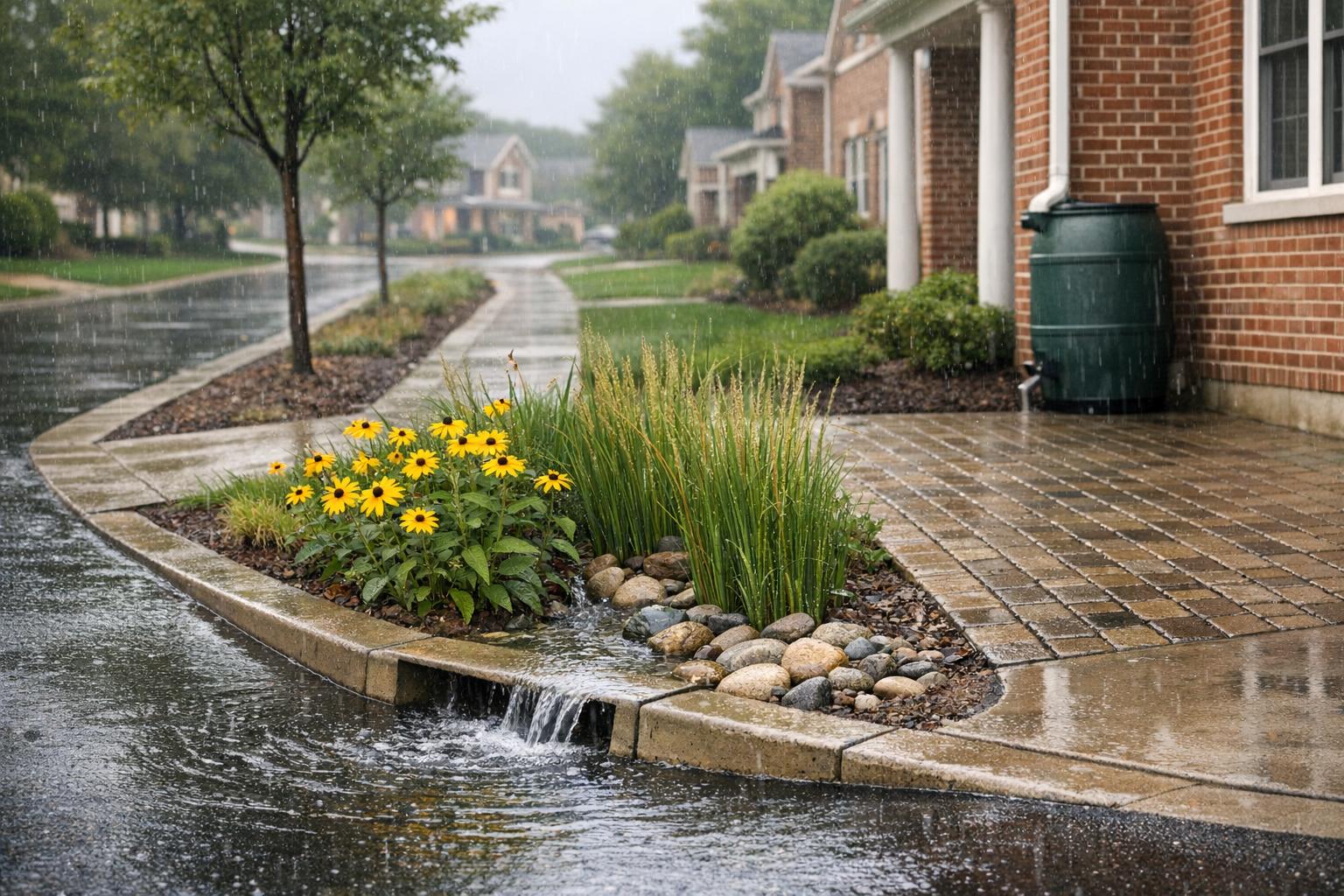
- Fee Credits: Reduce fees by implementing approved practices like rain gardens, rain barrels, or permeable pavements.
- Compliance: Property owners must maintain stormwater systems and adhere to annual reporting requirements.
- Resources: Programs like the Vulnerable Watershed Restoration and Resiliency Program and the 2024-2029 Hazard Mitigation Plan support flood reduction and water quality initiatives.
For expert help, companies like Pro Landscapes MD offer solutions such as French drains, grading, and eco-friendly landscaping to align with county regulations.
Green Dragon 304 | Rhadika Wijetunge with the Howard County Department of Public Works.
sbb-itb-843f8be
Howard County Stormwater Regulations Overview
Howard County’s stormwater regulations, rooted in the Clean Water Act and state law, aim to protect local waterways and ensure public safety. Below is an overview of the permit requirements and management goals that shape these efforts.
NPDES MS4 Permit Compliance
At the heart of Howard County’s stormwater program is the National Pollutant Discharge Elimination System (NPDES) Municipal Separate Storm Sewer System (MS4) permit. This permit, established under Section 402(p) of the Clean Water Act, applies to municipalities with populations exceeding 100,000 and is administered by the Maryland Department of the Environment [5]. The permit’s primary focus is reducing pollutants in stormwater systems to the greatest extent possible. The MS4 system includes a range of components such as roads, catch basins, curbs, gutters, ditches, and storm drains. Additionally, industrial sites and other high-risk facilities are required to create Stormwater Pollution Prevention Plans (SWPPPs) to ensure compliance [4].
Primary Stormwater Management Goals
Howard County’s stormwater management efforts go beyond compliance, focusing on four key objectives: reducing pollutant flow, controlling runoff to prevent flooding, restoring watershed health, and maintaining infrastructure. Flood protection measures are critical for safeguarding properties and public safety, particularly in areas like the Ellicott City watershed, which is prone to flooding [2]. Restoration initiatives target specific watersheds, such as Plumtree and Tiber, to improve water quality and support ecosystem recovery [2]. Meanwhile, infrastructure maintenance ensures that stormwater facilities remain effective across the county [3].
These goals are supported by the Watershed Protection Fee, which funds essential restoration projects and helps the county meet both state and federal water quality standards [1]. The county also runs a Vulnerable Watershed Restoration and Resiliency Program to protect fragile ecosystems and strengthen infrastructure [3]. Furthermore, the Howard County Design Manual Volume I provides detailed technical guidelines for developers and property owners when designing stormwater systems [4]. These elements establish a solid foundation for the county’s stormwater management framework, setting the stage for more detailed regulations and processes outlined in subsequent sections.
Stormwater Design Standards and Best Practices
Howard County Design Manual Volume I Requirements
Howard County’s stormwater design guidelines are outlined in Design Manual Volume I, managed by the Development Engineering Division of the Department of Planning and Zoning. These standards apply to everything from site grading to construction drainage systems [6][1].
Situated in the Piedmont Plateau, Howard County features rolling hills and receives about 45 inches of rainfall each year [7]. To address this, drainage systems must be designed to prevent flooding effectively.
Stormwater compliance is monitored by the Bureau of Environmental Services, which reviews Stormwater Pollution Prevention Plans (SWPPP) [8][2]. Meanwhile, the Bureau of Engineering offers technical oversight through its Utility Design and Construction Inspection divisions. All project submissions must be processed via the ProjectDox Plan Submission Portal [6][1].
These standards aim to blend technical requirements with practical stormwater management solutions implemented throughout the county.
Best Management Practices (BMPs) for Stormwater
Howard County promotes several Best Management Practices (BMPs) to minimize stormwater runoff. For instance, rain barrels are used to collect roof runoff, providing water for gardens and landscapes while reducing the strain on storm drains [1][2].
For larger-scale projects, BMPs like rain gardens, permeable pavements, and dry riverbeds are employed to manage water directly on-site. These efforts are part of the county’s Resilient HoCo initiative, which is guided by the Environmental Sustainability Board. Sensitive areas benefit further from the Vulnerable Watershed Restoration and Resiliency Program, ensuring targeted solutions for high-risk zones [1][3].
Permit Application and Compliance Process
How to Apply for a Stormwater Permit
In Howard County, all stormwater management permit applications are submitted through the ProjectDox Plan Submission Portal, a digital platform for plan reviews. The Development Engineering Division within the Department of Planning & Zoning manages these reviews, including stormwater management plan submissions.
Before applying, make sure you have the necessary documents ready:
- A Stormwater Management (SWM) Plan that shows how your project meets technical requirements.
- A Stormwater Pollution Prevention Plan (SWPPP) outlining strategies to prevent pollutants from entering storm drains.
- A maintenance agreement, which is a binding document committing you to the upkeep of stormwater facilities.
Check the current fee schedule on the Department of Inspections, Licenses & Permits website to plan for any associated costs.
If your site has unique challenges that make compliance difficult, you can consider the Alternative Compliance process. This option, managed by the Department of Planning and Zoning, provides flexibility for sites where standard on-site compliance isn’t practical. The Bureau of Environmental Services reviews your SWPPP, while the Bureau of Engineering oversees technical aspects through its Construction Inspection Division during and after construction.
Following these steps ensures your project aligns with local regulations and sets the stage for long-term system maintenance.
Annual Compliance and Reporting Requirements
After your stormwater permit is approved, keeping the system in good working order becomes your responsibility. Once installed, you’ll need to maintain detailed records of inspections and repairs to meet annual compliance requirements. While the Bureau of Highways’ Roadway Maintenance Division manages county-owned storm drains, private stormwater facilities are the responsibility of the property owner or homeowners’ association.
Additionally, most properties are subject to the Watershed Protection Fee, which helps fund restoration and resiliency programs across Howard County. Staying compliant with your maintenance agreement and keeping thorough documentation not only helps you avoid violations but also ensures your stormwater systems continue to function effectively over time.
Watershed Protection Fee and Incentives
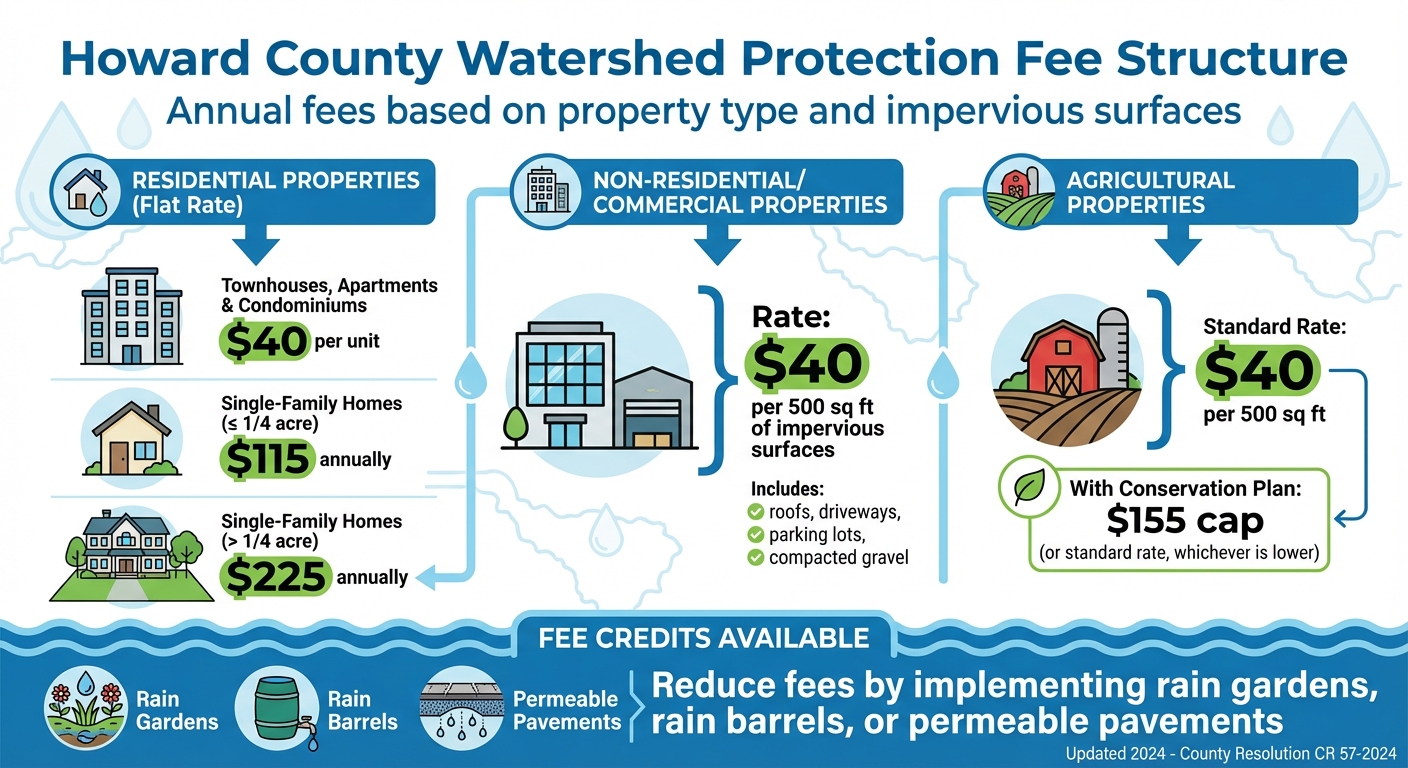
Howard County Watershed Protection Fee Structure by Property Type
Watershed Protection Fee Structure
Howard County imposes an annual Watershed Protection Fee to support stormwater projects aimed at improving water quality and aiding the Chesapeake Bay. This fee appears on the real property tax bill every July 1, and the amount varies depending on the type of property. For residential properties, the fee is a flat rate based on lot size:
- Townhouses, apartments, and condominiums: $40 per unit
- Single-family homes on lots up to 1/4 acre: $115 annually
- Single-family homes on lots over 1/4 acre: $225 annually
For non-residential and commercial properties, the fee is calculated at $40 per 500 square feet of impervious surfaces like roofs, driveways, parking lots, and even compacted gravel on private roads. Agricultural properties follow the same rate for standard land, but if a Soil Conservation and Water Quality Plan or a Forest Conservation and Management Plan is in place, the fee is capped at $155 or calculated as usual – whichever is lower.
These rates were updated in 2024 under County Resolution CR 57-2024. Commercial property owners can check their impervious area measurements using the Howard County mapping tool, while residential property owners unsure of their lot size should confirm details through the State Department of Assessments and Taxation website. Fee reductions are also available for properties that incorporate approved stormwater management practices. [10]
Credits and Incentives for Reducing Impervious Surfaces
Property owners can reduce their Watershed Protection Fee by adopting approved stormwater management practices. For non-residential and commercial properties, minimizing impervious surfaces directly lowers the fee, as it’s tied to the total square footage of these surfaces.
Non-profit organizations have an additional option: they can qualify for a full 100% fee credit by joining the Non-profit Watershed Protection Partnership. After completing the partnership agreement, the county conducts a site assessment to identify potential stormwater treatment measures. If these recommendations are implemented, the entire fee is waived. To ensure the credit applies to the current year’s tax bill, applications must be submitted by April 1. [10]
Pro Landscapes MD: Stormwater Solutions in Howard County

Pro Landscapes MD combines expertise with Howard County’s regulations to offer stormwater solutions that not only comply with local standards but also add to the value of your property.
Stormwater Management Services
Howard County has strict stormwater management standards, and Pro Landscapes MD provides solutions designed to meet these requirements. They address water-related challenges like flooding, erosion, and landscape damage with services such as French drain installation and repair. These systems effectively redirect excess water away from foundations and low-lying areas. They also offer dry riverbeds, which manage runoff while adding a natural aesthetic to your property.
For properties with uneven terrain or soil settling issues, the company provides land leveling, grading, and yard repair. These services are aimed at improving water flow, preventing pooling, and maintaining the integrity of your landscape. Projects involving drainage fixtures like sump pumps include a $50 plumbing fee, $25 per sump pump, and a 10% technology fee [9].
Before starting any drainage or land-leveling project, it’s essential to verify permit requirements with Howard County Permits & Inspections to ensure compliance with local codes. Pro Landscapes MD assists property owners in navigating these regulations while implementing stormwater solutions that align with the county’s watershed protection goals, overseen by the Bureau of Environmental Services. Additionally, the company incorporates eco-conscious techniques to reduce impervious surfaces, helping to promote natural water absorption.
Eco-Friendly Landscaping and Hardscaping Options
Pro Landscapes MD emphasizes sustainability with options like environmental pavers, which reduce impervious surfaces and encourage water infiltration. This method directly supports Howard County’s goal of minimizing impervious areas, a critical factor in calculating the Watershed Protection Fee.
The company also designs rain gardens that not only manage stormwater but add visual appeal to your property. These solutions align with the county’s Vulnerable Watershed Restoration and Resiliency Program and could potentially help property owners lower their fees. For additional green infrastructure options, property owners can consult the Howard County Bureau of Environmental Services about programs like rain barrels to ensure private projects contribute to broader sustainability goals.
Conclusion
Howard County’s stormwater regulations are designed to protect properties, improve water quality, and safeguard vulnerable watersheds as part of the 2024–2029 Hazard Mitigation Plan Update. This effort is funded through the Watershed Protection Fee and aligns with compliance standards like the NPDES MS4 permit and the Howard County Design Manual Volume I, ensuring properties adhere to state and federal environmental guidelines. Programs like the Vulnerable Watershed Restoration and Resiliency Program further strengthen these initiatives.
Homeowners can play a role by adopting practices such as installing rain barrels, using environmental pavers to reduce impervious surfaces, and properly maintaining private stormwater management systems. These steps not only help meet compliance requirements but may also qualify for fee credits. Additionally, preventing pollution through responsible waste disposal and engaging in county programs contributes to healthier watersheds.
Pro Landscapes MD offers tailored stormwater management solutions that align perfectly with Howard County’s regulations. Their services include installing French drains, dry riverbeds, grading, and land leveling, along with eco-friendly options like environmental pavers and rain gardens. These solutions not only effectively manage runoff but also support the county’s broader goals to promote community and environmental well-being.
FAQs
Do I need a stormwater permit for my home project?
Yes, certain home projects in Howard County require a stormwater permit. This applies to activities such as construction, work in floodplain areas, or modifications to stormwater management facilities. These requirements are outlined by county regulations and enforced in accordance with the Maryland Department of the Environment’s guidelines.
What counts as an impervious surface for the fee?
Impervious surfaces are areas that prevent or limit stormwater from soaking naturally into the ground. Common examples include rooftops, sidewalks, walkways, patios, driveways, parking lots, storage areas, compacted gravel or soil, and awnings. These surfaces play a role in increasing stormwater runoff and are factored into fee calculations.
How do I qualify for Watershed Protection Fee credits?
To be considered for Watershed Protection Fee credits in Howard County, property owners need to submit their applications by April 1 each year. These credits are available for residential properties and are determined by factors such as the size of the property or the amount of impervious surface area. Qualifying properties can benefit from reductions in their fees.
Chat with Us