









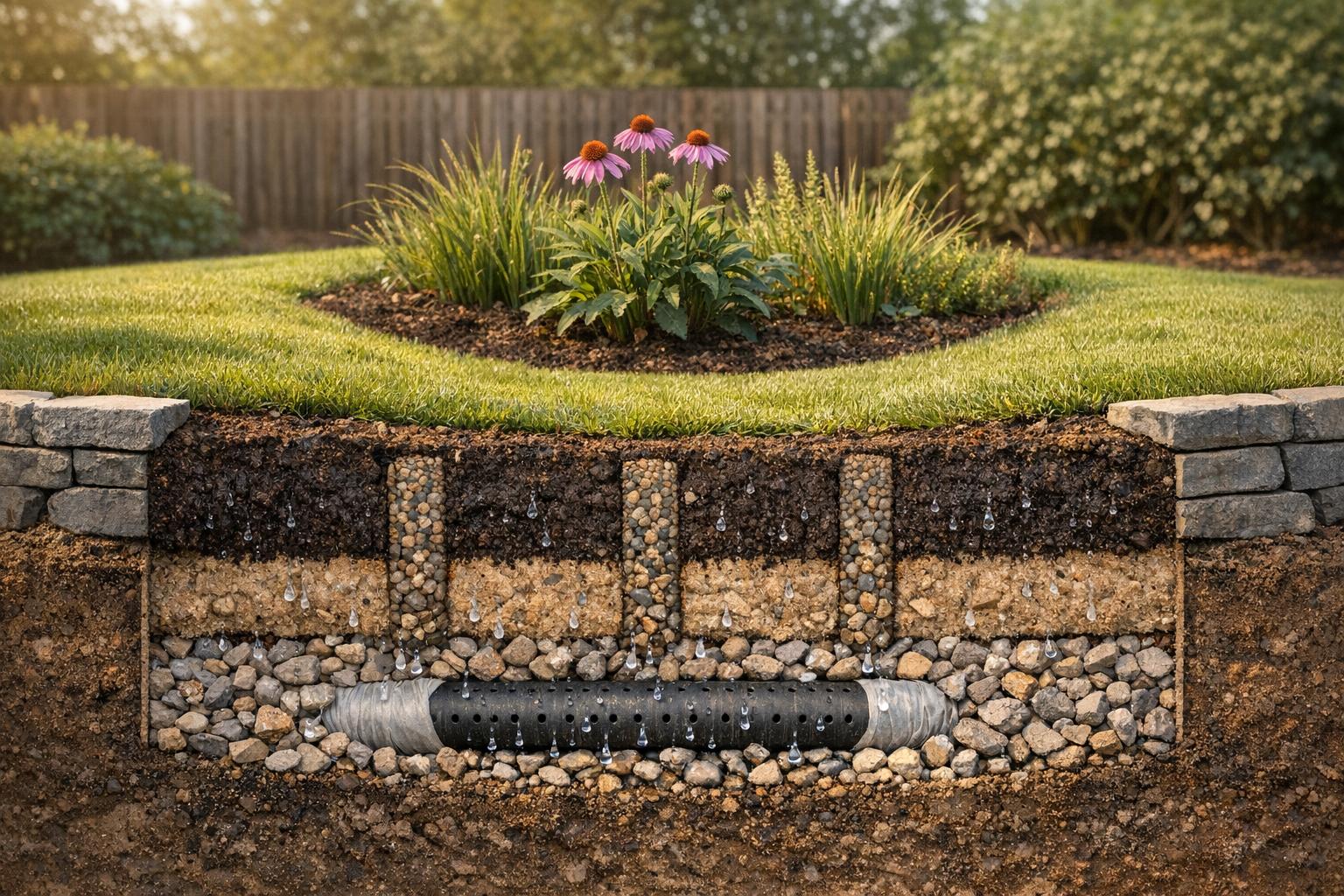
- bhavya gada
- No Comments
Rain gardens can struggle without proper soil drainage, leading to waterlogging, root rot, and plant death. To keep your rain garden functional and healthy, here are five effective methods for improving drainage:
- Mix Organic Matter: Add compost to improve soil structure and water flow.
- Grade and Level: Adjust slopes to direct water toward your rain garden.
- Aerate Compacted Soil: Break up compressed layers to restore water movement.
- Install Underdrains: Use systems like French drains to redirect trapped water.
- Add Rock Layers or Raised Beds: Use gravel layers or elevate planting areas for better drainage.
For Maryland homeowners dealing with clay-heavy soils and frequent rainfall, these strategies can make rain gardens more efficient at managing stormwater and supporting plant growth. Regular maintenance, like adding compost and monitoring for compaction, is key for long-term success.
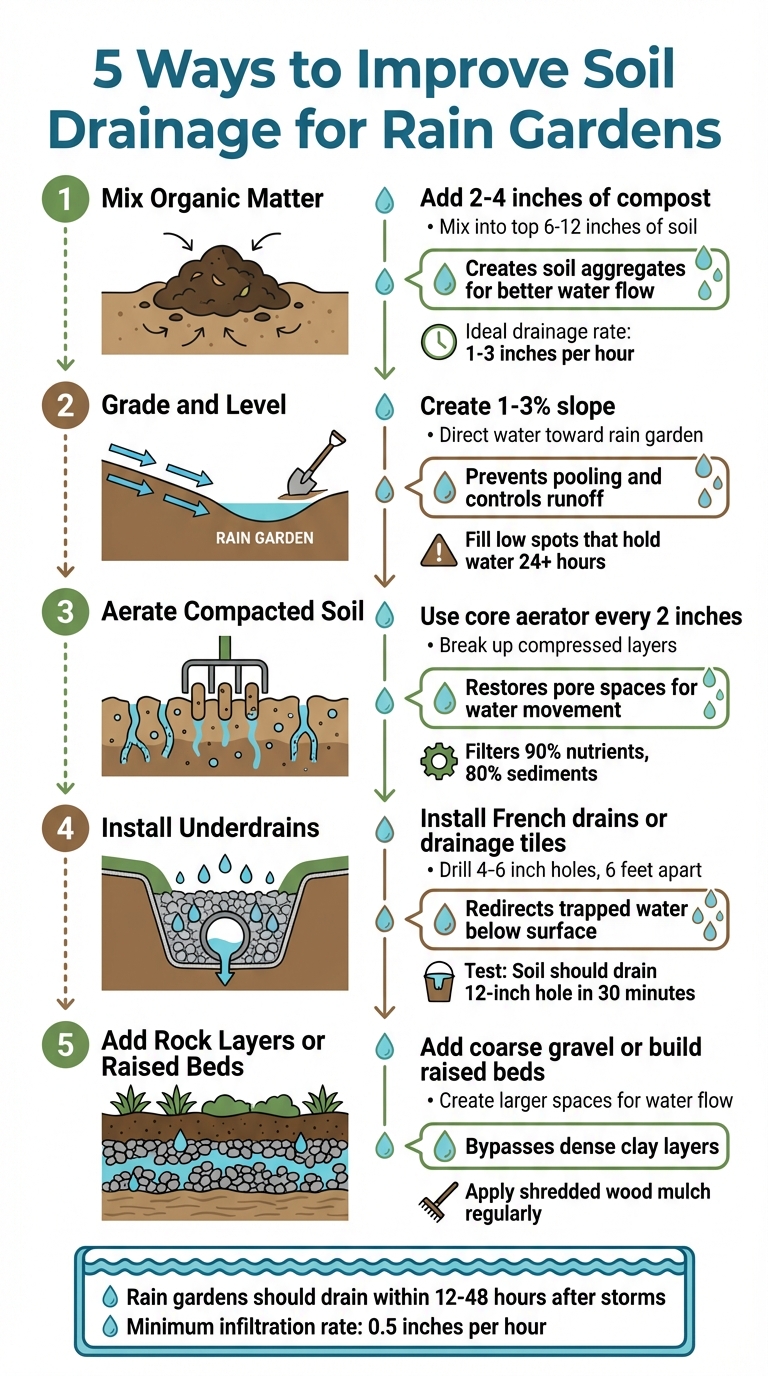
5 Methods to Improve Rain Garden Soil Drainage
1. Mix Organic Matter into Soil
How It Helps with Soil Drainage
Adding compost to your soil can work wonders for its structure. It encourages soil particles to clump together, forming aggregates. These aggregates create larger gaps in the soil, allowing water and air to flow more freely instead of pooling on the surface. Aaron Steil, a Consumer Horticulture Extension Specialist at Iowa State University, emphasizes:
Add organic matter (not sand) to improve drainage in poorly drained soils. Incorporating organic matter, such as compost, improves soil structure in poorly drained soils by increasing soil aggregation.
This technique is particularly effective for clay soils, where it enhances drainage, and sandy soils, where it helps retain moisture. The result? Rain gardens that filter and absorb stormwater much more efficiently. [2]
Why It’s Perfect for Rain Gardens
Rain gardens rely on soil that can absorb water at a steady rate – ideally between 1 to 3 inches per hour. This prevents standing water while allowing the soil enough time to filter out pollutants before they seep into the groundwater. Mixing organic matter into the soil makes it better equipped to handle this task. [2]
How to Do It Yourself
If you’re tackling this on your own, start by spreading a 2 to 4-inch layer of compost over the top 6 to 12 inches of soil. Be careful not to till the soil when it’s wet, and avoid excessive tilling to maintain those all-important soil aggregates. [2]
Keeping It Up Over Time
Improving soil drainage with organic matter isn’t a one-and-done deal – it requires regular upkeep. Megan Hughes, a Horticulture Expert at Better Homes & Gardens, advises:
By adding several inches of compost into the soil each year, you’ll gradually improve the drainage. This is a long-term process, so patience is key.
To keep your soil in good shape, apply compost annually and use organic mulches like wood or bark chips. These not only maintain drainage but also prevent compaction over time.
sbb-itb-843f8be
2. Grade and Level Your Property
Effectiveness in Improving Soil Drainage
Getting the grading right is a must for ensuring proper soil drainage. Without it, low spots can lead to water pooling, which defeats the purpose of a rain garden. As the Colorado State University Extension points out:
Make sure areas are properly graded so there are not low spots and all drainage heads in the right direction.
By adjusting your property’s grade, you can direct water away from areas like your home’s foundation or delicate plant roots. A gentle slope – usually between 1% and 3% – is ideal for guiding water toward your rain garden or any other designated outlet. This slope helps control surface runoff, giving your rain garden the chance to absorb stormwater effectively. According to Iowa State University Extension:
Change the soil elevation to remove depressions or redirect water from uphill or downspouts to reduce the amount of water in the plant’s root zone.
This groundwork is essential for the rain garden to do its job.
Suitability for Rain Gardens
Grading isn’t just helpful – it’s essential for a rain garden to work. By channeling water from uphill areas or downspouts into your rain garden, you create a system that slows down runoff. This allows the soil to soak up water gradually, reducing the risk of flooding or erosion. Just make sure the grading keeps water within your property or directs it to a safe outlet.
Ease of Implementation
Once you’ve mapped out your grading plan, implementing it is straightforward. Start by observing your yard after a rainstorm to find any low spots that hold water for more than 24 hours. Fill these areas to match the surrounding grade. If you’re dealing with big elevation changes or need to redirect a lot of water, hiring professionals might be the best route to ensure accurate slope calculations and lasting results.
After completing major soil adjustments, water the area to help the soil settle. Once it’s dry, do a final grading to smooth everything out and avoid future dips. For homeowners in central Maryland tackling tricky drainage issues, Pro Landscapes MD provides expert grading and leveling services that solve water problems while keeping your yard intact.
Long-Term Maintenance Requirements
After grading, it’s important to stabilize the soil quickly. Plant perennial ground covers or lay turf on sloped areas to prevent erosion during heavy rains. Mowed lawns can also help slow down runoff while keeping things tidy. Be mindful of soil compaction caused by foot or vehicle traffic, as it can undo your hard work by compressing the soil and reducing drainage efficiency. Regularly check for new low spots and address them promptly to maintain your grading efforts.
3. Aerate Compacted Soil
Effectiveness in Improving Soil Drainage
Compacted soil can be a major obstacle for proper drainage in rain gardens. When soil becomes compressed – whether from heavy machinery or frequent foot traffic – the small spaces that allow water and air to move through the soil are reduced. Aerating the soil helps break up these compacted layers, restoring the pore spaces necessary for water to drain effectively. Aaron Steil, a Consumer Horticulture Extension Specialist at Iowa State University, highlights the role of organic matter in this process:
"Incorporating organic matter, such as compost, improves soil structure in poorly drained soils by increasing soil aggregation… The space between the aggregates provides pore space for holding and exchanging air and water." [2]
By reintroducing these pore spaces, aeration ensures water flows through the soil instead of pooling on the surface. For most garden plants, an ideal drainage rate is between 1 and 3 inches per hour. If drainage falls below 1 inch per hour, it signals a problem that needs addressing. [1]
Suitability for Rain Gardens
Aeration plays a crucial role in maintaining the functionality of rain gardens. Properly aerated rain gardens drain water within 12 to 48 hours after a storm, which is essential for preventing standing water that could lead to mosquito breeding or stress on plant roots. A minimum infiltration rate of 0.5 inches per hour is recommended for rain gardens to function effectively. When done right, these gardens can filter out up to 90% of nutrients and chemicals, as well as 80% of sediments from stormwater runoff. In contrast, traditional lawns allow about 30% less water infiltration, showcasing the efficiency of rain gardens. [6]
If you’re converting a lawn into a rain garden, core aeration is a great starting point. Using a core aerator to remove soil plugs every two inches, followed by mixing in 2 to 4 inches of compost into the top 6 to 12 inches of soil, can significantly improve drainage. [2]
Ease of Implementation
Timing is everything when it comes to aeration. Always aerate when the soil is dry enough to crumble easily in your hand – this prevents issues like glazing. For most residential projects, renting a core aerator is a practical option. If the compacted soil layer is less than two feet deep, methods like double digging or using a soil ripper can help break through to more permeable layers. For more severe compaction, professional services like Pro Landscapes MD can handle aeration and soil amendments to ensure your rain garden is set up for success.
Long-Term Maintenance Requirements
To keep your soil in good condition after aeration, it’s important to prevent it from becoming compacted again. Adding pathways or stepping stones can reduce foot traffic in rain garden areas, and avoiding walking on wet soil helps keep the newly created pores open. Applying a yearly layer of organic mulch not only suppresses weeds but also gradually improves soil structure. Incorporating 2 to 4 inches of compost annually can further maintain soil aggregation and drainage rates. After heavy rains, check for any standing water – this could indicate re-compaction or clogging that needs attention. [2] [4] [5] [7]
4. Install Underdrains or Redirect Water Flow
Effectiveness in Improving Soil Drainage
If your rain garden sits on top of an impervious soil layer that traps water, installing underdrains can make a big difference. Systems like French drains or drainage tiles are designed to collect water that seeps through the topsoil but can’t move deeper, redirecting it through pipes or gravel-filled trenches to prevent pooling. To work properly, underdrains need a gravity-fed outlet positioned downhill.
A French drain, for example, is essentially a trench lined with gravel and fitted with a pipe to guide water away. The trench must be sloped enough to allow water to flow freely. The success of this system also depends on how well the surrounding soil drains. A quick way to test this is by digging a 12-inch hole – if it doesn’t drain within 30 minutes, the soil likely has poor drainage and could benefit from an underdrain system [1].
Suitability for Rain Gardens
Underdrains are a great addition to rain gardens, especially in areas where water gets stuck beneath the surface due to compacted soil layers like clay or hardpan. These systems work hand-in-hand with proper grading efforts to channel water away and prevent new low spots from forming. Before installing an underdrain, make sure there’s a reliable outlet for water to flow out. For particularly deep impervious layers (over two feet), you can also drill 4- to 6-inch diameter holes spaced six feet apart and fill them with coarse sand or gravel. This helps water bypass the compacted layer and flow into the underdrain [1].
Ease of Implementation
Setting up an underdrain system requires careful planning. The trench must maintain a consistent slope, and you’ll need to identify a clear outlet for the water. To prevent clogging, ensure the gravel remains exposed. The process involves digging trenches, placing pipes, and backfilling carefully. If the project feels too complex or the drainage problems are severe, hiring a professional can ensure the system is installed correctly. For example, Pro Landscapes MD offers expert French drain installations and other drainage solutions in central Maryland. Once installed, regular maintenance will keep the system working efficiently.
Long-Term Maintenance Requirements
Ongoing maintenance is key to keeping underdrains functioning properly. The outlet must stay clear, so inspect it frequently – especially after heavy rain – to remove any debris. Watch for soil settling that might affect the slope of the trench. Additionally, avoid compacting the soil around the drainage tiles by limiting foot traffic or heavy equipment in the area. If you notice water pooling or backing up, check both the outlet and the surrounding soil. Aeration may help if compaction or surface buildup is causing issues [1].
5. Add Rock Layers or Build Raised Beds
Effectiveness in Improving Soil Drainage
Adding rock layers or constructing raised beds can significantly improve your rain garden’s drainage. Rock layers, for example, create larger spaces between particles, allowing water to move more easily through compacted or clay-heavy soils. By placing coarse materials like gravel or sand beneath the soil, water can bypass denser layers and drain more effectively. One effective method is drilling 4- to 6-inch holes roughly six feet apart and filling them with coarse sand or fine gravel to encourage water flow [1]. These techniques complement other rain garden strategies, working together to improve overall drainage.
Raised beds, on the other hand, take a different approach by lifting the planting area above problematic soil. This creates the necessary space for proper root oxygenation and drainage, making raised beds particularly useful for growing vegetables, perennials, and small shrubs [1][2].
Suitability for Rain Gardens
Both rock layers and raised beds offer practical solutions for rain gardens, but they serve different purposes. Rock layers are often used below the surface, similar to French drain systems, to redirect water that might otherwise collect in the garden. However, be aware of a potential issue called the "soil textural interface." When fine-textured soil sits directly on top of coarse rock, the finer soil must become fully saturated before water can pass into the coarser layer below [1]. To avoid this, mix soil and rock layers during installation to ensure better water movement.
Raised beds, on the other hand, are ideal for planting smaller plants, as they provide enough room for the root systems while improving drainage. For the best results, aim for soil that drains at a rate of 1 to 3 inches per hour [2].
Long-Term Maintenance Requirements
To keep rock layers functioning properly, clear away debris regularly and apply shredded wood mulch to maintain their permeability [8][9]. If compaction or clogging occurs, aerate the soil to restore its infiltration capabilities [9].
For raised beds, maintenance includes adding shredded wood mulch, removing weeds, and replacing any dead plants promptly [6][8]. If you’re considering professional help for these drainage solutions, Pro Landscapes MD offers expert services to ensure long-lasting results.
Transforming a poorly drained area into a rain garden | DIY Garden Projects | Gardening Australia

Conclusion
Improving soil drainage can turn waterlogged rain gardens into vibrant, functional spaces by enhancing water flow and providing plants with the oxygen they need to thrive. Techniques like mixing in organic matter, proper grading, aeration, and adding underdrains or rock layers help redirect excess water and maintain the right drainage levels. These methods not only improve water movement but also promote long-term soil health.
A well-structured soil ensures roots get enough oxygen, reducing the risk of root rot – a common killer of plants in overly wet conditions. Good drainage also helps control erosion by slowing surface runoff and prevents harmful salt buildup, which can stunt plant growth. Together, these benefits create a rain garden that effectively handles stormwater while supporting a variety of plants, reinforcing the importance of proper drainage highlighted earlier.
That said, fixing drainage problems requires careful planning. Grading should maintain a slope of 1-3% to allow for effective gravity-based drainage, and hardpan layers or other subsurface issues might need specialized equipment to address. Installing French drains requires precise placement and the correct rock fill to avoid clogs over time. A simple drainage test – digging a 12-inch hole, filling it with water, and checking if it drains within 30 minutes – can help determine whether professional help is needed. If the water doesn’t drain, expert intervention is likely required.
For homeowners in Maryland, Pro Landscapes MD provides professional services like grading, French drain installation, and stormwater management. Serving areas such as Howard County, Montgomery County, Carroll County, Frederick County, Prince George’s County, and Baltimore County, they help protect your property and ensure your plants thrive.
FAQs
How often should I add compost to improve soil drainage in my rain garden?
For the best soil drainage in your rain garden, start by mixing compost into the top 6 inches of soil during the initial setup. While there’s no hard-and-fast rule for adding compost later, applying it annually can help keep the soil healthy and improve drainage over time. Just make sure to add organic matter gradually to avoid overwhelming the soil.
What is the recommended slope for grading a property to improve drainage in a rain garden?
To ensure proper drainage in a rain garden, the suggested grading slope is usually 1% to 2%. This translates to a drop of about 1 to 2 feet for every 100 feet of distance. The ideal slope can vary depending on factors such as soil type and the typical rainfall in your region. Correctly grading the area helps water flow smoothly, preventing pooling and allowing your rain garden to work as intended.
How do I know if my rain garden needs an underdrain system?
If your rain garden holds standing water for more than 24 to 48 hours after it rains, it might be time to consider adding an underdrain system. This could be a sign of poor drainage, often caused by compacted soil or a high water table. Prolonged water retention can make it difficult for plants to grow and might lead to other problems. Tackling this issue quickly is key to keeping your rain garden healthy and functioning properly.
Chat with Us