









- bhavya gada
- No Comments
Wasting water on your yard doesn’t just hurt your wallet – it can also harm your plants. Many common irrigation mistakes lead to overwatering, runoff, and inefficient water use. Here’s what you need to know to save water and keep your landscape healthy:
- One-size-fits-all watering schedules waste water. Different plants and zones need tailored watering based on soil type, sun exposure, and plant needs.
- Overwatering can drown roots, promote diseases, and waste hundreds of gallons. Simple soil moisture checks can prevent this.
- Skipping sprinkler maintenance leads to leaks, misaligned sprays, and uneven coverage, wasting up to 10,000 gallons annually.
- Ignoring weather and soil type results in runoff and evaporation. Water early in the morning and adjust for rainfall or clay-heavy soil.
- Poor sprinkler spacing creates dry spots and pooling, forcing you to overwater. Test your system to ensure even coverage.
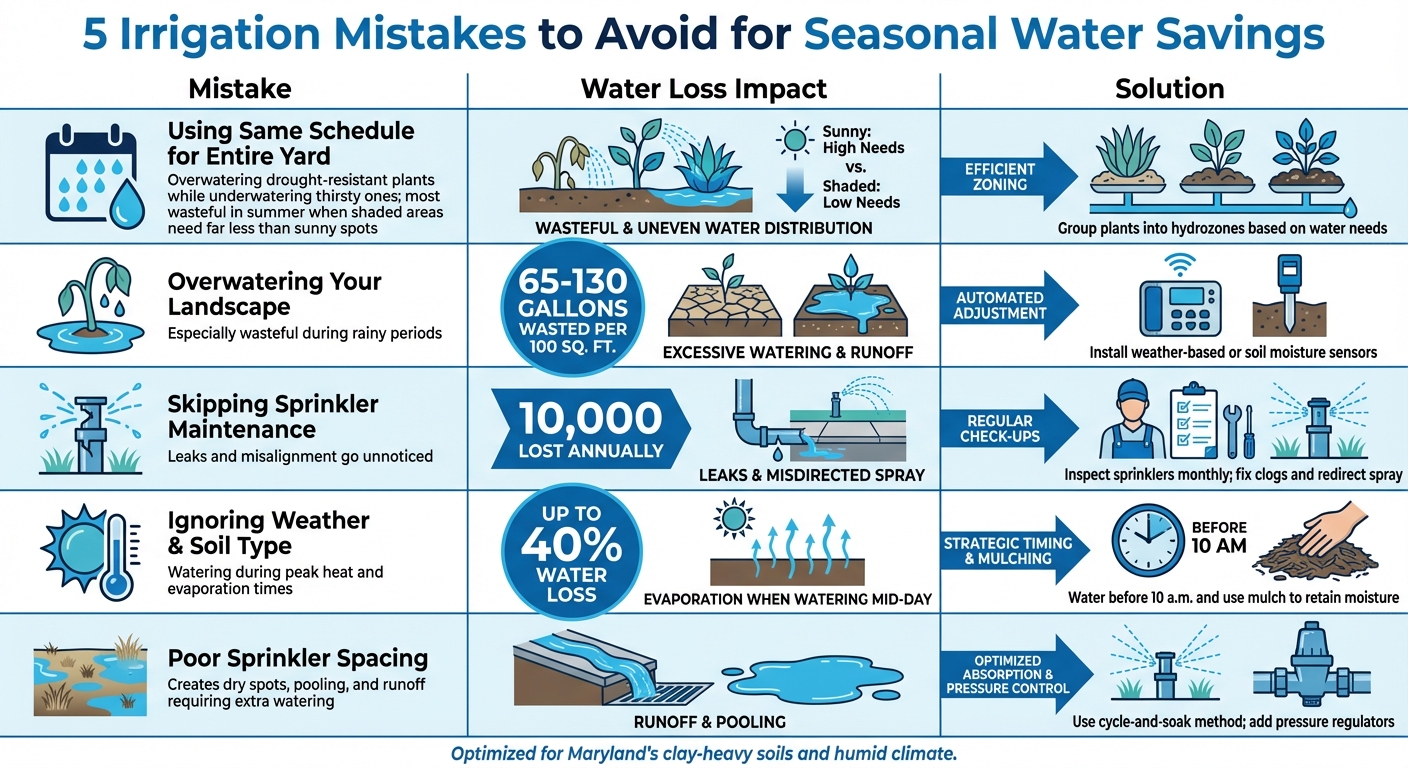
5 Common Irrigation Mistakes and Their Water Waste Impact
Fixing Common Issues in Landscape Irrigation Systems to Increase Water Efficiency, October 2023
sbb-itb-843f8be
1. Using the Same Watering Schedule for Your Entire Yard
Your yard is a mix of zones – each with its own blend of plants, soil types, and sun exposure. Treating them all the same way when it comes to watering is a recipe for waste. Some areas will end up overwatered, while others will be left thirsty, and your water bill will reflect that imbalance.
Each zone has its own needs. For example, newly planted trees demand daily watering for about two weeks, but a well-established tall fescue lawn can handle dry spells just fine[2][3]. Shady spots under large trees lose less water to evaporation compared to sunny areas, like that strip of grass baking along your driveway. If you’re watering them all identically, you’re literally washing money away. And it gets even trickier when you factor in soil type.
Soil texture changes everything. In Maryland, where clay-rich soil is common, water absorption happens slowly. If you water clay soil as though it were sandy, you’ll end up with pooling and runoff. To properly wet clay soil to a depth of 6 inches, you’ll need about 65 to 130 gallons of water per 100 square feet[3]. But here’s the catch – it only works if you apply the water slowly enough for the soil to absorb it.
Hydrozoning is a smart solution. This means grouping plants with similar water needs together. The EPA WaterSense program explains:
"Similar plants should be planted together in an irrigation zone, and each hydrozone should account for the type of sprinkler, sun or shade exposure, and type of plants"[1].
For areas with clay soil or slopes, a "cycle-and-soak" method works wonders. Break your watering into shorter sessions with pauses in between. This allows the water to seep in instead of running off into the storm drains[1]. Adjust your approach as the seasons change to ensure efficient water use.
Want to avoid overwatering? Test your soil moisture by inserting a tool about 6 inches deep. If the soil feels damp, skip watering that day[2][3]. This quick check prevents shallow and frequent watering, which can weaken root systems and invite disease.
2. Overwatering Your Landscape
Overwatering not only inflates your water bill but also harms your plants. It drowns their roots, making them weaker and overly reliant on frequent watering to survive.
Watering during the hottest part of the day is another issue – it can lead to evaporation losses of up to 40% before the water even reaches the plants[3]. Plus, it can wash fertilizers and pesticides into nearby waterways, creating environmental concerns.
Excess water also creates the perfect environment for problems like weeds (think green kyllinga and yellow nutsedge), fungal diseases like black spot on roses, and pests such as grubs.
So, how do you know when to water? Use simple tests to check soil moisture:
- Screwdriver Test: Push a screwdriver into the soil. If it slides in easily and feels moist 4 to 6 inches down, skip watering that day.
- Tuna Can Test: Place empty tuna cans around your yard while watering. Once each can collects 1 inch of water, you’ve provided enough moisture to soak 6 inches deep into the soil.
For lawns, water only when you notice signs like grass blades wilting, turning blue-gray, or leaving visible footprints after walking.
Timing matters, too. Water early in the morning, ideally before 10 a.m., to reduce evaporation and avoid prolonged wet leaves that can encourage disease. If your soil is clay-heavy, like much of Maryland’s, water slowly using a cycle-and-soak method to ensure it absorbs properly. Consider installing a WaterSense-rated weather-based controller or a soil moisture sensor to adjust watering based on actual conditions. Seasonal adjustments to your watering habits can keep your landscape thriving while cutting down on water waste.
3. Skipping Sprinkler Head Maintenance and Alignment
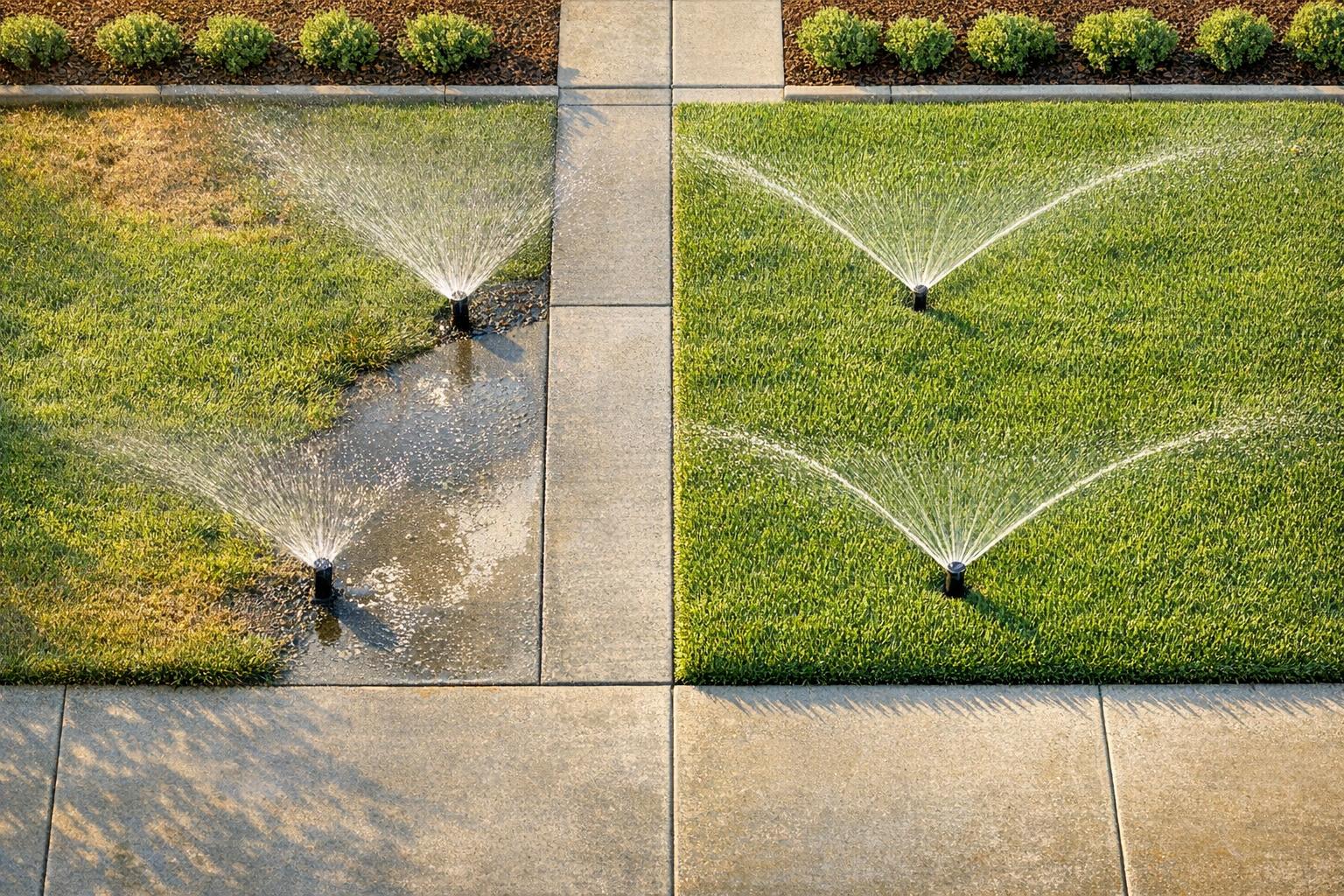
Broken or misaligned sprinkler heads can waste water without you even noticing. When sprinkler heads are tilted or pointed in the wrong direction, they end up spraying sidewalks, driveways, or streets instead of your lawn. This leaves parts of your yard dry while overwatering areas that don’t need it. Clogged nozzles can also cause sprinklers to sputter unevenly, creating dry patches that might tempt you to water more often to make up for the problem.
On average, households lose nearly 10,000 gallons of water each year due to leaks [7]. A significant portion of this waste comes from cracked sprinkler heads or leaking risers, which can lead to water pooling. High water pressure can also create a fine mist that evaporates before it even hits the ground, while low pressure reduces spray coverage, leaving gaps in irrigation.
A monthly inspection can help you avoid these issues [1]. Walk through your yard while the sprinkler system is running and check for heads spraying onto hard surfaces, sputtering, or failing to pop up properly. Brown or dry spots in your lawn are clear signs of a malfunctioning or misaligned sprinkler head. To fix this, remove and clean nozzles and screen filters to clear out any dirt. Use flush caps and run the system for about 10 minutes to clear debris from the risers before reinstalling the cleaned nozzles. This step is especially important for areas like Maryland, where clay-heavy soils can complicate irrigation.
For Maryland’s unique soil conditions, pressure regulation is key. Sprinkler bodies with built-in pressure regulation can help prevent flooding and ensure water reaches the intended areas without waste [1]. Once adjustments are made, run a quick test to confirm proper coverage.
Staying on top of maintenance not only reduces water waste but also saves money over the course of the season. Don’t wait until problems become obvious. Use a checklist during your monthly inspections, mark problem spots with flags, and handle repairs immediately [1]. This simple, proactive approach keeps your system efficient and prevents small issues from turning into expensive water waste.
4. Ignoring Weather and Soil Type
Watering your landscape without considering weather conditions or soil type is a recipe for wasted water and higher utility bills. For example, watering during or right after rainfall, or in the heat of midday when evaporation rates can spike by up to 40%, can significantly increase water usage and costs[3].
In Maryland, the type of soil plays a huge role in how water behaves. Clay-heavy soils, which are common in the area, drain slowly and tend to pool water. If you water too quickly or when the soil is already saturated, you’ll likely see runoff instead of absorption. On the other hand, sandy soils drain water rapidly, meaning they often need more frequent watering to keep plants hydrated. Experts recommend landscapes receive about one inch of water per week, including rainfall[1]. If you’re not keeping track of rainfall or adjusting your irrigation system, there’s a good chance you’re overwatering.
One way to address this is by installing a WaterSense-labeled, weather-based irrigation controller. These smart devices automatically adjust watering schedules based on weather conditions, skipping cycles during cool or rainy periods. Soil moisture sensors are another great tool – they activate watering only when the root zone is dry[1]. Together, these technologies provide precise control over your irrigation system[1].
Timing is equally important. Watering early in the morning, before 10 a.m., helps reduce evaporation and lowers the risk of plant diseases caused by extended wetness in humid conditions[6]. For clay-rich soils like those in Maryland, short, spaced-out watering sessions work best to minimize runoff[1]. Adjusting your watering schedule based on weather and soil type can lead to noticeable savings over the season.
To optimize further, consider a soil test to understand your soil’s specific needs. Adding a rain sensor to your system can also prevent unnecessary watering. By tailoring your approach to local conditions, you’ll not only save water but also reduce your overall costs. These small adjustments can make a big difference in your seasonal water management.
5. Poor Sprinkler Spacing and Coverage
Getting the spacing right for your sprinklers is just as important as managing watering schedules, rates, and maintenance. When sprinklers are spaced incorrectly, you’ll likely see dry patches and water runoff. Dry spots are easy to recognize – grass in these areas wilts, turns a blue-gray shade, and doesn’t spring back after being stepped on, leaving visible footprints behind [2][4]. Misaligned sprinklers can also overspray onto hard surfaces, leading to water pooling, runoff (especially in clay-heavy soils), or more dry patches [1][3]. This uneven watering often forces homeowners to overwater their entire lawn in an attempt to fix the problem, wasting water in the process. The good news? Testing your sprinkler system’s output makes identifying these issues much simpler.
A quick way to check your sprinkler coverage is by performing a catch can test. Place several empty tuna cans around your yard and run the sprinklers until each can collects about 0.5–1 inch of water [1][3][5]. If the water levels vary significantly between cans, it’s a sign your sprinkler spacing needs adjustment. Another method is to test soil moisture – push a screwdriver into the ground after watering. If it slides in easily to a depth of 4 to 6 inches, your system is delivering water effectively [2][3].
If you find uneven coverage, here’s how to fix it:
- Redirect sprinkler heads so they water only the landscape, not pavement [1].
- Use a cycle-and-soak technique for areas with slopes or clay soil [1].
- Add pressure regulators to reduce misting and improve coverage [1].
- Check your system monthly for clogs or damage.
Proper sprinkler spacing does more than just eliminate dry patches. It helps conserve water, encourages deeper root growth, and reduces the risk of weeds and lawn diseases [2]. By ensuring even watering, you’ll keep your yard healthier and more resilient throughout the growing season.
Seasonal Water Savings Comparison Table
The table below highlights how common irrigation mistakes lead to water waste, their seasonal impact in Maryland, and practical ways to address them.
| Irrigation Mistake | Estimated Water Loss | Seasonal Context (Maryland) | Recommended Fix |
|---|---|---|---|
| Using the Same Schedule for Entire Yard | Overwatering drought-resistant plants to meet the needs of thirstier ones | Most noticeable during summer when shaded areas need far less water than sunny spots | Group plants into hydrozones based on water needs and adjust irrigation runtimes [1] |
| Overwatering Your Landscape | 65–130 gallons per 100 sq. ft. wasted [3] | Especially wasteful during rainy periods or when cool-season grasses naturally go dormant | Install weather-based or soil moisture sensors to skip unnecessary watering [1] |
| Skipping Sprinkler Maintenance | Significant water loss due to runoff from misaligned sprinklers [1] | Happens year-round but is costlier during peak summer demand | Inspect sprinklers monthly to fix clogs and redirect spray away from pavement [1] |
| Ignoring Weather and Soil Type | Up to 40% lost to evaporation when watering mid-day [3] | Most critical during summer droughts and heat waves | Water before 10 a.m. and use mulch to retain soil moisture [2][3] |
| Poor Sprinkler Spacing | Leads to pooling, runoff, and dry spots that require extra watering | Especially an issue on clay soils during humid months | Use the cycle-and-soak method and add pressure regulators to prevent misting [1] |
For lawns like tall fescue and bluegrass, summer dormancy is a natural survival strategy – they turn brown to conserve resources. Watering them during this time is often unnecessary unless a prolonged drought occurs [2][4]. Tackling these irrigation errors can help save water throughout the year.
Conclusion
Avoiding the five common irrigation mistakes can help lower your water bills and keep Maryland landscapes thriving. Practices like deep, infrequent watering encourage stronger root systems, which boost drought resistance. Watering early in the morning – before 10 a.m. – cuts down on evaporation losses, which can reach up to 40% during the heat of midday [3]. Grouping plants with similar water needs into hydrozones also helps eliminate unnecessary water waste.
Regular system maintenance is another key step. It helps catch issues like clogged heads, broken sprinklers, or misaligned sprays before they lead to wasted water [1]. This kind of upkeep prevents problems like shallow rooting and fungal diseases, which are often tied to improper irrigation [2].
Given Maryland’s clay-heavy soils and humid summers, expert advice can be especially helpful. Certified irrigation professionals can assess your system, install WaterSense-labeled weather-based controllers, and create cycle-and-soak schedules tailored to your property’s conditions [1]. As the U.S. Environmental Protection Agency highlights:
"A certified irrigation professional can design, install, maintain, or audit your system to ensure you’re using the proper amount of water to support a healthy landscape" [1].
Making these adjustments can lead to real savings and healthier plants. Whether you handle these changes yourself or enlist professional help, the benefits are clear: lower utility bills, fewer pest and disease problems, and vibrant, thriving greenery.
For those in central Maryland, Pro Landscapes MD offers a full range of landscape services, including irrigation system optimization and drainage solutions tailored to the area’s unique challenges.
Start today: tweak your watering schedule, inspect your sprinklers, or check soil moisture levels – small steps can lead to big results.
FAQs
How can I figure out the right watering needs for different areas of my yard?
To figure out how much water different parts of your yard need, think about factors like the type of plants you’re growing, the soil’s condition, and the current season’s weather patterns. For instance, lawns generally need about 1 to 1.5 inches of water each week during the summer. It’s best to water 2-3 times a week to encourage deeper root growth. Using tools like a soil probe or a gauge can help you check that water is reaching a depth of 4-6 inches.
Other areas, like flower beds, trees, or vegetable gardens, often have different watering needs. Newly planted spots usually need more frequent watering, while established native plants might need little to no extra water. Tools such as drip irrigation systems or soaker hoses can help you water efficiently by reducing waste and ensuring each area gets the moisture it requires. Be sure to adjust your watering schedule based on changes in weather, soil type, and the specific needs of your plants to keep your landscape thriving without wasting water.
How can I maintain and properly align my sprinkler heads to save water?
To keep your sprinkler heads working efficiently, make it a habit to inspect them often. Look for leaks, clogs, or any signs of damage that might cause uneven watering or waste water. Proper alignment is also key – misaligned heads can overspray onto sidewalks, driveways, or other areas where water isn’t needed, wasting resources and reducing coverage where it matters.
Fine-tune the spray pattern and radius to suit your landscape’s specific needs. This helps avoid overwatering certain spots or leaving others too dry. Make sure sprinkler heads are set at the right height and aren’t blocked by plants, debris, or even outdoor furniture. Occasionally, run the system to observe how it’s working and spot any issues early. These straightforward steps can help conserve water, keep your plants thriving, and extend the lifespan of your irrigation system.
How do weather conditions and soil type impact how I should water my yard?
Weather and soil conditions are key to figuring out the best way to water your yard, especially with Maryland’s seasonal shifts. When the weather turns hot and dry, it’s better to water deeply but less often. This encourages roots to grow stronger and helps reduce water loss through evaporation. The best time to water? Early morning. This gives the soil a chance to absorb moisture before the sun heats things up and dries it out.
Your soil type matters, too. Clay soils hold onto water longer, so you can water them less frequently. On the other hand, sandy soils drain water quickly, meaning they’ll need more frequent watering to stay hydrated. Adding organic matter can be a game-changer: it helps sandy soils retain moisture and improves drainage in clay soils. By tailoring your watering habits to these factors, you can avoid overwatering – which can damage plants – and underwatering, which stresses roots and slows down growth.
Chat with Us