









- bhavya gada
- No Comments
Want a yard that’s safe for your pets and saves water? Here’s how to create a low-maintenance outdoor space that’s both pet-friendly and drought-tolerant. From choosing non-toxic plants to setting up durable pathways, these tips balance your pet’s needs with water conservation.
Key Takeaways:
- Pet-Safe Plants: Prioritize non-toxic, drought-resistant options like clover, lavender, and buffalo grass. Avoid harmful plants like lilies or azaleas.
- Durable Ground Covers: Use clover or buffalo grass for soft, paw-friendly surfaces that require less water and resist pet damage.
- Hardscaping Solutions: Add pathways with smooth materials like modern landscaping and hardscaping trends including flagstone or pavers to match your pet’s natural routes.
- Bathroom Zones: Install gravel potty areas to reduce lawn damage and simplify cleanup.
- Shade and Cooling: Use native trees or shade structures to protect pets from heat. Avoid artificial turf, which can become dangerously hot.
- Mulch and Soil Care: Stick to pet-safe mulch like cedar or pine and avoid cocoa mulch, which is toxic to dogs.
- Rain Gardens and Turf Alternatives: Incorporate clover, creeping thyme, or rain gardens to conserve water and create pet-friendly play areas.
These strategies make it easy to maintain a yard that’s safe for pets, reduces water usage, and stays beautiful year-round.
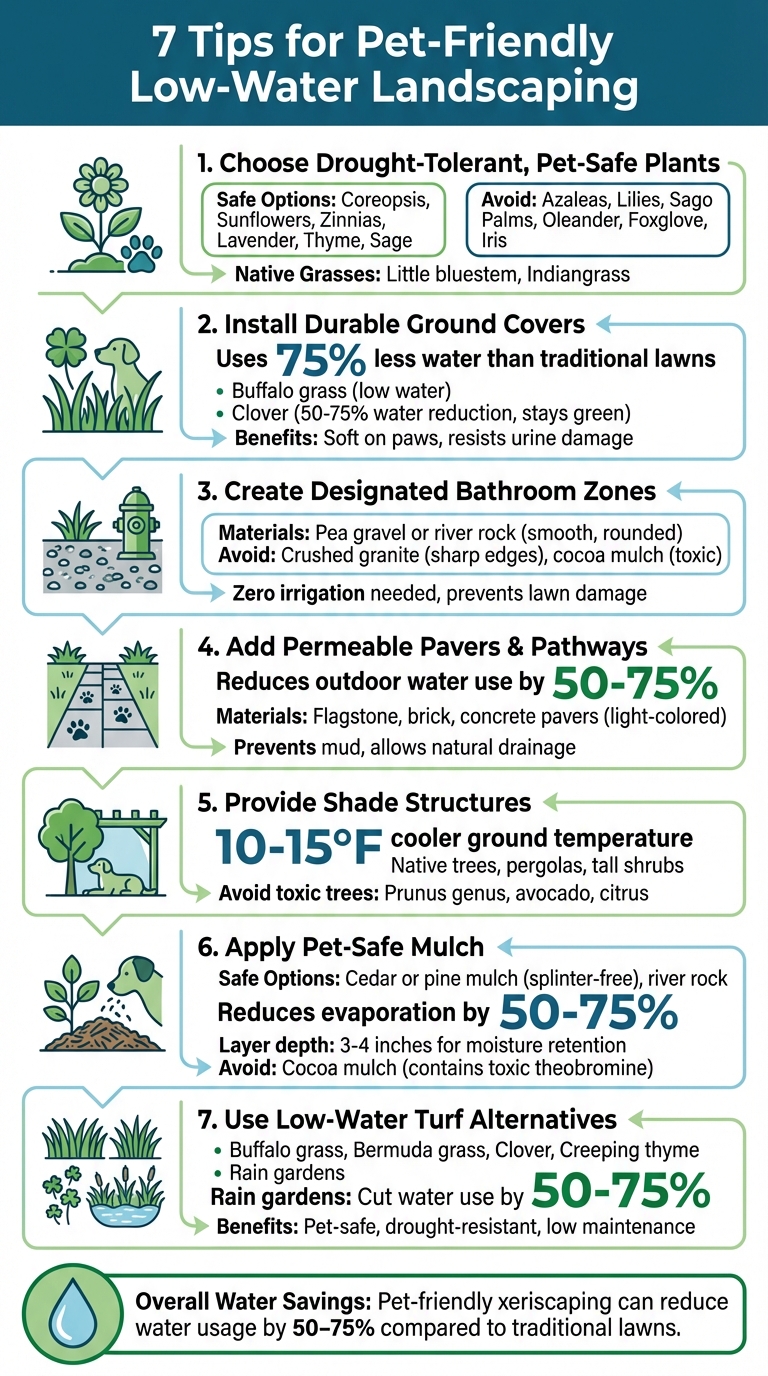
7 Essential Tips for Pet-Friendly Water-Saving Landscaping
1. Choose Drought-Tolerant, Pet-Safe Native Plants
Pet Safety (Non-Toxic and Paw-Friendly)
When planning your garden, it’s crucial to prioritize plants that won’t harm your pets. Check the ASPCA toxic plant list to ensure your selections are safe. Great non-toxic options include Coreopsis, Sunflowers, and Zinnias – all of which are safe for pets and need little water to thrive [8]. For added benefits, consider Lavender, Thyme, and Sage. These not only smell great but also naturally repel fleas [8].
Stay away from plants like Azaleas, Lilies, Sago Palms, Oleander, Foxglove, and Iris, which are common in Maryland landscaping projects but can pose serious risks to your pets’ health [8][6][1].
Also, avoid plants with sharp thorns, spines, or jagged edges near areas where your pets play. Instead, go for hardy, pet-friendly choices such as Camellias, Rosemary, and Snapdragons, which can handle a bit of roughhousing [3].
Drought Tolerance and Low Water Requirements
Pair pet safety with plants that thrive in dry conditions. Native ornamental grasses like little bluestem and Indiangrass are perfect for Maryland’s climate. They require much less water than traditional lawns and are safe for pets to nibble on occasionally [3][9][10].
"Native grasses are both an eco-friendly and pet-friendly option as well, and they have a bonus of requiring less water and maintenance than exotic species." – Shearer Landscaping [2]
If you’re looking for ground cover, try Irish moss, creeping thyme, silver carpet, or snow-in-summer. These plants spread efficiently and don’t need much water [3][1]. For those who want to keep some grass, Bermudagrass and Zoysiagrass are excellent warm-season options. They’re not only durable but also handle pet traffic and the high nitrogen content in dog urine better than typical turf [3][7].
Durability for Pet Traffic
Durability is key when pets are part of the equation. Protect delicate plants by maintaining a three-foot buffer zone along fence lines. For areas with heavy paw traffic, go with tough plants like Buffalo grass (Bouteloua dactyloides), which can handle wear and tear while still requiring less water [8][1].
Avoid delicate plants with feathery or fern-like foliage in high-traffic zones, as they’re easily damaged underfoot. Focus on sturdy, resilient choices to keep your garden looking great while accommodating your pets.
sbb-itb-843f8be
2. Install Durable Ground Covers like Buffalo Grass or Clover
Pet Safety (Non-Toxic and Paw-Friendly)
Buffalo grass and clover are excellent choices for pet-friendly ground covers. They provide a soft, cool surface that’s gentle on paws, unlike hardscaping or artificial turf, which can become dangerously hot during summer. Clover, in particular, offers a cushioned texture that many dogs find comfortable for lounging [11].
Drought Tolerance and Low Water Requirements
If water conservation is a priority, buffalo grass and clover are ideal. Buffalo grass uses up to 75% less water than traditional lawns, while clover stays green even during dry spells, cutting water usage by 50% to 75% [11]. Native to regions like the Great Plains, Southwest, and Southern U.S., buffalo grass thrives in dry climates with minimal irrigation. Options like UC Verde Buffalo Grass and specialized clover-turf mixes are great for maximizing water efficiency [11].
"Clover is the top choice for pet-friendly, water-wise gardens – remaining green, withstanding foot traffic, and offering a soft texture dogs love." – John Anderson, Author, Landscape Unite [11]
Durability for Pet Traffic
These ground covers are tough enough to handle active pets. Buffalo grass and clover recover quickly from wear and tear caused by foot traffic, reducing the risk of bare patches [11]. Clover, in particular, resists damage from the nitrogen in pet urine, which often causes yellow spots in traditional lawns. For best results, try white clover or microclover in high-traffic areas. Adding gravel borders around these patches can help minimize edge wear [11].
Eco-Friendliness and Sustainability
Beyond their practical benefits, these ground covers are great for the environment. Buffalo grass requires very little mowing, while clover naturally enriches the soil by fixing nitrogen. Together, they create a healthier, low-maintenance landscape with a smaller environmental footprint [11].
Amazing PET FRIENDLY No-Mow Lawn Substitute – Ruschia ‘Nana’ (Dwarf Carpet of Stars)
3. Create Designated Pet Bathroom Zones with Gravel or Decomposed Granite
This idea builds on durable ground cover solutions by setting up specific zones for pets, helping to reduce lawn damage.
Pet Safety (Non-Toxic and Paw-Friendly)
When choosing materials, stick to smooth options like pea gravel or river rock to keep your pets comfortable. Crushed granite, with its sharp edges, can harm paws. As the Associated Landscape Contractors of Colorado advises:
"A better choice is rock mulch. We recommend river rock, which is rounded and smooth. Avoid granite, because it has jagged edges that can cut paws and little feet." [5]
Another important note: avoid cocoa bean mulch, as it contains chocolate toxins that are harmful to pets. Gravel, on the other hand, is completely safe [6]. It also helps conserve water while protecting your pet’s paws.
Drought Tolerance and Low Water Requirements
Gravel and decomposed granite don’t need any irrigation, making them perfect for landscapes designed to save water [2]. Traditional grass lawns, by contrast, often require frequent watering to counteract damage caused by dog urine.
Durability for Pet Traffic
Gravel zones are not only water-efficient but also highly durable. Unlike grass, which can suffer from "urine kill" or yellow spots due to the high nitrogen content in dog urine, gravel and decomposed granite are unaffected by this chemical damage [1]. They also stand up better to activities like pacing, digging, and heavy use. Shearer Landscaping highlights this advantage:
"Hardscaping is less vulnerable to digging, staining, and trampling than flower beds and greenery." [2]
Another bonus? These materials drain well, preventing mud and dirt from being tracked indoors. This makes them a practical, low-maintenance option for pet-friendly landscapes.
Eco-Friendliness and Sustainability
Gravel zones eliminate the need for chemical treatments, which can be harmful to pets [10]. Their permeable properties allow liquids to drain naturally into the soil, helping to replenish local water tables instead of causing runoff [3]. To encourage your pet to use these zones, consider adding a marking post in the center. For effective training, walk your pet on a leash to the area until they develop the habit [2][3].
4. Add Permeable Pavers and Hardscaping Pathways
Hardscaping pathways are a smart addition to pet-friendly, drought-resistant landscaping. Instead of trying to redirect your pet’s natural tendencies, design pathways that align with their behavior. For example, if your dog has a favorite route through the yard, consider adding a pathway there. The Associated Landscape Contractors of Colorado offers this practical advice:
"You can’t change your dog, so work with him by simply placing a flagstone path where he likes to walk." [5]
Pet Safety: Choosing Non-Toxic and Paw-Friendly Materials
Protecting your pet’s paws is crucial when designing pathways. Materials like flagstone, brick, and concrete pavers create smooth, flat surfaces that reduce the risk of injury. Opt for light-colored materials, as they reflect heat and help prevent paw burns during hot summer days [3][9]. A simple test: if a surface feels too hot for your bare feet, it’s too hot for your pet [11].
Avoid sharp materials like crushed granite, which can hurt paws [5]. For edging, replace sharp steel borders with rounded metal or poured concrete to eliminate the risk of cuts [5]. These thoughtful choices not only ensure safety but also improve water efficiency in your yard.
Water Conservation Benefits of Permeable Pavers
Permeable pavers are a great way to conserve water while maintaining functionality. These pavers allow rainwater to seep into the soil below, cutting outdoor water use by 50% to 75% compared to conventional landscaping [11]. They don’t require irrigation and, with gravel-filled joints, they encourage natural drainage and reduce runoff [9][10].
Built to Withstand Pet Activity
Hardscaping is tough enough to handle the wear and tear of even the most energetic pets. According to Shearer Landscaping:
"Hardscaping is less vulnerable to digging, staining, and trampling than flower beds and greenery." [2]
Unlike grass, pavers maintain their appearance and functionality over time. They also prevent mud from forming along your pet’s regular paths, keeping your home cleaner [10].
Supporting the Environment
Permeable pathways don’t just benefit your yard – they also help the environment. By allowing water to infiltrate the ground, they minimize runoff and support natural stormwater management, which helps replenish local water tables [11]. For added charm, consider planting creeping thyme between flagstone joints [1][5].
5. Provide Shade with Native Trees and Structures
Creating shaded areas is essential for keeping pets safe from sunburn, heatstroke, and dehydration on hot days [2]. Thoughtfully designed shade structures can lower ground temperatures by 10–15°F, offering relief for sensitive paws and providing cool, comfortable spots for rest [11]. Incorporating shade into your outdoor space adds another layer of comfort and safety, perfectly aligning with a low-water, pet-friendly design.
Pet Safety (Non-Toxic and Paw-Friendly)
When choosing shade trees, it’s important to prioritize your pets’ safety. Avoid planting trees from the Prunus genus, such as apricot, plum, peach, and cherry trees, as they are toxic to both dogs and cats [7]. Other species to steer clear of include avocado and citrus trees (like orange, lemon, lime, and grapefruit), which can also be harmful [7]. Before planting, consult the ASPCA’s list of toxic and non-toxic plants to ensure you’re making safe choices [7].
For shaded areas, opt for smooth, paw-friendly materials like flagstone, brick, or river rock to minimize the risk of injuries [2].
Drought Tolerance and Low Water Requirements
Native trees, adapted to Maryland’s climate, are an excellent choice for providing shade while conserving water [2][7]. Shade structures like pergolas can offer immediate relief, while native trees also support local pollinators and wildlife, making them an environmentally conscious option. If you’re looking for quicker results, tall native shrubs can be a great temporary solution to create cool, shaded spots in your yard [2].
Durability for Pet Traffic
Young trees need protection during their early growth stages, so consider using fencing to shield them from curious pets [1]. For shaded areas, choose durable surfaces like flagstone or concrete, which can withstand heavy pet traffic and help prevent digging or muddy patches [2]. If your pets have a habit of digging, you can create designated shallow, cool zones under the shade to redirect their energy and keep your yard intact [7].
6. Apply Mulch and Soil Amendments for Moisture Retention
Mulch is a game-changer when it comes to conserving water in your yard. It helps reduce evaporation and keeps soil moisture intact, potentially cutting water usage by as much as 50–75% compared to traditional grass lawns [11]. When choosing mulch, prioritize options that are both effective at retaining moisture and safe for your pets.
Pet Safety (Non-Toxic and Paw-Friendly)
If you have pets, avoid cocoa mulch at all costs. Cocoa bean shells contain theobromine, a compound that can dangerously affect dogs, causing heart stimulation and even seizures [5].
Instead, go for cedar or pine mulch, ensuring it’s labeled as splinter-free and free of artificial dyes to protect your pet’s paws [6][2]. For a more permanent, low-maintenance solution, consider rounded river rock. Unlike jagged gravel or granite, river rock is gentle on sensitive paw pads and less likely to cause injuries [5].
Drought Tolerance and Low Water Requirements
To maximize moisture retention, spread a 3–4 inch layer of organic mulch, such as shredded bark. Refresh the layer every 1–2 years to keep it effective [11].
When it comes to fertilizing, liquid fertilizers are a safer choice for pet-friendly yards. Granular fertilizers, especially organic ones like bone meal or blood meal, can attract curious dogs who might eat or lick them off plants. As MD Landscaping explains:
"Some dogs find organic fertilizers like bone meal or blood meal very attractive will eat or lick it off your plants. Be watchful and consider using liquid fertilizers that are absorbed more quickly." [1]
Liquid fertilizers soak into the soil faster, reducing the risk of accidental ingestion by pets. Pairing these with soil amendments can further enhance your landscape’s drought tolerance.
Durability for Pet Traffic
In areas where pets play or move frequently, durability is key. Rounded river rock is a great choice for high-traffic zones since it stays in place even with active pets. While wood mulch benefits soil health and moisture retention, it can scatter during playtime [5].
If digging is an issue, consider using landscape fabric beneath the mulch to discourage it. Secure the fabric with landscape staples and cover it completely to prevent pets from pulling it up [5]. Another clever idea? Create a designated "dig zone" filled with mulch or sand. This can help satisfy your dog’s natural digging instincts without disturbing the rest of your yard [2].
7. Use Low-Water Turf Alternatives and Rain Gardens
Drought Tolerance and Low Water Requirements
If you’re looking to create a pet-friendly yard that conserves water, low-water turf alternatives and rain gardens are excellent options. Buffalo grass (Bouteloua dactyloides) and Bermuda grass (Cynodon dactylon) are both hardy and water-efficient, making them great for areas where pets play. Clover (Trifolium spp.) is another standout – it stays green with very little watering and even helps enrich the soil naturally. For a more fragrant and drought-resistant option, Creeping thyme (Thymus serpyllum) is soft underfoot and can handle both pet traffic and dry conditions.
Rain gardens are another smart addition to your yard. They capture and filter stormwater, cutting outdoor water use by 50-75% compared to traditional lawns. Plus, they’re pet-safe when planted with native, drought-resistant species like Blue Fescue, Yarrow, or Marigolds. These gardens are low-maintenance and help create a thriving ecosystem that benefits local wildlife.
Pet Safety (Non-Toxic and Paw-Friendly)
When designing your yard, always check the ASPCA’s toxic plant list to ensure your landscaping is safe for pets. While options like clover and creeping thyme are pet-friendly, some common plants, such as Foxglove and Iris, can be harmful if ingested. In rain gardens, avoid letting water pool, as standing water can breed harmful bacteria and attract mosquitoes, which can pose health risks to pets. Make sure your rain garden has proper drainage and gently sloped edges so pets can easily get out if they wander in.
For hardscaping, smooth, rounded river rocks are a better choice than sharp granite, which can injure paw pads. Artificial turf might seem like a convenient option, but it can get dangerously hot – reaching up to 200°F on a 98°F day – posing a burn risk for your pet’s paws. Natural alternatives like clover or native ground covers are not only safer but also more comfortable for pets.
Durability for Pet Traffic
If your dog has created "paw paths" in your yard, you can extend hardscaping solutions like flagstone paths to these areas. This prevents muddy patches and allows low-water ground covers like Silver Carpet (Dymondia margaretae) or woolly thyme to grow between the stones. To protect the edges of your turf alternatives from wear and tear, consider framing them with gravel or hardscape borders.
Be mindful of watering schedules – avoid watering turf alternatives right before your pets use them. Wet soil compacts easily and can quickly turn into a muddy mess under active paws. For areas prone to urine damage, clover is a resilient choice that resists yellow burn spots, keeping your yard looking fresh.
Eco-Friendliness and Sustainability
Switching to native grasses and ground covers not only reduces water usage but also minimizes maintenance, making them a smart choice for environmentally conscious pet owners. Rain gardens naturally manage stormwater, keeping pollutants out of local waterways and supporting beneficial insects and pollinators. Dr. Amy Attas, DVM, from City Pets, highlights the environmental impact of traditional lawns:
"Typically, we landscape around our homes with grass, but environmentally, it’s a very poor choice." [3]
Pro Landscapes MD Expertise
Pro Landscapes MD specializes in designing pet-friendly, water-efficient landscapes throughout central Maryland. Their work blends native plant choices with thoughtful hardscaping to create outdoor spaces that are safe for pets and environmentally conscious.
By focusing on proven low-water landscaping techniques, Pro Landscapes MD customizes each yard with pet safety and efficiency in mind. They carefully select native, drought-resistant plants like Blue Fescue, Yarrow, Catmint, and Rosemary – all non-toxic species that thrive in Maryland’s climate with minimal watering [11][6]. To protect these plants, they often use raised beds – elevated 12 to 18 inches – or decorative barriers to keep curious pets from disturbing roots [11][6][2]. For ground cover, they swap out traditional turf for water-saving options like Buffalo Grass, which uses 75% less water, or Clover, which stays lush with little irrigation and provides a soft surface for pets [11].
Their hardscaping expertise includes permeable pavers, which create durable, pet-safe pathways with built-in natural drainage. These pavers are made from light-colored, heat-reflecting materials with smooth, rounded edges to reduce the risk of paw injuries. Beneath the surface, a compacted crushed rock base acts as a drainage system, efficiently directing liquid waste away [12].
For additional pet comfort, Pro Landscapes MD incorporates dry riverbeds made with smooth, rounded river rocks. These features not only protect sensitive paw pads but also prevent standing water, reducing the risk of bacteria and mosquito breeding. At the same time, they help manage stormwater runoff common in Maryland [2][6]. Potty zones, made from gently sloping pea gravel, offer easy cleanup and limit nitrogen damage to nearby plants [11][1]. This approach combines safety, functionality, and durability in every pet-friendly design.
Homeowners in areas like Ellicott City, Columbia, Bethesda, and Towson have praised these strategies for creating outdoor spaces that are both pet-friendly and water-efficient year-round. By integrating native plants, smart hardscaping, and effective drainage solutions, Pro Landscapes MD delivers practical and thoughtful designs tailored to pets and their owners alike.
Conclusion
Designing a pet-friendly, drought-tolerant yard involves balancing your pet’s needs with smart water-saving practices. By selecting non-toxic, native plants like Blue Fescue and Rosemary, adding durable ground covers such as Buffalo Grass or Clover, and setting up specific zones for digging and bathroom use, you can safeguard both your landscaping and your pet’s well-being. Features like permeable pavers, shade structures, and moisture-retaining mulch further enhance the yard’s functionality and comfort.
These strategies are not just practical but highly effective. For instance, pet-friendly xeriscaping can reduce water usage by 50–75%. Buffalo Grass, a standout option, uses up to 75% less water while withstanding heavy pet activity [11]. The result? A yard that conserves water while accommodating your pet’s natural behavior.
As RYAN Lawn & Tree puts it:
"Finding good landscaping ideas for pets means working with the animal’s instincts rather than against them." [4]
Start by observing your pet’s habits and create pathways or turf alternatives that suit their patterns. Always cross-check plant safety using the ASPCA database, and steer clear of cocoa mulch, which contains theobromine – a substance toxic to dogs [11].
For homeowners in central Maryland, these ideas can become a reality with the help of Pro Landscapes MD. Serving areas like Ellicott City and Bethesda, they specialize in blending native plant selections, strategic hardscaping, and efficient drainage systems. Their tailored solutions ensure your yard remains pet-safe, water-conscious, and easy to maintain throughout the year.
FAQs
How do I pick pet-safe plants for my yard?
When selecting plants for your yard, it’s crucial to avoid varieties that could harm your pets. Toxic plants like oleander, azalea, foxglove, sago palm, and lilies can pose serious risks – even in small amounts. Instead, choose safer, non-toxic options that are also drought-tolerant. Good choices include lavender, thyme, sage, snapdragons, zinnias, succulents, and ornamental grasses.
To ensure your furry friends stay safe, consult trusted resources like the ASPCA’s list of toxic plants. You can also consider incorporating native or widely recognized non-toxic plants to create a pet-friendly outdoor space.
What’s the best low-water ground cover for dogs?
Blue oat grass is a fantastic option for dog owners looking to create a low-maintenance yard. This plant doesn’t just add visual appeal with its silvery-blue foliage; it’s also drought-tolerant and safe for pets. If you’re aiming for a yard that’s both durable and dog-friendly, this could be the perfect fit.
How do I stop dog urine from killing my lawn?
To keep your lawn safe from dog urine damage, consider planting grasses that can handle both drought and canine activity, such as fescue, Bermuda, or zoysia. If you’re open to alternatives, ground covers like clover or even artificial turf can help minimize harm.
Another helpful tip is to water the affected spots regularly – this dilutes the urine and reduces its impact. You can also set up specific potty zones for your dog to protect the rest of your yard. And don’t forget: keeping your dog well-hydrated can make their urine less harsh on the grass.
Chat with Us