









- bhavya gada
- No Comments
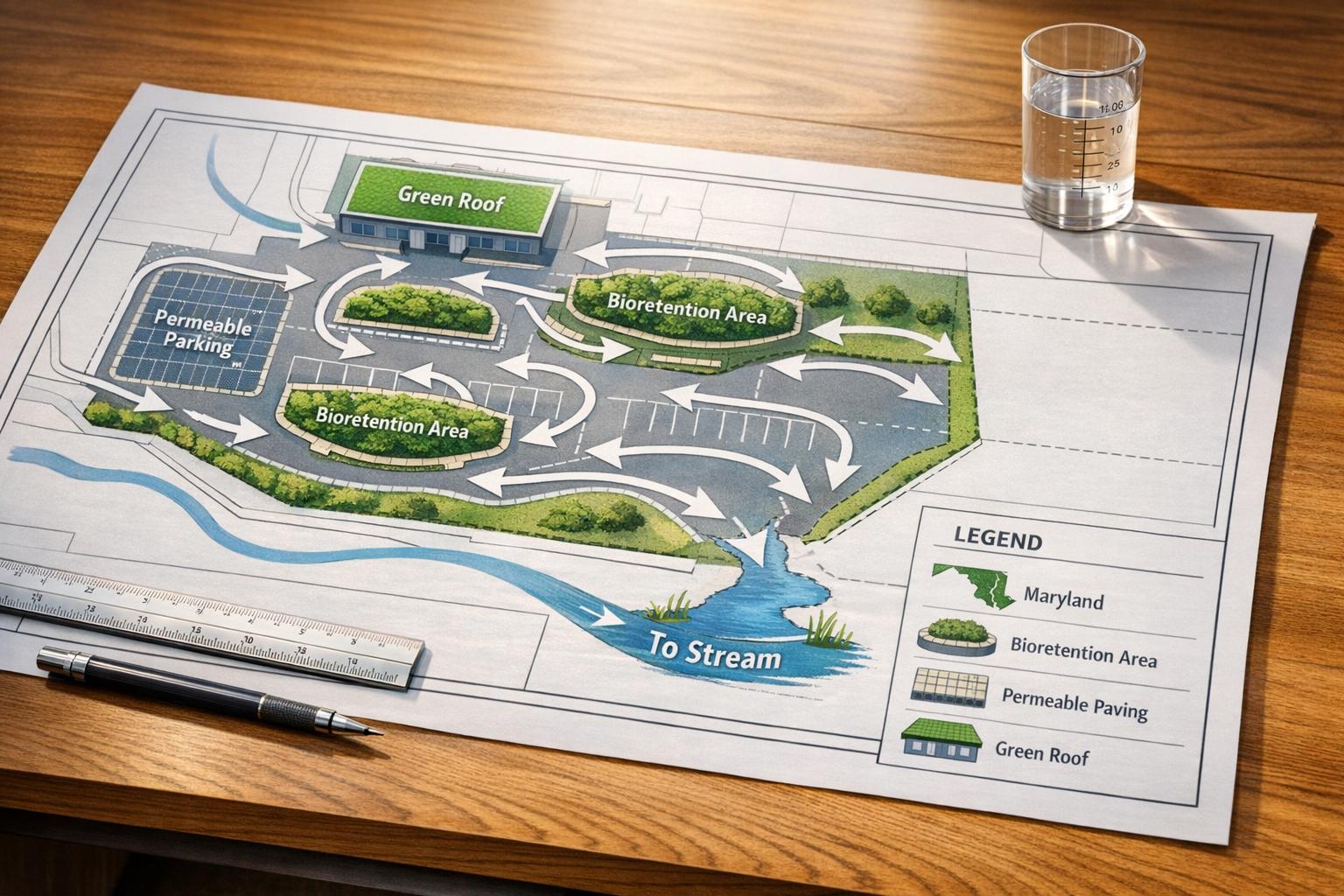
Maryland’s stormwater rules focus on managing water runoff from developed areas to prevent flooding, erosion, and pollution. Overseen by the Maryland Department of the Environment (MDE), these regulations require developers and property owners to follow specific guidelines for construction and landscaping projects. Key highlights include:
- Stormwater Modeling: Predicts water flow changes before and after development to design systems that manage runoff effectively.
- Environmental Site Design (ESD): Prioritizes natural water absorption methods like rain gardens and permeable pavements over large, centralized structures.
- NOAA Atlas 14 Data: Requires accurate, location-specific rainfall data for hydrologic calculations.
- Downstream Impact Analysis: Ensures changes in runoff won’t harm nearby waterways, dams, or infrastructure.
- Compliance Steps: Local governments must align ordinances with state regulations, and projects need approved stormwater management plans before permits are issued.
These rules help balance development with protecting natural water systems. For complex projects, professional expertise can simplify compliance and ensure effective water management.
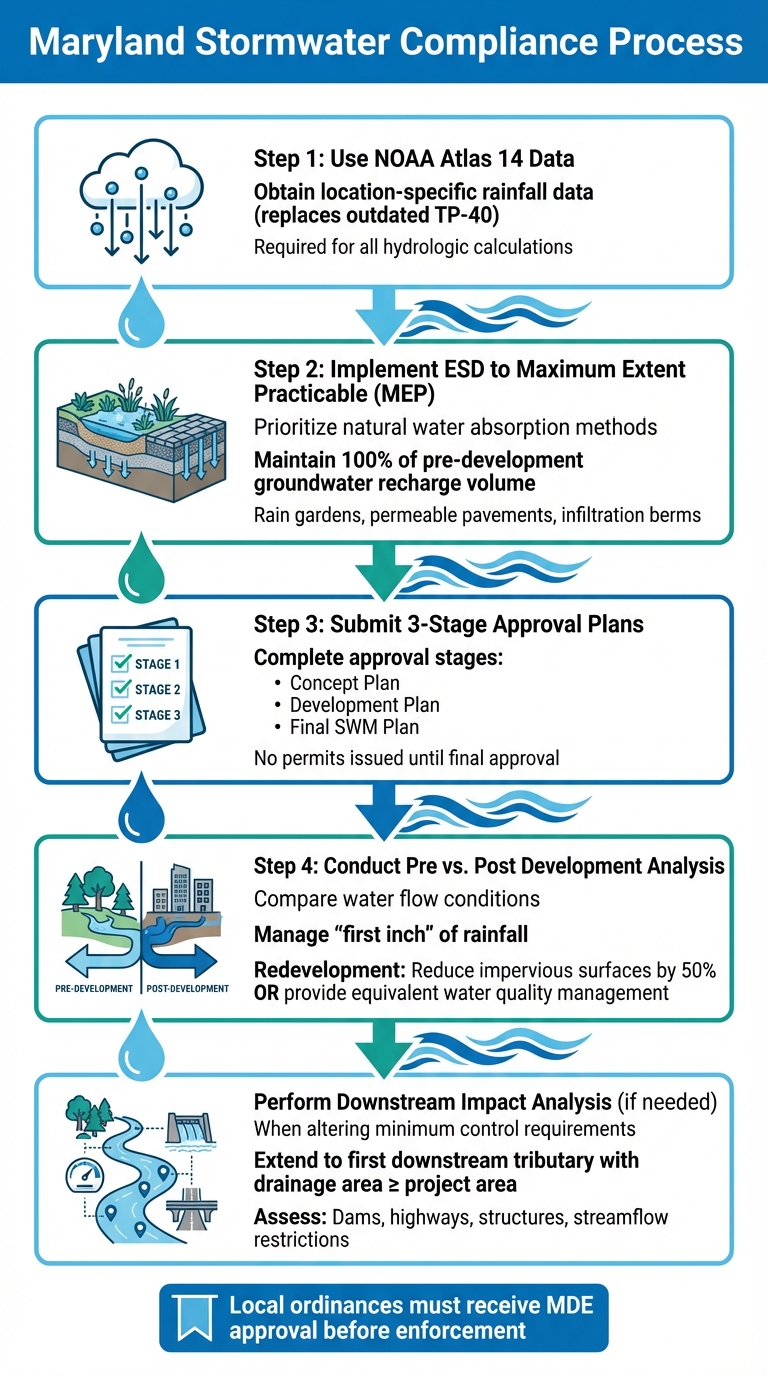
Maryland Stormwater Compliance: 5-Step Process from ESD Requirements to Approval
MDE Stormwater Regulations and Design Manual Updates Listening Session – October 28 (2025)
Core Requirements for Stormwater Modeling in Maryland
Maryland’s approach to stormwater modeling emphasizes precise rainfall data, decentralized design practices, and safeguarding waterways. These elements form the foundation of the state’s regulations, connecting technical methods with legal standards.
NOAA Atlas 14 Rainfall Data Requirements
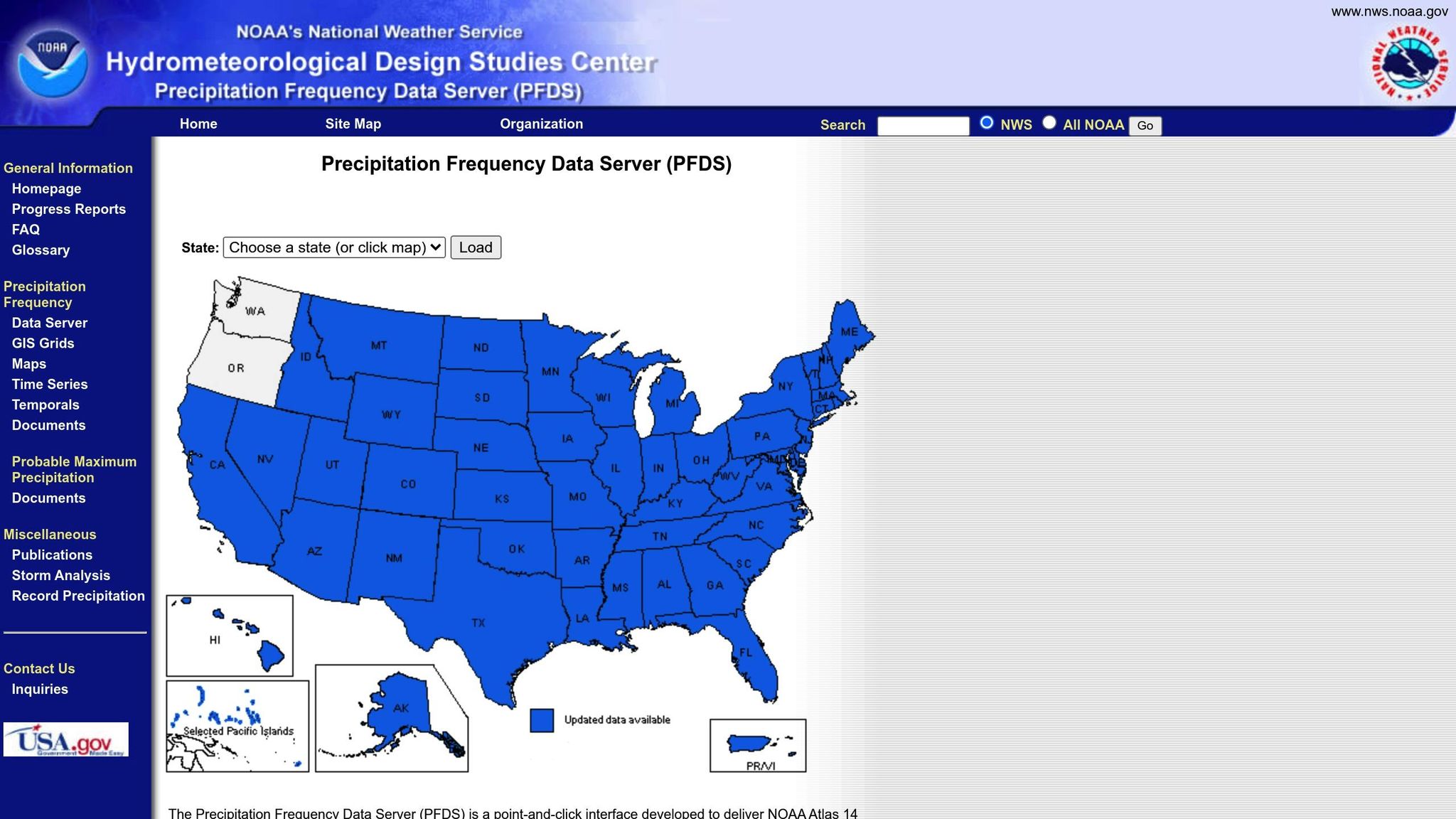
For hydrologic and hydraulic modeling, Maryland mandates the use of NOAA Atlas 14 precipitation frequency estimates. This dataset has replaced outdated resources like TP-40, offering more accurate, location-specific rainfall data. Since rainfall depths vary across counties, engineers must ensure they use data tailored to the exact geographic coordinates of their project.
Environmental Site Design (ESD) Standards
State law requires Environmental Site Design (ESD) to the Maximum Extent Practicable (MEP) for all new and redevelopment projects [3]. This method prioritizes decentralized systems that imitate natural water absorption over large, centralized structures like ponds. The approval process includes three stages – Concept, Development, and Final Stormwater Management (SWM) Plans [3]. Redevelopment projects must either reduce impervious surfaces by 50% or provide equivalent water quality management [3]. Calculations focus on managing the "first inch" of rainfall, as facilities are designed to handle and treat this initial runoff volume [3]. Importantly, no grading or building permits are issued until final SWM plans receive formal approval [3].
Channel Protection and Flood Control Standards
Regulations also require developers to address channel protection and flood control. According to state guidelines:
Each ordinance shall require that a developer demonstrate that ESD has been implemented to the MEP and, only where absolutely necessary, is a structural BMP used in developing a stormwater management plan [4].
When ESD alone cannot meet control needs, structural solutions like ponds, wetlands, or open channels are permitted [4]. However, altering minimum control requirements triggers a downstream impact analysis. This analysis must extend to the first downstream tributary with a drainage area equal to or larger than the project’s contributing area [4]. It should include hydrologic and hydraulic studies to assess how changes in runoff timing might affect dams, highways, or natural streamflow bottlenecks [4].
Hydrologic and Hydraulic Modeling Methods
These methods, grounded in established stormwater standards, outline how engineers must analyze hydrology and hydraulics. Using guidelines from the Maryland Stormwater Design Manual, engineers simulate water flow both before and after development to ensure that projects don’t lead to increased flooding or erosion downstream [1][2]. The process requires modeling for multiple storm events and proving compliance with specific design criteria. This framework sets the stage for the detailed requirements covered in the following sections.
Runoff Conveyance Requirements
Runoff from impervious surfaces – like roofs, driveways, and parking lots – needs to be directed toward approved stormwater management systems. These systems must demonstrate effective water quality treatment before any discharge [1]. Designs must account for varying storm intensities and use NOAA Atlas 14 rainfall data for accurate calculations.
Pre-Development vs. Post-Development Analysis
Comparing water flow conditions before and after construction is a key step in ensuring compliance. Developers are required to submit detailed calculations showing the differences in flow rates and volumes under pre- and post-construction conditions. A central requirement is to maintain 100% of the average annual pre-development groundwater recharge volume [4].
This analysis doesn’t stop at the property line. When a project alters runoff timing, engineers must evaluate its downstream effects, extending to the first tributary with a drainage area equal to or larger than the project site. These calculations must also consider how changes in runoff timing might impact dams, highways, structures, or areas with restricted streamflow [4].
The comparative modeling process helps determine whether Environmental Site Design (ESD) practices alone can meet the required standards or if additional structural measures are needed. Engineers must assess how peak flow rates, runoff volumes, and timing changes could affect existing infrastructure or natural waterways. If the analysis identifies risks like potential flooding or channel erosion downstream, regulatory agencies may mandate further engineered solutions, even if standard ESD practices are in place.
sbb-itb-843f8be
Compliance Deadlines and Implementation Steps
Maryland enforces detailed stormwater management procedures that require collaboration between local governments and the Maryland Department of the Environment (MDE). This partnership ensures that enforcement is consistent across all jurisdictions.
MDE Approval Process for Local Ordinances
Every county and municipality in Maryland must align their ordinances with state regulations by incorporating Environmental Site Design (ESD) techniques and structural stormwater management measures [4]. Local governments are tasked with revising their zoning and public works codes to remove barriers to ESD implementation. These changes must receive MDE approval before they can be enforced. To ensure compliance, it’s important to verify that local ordinances are up-to-date and consult local planning departments for MDE-approved requirements. Additionally, the approving agency can mandate an engineered stormwater management plan if current ESD standards are not met or if there are concerns about downstream flooding. After ordinances are updated, ongoing documentation and regular reviews are necessary to maintain compliance.
Ongoing Compliance and Modification Procedures
All implemented ESD practices must be documented, and any proposed changes require agency approval [4]. If developers wish to adjust minimum control requirements or design criteria, they must submit a downstream impact analysis. This analysis should include hydrologic and hydraulic calculations to evaluate potential effects on structures, dams, highways, or natural areas with limited streamflow. Keep in mind that the review of such modifications may extend project timelines.
Stormwater Management for Landscaping and Grading Projects
When planning landscaping and grading projects, stormwater modeling needs to be part of the design process from the start. Altering your property’s topography can have a big impact on how water moves across the land. In Maryland, regulations require proof that your project won’t increase peak stormwater discharge or cause drainage problems for neighboring properties. This is especially important for landscaping projects, where changes to the land’s shape directly affect water flow.
Designing Landscapes for Water Management
The Maryland Stormwater Design Manual offers detailed guidance on how landscaping features can meet Water Quality Volume (WQv) and Recharge Volume (REv) requirements [1]. Maryland’s approach focuses on Environmental Site Design (ESD), which prioritizes landscaping techniques that mimic natural water absorption instead of relying on large, artificial structures.
For instance, French drains use perforated pipes and gravel to redirect groundwater. These systems must be properly sized to handle rainfall amounts specified by local rules [1]. Similarly, dry riverbeds are effective for managing heavy surface runoff during storms, helping to reduce soil erosion. Regrading and leveling yards can also direct water flow away from buildings, minimizing flooding risks.
These methods align with Maryland’s stormwater management standards. A treatment train approach – combining features like rain gardens, infiltration berms, grass swales, and permeable pavements – can optimize stormwater credits while meeting predevelopment recharge goals [1]. Maryland emphasizes non-structural solutions aimed at maintaining 100% of the average annual predevelopment groundwater recharge volume for a site [4]. By incorporating these strategies, property owners can meet state requirements while enhancing water management.
Pro Landscapes MD‘s Stormwater Management Services

Precision is key when implementing these stormwater solutions, which is why professional expertise is invaluable. Pro Landscapes MD specializes in drainage and stormwater management services to help Maryland property owners stay compliant with state regulations while tackling water-related issues effectively. Their offerings include French drain installation, dry riverbed construction, grading and land leveling, yard repair, and stormwater management planning. They serve clients across Howard County, Montgomery County, Carroll County, Frederick County, Prince George’s County, and Baltimore County.
Conclusion
Maryland’s stormwater modeling rules emphasize the use of Environmental Site Design (ESD) to the Maximum Extent Practicable (MEP) before turning to structural solutions. This means natural strategies – like rain gardens, permeable pavements, and landscape infiltration – take precedence over traditional stormwater ponds.
To comply, projects must preserve 100% of the average annual predevelopment groundwater recharge volume. Any modifications require a detailed hydrologic and hydraulic analysis to assess downstream effects [4]. The Maryland Stormwater Design Manual serves as the go-to resource, and the Maryland Department of the Environment notes that only the original English version of the manual is considered official [1].
For landscaping and grading projects, compliance starts in the design phase. Local regulations need to support ESD practices, and certain projects, like yard or grading work, may require engineered stormwater management reviews if hydrologic conditions demand it [4].
Given the complexity of these requirements, working with seasoned professionals can make all the difference. Pro Landscapes MD specializes in central Maryland’s drainage and stormwater management needs, offering services such as French drain installation, dry riverbed construction, grading, and stormwater management planning – all tailored to meet Maryland’s strict ESD standards. Partnering with experts ensures your outdoor spaces are not only functional but also meet regulatory demands.
Focus on natural drainage solutions and expert guidance to create outdoor spaces that align with Maryland’s stormwater management framework.
FAQs
What is Environmental Site Design (ESD) and why is it important for stormwater management in Maryland?
Environmental Site Design (ESD) is Maryland’s approach to managing stormwater in a way that mimics natural water flow. The goal? To reduce the environmental impact of development by using small-scale, nature-friendly practices. These include conserving natural features, cutting down on impervious surfaces, slowing stormwater runoff, and improving water infiltration into the ground. By doing this, ESD helps protect local waterways, improve water quality, and reduce the risk of flooding.
Maryland emphasizes ESD to the Maximum Extent Practicable (MEP), meaning developers are required to prioritize nonstructural methods – like preserving natural landscapes and managing runoff – before considering larger, structural solutions. This focus on sustainable practices not only enhances stormwater control but also supports groundwater recharge and preserves natural drainage systems. ESD stands as a key part of Maryland’s efforts to safeguard its environment.
How does NOAA Atlas 14 data enhance the accuracy of stormwater modeling in Maryland?
NOAA Atlas 14 data improves the precision of stormwater modeling in Maryland by offering detailed, current rainfall frequency estimates specific to various regions. This information plays a key role in designing stormwater management systems capable of managing both current and future rainfall patterns effectively.
With this data, engineers and planners can meet Maryland’s stormwater regulations while developing systems that better safeguard communities and infrastructure from flooding and erosion. Accurate modeling also supports sustainable growth and strengthens environmental resilience over time.
What steps do developers need to take to comply with Maryland’s stormwater management regulations?
To meet Maryland’s stormwater management rules, developers need to align with the Maryland Stormwater Design Manual. Central to this is the use of Environmental Site Design (ESD) practices to the maximum extent practicable (MEP). These practices focus on protecting natural features, cutting down on impervious surfaces, and managing runoff with nonstructural methods.
Key actions include integrating stormwater measures that handle water quality, support groundwater recharge, and manage flood risks. Examples of such practices are disconnecting rooftop runoff, using rainwater harvesting systems, and incorporating permeable surfaces into site designs. All these measures must adhere to the state’s water management sizing criteria and receive approval from local authorities.
By implementing these strategies and submitting thorough plans for review, developers can reduce their project’s environmental footprint while safeguarding Maryland’s water resources.
Chat with Us