









- bhavya gada
- No Comments
Microhabitats are small, natural spaces that support wildlife by providing food, shelter, and breeding areas. Even a small yard or balcony can transform into a haven for birds, insects, and small mammals. Here’s a quick look at seven ways to create wildlife-friendly spaces:
- Layered Vegetation: Mimic forest layers with ground covers, shrubs, and trees to attract diverse species.
- Native Wildflower Patches: Support pollinators and birds with native flowers, offering food and shelter.
- Log Piles and Dead Wood: Provide a home for insects, amphibians, and small mammals.
- Leaf Litter: Leave fallen leaves in specific areas to create habitats for insects and toads.
- Shrubland Openings: Mix open spaces with shrubs to attract birds and small mammals.
- Waterside Buffers: Plant near water features to support amphibians, reptiles, and birds.
- Nesting Structures: Add nest boxes, trimmed plant stems, or brush piles for cavity-nesting wildlife.
These features not only invite wildlife but also improve soil health, support pollination, and reduce yard maintenance. Start small – leave a log, plant native flowers, or let leaves accumulate – and watch your outdoor space come alive with nature.
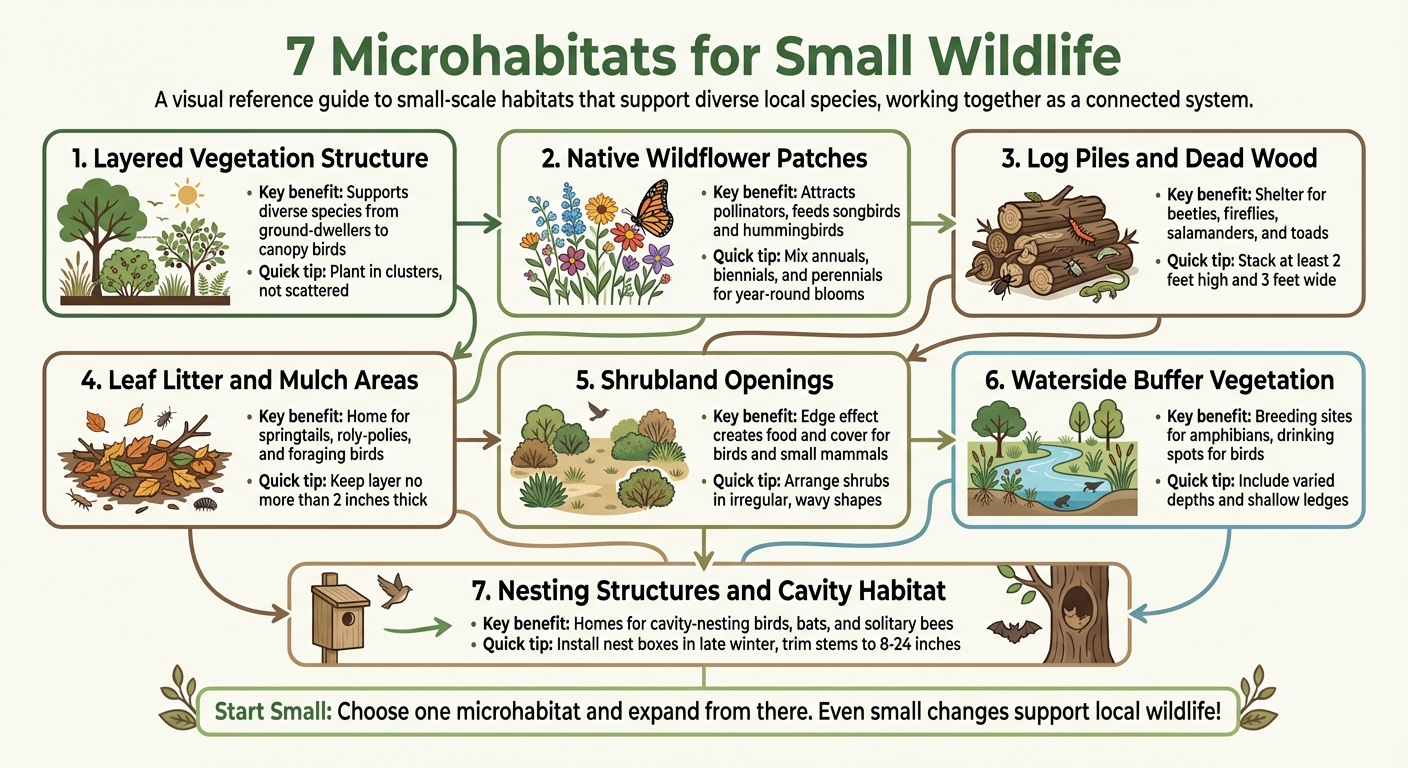
7 Microhabitats for Small Wildlife: Quick Reference Guide
Wild Things – Tutorial 12 – Microhabitats
1. Layered Vegetation Structure
Layered vegetation takes inspiration from nature, replicating the way plants grow in forests – from ground covers to towering trees. This method creates vertical zones, each catering to different wildlife. For example, ground-dwelling species like Eastern towhees thrive in the lower layers, while birds such as Red-eyed vireos and scarlet tanagers prefer the upper canopy [5].
Wildlife Benefits
One of the biggest perks of layered vegetation is how it supports a wide range of species. Northern cardinals and catbirds often nest in shrubs, while woodpeckers carve out homes in dead trees, also known as snags. These layers also form "edge" environments, where different vegetation zones meet. These edges are hotspots for wildlife since they offer food and cover in close proximity [5]. And because insects are a primary food source for many birds, reptiles, and amphibians, the layered approach indirectly boosts biodiversity by increasing insect populations.
How to Get Started
Creating a layered structure is simpler than it sounds. Start with stepwise planting: begin with ground covers and wildflowers, then add shrubs, followed by smaller trees, and finish with larger ones. Planting in clusters or "islands" instead of scattering individual plants helps reduce open spaces, making it safer for small animals to move around [5].
Keeping It Low Maintenance
Once established, native plants need far less water and fertilizer compared to traditional lawns [5]. To maintain habitat quality, keep invasive species in check by removing them regularly. If you have dead trees, consider trimming them to around 15 feet instead of cutting them down entirely. This keeps them safe while still providing valuable habitat for wildlife [5].
2. Native Wildflower Patches
Adding native wildflower patches to your landscape does more than just brighten up your yard – it creates a thriving hub for wildlife. These patches attract bees, butterflies, moths, and other insects, while also feeding songbirds and hummingbirds. Plus, they provide a home for helpful predators like ladybugs and spiders. Together, these visitors form the backbone of a balanced food web.
Wildlife Benefits
Wildflower patches are a key player in supporting biodiversity. As Mark E. Hostetler from the University of Florida/IFAS puts it:
"If you have good insect diversity, you have good wildlife diversity."
The insects drawn to wildflowers act as a food source for birds, reptiles, and amphibians. Meanwhile, the dense vegetation offers shelter for small mammals like chipmunks and creates hiding spots for frogs and toads near damp areas. Including specific host plants – such as milkweed for monarch caterpillars or dill for swallowtails – ensures butterflies can complete their life cycles right in your yard.
Ease of Implementation
Transform unused corners of your lawn into wildflower patches by selecting native plants that match your soil’s moisture levels and sunlight conditions. Use a mix of annuals, biennials, and perennials to keep blooms going throughout the growing season. Adding a shallow puddling station filled with moist sand gives butterflies a place to drink and gather minerals. Even small patches can make a difference, as Matthew Shepherd from the Xerces Society explains:
"Many bees, butterflies, beetles, and other invertebrates can take advantage of smaller spaces."
Maintenance Requirements
Once your wildflower patch is established, it requires little upkeep. These plants typically need minimal watering and no fertilizers. Skip the pesticides, and let stems stand through winter to create nesting spots for solitary bees. In spring, trim stems to a height of 8–24 inches to maintain the habitat while keeping it tidy.
3. Log Piles and Dead Wood
Logs and dead wood might look messy, but they’re a treasure trove of life, creating an entire ecosystem in your backyard. Matthew Shepherd from the Xerces Society sums it up perfectly:
"Bringing wildlife back into our neighborhoods can be as easy as just tidying up less."
Wildlife Benefits
Dead wood is a magnet for wildlife. It provides shelter for wood-eating beetles, ground beetles, ants, spiders, and isopods (roly-polies). Fireflies use log piles to rest during the day, and mourning cloak butterflies hibernate in them through the winter. As Hinterland Who’s Who describes:
"A decaying log is a paradise for toads, moles, shrews, thanks to all the bugs they find there."
The damp environment underneath logs is perfect for salamanders and toads to lay their eggs. Snakes, such as black rat snakes and garter snakes, use these areas for hunting and nesting. Birds also benefit – woodpeckers, chickadees, nuthatches, and wrens use standing dead trees (snags) for nesting and roosting. Even small mammals like voles, shrews, and squirrels find refuge in these spaces, hiding from predators.
How to Create a Log Pile
Building a log pile is simple and requires little effort. Stack branches with the largest ones at the bottom to create gaps and crevices. Ideally, aim for a pile that’s at least 2 feet high and 3 feet wide. You can also lay a log horizontally, burying one end slightly to create moist areas that attract ground beetles. Place the pile in a sheltered spot – under trees, by fences, or near buildings – to make wildlife feel safe. Just be sure to keep it away from your house to avoid inviting pests indoors. This approach blends easily with other natural landscaping features, enhancing your yard’s biodiversity.
Minimal Maintenance
Log piles are incredibly low-maintenance. As the wood breaks down, it enriches the soil and naturally settles. You can add more branches on top or start a new pile elsewhere. If a dead tree becomes a safety concern, consider cutting it down to about 15 feet instead of removing it entirely. Mark E. Hostetler from the University of Florida explains:
"While nest boxes supply homes for many species, some woodpeckers will only use cavities they excavated themselves, thus, the need for snags."
If you’re bringing logs from other locations, check local regulations to avoid spreading invasive species or diseases. This small effort can make a big difference in supporting local wildlife.
4. Leaf Litter and Mulch Areas
Managing leaf litter thoughtfully can create a thriving environment for local wildlife. Instead of bagging and discarding fallen leaves, let them accumulate in specific areas to form vital microhabitats.
Wildlife Benefits
Leaf litter is more than just debris – it’s home to a bustling underground ecosystem. Creatures like springtails and roly-polies (surprisingly related to lobsters and shrimp) break down leaves, recycling nutrients that enrich the soil. Matthew Shepherd from the Xerces Society highlights their importance:
"Some, like springtails and roly-polies, happily feed on leaves and recycle those nutrients back into the soil."
Above ground, Eastern towhees and brown thrashers forage through leaf piles for insects, worms, and snails, while toads take advantage of the damp crevices for shelter. Luna moth caterpillars even use the leaves to spin silk shelters that last through winter. This natural covering also acts as insulation, helping insects survive harsh, freezing temperatures.
Ease of Implementation
Creating a leaf litter area is simple and budget-friendly – there’s no cost involved. Just gather leaves and place them strategically. Ideal spots include the base of fences, under shrubs, or tucked into a corner of your yard. You can also spread them over flower beds or vegetable gardens as a no-cost alternative to commercial mulches. Keep the layer thin – no more than 2 inches thick – to avoid damaging grass. However, steer clear of using leaves near drains to prevent clogs or in areas prone to plant diseases. This approach not only supports wildlife but also enhances other microhabitats in your yard.
Maintenance Requirements
One of the best things about leaf litter is its low-maintenance nature. Skip the raking, blowing, or shredding, as these activities can harm overwintering insect eggs and pupae. Wait to tidy up garden beds until spring temperatures consistently hit the 50s°F. Over time, the leaves will naturally decompose, enriching the soil and improving moisture retention – reducing the need for chemical fertilizers. It’s an effortless way to nurture both your garden and the wildlife that depends on it.
sbb-itb-843f8be
5. Shrubland Openings
Shrubland openings are those fascinating transition zones where open spaces meet dense woody vegetation. These areas act as wildlife hotspots, thanks to what ecologists call the "edge effect." This phenomenon occurs when different habitat types meet, offering food and protective cover in close proximity. Essentially, these zones become self-sustaining resources for a variety of wildlife. Let’s dive into how this structure benefits local species.
Wildlife Benefits
The magic of shrubland openings lies in their layered, vertical structure. Picture a natural staircase: low grasses and wildflowers at the base, mid-height shrubs in the middle, and tall trees at the top. This setup creates diverse habitats that cater to many species. Birds like eastern towhees, brown thrashers, and gray catbirds forage on the ground near protective cover, while others, such as northern cardinals and indigo buntings, nest in the mid-level shrubs. The sunny spots encourage the growth of wildflowers and legumes, which attract protein-packed insects – critical for birds feeding their young. Beyond birds, animals like rabbits, voles, and box turtles benefit too, finding high-quality forage close to safe hiding spots.
Ease of Implementation
Creating shrubland openings doesn’t require a complete yard makeover. Even small changes can make a big difference. Mark E. Hostetler, a Professor and Extension Wildlife Specialist at the University of Florida, provides a simple yet impactful tip:
"By simply not mowing, you will be creating shelter and food for many animal species. Over time, unmowed areas contain more plant species than mowed areas."
Start small by turning unused parts of your yard into shrub clusters. Opt for native plants like winterberry, viburnums, spicebush, and serviceberry, arranging them in irregular, wavy shapes instead of straight lines to maximize the edge habitat. Connect these shrub "islands" by placing them close together, minimizing the open ground that small animals need to cross. For an extra touch, add a small patch of moist sand to the area. Male butterflies will use this "puddling" spot to gather essential minerals.
Maintenance Requirements
Native shrubs are low-maintenance, requiring little watering and no fertilizers. However, managing succession is crucial to keep these areas functional. Without occasional pruning or thinning, shrubland openings can evolve into dense forests, losing the open qualities that make them valuable. Allow adjacent unmowed areas to grow naturally, fostering a mix of plants that attract insects and produce seeds. One final tip: keep bird feeders at least 15 feet from shrubbery to reduce the risk of predators targeting feeding birds.
6. Waterside Buffer Vegetation
Vegetation along the edges of water bodies creates a thriving microhabitat. This unique transition zone between land and water supports a variety of species, including amphibians, birds, and pollinators. Robert A. Pierce II, an Associate Extension Professor and State Fisheries and Wildlife Specialist at the University of Missouri, highlights its importance:
"Water is an essential component of any wildlife habitat. A pond ecosystem provides a habitat for an array of wildlife that would not otherwise be there and improves conditions for many terrestrial species."
These zones foster dynamic interactions between aquatic and terrestrial life.
Wildlife Benefits
Waterside buffers are hotspots for wildlife activity, offering both water access and protective cover in close proximity. Frogs, toads, and salamanders use these areas for breeding and laying eggs, with their tadpoles developing in the shallow, plant-filled edges. Birds such as herons and kingfishers hunt for small fish and crawdads, while songbirds find refuge in the vegetation and use the water for drinking and bathing. Insects like dragonflies, damselflies, and butterflies thrive here, engaging in behaviors like puddling. Bats hunt for insects around the water, raccoons forage in shallow pools, and reptiles like snakes and turtles bask on flat rocks near the shoreline.
Ease of Implementation
Designing a waterside buffer is straightforward and doesn’t require advanced techniques. Include varied depths in your water feature: shallow ledges for aquatic plants, gentle slopes for easy wildlife access, and a deeper section (at least 3 feet) to protect fish during the winter. Plant native wetland species in layers around the water – ground covers near the edge, mid-height shrubs behind them, and taller trees further back – to create a "stair-step" structure. This setup offers nesting and foraging opportunities for diverse species. Add rock piles of different sizes at the water’s edge for reptiles and amphibians to bask, and place a shallow pan filled with sand, soil, and water in a sunny spot to attract butterflies. This layered approach not only enhances habitat value but also makes ongoing care simpler.
Maintenance Requirements
Native wetland plants are low-maintenance, needing little more than natural rainfall and no chemical fertilizers or pesticides, which helps prevent runoff. The main task is managing mosquito populations in still water. A small pump, fountain, or waterfall can keep the water circulating and deter mosquito larvae. Regularly cleaning birdbaths and shallow water features with hot water and soap (avoiding chlorine on wood or cement) helps prevent the spread of avian diseases. Leaving sections near the water unmowed provides additional cover for wildlife while reducing upkeep.
Ecological Impact
Waterside buffers play a key role in connecting fragmented habitats, filtering water, and supporting a wide range of species. Using native plants eliminates the need for chemical treatments, helping to maintain water quality and protect the local ecosystem. These buffers offer breeding sites for amphibians, a mineral source for pollinators, and basking spots for reptiles – all within a compact and productive habitat near the shoreline.
7. Nesting Structures and Cavity Habitat
Creating spaces for wildlife to nest, roost, and raise their young transforms any area into a sanctuary for nature. These structures act as dedicated sites for reproduction and resting, complementing other habitats that primarily offer shelter. In urban and suburban areas, where landscaping often removes natural cavities, these man-made options become crucial [5].
Wildlife Benefits
Cavity-nesting birds benefit greatly from these efforts. Secondary cavity-nesters like bluebirds, chickadees, wrens, owls, and flycatchers depend on existing holes, while primary cavity-nesters, such as woodpeckers, carve out their own [2][5]. Beyond birds, small mammals like bats, flying squirrels, and gray squirrels make use of nest boxes, log piles, and tree cavities for raising their young [2][5].
Insects also thrive in these environments: solitary bees, including leaf-cutter and carpenter bees, nest in hollow plant stems, while beetles and spiders find refuge in crevices within logs or brush piles [1][6]. Reptiles and amphibians, such as garter snakes, black rat snakes, salamanders, and toads, seek moist cavities in rotting logs or rock piles for shelter and egg-laying [2][6]. Research from Columbia, Missouri, highlights that 80% of residential homeowners value wildlife, with 90% actively using their property to connect with nature [2]. With so many benefits, implementing nesting solutions can be both rewarding and straightforward.
Ease of Implementation
Setting up nesting structures doesn’t have to be complicated. For instance, install nest boxes in late winter and remove perches to deter predators and invasive species [2][3]. If a dead tree poses a safety concern, consider having a professional trim it to 15 feet. This creates a "snag" that remains useful for woodpeckers and other cavity users [5].
When building brush piles, stack branches in a cone shape to provide internal perching space, then cover the pile with evergreen boughs for added protection [6]. For bee habitats, trim perennial plant stems to 8–24 inches in spring when temperatures stabilize around 50°F. These trimmed stems become ideal nesting spots for native bees [1]. Once set up, these features require very little maintenance to keep supporting local wildlife.
Maintenance Requirements
To keep these habitats safe and functional, regular upkeep is key. Clean nest boxes and birdbaths every two weeks using a 1:9 bleach solution [3]. As the Virginia Cooperative Extension advises:
"It is extremely important to keep bird feeders, nest boxes, and birdbaths clean. The transmission of disease associated with contaminated bird feeders is a serious problem and can contribute to death among songbirds" [3].
For brush piles, add fresh evergreen boughs or branches occasionally to replace decomposing layers [1][6]. Leave perennial stems intact year-round, as bees may remain inside throughout the year [1]. According to the Xerces Society:
"Compared to artificial options such as bee blocks and bee hotels, natural materials like stems are much healthier options. They allow for nests to be more spread out, and break down naturally with time, helping to control diseases and parasites" [1].
Ecological Impact
Nesting structures play a crucial role in addressing habitat loss caused by urban development. By providing artificial cavities, you can offset the damage caused by invasive species and human activity [5]. These structures create essential breeding spaces for wildlife that might otherwise struggle to reproduce. They also help shield vulnerable species from predators, including domestic and stray cats, which are responsible for significant wildlife losses [5]. Thoughtfully placed nesting options give these creatures a better chance to thrive, even in areas dominated by human activity.
Design Principles for Adding Microhabitats
When creating microhabitats, think about how they can work together as a connected system. A smart approach involves layering vegetation at different heights – ground covers and wildflowers at the base, shrubs in the middle, and tree canopies overhead. This tiered setup provides nesting and feeding opportunities for a variety of species [2][7]. Robert A. Pierce II, an Associate Extension Professor at the University of Missouri, emphasizes:
"Increasing plant diversity, especially with native plants, enhances the potential for attracting a greater number of different wildlife species on your property" [2].
Native plants are the backbone of wildlife-friendly landscapes. They thrive in local conditions with minimal need for water, fertilizers, or pesticides. Plus, they supply the nectar, pollen, seeds, and fruits that local wildlife depends on. To make the most of these plants, choose species that bloom or bear fruit throughout the year. For instance, trees like oaks and hickories provide high-energy food in winter, while shrubs such as serviceberry and elderberry offer fruits in spring and summer [2].
Connecting these habitats boosts their effectiveness. For example, create irregular edges where your lawn meets wooded areas, encouraging biodiversity [2]. You can also break up large stretches of turf by planting clusters – or "islands" – of native wildflowers and shrubs. Keeping these clusters within about 15 feet of each other minimizes the distance animals need to travel across open spaces [5]. Mark E. Hostetler, a Professor and Extension Wildlife Specialist at the University of Florida, highlights the importance of linking natural areas:
"A neighborhood may separate natural areas. These natural areas can be connected if residents provide a corridor of natural vegetation through the neighborhood" [5].
Pro Landscapes MD offers professional services to bring these ideas to life. They can help you choose native plants that match your property’s sun, soil, and moisture conditions. Their team also handles tasks like turf reduction, installing water features, removing invasive species, and ensuring proper drainage through expert land grading [4][5]. This comprehensive approach helps establish thriving habitat corridors.
Even small actions can make a difference. For example, leave leaf litter no deeper than 2 inches for winter cover or trim perennial stems to 8–24 inches in spring (around 50°F) to provide nesting spots [1]. The key takeaway? Any planting effort benefits wildlife, so start wherever you can [7].
Conclusion
Microhabitats add both charm and ecological benefits to your yard. Incorporating elements like log piles, wildflower patches, or waterside vegetation invites songbirds, pollinators, beneficial insects, and small mammals into your outdoor space. These visitors help with natural pest control, while the vegetation works to protect soil, enhance air and water quality, and even cut down on maintenance. As Matthew Shepherd, Director of Outreach and Education at the Xerces Society, puts it:
"Every small change you make will make your yard better, and will pay off when you see more beautiful wildlife around you. Together, we can reweave the fabric of our environment" [1].
This approach not only encourages biodiversity but also turns your yard into a purposeful and thriving environment.
You don’t have to overhaul your entire property at once. Start small – maybe with a rock pile, a patch of native wildflowers, or even a corner of undisturbed leaf litter. These modest steps can make a big difference for local wildlife. For Maryland residents looking for professional help, Pro Landscapes MD provides services like landscape design, native plant installation, and drainage solutions in areas including Howard County, Montgomery County, Carroll County, Frederick County, Prince George’s County, and Baltimore County. Their expertise ensures your microhabitats flourish while addressing practical concerns like soil health and water management.
Whether you take on these projects yourself or enlist expert assistance, your efforts will create a yard that supports biodiversity and sustainability. By adding features like log piles or wildflower patches, you’re transforming your space into a lively, interconnected community that reflects the beauty and balance of the natural world.
FAQs
How can I create microhabitats for small wildlife in a small urban yard?
Creating microhabitats in a small urban yard is simpler than it sounds. Start by incorporating natural features like brush piles made from fallen branches or trimmed clippings. These serve as cozy shelters and nesting areas for birds, insects, and small mammals. Adding rock piles with a mix of shapes and sizes can attract reptiles and amphibians, giving them spots to bask in the sun or hide. You can also stack logs, as decomposing wood becomes a haven for various species.
Planting native plants is another key step. Look for ones that produce seeds, nectar, or berries to draw in local wildlife. Don’t forget a water source – something as straightforward as a birdbath or a small pond can meet their hydration needs. To keep these habitats effective, refresh them regularly by adding new elements like branches or rocks. Even in a tiny space, these easy additions can transform your yard into a vibrant refuge for wildlife.
Why are native plants important for creating microhabitats?
Native plants are essential for supporting small wildlife, as they create microhabitats that allow local ecosystems to thrive. Since these plants are naturally suited to the local environment, they need less water, fertilizers, and upkeep, making them a more environmentally friendly option. They also provide critical food sources – like nectar, seeds, berries, and foliage – that are perfectly matched to the needs of local insects, birds, and small mammals.
Beyond food, native plants contribute to the stability of the environment. Their deep root systems help prevent soil erosion and maintain the structure of habitats. They also attract pollinators and beneficial insects, which are key players in keeping ecosystems healthy. At the same time, these plants offer shelter and nesting spaces for small animals. By incorporating native plants into your yard or garden, you not only boost its natural charm but also promote biodiversity and support a balanced ecosystem.
How can I create and maintain a wildlife-friendly yard with minimal upkeep?
To design a yard that’s both easy to care for and welcoming to wildlife, focus on adding natural features that benefit local species while keeping maintenance low. Simple additions like log piles, rock gardens, or brush piles can create safe spaces for birds, insects, and small animals to nest and take shelter.
Planting native species is a smart move. These plants are well-suited to the local environment, meaning they need less water and attention while also providing crucial food sources for wildlife. You can also include wildflower patches, water features, and a mix of plants to invite a broader range of species and encourage a balanced, self-sufficient ecosystem.
For even less upkeep, try using organic mulch to retain moisture and improve soil health, and steer clear of pesticides to protect beneficial insects. With these straightforward strategies, you can transform your yard into a lively, wildlife-friendly haven that practically takes care of itself.
Chat with Us