









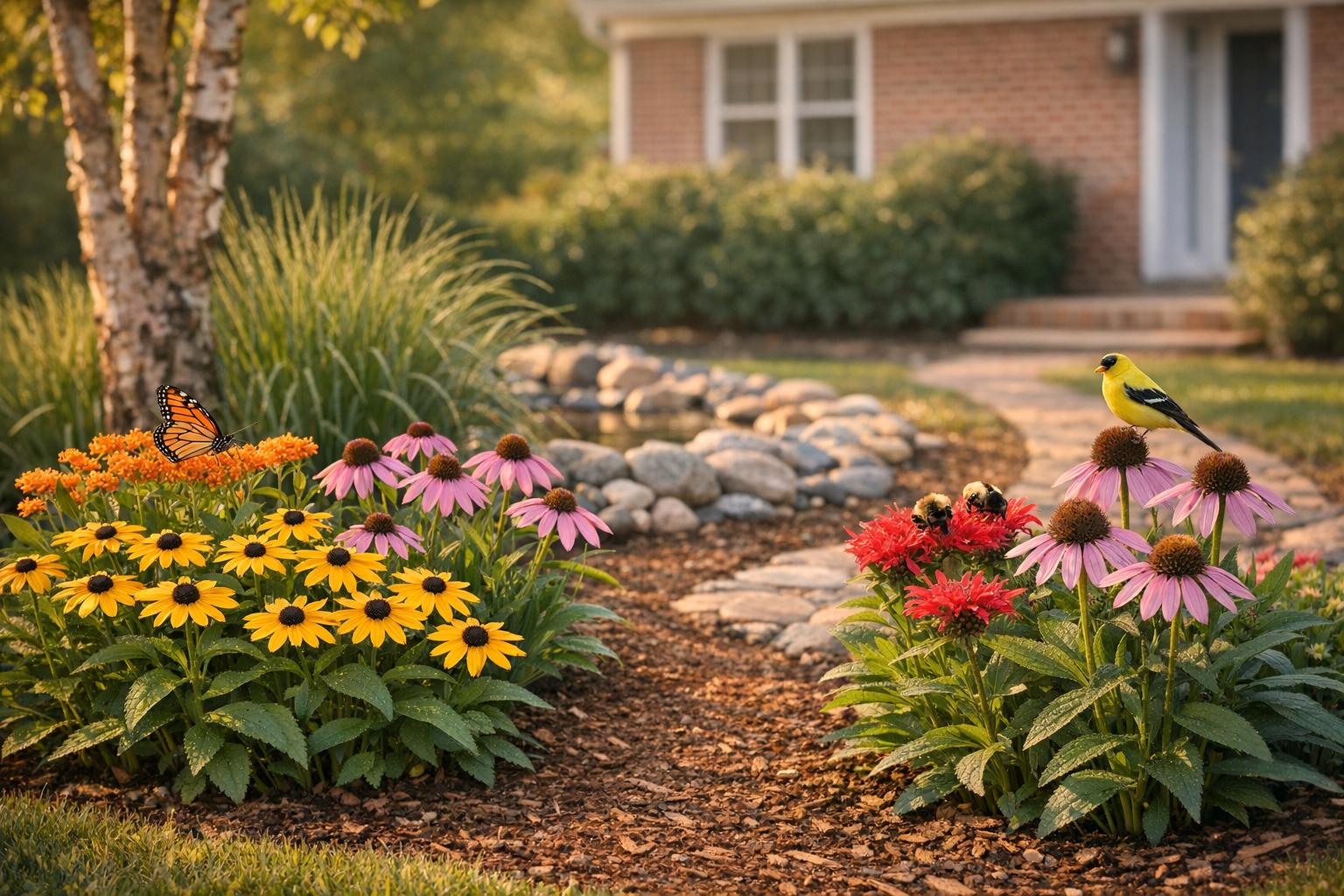
- bhavya gada
- No Comments
Native gardening in Maryland is all about planting species naturally suited to the state’s climate, soil, and wildlife. These plants are low-maintenance, cost-effective, and support local ecosystems, including pollinators and birds. With over 2,000 native species and 675 commercially available options, creating a garden that thrives in Maryland’s Mountain, Piedmont, or Coastal Plain regions has never been easier.
Key takeaways:
- Native plants require less water, fertilizer, and pesticides.
- They reduce runoff and help protect the Chesapeake Bay.
- Support biodiversity by planting at least 70% native species.
- Popular choices include Eastern Redbud, Black-eyed Susan, and Switchgrass.
Start by evaluating your yard’s sun, soil, and moisture conditions, then plan a layout tailored to Maryland’s unique environment. Professional soil testing ensures plants thrive, and fall is the best time to plant. Native gardens are not only beautiful but also a practical way to improve your yard while supporting Maryland’s natural habitat.
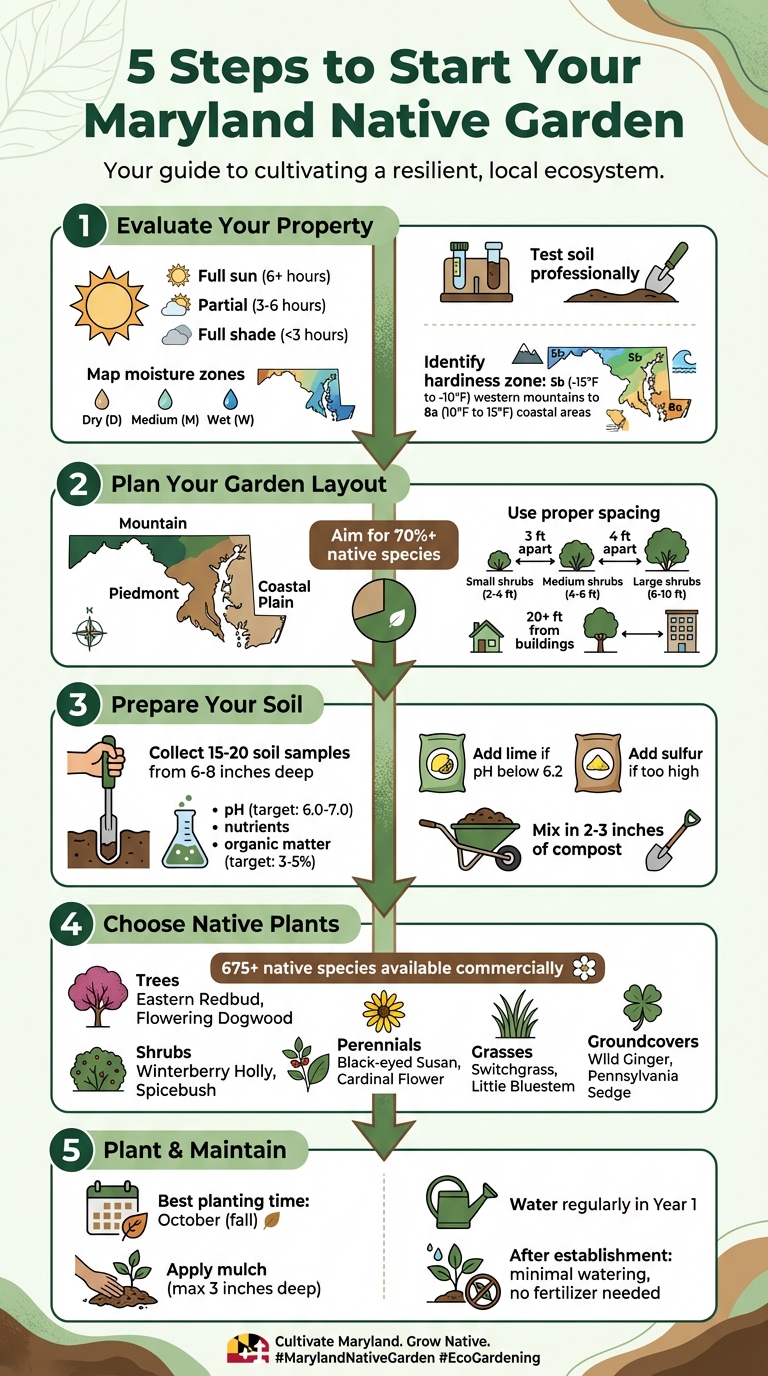
5-Step Guide to Starting a Native Garden in Maryland
Benefits of Native Plants in Maryland
Supporting Local Ecosystems
Native plants are the backbone of Maryland’s food web. They supply nectar to essential pollinators like bees and butterflies while offering berries and seeds that sustain birds year-round [2]. By planting natives, you’re helping to create a thriving ecosystem that supports both insect and bird populations [2].
Another perk? Native gardens naturally control pests. They attract a diverse range of beneficial insects, including predators that help keep harmful pests in check – no need for chemical pesticides [2]. This balanced ecosystem not only protects your plants but also makes your garden more adaptable to environmental changes and shifting climates compared to landscapes dominated by non-native species [2].
And the benefits don’t stop at ecological health – there are practical savings for gardeners, too.
Lower Maintenance and Costs
Native plants are perfectly suited to Maryland’s conditions, which means less work and lower expenses for you [2]. They require minimal watering, thrive without fertilizers, and need far less maintenance overall. Since they’re adapted to Maryland’s natural rainfall and soil, you can skip the costly soil amendments and chemical treatments.
Another bonus? Dense native plantings act as natural weed suppressors. By effectively covering the ground, they prevent weed seeds from sprouting [2]. This cuts down on both weeding time and the need for annual mulching. Plus, many native perennials multiply over time, which means you can divide and replant them to expand your garden without spending extra money [2]. Swapping out traditional turf grass for native plant beds also eliminates the ongoing hassle and expense of mowing and lawn maintenance [2].
Natural Fit for Maryland Weather
The reduced upkeep of native plants comes down to one key factor: they’re perfectly adapted to Maryland’s climate. These plants have evolved over time to thrive in the state’s three ecoregions – Mountain, Piedmont, and Coastal Plain [1]. They handle Maryland’s seasonal weather shifts and varying temperatures with ease.
Native plants are also suited to the state’s diverse soil and moisture conditions, from dry hillsides to wetter lowlands. Unlike imported ornamentals, they don’t need artificial soil amendments to thrive. Their natural defenses against local pests and diseases, along with root systems designed for Maryland’s unique drainage patterns, make them an ideal choice for gardeners [2]. Instead of battling against the environment, native plants work in harmony with it, creating a garden that’s both beautiful and resilient.
sbb-itb-843f8be
Evaluating Your Property and Planning Your Garden
Checking Your Site Conditions
Before you start planting, take some time to observe how your yard behaves throughout the day and across different seasons. Pay attention to sunlight exposure: areas with full sun get six or more hours of sunlight, full shade means three hours or less, and partial falls somewhere in between. Keep in mind that hard surfaces nearby, like driveways or patios, can amplify light intensity.
Get a professional soil test to understand your soil’s composition and identify any adjustments it might need. Also, watch how water moves through your yard after a heavy rain. Label different areas as Dry (D), Medium (M), or Wet (W) based on how well they drain [2]. Maryland’s hardiness zones range from 5b (–15°F to –10°F) in the western mountains to 8a (10°F to 15°F) in the southeastern coastal areas. These zones are crucial for choosing plants that will thrive in your garden [3].
Use this information to create a garden plan that works in harmony with your yard’s natural conditions.
Creating Your Garden Layout
Once you’ve assessed your site, design a garden that complements Maryland’s native ecosystems. Start by identifying which of Maryland’s three ecoregions – Mountain, Piedmont, or Coastal Plain – your property falls into, as plant choices vary by region [1]. To support local ecosystems, dedicate most of your garden to native plants.
Plan your garden in stages, beginning near structures to avoid soil compaction and protect young plants. For a polished, organized appearance, stick to one species per plant category – such as groundcovers, perennials, shrubs (small, medium, large), and small trees – rather than mixing too many types in one spot. Use these spacing guidelines for healthy growth:
- Small shrubs (2–4 feet tall): Space 3 feet apart
- Medium shrubs (4–6 feet tall): Space 4 feet apart
- Large shrubs (6–10 feet tall): Space 5 feet apart
- Small trees: Plant at least 20 feet away from buildings, sidewalks, or other trees
Planting densely can reduce the need for future mulching, as mature plants will naturally shade out weeds [2]. Proper spacing also ensures plants have room for root growth and air circulation, helping them thrive while benefiting the surrounding ecosystem.
And here’s a helpful note: A 2021 Maryland General Assembly bill prevents homeowners’ associations (HOAs) from banning low-impact landscaping, such as pollinator or rain gardens [2].
Let’s Transform this Maryland Landscape with Native Plants! (project Kick-Off)
Choosing Native Plants for Maryland
If you’re planning a garden in Maryland, choosing plants native to the state is a smart move. With more than 675 native species available for landscaping [1], you have plenty of options to create a thriving, low-maintenance yard. According to the University of Maryland Extension, "Developed landscapes need to be more than beautiful. They have to serve multiple functions, from supporting pollinators and local wildlife to protecting one of the region’s most treasured natural resources: the Chesapeake Bay" [1]. To get started, consider incorporating native trees, shrubs, perennials, grasses, and groundcovers into your design for a well-rounded and functional garden.
Native Trees and Shrubs
Trees and shrubs form the backbone of any garden, providing structure, shade, and food for wildlife. Here are a few native options to consider:
- Flowering Dogwood (Cornus florida): This tree offers gorgeous spring blooms and berries that attract wildlife. It grows well in partial shade to full shade with medium moisture.
- Eastern Redbud (Cercis canadensis): Known for its early spring flowers that feed pollinators, this tree also produces seeds for birds. It adapts to both sun and shade.
For shrubs, try these versatile options:
- Winterberry Holly (Ilex verticillata): Its bright red berries feed birds during the winter. Be sure to plant both male and female plants for berry production.
- Spicebush (Lindera benzoin): This aromatic shrub serves as a host plant for butterflies and grows 6–10 feet tall.
- Virginia Sweetspire (Itea virginica): A shrub with showy flowers and vibrant fall foliage, reaching 4–6 feet in height.
- Black Chokeberry (Aronia melanocarpa): Compact at 2–4 feet, it provides flowers and berries that wildlife love.
Native Perennials and Grasses
Perennials and grasses bring color, movement, and texture to your garden while supporting pollinators and birds. Some standout choices include:
- Black-eyed Susan (Rudbeckia hirta): A sunny garden staple, this perennial attracts pollinators all summer long.
- Cardinal Flower (Lobelia cardinalis): Perfect for wet or medium-moisture areas, its bright red blooms draw hummingbirds to sunny or partially shaded spots.
- Blue Wood Aster (Aster cordifolius): A great option for shaded areas, this plant feeds late-season pollinators.
Native grasses add another layer of interest and functionality:
- Switchgrass (Panicum virgatum): A drought-resistant grass that thrives in a variety of conditions, from dry to wet. Its seeds provide food for birds.
- Little Bluestem (Schizachyrium scoparium): This grass prefers dry to medium-moisture soil and offers nesting material and seeds for birds.
- Pennsylvania Sedge (Carex pensylvanica): A shade-loving groundcover alternative to turfgrass, ideal for areas with medium moisture.
To keep ornamental grasses healthy, cut them back once a year in early spring before new growth begins.
Native Groundcovers and Ferns
Groundcovers and ferns are perfect for filling in bare spots, retaining soil moisture, and keeping weeds at bay. Here are some options to complete your garden layers:
- Wild Ginger (Asarum canadense): This shade-loving groundcover spreads easily, creating a lush carpet of heart-shaped leaves.
- Green and Gold (Chrysogonum virginianum): With its yellow blooms, this semi-evergreen groundcover thrives in dry to medium-shade conditions.
- Foamflower (Tiarella cordifolia): Known for its white flowers and semi-evergreen foliage, it grows well in medium-moisture shaded areas.
For sunny spots, consider:
- Moss Phlox (Phlox subulata): This hardy groundcover offers vibrant spring blooms and evergreen foliage in dry conditions.
- Lady Fern (Athyrium asplenioides): A classic fern that thrives in shaded areas with medium moisture.
Plant groundcovers densely to help reduce weed growth and minimize the need for future mulching. By layering trees, shrubs, perennials, grasses, and groundcovers, you can create a garden that’s not only beautiful but also supports Maryland’s unique ecosystem.
Soil Preparation and Planting Methods
Testing and Improving Soil
Once you’ve assessed your property, it’s time to prepare your soil for native plants. Maryland law mandates that professional lawn care clients have their soil tested at the beginning of service and every three years thereafter. This practice helps minimize nutrient runoff into the Chesapeake Bay [4]. A soil test provides a clear picture of what your soil needs.
In Maryland, standard lab tests measure factors like soil pH, phosphorus (P), potassium (K), calcium (Ca), magnesium (Mg), cation exchange capacity (CEC), and organic matter [4][5]. To ensure accurate results, collect 15 to 20 soil samples from various spots in your planting area, digging 6 to 8 inches deep [5]. Combine these samples in a clean plastic bucket, remove any debris, and allow the soil to air-dry if it’s wet before sending it to a lab [5].
"Knowing the nutrient concentrations in your soil takes the guesswork out of fertilizing, helping you to pinpoint potential nutrient deficiencies and to ensure plants have the necessary nutrients to support optimal growth and production." – University of Maryland Extension [5]
Focus on your pH levels. Native plants generally thrive when the soil pH is between 6.0 and 7.0 [4]. If your pH is below 6.2, adding lime can help raise it. On the rare occasion your pH is too high, sulfur can lower it [4]. Only add phosphorus or potassium if your test indicates a deficiency [4][5]. Organic matter levels between 3% and 5% are ideal [4]. If your soil falls short, incorporate compost or other organic materials into the planting area before starting [2].
With a balanced soil profile, you’re ready to plant. If you prefer professional assistance, our team offers comprehensive landscaping services to help you get started.
How to Plant Native Species
Timing is key. Fall, particularly October, is the best time to plant native species. During this season, the soil is easier to work with compared to the soggy conditions often found in spring. Plus, plants that are dormant after shedding their leaves handle transplanting better. They focus on establishing strong root systems before spring growth kicks in.
When planting, dig a hole that matches the depth of the nursery pot and ensure the plant sits at the same height as it did in the pot. Afterward, apply mulch to a maximum depth of 3 inches to help retain moisture and reduce weed growth [2]. For trees, leave a 6-inch gap around the trunk to prevent damage from mice or voles. Keep an eye on soil moisture during the first year, as young native plants need consistent hydration to establish themselves [2].
If you’re working on a larger project, start by planting areas near structures first. This approach prevents trampling smaller plants or compacting the freshly prepared soil as you move through the space [2].
Maintaining Your Native Garden
Caring for your native garden is essential to ensure it stays healthy and strong over time.
Watering Requirements
In the first year, keep an eye on the soil moisture and water whenever the top few inches are dry. This helps your plants develop deep, strong roots. Once they’re established, most native plants can rely on Maryland’s natural rainfall to thrive.
By choosing plants suited to your soil’s moisture – whether it’s dry, medium, or wet – you can cut down on the need for extra watering, even during dry periods. This approach, often called xeriscaping, not only conserves water but is also protected under Maryland law. In 2021, the state passed a law preventing homeowners’ associations from placing unreasonable restrictions on eco-friendly landscaping methods like xeriscaping and rain gardens.
Pruning and Weed Control
If plants appear stressed or overcrowded, prune them back and divide perennials that are multiplying. This keeps your garden balanced and allows you to expand your planting area.
A dense planting of native species naturally suppresses weeds, reducing the need for mulching [2]. Adding native groundcovers – plants that grow to about 1 foot tall – acts as a living mulch, further discouraging weeds. Be sure to remove invasive plants like Japanese barberry, which can outcompete natives and don’t contribute to the local ecosystem.
Maintenance Comparison Table
| Plant Type | Native Example | Watering After Year 1 | Fertilizer Needs | Pest Resistance |
|---|---|---|---|---|
| Perennial | Black-eyed Susan | Minimal (rainfall only) | None | High |
| Perennial | Goldenrod | Minimal (rainfall only) | None | High |
| Grass | Switchgrass | Minimal (rainfall only) | None | High |
| Non-Native | Japanese Barberry | Regular supplemental | Annual feeding | Low |
Switching to native plants reduces the need for mowing and makes your garden better equipped to handle environmental changes. Plus, native plants attract beneficial insects that naturally manage pests, cutting down on the amount of work you need to do.
Working with Pro Landscapes MD for Native Gardens

Custom Native Garden Design
Pro Landscapes MD specializes in creating native garden designs that align with your property’s specific ecoregion – whether it’s the Mountain, Piedmont, or Coastal Plain areas. This ensures the plants chosen not only thrive but also support the local ecosystem effectively.
Their designs emphasize using at least 70% native plants, a key factor in sustaining beneficial insects, birds, and pollinators [2]. For larger projects, they can break the work into phases. Typically, they start closest to your home or structures to avoid soil compaction and minimize damage to smaller plants [2]. If you’re dealing with homeowners’ association (HOA) restrictions, the team can guide you through the process. Thanks to Maryland’s 2021 law, HOAs cannot impose "unreasonable limitations" on low-impact landscaping, such as pollinator or habitat gardens [2].
Once the custom design is finalized, they ensure professional soil preparation so your native plants can thrive from the very beginning.
Professional Soil Preparation and Planting
After crafting a thoughtful garden design, Pro Landscapes MD takes soil preparation seriously. They use advanced techniques to create the ideal conditions for your plants to establish strong roots. This includes professional soil testing, loosening compacted subsoil, and incorporating compost to enrich the soil. They also focus on precise planting techniques, such as properly exposing the root flare to promote healthy growth.
For areas with compacted or heavily used soil, they use specialized tools to loosen the subsoil and mix in 2–3 inches of compost into the top 6 inches of soil [6]. Their attention to detail ensures that every plant is set up for success.
Garden Care and Maintenance Services
Pro Landscapes MD offers ongoing care to help your garden thrive over time. During the crucial first year, they regularly monitor moisture levels to support root development [2]. They understand that native plants take a few years to establish deep roots and reach their full beauty [7].
Seasonal maintenance is part of their approach. For example, they leave spent flower heads intact to benefit wildlife and trim plants like Little Bluestem at the right time to maintain a healthy ecosystem. Native gardens naturally attract helpful insects like lacewings and ladybirds, which control pests such as aphids and slugs [3]. This reduces the need for chemical treatments, keeping your garden vibrant and ecologically balanced.
Conclusion
Creating a native garden in Maryland involves careful planning, from evaluating your site to preparing the soil and selecting the right plants. By understanding factors like light exposure, moisture levels, and soil composition, you can choose a mix of native trees, shrubs, perennials, and groundcovers that not only enhance your yard but also support local wildlife like pollinators and birds – all while reducing maintenance in the long run.
But the benefits go beyond aesthetics. Maryland’s unique geography means that 95% of its land drains into the Chesapeake Bay, making native gardens an essential tool for filtering runoff and protecting this critical waterway[1]. Plus, native plants are naturally suited to the region, which means they require less water and fewer chemical treatments to thrive.
Feeling daunted by the process? You don’t have to tackle it alone. Pro Landscapes MD offers expert support at every stage – from designing a garden tailored to Maryland’s ecoregions to preparing the soil and providing ongoing maintenance. Their expertise ensures your garden not only looks great but also contributes to the health of the local ecosystem.
Whether you’re envisioning a small pollinator haven or a complete landscape makeover in central Maryland, Pro Landscapes MD has the knowledge and experience to bring your vision to life. Reach out today to start building a garden that’s as beneficial to the environment as it is beautiful.
FAQs
How do I figure out which Maryland ecoregion my yard is in?
To figure out your ecoregion in Maryland, you can use resources designed to classify areas based on factors like soil, climate, and local wildlife. Organizations such as Homegrown National Park and the University of Maryland Extension provide guides specifically for Maryland’s ecoregions, which include the Piedmont, Mountain, and Coastal Plain regions. Additionally, the Chesapeake Bay Trust offers a native plant selection guide. These tools make it easier to pinpoint your ecoregion and select native plants that thrive in your area.
Where can I get a soil test in Maryland, and what should I ask for?
If you’re in Maryland and need a soil test, the University of Maryland Extension has you covered. They offer a list of reliable private and public labs to choose from.
For a basic soil test, request an analysis of pH, calcium, phosphate, potassium, and magnesium. Planning a vegetable garden? Be sure to include a lead test as well. Simply follow the lab’s instructions for collecting your soil sample. Costs for these tests usually range from $9 to $30.
Which native plants work best for deer pressure and tough spots like dry shade?
Native plants that thrive in Maryland’s environment are well-equipped to deal with deer and tricky spots like dry, shady areas. If you’re looking for deer-resistant options, focus on shrubs and perennials that naturally adapt to the local ecosystem. For areas with dry shade, seek out native plants that are both drought-tolerant and capable of thriving in low-light conditions. To find the best fit for your garden, check with local nurseries or garden centers – they can provide specific recommendations based on your site’s unique conditions.
Chat with Us