









- bhavya gada
- No Comments
Erosion is a common challenge, especially on steep slopes or areas with heavy water runoff. Native groundcovers offer an effective solution by stabilizing soil with their deep root systems while supporting local ecosystems.
Here’s how to manage erosion using native groundcovers:
- Identify Problem Areas: Look for bare soil, exposed roots, or gullies. Observe water flow during rainstorms to pinpoint trouble spots.
- Understand Soil and Drainage: Test soil type (clay or sandy) and check water drainage patterns to select suitable plants.
- Choose Native Groundcovers: Match plants to site conditions:
- Full Sun: Moss Phlox, Black-eyed Susan, or Switchgrass.
- Shade/Wet Areas: Sedge species or Green and Gold.
- Prepare and Plant: Clear turfgrass, add compost for clay soils, and use biodegradable materials like jute mesh on slopes.
- Early Care: Water regularly during the first growing season to help roots establish.
- Seasonal Maintenance: Trim plants, divide clumps, and manage weeds as needed.
Once established, native groundcovers reduce erosion, require minimal upkeep, and improve your landscape’s resilience. By addressing erosion risks and planting the right species, you can protect your property effectively while supporting local wildlife.
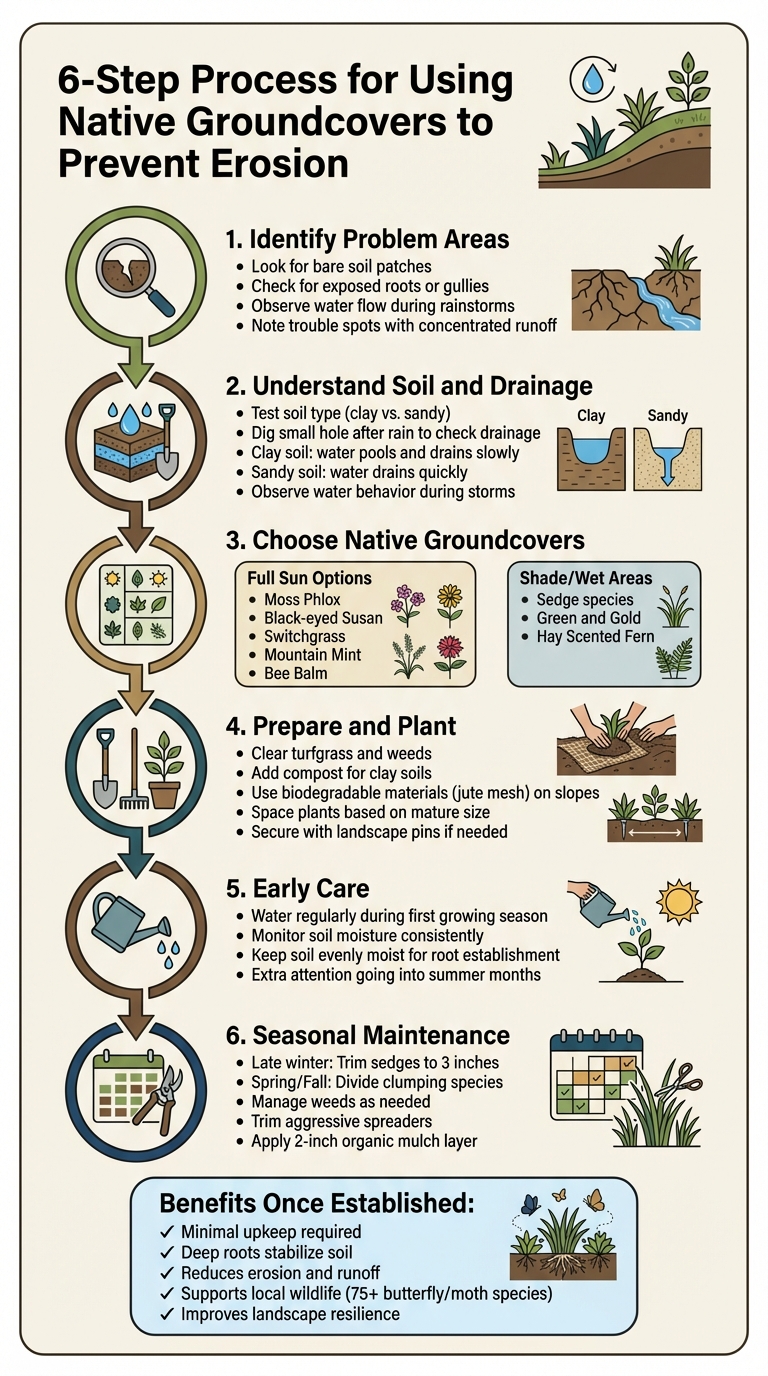
6-Step Process for Using Native Groundcovers to Prevent Erosion
Best Plants for Erosion Control | How to Protect Your Landscape with Native Plants 🌿
sbb-itb-843f8be
Finding Erosion-Prone Areas on Your Property
Before tackling erosion issues, it’s crucial to identify areas on your property that are at risk. Start by walking around and looking for potential problem spots. Steep hillsides are especially prone to erosion, as their sharp inclines can cause water and soil to move downhill quickly, creating both safety and maintenance challenges [1].
Pay close attention to water flow during and after rainfall. Watch where water visibly runs down slopes or collects in channels. Downspouts are common trouble areas if water isn’t being directed properly [2]. Additionally, spots where organic mulch won’t stay in place often signal ongoing soil loss [1].
This step is key before choosing and installing groundcovers. Observing these signs will help you determine the best native plants for your property.
Signs That Indicate Erosion Risk
Certain physical signs make erosion risks easier to spot. Bare soil patches are a major warning, especially in areas where grass or other vegetation has struggled to grow. Gullies or channels carved into the ground are clear evidence of concentrated water flow stripping away soil.
Other indicators include displaced mulch or exposed tree roots. If roots are visible on the surface or mulch has gathered at the base of a slope instead of staying in place, it’s a sign that water is carrying material downhill. Maryland Certified Professional Horticulturist ckc highlights the importance of slope appearance in winter:
Some ornamental grasses can maintain a nice look through the winter months and their long root systems will help to prevent erosion [3].
Another risk arises when perennials die back completely without leaving any protective cover. This leaves the soil especially vulnerable during the colder months when rainfall is more frequent.
Once you’ve identified these signs, the next step is to evaluate your soil type and drainage patterns to uncover the root causes of erosion.
Checking Soil Type and Drainage Patterns
The type of soil on your property significantly affects erosion risks. In Maryland, heavy clay soils tend to hold their structure well but benefit from added compost to encourage dense root systems [3]. To identify your soil type, dig a small hole after it rains. If water pools and drains slowly, you likely have clay soil. If water drains quickly, your soil may be sandy and more prone to washing away.
Observing how water behaves during a rainstorm is another effective way to assess erosion risk [2]. Take note of where water collects and how fast it moves. Emily from the University of Maryland Extension‘s Home and Garden Information Center suggests:
If the slope tends to have a lot of water running down it during a rain event, you can consider planting in some biodegradable erosion cloth that is pinned in place with landscape pins [2].
Lastly, check for large tree roots in the area. In these spots, it’s better to plant small plugs rather than larger potted plants to avoid damaging the existing root systems [2].
Selecting Native Groundcovers for Your Site
Choosing the right native groundcovers is key to maintaining erosion control and supporting the overall health of your landscape. To make the best selection, match the plants to your site’s specific conditions, including light, moisture, and soil type. Start by observing how much light each area gets and when – like a slope that might see morning sun but is shaded in the afternoon [2]. These details will help guide your choices.
You’ll also want to factor in challenges like wildlife activity, steep slopes, or existing tree roots. For areas with tree roots, smaller plugs may be more practical [2]. To stabilize soil quickly, opt for plants that spread aggressively [1].
Groundcovers for Full Sun Locations
In sunny spots, go for species that can handle heat and dry conditions. Moss Phlox, Mountain Mint (Pycnanthemum sp.), and Bee Balm (Monarda sp.) are excellent options for full sun [3]. Black-eyed Susans (Rudbeckia hirta) are another great choice, especially for clay-heavy soils [3]. For larger spaces, consider Gro-Lo Sumac or native grasses like Switchgrass and Little Bluestem. These grasses not only help with erosion but also keep their structure through the winter, offering year-round protection with deep root systems [3].
Mountain Mint and Bee Balm are particularly useful because they spread in clumps, securing soil even in heavy clay when compost is added [3].
Groundcovers for Shade and Wet Areas
Shady or moisture-heavy areas call for different groundcovers. Green and Gold (Chrysogonum virginianum) thrives in partially shaded spots [3]. For dry, shady slopes, Hay Scented Fern is a good pick, though it will die back after frost [2].
For wetter areas or places with poor drainage, Sedge (Carex) species are a standout choice. They’re highly effective at stabilizing soil in consistently moist conditions [2].
Mixing Different Groundcover Species
Blending multiple species can improve the overall resilience of your site. Using a mix of native groundcovers allows for better adaptability across varying conditions. Emily from the University of Maryland Extension highlights this approach:
You could even mix a few ground covers and let them fill in the space for a mixed woodland appearance [2].
For efficient planting, consider purchasing plug-sized groundcovers in flats of 25, 50, or 100 [2]. Combining deciduous plants like Hay Scented Fern with ornamental grasses helps maintain both erosion control and aesthetic appeal throughout the year, even when some plants die back in winter [3]. This approach not only adds visual interest but also supports local wildlife while creating a natural and balanced landscape.
Preparing the Site and Planting Groundcovers
Getting the Site Ready
Before planting groundcovers, it’s important to clear the area of turfgrass and weeds to minimize competition. Miri from the University of Maryland Extension’s Home and Garden Information Center explains:
Ideally, the existing grass should be removed first, since adding plants to established turfgrass areas may be challenging, in that they might not establish well, or will take longer to do so as the grass competes for resources.
If removing grass completely isn’t an option, planting directly into the lawn is possible, though it may take longer for plants to establish. For areas with heavy clay soil or steep slopes, mix compost into the topsoil to improve conditions, then ensure the soil stays in place. Maryland Certified Professional Horticulturists recommend:
You could lay down Jute mesh soil stabilizer fabric.
On very steep slopes, you can also use large rocks or lay branches horizontally to create small terraces. These ledges help anchor the soil and prevent erosion, making the site more stable for planting.
How to Plant for Erosion Control
Native groundcovers are ideal for stabilizing soil, especially when paired with biodegradable materials. On steep slopes, avoid traditional mulch and instead use biodegradable stabilizers like jute mesh, untreated burlap, or paper-based landscape fabric. These materials naturally break down over time and don’t require removal. If using landscape fabric, secure it with pins and cut holes to fit the plants.
When planting, space the groundcovers based on their mature size. Fast-spreading plants can cover the area more quickly, helping to stabilize the soil sooner. Native groundcovers, with their deep root systems, are particularly effective for erosion control. Once planted, the key to success lies in consistent yard maintenance during the early stages.
Watering and Early Care
New plantings need extra attention, especially during their first growing season. Regularly check the soil moisture and water as needed to help the roots establish. Miri from the University of Maryland Extension emphasizes:
Any new planting will need careful monitoring for watering needs as it establishes… especially going into summer.
During the first few months, keeping the soil evenly moist is essential. This early care ensures the plants develop strong root systems, which are critical for long-term erosion control.
Caring for Your Groundcovers Over Time
Maintenance Tasks by Season
Once established, native groundcovers require very little attention. After the first year, you’ll only need to water them during extended dry periods since their deep roots are excellent at tapping into moisture reserves.
Each season comes with specific care tasks to keep your groundcovers thriving and effective at preventing erosion. In late winter, trim sedges like Pennsylvania sedge to about 3 inches to promote healthy spring growth. During spring and fall, you can divide clumping species such as golden groundsel to cover any bare spots in your landscape.
As your groundcovers mature, weeding becomes less of a chore. Acting as a natural mulch, they form a dense canopy that blocks sunlight, making it harder for weeds to grow. However, you’ll still need to manage aggressive spreaders like common blue violet and trim vigorous vines such as Virginia creeper to maintain balance in your planting.
Avoid using synthetic landscape cloth. These fabrics can increase runoff, harm soil health, and eventually lead to erosion problems when weeds break through. Instead, apply a 2-inch layer of organic mulch – like wood chips or composted leaves – over any exposed soil. As your groundcovers grow and fill in completely, you’ll find that extra mulch is no longer necessary.
By following these seasonal practices, you’ll create the conditions for your groundcovers to thrive and provide lasting benefits.
Benefits of Mature Groundcovers
Once native groundcovers are fully established, they offer more than just erosion control – they bring long-term value to your landscape. Their deep roots stabilize soil and prevent further erosion, while their dense growth reduces the need for ongoing maintenance. Compared to lawns, mature groundcovers save both time and money, requiring only occasional weeding and seasonal trimming.
Beyond their practical advantages, native groundcovers play a key role in supporting local ecosystems. For example, wild strawberry is a host plant for at least 75 species of butterfly and moth caterpillars, Virginia creeper supports 32 species (including hummingbird moths), and golden ragwort benefits 17 Lepidoptera species [4]. Additionally, these plants improve soil quality by breaking up compacted earth with their roots and enriching the soil with organic matter from their foliage. The result? A more attractive, resilient landscape that not only looks great but also supports wildlife and enhances the health of your property over time.
Conclusion
Every step in managing erosion – from assessing risks to planting and maintaining native groundcovers – plays a key role in creating an effective, lasting solution. By following a thoughtful process that includes site evaluation, proper species selection, and ongoing care, you can set your erosion control plan up for success.
Native groundcovers are a powerful tool for protecting your property while enhancing the natural environment. The journey begins with evaluating your site conditions – pinpointing erosion-prone spots, understanding your soil composition, and noting factors like sunlight and moisture levels. As Miri from the University of Maryland Extension explains:
Use species known to be aggressive spreaders so they hold onto the soil quickly and effectively [1].
Selecting plants that align with your site’s specific conditions ensures they’ll thrive, develop strong root systems, and effectively anchor the soil.
Once these plants are established, they require little upkeep while offering a host of benefits. Native groundcovers stabilize soil, curb runoff, support local ecosystems, and are more cost-effective and time-efficient than traditional lawns. By identifying erosion-prone areas and taking action, you can create a more durable and self-sustaining landscape that safeguards your property for the future.
FAQs
How fast will native groundcovers stop erosion on a slope?
Native groundcovers can help combat erosion in just a few months when planted and cared for correctly. Species with deep roots, such as Wild Ginger and Sweet Box, are particularly effective at stabilizing soil, especially on slopes. Consistent maintenance is key to ensuring their growth and achieving lasting soil protection.
Should I use jute mesh or mulch on steep, eroding areas?
When dealing with steep, eroding areas, native groundcovers with deep root systems – such as switchgrass, fescue, or sedges – are excellent options for long-term soil stabilization. To protect bare soil temporarily, materials like mulch or straw can be applied, especially during planting and the early growth stages. The most effective approach combines both strategies: mulch or straw provides immediate coverage, while the deep-rooted plants work over time to anchor the soil securely.
What’s the best way to plant around exposed tree roots?
To protect exposed tree roots from erosion, start by removing any existing turf if feasible. Replace it with native groundcovers, grasses, or low shrubs that thrive in the area’s specific sun and moisture conditions. To stabilize the soil temporarily, consider using biodegradable fabric. When planting, take care not to harm the tree roots. Once planted, focus on regular watering and controlling weeds until the plants are well-established. A densely planted area will provide better soil stability and safeguard the roots effectively.
Chat with Us