









- bhavya gada
- No Comments
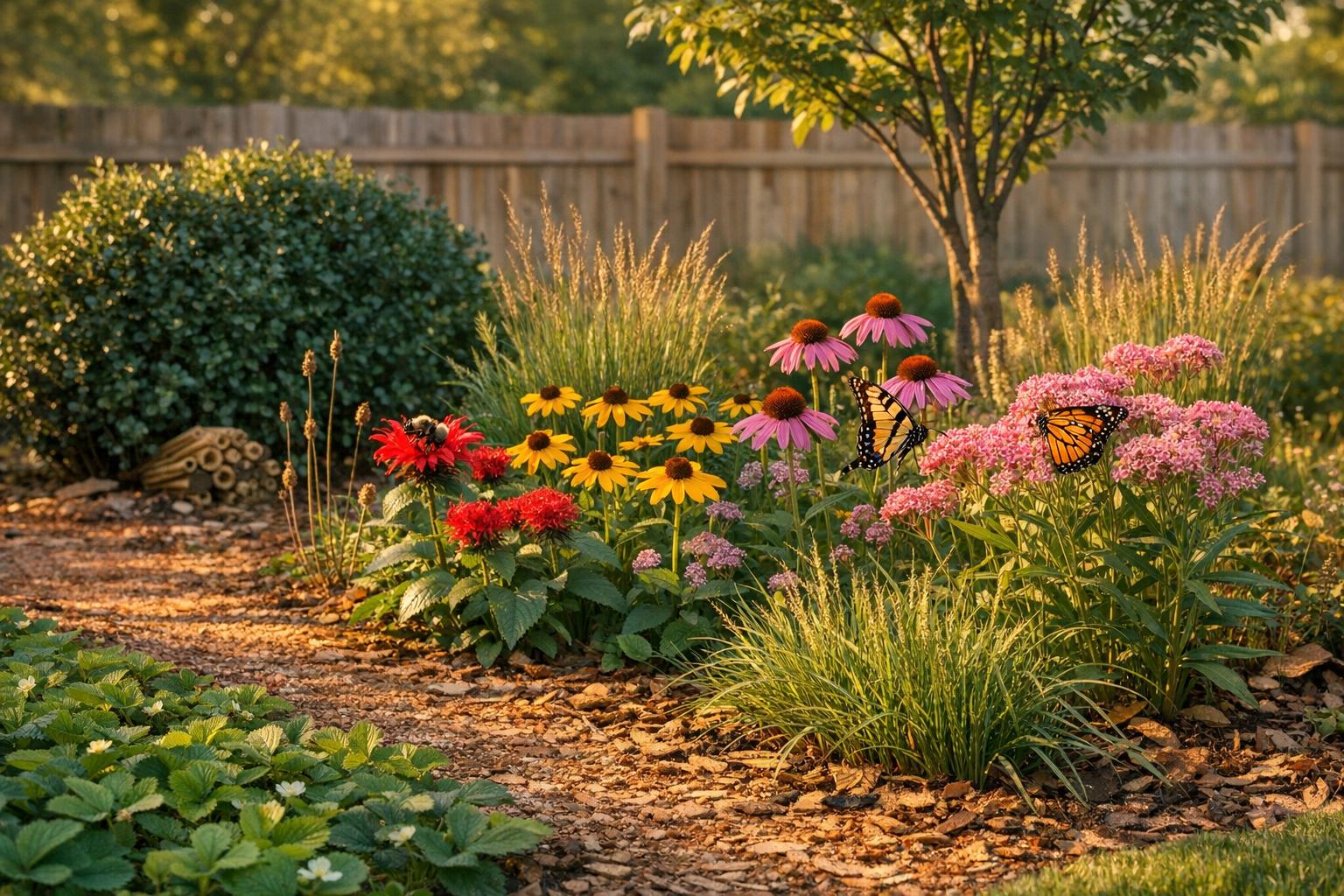
Pollinators in Maryland, like monarch butterflies and wild bees, are facing steep declines, threatening the balance of ecosystems and food production. Planting native species is one of the most effective ways to support these essential creatures. Native plants are well-suited to Maryland’s soil and climate, offering food, shelter, and nesting spaces for pollinators year-round.
Here’s how you can create a pollinator-friendly garden:
- Use native plants: These provide critical nutrients for local insects and require less yard maintenance.
- Layer your garden: Combine ground-level perennials, mid-level shrubs, and canopy trees for diverse habitats.
- Plan for continuous blooms: Choose plants with overlapping flowering periods to ensure nectar availability from spring to fall.
- Avoid invasive species: Replace non-native plants with native alternatives that better sustain pollinators.
- Leave natural features: Allow dead stems and leaves to remain in fall and winter to provide nesting and shelter.
Buttonbush: A Maryland Native Shrub for Pollinators
sbb-itb-843f8be
Flowering Perennials for Continuous Nectar
Native ground-level perennials are the backbone of any pollinator-friendly garden. These plants bloom at different points during the growing season, ensuring that bees, butterflies, and hummingbirds always have access to nectar and pollen. By choosing species with overlapping bloom periods, gardeners can create a seamless transition of flowering plants – when one finishes, another takes over. Maryland’s native perennials are particularly effective because they thrive in the state’s three physiographic regions and require less water and fertilizer compared to non-native ornamentals [1]. These low-growing plants also serve as the foundation for a layered garden design that can later include native shrubs and canopy trees. Below are some perennial species that provide a steady nectar supply throughout Maryland’s growing season.
Black‑Eyed Susan (Rudbeckia fulgida)
With their bright yellow petals and dark centers, Black‑Eyed Susans are unmistakable. These hardy perennials bloom all summer long, attracting a variety of pollinators. They are well-suited to Maryland’s diverse soil conditions, making them a reliable choice for any garden.
Butterfly Weed (Asclepias tuberosa)
Butterfly Weed stands out with its striking orange clusters, which not only attract pollinators but also serve as the exclusive host plant for Monarch butterfly caterpillars. This dual role makes it a vital addition to support Monarch populations. Plus, its drought tolerance makes it perfect for sunny, dry areas. Gardeners should opt for native Butterfly Weed rather than invasive species like butterfly bush.
Bee Balm (Monarda spp.)
Bee Balm is a magnet for hummingbirds, bees, and butterflies, thanks to its tubular blossoms. The University of Maryland Extension highlights:
"Butterflies, bees, and hummingbirds are attracted to larger blossoms and tubular‑shaped flowers" [1].
Blooming in summer, Bee Balm thrives across Maryland’s climate zones. Its aromatic foliage also adds a pleasant scent to the garden, making it both functional and enjoyable.
Purple Coneflower (Echinacea purpurea)
Purple Coneflowers are a quintessential choice for pollinator gardens. Their purple petals and raised central cones attract a variety of generalist pollinators. These easy-to-care-for perennials bloom throughout summer and, if left standing, provide overwintering sites for beneficial insects.
New England Aster (Aster novae-angliae)
As summer fades, New England Asters step up to provide essential late-season nectar for bees and migrating butterflies. Patuxent Nursery emphasizes their importance:
"One third of every bite of food we eat is thanks to a pollinator, so they are incredibly important!" [2].
Native Shrubs for Shelter and Mid-Level Blooms
Native shrubs play a unique role in the garden, filling the space between perennials and towering canopy trees. They provide shelter, nesting spots for bees, and serve as host plants for caterpillars. These shrubs are well-suited to Maryland’s diverse landscapes and require little maintenance. Plus, their bloom times often complement perennials, ensuring a longer nectar supply for pollinators. Here are some standout native shrubs that add structure to your garden while supporting local wildlife.
New Jersey Tea (Ceanothus americanus)
This shrub produces fragrant white flower clusters that butterflies adore, while also hosting moth larvae. It thrives in well-drained soils and adapts easily to Maryland’s range of growing conditions.
Hillside Blueberry (Vaccinium pallidum)
With delicate white flowers in spring that attract bees, Hillside Blueberry is a pollinator favorite. It also produces edible berries, offering food for birds and other wildlife. This low-growing shrub thrives in sunny, well-drained areas and is ideal for compact gardens or as a mass planting on slopes, providing food and beauty across multiple seasons.
Mapleleaf Viburnum (Viburnum acerifolium)
Native to Maryland, the Mapleleaf Viburnum is a deciduous shrub that blooms with clusters of flowers in late spring. Come fall, it bears berries that not only nourish wildlife but also provide essential shelter for pollinators and other creatures.
Eastern Redbud (Cercis canadensis)
While often considered a small tree, the Eastern Redbud can also function as a large shrub in garden settings. Its vibrant pink flowers bloom in early spring, offering critical nourishment to pollinators just emerging from winter. As the University of Maryland Extension notes, native plants often provide essential and specific nutrients – like pollen, nectar, or oils – that specialist insects need at key stages in their life cycle [1].
Trees for Canopy and Early-Season Pollen
Native trees are the final piece of the puzzle when creating a layered garden design. They not only offer canopy shelter but also supply early-season pollen, supporting pollinators at various levels of the landscape. As Patuxent Nursery points out:
"Native trees are essential to restoring and preserving habitats for surrounding wildlife like bats, birds, bees, and other pollinators" [3].
Here’s a closer look at three native trees that bring structure and ecological benefits to your garden.
Flowering Dogwood (Cornus florida)
Flowering Dogwood is a charming small tree that bursts into life with white-to-pink bracts in spring, offering nectar and pollen just when pollinators are beginning to stir [4]. It thrives in Maryland’s diverse environments, particularly in partial shade or along woodland edges. Its compact size makes it perfect for residential gardens where space might be at a premium.
Tulip Tree (Liriodendron tulipifera)
The Tulip Tree stands tall – literally and figuratively – as a prominent canopy species. Its tulip-shaped blooms are a magnet for a variety of pollinators [3]. Beyond its ecological role, this tree adds visual drama with its height and golden fall foliage, making it especially suited for larger landscapes. Its nectar production also serves as a vital link between early and mid-season blooms.
Cockspur Hawthorn (Crataegus crus-galli)
Cockspur Hawthorn is a springtime standout with clusters of white flowers that provide nectar for pollinators [3]. By extending the availability of nectar later into the season, it ensures a steady food supply for both emerging and resident pollinators. Its addition enriches the layered structure of any garden, blending beauty with functionality.
Design Principles for Layered Structures
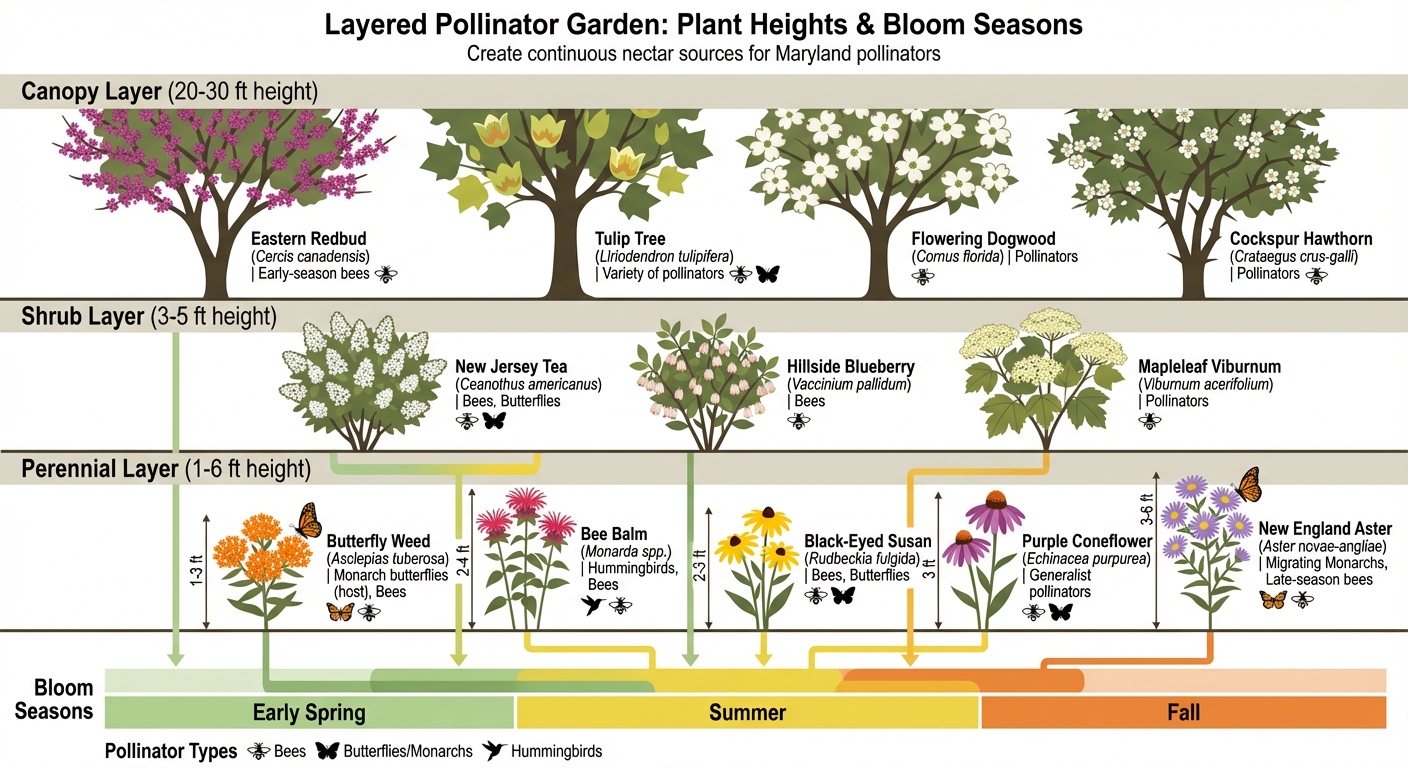
Maryland Native Plants for Pollinators: Bloom Times and Heights Guide
Creating a thriving pollinator garden isn’t just about picking the right plants – it’s about arranging them thoughtfully to provide year-round support. A layered approach, combining plants of various heights, bloom times, and types, ensures that pollinators in Maryland have access to food, shelter, and nesting spaces throughout the year.
Combining Plant Heights and Bloom Seasons
Layering plants by height and bloom season is essential for an effective garden. Think of it as building a multi-story habitat: low-growing perennials form the foundation, shrubs fill the middle layer, and trees create a canopy. This setup not only maximizes space but also caters to the diverse needs of pollinators.
By planting species with overlapping bloom periods, you guarantee a continuous supply of nectar and pollen from early spring to late fall. This strategy supports pollinators at every stage of their life cycle – from spring bees just emerging to monarch butterflies preparing for their fall migration.
Here’s a quick look at how different plant types, heights, and bloom times attract specific pollinators:
| Plant Type | Species Example | Bloom Season | Height | Key Pollinators Attracted |
|---|---|---|---|---|
| Tree | Eastern Redbud (Cercis canadensis) | Early Spring | 20–30 ft | Early-season bees |
| Shrub | New Jersey Tea (Ceanothus americanus) | Late Spring/Summer | 3 ft | Bees, Butterflies |
| Perennial | Butterfly Weed (Asclepias tuberosa) | Summer | 1–3 ft | Monarch butterflies (host), Bees |
| Perennial | Bee Balm (Monarda spp.) | Summer | 2–4 ft | Hummingbirds, Bees |
| Perennial | Black-Eyed Susan (Rudbeckia fulgida) | Summer/Fall | 2–3 ft | Bees, Butterflies |
| Perennial | New England Aster (Aster novae-angliae) | Fall | 3–6 ft | Migrating Monarchs, Late-season bees |
Before planting, evaluate your site’s conditions – sunlight, soil type, and moisture levels – and choose plants that will thrive naturally. This reduces the need for extra care and creates a garden that’s not only pollinator-friendly but also low-maintenance.
Using Native Plants for Long-Term Success
Native plants are perfectly suited to Maryland’s environment, making them easier to care for and better for pollinators. Once established, they typically require less watering, fertilizing, and pest control. Their natural resistance to local pests also means fewer chemicals are needed, which helps protect pollinators.
Native plants go beyond convenience – they’re essential for supporting specialist insects that rely on specific plants for survival. As the University of Maryland Extension explains:
"Native plants… generally require less tending from gardeners because they are more resistant to regional pests, require less additional watering and fertilizing once established, and in some cases provide the only food source for specialist insects."
To further support pollinators, let your garden evolve naturally through the seasons. For example, leaving dead plant stalks in the fall and delaying pruning until late spring provides critical overwintering habitat. Hollow stems are nesting spots for bees like mason and leaf-cutter bees. The University of Maryland Extension highlights this approach:
"Pollinator gardens require less maintenance and perhaps to some can look unkempt. But unpruned perennials and ornamental grasses, leaves, and other garden debris are overwintering places for many of the insects we enjoy seeing in summer."
Finally, replace invasive species like butterfly bush with native alternatives such as blazing star (Liatris spicata) or New York ironweed (Vernonia noveboracensis). These plants not only support pollinators more effectively but also maintain the beauty of your garden.
Pro Landscapes MD Pollinator Garden Services

Pro Landscapes MD takes the principles of layered garden design and brings them to life, transforming residential yards into vibrant pollinator havens. Their team of skilled horticulturists specializes in creating native pollinator gardens that cater to Maryland’s diverse landscapes, from the western mountains to the Piedmont plateau and coastal plain.
Operating across central Maryland – including Howard, Montgomery, and Baltimore Counties – Pro Landscapes MD begins with a detailed site assessment. They evaluate key factors like sun exposure, soil moisture, and soil type to select native plants that perfectly suit your yard’s unique microclimate. This careful planning results in a layered garden design that not only enhances the beauty of your outdoor space but also provides year-round support for pollinator populations.
Their designs feature a multi-level habitat created by combining perennials, shrubs, and trees. This structure offers nectar sources for adult pollinators and host plants that cater to butterfly and moth larvae throughout their life cycles. The result? A thriving ecosystem that benefits both pollinators and homeowners.
But Pro Landscapes MD doesn’t stop at plants. They incorporate essential features for pollinators, such as birdbaths or small ponds for water, undisturbed soil areas for ground-nesting bees, and woody materials like dead branches to serve as nesting sites. These thoughtful additions align with the low-maintenance, self-sustaining garden principles discussed earlier, ensuring a functional habitat that adapts to Maryland’s evolving ecosystem.
To explore their landscape design, planting, and maintenance services tailored to your property, visit prolandscapesmd.com.
Conclusion
Layered native plantings can turn your Maryland yard into a lively, buzzing ecosystem. By combining flowering perennials, shrubs, and trees, you create a habitat that offers pollinators everything they need – food, shelter, water, and nesting spots [1]. This setup ensures support for pollinators during every stage of their life cycle.
Using plants of varying heights attracts a wide variety of pollinators, including bees, butterflies, and hummingbirds. Native plants, perfectly suited to Maryland’s unique regions – whether it’s the western mountains, the Piedmont plateau, or the coastal plain – naturally fend off local pests and flourish in the area’s climate. Plus, staggering bloom times keeps nectar and pollen available all season long. Features like hollow stems from perennials or woody debris from shrubs also provide essential winter homes for species such as leaf-cutter and mason bees.
FAQs
Which native plants should I choose for my yard’s sun and soil?
For a yard that gets plenty of sun and has well-draining soil, native plants like Broomsedge (Andropogon virginicus) and Common Milkweed (Asclepias syriaca) are excellent choices. These plants are not only resistant to deer but also flourish in dry, nutrient-poor soils – perfect for such environments.
How can I make sure something is blooming from spring through fall?
To enjoy vibrant blooms from spring to fall in your Maryland pollinator garden, opt for a variety of native plants with staggered blooming periods. Native choices like Monarda fistulosa (wild bergamot) are excellent for providing extended flowering seasons.
Include a mix of groundcovers, shrubs, and perennials to create a diverse habitat. For help selecting species with overlapping bloom times, reach out to local native plant societies or nurseries – they’re great resources for expert advice.
When should I cut back stems and clean up leaves without harming pollinators?
The ideal time to trim stems and clear away leaves is late winter or early spring, just before new growth begins. This timing helps protect pollinators that might be spending the winter in the plant debris.
Chat with Us