









- bhavya gada
- No Comments
Choosing between natural stone and concrete pavers for your Maryland property comes down to durability, cost, and maintenance. Maryland’s harsh climate – with freeze-thaw cycles, heavy rain, and humid summers – can be tough on outdoor surfaces. Here’s a quick breakdown to help you decide:
- Natural Stone Pros: Long-lasting (50+ years), resists cracking, retains color, and provides a textured, slip-resistant surface. Best for high-end projects but costs $25–$45 per sq. ft.
- Natural Stone Cons: Higher upfront cost, requires sealing, and needs precise installation due to varying thickness.
- Concrete Pavers Pros: Affordable ($15–$30 per sq. ft.), strong (up to 8,000 psi), easy to install, and individual pavers can be replaced.
- Concrete Pavers Cons: Requires resealing every 3–5 years, colors may fade, and more prone to weather-related wear than stone.
Quick Comparison:
| Feature | Natural Stone | Concrete Pavers |
|---|---|---|
| Cost per sq. ft. | $25–$45 | $15–$30 |
| Lifespan | 50+ years | 25–50 years |
| Color Retention | Permanent (natural) | May fade over time |
| Maintenance | Occasional sealing | Resealing every 3–5 years |
| Durability | High (resists cracking) | Moderate (can crack) |
For Maryland’s climate, proper installation with a compacted gravel base is critical to ensure longevity for both materials. Choose based on your budget, design preference, and long-term goals.
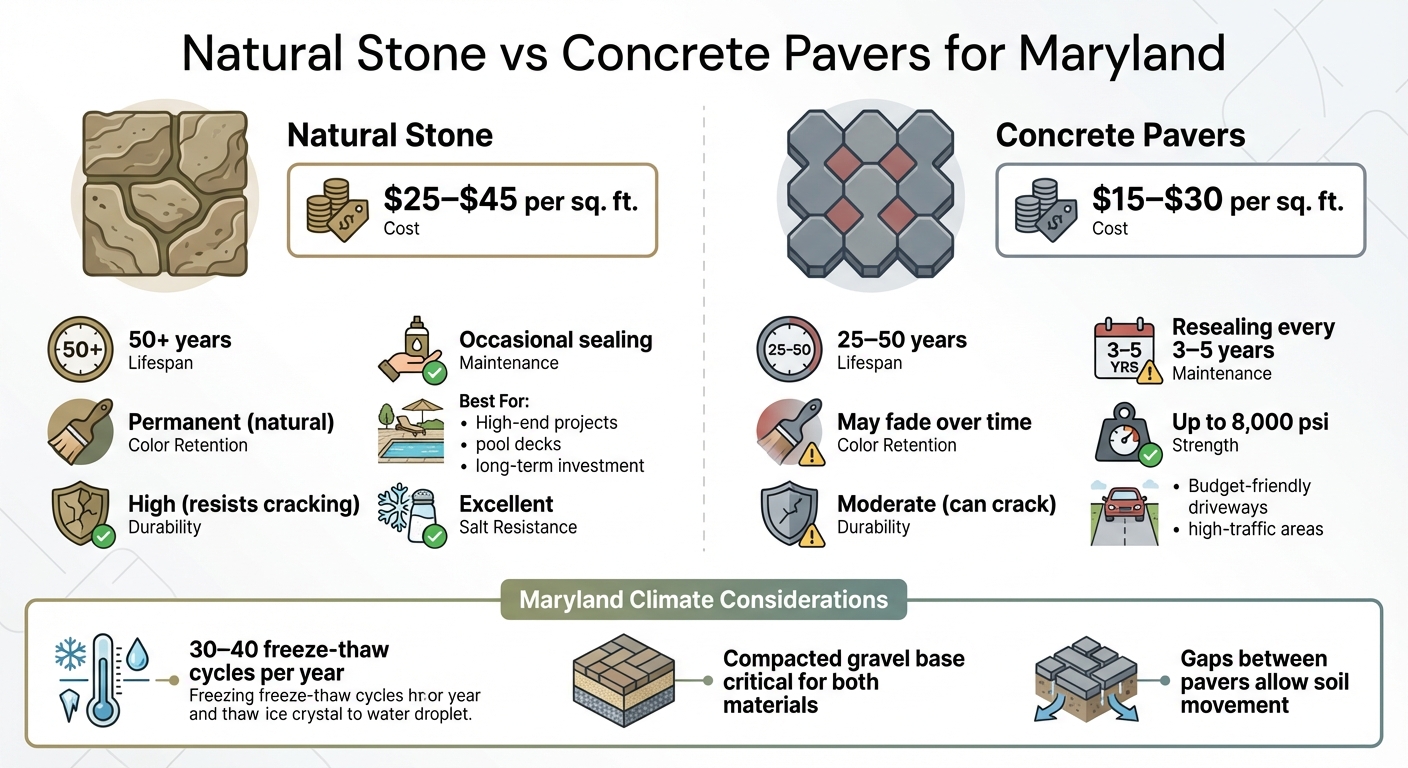
Natural Stone vs Concrete Pavers Comparison for Maryland Climate
Natural Stone Pavers for Maryland Properties
Natural Stone Characteristics
Natural stone pavers offer a one-of-a-kind look that factory-made materials just can’t match. Each piece of stone has its own unique blend of colors, textures, and patterns. For Maryland properties, Pennsylvania Bluestone is a crowd favorite, showcasing shades of blue, gray, brown, and even purple. Then there’s flagstone, which pairs beautifully with Maryland’s colonial and traditional-style homes. If you’re leaning toward a more Mediterranean vibe, travertine is the go-to option.
One practical perk? Natural stone’s granular texture makes it less slippery than smoother surfaces – something Marylanders appreciate, especially during those wet, rainy seasons. Plus, unlike concrete, natural stone’s color runs all the way through the material. That means it won’t fade, even after years under Maryland’s blazing summer sun.
These qualities make natural stone a durable and visually appealing choice for Maryland’s varied climate.
Benefits in Maryland’s Climate
Maryland’s weather can be tough, but natural stone can handle it. High-density stones like granite and thermal bluestone resist water infiltration, preventing damage from freezing and thawing. With Maryland experiencing 30 to 40 freeze-thaw cycles a year, that’s a big deal.
Granite is a standout in durability, lasting 30 to 50 years (or more). Its crystalline structure shrugs off temperature swings with ease. Meanwhile, travertine is a favorite for pool areas because it stays cool to the touch, even on those humid summer days when temperatures soar past 90°F. Another bonus? The gaps between pavers allow for natural movement as the soil expands and contracts, avoiding the cracks that often plague solid concrete surfaces.
Limitations to Consider
Of course, all these benefits come with some trade-offs.
First, there’s the price. Natural stone isn’t cheap. Expect to pay $20–$35 per square foot for Pennsylvania Bluestone, $25–$45 for travertine, and $30–$50 for flagstone (installed). That’s about 1.5 to 2 times more than what you’d spend on standard concrete pavers in Maryland. But for homeowners dealing with Maryland’s challenging seasons, the higher cost reflects the stone’s ability to perform under extreme conditions.
Installation can also be tricky. Natural stone varies in thickness more than manufactured options, so it needs a deeper, well-compacted gravel base to prevent shifting – especially in Maryland’s clay-heavy soils. And don’t forget about maintenance. Sealing is a must to protect the stone from winter salt and organic stains. If you’re considering travertine, make sure it’s Premium Grade with minimal voids. Lower grades can trap water, leading to cracks and crumbling when temperatures drop.
sbb-itb-843f8be
Concrete Pavers for Maryland Properties
Concrete Paver Characteristics
Concrete pavers are crafted from cement, aggregates, and pigments, offering a broad range of colors and textures to suit various design preferences. Their uniform sizes and consistent thickness make installation easier, ensuring a smooth, level surface.
Thanks to their manufacturing process, concrete pavers are exceptionally strong and durable. They can handle up to 8,000 psi[1], far surpassing the 2,500 psi typical of standard poured concrete. This makes them an excellent option for high-traffic areas like driveways, where Maryland homeowners need surfaces that can handle heavy vehicles and frequent use.
This level of consistency also ensures they perform well in Maryland’s variable climate.
Benefits in Maryland’s Climate
Concrete pavers are designed to adapt to Maryland’s freeze-thaw cycles. The intentional gaps between pavers allow for natural movement, preventing widespread cracking as the soil shifts, sinks, or expands during the cold winters.
Another advantage? Damaged pavers can be replaced individually, making repairs straightforward and cost-effective. This feature is particularly useful in Maryland, where harsh winters and summer storms can take a toll on outdoor surfaces. With proper care, concrete pavers can last 20 to 30 years. Installation costs typically range from $10 to $20 per square foot[2], which is notably more affordable than natural stone, often costing three to four times as much.
These features make concrete pavers a practical and durable choice for Maryland homes.
Limitations to Consider
While concrete pavers are budget-friendly upfront, they come with a few trade-offs. Concrete tends to absorb stains, so regular cleaning and resealing are necessary to protect against Maryland’s weather. Unlike natural stone, where the color is consistent throughout, concrete pavers use surface pigments that can fade over time, especially under the intense summer sun.
Joint maintenance is another consideration. You’ll need to keep an eye on weed growth and dust accumulation between pavers to maintain their appearance and structure. While they handle freeze-thaw cycles better than poured concrete, concrete pavers are still more vulnerable to cracking and weather-related wear compared to dense natural stone. Periodic maintenance is essential to keep them looking and performing their best.
These factors are worth weighing when choosing materials for Maryland’s unpredictable weather patterns.
Natural Stone vs Concrete Pavers: Direct Comparison
Cost, Durability, and Maintenance Comparison
In Maryland’s unpredictable climate, understanding how natural stone and concrete pavers perform is key. Natural stone comes in at $25–$45 per square foot, while concrete pavers are more budget-friendly at $15–$30 per square foot. While natural stone has a higher upfront cost, its longevity and minimal upkeep often make it a worthwhile investment.
Natural stone boasts a lifespan of 50+ years, sometimes outlasting the property itself. Concrete pavers, on the other hand, offer a lifespan of 25–50 years. Both materials handle Maryland’s freeze-thaw cycles effectively but in distinct ways. Concrete pavers rely on interlocking joints that adapt to soil movement, reducing the risk of extensive cracking. Meanwhile, natural stone – especially durable types like granite or bluestone – resists cracking due to its inherent strength and natural UV resistance, which also keeps its color intact over time.
Maintenance requirements vary between the two. Natural stone needs occasional cleaning and sealing, but its color holds up without much additional effort. Concrete pavers require sealing every 3–5 years to combat fading from Maryland’s intense summer sun and to protect against surface wear caused by de-icing salts. Both options allow for individual paver replacement if damage occurs, making repairs manageable.
| Feature | Natural Stone | Concrete Pavers |
|---|---|---|
| Cost per sq. ft. | $25–$45 | $15–$30 |
| Lifespan | 50+ years | 25–50 years |
| Color Retention | Permanent (natural minerals) | May fade over time |
| Salt Resistance | Excellent (especially granite) | Moderate (requires sealing) |
| Maintenance | Low; occasional cleaning/sealing | Moderate; seal every 3–5 years |
When deciding, think about how these features align with the needs of your specific project.
Choosing the Right Material for Your Project
The type of project you’re tackling plays a big role in material selection. For driveways in Maryland, where heavy vehicles and winter salt are common, high-strength concrete pavers or thick granite are ideal. Concrete pavers can reach up to 8,000 psi[1] in compressive strength, making them a solid choice for high-traffic areas.
For pool decks or areas where you’ll be barefoot, natural stone – especially in lighter shades – stays cooler under the summer sun compared to darker concrete pavers. This can make a big difference in comfort during Maryland’s humid, hot summers.
Think about the long-term when weighing your options. If you plan to stay in your home for 20 years or more, natural stone offers durability that avoids the need for replacement. Concrete pavers, while less expensive upfront, come with predictable maintenance costs over time. No matter which material you choose, ensure your installer uses a properly compacted crushed stone base to handle Maryland’s clay-heavy soils and the challenges of freeze-thaw cycles.
Pro Landscapes MD: Professional Paver Installation

Hardscaping Services for Maryland Properties
Pro Landscapes MD specializes in natural stone and concrete paver installations that are built to handle Maryland’s tough freeze-thaw cycles. They start every project with thorough subgrade preparation to reduce the risk of cracking. Pavers are installed with carefully planned gaps to allow for natural expansion and contraction. For driveways, they use materials capable of withstanding up to 8,000 psi – far exceeding the 2,500 psi strength of standard concrete [1].
This attention to detail ensures high-quality results across a variety of projects.
Their services include the installation of flagstone and paver patios, walkways, driveways, retaining walls, and natural stone steps. Each project is designed with customized drainage solutions, such as French drains and durable stormwater systems, to effectively manage heavy rainfall and snowmelt. These drainage strategies align with their focus on addressing Maryland’s specific climate challenges.
Service Areas and Customer Satisfaction
Pro Landscapes MD combines local expertise with a commitment to delivering superior craftsmanship and customer satisfaction.
They serve central Maryland, covering counties like Howard, Montgomery, Carroll, Frederick, Prince George’s, and Baltimore. Their reach includes communities from Annapolis to Bethesda and Damascus to Sykesville. With a deep understanding of local soil conditions and weather patterns, they make informed decisions about everything from base materials to joint spacing. Additionally, they incorporate eco-conscious solutions by using environmental pavers that allow water to seep through, reducing runoff and promoting sustainability.
Pavers vs Concrete: 6 DIFFERENCES You Need to Know BEFORE Your Next Project!
Conclusion: Selecting Pavers for Maryland’s Climate
Both natural stone and concrete pavers perform well in Maryland’s unique climate when installed correctly. The choice between them boils down to your budget, preferred look, and long-term plans. With Maryland experiencing 30–50 freeze-thaw cycles annually, proper installation is critical. The gaps between pavers are designed to absorb soil movement, reducing the risk of cracking – a common issue with poured concrete surfaces [3].
Cost plays a major role, both upfront and over time. Concrete pavers typically range from $15–$25 per square foot, while natural stone comes in higher at $25–$45 [3]. However, the durability of pavers is a significant advantage. When maintained, they can last 50–100 years, far outliving poured concrete, which averages about 25 years [1]. Plus, damaged pavers can be replaced individually without disturbing the rest of the surface [1].
Maintenance is another key factor to consider. Concrete pavers need resealing every 3–5 years, while natural stone requires occasional sealing to limit moisture absorption [3][4]. Using polymeric sand in the joints not only stabilizes the pavers but also helps prevent weeds from sprouting [3][5]. Ultimately, your decision should balance your budget with the demands of Maryland’s seasons.
Don’t forget that a strong foundation is essential for longevity. A compacted gravel base – 4–6 inches for patios and 6–8 inches for driveways – can prevent winter heaving, ensuring your pavers withstand Maryland’s challenging weather conditions [3][5].
FAQs
Which paver type adds more resale value in Maryland?
Pavers in Maryland often bring more resale value to properties compared to natural stone. Their cost-effectiveness, flexibility in design, and ease of maintenance make them a go-to option for boosting curb appeal and property value. While natural stone is admired for its classic elegance, its higher price tag and more intricate installation process can make it less appealing for resale purposes in the local market. As a result, pavers tend to be the smarter financial choice.
What paver base thickness is needed for a patio or driveway?
For patios, a 4-inch paver base is generally enough to provide stability. However, for driveways, it’s better to go with a 6-inch base to handle the extra weight and wear. These measurements are key to building a strong, durable foundation for your outdoor areas.
How can I prevent weeds and shifting between pavers?
To keep weeds from sprouting and to stop your pavers from shifting, start by pulling out any weeds by hand. Next, apply a weed barrier or joint sand, such as polymeric sand, to lock the pavers in place and prevent weed growth. Make it a habit to check the area regularly, remove any new weeds right away, and top up the joint sand when needed. With consistent care, your pavers will stay secure and weed-free.
Chat with Us