









- bhavya gada
- No Comments
Pollinators, especially bees, need safe nesting sites to survive, but Maryland’s urban growth has reduced natural options like tree cavities and soil nests. Artificial shelters, such as bee hotels, offer an alternative, but each option has distinct pros and cons.
Key Points:
- Natural Shelters: Found in tree cavities, underground tunnels, and hollow stems. They offer better climate stability and predator protection but are disappearing due to urban sprawl.
- Artificial Shelters: Bee hotels and blocks mimic natural nests and work well in cities. However, they require maintenance and often attract fewer species.
- Comparison: Natural shelters support biodiversity but are harder to control. Artificial shelters are customizable but need upkeep and can face higher parasite risks.
Quick Comparison:
| Feature | Natural Shelters | Artificial Shelters |
|---|---|---|
| Cost | Free (uses existing features) | Low to high (DIY to commercial kits) |
| Maintenance | Minimal | Requires regular cleaning |
| Biodiversity Support | High | Moderate |
| Climate Protection | Excellent | Moderate (varies by design) |
| Parasite Risk | Low | High |
| Longevity | Natural decay cycles | Dependent on upkeep |
Blending both shelter types in landscapes – like preserving bare soil for ground-nesting bees and adding bee hotels – can help maintain pollinator populations in Maryland.
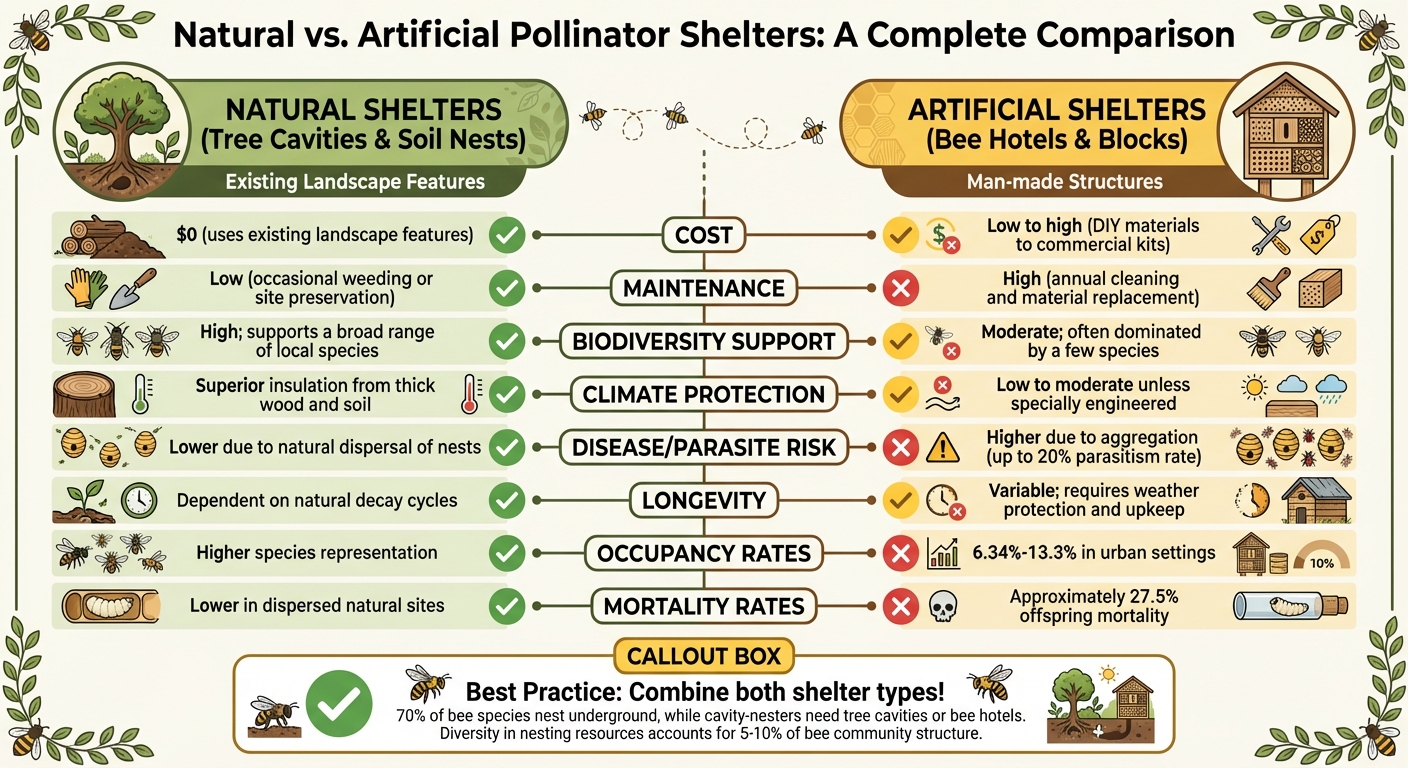
Natural vs Artificial Pollinator Shelters Comparison Chart
Bring Back the Pollinators: Providing Nest Habitat for Bees
sbb-itb-843f8be
Natural Pollinator Shelters: Tree Cavities and Soil Nests
In Maryland’s ecosystems, pollinators primarily rely on two types of natural shelters: tree cavities and soil nests. Tree cavities, found in dead or decaying wood like standing snags, fallen logs, and hollow branches, provide excellent temperature regulation due to their thick, insulating walls. These natural structures also act as strong barriers against predators and protect against harsh conditions such as wind and rain [1].
Ground-nesting bees make up the majority of all bee species [2]. Families like Andrenidae, Melittidae, and most Halictidae dig underground tunnels, favoring soil that is exposed, well-drained, and loose. In Maryland, these bees thrive in sunny meadows, forest edges, and tree rows where the soil remains accessible and minimally compacted.
This diversity in nesting habits enhances the structure of local bee communities, contributing 5–10% to overall biodiversity [2][4]. Semi-natural habitats, such as forest edges, provide additional nesting options, allowing various species to coexist within a single landscape [4]. Research on cavity-nesting bees has shown that only 34.3% of field species use artificial trap-nests, meaning nearly two-thirds depend exclusively on natural sites [3].
"Natural tree cavities offer superior environmental stability compared to standard artificial hives. Specifically, they function as robust shields against predators and provide a critical buffer against harsh weather conditions like wind and rain." – HonestBee [1]
Unfortunately, urban development in Maryland is reducing these essential nesting sites. Construction leads to soil compaction, dead trees are often removed for safety or aesthetic reasons, and impervious surfaces like pavement cover critical areas [2]. To counteract this loss, preserving features such as snags, bare soil patches, and pithy plant stems (e.g., elderberry and sumac) is vital for maintaining pollinator populations.
Pros and Cons of Natural Shelters
Natural pollinator shelters have clear benefits but also come with limitations that landowners and conservationists should weigh.
| Feature | Advantages | Disadvantages |
|---|---|---|
| Climate Control | Thick wood walls stabilize temperatures [1]. | Cannot shield against extreme weather entirely. |
| Predator Protection | Strong physical barriers deter predators [1]. | Nests cannot be relocated if threats emerge. |
| Disease Resistance | Natural dispersal reduces parasite concentrations. | Vulnerable to flooding or decay, which can wipe out colonies. |
| Biodiversity | Supports a wide range of specialist species and ecological interactions [2][4]. | Scarce in urbanized or heavily managed areas. |
| Placement | Blends seamlessly into ecosystems. | Fixed locations may not align with nearby foraging areas. |
| Maintenance | Requires no upkeep or cleaning. | No way to monitor or intervene in nest health. |
The main drawback of natural shelters is the lack of control. For instance, a tree cavity cannot be relocated to a safer or more suitable area, and soil nests are vulnerable to nearby disturbances like construction. However, their self-sustaining qualities and ability to buffer environmental extremes make them irreplaceable for supporting Maryland’s native pollinators. With this understanding of natural shelters, the next step is to explore artificial alternatives that can help address the challenges of urban nesting.
Artificial Pollinator Shelters: Bee Hotels and Bee Blocks
With the decline of natural nesting sites, artificial shelters provide an alternative for pollinators, especially in urban areas.
Artificial pollinator shelters – commonly called bee hotels or bee blocks – are man-made structures designed to imitate natural nesting spots like tree cavities and hollow plant stems. These shelters are typically created using preservative-free wood (such as pine, cedar, or oak), bundles of hollow stems (like bamboo or reeds), or stems with soft centers (such as elderberry or raspberry) that certain bee species can hollow out themselves [5][2].
The design of these shelters can be customized to cater to specific bee species. Nesting holes are usually drilled with diameters less than 1 cm and lengths of 6–8 inches to suit various bees. For instance, Hylaeus species prefer smaller holes (1–4 mm), while Osmia and Megachile species favor slightly larger openings (5–8 mm) [5].
To maximize effectiveness, bee hotels should be mounted on stable surfaces like walls, fences, or poles, positioned 3–6 feet above the ground, and oriented south or southeast for optimal sunlight exposure. The entrance should remain unobstructed by vegetation and be placed within 100–200 yards of a reliable pollen source [5][8]. Adding visual cues, such as colored tubes (blue, white, or yellow) or varying tube lengths, can help bees locate their nests more easily [7]. These thoughtful placement and design choices make bee hotels a practical addition to urban Maryland landscapes.
In Maryland’s urban and suburban areas, where landscaping often eliminates natural nesting options like dead trees and bare soil, these shelters have grown in popularity [6][2]. A notable example comes from Lyon, France, where researchers installed large wooden bee hotels (approximately 13 × 6.5 ft) across 16 urban sites between 2010 and 2013. Over two years, they collected 3,102 specimens from 21 species, with Osmia cornuta and Osmia bicornis dominating the populations [2]. This study highlights how artificial shelters can support diverse pollinator communities in developed environments.
"Providing human-made nesting structures in the urban environment may be a useful tool to study bee communities and possibly locally sustain and increase the population of a range of species." – Fortel et al. [2]
Pros and Cons of Artificial Shelters
Artificial pollinator shelters have their benefits but also come with challenges, particularly when it comes to upkeep.
| Feature | Advantages | Disadvantages |
|---|---|---|
| Customization | Attracts specific bee species by tailoring hole diameters [5]. | High-density use can lead to parasite infestations [5][6]. |
| Monitoring | Allows easy observation of bee activity and capped tubes [5]. | Requires annual cleaning or replacement to prevent disease [5][8]. |
| Urban Adaptation | Provides nesting options where natural resources are scarce [6][2]. | Thin-walled designs may be vulnerable to extreme temperature changes [1]. |
| Educational Value | Encourages community involvement and offers a chance to observe bee behavior [5]. | Occupancy rates in urban areas can be low (6.34%–13.3%) [6]. |
| Flexibility | Can be installed on balconies, garden walls, or other small spaces [2][5]. | Unprotected nests risk near-total destruction by predators like woodpeckers [7]. |
| Maintenance | Enables proactive care to maintain nest health. | Urban bee hotels face an average offspring mortality rate of 27.5% [6]. |
One of the biggest challenges with artificial shelters is maintenance. Unlike natural cavities, which are self-regulating, bee hotels need regular upkeep to prevent issues like parasite infestations. Common culprits include Gasteruptiidae wasps and Bombyliid flies [5][6]. Using replaceable liners made of paper or cardboard can make cleaning and maintenance easier [7].
For Maryland homeowners dedicated to supporting pollinators, artificial shelters are a practical and impactful way to compensate for the lack of natural nesting sites in urban and suburban areas.
Natural vs. Artificial Shelters: Side-by-Side Comparison
When deciding how to incorporate pollinator shelters into Maryland landscapes, it’s helpful to weigh the pros and cons of natural and artificial options. Natural shelters, like tree cavities, dead wood, and bare soil patches, use the environment’s existing features and come at little to no cost. On the other hand, artificial shelters – such as bee hotels or wooden blocks – require an upfront investment. These can range from simple DIY projects to pricier commercial kits, designed to fill gaps where natural nesting spots are scarce [1][9]. This initial cost highlights other important distinctions, including maintenance and biodiversity.
Maintenance is a key difference between the two. Natural shelters need little to no upkeep [2]. Artificial shelters, however, require regular care, such as cleaning or replacing nesting tubes annually, to avoid issues like parasite infestations or disease spread [5]. Research even shows that artificial nests can experience parasitism rates of up to 20% [6].
Biodiversity support also varies significantly. Natural shelters cater to a wide range of bee species, including specialists with unique nesting needs. In contrast, artificial shelters often attract only a few dominant, gregarious species. Studies reveal that just 21.9% to 34.3% of cavity-nesting species use artificial shelters, with urban occupancy rates as low as 6.34% to 13.3% [6].
Another critical factor is climate resilience. Maryland’s unpredictable climate makes natural shelters more reliable. Tree trunks and deep soil nests provide excellent thermal insulation and protection from harsh weather, such as cold winters [1]. Artificial shelters, unless specifically designed, don’t offer the same level of protection. As the HonestBee Tech Team explains:
"Natural tree cavities offer superior environmental stability compared to standard artificial hives… they function as robust shields against predators and provide a critical buffer against harsh weather conditions like wind and rain" [1].
Comparison Table: Natural vs. Artificial Shelters
| Feature | Natural Shelters (Tree Cavities/Soil) | Artificial Shelters (Bee Hotels/Blocks) |
|---|---|---|
| Upfront Cost | $0 (uses existing landscape features) | Low to high (DIY materials to commercial kits) |
| Maintenance | Low (occasional weeding or site preservation) | High (annual cleaning and material replacement) |
| Biodiversity Support | High; supports a broad range of local species [6] | Moderate; often dominated by a few species [2] |
| Climate Buffering | Superior insulation from thick wood and soil [1] | Low to moderate unless specially engineered [1] |
| Disease Risk | Lower due to natural dispersal of nests | Higher due to aggregation facilitating parasites [5] |
| Longevity | Dependent on natural decay cycles | Variable; requires weather protection and upkeep |
| Occupancy Rates | Higher species representation | 6.34%–13.3% in urban settings [6] |
| Mortality Rates | Lower in dispersed natural sites | Approximately 27.5% in artificial shelters [6] |
Adding Pollinator Shelters to Maryland Landscapes
Creating a pollinator-friendly landscape in Maryland involves blending natural and man-made shelters. Since most bee species are ground-nesters, it’s essential to include areas with bare or lightly covered soil for them to burrow into [2]. At the same time, cavity-nesting bees, such as those in the Megachilidae and Apidae families, thrive in shelters like drilled logs, hollow stems, or bee hotels [2]. By combining these elements, you can provide nesting opportunities for a wide variety of species.
You can integrate these features into your landscape design in creative ways. For instance, when working on patios or walkways, consider incorporating soil squares – small patches of local soil about 3.3 feet wide and 20 inches deep [2]. Similarly, bee hotels can be mounted on fences, shed walls, or garden structures. To optimize their effectiveness, position these hotels facing southeast, just above the flower line, so they get plenty of morning sunlight and remain unobstructed by vegetation [5].
When building artificial shelters, use a mix of materials. Drilled logs with hole diameters between 4 mm and 12 mm and depths of around 8 inches work well. Hollow or pithy plant stems from species like elderberry, raspberry, or bamboo are also excellent choices [2][5]. Avoid materials like heavy mulch, landscape fabric, or plastic barriers, as they can block bees from creating tunnels [2][10]. Instead, leave patches of exposed soil and clear away overgrown vegetation monthly to keep these areas accessible [2].
These specific design strategies enhance urban pollinator habitats and contribute to the diversity of bee communities, which can account for 5% to 10% of their overall structure [2]. To amplify the benefits, pair shelters with thoughtful plantings. Aim for at least 10 different flowering plant species, grouped in clumps, with at least three species blooming at any time from March through November. Native bees are particularly drawn to white, yellow, and blue-purple flowers [10].
Pro Landscapes MD: Creating Eco-Friendly Outdoor Spaces
For those looking to implement these strategies, Pro Landscapes MD offers expert assistance in designing pollinator-friendly landscapes. Their tree services can safely manage snags and create log piles or drilled-log shelters from removed limbs, ensuring that natural nesting substrates are preserved [2]. They also replace traditional heavy mulching with native ground covers or clustered floral arrangements, which maintain critical access points for nesting [10].
Pro Landscapes MD’s hardscaping skills allow them to incorporate permanent soil squares into garden designs, giving ground-nesting bees stable sites even in urban areas. They also install environmental pavers, enabling the creation of outdoor kitchens, fire pits, and seating areas that complement pollinator habitats. This approach ensures you can enjoy a functional outdoor space while supporting local ecosystems [2].
Conclusion
Both natural and artificial pollinator shelters are crucial for supporting Maryland’s bee populations. Natural shelters, like tree cavities, provide excellent climate control and protection from predators [1]. On the other hand, artificial options, such as bee hotels and soil squares, help address the nesting shortages caused by urban development and soil compaction [2][6]. Studies indicate that around 5% to 10% of bee community structure depends on the variety of nesting resources available [2], which underscores the importance of diverse shelter options for thriving bee populations.
The best approach is to combine both natural and artificial shelters. Since roughly 70% of bee species nest underground [11], preserving bare soil patches is just as critical as installing bee hotels for species that prefer cavities. However, artificial shelters come with their own challenges – without regular maintenance, they can lead to parasite buildup, contributing to a 27.5% offspring mortality rate [6]. This highlights the need for careful design, proper placement, and ongoing upkeep.
Maryland homeowners can take a strategic approach by integrating both shelter types into their landscapes. Pro Landscapes MD offers expert services to help create cohesive outdoor spaces that support pollinators while enhancing property aesthetics. Whether it’s incorporating soil squares into patio designs, pairing native plantings with shelters, or providing guidance on maintaining artificial nests, their expertise can transform your yard into a pollinator-friendly haven.
With thoughtful planning and professional assistance, you can design a beautiful, functional outdoor space that not only nurtures vital pollinators but also elevates your property’s appeal.
FAQs
Which bees will use a bee hotel?
Bee hotels are primarily designed for cavity-nesting bees, such as solitary bees. These bees typically make their homes in wood, plant stems, or soil. However, they easily adjust to using human-made structures like nest boxes or the cavities found in bee hotels. These shelters serve as alternatives to their usual natural nesting spots.
How can I prevent a bee hotel from spreading pests and disease?
To keep pests and diseases at bay in a bee hotel, it’s best to use untreated wood and other natural materials. Regularly replacing nesting materials is also key. Overcrowding should be avoided, as it raises the chances of diseases spreading among the bees. Routine care, like cleaning and keeping an eye on the hotel, helps ensure it stays a safe and healthy space for pollinators.
What’s the easiest way to add ground-nesting sites in a yard?
Creating bare soil patches or open spaces is a straightforward way to support solitary bees. Many of these bees prefer to nest in soil, so leaving undisturbed, exposed areas free of vegetation can provide the ideal conditions. While bee hotels are helpful for cavity-nesting bees, they’re not as beneficial for ground-nesting species. This makes natural soil patches an easy and practical option for encouraging nesting.
Chat with Us