









- bhavya gada
- No Comments
Permeable concrete is a smart choice for Maryland homeowners dealing with heavy rainfall, flooding, and icy winters. This material allows water to flow through its surface, reducing runoff, improving drainage, and protecting your property. Here’s why it stands out:
- Manages Stormwater Better: Absorbs water at speeds of up to 500 inches per hour, cutting runoff by 30%-80%.
- Reduces Flooding and Erosion: Prevents water pooling and erosion around foundations, lowering flood risks.
- Improves Water Quality: Filters out pollutants like oil and sediments, keeping groundwater cleaner.
- Keeps Areas Cooler: Reflects sunlight and reduces heat absorption, making outdoor spaces more comfortable.
- Durable and Low Maintenance: Lasts 20-30 years with minimal upkeep, saving on long-term costs.
While installation costs range from $8 to $15 per square foot, the long-term savings and potential tax incentives make it a worthwhile investment. This eco-friendly option not only protects your home but also supports local water systems. For Maryland’s changing climate, permeable concrete is a practical and lasting solution.
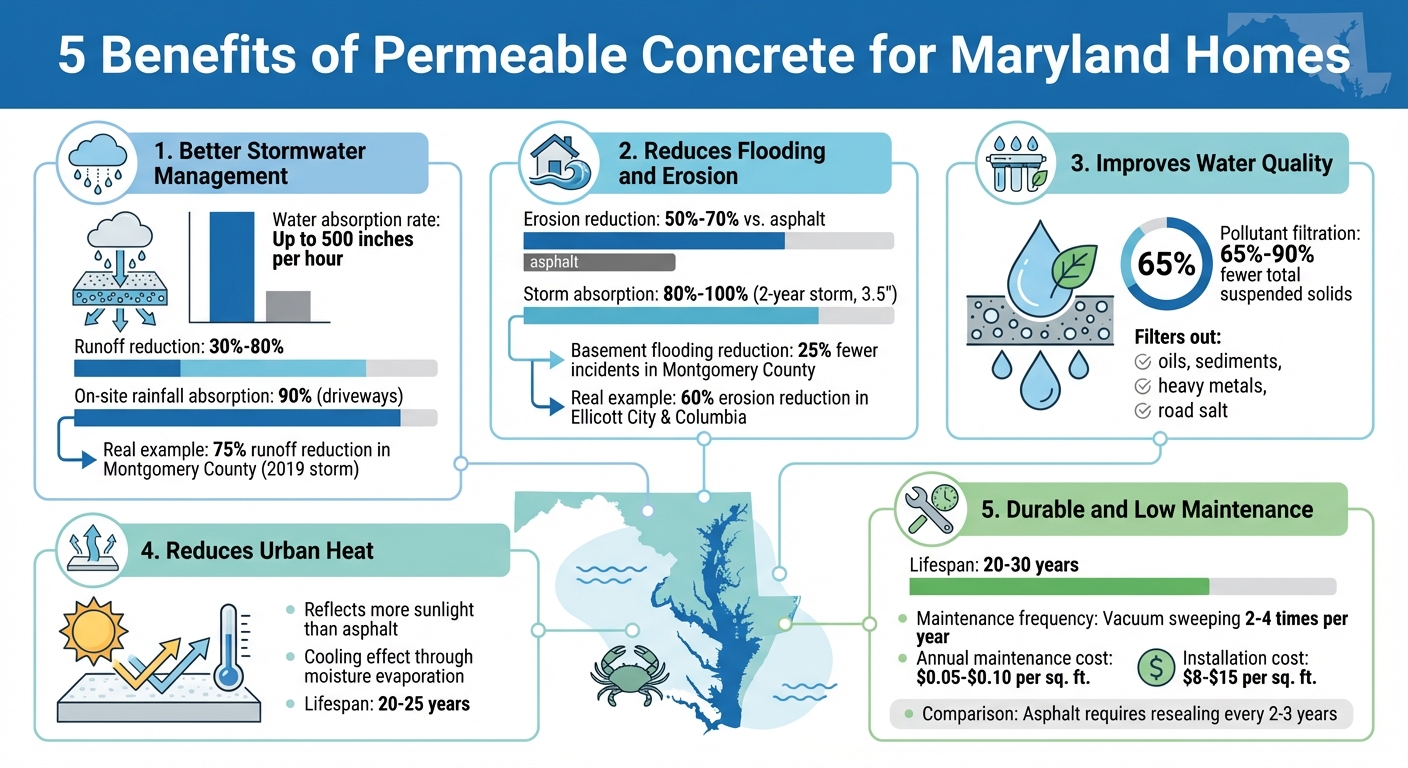
5 Key Benefits of Permeable Concrete for Maryland Homes: Statistics and Performance Data
1. Better Stormwater Management
Stormwater Infiltration and Runoff Reduction
Permeable concrete can handle water at speeds of up to 500 inches per hour, a stark contrast to traditional concrete, which blocks water entirely. Depending on soil conditions and the installation design, it can cut runoff by 30% to 80% [2][3]. With Maryland receiving around 40 to 45 inches of rain annually, this capability is especially useful [3]. For instance, a residential driveway with permeable concrete can absorb 90% of rainfall on-site [3]. In Montgomery County, Pro Landscapes MD installed a permeable paver driveway that reduced runoff by 75% during a 2019 storm, even preventing basement flooding [7].
This not only manages water effectively but also helps protect downstream water systems.
Water Quality Improvement
When rainwater filters through permeable concrete and the underlying aggregate, it undergoes natural purification. This process removes oils, sediments, and heavy metals before they can contaminate groundwater. A University of Maryland study found that this filtration reduces total suspended solids by 65% to 90% [5]. For Maryland homeowners, this is a big deal. The state has strict stormwater rules under the Chesapeake Bay Total Maximum Daily Load (TMDL), and using permeable surfaces helps meet these requirements while safeguarding local waterways [5].
Durability and Maintenance Requirements
Permeable concrete is built to last in Maryland’s climate, with a lifespan of 20 to 30 years when installed correctly [6]. Its porous structure even offers an advantage in winter, as it minimizes freeze-thaw damage that often cracks traditional concrete. Maintenance is simple: vacuum sweeping two to four times a year to keep the pores clear of debris, which costs around $0.05 to $0.10 per square foot annually [6].
sbb-itb-843f8be
2. Less Flooding and Erosion
Flood Prevention and Erosion Control
Permeable concrete goes beyond improving stormwater management – it actively helps reduce flooding and erosion. Unlike traditional impervious surfaces, which can increase runoff by up to 20 times and lead to flash floods, permeable concrete allows water to seep into the ground, mirroring natural infiltration. This approach significantly lowers the risks of flooding and erosion, as shown by local projects that highlight its effectiveness.
For example, in Ellicott City and Columbia, projects using permeable concrete saw a 60% reduction in erosion and no surface ponding during heavy storms[8]. The benefits don’t stop at flood prevention. By slowing down water flow and encouraging absorption, permeable concrete minimizes soil erosion around foundations and slopes. Research shows it can cut erosion by 50% to 70% compared to asphalt surfaces – a critical advantage in Maryland’s hilly areas like Howard County[4][5]. When paired with proper grading, such as maintaining a 2% slope away from foundations, this system helps stabilize soil and safeguard your home’s structural foundation.
On a broader scale, communities also see tangible benefits. Homeowners in Montgomery County who switched to permeable pavements reported 25% fewer basement flooding incidents[7]. During a typical 2-year storm (about 3.5 inches of rain), permeable concrete can absorb 80% to 100% of rainfall on-site, drastically reducing peak runoff and erosion damage. This means that beyond protecting individual properties, permeable concrete strengthens neighborhoods, making them more resilient to severe weather events.
3. Improved Groundwater Recharge and Water Quality
Water Quality Improvement
Permeable concrete does more than just manage stormwater – it actively filters rainwater, keeping pollutants like oil, road salt, and debris out of Maryland’s streams and rivers. This natural filtration process not only reduces runoff and erosion but also helps protect local waterways from contamination.
Beyond filtering out pollutants, permeable concrete supports Maryland’s groundwater reserves by letting water seep back into the earth instead of flowing away. This process is especially vital during dry summer months when water tables often need replenishment. By preserving the natural water cycle, permeable concrete provides a twofold benefit: it improves water quality while helping to recharge underground water supplies. In essence, every rainfall becomes a chance to clean and restore, turning a driveway or patio into a small-scale environmental ally.
For homeowners in areas like Howard County and Montgomery County, this recharge capability is key to maintaining healthy aquifers that supply wells and sustain local ecosystems. Some municipalities in Maryland even offer tax incentives or reduced stormwater fees for installing permeable surfaces, making it easier for residents to contribute to water conservation efforts while enjoying financial benefits.
Pros and Cons of Pervious Concrete – Vlog #168
4. Eco-Friendly and Reduces Urban Heat
Permeable concrete doesn’t just handle stormwater well – it also helps keep Maryland neighborhoods cooler during those sweltering summer months. Unlike asphalt, which tends to trap and hold heat, permeable concrete is made with a lighter mix that reflects more sunlight and absorbs less heat [1].
This material also allows water to seep into the ground, keeping the soil moist. That moisture cools the surrounding area through evaporation, all while the concrete remains stable and avoids heat-related damage like rutting [1]. This combination of features makes it a standout choice for densely populated urban areas.
Lower temperatures in urban neighborhoods bring noticeable benefits. Residents in places like Bethesda, Silver Spring, or Towson may find their outdoor spaces more enjoyable and comfortable, thanks to the cooling effects of permeable concrete.
Another bonus? Its durability. Unlike traditional asphalt, which often needs resealing every 2–3 years, permeable concrete requires only occasional cleaning to clear out debris from its pores. This simple upkeep helps maintain its functionality and cooling properties, with a lifespan of 20–25 years [1].
For those looking to incorporate these eco-friendly benefits, local professionals like Pro Landscapes MD can help create modern landscaping and hardscaping projects using permeable concrete.
5. Easy Maintenance and Long-Lasting Performance
Durability and Maintenance Requirements
Permeable concrete is surprisingly low-maintenance. It only needs occasional cleaning, like vacuuming or power washing, to keep its pores free of debris. Compare that to asphalt, which typically requires resealing every 2–3 years, and the difference is clear. Plus, with a lifespan of 20–25 years, permeable concrete offers a reliable, long-term solution for Maryland homes.
Maryland winters can be tough on traditional surfaces. When water freezes and expands on conventional materials, it can lead to cracks that worsen over time. Permeable concrete, however, allows water to filter through instead of pooling on the surface. This reduces freeze-thaw damage, meaning fewer cracks and less need for costly repairs. For homeowners, this durability translates into fewer headaches and a better return on investment.
While the upfront cost of permeable concrete ranges from $8–$15 per square foot, the long-term savings are hard to ignore. Its lower maintenance demands, reduced repair needs, and ability to handle drainage issues make it a cost-effective choice. Homeowners may even see additional savings from reduced municipal stormwater fees and fewer foundation problems linked to poor drainage [1]. These practical benefits, combined with its eco-friendly and stormwater management advantages, make permeable concrete a smart investment for Maryland properties.
Conclusion
Permeable concrete offers Maryland homeowners a smart and environmentally conscious solution that addresses the region’s specific climate challenges. It tackles issues like heavy rainfall, flooding risks, and pollutant filtration while helping to recharge local groundwater. Plus, its ability to resist freeze-thaw cycles means fewer cracks, less maintenance, and longer-lasting durability compared to traditional hardscaping options.
While the upfront cost may be higher than standard concrete, the long-term savings and benefits make it a worthwhile investment. With reduced maintenance needs and potential savings on stormwater fees and drainage infrastructure, permeable concrete can offset its initial expense over time. It also helps lower your property’s overall environmental impact while enhancing its functionality.
Proper installation is key to getting the most out of permeable concrete. Pro Landscapes MD specializes in hardscaping services tailored to central Maryland’s climate, including permeable concrete driveways, patios, and stormwater management solutions. Their experienced team is ready to handle every detail, ensuring your project is both effective and durable.
If you’re considering upgrading your driveway, adding a patio, or improving your property’s drainage, permeable concrete is a practical choice. It not only protects your home but also supports the environment. For professional installation and a custom quote, contact Pro Landscapes MD at https://prolandscapesmd.com.
FAQs
Will permeable concrete work with Maryland’s clay soils?
Permeable concrete can be effective in Maryland’s clay soils if it’s designed and installed correctly. This type of pavement lets stormwater flow through, allowing it to soak into the soil beneath. This process helps control water runoff and improves stormwater management.
Can permeable concrete handle snow, ice, and road salt?
Permeable concrete is capable of withstanding snow, ice, and road salt, but prolonged exposure to salt can eventually cause damage. Over time, salt may lead to corrosion and cracking if the surface isn’t properly maintained. To preserve its strength and longevity, it’s crucial to limit salt exposure and implement steps to safeguard the concrete.
How do I prevent permeable concrete from clogging over time?
To keep permeable concrete functioning properly, regular upkeep is essential. Clear away debris such as leaves, sediment, and grass clippings, and make it a habit to vacuum sweep the surface once or twice a year to remove any sediment buildup. During winter, skip the sand – it can clog the pores. Use gravel as a safer alternative. After storms, check the pavement for proper drainage and deal with any ponding water quickly to avoid long-term clogging problems.
Chat with Us