









- bhavya gada
- No Comments
Permeable pavers are a smart solution for managing water runoff compared to traditional paving methods like concrete or asphalt. They allow water to seep into the ground through open joints and layered stone bases, reducing runoff by up to 90% and absorbing water 5–10 times faster. In contrast, traditional paving blocks water, leading to pooling, erosion, and overloaded storm drains. While permeable pavers cost more upfront ($10–$40/sq. ft. vs. $8–$25/sq. ft.), they help prevent flooding, protect foundations, and improve groundwater recharge.
Key Differences:
- Runoff Reduction: Permeable pavers cut runoff by 70–90%, while traditional paving only reduces it by 20–30%.
- Drainage Speed: Permeable systems absorb water much faster, preventing pooling.
- Freeze-Thaw Durability: They resist cracking and ice patches better than standard paving.
- Maintenance: Annual vacuum sweeping keeps them effective, while traditional paving requires crack repairs and resealing.
For Maryland homeowners, permeable pavers are ideal due to local stormwater regulations and rebate programs offering up to $14/sq. ft., making them a cost-effective, long-term drainage solution.
Advantages of Using Porous Pavement vs Concrete or Asphalt with Brian Holers of Root Cause Seattle

sbb-itb-843f8be
What Are Permeable Pavers?
Permeable pavers are designed as part of a stormwater management system that lets water seep into the ground naturally. Unlike standard paving, which relies on fine materials to block water, these systems use interlocking pavers with coarse, clean stone in the joints and a specially engineered, open-graded stone base underneath[2]. While the pavers themselves are typically non-porous, the system’s ability to absorb water comes from the open joints and the carefully designed subsurface layers[3].
Beneath the surface, an open-graded stone base supports the pavers and serves as a temporary reservoir for rainwater. Depending on the application, the depth of this stone base varies: 8–12 inches for residential patios, 12–18 inches for driveways, and 18–24+ inches for commercial areas or spaces with heavy vehicle traffic[2]. This layer holds water before it gradually infiltrates into the soil, a process that usually happens within 24 hours[3].
This system mimics the way natural landscapes handle rainfall. Instead of directing water to storm drains, it temporarily stores runoff and slowly releases it into the ground. As water percolates through the layers of stone, soil microorganisms help filter out pollutants like chemicals, oil, and sediments, ensuring cleaner water reaches groundwater supplies[3].
Another advantage of permeable pavers is their performance in freeze-thaw cycles. Because water drains efficiently, pooling is minimized, which reduces freeze-thaw damage and the need for de-icing chemicals[2]. This makes them a reliable choice for areas prone to harsh winters, adding to their overall effectiveness in managing drainage.
What Is Standard Paving?
Standard paving relies on materials like asphalt and concrete to create hard, impermeable surfaces. These surfaces prevent rainwater from soaking into the ground, forcing it to flow across the top instead. Water runoff is directed toward storm drains or pools in low areas, as it can only seep through the tiny joints between stones – far from sufficient during heavy rainfall. Landscaping expert Calvin van Eck from Panda Pavers explains:
"Regular concrete slabs? They just send water running everywhere." [1]
This design flaw leads to a range of drainage issues. Runoff from these surfaces carries pollutants like oil, chemicals, and debris, which flow into storm drains and, ultimately, into local waterways. In Maryland, including Montgomery County, stormwater often enters creeks and streams untreated. The Little Falls Watershed Alliance highlights the problem:
"Everything that is washed into the water by the rain – trash, oil, dirt, chemicals, dog wastes – is dumped into the creek polluting it." [3]
The impact doesn’t stop there. The sheer volume and speed of runoff can erode stream banks, destroy habitats, and cause localized flooding. In winter, these surfaces pose safety risks as trapped water forms ice patches on walkways. Poor drainage also damages building foundations, erodes soil, and creates standing water, which becomes a breeding ground for mosquitoes.
For instance, the Overlook Homeowners Association in Bethesda, Maryland, faced significant drainage problems in 2017 due to their asphalt parking lot. Runoff from the lot caused mudslides on walkways and severe erosion where storm drains emptied into Little Falls creek. Annually, this runoff contributed 0.284 pounds of phosphorus, 167.31 pounds of silt, and 5.99 pounds of nitrogen to the local watershed [3]. These pollutants could have been mitigated with improved drainage solutions.
Permeable Pavers vs. Standard Paving: Drainage Comparison
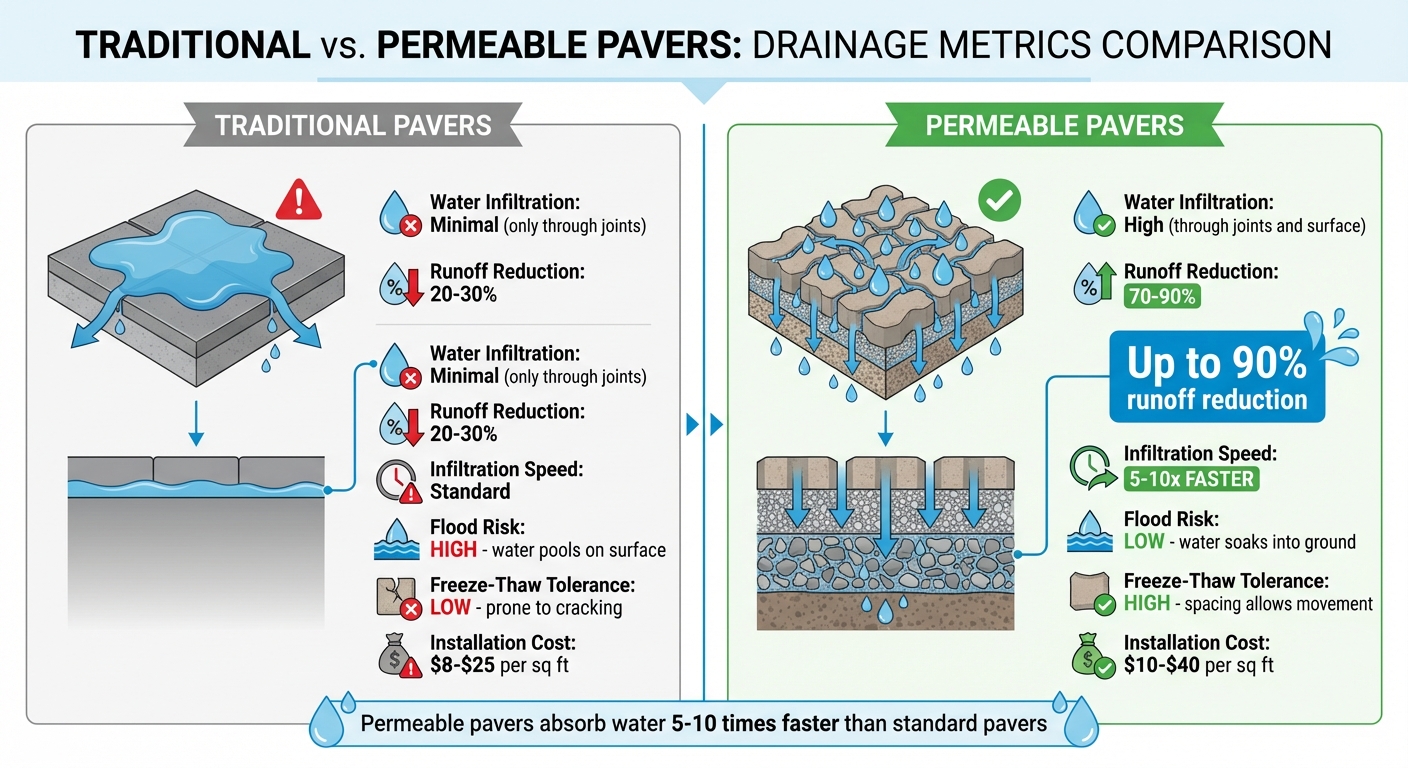
Permeable Pavers vs Traditional Paving: Drainage Performance Comparison
Drainage Performance
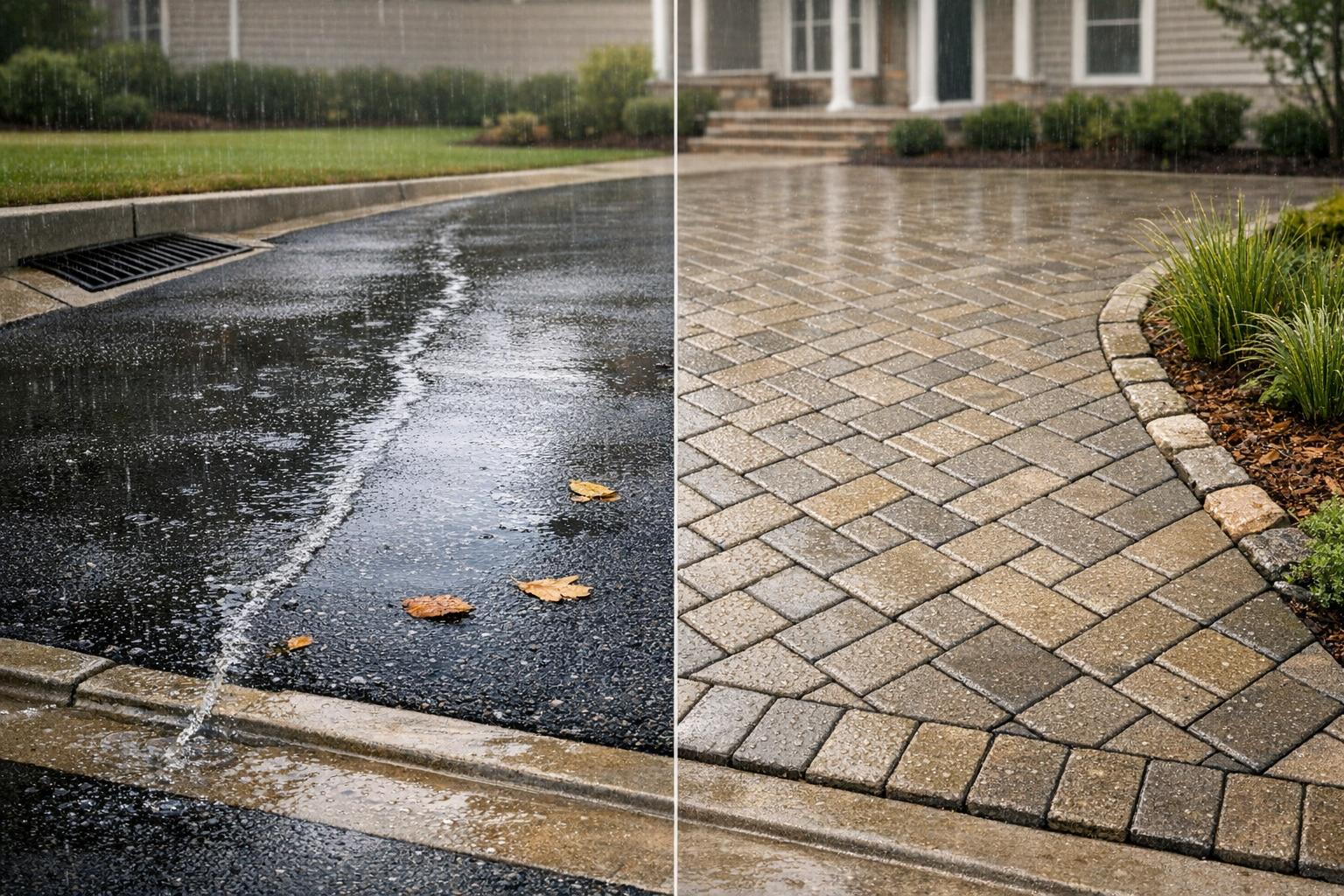
When it comes to drainage, the difference between standard paving and permeable pavers is night and day. Standard paving blocks nearly all water from seeping into the ground, forcing it toward storm drains or low-lying areas. In contrast, permeable pavers are designed to absorb water directly into the ground. Their wider joints and layered stone base act like a sponge, letting water flow through the surface and into the soil below – similar to how natural ground handles rain.
The performance gap is striking. Calvin van Eck, a landscaping expert from Panda Pavers, highlights this advantage:
"Permeable pavers… can soak up water 5 to 10 times faster than standard pavers, which makes them perfect for serious drainage problems or heavy rain." [1]
This quick absorption prevents water from pooling on the surface, reducing the chances of runoff and keeping neighboring areas dry.
Runoff Volume Reduction
Runoff is another area where permeable pavers outshine traditional options. Standard pavers only reduce runoff by 20–30%, and that’s mainly due to the narrow gaps between the stones [1]. On the other hand, permeable systems can cut runoff volumes by an impressive 70–90% [1]. This dramatic reduction helps ease the burden on municipal drainage systems during heavy storms. Calvin van Eck elaborates:
"Recent studies show that permeable paver systems cut stormwater runoff by up to 80% compared to regular concrete." [1]
Less runoff also means fewer pollutants are carried into nearby water bodies – a particularly important benefit for properties near sensitive ecosystems like Maryland’s Chesapeake Bay watershed.
Flood Risk Mitigation
Permeable pavers don’t just reduce runoff; they actively help prevent flooding. Localized flooding often occurs when water has no way to drain, a problem worsened by standard paving, which traps water on the surface. Permeable pavers address this issue by letting water percolate through the gaps between units and into the ground [4]. This eliminates surface pooling and significantly lowers the risk of flooding.
The benefits aren’t just limited to individual properties. As Woodfield Outdoors explains:
"By reducing the impervious surfaces (such as concrete and asphalt) around your home, you can also help reduce localized flooding." [4]
They also warn about the growing challenges of stormwater management:
"With increasingly severe storms, stormwater runoff can overwhelm municipal systems." [4]
Additionally, permeable pavers handle freeze-thaw cycles better than traditional surfaces. The gaps between the pavers allow for natural expansion and contraction, preventing cracks and reducing the formation of icy patches – a common hazard during Maryland’s cold winters.
Comparison Table
Here’s a quick breakdown of how traditional and permeable pavers stack up in terms of drainage and related features:
| Feature | Traditional Pavers | Permeable Pavers |
|---|---|---|
| Water Infiltration | Minimal (only through joints) | High (through joints and surface) |
| Runoff Reduction | 20–30% [1] | 70–90% [1] |
| Infiltration Speed | Standard | 5–10x faster [1] |
| Flood Risk | High; water pools on surface | Low; water soaks into ground |
| Freeze-Thaw Tolerance | Low; prone to cracking | High; spacing allows movement |
| Installation Cost | $8–$25 per square foot [1] | $10–$40 per square foot [1] |
Key Benefits of Permeable Pavers for Drainage
Groundwater Recharge
Permeable pavers are designed to capture rainwater and allow it to seep back into the ground, helping recharge aquifers right on-site. Their layered structure temporarily holds water before releasing it slowly into the subsoil, where it naturally replenishes underground water reserves.
This process not only reduces the burden on storm drain systems but also promotes healthier water cycles. Unlike traditional paving, which forces water into artificial drains and blocks natural recharge, permeable pavers restore the balance by letting water flow back into the earth.
Pollutant Filtration
In addition to aiding groundwater recharge, permeable pavers improve water quality. As rainwater moves through the stone joints and into the aggregate layers below, it undergoes a natural filtration process. These layers trap pollutants and sediments before the water reaches the groundwater supply. This is especially important in areas like Maryland, where runoff often carries harmful contaminants into the Chesapeake Bay watershed.
By managing water at its source, these systems prevent untreated pollutants from entering municipal storm drains and nearby waterways. Regular maintenance, like annual vacuum sweeping, keeps the system working efficiently by removing fine sediments that could clog the joints and reduce filtration effectiveness.
Erosion Prevention
Permeable pavers also play a key role in protecting landscapes from erosion. They direct water vertically into the system instead of letting it flow horizontally across surfaces. This vertical infiltration reduces surface water velocity, which is often the main cause of soil displacement and erosion.
The underlying aggregate reservoir is designed to hold runoff from specific storm events and release it gradually into the ground or an underdrain. This controlled release prevents flash flooding, a common culprit behind heavy erosion. In contrast, traditional paving creates concentrated water flow that increases erosion risks at discharge points. For properties in Maryland that face intense spring rains or summer storms, this vertical water management approach is a dependable way to safeguard soil and landscaping from damage.
Maryland-Specific Applications and Incentives
Permeable pavers offer more than just excellent drainage – they also come with Maryland-specific applications and financial incentives that make them an attractive option for property owners.
Ideal Uses for Maryland Properties
In Maryland, permeable pavers are a smart solution for managing flooding and drainage challenges. They work well for driveways, patios, and walkways, providing sturdy surfaces that allow water to soak into the ground rather than overwhelming stormwater systems. This is especially crucial in areas like Ellicott City, where frequent flooding highlights the need for effective stormwater management close to its source.
For properties with slow-draining clay soils, an underdrain system can be added beneath the pavers. This system channels excess water to an approved discharge location, making permeable pavers a practical choice even on sites with less-than-ideal soil conditions.
Beyond their practical benefits, these pavers are made even more appealing by the availability of financial rebates.
Incentives and Rebates
Maryland homeowners can take advantage of several rebate programs to help cover the cost of installing permeable pavers. For example:
- Prince George’s County offers rebates of $12 per square foot for permeable pavement projects. Residential properties can receive up to $6,000, while commercial or multi-family properties can qualify for up to $20,000. One Mount Rainier homeowner in 2026 received a $4,000 rebate after converting 425 square feet of traditional pavement into a permeable driveway and walkway.
- The City of Rockville provides an even higher rebate of $14 per square foot for permeable paver retrofits, with a lifetime cap of $5,000 for residential projects.
- Montgomery County’s RainScapes Rewards program offers rebates of up to $7,500 for residential properties and $20,000 for commercial installations. Homeowners who participate in this program may also qualify for a Water Quality Protection Charge credit, which reduces annual property tax fees.
"This program is a no-brainer if you are considering any of the green initiatives they cover… The process of applying for a rebate was so much easier and more straightforward than we expected."
- Val and Daniel, Prince George’s County Residents [5]
It’s important to note that most rebate programs require pre-approval before construction begins. Projects completed without prior approval typically don’t qualify. Additionally, Prince George’s County mandates that installations be carried out by a qualified contractor to ensure proper performance and durability.
If you’re considering making the switch to permeable paving, working with professionals like Pro Landscapes MD can help ensure your project meets local guidelines and maximizes the rebates available to you.
Installation and Maintenance: Permeable Pavers vs. Standard Paving
Installation Process
Installing permeable pavers takes a bit more effort upfront, but the payoff comes in their long-term functionality. The process uses a layered design that creates a water storage reservoir beneath the surface. This reservoir’s depth depends on the specific application, as explained earlier.
The system typically starts with a base layer of larger stones (like #2) for water storage, topped by smaller stones (like #57) near the surface for filtration. When dealing with soft or organic soils, a geotextile fabric is added to keep the soil separate from the aggregate. A noteworthy example is the Overlook Homeowners Association in Bethesda. In 2017, they replaced part of their pool’s asphalt parking lot with a permeable paver system featuring a 15-inch uncompacted gravel bed. According to the Little Falls Watershed Alliance:
"The 15-inch uncompacted gravel bed is key to the whole system."
This setup now handles over 15,000 gallons of water during rainstorms [3]. By incorporating this layered design, permeable pavers not only improve drainage but also simplify ongoing maintenance.
Maintenance Requirements
Keeping permeable pavers in top shape involves annual vacuum sweeping to clear out fine sediments that can clog the joints, especially after heavy leaf fall. Occasionally, the joint stones need to be topped up to maintain proper infiltration. During winter, it’s best to use coarse abrasives or approved de-icers instead of sand or fine gravel, which could block the system.
On the other hand, standard paving demands more frequent upkeep. Cracks need filling, surfaces require sealing, and eventually, the pavement will need to be resurfaced as it wears down. Drainage problems often speed up this deterioration, especially in areas where water pools or flows across the surface. Freeze-thaw cycles also take a toll on standard pavement. Water trapped on the surface expands when frozen, leading to cracks and frost heave. Permeable pavers avoid these issues by allowing water to drain through, reducing surface ice and minimizing freeze-thaw damage. This difference in durability and upkeep highlights the advantages of permeable systems over traditional paving.
Cost Considerations
While permeable pavers come with higher upfront costs due to their thicker stone base and specialized materials, they often save money in the long run. A great example is the Shoppes at Fashion Square in Orlando, Florida. Their permeable paving project was completed in just 10 days and saved the client $1,000,000 compared to traditional stormwater solutions [6]. Plus, permeable systems remove the need for separate stormwater infrastructure.
In Maryland, homeowners can reduce costs further through rebate programs and lower municipal runoff fees. With proper care, these systems can last 5–10 years before major maintenance is needed, though a 3-year maintenance cycle is recommended to prevent sediment buildup [6]. The combination of financial savings and improved drainage makes permeable pavers an excellent option for Maryland properties.
For professional design and installation services in Maryland, check out Pro Landscapes MD.
Conclusion: Why Choose Permeable Pavers?
Permeable pavers are a smart way to manage water right where it falls. Unlike traditional paving, which sends water running off the surface, these systems let water soak into the ground through open joints that lead to an underlying stone reservoir. This process eases the strain on municipal stormwater systems, naturally replenishes groundwater, and filters out pollutants before they can enter local waterways.
By directing water into the ground, permeable pavers also resist damage from freeze-thaw cycles. This means fewer cracks, less heaving, and lower maintenance costs over time – despite a higher upfront investment. For properties that face heavy rainfall or need to meet strict stormwater regulations, these systems offer a reliable way to tackle drainage issues while addressing environmental concerns.
Beyond their drainage benefits, permeable pavers help meet conservation goals. Many Maryland municipalities prefer these systems because they cut down on runoff after development and align with the state’s stormwater management standards. When combined with proper engineering – like infiltration testing and tailored aggregate reservoirs – these installations can perform dependably for years.
Pro Landscapes MD specializes in permeable paver projects across central Maryland, including areas like Howard County and Baltimore County. Their team uses precise rainfall data and soil infiltration rates to design the perfect reservoir depth for your property. Whether you’re adding a residential patio with an 8–12-inch stone base or a driveway that needs 12–18 inches to handle vehicle loads, they’ve got you covered. For slow-draining soils, they can even incorporate underdrains to prevent pooling while still effectively treating stormwater.
FAQs
Will permeable pavers work in clay soil?
Yes, permeable pavers can function well in clay soils when installed with the right adjustments. Since clay drains more slowly, it’s essential to incorporate features like underdrains and choose base materials that enhance drainage. With proper design, the layered system of permeable pavers can effectively handle stormwater, minimizing runoff, preventing erosion, and supporting groundwater recharge, even in areas with clay-rich soil.
Do permeable pavers clog over time?
Over time, permeable pavers can become clogged with sediment, leaves, and debris carried by stormwater. To keep them functioning properly and ensure water continues to infiltrate as intended, regular upkeep is key. This can include activities like vacuuming or cleaning to clear out accumulated materials before they cause major blockages.
Can permeable pavers handle cars and snow?
Yes, permeable pavers are capable of handling both vehicles and snow, provided they are properly designed and maintained. Many varieties are specifically engineered to support heavy loads, such as cars or trucks, and endure harsh winter conditions. However, to keep them in good shape, avoid piling snow treated with salt or sand on the surface, as this can impact their durability over time.
Chat with Us