









- bhavya gada
- No Comments
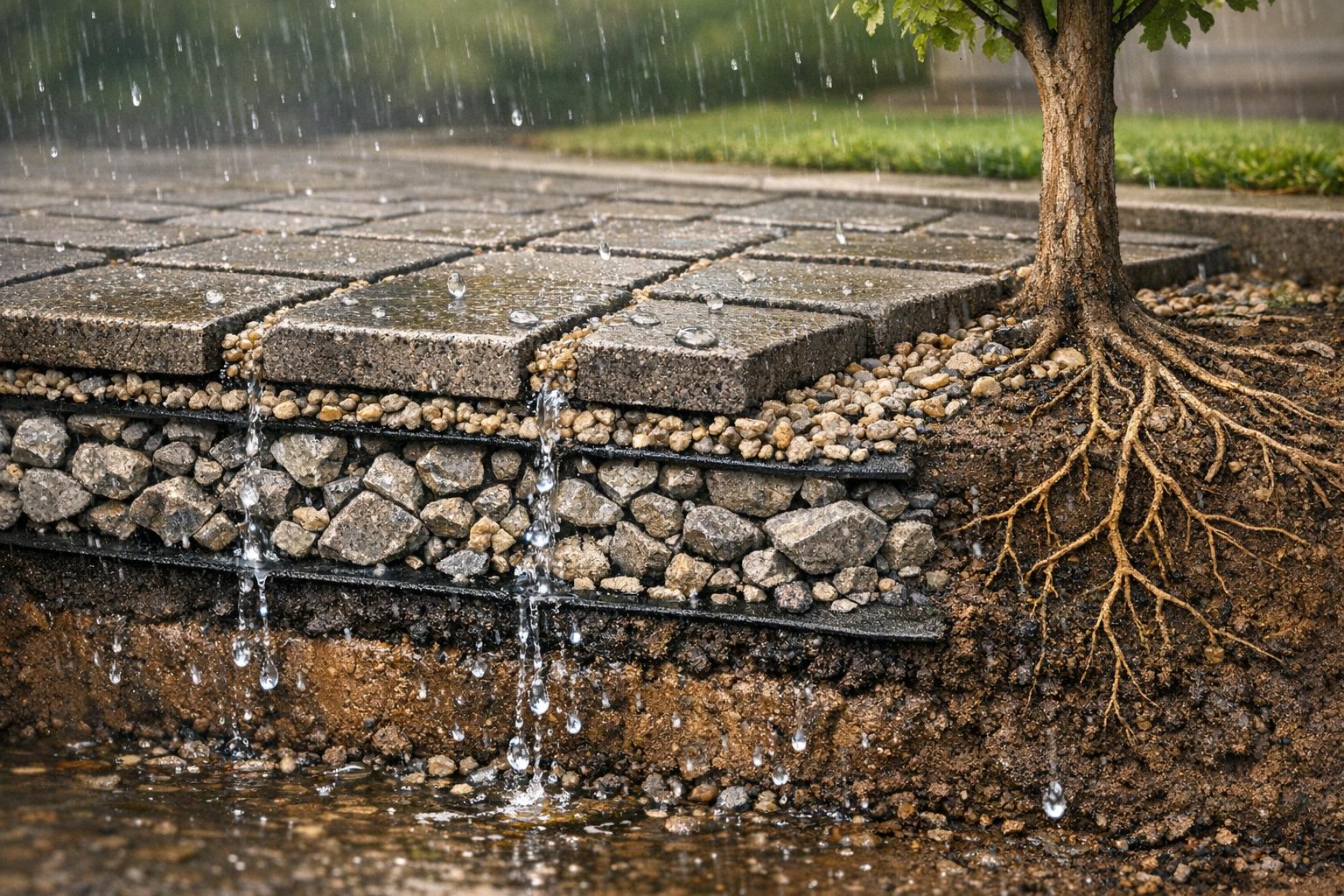
Permeable pavers are a practical way to manage water runoff, reduce flooding, and improve water quality. Unlike traditional surfaces like asphalt or concrete, permeable pavers allow rainwater to seep into the ground instead of rushing into storm drains. This process helps prevent erosion, replenish groundwater, and filter out pollutants.
Key Points:
- How They Work: Rainwater flows through gaps or porous materials into layers of stone, where it is stored and gradually absorbed by the soil.
- Benefits:
- Reduces water runoff by 70–90%.
- Prevents flooding and erosion by slowing water flow.
- Filters pollutants, improving water quality.
- Recharges groundwater supplies.
- Requires less road salt in winter, reducing environmental impact.
- Applications: Ideal for driveways, patios, and walkways in areas with heavy rainfall or strict stormwater regulations, like Maryland.
Proper installation and maintenance are essential to ensure long-term performance. Below, we’ll explore how permeable pavers work, their advantages, and what to consider for installation.
Permeable Pavement – Explained | Exact
sbb-itb-843f8be
How Permeable Pavers Reduce Water Runoff
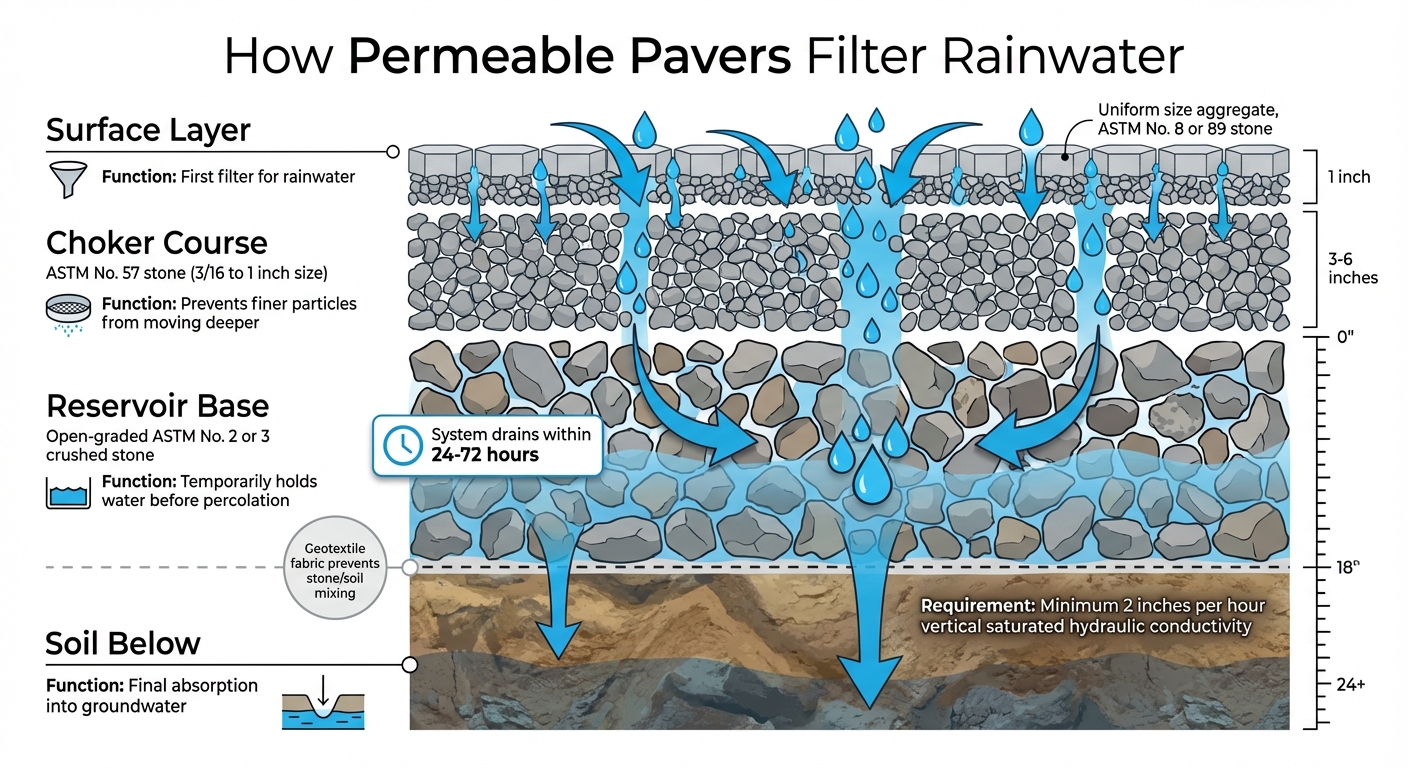
How Permeable Pavers Filter Rainwater: Layer-by-Layer Infiltration Process
Permeable pavers are designed to capture rainwater where it falls, channeling it underground and allowing it to slowly seep back into the earth. This approach helps manage water runoff effectively while offering environmental benefits.
The Infiltration Process
When rain lands on a permeable paver surface, the water moves through the gaps between the pavers – filled with aggregate – or through the porous material itself. From there, it filters through a carefully constructed series of stone layers:
- Surface Layer: A 1-inch layer of ASTM No. 8 or 89 stone acts as the first filter.
- Choker Course: A 3- to 6-inch layer of ASTM No. 57 stone prevents finer particles from moving deeper.
- Reservoir Base: A layer of open-graded ASTM No. 2 or 3 crushed stone temporarily holds water before it percolates into the soil below [2][3].
For this system to function efficiently, the soil beneath must have a vertical saturated hydraulic conductivity of at least 2 inches per hour [3]. A properly designed system should drain within 24 to 72 hours, preparing it for future rainfall [3]. This layered structure not only filters the water but also ensures it is released gradually, which is crucial for managing stormwater.
Stormwater Management Benefits
Permeable pavers address stormwater issues by capturing rain at its source, preventing the sudden surges of water that can overwhelm municipal drainage systems and lead to flash flooding [2]. By slowing the flow, these systems reduce peak discharge rates, allowing water to enter waterways more gradually. This protects neighborhoods from flooding and minimizes erosion in streams and rivers.
Another advantage is the system’s ability to filter pollutants. Larger debris gets trapped on the surface, while microbes in the soil and stone layers break down harmful chemicals [2][3]. For grid pavers filled with soil and grass, plants add an extra layer of biological filtration. Additionally, the system cools water before it reaches local streams and ponds, helping to reduce thermal stress on aquatic life like fish [2].
Key Benefits of Using Permeable Pavers
Flood and Erosion Prevention
Permeable pavers help manage rainwater effectively by storing it where it falls. Instead of creating sudden surges of water that overwhelm storm drains, these systems slow down the flow, reducing the risk of flash floods.
Unlike traditional paving, which forces water to rush across surfaces, often eroding soil and damaging stream channels, permeable pavers manage runoff right at its source. Whether it’s a driveway, patio, or walkway, they trap coarse solids and sediment on the surface, helping to prevent erosion and protect the surrounding environment.
Groundwater Replenishment
Conventional paving blocks rainwater from soaking into the soil, gradually depleting local groundwater supplies. Permeable pavers, however, allow water to seep back into the ground, replenishing natural aquifers. According to the U.S. Geological Survey:
"Permeable pavements help reestablish a more natural hydrologic balance and reduce runoff volume by trapping and slowly releasing precipitation into the ground instead of allowing it to flow into storm drains and out to receiving waters as effluent." [2]
This process mimics the way natural landscapes like forests and grasslands handle rainfall, helping to restore the disrupted water cycle. Not only does this recharge groundwater levels, but it also helps maintain water quality.
Pollutant Filtration
The layered structure beneath permeable pavers acts as a built-in filtration system. Soil microbes break down pollutants, while vegetation growing between the pavers further enhances this natural filtration process. Together, these mechanisms help protect local waterways by filtering out harmful substances and even cooling urban runoff, which reduces thermal stress on aquatic ecosystems. This is a sharp contrast to traditional paving, which allows pollutants to flow unchecked into nearby water systems.
Comparison With Standard Paving
The benefits of permeable pavers stand out even more when compared to traditional paving methods:
| Feature | Permeable Pavers | Standard Paving |
|---|---|---|
| Runoff Volume | Low – water infiltrates into the ground | High – water flows directly into storm drains |
| Flooding Risk | Reduced – minimizes rapid water pulses | Increased – can produce dangerous flash floods |
| Pollutant Filtration | High – traps sediment, nutrients, and bacteria | Low – pollutants are carried to local waters |
| Erosion Control | High – controls runoff at the source | Low – contributes to soil erosion and channel damage |
| Groundwater Impact | Enhances recharge of groundwater | Diminishes natural recharge |
Winter Performance
Permeable pavers aren’t just useful in warm weather – they shine in winter too. Permeable asphalt, for example, requires significantly less road salt – anywhere from 0% to 25% of what standard asphalt needs. The air trapped in the pavement’s voids stores heat, gradually releasing it to help melt snow and ice naturally. This reduces the need for chemical treatments and minimizes runoff issues during cold weather, offering a practical and eco-friendly solution. [2]
Installing Permeable Pavers: Step-by-Step Process
Getting the installation right is key to making sure permeable pavers can handle water runoff effectively and reduce flooding risks.
Site Preparation and Base Layers
Start by excavating and leveling the site to avoid water pooling. If the area has a slope, keep it under 5%. For slopes steeper than 1%, you’ll need to add internal baffles to control lateral water flow[3].
When preparing the soil subgrade, don’t over-compact it – aim for 92%–95% of the modified Proctor density. Lay geotextile fabric over the bottom and up the sides of the excavated area. This fabric keeps the stone aggregate from mixing with the surrounding soil and helps filter out pollutants. Extend the fabric about 1 foot beyond the edge of the installation footprint[3].
Next, build the reservoir base layer using open-graded ASTM No. 2 or No. 3 stone. Add the stone in layers no thicker than 6 inches, compacting each one before adding the next. Over this, spread a 3- to 6-inch choker layer of ASTM No. 57 stone (sized between 3/16 and 1 inch) to prevent smaller stones from shifting downward. Finally, apply a 1-inch bedding layer of ASTM No. 8 or 89 stone (pea-gravel size) and screed it level[3].
Once the base is stable and well-graded, you’re ready to lay the pavers and fill the joints.
Placing Pavers and Filling Joints
With the base layers complete, install the pavers, ensuring they have wider, open-graded joints to allow for water infiltration. Fill these joints using the same ASTM No. 8 or 89 stone used for the bedding layer. Avoid using sand, as it will block water flow and compromise the system’s effectiveness[3].
The stone used for the joints should be "washed" or open-graded, meaning it’s free of fine particles, sand, and dust. E. Bean, M. Clark, and B. Larson emphasize this point:
"The stone should be narrow or open-graded, meaning that fine sand and smaller particles have been removed from the aggregate. This is often called ‘washed’ stone… Removing the fine particles prevents them from clogging the reservoir aggregate or the surface of the subgrade soil."[3]
For a more decorative look, concrete grid pavers offer flexibility. You can fill the joints with narrowly graded construction sand (free of fines) or even a mix of topsoil and turfgrass for a greener appearance[3].
Final Steps and Maintenance
Once the pavers are in place, compact the surface to secure them. A well-designed system should fully drain within 24 to 72 hours after a storm[3]. Installing an observation well is a smart move – it lets you monitor water levels and spot potential clogs over time[3].
Regular maintenance is simple but essential. Use a vacuum sweeper at least three times a year – or monthly in areas with heavy debris – to clear sediment from the joints[1]. Keep organic debris like leaves and grass clippings off the surface, and don’t let runoff from landscaped areas flow onto the pavers, as sediment buildup is a common cause of system failure[3]. Plan to spend about 1%–2% of the initial construction cost annually on maintenance[1].
To protect your investment, install permeable pavers as one of the final steps in your project, after heavy construction and landscaping are done. This timing prevents sediment from construction vehicles or loose soil from clogging the system before it’s operational[1]. Following these steps will ensure your permeable pavers perform well in managing stormwater for years to come.
Applications of Permeable Pavers in Maryland Landscaping

Common Uses: Driveways, Patios, and Walkways
Permeable pavers are a fantastic choice for residential driveways in Maryland. They handle low-speed traffic while managing the heavy rainfall typical in the region – no need for traditional drainage pipes. By cutting down on surface runoff, these pavers help protect neighborhoods from flooding and erosion. Depending on the design and soil type, they can infiltrate 70%–80% of annual rainfall [1][5]. This makes them a smart option for reducing impervious surfaces and meeting Maryland’s strict stormwater management requirements.
For patios and walkways, permeable pavers create outdoor spaces that stay dry and functional. They prevent standing water and eliminate the pooling issues often seen with standard paving materials. After a storm, these surfaces typically drain within 24–72 hours [3]. Plus, the air voids in the pavement and the stone reservoir below provide insulation during Maryland’s chilly winters. This stored heat helps melt snow and ice faster, keeping surfaces safer [2].
However, there are a few things to keep in mind. Runoff from nearby landscaped areas should be directed away from the pavers to avoid sediment buildup. Also, avoid installing them in spots where vehicles frequently make tight turns, as high-torque movements can cause the pavers to shift or crack [3]. While the upfront costs are around 50% higher [1][5], the savings on stormwater infrastructure can more than make up for it. These real-world benefits demonstrate why permeable pavers are a practical and eco-friendly solution – something Pro Landscapes MD specializes in delivering.
Pro Landscapes MD‘s Expertise in Permeable Paver Installations

Pro Landscapes MD has built a strong reputation for installing durable and environmentally friendly permeable pavers across central Maryland. They serve a wide range of areas, including Howard, Montgomery, Carroll, Frederick, Prince George’s, and Baltimore counties, with projects in communities like Ellicott City, Bethesda, and Gaithersburg.
As part of their hardscaping services, Pro Landscapes MD handles everything from paver driveways and patios to walkways and drainage systems. Using advanced techniques, they optimize infiltration and minimize runoff, ensuring all projects comply with Maryland’s BMP standards for stormwater management. Their expertise in grading, land leveling, and stormwater solutions allows them to calculate the exact stone reservoir depth needed for local frost conditions and water storage requirements – key factors in Maryland’s climate. Pro Landscapes MD takes outdoor spaces and turns them into functional, water-efficient environments that are built to last.
Conclusion
Key Takeaways
Permeable pavers offer an effective way to tackle water runoff issues for Maryland homeowners. Unlike traditional concrete or asphalt, which direct 100% of rainfall into storm drains, permeable pavers can cut runoff by 70–90% [6]. For example, a typical 1,000-square-foot driveway can generate over 600 gallons of runoff from just one inch of rain [6]. With permeable pavers, much of that water stays on-site, filtering through layers of stone and soil, rather than overwhelming local drainage systems.
This system does more than just control flooding. As water moves through the stone layers, it naturally filters out oil, sediment, and other pollutants [6][2]. This filtered water replenishes aquifers, reduces soil erosion, and helps maintain the hydrologic balance by gradually releasing rainwater back into the ground [2][6]. The result? Cleaner water and healthier ecosystems.
Maryland’s climate makes permeable pavers a year-round asset. In winter, the air trapped within the system helps melt snow faster and reduces the need for road salt by 75–100% [2][4]. During heavy rainstorms, the stone base – typically 6–8 inches deep – acts as a temporary reservoir, holding 30–40% of its volume in water and releasing it slowly into the ground [6]. This combination of benefits makes permeable pavers a smart, sustainable choice for managing stormwater.
To enjoy these advantages, proper installation is critical.
Partnering With Pro Landscapes MD
Maximize the benefits of permeable pavers by working with a team that knows the ins and outs of these systems. Pro Landscapes MD specializes in permeable paver installations across central Maryland, offering the expertise needed to ensure your system is built to last. Their approach covers everything from assessing your property and preparing the base layers to planning for long-term maintenance. They even account for local factors like frost depth and infiltration rates to ensure optimal performance.
Whether you’re installing a new driveway in Ellicott City, upgrading a patio in Bethesda, or rethinking walkways in Gaithersburg, Pro Landscapes MD combines technical know-how with a commitment to creating functional, eco-friendly outdoor spaces. Serving Howard, Montgomery, Carroll, Frederick, Prince George’s, and Baltimore counties, they’re ready to help you transform your property into a water-efficient, environmentally conscious landscape designed to stand the test of time.
FAQs
Are permeable pavers right for my soil type?
Permeable pavers are compatible with various soil types, such as sandy, silty, and clay-heavy soils. However, for clay soils that drain more slowly, additional measures like underdrains might be required to manage stormwater effectively. It’s a good idea to consult a professional to figure out the best solution for your soil conditions.
How do I prevent permeable pavers from clogging?
To keep your pavers working efficiently and prevent clogging, regular maintenance is key. Start by sweeping or using a leaf blower to clear out fine particles from the joints. If you’re dealing with a bigger area, vacuum sweeping can help tackle debris more thoroughly. Additionally, proper installation and steering clear of materials that are prone to clogging during construction can go a long way in preserving permeability. A little routine care ensures your pavers stay effective at managing water runoff over time.
Do permeable pavers hold up in Maryland winters?
Permeable pavers can handle Maryland winters effectively when installed and maintained correctly. These pavers are built to manage stormwater infiltration and handle snow or ice melt efficiently. However, their performance and longevity rely heavily on factors such as soil permeability and proper installation. Ensuring these elements are addressed is key to their long-term success.
Chat with Us