









- bhavya gada
- No Comments
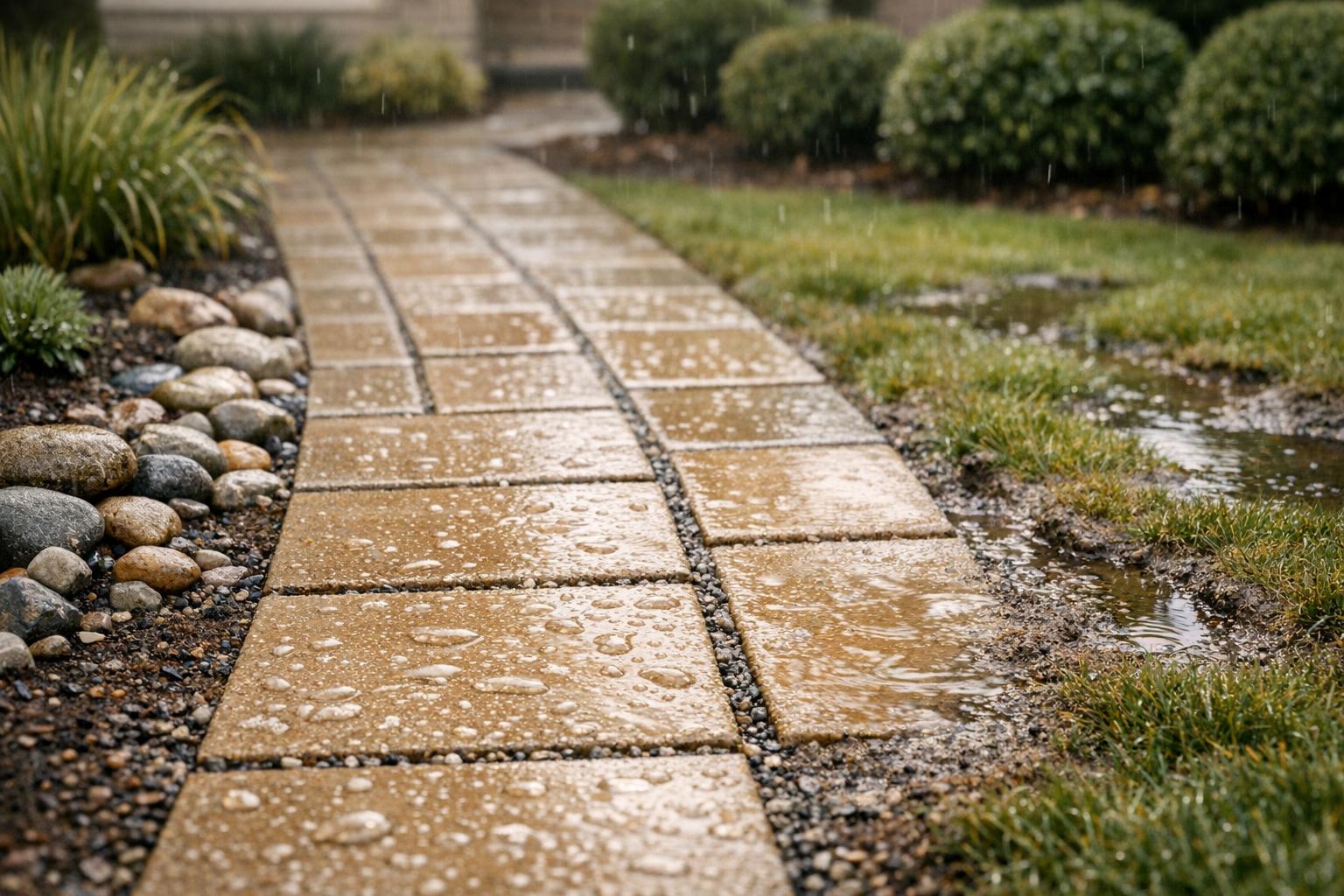
Permeable pavers are a practical solution for managing water runoff, reducing erosion, and preventing flooding in your yard. They allow rainwater to seep into the ground, improving drainage and protecting your property from damage. If you notice standing water, soil erosion, muddy patches, or flooding in low-lying areas, it may be time to consider installing permeable pavers.
Here’s why they work:
- Better Drainage: Water flows through the pavers into a gravel base, reducing pooling and runoff.
- Erosion Control: Evenly distributes water to protect foundations and landscaping.
- Flood Prevention: Handles heavy rainfall and prevents water from collecting in low spots.
- Cost Savings: Maryland offers rebates of $14/sq. ft. for eligible installations, up to $7,500 for residential properties.
Permeable pavers combine functionality with durability, making them ideal for driveways, walkways, and patios. They also align with Maryland’s water quality goals, filtering contaminants and protecting local waterways like the Chesapeake Bay. For tailored solutions, consult experts who can assess your property and design a system that works for your specific needs.
Signs Your Yard Needs Permeable Pavers
Standing Water or Puddles That Won’t Drain
If puddles linger in your yard long after a rainstorm, it’s a red flag for drainage issues. Solid surfaces can trap water, forcing it to sit until it evaporates or runs off. This is especially common in areas with clay-heavy soil, which drains far slower than sandy-gravel soil – sometimes up to 100 times slower. Permeable pavers solve this by allowing water to flow vertically through their wide joints into an open-graded gravel base. For example, 3/4-inch gravel can hold up to 48% of its volume in water [2]. Persistent pooling like this signals the need for a better drainage system.
Soil Erosion Around Foundations or Walkways
Noticing exposed soil or small gullies near your home’s foundation or walkways? That’s a telltale sign of concentrated runoff. Solid surfaces often channel water into specific areas, which can weaken structures and ruin landscaping.
"The standard interlocking paving stone is not permeable and does not drain water. Pavers are designed to be flexible but not permeable." – Pacific Pavingstone [2]
Permeable pavers, on the other hand, evenly distribute water across the surface, reducing runoff. Conducting a soil permeability test before installation is crucial – clay-heavy soils may need a deeper gravel base to ensure proper drainage [2]. Addressing erosion early can protect your property from costly damage.
Ruts or Channels in Your Lawn or Garden
Ruts or channels forming in your lawn or garden are another sign of concentrated runoff, often caused by water flowing off hard surfaces like roofs or driveways. Over time, this runoff carves out channels, especially on steep slopes. If left unchecked, this can lead to more significant landscape damage. In some cases, installing a channel drain may be necessary to manage the flow [2]. Tackling these issues early can save your yard from further harm.
Muddy or Waterlogged Ground
If parts of your yard remain muddy or waterlogged, it’s a clear indicator that surface drainage isn’t keeping up. This happens when the ground receives more water than it can absorb, often due to runoff from nearby hardscapes. Permeable pavers offer a solution by providing a stable surface that still allows water to drain. Their open-graded base temporarily stores water, letting it seep gradually into the soil. When planning, consider all runoff sources, including roofs and nearby concrete, to ensure the gravel base is deep enough to handle the water load [2].
Flooding in Low-Lying Areas
Flooding in low spots or depressions during heavy rain is another sign of inadequate drainage. A well-designed permeable paver system can handle over 90% of rainfall from a 3-inch storm over 48 hours [2]. These pavers allow water to infiltrate instead of pooling, but it’s essential to include a deep gravel base and an overflow drain to manage excess water [2]. This approach helps prevent flooding and keeps your yard dry even during heavy downpours.
sbb-itb-843f8be
Stormwater@Home – Episode 4: Permeable Pavement
Why Choose Permeable Pavers for Your Yard
Maryland Permeable Paver Rebates and Financial Incentives by Property Type
If you’re dealing with drainage or erosion issues, permeable paver systems might be the solution you need. Here’s why they stand out.
Environmental Benefits
One major advantage of permeable pavers is their ability to support natural water filtration. Unlike traditional concrete or asphalt, which forces water to run off the surface, permeable pavers let water seep into the ground through soil and gravel layers. This process helps replenish underground aquifers and maintain the local water table [3][5].
As water flows through the layered base of the paver system, it naturally filters out contaminants like sediments, nitrogen, phosphorus, heavy metals, and even car fluids. This filtration prevents harmful substances from reaching nearby waterways, including the Chesapeake Bay, aligning with Maryland’s clean water initiatives [3][4][5].
Better Drainage and Erosion Control
Permeable pavers don’t just benefit the environment – they also protect your property. Their structure anchors the soil, reducing the risk of erosion during heavy rain. By slowing water flow and encouraging absorption, these systems prevent the formation of ruts, mud, and other issues that often plague traditional hardscaping [7][8].
"Permeable pavement catches precipitation and surface runoff, storing it in the reservoir while slowly allowing it to infiltrate into the soil below." – U.S. Geological Survey [6]
These systems are incredibly durable, capable of supporting loads up to 120,000 pounds. This makes them ideal for driveways while still managing stormwater effectively. To keep them functioning properly, occasional maintenance like clearing leaves and sediment is recommended [7][8].
Financial Savings and Rebates
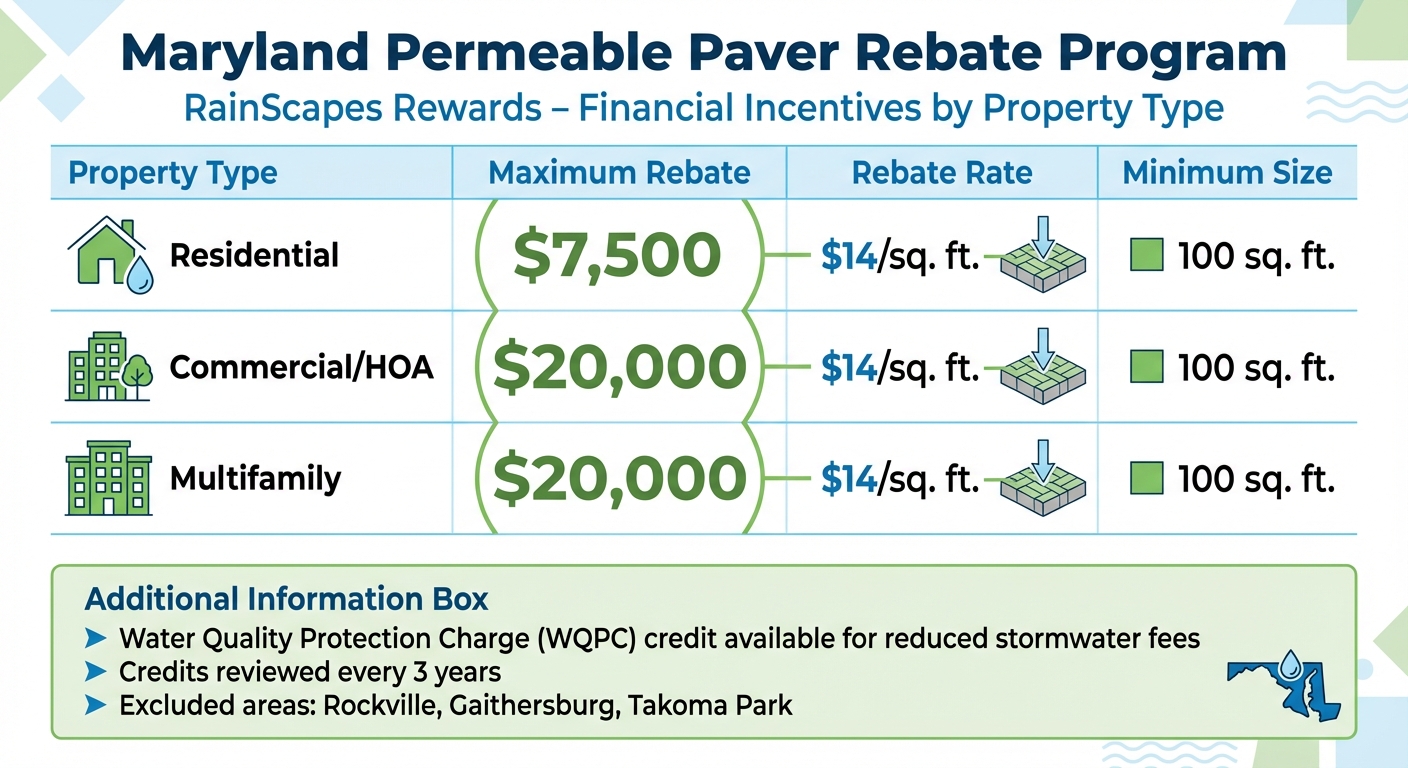
In Montgomery County, installing permeable pavers can come with substantial financial perks. The RainScapes Rewards program offers a rebate of $14 per square foot for retrofitting properties with permeable pavement. Residential properties can qualify for up to $7,500 per parcel, while commercial, HOA, and multi-family properties are eligible for rebates up to $20,000 per parcel [1][9].
| Property Type | Maximum Rebate | Rebate Rate | Minimum Size |
|---|---|---|---|
| Residential | $7,500 | $14/sq. ft. | 100 sq. ft. |
| Commercial/HOA | $20,000 | $14/sq. ft. | 100 sq. ft. |
| Multifamily | $20,000 | $14/sq. ft. | 100 sq. ft. |
On top of the rebate, homeowners can also apply for a Water Quality Protection Charge (WQPC) credit, which reduces stormwater fees. To qualify, the system must be installed after a site assessment and properly maintained. Credits are reviewed every three years. However, properties in Rockville, Gaithersburg, and Takoma Park are excluded from this program [9].
These financial incentives make permeable pavers an attractive option for improving your yard while saving money.
Pro Landscapes MD: Your Permeable Paver Experts

Pro Landscapes MD is here to tackle drainage and erosion issues head-on, offering solutions that protect and enhance your property. With a deep understanding of Maryland’s unique landscape challenges, their team specializes in designing and installing permeable paver systems. Whether you’re in Howard County, Montgomery County, Baltimore County, or nearby areas, they’ve got the expertise to address your yard’s specific needs.
Custom Permeable Paver Designs
Pro Landscapes MD doesn’t believe in one-size-fits-all solutions. They create custom permeable paver designs for driveways, patios, and walkways that not only solve drainage problems but also elevate your home’s curb appeal. Their process starts with analyzing how water flows across your property. From there, they design systems that let rainwater filter naturally through the surface, reducing runoff. Whether it’s a soggy driveway in Ellicott City or erosion around a patio in Bethesda, they craft solutions tailored to your property’s unique challenges and style. These designs seamlessly integrate with their broader drainage and grading services for a complete approach.
Complete Drainage and Grading Services
Great permeable paver projects go beyond just the pavers themselves. That’s why Pro Landscapes MD pairs their installations with robust drainage and grading services. They incorporate features like French drains and channel drains into their hardscape designs to direct excess water away from your home’s foundation, protecting it from potential damage. Their precise grading work ensures water flows away from your property instead of pooling in low spots, offering a comprehensive solution for stormwater management and land leveling.
Proven Track Record Across Maryland
Pro Landscapes MD has built a reputation for delivering quality work and dependable service throughout Maryland. Homeowners consistently praise their attention to detail and commitment to excellence. Want to see how they can transform your yard into a sustainable, erosion-free space? Visit Pro Landscapes MD to learn more about their permeable paver solutions and how they can address your drainage challenges. With their expertise, your yard is in good hands.
Conclusion
Have you noticed standing water, foundation erosion, muddy patches, or even flooding on your property? These are clear indicators of poor drainage. Permeable pavers offer an effective way to manage these issues. They allow rainwater to pass through the surface into a specially designed gravel base, helping recharge the aquifer instead of contributing to runoff [2].
But the advantages don’t stop at solving drainage problems. With permeable pavers, you can minimize erosion, protect your home’s foundation, and create a water-smart landscape that manages stormwater efficiently by directing it downward rather than across your property. As highlighted in our checklist, proper stormwater management not only prevents erosion but also safeguards your property. In Maryland, where clay-heavy soils are common, tailored base depths are essential for ensuring effective drainage [2].
Pro Landscapes MD specializes in crafting custom permeable paver solutions designed to meet your specific drainage needs. Their team conducts thorough evaluations of your property, considering factors like subsoil conditions and runoff from surfaces such as roofs and patios. Whether you’re dealing with a waterlogged driveway in Columbia or erosion problems in Gaithersburg, they deliver solutions that integrate seamlessly into your landscape and provide long-lasting results.
Ready to turn your drainage issues into a functional and attractive outdoor space? Contact Pro Landscapes MD today to schedule a consultation and explore how permeable pavers can provide a lasting solution to your stormwater challenges.
FAQs
How do I know if my soil can handle permeable pavers?
To determine whether your soil is suitable for permeable pavers, you’ll need to test its ability to absorb water. One way to do this is by monitoring how quickly water drains in an observation well following a storm. If water is still present after two days, it could signal poor infiltration or potential soil clogging, which might impact the effectiveness of the pavers.
How deep should the gravel base be for permeable pavers?
The gravel base for permeable pavers is typically 4 to 6 inches deep. This depth helps maintain stability and allows for proper drainage, which is key to ensuring the pavers hold up over time.
What maintenance do permeable pavers need to keep draining?
To keep permeable pavers working effectively, regular cleaning is a must. Sweeping or vacuuming once or twice a year helps clear out sediment and debris, preventing clogs that could disrupt drainage. After heavy storms, it’s also a good idea to check the pavers to make sure they’re draining water properly and performing as they should.
Chat with Us