









- bhavya gada
- No Comments
Proper pipe sizing is critical for effective stormwater management in Maryland. Undersized pipes can cause flooding and damage, while oversized ones waste resources and accumulate sediment. Maryland requires a minimum pipe diameter of 15 inches for most systems, though smaller sizes (12 inches) may be allowed with local approval. Pipes must handle a 10-year storm event and maintain a flow velocity of at least 2.0 feet per second to prevent sediment buildup.
Key points to know:
- Maryland follows strict guidelines from the Maryland Stormwater Design Manual (Volumes I and II).
- Approved pipe materials include reinforced concrete (RCP), corrugated metal (CMP), and high-density polyethylene (HDPE).
- Site assessments must consider local rainfall, soil, and slope conditions.
- Regular inspections and maintenance are necessary to ensure long-term performance and compliance.
For complex projects, working with stormwater management professionals is recommended to meet state standards and avoid costly mistakes.
Maryland Stormwater Pipe Sizing Requirements and Standards
Maryland’s Pipe Sizing Requirements
Minimum Pipe Diameter Requirements
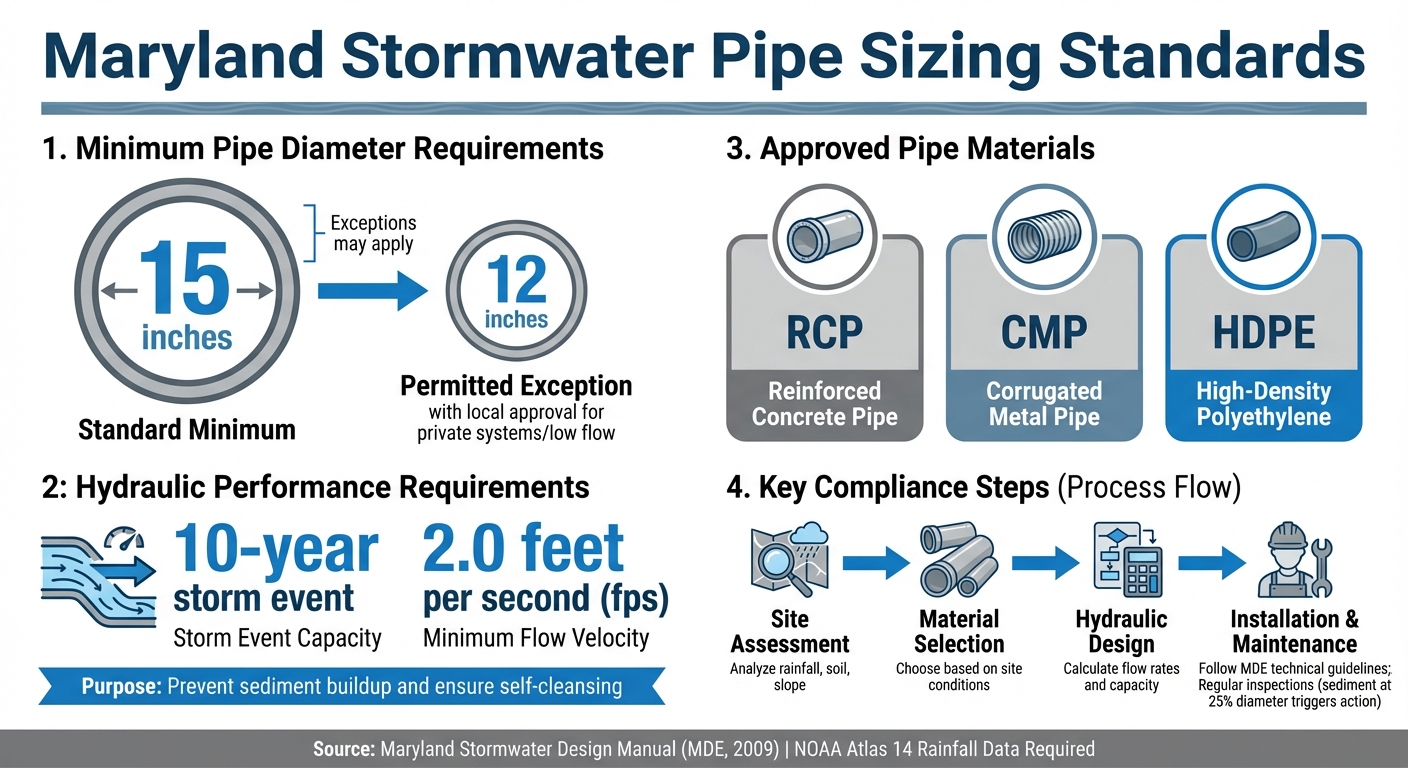
In Maryland, stormwater systems generally require a minimum pipe diameter of 15 inches to manage typical storm events effectively. However, in certain cases – such as private systems or areas with low flow rates – pipes as small as 12 inches may be permitted, provided local approval is obtained and justified. These standards are detailed in the Maryland Stormwater Design Manual, Volumes I and II, published by the Maryland Department of the Environment (MDE) in 2009[1]. Once the pipe size is determined, hydraulic design becomes critical for ensuring proper flow performance.
Hydraulic Design Requirements
The capacity of a storm drain system isn’t just about size – its hydraulic performance plays a key role. Maryland requires storm drain systems to handle a 10-year storm event while maintaining a self-cleansing velocity of at least 2.0 feet per second (fps). This velocity helps prevent sediment buildup and ensures the system operates efficiently over time[2]. With these flow requirements in mind, selecting the right materials is the next step.
Pipe Material and Installation Standards
Approved materials in Maryland include reinforced concrete pipe (RCP), corrugated metal pipe (CMP), and high-density polyethylene (HDPE). Each material is suited to specific soil types and load conditions, ensuring the system can withstand Maryland’s unique environmental demands. To guarantee long-term durability, installation must strictly follow the technical guidelines outlined in the Maryland Stormwater Design Manual. For assistance with compliance and proper installation, consulting stormwater professionals, such as those at Pro Landscapes MD, is highly recommended[1].
sbb-itb-843f8be
How to Meet Maryland’s Pipe Sizing Standards
Performing Site Assessments
Before diving into pipe sizing, it’s essential to conduct a detailed site assessment. This includes analyzing rainfall patterns, understanding soil composition, and measuring land slopes, all in line with the Maryland Stormwater Design Manual. These factors help determine the correct pipe dimensions for your project. To stay compliant, all data collection – whether it’s soil testing or slope measurements – must strictly follow the guidelines set by the Maryland Department of the Environment (MDE).
"The Maryland Stormwater Design Manual is the official guide for stormwater management principles, methods, and practices in Maryland." – Maryland Department of the Environment [1]
Make sure to document every measurement carefully. This ensures compliance with MDE standards and provides a clear record for future reference.
Selecting Appropriate Pipe Materials
Choosing the right pipe materials is another critical step. The selection process should be guided by MDE recommendations, taking into account the specific conditions of your site. Factors like soil type and load requirements play a big role in determining which materials will work best. Once you’ve made your selection, it’s a good idea to collaborate with seasoned professionals who can help bring your design to life with precision.
Working with Stormwater Management Professionals
After completing your assessments and selecting materials, the next step is proper implementation. To meet Maryland’s pipe sizing standards, you’ll need to work with professionals who are well-versed in the Maryland Stormwater Design Manual. These experts should provide detailed documentation of their calculations, including how they determined flow rates and pipe dimensions. Asking for their methodology ensures they’re using state-approved hydraulic methods and gives you peace of mind that the project is on track.
If you’re looking for reliable help, Pro Landscapes MD offers drainage solutions and stormwater management services throughout central Maryland. They bring experience and expertise to ensure your project meets all state requirements.
Common Pipe Sizing Problems and Solutions
Calculating Peak Flow Rates Correctly
Getting peak flow rates wrong is a common issue that can lead to a chain reaction of problems. Overestimating or underestimating the time of concentration (Tc) can skew peak flow rate calculations. This often happens when surface roughness or flow path lengths are miscalculated. Another frequent mistake is relying on outdated rainfall data. For example, Maryland requires the use of NOAA Atlas 14 rainfall data, but some still use older standards like TP-40, which can result in undersized pipes and regulatory non-compliance. To avoid these issues, double-check that you’re using the latest, state-approved data and methods. Errors in this step can create major headaches, especially on sites with limited space or complex layouts, and can complicate future maintenance.
Handling Site Constraints and Space Limitations
Physical site limitations can add another layer of difficulty. Existing underground utilities often restrict where stormwater pipes can go, forcing smaller pipe diameters or intricate layouts with more manholes and junctions. Steep terrain adds its own challenges – while higher velocities on slopes might allow for smaller pipes, they also increase the risk of erosion and potential pipe damage. To address these issues, you’ll need to find a balance between hydraulic performance and installation practicality. This might involve using energy dissipators or selecting stronger pipe materials to handle the added stress of steep slopes and high velocities.
Maintaining Pipes Over Time
Even the best-designed and installed pipes require regular upkeep to perform well long-term. Maryland regulations emphasize routine inspections to identify joint separations, cracks, or deformations early, before they escalate into bigger problems. Sediment buildup is another concern – once it reaches 25% of the pipe’s diameter, it can reduce hydraulic capacity and disrupt the roughness values used in your original design. Outfall areas with riprap or energy dissipators also need consistent attention to prevent erosion, which could compromise the entire system. Establishing a regular inspection and maintenance schedule is key to keeping your stormwater system running smoothly and staying compliant with Maryland’s standards. Proper planning, installation, and upkeep go hand in hand to ensure the system’s long-term success.
Conclusion
Key Takeaways for Maryland Property Owners
In Maryland, pipe sizing standards are strictly regulated by the Maryland Department of the Environment (MDE) to help manage stormwater runoff and prevent flooding. The Maryland Stormwater Design Manual outlines the essential design and compliance requirements, which include detailed hydraulic modeling, thorough site assessments, and ongoing maintenance. These technical standards are complex, and mistakes can lead to costly repairs, regulatory penalties, or system failures. To avoid these risks, property owners should rely on professional expertise to navigate the process effectively.
Why Professional Guidance Matters
Meeting Maryland’s stormwater regulations isn’t a simple task – it requires a deep understanding of the technical guidelines and the ability to implement them accurately.
"The Maryland Stormwater Design Manual is the official guide for stormwater management principles, methods, and practices in Maryland" [1]
Partnering with experienced professionals, such as Pro Landscapes MD, can make all the difference. Their team ensures your stormwater system complies with both state and local regulations. From addressing site-specific challenges to selecting the right materials and ensuring systems meet MDE standards, they handle every detail. They also ensure your system includes proper access points for future maintenance, protecting your property and investment while keeping you fully compliant with Maryland’s stormwater management requirements.
Pipe Sizing for Storm Drain Performance – Insights from the IAPMO/ASPE White Paper

FAQs
What happens if stormwater pipes in Maryland are the wrong size?
Using pipes that are too small in Maryland’s stormwater systems can create a cascade of issues. High water velocities and pressure drops are common, often leading to channel erosion, over-bank flooding, and the inability to meet Maryland’s stormwater management standards for peak discharge and erosion control. These problems can compromise the system’s overall functionality and safety.
On the flip side, oversized pipes come with their own set of challenges. Low water velocities can cause sediment buildup, resulting in stagnant water that poses health risks. This can lead to sewage clogs, unpleasant odors, and even bacterial growth. Beyond these concerns, using larger pipes than necessary drives up project costs without delivering any performance benefits.
Getting the pipe sizing right is critical – not just for staying compliant with Maryland’s stormwater regulations but also for ensuring the drainage system operates safely and efficiently.
How does Maryland choose the right pipe material for different soil and load conditions?
In Maryland, choosing the right pipe material hinges on a variety of site-specific factors. These include soil composition, water chemistry, groundwater levels, bed load, and the anticipated traffic or load stresses the pipe will endure. Engineers carefully evaluate these conditions to select materials and protective coatings that can withstand the environment and ensure the pipe’s longevity.
Why should I hire a professional for stormwater management in Maryland?
Hiring an expert for stormwater management in Maryland is a smart move, given the state’s stringent regulations and intricate design standards. Maryland’s Stormwater Management Act of 2007 requires all new developments to use Environmental Site Design (ESD) to the maximum extent practicable (MEP). This includes meeting specific criteria for water-quality volume, recharge volume, and peak-discharge control. Failing to comply can result in permit delays, fines, or expensive redesigns, making professional guidance a necessity.
Experienced professionals are well-versed in the Maryland Stormwater Design Manual and its complex calculations, ensuring designs align with both state and local requirements. They also bring the expertise to implement effective solutions like French drains, dry riverbeds, and engineered pipe systems. These methods help control flooding, maintain natural water flow, and enhance water quality. Companies such as Pro Landscapes MD specialize in designing sustainable, regulation-compliant drainage systems that protect your property while adhering to environmental standards.
Chat with Us