









- bhavya gada
- No Comments
Pollinator gardens are more than just pretty spaces – they create habitats for butterflies, bees, and other species while promoting hands-on learning for kids. These gardens support pollinators by providing food, nesting areas, and safe overwintering spots. For schools and communities, they serve as outdoor classrooms, helping students learn about nature and even improve academically.
Key ideas covered include:
- Use Native Plants: Choose plants that bloom in different seasons, serve as host plants, and group them in clusters for better pollinator visibility.
- Engage Students: Involve kids in citizen science, let them design educational signs, and host garden maintenance sessions.
- Go Chemical-Free: Avoid pesticides and opt for organic alternatives to protect pollinators.
- Add Habitat Features: Include bare soil, leaf litter, dead stems, and shallow water dishes for nesting and shelter.
These gardens not only help pollinators but also teach sustainability and conservation. By following simple steps like planting native species and reducing chemical use, schools and communities can make a big impact.
10 Essential Pollinator Garden Ideas for Schools and Communities
Sunday Gardener tours school’s pollinator garden
sbb-itb-843f8be
1. Native Plants
Native plants play a crucial role in sustaining local pollinators, providing them with the resources they need to thrive.
Choose Plants That Bloom Throughout the Growing Season
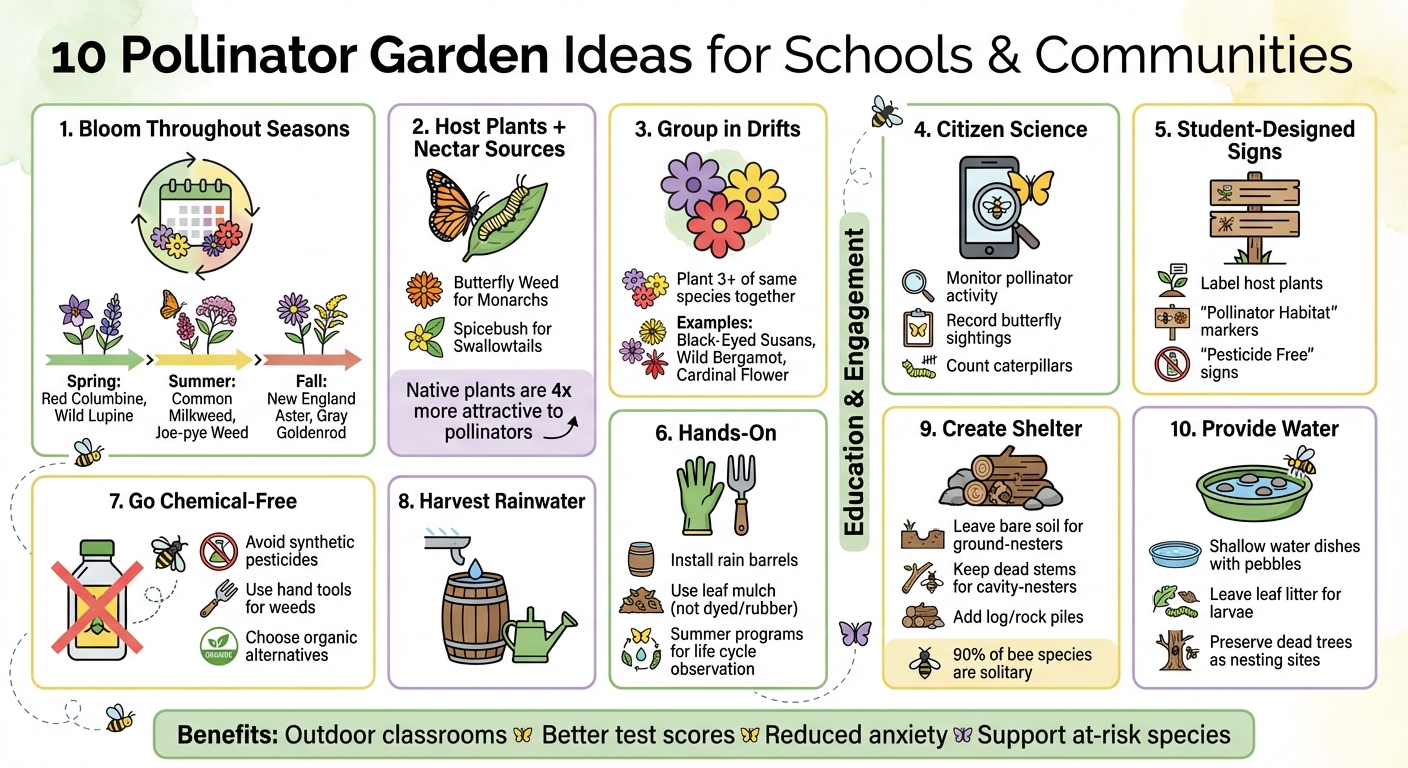
A successful pollinator garden ensures nectar and pollen are available from spring to fall. To achieve this, select a variety of native plants with overlapping bloom times. For instance, Red Columbine and Wild Lupine bloom in spring, Common Milkweed and Joe-pye Weed dominate summer, and New England Aster and Gray Goldenrod wrap up the season in fall[3][4].
By staggering bloom periods, you create a continuous food source for pollinators throughout the growing season.
Plant Both Host Plants and Nectar Sources
It’s not just about blooms – plants should also meet the specific needs of pollinators at different life stages. While adult butterflies and bees depend on nectar for energy, their larvae require host plants for survival. For example, Butterfly Weed (Asclepias tuberosa) serves as both a host for Monarch caterpillars and a nectar source for adult butterflies[1]. Similarly, Spicebush (Lindera benzoin) supports the larvae of Spicebush Swallowtail butterflies.
As Penn State Extension explains:
Native plants have been proven to be four times more attractive to pollinators than non-natives, so your first choice should be plants native to our region[4].
Group Native Plants in Drifts for Maximum Impact
Pollinators are more likely to notice and visit large, concentrated patches of flowers. Group at least three of the same plant species together in drifts to make it easier for pollinators to locate food sources[4]. Plants like Black-Eyed Susans, Wild Bergamot, and Cardinal Flower thrive when planted this way.
Consider each plant’s preferred growing conditions and our professional landscaping services to maximize their health and attractiveness. For example, Butterfly Weed flourishes in full sun and dry soil, while Cardinal Flower prefers moist, partially shaded areas. Avoid double-flowered hybrids, as their dense blooms often lack the nectar and pollen that pollinators need, despite their striking appearance[4].
2. Education and Engagement
Involve Students in Citizen Science Projects
Transform your pollinator garden into a dynamic learning space by involving students in citizen science. Encourage them to monitor and document pollinator activity using mobile devices. For example, they can record monarch butterfly sightings or count caterpillars, contributing valuable local data to larger conservation efforts [1]. This hands-on experience not only sharpens their observational skills but also connects them to meaningful scientific work. Plus, the data they collect can inspire creative projects that bring the broader community into the conversation.
Create Student-Designed Educational Signage
Let students take the lead in designing educational signs for the garden, which can be placed near garden walls or other structural features. These signs can explain the importance of host plants like milkweed for monarchs, highlight how "messy" garden elements such as fallen leaves support overwintering insects, and showcase labels like "Pollinator Habitat" or "Pesticide Free" [1][2]. V. Kulikow from the American Montessori Society emphasizes:
A ‘neat’ garden means no pollinators [1].
By creating these signs, students not only educate visitors but also deepen their own understanding of ecological balance. The process encourages a sense of ownership and promotes a more authentic connection to the environment.
Host Hands-On Maintenance Sessions
Organize interactive "weed-and-learn" sessions where students can identify and remove invasive species by hand. This method avoids the use of harmful herbicides and helps students develop fine motor skills [1][2]. These sessions are a practical way to maintain the garden’s health while fostering ecological awareness. To extend the learning experience, integrate the garden into summer programs, allowing children to witness the full pollinator life cycle – from caterpillar to chrysalis to butterfly [1]. Collaborating with local garden clubs or nurseries to supply pesticide-free plants can further strengthen community involvement in the project [1].
3. Sustainability
Eliminate Chemicals and Choose Organic Alternatives
Using fewer chemicals is a critical step in protecting pollinators. Pesticides, especially when overused, can harm pollinators, and many commercial turf fertilizers come pre-mixed with insecticides that are dangerous to beneficial insects in your garden [2]. Instead of relying on synthetic sprays, try using hand tools to manage weeds or unwanted plants. The Xerces Society highlights the importance of this approach:
A home garden truly can thrive without pesticides, and this is one of the most important ways to protect pollinators and beneficial insects in your garden [2].
Also, make sure any plants you bring into your garden haven’t been treated with systemic insecticides, which can harm pollinators long after planting.
Harvest Rainwater and Select Native Plants
Sustainable water practices can make a big difference in how well your garden supports pollinators. Setting up rain barrels near buildings provides a natural irrigation source, especially for native plants that need less water once they’re established. For even more efficiency, group plants with similar water needs together. When it comes to mulching, skip the dyed or rubber options. Instead, use fallen leaves. Matthew Shepherd of the Xerces Society explains why:
Leaf mulch suppresses weeds, enriches soil, and offers winter refuge for insects. And it’s free! [2]
This method not only provides a natural moisture barrier but also protects overwintering insect larvae.
Preserve Natural Habitats and Reduce Mowing
In addition to managing chemicals and water, maintaining natural habitats is key. Consider turning parts of your lawn into no-mow zones or adopting mosaic mowing, which cuts only certain sections. This not only saves fuel but also allows clover and dandelions to grow, providing extra food for pollinators. Leave dead flower stems standing through the winter, as many native bees use the hollow centers for nesting [1]. Similarly, leaving "snags" (dead trees trimmed to about 6 feet) can serve as nesting sites for various pollinator species [1]. These small changes can support the 90% of bee species that are solitary and don’t live in hives [5].
4. Pollinator Habitat Features
Beyond relying on native plants and sustainable water practices, creating physical habitat features is a key step in supporting pollinators.
Build Shelter and Nesting Opportunities
Pollinator habitats need more than just flowers. Many native bees are ground-nesters, so leaving patches of bare soil can provide the nesting space they require. For cavity-nesting species, dead flower stems left standing during winter offer an ideal home, as the hollow centers are perfect for solitary bees.
Adding natural structures can also make a big difference. Liz Robertson from the Xerces Society explains:
A small log, rock pile, or stack of twigs and branches near your plants provide shelter, and a place for many bugs to nest and reproduce. [2]
Even a dead tree, trimmed to about 6 feet, can function as a nesting site.
Natural debris like leaf litter is equally important. Many butterfly and moth larvae depend on fallen leaves for shelter through the summer and to survive winter. Instead of clearing out garden beds with rakes or blowers, leaving the leaves intact can provide insulation and protection for overwintering insects.
Another helpful addition is a shallow water dish filled with pebbles, offering pollinators a safe spot to drink. For schools or community gardens, installing a rain barrel near the garden serves a dual purpose: it waters plants and supplies a sustainable water source for pollinators. These simple features create a welcoming and year-round refuge.
Conclusion
Pollinator gardens go beyond offering a splash of color to schools and communities – they serve as outdoor classrooms where students can strengthen their science and math skills while gaining a deeper understanding of life cycles and environmental care. Studies reveal that kids involved in gardening programs perform better on standardized tests and experience benefits like improved focus, reduced anxiety, and enhanced memory[1]. These gardens also play a crucial role in supporting at-risk species such as native bees, butterflies, and beetles by providing essential food, nesting areas, and overwintering spots.
The impact of these gardens extends far beyond academics. They contribute meaningfully to ecological health. As Liz Robertson from the Xerces Society puts it:
By establishing pollinator habitat in your home garden, schools, parks or other community spaces, you become an active part of helping to protect and restore at-risk species[2].
Creating a thriving pollinator garden requires careful planning, including chemical-free care, choosing the right native plants, and designing a space that promotes biodiversity. Partnering with Pro Landscapes MD ensures these elements are handled expertly. Their team of horticulturists specializes in native plant selection, soil evaluation, and eco-friendly maintenance practices tailored for central Maryland, including areas like Howard County and Montgomery County. With their expertise, your garden can become a lasting source of education, inspiration, and vital support for pollinators.
FAQs
Which native plants are best for my area?
The ideal native plants for your garden will vary based on your region’s specific eco-region and environmental conditions. For example, Arctic goldenrod and Siberian aster are perfect for colder northern climates. To pinpoint plants that will thrive in your area, check out regional native plant lists or consult local nurseries.
You can also explore resources from organizations like the U.S. Fish & Wildlife Service or the Xerces Society, which offer excellent guidance on selecting plants that support local pollinators.
What size should a school pollinator garden be?
A pollinator garden at a school doesn’t need to be huge to make a difference. Even a small collection of plants can provide support for pollinators and serve as a valuable educational tool. The garden’s size should align with the space and resources available – start small and expand as you’re able. Every little bit contributes to helping pollinators while fostering community involvement.
How do we maintain it without pesticides?
To keep your pollinator garden thriving without pesticides, turn to organic methods. Try companion planting by including pest-repelling plants like marigolds, mint, or nasturtium. These plants naturally deter unwanted pests while adding beauty to your garden.
Encourage the presence of beneficial insects like parasitoids and predators that help control pest populations. Avoid using herbicides or harmful chemicals, as they can harm the very pollinators you’re trying to attract. Instead, focus on techniques like manual weeding, mulching, and biological pest controls to manage weeds and pests. These approaches support biodiversity and create a healthy, pesticide-free space for pollinators to flourish.
Chat with Us