









- bhavya gada
- No Comments
Soil compaction can quietly harm your trees, leading to poor growth and even long-term damage. When soil becomes compacted, air, water, and nutrients struggle to reach roots, weakening trees over time. This issue affects 40% of properties and is especially common in areas with clay-heavy soil, like parts of Maryland. The good news? You can take simple steps to protect your trees and restore soil health.
Here are five practical ways to prevent and address soil compaction:
- Apply mulch: Spread 3–6 inches of organic mulch around trees to cushion the soil and improve its structure.
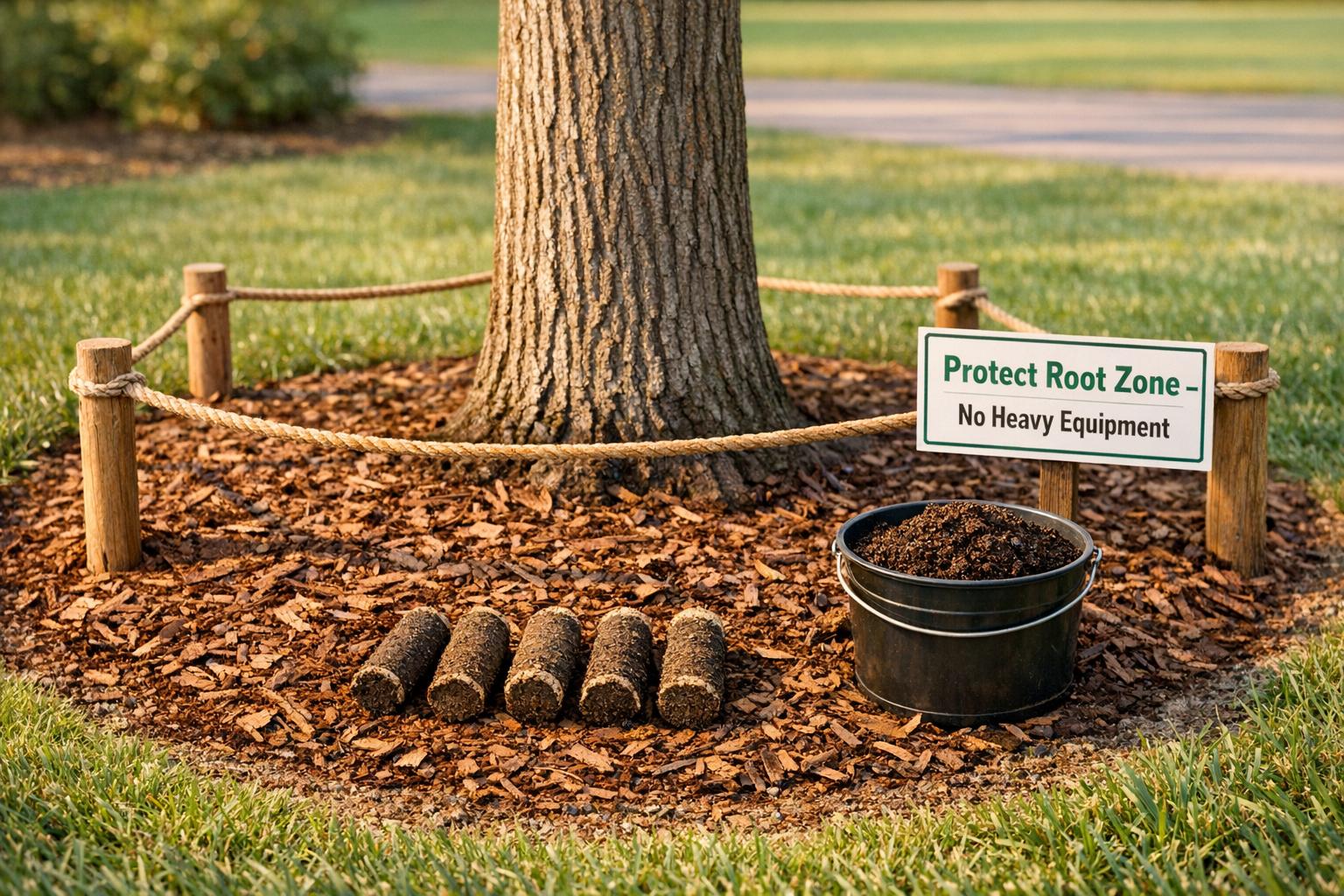
- Set up barriers: Use fences or steppingstones to keep foot traffic and equipment away from root zones.
- Aerate the soil: Loosen compacted soil with tools or professional methods like air-excavation.
- Keep heavy equipment away: Avoid driving or parking vehicles near trees to preserve the soil’s structure.
- Add organic matter: Use compost or shredded leaves to enrich the soil and improve its texture.
Taking these steps now can help your trees thrive for years by ensuring their roots get the oxygen, water, and nutrients they need.
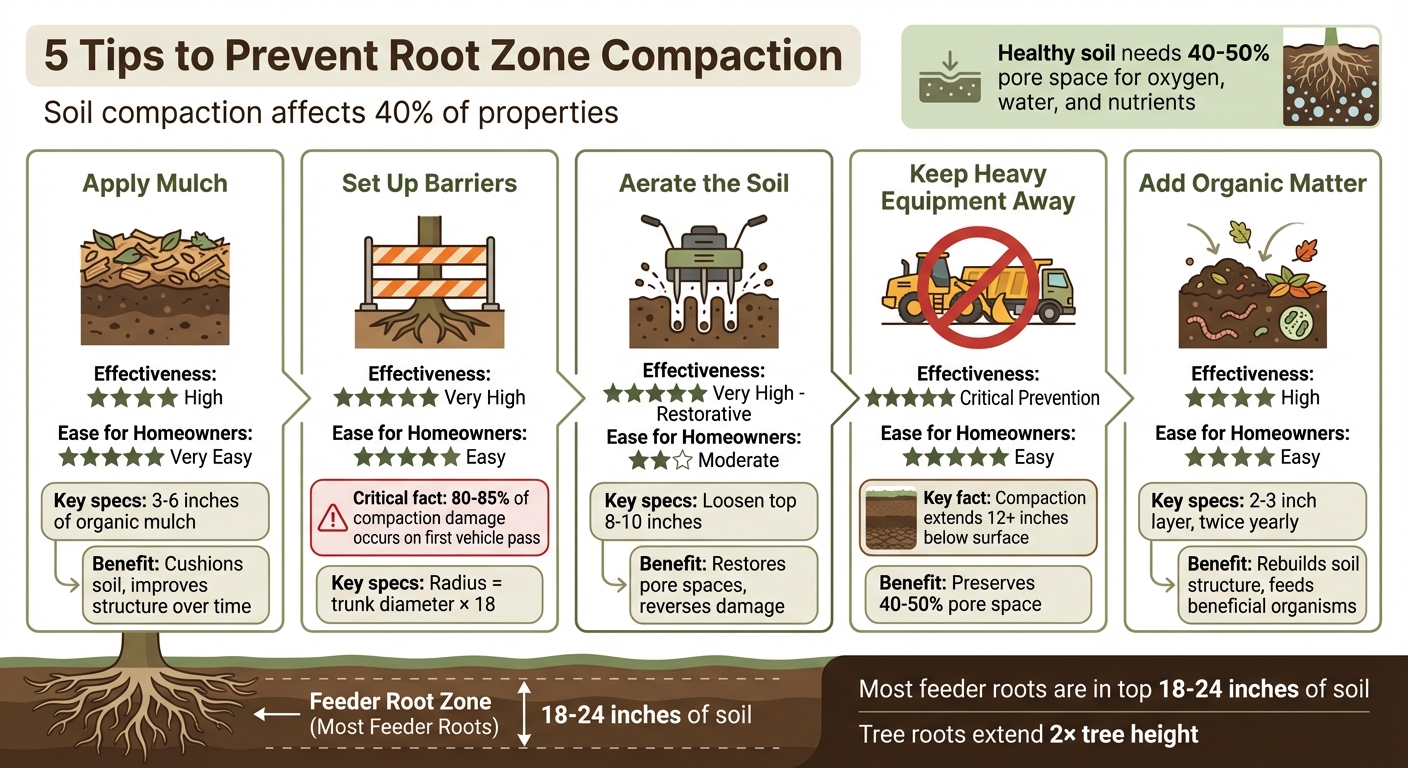
5 Methods to Prevent Root Zone Compaction: Effectiveness and Implementation Guide
1. Apply Mulch Around Trees
How Well It Prevents Soil Compaction
Mulch acts like a cushion for a tree’s root zone, absorbing impacts from rain, irrigation, foot traffic, and even light equipment [1][4][5][7]. By spreading a wide ring of mulch around the tree, you discourage walking and mower use in that area, which helps reduce soil pressure and prevents compaction caused by mowers [7]. Over time, as the mulch decomposes, organisms like earthworms pull it into the soil. This natural process loosens compacted areas and rebuilds the soil’s pore structure, which is essential for healthy tree roots.
How Easy It Is for Homeowners to Apply Mulch
Using mulch is one of the easiest and most cost-effective yard maintenance tasks to protect trees. Organic materials like double-shredded hardwood or wood chips work well. Simply apply a 3- to 6-inch layer around the tree, but make sure to keep it a few inches away from the trunk to avoid damaging the bark. Skip using weed mats underneath, as they block decomposed organic matter from reaching the roots [7]. This simple approach not only prevents soil compaction but also promotes long-term tree health.
Long-Term Benefits for Tree Health
As mulch breaks down, it improves the soil by enriching it, retaining moisture, and loosening compacted layers. Protecting the top 18–24 inches of soil – the critical zone for water and nutrient absorption – helps stabilize trees and lowers the risk of damage during storms [1][7][8]. Georgia Peterson from Michigan State University Extension explains:
"The majority of these root systems are located in the upper 18–24 inches of soil to take advantage of as much rain or melting snow, nutrients and oxygen as possible" [8].
sbb-itb-843f8be
2. Set Up Physical Barriers
How Well It Prevents Soil Compaction
Barriers like fences and walls are excellent for keeping foot and vehicle traffic away from your tree’s root zone. This is critical because 80% to 85% of soil compaction damage happens during the very first vehicle or heavy equipment pass over the soil [2][10]. Installing a fence around the critical root zone can stop this damage before it begins.
If crossing the area is unavoidable, steppingstones or pavers can help spread out the weight over a larger surface. During construction, laying plywood over mulch can also help distribute heavy loads more evenly [5]. Georgia Peterson from Michigan State University Extension highlights the importance of visual reminders:
"No parking signs are a visible reminder that trees have sensitive root systems" [8].
How Easy It Is for Homeowners to Do
Setting up physical barriers is a simple project most homeowners can handle without professional assistance. Start by measuring the tree trunk diameter at 4.5 feet above the ground, then multiply that number by 18 to determine the protection radius [11]. For instance, a tree with a 1-foot trunk diameter would need an 18-foot radius of protection.
When choosing materials, opt for durable metal fencing instead of plastic. Metal barriers are more likely to be respected and maintained by construction crews [11]. For everyday use, a basic mulch ring paired with flat steppingstones in high-traffic areas works effectively. This setup is easy to manage and supports the tree’s health over time.
Long-Term Benefits for Tree Health
Barriers help preserve the soil’s structure by preventing direct pressure, which is essential for maintaining pore space for oxygen, water, and nutrients. Healthy soil should have more than 40% pore space [2]. Protecting this structure can prevent long-term damage and the gradual decline that might eventually harm the tree [5]. Since most feeder roots are located in the upper 6 to 18 inches of soil [9], keeping this area uncompacted ensures the tree stays stable and healthy for years to come.
3. Aerate the Soil
How Well It Prevents Soil Compaction
While mulching and using barriers help protect the root zone, aeration takes it a step further by actively repairing soil structure. It not only prevents compaction but also undoes its effects by restoring the soil’s natural ability to breathe. Compacted soil loses the pore spaces that allow water and air to flow freely, forcing roots to work harder to access essential nutrients and moisture.
For lighter surface compaction, mixing compost into the top 8 to 10 inches of soil can help restore its porosity [4][7]. However, when compaction runs deeper, professional methods like air-excavation or radial trenching can break through those dense layers without causing harm to the tree’s root system [1].
How Easy It Is for Homeowners to Do
Once mulching and barriers are in place, homeowners can focus on aerating the soil to further rejuvenate it. Before starting, check the soil’s moisture level with a simple "ball test": grab a handful of soil and try to form a ball. If it crumbles, it’s ready for aeration; if it holds its shape, it’s too wet [6]. For mild compaction, use a spade or pickaxe to gently loosen the top 3 to 10 inches of soil around the tree, taking care not to damage roots [4][7].
Another easy option is to top-dress planting beds with a 2- to 3-inch layer of compost or shredded leaves. Over time, earthworms and other soil organisms will naturally aerate the soil as they burrow through it [1][2][4]. In areas with heavy foot traffic, installing deep root aeration tubes – like the Rootwell Pro-318 – can create permanent pathways for oxygen and water to reach the roots [7]. These straightforward steps not only alleviate compaction but also set the stage for healthier, more resilient trees.
Long-Term Benefits for Tree Health
Aeration delivers lasting improvements by creating pathways in the soil for water, oxygen, and nutrients to reach the roots. This encourages deeper root growth, which enhances tree stability, boosts drought tolerance, and prevents issues like dehydration and nutrient deficiencies [4][6]. Additionally, aeration eliminates the damp, oxygen-deprived conditions that often lead to root diseases. The Artistic Arborist Inc. highlights the importance of addressing compaction:
"Roots growing in compacted soil must exert more energy, robbing above-ground growth. Compaction diminishes water infiltration and drainage capabilities creating damp soils that foster anaerobic disease organisms, soil erosion, and further compaction" [7].
Beyond improving tree health, aerated soil supports earthworms and microorganisms that naturally maintain soil structure, enhance water infiltration, and reduce erosion [1][6]. These long-term benefits make aeration a key step in ensuring your trees thrive.
4. Keep Heavy Equipment Away from Trees
How Well It Prevents Soil Compaction
Preventing heavy equipment from accessing tree root zones is one of the most effective ways to protect soil structure. Machines like construction equipment, riding mowers, and vehicles exert intense pressure, collapsing the soil’s pore spaces – the channels needed for air and water movement. This compaction can extend more than a foot below the surface [2][7][12]. Once this happens, reversing the damage is incredibly difficult. While surface compaction can often be addressed with aeration, deeper compaction caused by heavy machinery typically requires costly subsoiling equipment, which isn’t practical for most established landscapes [12].
Wet soil is especially vulnerable. When water acts as a lubricant, soil particles slide together, collapsing pore spaces more easily [3][6]. A quick "ball test" can help determine if the soil is too wet: squeeze a handful of soil – if it forms a ball that holds its shape, it’s too wet for equipment. If it crumbles when poked, the soil is dry enough to handle traffic [6].
How Easy It Is for Homeowners to Do
The risks of compaction can be managed with simple, practical steps. Start by fencing off the tree’s drip line to keep equipment at a safe distance. Remember, tree roots often extend two or more times the height of the tree, so the wider the buffer, the better [8][5]. Georgia Peterson from Michigan State University Extension highlights the importance of this:
"Keeping heavy machinery, including cars, off of grounds with trees is an important way to avoid soil compaction and protect tree root systems" [8].
To reinforce these boundaries, extend barriers to define safe zones for equipment. Store materials and machinery on paved areas whenever possible. Adding wide mulch rings around trees can also deter riding mowers from repeatedly crossing critical root zones [5][7]. If heavy equipment must pass through a root zone, lay down a thick layer of mulch and cover it with sturdy plywood to distribute the weight [2][5]. These preventive steps not only minimize immediate damage but also support the tree’s long-term health.
Long-Term Benefits for Tree Health
Keeping heavy equipment off root zones preserves the 40%–50% pore space needed for air and water to flow freely [1][6]. This allows roots to grow deeper in search of nutrients and water, rather than being confined to surface layers by compacted soil [1][6]. When roots aren’t struggling to penetrate dense soil, the tree can focus its energy on above-ground growth, including canopy expansion [7]. Loose soil also promotes better water infiltration, reducing runoff and protecting against drought stress or root rot caused by poor oxygen flow [1][4][7]. Additionally, healthy soil structure supports beneficial microorganisms and earthworms, which play a key role in nutrient recycling and natural aeration [1][6].
Confronting Soil Compaction Restoring Vitality to Your Trees
5. Add Organic Matter to Soil
Adding organic matter is another effective way to restore and maintain healthy soil, complementing other methods of protecting root zones.
How Well It Prevents Soil Compaction
Organic matter plays a key role in rebuilding soil structure. Materials like compost, shredded leaves, and wood chips help create a loose texture that allows for proper air and water movement. This "looseness" comes from the pore spaces these materials introduce into the soil, which are essential for reversing compaction issues [1]. In fact, mixing organic matter with existing soil at a 1:1 ratio can significantly improve porosity, making it a better option than adding sand. Sand, when combined with certain soils, can lead to cement-like conditions that harm soil structure instead of improving it [4].
Additionally, organic matter nourishes earthworms and microorganisms, which naturally improve water retention and create channels for roots to grow [1].
How Easy It Is for Homeowners to Do
Homeowners have two straightforward ways to add organic matter. The easiest method is top-dressing – spreading a 2- to 3-inch layer of compost or shredded leaf mulch on the soil surface around trees. Over time, earthworms will pull this material into the soil, loosening it naturally without disturbing the roots.
For more severe compaction, compost can be gently worked into the top 8–10 inches of soil using a spade. Be cautious not to harm large roots while doing this [4]. To maintain soil health, organic material should be added twice a year [4]. Also, avoid working with soil when it’s wet; use the ball test (mentioned earlier) to ensure it’s dry enough to handle [6].
Long-Term Benefits for Tree Health
The consistent application of organic matter brings lasting rewards. For instance, it supports mycorrhizae fungi, which form beneficial partnerships with tree roots. These fungi improve the roots’ ability to absorb water and nutrients and help protect trees from harmful pathogens [8]. Organic matter also helps the soil hold moisture without becoming overly saturated, encouraging roots to grow deeper instead of staying near the surface [4]. Since most feeder roots are located within the top 18 to 24 inches of soil [8], maintaining a healthy structure in this zone is crucial for the long-term health of trees.
Incorporating organic matter into your soil not only addresses compaction but also strengthens root systems, ensuring your trees thrive for years to come.
Conclusion
Protecting your trees from root zone compaction requires a combination of preventive measures and restorative actions to keep your soil healthy. Around 40% to 50% of the soil volume should ideally consist of pore space, allowing oxygen, water, and nutrients to reach the tree roots effectively [1][6].
Preventive steps like using physical barriers and managing equipment carefully help maintain soil structure by preventing soil particles from collapsing. Adding a proper mulch layer can also reduce the impact of rain and foot traffic [6]. For restoration, techniques like aeration and adding organic matter help rebuild damaged soil, creating an environment where earthworms and beneficial microorganisms can naturally improve the soil structure [2].
According to the Department of Horticulture at Cornell University, soil compaction is one of the most damaging conditions for trees, affecting 40% of properties [7]. Healthy, loose soil allows trees to focus their energy on growth and natural defenses instead of struggling to push roots through dense ground [7].
Proper soil management also prevents issues like water pooling and root rot [6]. Since most critical feeder roots are located in the top 18 to 24 inches of soil, maintaining this area’s structure is essential for water and nutrient absorption [8]. Unfortunately, the effects of compaction may take years to become visible, making early action even more important [5].
For homeowners in central Maryland, Pro Landscapes MD provides expert services to address soil compaction. Their team specializes in techniques like soil aeration, vertical mulching, and radial trenching to restore soil health. They can also identify subtle signs of compaction, such as water ponding or stunted plants, and implement tailored solutions to revitalize your landscape [2].
Taking steps now to protect your trees can have long-term benefits. Healthy trees not only enhance property values but also reduce energy costs and provide natural privacy screening [5]. By addressing compaction issues today, you ensure your trees have the conditions they need to thrive for years to come.
FAQs
How can I tell if my tree’s soil is compacted?
Compacted soil often shows itself through several telltale signs. Struggling to push a shovel into the ground is one of the most common indicators. You might also notice water pooling on the surface or draining very slowly. Other red flags include surface runoff, shallow root systems, stunted plant growth, or a noticeable resistance when probing the soil with a steel rod or shovel. All these signs point to poor aeration, which can seriously affect the health of trees and other plants.
How wide should the protected root zone be around a tree?
The protected root zone is generally defined as a circular area with a radius equal to 12 times the tree’s stem diameter, measured at a height of 1.5 meters above the ground. However, the radius is often limited to a maximum of 15 meters, though this limit can differ depending on the tree’s size and applicable guidelines.
When should I call Pro Landscapes MD for soil aeration?
If you’re noticing water pooling, slow drainage, shallow roots, or stunted plant growth in your yard, it could be a sign of soil compaction. Pro Landscapes MD can help with professional soil aeration services. Aeration promotes better root growth and improves soil health, giving you a thriving and healthier landscape.
Chat with Us