









- bhavya gada
- No Comments
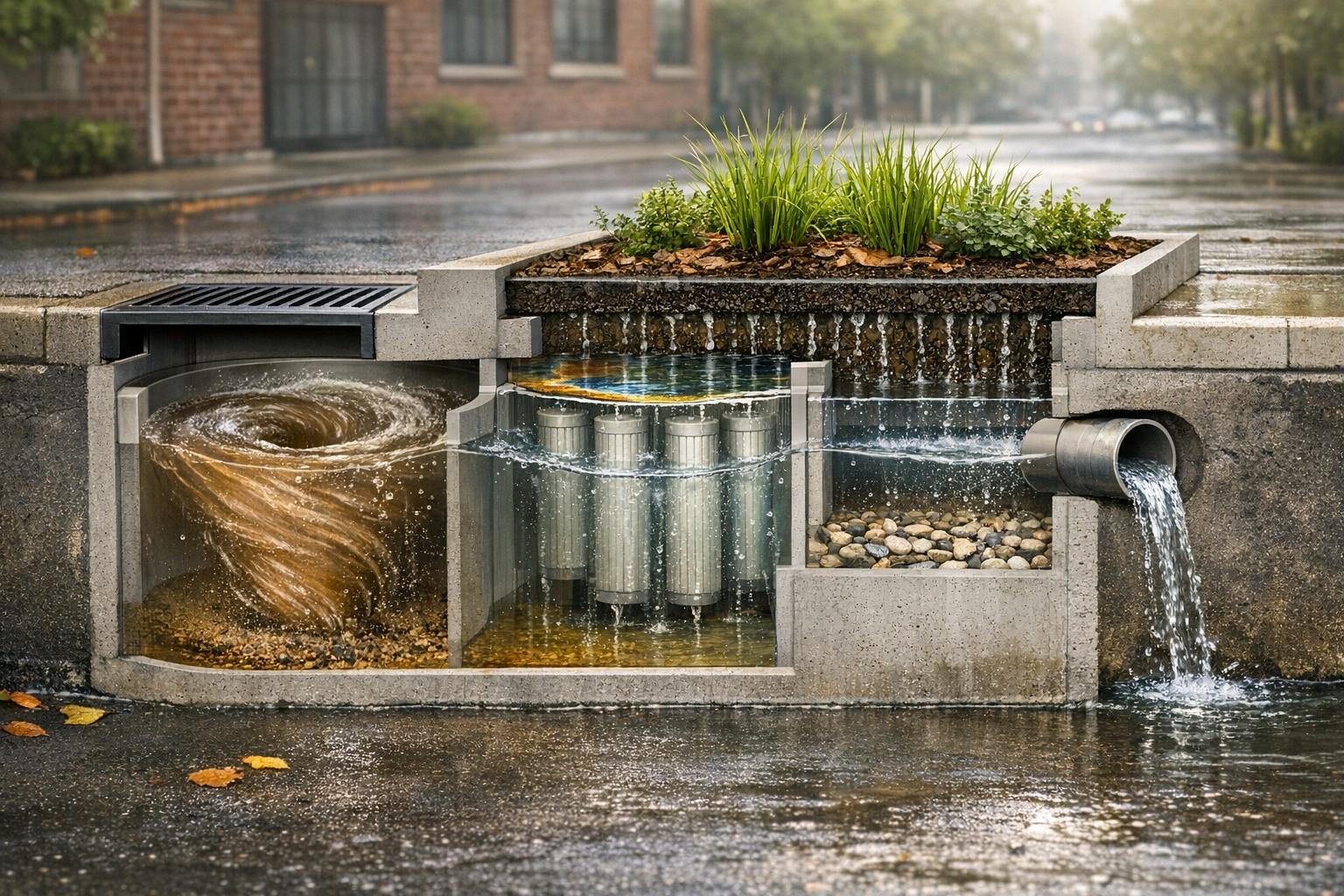
When rain hits hard surfaces like parking lots and rooftops, it collects pollutants such as sediment, oils, and metals. This runoff flows untreated into waterways, threatening aquatic life and public health. Proprietary stormwater treatment devices, also known as Manufactured Treatment Devices (MTDs), offer a practical solution. These systems use physical and chemical processes to filter pollutants effectively, especially in space-limited urban areas. Here’s what you need to know:
- Types of Devices:
- StormFilter: Uses customizable cartridges to remove fine sediments, heavy metals, and oils.
- Filterra: Combines vegetation and engineered media to handle nutrients, bacteria, and metals.
- Hydrodynamic Separators: Use vortex motion to separate coarse solids, trash, and oils.
- Key Benefits:
- Removes up to 80% of Total Suspended Solids (TSS) in many cases.
- Compact, underground designs suit urban spaces.
- Meets Maryland’s strict stormwater regulations when maintained properly.
- Maintenance: Regular cleaning and inspections are crucial to ensure performance. For example, sediment removal via vacuum trucks or media replacement is often required.
These devices help reduce pollution in areas where traditional methods like retention ponds aren’t feasible, making them a reliable choice for improving stormwater quality.
The Fundamentals Of Stormwater Treatment
sbb-itb-843f8be
Main Types of Proprietary Stormwater Treatment Devices
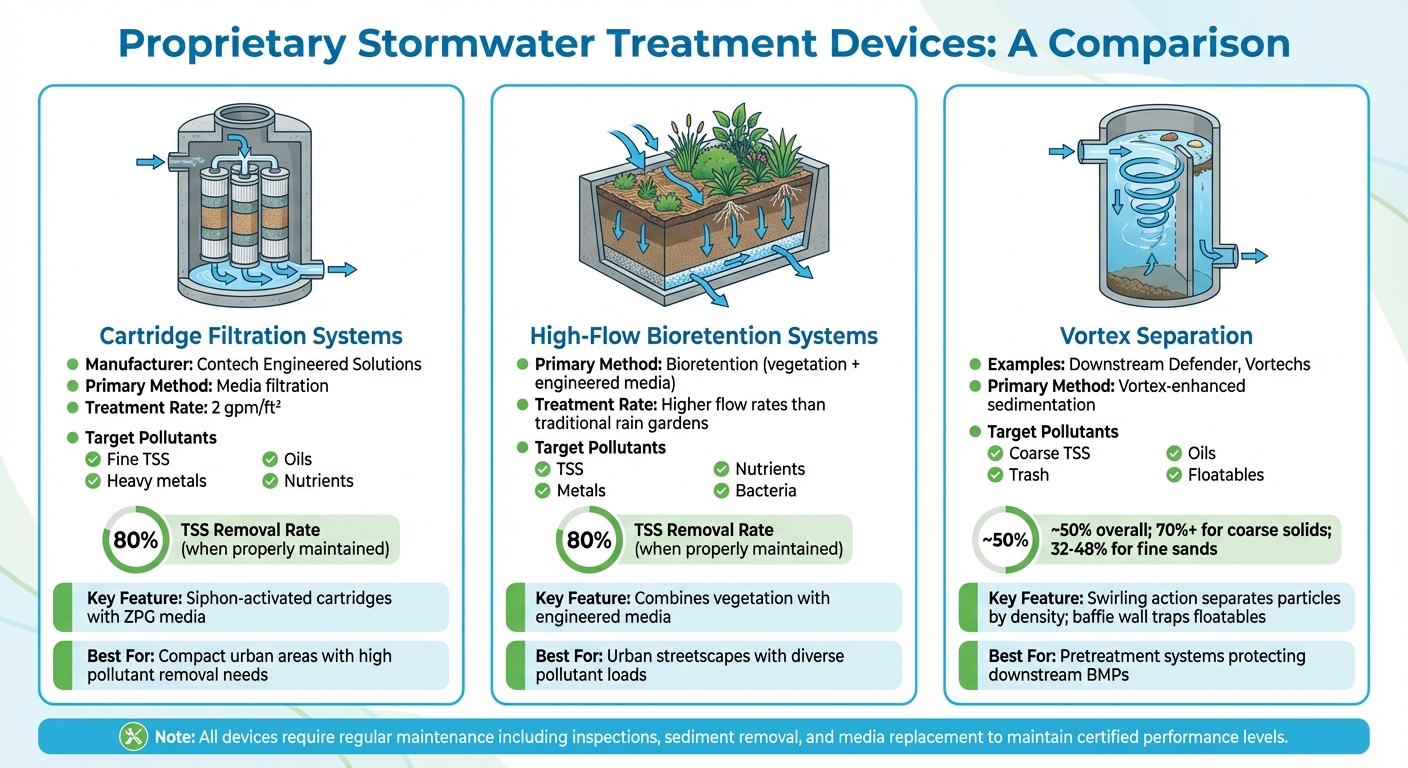
Comparison of Proprietary Stormwater Treatment Devices: StormFilter, Filterra, and Hydrodynamic Separators
Let’s dive into the specific proprietary devices commonly used across Maryland. Each device type employs unique methods to tackle stormwater pollutants, making them essential tools in urban water management.
StormFilter: Cartridge Filtration Systems
The StormFilter, created by Contech Engineered Solutions, uses siphon-activated cartridges filled with customizable media to filter pollutants. These cartridges, packed with ZPG media, effectively trap fine sediments and absorb contaminants like heavy metals and oils. With a treatment rate of 2 gpm/ft², the StormFilter is particularly suited for compact urban areas where space is limited but pollutant removal needs are high [2].
Filterra: High-Flow Bioretention Systems
Filterra systems combine vegetation with engineered media to treat stormwater at higher flow rates than traditional rain gardens [1] [2]. The vegetation helps remove nutrients and bacteria, while the engineered media captures fine suspended solids and metals. This makes Filterra units a great fit for urban streetscapes that deal with diverse pollutant loads. For areas with mixed pollutants, these systems offer a practical solution.
Downstream Defender and Vortechs: Hydrodynamic Separation
Hydrodynamic separators like Downstream Defender and Vortechs rely on vortex motion to separate pollutants from stormwater [7]. The swirling action causes heavier particles – such as sand, sediment, and trash – to settle at the bottom. Meanwhile, a baffle wall traps floatables, including oils and organic debris. These devices are particularly effective for removing coarse solids, achieving over 70% removal for larger particles, though their efficiency drops to 32–48% for finer sands [7]. They work well as pretreatment systems, protecting downstream BMPs by handling the bulk of coarse material before water moves to secondary treatment.
| Device Type | Primary Removal Method | Target Pollutants |
|---|---|---|
| StormFilter | Media filtration | Fine TSS, heavy metals, oils, nutrients |
| Filterra | Bioretention | TSS, metals, nutrients, bacteria |
| Downstream Defender / Vortechs | Vortex separation | Coarse TSS, trash, oils, floatables |
Each of these devices plays a unique role in Maryland’s stormwater management efforts, focusing on specific pollutants while meeting regulatory standards for water quality. Their varied approaches ensure that stormwater treatment can adapt to different urban challenges effectively.
Benefits of Using Proprietary Stormwater Devices
Pollutant Removal Performance
Proprietary stormwater devices stand out for their ability to remove pollutants more effectively than traditional methods. Certified systems like StormFilter and Filterra consistently achieve 80% Total Suspended Solids (TSS) removal, provided they are properly maintained. This makes them a reliable choice, especially for compact installations [2]. On the other hand, hydrodynamic separators handle about 50% of TSS, offering a practical solution to manage heavy sediment loads and protect downstream systems [5].
Each device is engineered to target specific pollutants. For instance, media filtration captures fine sediments, hydrocarbons, and heavy metals, while vortex-enhanced sedimentation excels at removing coarse solids, often exceeding 70% removal rates [7]. The American Society of Civil Engineers (ASCE) Joint Task Committee underscores the importance of scientific evaluation in this field, stating:
"It is critical that consistent, scientific, defendable methods are used to evaluate and verify MTD performances for sediment recommendation" [3].
These high removal rates make these devices not only effective but also manageable when it comes to installation and maintenance.
Installation and Maintenance Requirements
The design of these devices makes them perfect for tight urban spaces like parking lots and streets, where traditional stormwater solutions often fall short. Their compact, pre-assembled, underground design allows for seamless installation in areas with limited space [3].
Maintenance is straightforward, guided by manufacturer recommendations. For example:
- Hydrodynamic separators need periodic sediment removal using vacuum trucks.
- Filtration systems require regular checks to prevent media blockages and timely cartridge replacement [3].
Property owners play a key role in ensuring these devices perform optimally by monitoring sediment buildup and maintaining detailed inspection and cleaning records. As Gordon England, P.E., President of Stormwater Solutions, explains:
"The buildup of those materials [gross solids] inside of an MTD affects the predicted performance and cleaning intervals required for an MTD to remain effective" [3].
Meeting Maryland Stormwater Regulations
Proprietary stormwater devices are particularly effective for meeting Maryland’s stringent stormwater standards. Their ease of installation and proven pollutant removal capabilities make them essential for redevelopment and highway projects, where traditional methods may not be feasible [6]. Companies like BaySaver Technologies, based in Mount Airy, MD, design these systems to meet local regulatory requirements for pollutant reduction [6].
To comply with regulations, devices must be installed and maintained according to their certified performance specifications [2]. This involves ensuring that the model, media type, and internal configurations match the approved setup verified by permitting agencies [5]. In many areas, third-party field-scale evaluations, such as those conducted through TAPE or NJCAT programs, are required to validate performance claims before these devices can gain regulatory approval [5].
How to Install and Maintain Proprietary Stormwater Devices
Site Assessment and Device Selection
Start by assessing your site’s hydraulic needs. This includes determining the maximum flow rate during a 10-year storm event and calculating the water quality flow rate (WQF) [7]. Measure the drainage area, note land use types (like residential or commercial), and figure out the ratio of impervious surfaces (like asphalt) to vegetated spaces [7].
Next, identify the pollutants you need to target. For instance, are you dealing with total suspended solids (TSS), floatables, or specific particle sizes? The effectiveness of stormwater devices can vary, especially when handling coarse versus fine sediments [7][2]. For example, field testing shows that some hydrodynamic separators can capture over 70% of coarse solids but only manage 32–48% for fine sands [7].
Evaluate the available space, check for utilities, and confirm there’s at least a 0.2-foot elevation drop between the inlet and outlet [7][4]. Ensure the site is accessible for vacuum trucks, which are essential for sediment removal. Also, confirm that the device has third-party certifications like the Technology Assessment Protocol – Ecology (TAPE) General Use Level Designation (GULD). This certification is crucial if you need reliable performance [2].
Once you’ve completed these steps, you’re ready to move forward with installation.
Installation Steps
Create a safe work zone, ensuring it meets confined space entry standards [7]. To prevent nuisance flows during installation, use inflatable rubber plugs to seal upstream drainage [7]. Additionally, deploy sump pumps to dewater the area where the device will be installed [7].
Connect the stormwater device to the inlet and outlet pipes (typically PVC or concrete), ensuring the proper invert drop. Your installation plans should include precise sizing calculations, detailed layouts, and accurate utility locations [7][2]. For instance, in New Brighton, Minnesota, researchers installed an Environment21 V2B1 Model 4 with a dual-manhole system. This setup, which featured a 5-foot diameter swirl chamber and a floatables trap, effectively served a 4.2-acre residential watershed. This example highlights the importance of integrating the device with the drainage system to maximize performance [7].
After installation, regular maintenance is critical to keeping the system running optimally.
Maintenance Requirements
Installation is just the beginning. Routine maintenance is key to ensuring the device performs as intended. Follow the manufacturer’s maintenance schedule, which typically includes regular inspections and cleaning [2]. For hydrodynamic separators, dewater the system and remove accumulated solids using vacuum equipment. For filtration devices, inspect the media and replace it as needed [7][1][2].
Plan to inspect the system every few months to check for sediment buildup [7]. Before cleaning, use an inflatable plug to block upstream drainage and prevent water flow [7]. As noted by M. A. Wilson and colleagues from the University of Minnesota:
"The effectiveness of proprietary underground stormwater treatment devices depends upon the settling velocity of influent solids (i.e., solid size and density) in addition to the size and design of the device" [7].
In many areas, you’ll need a formal Maintenance Agreement to ensure the device is serviced according to its design specifications [2]. Keep detailed records of inspections and cleanings to show compliance with regulations and maintain the device’s pollutant removal efficiency.
If you’re in central Maryland and need help with stormwater device installation or maintenance, check out Pro Landscapes MD for expert drainage solutions and dependable service.
Conclusion
Proprietary stormwater treatment devices play a crucial role in safeguarding water quality and meeting regulatory requirements. By employing methods like settling, filtration, vortex separation, and biological processes, these systems effectively capture pollutants such as sediments, metals, hydrocarbons, and trash before they enter local waterways [6][1]. Their compact design makes them especially useful in urban areas, where space limitations often render traditional options like retention ponds or wetlands unfeasible [4][3].
One of their standout advantages is ensuring compliance with strict regulatory standards. These devices consistently achieve high Total Suspended Solids (TSS) removal rates, aligning with EPA National Pollutant Discharge Elimination System (NPDES) and Total Maximum Daily Load (TMDL) permit requirements [6][3]. As highlighted by the Metropolitan St. Louis Sewer District:
"A proprietary BMP is generally adequate for small drainage areas that contain a predominance of impervious cover that is likely to contribute high hydrocarbon and sediment loadings" [6].
Additionally, these systems excel as pretreatment solutions, offering a space-saving design and dependable pollutant removal performance [1]. Whether you’re retrofitting an existing site or working on a new development, proprietary treatment devices provide consistent results that meet essential stormwater management standards. Their efficiency and adaptability make them a smart choice for projects requiring effective and reliable water quality solutions.
FAQs
Which proprietary device is best for my site?
The best proprietary stormwater treatment device for your site will hinge on several factors, including the size of the location, the types of pollutants present, and the expected flow rates. Devices like underground swirl chambers (such as the V2B1 Model 4) or hydrodynamic separators are excellent choices for tackling sediment and pollutant removal, especially in urban environments. To ensure you’re choosing the right solution, it’s a good idea to consult with a professional who can evaluate your site’s unique requirements and recommend the most effective stormwater management approach.
How often do these devices need maintenance?
Proprietary stormwater treatment devices need regular attention, with inspections and maintenance ideally conducted once or twice a year. It’s also a good idea to check them after major storms to make sure they’re still working as intended and effectively removing pollutants.
Do proprietary devices count toward Maryland stormwater compliance?
Yes, proprietary stormwater treatment devices can be used to meet Maryland’s stormwater compliance standards, but only if they have received approval from the Maryland Department of the Environment (MDE). To gain approval, these devices must go through a formal application process designed for alternative stormwater management technologies.
Chat with Us