









- bhavya gada
- No Comments
Outdoor kitchens are a big investment, often costing between $5,000 and $20,000+, and without proper care, weather can cause costly damage. From freezing pipes to rusted appliances, neglecting maintenance can lead to repairs ranging from $150 to over $1,000. Protecting your outdoor kitchen year-round doesn’t have to be complicated. Here’s how:
- Clean Thoroughly: Remove grease, food debris, and moisture to prevent rust, mold, and pests.
- Drain Water Lines: Shut off and drain pipes to avoid freezing and bursting.
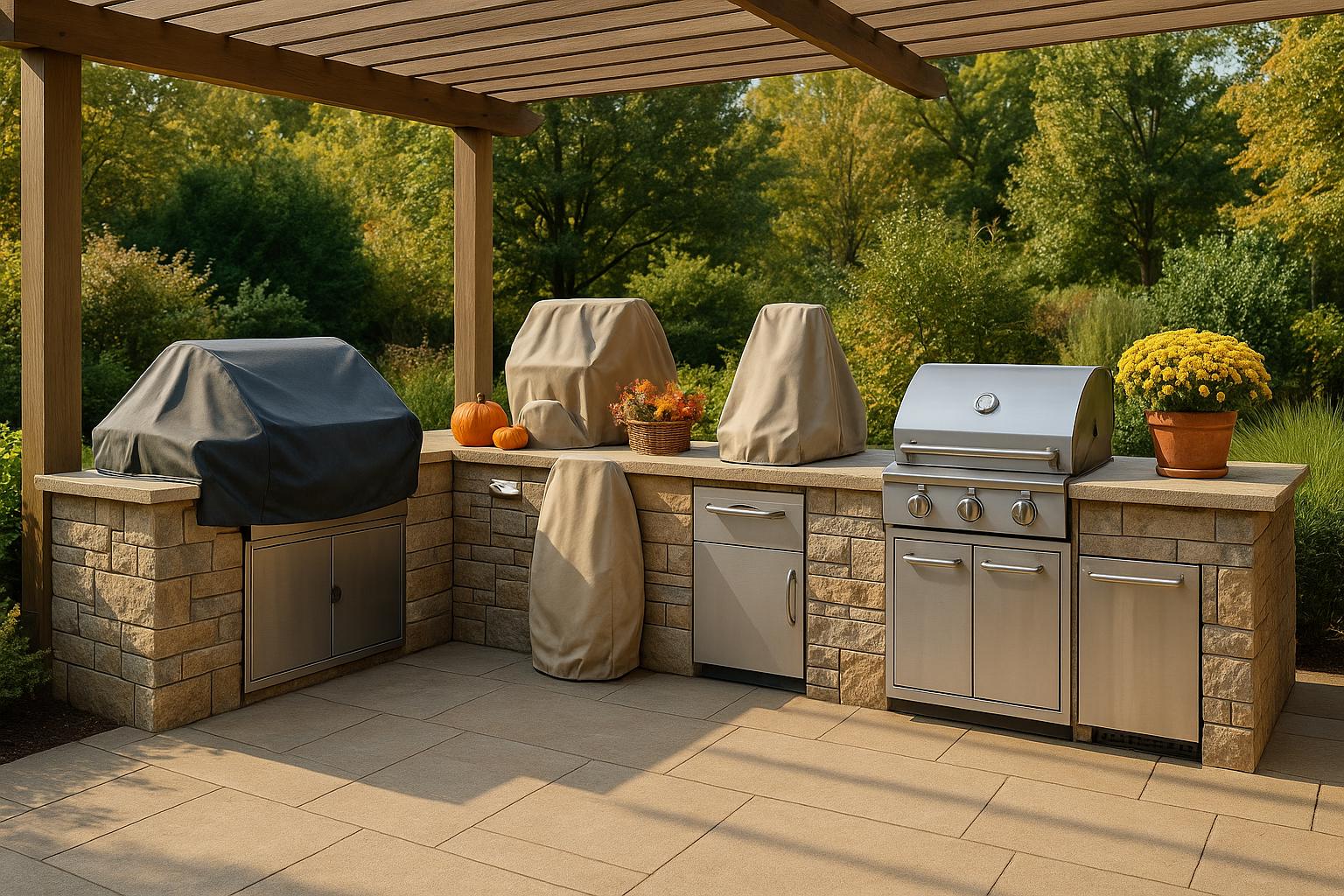
- Cover Appliances: Use weatherproof covers that allow airflow.
- Seal Surfaces: Apply weatherproof sealants to stone, wood, and concrete to prevent cracking.
- Store Accessories: Keep cushions, utensils, and smaller items in waterproof containers.
For long-term protection, consider adding a roof or pavilion, using weather-resistant materials like stainless steel or granite, and installing features like patio heaters for year-round use. Regular maintenance, such as cleaning, sealing, and post-storm inspections, can help ensure your outdoor kitchen stays in great condition no matter the season. Follow these simple steps to avoid expensive repairs and extend the life of your setup.
Outdoor Kitchen Winterize and Update
Step-by-Step Guide to Protecting Outdoor Kitchens Year-Round
Keeping your outdoor kitchen in top shape all year requires careful attention to every detail – from appliances to surfaces. By following these five steps, you can safeguard your investment and avoid unnecessary repairs, no matter the season.
Clean All Surfaces and Appliances Thoroughly
Start with a deep clean before winter sets in. Remove all food residues from countertops, grills, cabinets, refrigerators, and sinks to keep pests and mold at bay. Use mild soap and water for cleaning, focusing on areas where grease and debris tend to hide. For stainless steel surfaces, applying a specialized polish after cleaning adds extra protection against corrosion. Don’t forget to vacuum out debris from appliance interiors and ensure all surfaces are completely dry before moving on.
Turn Off and Drain Water Lines
Frozen water lines can cause serious damage, so draining them is a must. Begin by shutting off the main water supply to your outdoor kitchen. Then, open all faucets and drain lines to clear out any leftover water. To go a step further, pour a non-toxic RV or marine antifreeze into sink drains and exposed water lines. This prevents freezing and expansion, which can crack pipes. Insulating exposed pipes with foam or heat tape adds an extra layer of protection.
Disconnect and Protect Appliances
Unplug appliances that won’t be in use during the off-season to avoid moisture-related issues and potential mechanical problems. Clean each appliance according to the manufacturer’s guidelines. For grills, apply a light coat of cooking oil to burners and grates to ward off rust. Cover all appliances with weather-resistant covers that allow airflow. For refrigerators, leave the doors slightly open to promote ventilation and reduce moisture, which helps prevent mold.
Seal and Condition Surfaces and Cabinets
Protect your kitchen’s surfaces by applying high-quality, weatherproof sealants. Check for any cracks or gaps and repair them before sealing. Use stone-specific sealers for natural stone surfaces, and for concrete, consider options like Ghostshield for added durability. Wood cabinetry should be treated with sealants and conditioners recommended by the manufacturer. Applying a fresh coat annually helps cabinets stay in good shape, ensuring doors and drawers function properly. Regularly clean and polish stainless steel to maintain its protective finish.
Cover and Store Accessories
Invest in custom-fit, weatherproof covers for grills, kitchen islands, sinks, and other fixtures. These covers shield your equipment from the elements while allowing air circulation to prevent trapped moisture. Avoid thin plastic sheeting, which can lead to condensation and potential damage. Smaller items like cushions, utensils, and decorative pieces should be stored in waterproof, lockable containers or deck boxes to extend their lifespan. Secure covers with weights or anchors to prevent them from blowing away, and consider temporary windbreaks for added protection during harsh weather conditions.
Long-Term Protection Methods for Outdoor Kitchens
Seasonal maintenance is essential for keeping your outdoor kitchen in good shape, but adopting more permanent strategies can significantly extend its lifespan and reduce the need for frequent repairs. While these upgrades may require an upfront investment, they can save you money in the long run and ensure your outdoor kitchen performs well throughout the year.
Install Permanent Roof Structures or Pavilions
Adding a permanent roof or pavilion over your outdoor kitchen is one of the most effective ways to protect it from harsh weather conditions. By shielding the space from rain, snow, and harmful UV rays, these structures help reduce wear and tear on cabinetry, countertops, and other components. In fact, experts estimate that a permanent cover can reduce weather-related damage by as much as 30% [1][2].
A pavilion with a waterproof roof not only safeguards your outdoor kitchen but also adds a touch of elegance to the space. Companies like Pro Landscapes MD offer custom pergolas and pavilions designed to enhance both functionality and aesthetics. Costs for these structures can vary depending on size and complexity, but the long-term benefits often outweigh the initial expense.
Use Weather-Resistant Materials for Upgrades
When upgrading or replacing parts of your outdoor kitchen, opting for weather-resistant materials is a smart way to improve durability. Materials like stainless steel, granite, and composite wood are specifically designed to withstand outdoor conditions and offer varying levels of longevity and maintenance.
- Stainless steel: Known for its exceptional resistance to rust and corrosion, stainless steel is ideal for appliances and cabinetry. With proper care, it can last 15–20 years, far outpacing untreated wood or lower-grade materials, which typically last only 5–10 years [3].
- Natural stone surfaces (e.g., granite): These materials handle temperature changes well and provide a sturdy, long-lasting surface for countertops.
- Composite wood: Resistant to warping, rot, and insect damage, composite wood generally lasts 10–15 years in outdoor environments.
In areas like central Maryland, where winters can be harsh and summers are often humid, choosing durable materials is especially important. Pro Landscapes MD uses premium materials such as Techo-Bloc, Allen Block, and El Dorado Stone to ensure both resilience and visual appeal.
| Material | Weather Resistance | Maintenance | Lifespan (Years) | Cost Level |
|---|---|---|---|---|
| Stainless Steel | Excellent | Low | 15–20 | High |
| Stone (Granite) | Excellent | Medium | 10–20 | High |
| Composite Wood | Good | Low | 10–15 | Medium |
| Untreated Wood | Poor | High | 5–10 | Low |
Add Patio Heaters or Fire Pits for Year-Round Use
To make your outdoor kitchen usable year-round, consider installing patio heaters or fire pits. These heating options not only provide warmth during colder months but also create a cozy and inviting atmosphere for gatherings.
- Patio heaters: Available in freestanding or wall-mounted styles, these heaters deliver targeted warmth. Gas-powered models offer instant heat, while electric options are energy-efficient and easy to operate.
- Fire pits: Wood-burning fire pits offer a rustic charm and can double as a cooking surface, while gas-powered designs provide consistent heat with minimal effort.
For safety, place heaters or fire pits at least 3 feet away from cabinetry and ensure the flooring beneath them is non-combustible. Prices for patio heaters range from $150 to $1,200, while fire pits can cost anywhere from $300 to $3,000, depending on the design and fuel type.
Joe Raboine, VP of design at Belgard, notes, "Protecting your outdoor kitchen from the elements is the single most effective way to ensure it lasts for years." [1]
Professional installation is recommended to ensure compliance with local safety codes and proper clearances. Companies like Pro Landscapes MD specialize in creating custom fire pits and other outdoor features that enhance functionality while maintaining safety.
sbb-itb-843f8be
When to Perform Year-Round Maintenance Tasks
Keeping your outdoor kitchen in top shape requires regular care throughout the year. A well-timed maintenance routine not only extends the life of your setup but also helps you avoid expensive repairs. Knowing the right time to tackle specific tasks ensures your kitchen stays protected from weather-related wear and tear.
This guide complements the preventive steps mentioned earlier, offering a clear roadmap for year-round upkeep.
Pre-Winter Preparations
One of the most critical maintenance periods is before the first freeze. For most U.S. regions, this means wrapping up winterization efforts by late October or early November. If you’re in areas like Maryland or the Mid-Atlantic, aim for late October, as early frosts can sneak up unexpectedly.
Keep an eye on mid-October weather forecasts, and act before nighttime temperatures consistently drop below 32°F (0°C). Frozen water in pipes can expand, leading to bursts, leaks, and costly repairs.
Your pre-winter to-do list should include:
- Shutting off and draining all water lines to prevent freezing.
- Covering electrical appliances with weatherproof, breathable covers (avoid plastic tarps, as they trap moisture and encourage mold).
- Applying a weatherproof sealant to stone or wood surfaces to protect against freeze-thaw cycles.
- Storing cushions, fabrics, and portable items indoors to preserve their condition.
Once your winterization is complete, shift focus to post-storm inspections to handle any unexpected issues promptly.
Post-Storm Inspections
Severe weather – whether it’s heavy rain, snow, or strong winds – can leave behind damage that worsens if ignored. Plan to inspect your outdoor kitchen within 24-48 hours after a storm.
During these checks, look for:
- Water intrusion or standing water around the base, which might signal drainage problems.
- Debris on countertops, cabinets, and drains – wet leaves and organic material can stain surfaces and promote mold growth.
- Protective covers to ensure they remain secure and intact. Damaged covers offer little defense against future storms.
- Snow or ice buildup, which should be removed carefully to prevent surface scratches.
- Leaks, rust, or mold around joints and seams. Address these issues quickly to avoid structural damage.
Seasonal Cleaning and Maintenance Schedule
After storm inspections, sticking to a seasonal maintenance routine ensures your outdoor kitchen stays in excellent condition. Tackling maintenance at the start of each season helps you catch small problems before they become major headaches.
- Spring Maintenance: After winter, it’s time to bring your outdoor kitchen back to life. Remove covers, reconnect water lines (checking for leaks as you go), and give all surfaces a deep clean with material-appropriate cleaners.
- Summer Maintenance: With summer’s heat and activity, focus on weekly cleaning to remove pollen, dust, and cooking residue. Check inside cabinets for insect nests and ensure appliances have proper ventilation to handle the heat.
- Fall Maintenance: Prepare for winter by addressing wear from summer use. Clean up fallen leaves immediately to prevent stains and clogged drains. Inspect and reseal surfaces as needed, paying attention to areas that saw heavy use. Begin winterization steps as temperatures start to drop.
| Season | Focus | Key Tasks | When |
|---|---|---|---|
| Spring | Reactivation | Remove covers, reconnect water lines, deep clean | March – April |
| Summer | Regular Upkeep | Weekly cleaning, pest checks, ensure ventilation | May – August |
| Fall | Preparation | Leaf cleanup, inspect/reseal surfaces, start winterization | September – October |
| Winter | Protection | Final winterization, post-storm inspections | November – February |
A consistent seasonal schedule not only keeps your outdoor kitchen functional but also helps prevent damage from neglect. Homeowners who stay on top of regular maintenance often face fewer major repairs and enjoy longer-lasting kitchen components.
In areas like Maryland, where storms and humidity are common, this seasonal approach is especially effective for safeguarding your investment year after year.
Professional Installation and Maintenance Services
While regular upkeep is great for everyday use, some challenges require a professional’s touch. These experts tackle deeper issues like drainage problems, structural concerns, and advanced weatherproofing that go beyond routine seasonal care.
Drainage Solutions: The Key to Long-Term Protection
Water damage is a major risk, especially during freeze-thaw cycles. Subtle grading issues can cause water to pool near your outdoor kitchen’s foundation, leading to serious structural problems over time. Professionals, like those at Pro Landscapes MD, provide comprehensive water management services, including French drains, stormwater systems, grading, and land leveling. These solutions help protect your outdoor kitchen from water-related issues.
Expert drainage installation isn’t just about surface fixes. Professionals evaluate water flow, soil types, and infrastructure to create systems that direct water away from your space. This prevents the freeze-expansion cycle that can crack foundations, damage appliance connections, and weaken structural elements.
Custom Hardscaping and Structural Upgrades
Sometimes, protecting your outdoor kitchen means making structural changes. Adding features like pergolas or pavilions requires precise engineering to ensure they can handle weather conditions and distribute weight properly. Pro Landscapes MD specializes in hardscaping projects like flagstone and paver installations, natural stone steps, and fire pits. Their designs not only enhance the look of your space but also ensure durability through careful engineering and seamless integration with your kitchen layout.
Expert Surface Sealing and Weatherproofing
Weatherproofing isn’t just about slapping on some sealant. Professionals can spot vulnerabilities like hairline cracks in stone, gaps in countertop seams, or areas where different materials meet – issues that might go unnoticed during routine checks. Using professional-grade sealants, they carefully address these weak points to guard against moisture and temperature changes.
Critical areas, such as where pergola posts meet concrete footings, require extra attention. Flexible sealants are used here to prevent water infiltration while allowing for the natural expansion and contraction of materials, ensuring long-term protection.
Custom Cover Design and Installation
Off-the-shelf covers rarely fit your outdoor kitchen perfectly or account for local weather challenges. Professional services create custom covers tailored to your kitchen’s exact dimensions, using breathable materials to prevent moisture buildup. These covers are designed to accommodate different appliance types, ensuring proper ventilation and secure fastening.
Comprehensive Maintenance Programs
Professional maintenance services take a holistic approach. Instead of treating each task – like applying sealants or fixing drainage – as separate, they develop an integrated plan to address all aspects of your outdoor kitchen’s care. This coordinated approach ensures that every element, from weatherproofing to winterization, works together seamlessly.
Local Expertise and Climate Insights
Regional professionals bring valuable knowledge about the specific weather challenges in your area. For example, in central Maryland and the Washington, DC metro area, outdoor kitchens face humidity swings, sudden temperature drops, and freeze-thaw cycles. Pro Landscapes MD serves communities across Howard County, Montgomery County, Carroll County, Frederick County, Prince George’s County, and Baltimore County. Their deep understanding of local climate conditions ensures your outdoor kitchen receives tailored protection.
Key Steps for Year-Round Outdoor Kitchen Protection
Protecting your outdoor kitchen throughout the year requires a few essential steps to keep everything in top shape, no matter the season. By following these key practices, you can safeguard your investment against weather-related damage and avoid costly repairs.
Key Steps:
- Thorough Cleaning: Clean all surfaces and appliances before seasonal changes to remove dirt, grease, and debris.
- Drain Water Lines: Prevent freeze damage by draining water from pipes and lines.
- Cover Unused Appliances: Use breathable covers to protect appliances when not in use.
- Seal and Condition Surfaces: Apply weatherproof sealants to exposed surfaces to guard against moisture and cracking.
- Store Accessories Properly: Keep soft items and accessories in safe storage to avoid weather damage.
These steps are critical for protecting your outdoor kitchen from moisture, temperature swings, and seasonal wear and tear. For example, leaving water in pipes during freezing temperatures can lead to bursts, with repair costs ranging from $150 to over $1,000[1][2]. Similarly, applying high-quality weatherproof sealants – priced between $30 and $100 per gallon – can help prevent moisture from infiltrating surfaces, reducing the risk of cracking and structural issues[1].
In areas like central Maryland, where humidity and freeze-thaw cycles are common, professional installation and regular maintenance are especially important to ensure your outdoor kitchen can handle extreme weather conditions year-round[4]. For personalized advice or assistance, reach out to Pro Landscapes MD.
For more detailed instructions on each step, refer back to the sections above. These guidelines will help you keep your outdoor kitchen in excellent condition, no matter the season.
FAQs
What essential steps should I take to prepare my outdoor kitchen for winter?
To keep your outdoor kitchen in great shape during the winter months, start by giving it a thorough cleaning. Scrub down countertops, appliances, and grills to remove any grease or debris that could cause issues later. Disconnect and drain all water lines to avoid freezing and potential pipe damage as temperatures drop. Protect your appliances and furniture by covering them with weatherproof covers to guard against snow, ice, and moisture. If you’re using a gas grill, make sure to shut off the gas supply and disconnect the tank for added safety.
For stone countertops, applying a weather-resistant sealant can help prevent cracking caused by freezing temperatures. It’s also a good idea to inspect your outdoor kitchen regularly for any signs of wear or damage and address issues as soon as they arise. By following these steps, you’ll help ensure your outdoor kitchen is ready to use when warmer weather returns.
What are the best materials for building an outdoor kitchen that lasts through all seasons?
To build an outdoor kitchen that can handle all kinds of weather throughout the year, it’s crucial to pick materials that are tough and weather-resistant. Stainless steel is a solid option for appliances and cabinetry because it resists rust and corrosion. For countertops, granite or concrete work well since they’re durable and can endure temperature shifts. You’ll also want to use sealed natural stone or non-porous materials to protect against water damage and stains.
If you’re in central Maryland, Pro Landscapes MD offers expertise in designing and building outdoor kitchens that are functional and weather-ready. Their custom designs ensure your outdoor space stays stylish and practical, no matter the season.
How can I protect my outdoor kitchen from water damage during freeze-thaw cycles?
To keep your outdoor kitchen safe from water damage during freeze-thaw cycles, a few key steps can make all the difference. First, drain all water lines before temperatures drop to prevent pipes from bursting. Second, protect exposed surfaces, such as countertops and appliances, by using weatherproof covers to guard against moisture and ice buildup. Third, seal any cracks or gaps in the materials to stop water from seeping in and causing damage when it freezes and expands.
If you’re looking for long-term durability, reaching out to experts like Pro Landscapes MD can be a smart move. They specialize in designing and maintaining outdoor kitchens that can handle seasonal weather challenges.
Chat with Us