









- bhavya gada
- No Comments
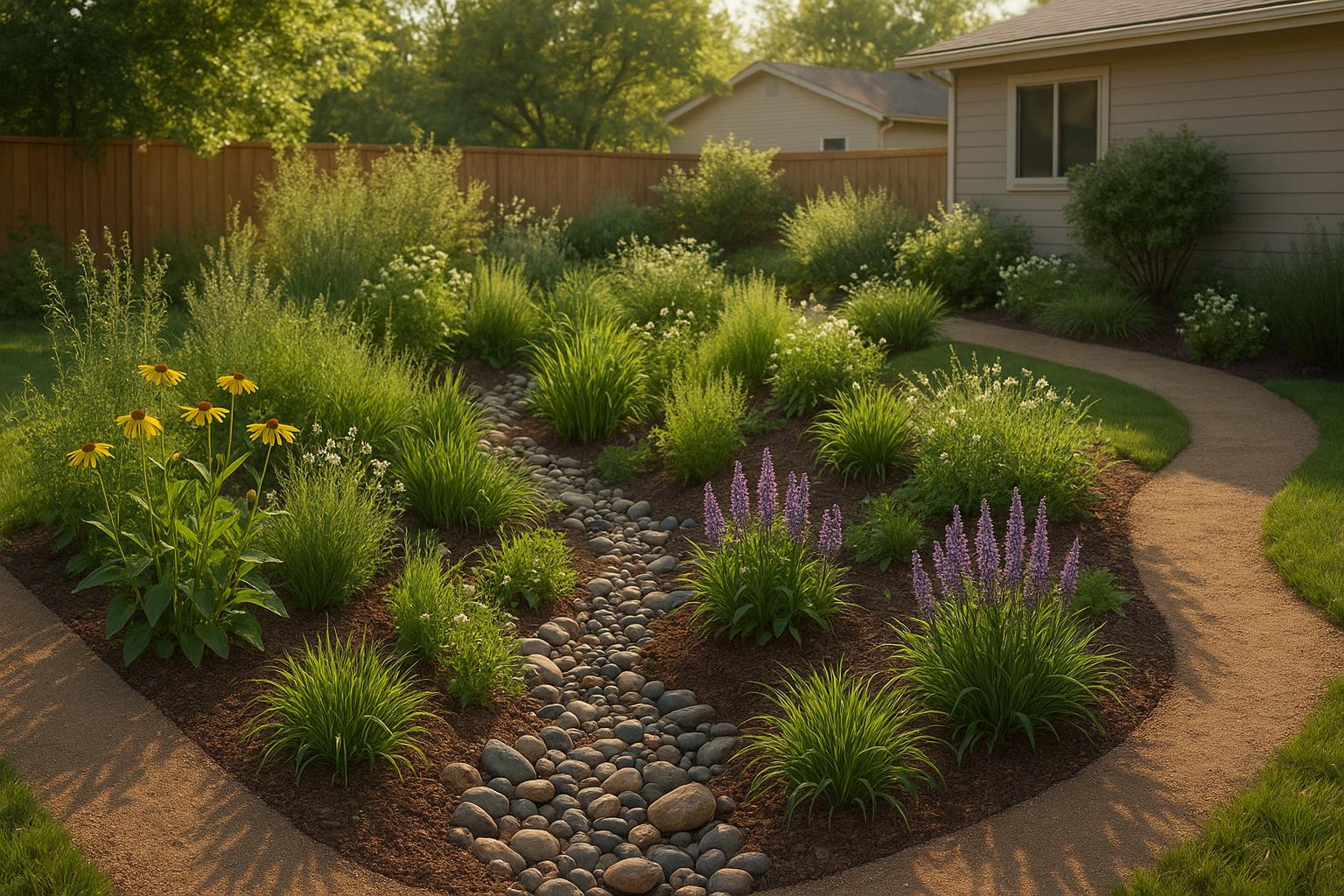
Dealing with stormwater runoff? Rain gardens, dry creek beds, and bioswales are effective ways to manage water while improving your yard. Each method has unique benefits depending on your property’s needs.
- Rain Gardens: These shallow, planted basins collect and filter runoff near downspouts or low spots, improving soil absorption by 30%. They also add visual appeal and support wildlife.
- Dry Creek Beds: Stone-lined channels mimic natural streams, guiding surface water away and reducing runoff by up to 50%. They’re a practical choice for sloped properties.
- Bioswales: Linear channels handle runoff along streets or property edges, filtering pollutants and directing water efficiently.
Quick Comparison
| Feature | Rain Gardens | Dry Creek Beds | Bioswales |
|---|---|---|---|
| Purpose | Absorb and filter water locally | Redirect surface runoff | Guide and filter water along edges |
| Installation | Shallow basins with native plants | Stone-lined channels | Linear channels with vegetation |
| Cost | $300–$2,500 (DIY); higher for pro jobs | $300–$2,500 (DIY); pro costs vary | Lower than underground systems |
| Maintenance | Occasional weeding and debris removal | Clear debris, inspect rocks | Clear debris, manage vegetation |
| Best For | Pooling water near downspouts or low areas | Sloped yards needing surface drainage | Linear runoff along streets/driveways |
Choosing the right solution depends on your property’s layout, soil, and water flow. For tailored options, consult a professional to ensure proper design and installation.
How to build a Rain Garden Step By Step Guide NO POWER TOOLS! Save $$ and no more wet basements!
1. Rain Gardens
Rain gardens have become a go-to solution for Maryland homeowners looking to manage stormwater while adding a touch of beauty to their yards. Unlike hidden underground systems, rain gardens are visible features that combine function and aesthetics, turning drainage areas into vibrant landscapes with seasonal plants.
Water Management Approach
When rainwater flows off your roof or driveway, it often rushes across your property, carrying pollutants into local waterways. A rain garden interrupts this process. It collects runoff in a shallow, planted basin where soil and vegetation work together to slow down and absorb water. This natural filtration process not only reduces the speed and volume of runoff but also helps protect nearby streams and rivers from pollutants like oil, fertilizers, and sediment [1][3].
Rain gardens are perfect for areas where water tends to pool, such as low spots near downspouts. Instead of letting water flow unchecked, these gardens capture it right where it lands. They typically have a depth of 4 to 8 inches, making them shallower than other options like bioswales [3].
But the benefits go beyond just water management. Rain gardens help prevent soil erosion, improve soil quality, and even create habitats for birds and pollinators [2]. By filtering out pollutants before water seeps into the ground, they also play a role in maintaining clean groundwater [3][6]. For homeowners interested in eco-friendly solutions, rain gardens combine practicality with environmental care.
With their ability to handle stormwater effectively, the next step is knowing how to design and install one that fits your yard.
Installation Complexity
Setting up a rain garden is a manageable process, whether you’re a hands-on DIY enthusiast or prefer hiring professionals. It all starts with choosing the right spot – at least 10 feet away from your home’s foundation to avoid water damage [1]. This placement ensures the garden solves drainage problems without creating new issues.
Once the location is set, a shallow basin is dug, tailored to your yard’s size and slope. Adding compost to the soil improves its ability to absorb water and support healthy plant growth [1]. You’ll also need to create an entry point for runoff, like a downspout extension, and an overflow path for those rare heavy rain events [1].
Plant selection is key. Native plants are the best choice because they’re adapted to local conditions, meaning they establish quickly and require less upkeep. In Maryland, options like swamp milkweed, blue flag iris, Joe-Pye weed, river birch, and sedges thrive in rain gardens [1]. These plants not only soak up excess water but also add visual interest and provide habitats for local wildlife.
Compared to underground drainage systems, installing a rain garden is relatively straightforward. It’s a project you can tackle yourself or leave to a professional landscaper. Experts like Pro Landscapes MD can help you pick the right plants and ensure the garden is graded correctly for maximum effectiveness.
Once installed, maintaining your rain garden is simple and keeps it working efficiently.
Maintenance Requirements
Rain gardens are known for being low-maintenance once they’re established [1]. Regularly checking on the plants ensures they stay healthy, while occasional weeding prevents invasive species from taking over and disrupting the garden’s drainage function.
After heavy rains, it’s a good idea to inspect the garden to make sure water is draining properly and not pooling for too long. Over time, sediment can build up in the basin, so removing debris occasionally helps maintain good water absorption [1]. Thanks to the water-absorbing plants, the garden naturally regulates moisture levels, which reduces the need for constant care [1].
Since rain gardens are visible, it’s easy to spot and address any issues early on. Their straightforward upkeep makes them an appealing choice for homeowners who want a functional yet manageable drainage solution.
Cost
The cost of installing a rain garden depends on factors like its size, soil type, and the plants you choose. DIY projects can cost anywhere from $300 to $2,500, depending on how complex the setup is [1]. Professional installations are more expensive due to labor and expertise, with costs influenced by basin size, soil amendments, plant selection, and site preparation.
Despite the upfront expense, rain gardens offer excellent value. They manage stormwater effectively while enhancing the appearance of your yard and supporting local wildlife [1]. Compared to underground drainage systems, they’re often more budget-friendly and accessible for homeowners.
Beyond installation, rain gardens come with minimal ongoing costs. Their long-term benefits – like natural water filtration, reduced maintenance, and added property value – make them a smart investment. By blending functionality with visual appeal, rain gardens stand out as a practical and attractive solution for surface water management.
2. Dry Creek Beds
Dry creek beds are a practical and visually appealing way to manage surface runoff, making them an excellent complement to rain gardens. These channels, lined with river rocks and boulders, mimic the look of a natural stream, turning what might otherwise be a drainage problem into a striking landscape feature. Unlike buried systems that conceal water movement, dry creek beds work out in the open, guiding runoff while adding charm and texture to your yard.
Water Management Approach
Dry creek beds are designed to visibly direct stormwater from roofs, driveways, or patios across your property. Using rocks and boulders, they form a shallow, sloped channel that slows water flow, allowing it to gradually soak into the surrounding soil. This method can reduce surface runoff by up to 50%, making it effective at controlling erosion in garden areas [1].
The main distinction between dry creek beds and underground systems is their approach to water management. While underground systems tackle hidden drainage issues, dry creek beds handle surface water across larger, open spaces [4]. During a rainstorm, you can actually see water flowing through the channel, giving you immediate feedback on how well your system is working.
This surface-level design makes dry creek beds a great fit for residential landscapes where drainage needs to blend into the yard’s overall look. The rocks and boulders not only guide water but also help filter it as it flows. Adding native plants along the sides enhances both drainage and aesthetic appeal, creating the illusion of a natural stream [2].
For properties dealing with moderate rainfall or occasional pooling, dry creek beds are a practical solution. However, if you’re contending with heavy runoff or steep slopes, you may need to pair them with overflow paths or other drainage features to handle extreme conditions [1]. Their visible design also makes installation a straightforward process.
Installation Complexity
Installing a dry creek bed is simpler than setting up underground drainage systems. Start by assessing your yard’s natural slope to determine the best path for water flow. The goal is to direct runoff away from your home’s foundation and toward safe drainage areas.
Once you’ve mapped the flow, dig a shallow channel along the slope and fill it with rocks and boulders to guide the water. Incorporate native plants along the edges to enhance absorption and add to the natural look. The size and depth of the channel should match the expected runoff from your roof, driveway, or other hard surfaces [1][2].
Unlike underground systems, dry creek beds don’t require deep trenching or complex pipe networks, making them accessible for DIY enthusiasts. Selecting water-tolerant plants suited to Maryland’s climate ensures they’ll thrive and contribute to water absorption [2].
It’s crucial to ensure the channel directs water away from foundations and doesn’t create drainage problems for neighboring properties [5]. A properly designed channel will solve your water issues without causing new ones.
For a professional touch, companies like Pro Landscapes MD can design and install dry creek beds that integrate seamlessly with your existing yard. Their expertise ensures proper grading and water flow, addressing your property’s specific drainage needs while enhancing its overall appearance.
Maintenance Requirements
One of the best features of dry creek beds is their low-maintenance nature. Since everything is visible on the surface, you can easily inspect the channel and spot any issues without needing specialized tools or excavation.
Maintenance mainly involves occasional checks to ensure the rocks stay in place, especially after heavy rains. Clearing leaves, branches, and other debris from the channel keeps water flowing smoothly [2]. Unlike underground systems like French drains, which require monitoring for root intrusion or sediment buildup in hidden pipes [4], dry creek beds let you see and address any problems right away.
Over time, some sediment may accumulate in the channel, but a quick raking or cleaning will restore proper water flow. The rocks and stones are durable and rarely need replacing unless you want to refresh the look. Native plants along the edges require minimal care, such as watering during the initial establishment phase and occasional pruning.
Cost
Dry creek beds are an affordable option for homeowners looking to manage drainage issues without breaking the bank. DIY installations typically cost between $300 and $2,500, depending on the channel’s length, the type of stones used, and the complexity of the design [1].
Professional installation costs more but remains an economical choice compared to underground systems [1]. Material costs vary based on the size and color of the river rocks and boulders you select, giving you plenty of options to customize the look while staying within budget.
After installation, ongoing costs are minimal. You won’t need regular professional maintenance or expensive repairs like those required for underground systems. The combination of effective drainage, easy upkeep, and visual appeal makes dry creek beds a smart choice for Maryland homeowners looking to solve runoff issues while enhancing their yard’s natural beauty.
Similar to rain gardens, dry creek beds benefit from professional design and installation to maximize their effectiveness. Pro Landscapes MD offers dry creek bed installation as part of their drainage solutions for central Maryland and Washington, DC. Their expertise ensures your system handles water efficiently while blending beautifully with your landscape.
sbb-itb-843f8be
3. Bioswales
Bioswales take a unique, linear approach to managing stormwater, making them different from localized solutions like rain gardens. These specially designed channels guide water along a set path while filtering out pollutants, making them perfect for areas where runoff follows streets, driveways, or property edges. For properties with linear drainage needs, bioswales combine practical water management with environmental benefits.
How Bioswales Work
Unlike rain gardens that collect water in a single spot, bioswales guide stormwater along a specific route. Their linear design and deeper structure make them ideal for handling runoff near streets or paved surfaces. As water flows through the channel, the soil acts as a natural filter, removing sediments, oils, and other pollutants before the water seeps into the ground. This makes bioswales especially effective in areas where runoff may carry contaminants from roads or driveways. By working with the natural slope of the land, bioswales direct water away from foundations and toward safer drainage areas. The added vegetation not only improves filtration but also enhances the appearance of the space.
Installation Details
Bioswales expand on the functionality of rain gardens by addressing drainage along property edges. Installing a bioswale is less invasive than some other systems, as it avoids deep trenching or extensive piping. The process involves creating a shallow, linear channel that follows the land’s natural slope, often near streets or property boundaries. The complexity of the installation depends on factors like the channel’s length, the slope of the terrain, and the type of soil. Proper grading is critical to ensure water flows smoothly without pooling or causing erosion.
Choosing the right plants is equally important. Vegetation must handle both wet and dry conditions, as water flow varies with rainfall. Native grasses, sedges, and flowering plants suited to Maryland’s climate work well, as they stabilize soil, prevent erosion, and improve filtration.
For a professional installation that ensures proper grading and water flow, Pro Landscapes MD offers bioswale services as part of their drainage solutions in central Maryland and Washington, DC. Their expertise ensures your bioswale functions effectively while blending seamlessly with existing features like patios, walkways, and driveways.
Maintenance Made Simple
One of the advantages of bioswales is their relatively low maintenance. Since they are surface-level systems, it’s easy to spot and address issues like water pooling or sediment buildup without needing specialized tools or excavation. During the first growing season, newly planted vegetation will require regular watering until it’s well established. After that, native plants typically thrive with minimal care.
Routine maintenance involves clearing debris like leaves and branches to keep water flowing smoothly. If sediment buildup or overgrown plants slow down drainage, simple tools can quickly resolve the problem. Occasional pruning or minor grading adjustments may also be needed. This straightforward upkeep makes bioswales an appealing choice for homeowners seeking effective drainage without frequent professional intervention.
Cost Considerations
Bioswales are often seen as a budget-friendly alternative to more complex underground drainage systems. Since they are surface-based, they require less excavation and fewer materials, which helps keep costs down. The overall expense depends on factors like the channel’s length, the grading requirements, and the type of vegetation used. While longer channels or installations on steep terrain may increase costs, native plants tend to be a cost-effective option thanks to their durability and low maintenance needs.
For property owners looking for a sustainable and affordable drainage solution, bioswales strike a balance between simple surface methods and pricey subsurface systems. Their ability to manage water efficiently, filter out pollutants, and require minimal upkeep makes them a smart investment for properties with linear runoff challenges. A professional installation ensures the bioswale is properly designed and graded, avoiding costly fixes down the line. Pro Landscapes MD can evaluate your property’s drainage needs and create a bioswale that not only improves water quality but also enhances the beauty of your landscape. This sets the stage for further comparison with other drainage solutions in the next section.
Advantages and Disadvantages
Rain gardens, dry creek beds, and bioswales each tackle stormwater management in their own way. Here’s a breakdown of how they perform in various aspects:
| Feature | Rain Gardens | Dry Creek Beds | Bioswales |
|---|---|---|---|
| Water Management | Absorbs water locally in shallow basins near downspouts; filters runoff through soil and plant roots | Redirects surface water using decorative stone channels that mimic natural creeks | Filters and guides water along property edges, removing pollutants as it flows |
| Installation Difficulty | Easy for DIY enthusiasts; involves shallow excavation (3–8 inches), soil improvement, and planting native plants | Requires moderate skill to design aesthetically and ensure proper stone placement for efficient flow | Relies on correct grading along natural slopes, avoiding deep trenching of underground systems |
| Installation Cost | Mid-range cost, between the lower expense of dry creek beds and the higher cost of French drains | Most budget-friendly, with DIY projects costing $300 to $2,500 | Surface-based design reduces excavation expenses compared to underground systems |
| Maintenance | Low maintenance once established – occasional weeding, plant care, and debris removal | Requires periodic raking, clearing debris, and trimming vegetation to maintain appearance | Simple upkeep with routine debris clearing and vegetation management to keep it functional |
| Effectiveness | Reduces flooding and protects waterways through natural infiltration; proper sizing (1/8 to 1/3 of the drainage area) is key[2] | Cuts surface runoff by up to 50% and prevents erosion | Filters sediments, oils, and pollutants effectively while managing water along linear property edges |
| Best Suited For | Areas with moderate to good soil drainage, especially low spots near downspouts | Sloped properties where surface runoff needs to be directed attractively | Properties with linear drainage needs, such as along streets, driveways, or boundaries |
| Aesthetic Appeal | Adds seasonal color and habitat diversity with native plants, blending naturally into the landscape | Creates a striking visual effect with natural-looking channels that enhance the property | Features vegetation that improves filtration and integrates seamlessly with existing landscaping |
| Space Requirements | Needs adequate space and should be placed at least 10 feet from the home’s foundation | Flexible sizing based on property layout and drainage paths | Follows property edges, making it ideal for boundary areas |
| Limitations | Poor subsoil permeability can lead to prolonged ponding, which may attract mosquitoes; overflow paths may be needed during heavy rains[7][5][3] | Requires proper stone placement and grading to avoid pooling; primarily addresses surface runoff and aesthetics | Effectiveness depends on proper grading, and longer or steeper channels can increase complexity and costs |
Key Takeaways
Rain gardens are excellent for localized water absorption but may struggle in areas with poor subsoil drainage. Prolonged ponding can occur, which might require designing overflow paths during heavy rains[7][5]. These gardens are best suited for smaller drainage areas rather than managing large-scale runoff[3].
Dry creek beds can reduce surface runoff by as much as 50%[1] while adding a decorative, natural element to your property. However, they do require periodic maintenance, such as raking and clearing debris, to keep them looking good and functioning properly.
Bioswales shine when it comes to managing linear drainage. They guide water along property edges while filtering pollutants, offering a functional and visually appealing solution. Their surface-based design avoids the expense of deep trenching, but proper grading is essential. Steep slopes or extended lengths can drive up installation costs.
Pro Landscapes MD evaluates your soil, layout, and water management needs to create a tailored solution. Whether it’s a rain garden, dry creek bed, bioswale, or a combination, their expertise ensures your Maryland landscape is equipped to handle stormwater effectively.
Conclusion
When selecting a drainage solution, it’s important to choose one that suits your property’s specific needs. Rain gardens are ideal for absorbing water in localized areas, such as near downspouts or low spots. Dry creek beds not only redirect surface water but also add a natural, decorative touch to your landscape. For linear drainage issues along property edges, bioswales are a practical choice, offering sediment and pollutant filtration while blending seamlessly with your surroundings.
Consider your property’s unique characteristics and Maryland’s climate when deciding. For instance, if water tends to pool near downspouts in a flat area with well-draining soil, a rain garden could be a great fit. On sloped terrain, where surface water needs redirection, a dry creek bed might work better. For stormwater challenges along driveways, streets, or property boundaries, bioswales provide effective filtration while maintaining aesthetic appeal. However, if your property has low subsoil permeability, you may need to incorporate surface drains into rain garden designs to prevent standing water[7]. Keep in mind both the upfront installation costs and the long-term maintenance requirements of each option when budgeting.
Pro Landscapes MD specializes in creating drainage solutions tailored to Maryland’s unique conditions. Their team of experts evaluates your soil, property layout, and rainfall patterns to design systems that address your needs – whether it’s a rain garden, a decorative dry creek bed, a bioswale, or a combination of these. From the planning stage to installation and maintenance, they ensure your property manages stormwater efficiently while enhancing its natural beauty.
FAQs
What’s the best drainage solution for my property: a rain garden, dry creek bed, or bioswale?
Choosing the best drainage solution for your property comes down to understanding its unique requirements – things like how much water runoff you’re dealing with, the type of soil you have, and the layout of your landscape. Here are a few options to consider:
- Rain gardens: These not only help capture and filter runoff but also add a touch of beauty to your yard. They’re a great choice if you’re looking to combine functionality with visual appeal.
- Dry creek beds: Perfect for areas that experience heavy rainfall, they guide water flow effectively while helping to prevent erosion.
- Bioswales: A more eco-friendly approach, these slow down and filter stormwater, making them a sustainable option for managing runoff.
Pro Landscapes MD offers custom drainage solutions designed specifically for your property. They focus on creating systems that manage water efficiently while enhancing the overall look of your outdoor space.
What should I consider when designing and installing a rain garden?
When planning a rain garden, start by assessing the drainage system to make sure water flows correctly and avoids pooling. Key elements to examine include the soil type, the land’s slope, and the typical rainfall patterns in your area.
Next, choose your plants wisely. Native species with deep root systems are ideal since they absorb water effectively and help filter out pollutants. Thoughtful preparation not only ensures your rain garden works efficiently but also makes it an attractive feature that supports sustainable stormwater management.
How do bioswales help filter pollutants from stormwater runoff compared to other drainage methods?
Bioswales excel at cleaning stormwater by utilizing a combination of vegetation, soil, and natural filtration. As water moves through a bioswale, pollutants like sediment, oils, and heavy metals are captured and absorbed by the plants and soil. This process significantly improves water quality before it seeps into the groundwater or enters stormwater systems.
Unlike traditional drainage options such as French drains or dry riverbeds, bioswales provide an extra layer of ecological support. They encourage the growth of native plants, create habitats for wildlife, and add visual appeal to the landscape. This makes them a practical and aesthetically pleasing solution for managing stormwater.
Chat with Us