









- bhavya gada
- No Comments
Recycled hardscape materials are cost-effective, durable, and reduce waste, making them a smart option for outdoor projects. Options like crushed concrete, reclaimed asphalt, and recycled brick pavers perform well in areas like driveways, patios, and walkways. These materials also help manage stormwater effectively, especially in Maryland’s rainy climate.
Key Points:
- Durability: Recycled materials like brick pavers can last 30-50 years, while recycled concrete is less prone to cracking compared to solid poured concrete.
- Cost Savings: Recycled options are often cheaper upfront and require less maintenance over time.
- Environmental Impact: Using recycled materials reduces landfill waste and lowers carbon emissions from new material production.
- Limitations: Recycled materials may not handle heavy loads as well as virgin materials and often require professional installation for best results.
Quick Tip: For Maryland’s freeze-thaw cycles and heavy rains, recycled concrete aggregate (RCA) is a top choice due to its permeability, which helps prevent runoff and moisture damage.
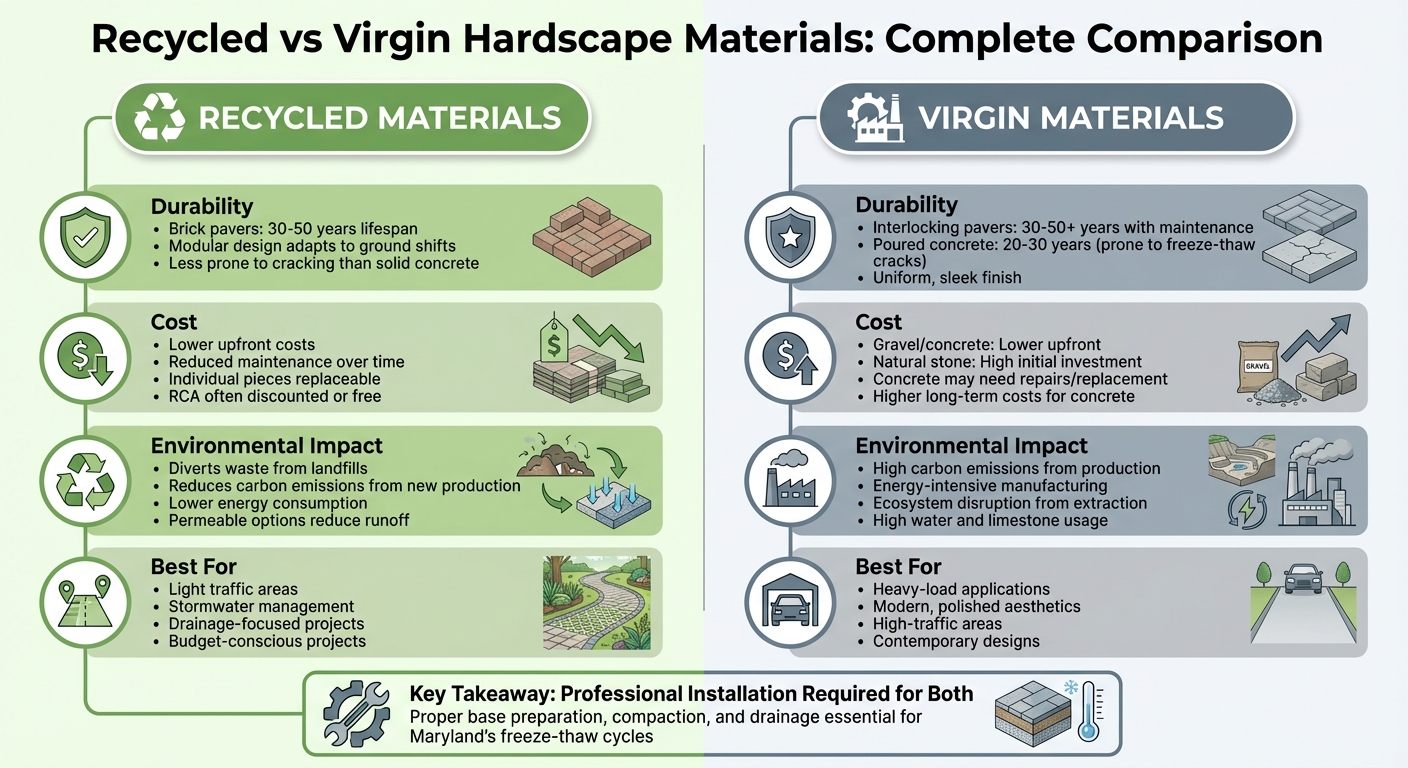
Recycled vs Virgin Hardscape Materials Comparison Chart
1. Recycled Hardscape Materials
Durability
Recycled hardscape materials deliver performance that rivals new ones when installed correctly. Take recycled concrete pavers, for example – they’re created by crushing old concrete and are just as sturdy and dependable as freshly manufactured pavers. This makes them a solid choice for heavy-use areas like driveways and retaining walls. Plus, their modular design helps them adapt to ground shifts, reducing the likelihood of cracks compared to solid concrete.
Composite decking, crafted from recycled plastics and wood fibers, is another durable option. It stands up well against rot, insect damage, and UV exposure, which often wear down natural wood. Similarly, reclaimed brick from older buildings not only brings a timeless aesthetic but also proves its longevity over decades. For those seeking a more modern touch, recycled glass pavers provide vibrant textures and colors without compromising on strength.
Cost
Recycled materials often come with a friendlier price tag because they repurpose existing resources, cutting down on manufacturing costs. Gravel and decomposed granite, for instance, are some of the most economical options for covering large areas like walkways or driveways. Reclaimed wood is another standout – it’s typically much cheaper than new lumber and brings a unique, weathered charm to projects.
While composite decking may seem pricey upfront, the reduced need for maintenance and infrequent replacements can lead to considerable savings over time. When you weigh long-term value against initial expenses, recycled materials often emerge as the smarter financial choice, blending cost efficiency with reliable performance.
Environmental Impact
Choosing recycled pavers helps divert waste from landfills, contributing to better waste management. As Old Town Pavers puts it:
Recycled pavers transform waste into valuable construction materials, thus helping us in our efforts towards waste management and sustainability [4].
Recycling concrete also reduces the demand for new cement production, which is a major source of carbon emissions. Paramount Stone highlights this benefit:
Using [recycled concrete] cuts down on landfill waste and lowers the need for new cement production, which is a major source of carbon emissions [5].
Additionally, producing recycled pavers requires less energy than manufacturing new ones, further shrinking the carbon footprint of construction projects.
Permeable recycled pavers bring added environmental perks. They allow rainwater to seep through, reducing runoff and helping to curb urban flooding. Light-colored recycled pavers also reflect sunlight, which can help lower surrounding temperatures and combat the urban heat island effect. These eco-friendly advantages make recycled materials a compelling choice for sustainable construction projects.
These points pave the way for a deeper comparison between recycled and virgin materials in the next section.
sbb-itb-843f8be
2. Virgin Hardscape Materials
Durability
When installed properly, virgin hardscape materials are known for their durability. Options like natural stone and concrete pavers stand out for their longevity. Blackstone Landscaping highlights this, stating:
Natural stone and concrete pavers generally have the longest lifespan when properly installed and maintained [1].
Interlocking pavers, for example, can last 30 to 50 years or more with regular maintenance [2]. On the other hand, poured concrete tends to develop "spiderweb" cracks during freeze-thaw cycles, often requiring repairs or replacement within 20 to 30 years [2]. Unlike concrete, interlocking pavers adjust to ground movement, reducing the risk of structural cracks [2].
These differences in durability can significantly impact the total cost of a project over time.
Cost
The cost of virgin materials can vary greatly. Gravel and poured concrete are budget-friendly upfront, but concrete’s affordability may be offset by repair or replacement costs due to cracking issues.
Natural stone, while expensive initially, provides value over time through its durability and the boost it can give to property value. Interlocking pavers fall into the mid-range price category and are cost-effective in the long term since damaged pieces can be replaced individually. The higher upfront investment in natural stone or interlocking pavers often aligns with their extended lifespan and lower maintenance needs.
Environmental Impact
The environmental footprint of virgin materials is another important factor to consider.
Concrete, for instance, has a significant impact on the environment. Its production process is energy-intensive, requiring large amounts of limestone, water, and other raw materials, which leads to high carbon emissions. As Shades of Green Permaculture explains:
Concrete is one of the most ubiquitous building materials globally, but its production comes with a high environmental cost, including substantial carbon emissions [7].
Similarly, extracting virgin stone can disrupt ecosystems and generate additional carbon emissions due to the energy demands of extraction and long-distance transportation [7]. These environmental challenges make virgin materials a less eco-friendly option compared to alternatives.
Is Recycled Concrete Aggregate a Viable Option? – Part 1 – Vlog 710
Advantages and Disadvantages
Choosing the right hardscape materials for your outdoor project involves balancing durability, cost, and environmental impact. Let’s break down these factors to help you make an informed decision.
Durability
When comparing recycled materials to virgin options, each has its strengths. Recycled materials, like urbanite (recycled concrete), stand out for their modular design, allowing individual pieces to be replaced without disrupting the entire structure. This feature, combined with their naturally weathered look, helps them age gracefully and conceal wear better than virgin concrete, which can highlight stains and cracks over time [6][7]. On the other hand, virgin materials often provide a sleek and uniform finish. However, poured virgin concrete may require significant repairs or even full replacement within 20 to 30 years due to freeze-thaw cycles causing cracks [2].
Cost Considerations
Recycled concrete is often a cost-effective choice, sometimes even free, especially if sourced from the same site. This makes it a budget-friendly option for many projects [7]. As Green Garden Landscape points out:
With pavers, you’re investing a bit more upfront for a much lower lifetime cost [2].
In contrast, natural stone can be more expensive upfront due to the labor-intensive processes involved in its extraction and transportation [1][6].
Environmental Impact
The production of new concrete is a major contributor to carbon emissions. Opting for reclaimed concrete eliminates the environmental toll of manufacturing and transporting new materials [7]. Shades of Green Permaculture highlights this advantage:
Using reclaimed and recycled concrete (‘urbanite’) for patios, raingardens, paths, and more… helps us keep it out of the landfill and make beauty from the rubble [7].
Additionally, recycled materials can be installed with gaps, allowing for better water permeability. This helps recharge groundwater, reduces erosion, and minimizes the risk of local flooding [7].
Appearance and Function
Recycled concrete brings a unique, rustic charm that works well for informal pathways and rain gardens. In contrast, virgin concrete delivers a polished, modern look that complements contemporary designs [6][7]. Brick pavers are another eco-conscious choice, while recycled composite materials stand out for their resistance to rot and UV damage, making them ideal for multi-level structures [1][7].
When to Use Recycled Materials and Professional Installation
Recycled hardscape materials are a smart choice for projects where cost savings and drainage are key priorities. Recycled Concrete Aggregate (RCA), for example, is often used as a sub-base layer for driveways and walkways with light traffic or pedestrian use. Many demolition companies sell crushed concrete at a discount to avoid landfill fees, making it an economical option for these applications [3]. Beyond affordability, RCA provides solid drainage performance, which is especially useful in Maryland’s climate.
For stormwater management, RCA stands out due to its high permeability, making it effective for drainage-focused projects [3]. Materials like recycled gravel or crushed concrete can be used in permeable pathways to control runoff. However, these surfaces may need periodic maintenance to stay functional [1][3]. Given Maryland’s humid conditions and frequent rainfall, proper compaction during installation is crucial to avoid issues like rutting [3].
Traffic volume is another factor to weigh when using recycled materials. RCA performs well in low-traffic areas but isn’t suited for heavy-load applications, as it lacks the durability of fresh concrete [3]. Additionally, the industrial look of recycled aggregates makes them better suited for functional drainage zones, where they can be concealed beneath more visually appealing materials like natural stone or pavers [3].
Because of these limitations, expert installation is critical. As Green Garden Landscape emphasizes:
Paver installation requires prep work, base layering, compaction, and edge restraints to ensure longevity. That is why it’s best to reach out to a pro [2].
Proper preparation ensures a stable base, preventing issues like shifting or sinking, which are especially problematic in Maryland’s freeze-thaw cycles.
Pro Landscapes MD offers extensive experience in stormwater-friendly hardscaping throughout central Maryland. Their services include specialized drainage solutions such as French drains, dry riverbeds, and permeable paver installations. With expertise in grading, land leveling, and stormwater management, they ensure recycled materials are compacted and drained to handle Maryland’s challenging climate. Their work supports eco-conscious designs across Howard County, Montgomery County, Carroll County, Frederick County, Prince George’s County, and Baltimore County.
Conclusion
Using recycled hardscape materials comes with clear advantages: they save money, reduce waste, and offer dependable durability. For every ton of recycled pavers used, an equal amount of waste is kept out of landfills, and producing these materials consumes less energy compared to new ones [4]. When installed correctly, recycled options can last just as long as new materials, as shown in earlier comparisons [2]. Plus, their modular design adapts to freeze-thaw cycles, avoiding the cracking issues that often affect rigid concrete surfaces.
The cost savings go beyond the initial expense. While virgin concrete might appear cheaper upfront, recycled pavers often prove more economical over time. Repairs are simpler and cheaper since individual units can be replaced without redoing entire surfaces [4][2]. Additionally, many recycled materials offer permeable surfaces, which help manage stormwater effectively. This not only reduces the risk of urban flooding but also aligns with Maryland’s drainage requirements [4].
Choosing the right recycled materials depends on your project’s specific needs, including traffic levels and design preferences. Professional installation is essential to ensure long-term performance. As Janine Hughes, an industry expert, explains:
Recycled aggregates are subject to stringent quality controls in order to meet environmental and performance protocols relevant to the intended use [8].
Proper preparation – like ensuring a solid base, thorough compaction, and effective drainage – is key to making recycled materials work well in Maryland’s tough climate. Pro Landscapes MD specializes in eco-friendly hardscaping and stormwater solutions across central Maryland. By opting for recycled hardscape materials, you’re not just making a practical choice but also contributing to sustainable practices tailored to Maryland’s unique environmental challenges.
FAQs
How can I tell if recycled materials are strong enough for my driveway?
The durability of recycled materials varies based on the type of material and how it’s installed. Take recycled asphalt, for example – it can hold up well under moderate loads if it’s compacted properly. On the other hand, recycled concrete often contains impurities, which can make it less reliable for supporting heavy vehicles. To ensure your driveway can handle the intended use, it’s a good idea to consult a professional who can assess the material’s strength and suitability.
What maintenance do recycled hardscape surfaces need to stay permeable?
To keep recycled hardscape surfaces working effectively, they need consistent upkeep. This includes regular sweeping to clear debris, occasional pressure washing to remove buildup, and periodic cleaning of inlet structures to avoid blockages. These steps are key for maintaining proper drainage and ensuring the surface remains functional over time.
What should I look for in an installer to avoid shifting or rutting in Maryland?
Choose an installer who works with durable and flexible materials, such as pavers. Pavers are designed to handle ground movement effectively and can be replaced easily if they get damaged. This makes them a smart choice for preventing issues like shifting or rutting, especially given Maryland’s diverse terrain.
Chat with Us