









- bhavya gada
- No Comments
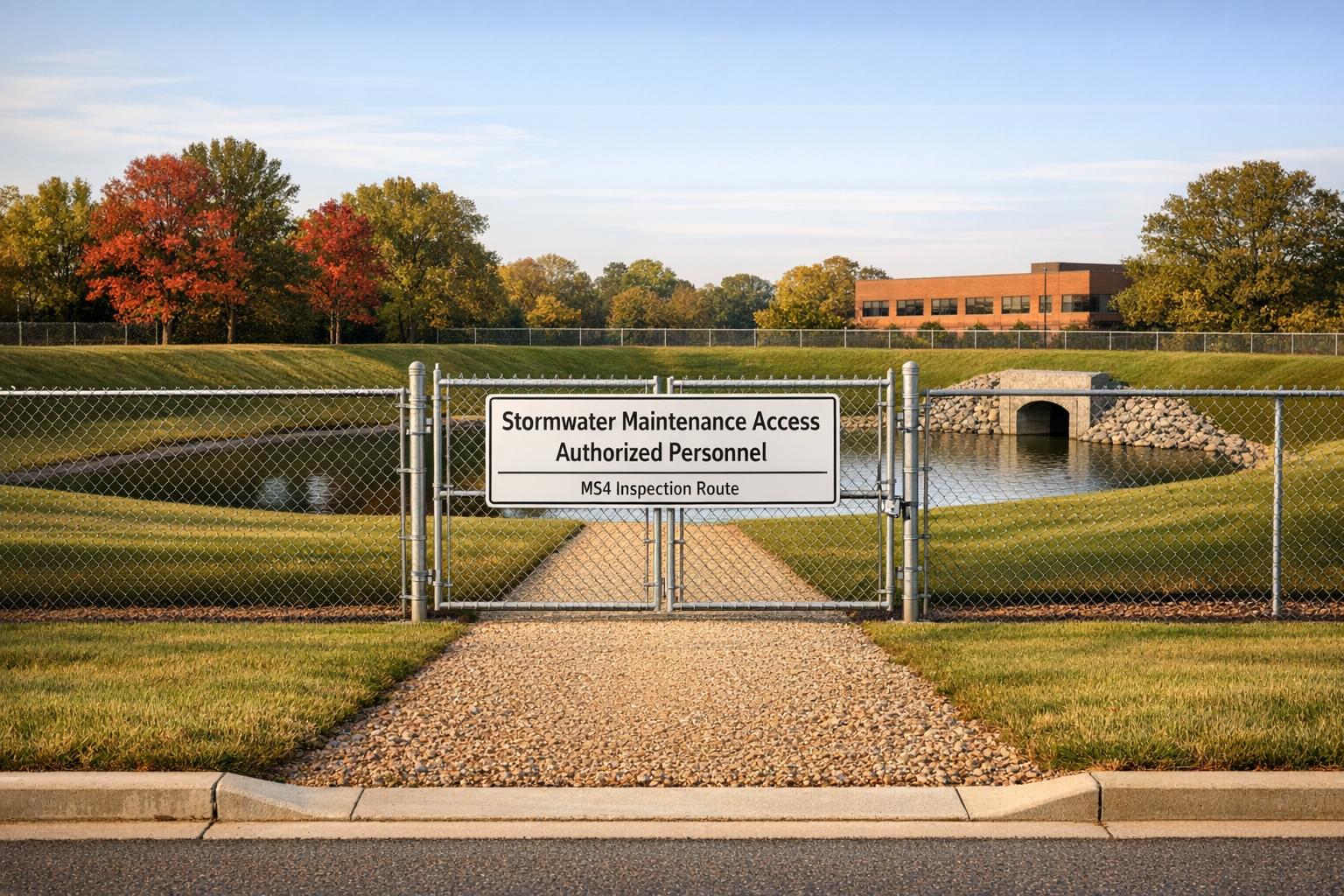
Ensuring proper access for stormwater system maintenance is a critical requirement in Maryland. State regulations, including the Maryland Stormwater Management Act and COMAR 26.17.02, mandate that stormwater systems are designed for easy inspection and upkeep. These rules aim to protect waterways like the Chesapeake Bay by preventing sediment and pollutants from entering them, while also reducing risks like flooding and structural damage for property owners.
Key takeaways:
- Inspection Access: Systems must include permanent access points, such as manholes or inspection ports, to allow regular maintenance and prevent failures.
- Maintenance Agreements: Property owners are legally required to sign agreements ensuring long-term system upkeep.
- Local Enforcement: Counties enforce these regulations through plan approvals, inspections, and recorded easements, ensuring compliance with state guidelines.
- Environmental Site Design (ESD): Developers must prioritize natural runoff management methods, such as bioretention areas and permeable pavements, to mimic predevelopment conditions.
Property owners and developers must understand these requirements to avoid penalties, ensure system functionality, and protect local water quality. Companies like Pro Landscapes MD offer services to help meet these standards while maintaining effective drainage systems.
Stormwater Control Measure (SCM) Inspection and Maintenance Training (Part 1)
sbb-itb-843f8be
Maryland’s Stormwater Regulatory Framework
Maryland’s approach to stormwater management is shaped by the Maryland Stormwater Management Act and COMAR 26.17.02, overseen by the Maryland Department of the Environment (MDE). Together, these establish the technical rules that local governments and developers must follow [1][2]. Let’s break down how these regulations guide stormwater system design and enforcement.
The Maryland Stormwater Management Act
At its core, the Act aims to ensure that after development, stormwater runoff behaves as it would under natural "woods in good condition" [2]. Developers are required to prioritize Environmental Site Design (ESD) methods before turning to structural solutions like detention ponds [1][2]. ESD techniques mimic natural hydrology by using strategies such as bioretention areas, permeable pavements, and vegetated swales to manage water directly where it falls.
The foundation of this approach lies in predevelopment runoff standards. Developers must demonstrate that post-development runoff – covering aspects like volume, flow rate, timing, and water quality – matches the natural conditions of the site. Additionally, stormwater systems must include accessible inspection points and maintenance access from the outset, ensuring that structural elements can be monitored and repaired as needed over time.
COMAR 26.17.02 builds on these principles, translating them into specific, enforceable requirements.
COMAR 26.17.02 Requirements
COMAR 26.17.02 lays out the detailed rules that make the Act’s goals actionable [3]. One key requirement is that all stormwater management plans submitted for approval must include a maintenance agreement. This document identifies who will be responsible for the long-term upkeep of the system – an essential step for plan approval.
The regulations also require recorded maintenance easements, which grant legal access to stormwater facilities. This ensures that local authorities or contractors can perform inspections and necessary maintenance without legal hurdles. To back this up, jurisdictions must enforce a mandatory inspection program, typically requiring inspections of all stormwater systems at least once every three years. Property owners are expected to keep detailed records of inspections and maintenance activities to prove compliance during reviews.
When designing stormwater systems, developers must include features like inspection ports or manholes for underground components, making them accessible from the surface. Maintenance easements should also be clearly marked on final site plans and recorded in land records, avoiding future disputes over system access [3].
County and Municipal Enforcement
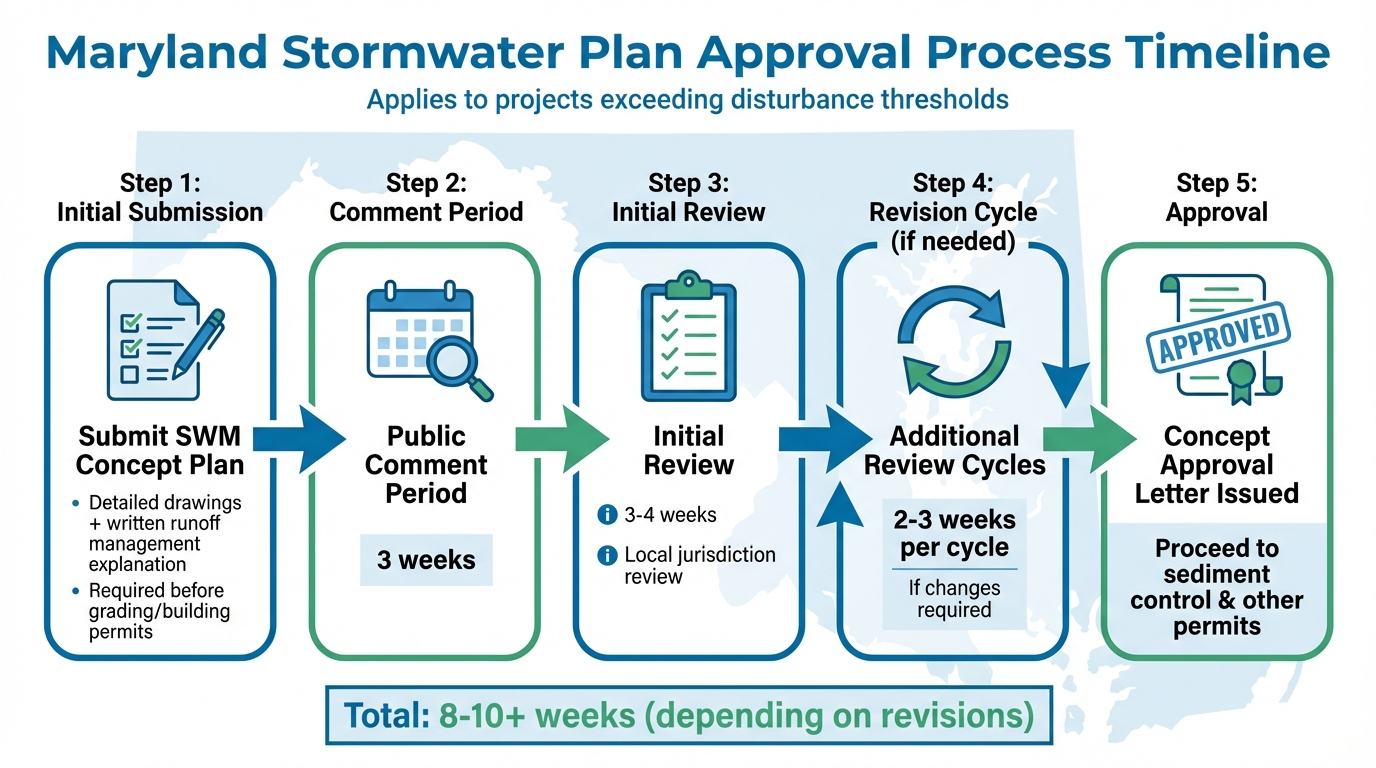
Maryland Stormwater Plan Approval Process Timeline
In Maryland, local governments play a key role in enforcing the state’s stormwater regulations. Counties and municipalities take the framework laid out in COMAR 26.17.02 and adapt it into their local ordinances. They also oversee the approval process that developers must navigate before starting construction. Essentially, local enforcement ensures that state policies are put into action through practical stormwater management practices.
This system of enforcement is evident in the step-by-step plan approval processes and examples of local ordinances discussed below.
Stormwater Plan Approval Process
Local agencies are responsible for turning state mandates into clear, actionable steps for developers. Before developers can get grading or building permits, they must first obtain approval for their stormwater management plans from the local jurisdiction. This requirement applies to projects that exceed specific disturbance thresholds [5]. The process typically kicks off with the submission of a Stormwater Management (SWM) Concept plan. This plan includes detailed drawings and a written explanation of how runoff will be managed and how maintenance access will be ensured.
Take Montgomery County as an example. The process starts with a three-week comment period, followed by an initial review lasting three to four weeks [4]. If changes are needed, additional review cycles usually take two to three weeks [4]. Once the SWM concept is approved, the county issues a Concept Approval letter. This approval allows the project to move forward to the sediment control stage and other permitting steps.
"Stormwater management plan approval is required to prevent stream bank erosion by controlling the rate of stormwater runoff from newly developed areas by using infiltration practices, shallow marshes, retention, and detention ponds." – Maryland Department of the Environment [5]
Local Ordinance Examples
Counties in Central Maryland have created ordinances that expand on state requirements. For example, Montgomery County’s Code Chapter 19 mandates that developers show how their stormwater systems will remain accessible for inspections and maintenance throughout their lifespan. Projects located in Special Protection Areas (SPAs) face additional requirements, including the submission of Preliminary and Final Water Quality Plans.
Howard County also enforces strict standards for accessibility. Developers are required to include inspection ports or surface-accessible manholes for underground stormwater structures, ensuring these systems can be easily inspected and maintained over time.
Design Standards for Conveyance Systems
In Maryland, stormwater conveyance systems are required to balance practical maintenance access with environmental protection. These regulations are enforced by both state and local authorities. While the Maryland Department of the Environment establishes the overall guidelines, counties like Howard County have specific frameworks in place to ensure compliance. Local agencies, such as the Bureau of Engineering and Environmental Services, oversee the implementation and inspection of these systems on a day-to-day basis.
Accessible Inspection Points
A key requirement for stormwater conveyance systems is the inclusion of inspection points that are easily accessible for long-term maintenance. These points must be designed with enough space and structural features to accommodate maintenance equipment. For example, Howard County’s Bureau of Engineering plays a critical role in setting the standards for infrastructure design and works closely with developers during the planning phase. This ensures inspection points meet accessibility requirements and are practical for ongoing maintenance.
Collaboration between various local agencies is essential during the design process. In Howard County, stormwater management responsibilities are divided between the Bureau of Environmental Services, which focuses on facilities and pollution prevention, and the Bureau of Highways, which handles roadway-related stormwater maintenance. To align with the long-term capabilities of the Roadway Maintenance Division, designs must include appropriately sized inspection points, access roads, and staging areas to support future maintenance crews.
These considerations not only ensure accessibility but also align with Maryland’s broader regulatory framework, which emphasizes environmental protection at sensitive sites.
Stream Disturbance Limits
When stormwater systems intersect with streams or protected buffers, Maryland enforces a regulatory category known as "Necessary Disturbance" under Land Development. This framework requires developers to minimize environmental impacts during both construction and maintenance. The Department of Planning and Zoning reviews these plans to ensure they comply with disturbance limits before approving any projects affecting waterways.
These limits directly shape the design of conveyance systems. Engineers are tasked with routing pipes, channels, and access points in ways that avoid sensitive stream areas whenever possible. If a stream crossing is unavoidable, the design must prove that the disturbance is absolutely necessary and that all reasonable alternatives have been explored.
Inspection and Maintenance Requirements
The design standards discussed earlier depend heavily on regular inspections and timely maintenance to ensure stormwater systems perform as intended. In Maryland, property owners are legally required to maintain these systems, a responsibility supported by the inclusion of accessible inspection points in the original designs. Before a development project receives final occupancy approval, the property owner must sign a legally binding maintenance agreement with the local authority. This agreement, recorded in local land records, underscores the owner’s responsibility to regularly inspect and maintain the stormwater system.
Developer and Contractor Obligations
For construction that disturbs one acre or more of land, developers and contractors must secure permit coverage under Section 402 of the Clean Water Act. This is managed through the National Pollutant Discharge Elimination System (NPDES) permitting program, overseen in Maryland by the Department of the Environment and its Water Management Administration. These permits and associated stormwater management plans are critical for ensuring the long-term functionality of stormwater systems.
Projects impacting 150 acres or more or discharging into waters listed under Section 303(d) require individual permits. Even smaller projects – those disturbing less than one acre – must comply if they are part of a larger development that collectively disturbs one acre or more. To meet these requirements, site inspections must be carried out by a Qualified Compliance Inspector of Stormwater (QCIS). This Maryland-specific certification involves an initial training fee of $799.00. Developers should determine early in planning whether their project discharges into an impaired water body, as this necessitates a more intricate individual permit process. These permitting and inspection measures align with the structured oversight required under MS4 permits.
MS4 Permit Requirements
Once stormwater systems are in place, MS4 permits establish a formal oversight framework. Jurisdictions operating under Municipal Separate Storm Sewer System (MS4) permits mandate triennial inspections for all structural stormwater practices. This rule applies to both public and private stormwater Best Management Practices (BMPs), ensuring systems continue to function as designed. If inspections reveal any deficiencies, immediate maintenance is required to restore the system to its original specifications. These MS4 protocols create a consistent cycle of inspections and accountability, ensuring property owners uphold the long-term performance of their stormwater systems.
Pro Landscapes MD: Stormwater Compliance Services

Managing stormwater regulations in Maryland can be a tricky process. Property owners in central Maryland need solutions that not only meet state and local requirements but also ensure their systems work effectively for the long haul. Pro Landscapes MD steps in with expertise, offering drainage and stormwater management services specifically designed to align with the Maryland Department of the Environment’s guidelines. By incorporating inspection points right from the planning stages, their approach ensures compliance while keeping systems functional and easy to maintain.
Drainage and Stormwater Services
Pro Landscapes MD prioritizes compliance and functionality in every project. Their drainage solutions are designed to meet strict regulatory standards while maintaining efficiency. For example:
- French drains: These systems redirect both groundwater and surface water away from foundations, channeling it toward designated management areas.
- Dry riverbeds: Ideal for managing heavy rainfall, these features prevent erosion and ensure easy maintenance access, adhering to COMAR 26.17.02.
They also offer regrading and land leveling services to correct site slopes, ensuring proper drainage patterns and eliminating standing water. This prevents pooling, which could otherwise disrupt system performance, and creates the right grades for compliant water conveyance. Additional services include installing catch basins, placing drain pipes, and conducting drainage repairs to keep stormwater systems in top shape over time.
Meeting Maryland Regulatory Standards
Pro Landscapes MD brings a thorough understanding of both state regulations and the local ordinances that often go hand-in-hand. Their work across central Maryland reflects this expertise, ensuring projects meet all necessary standards while delivering reliable stormwater solutions.
Conclusion
Maryland’s stormwater regulations emphasize the need for accessible inspection points, limits on stream disturbances, and adherence to MS4 standards – enforced through state, county, and municipal laws. These rules not only outline legal responsibilities but also highlight the importance of regular system upkeep.
Keeping access points clear and functional ensures that small issues don’t spiral into costly repairs. Property owners who proactively check their systems and confirm that inspection points meet Maryland’s design standards can avoid expensive penalties and system breakdowns in the future.
Pro Landscapes MD tackles these challenges by blending regulatory knowledge with practical drainage solutions like French drains, dry riverbeds, and regrading. They ensure projects align with Maryland Department of the Environment (MDE) guidelines and local rules while maintaining system efficiency. By integrating inspection points during project planning, they help property owners stay compliant without compromising performance.
Maintaining detailed records of inspections and upkeep simplifies MS4 reviews and local audits, reducing the risk of flooding, cutting long-term costs, and safeguarding Maryland’s waterways. Investing in proper stormwater management ensures both functional properties and a healthier environment.
FAQs
Do I need a recorded stormwater maintenance easement on my property?
Yes, having a recorded stormwater maintenance easement on your property is usually required. This ensures proper access for inspections and maintenance of stormwater management systems. In Maryland, this is a standard requirement under local regulations to maintain compliance with stormwater management standards.
What counts as “permanent maintenance access” to a stormwater system?
“Permanent maintenance access” refers to structural or infrastructural elements specifically designed to allow regular inspection, servicing, and repair of stormwater management systems. These features are essential to ensure the system continues to function efficiently over its entire lifespan.
What happens if my stormwater BMP fails an MS4 inspection?
If your stormwater BMP doesn’t pass an MS4 inspection, it likely needs maintenance or repairs. Common issues include clogging, structural cracks, or leaks. Overlooking these problems can lead to more expensive fixes down the road and might even put you at risk of violating permit requirements.
Chat with Us