









- bhavya gada
- No Comments
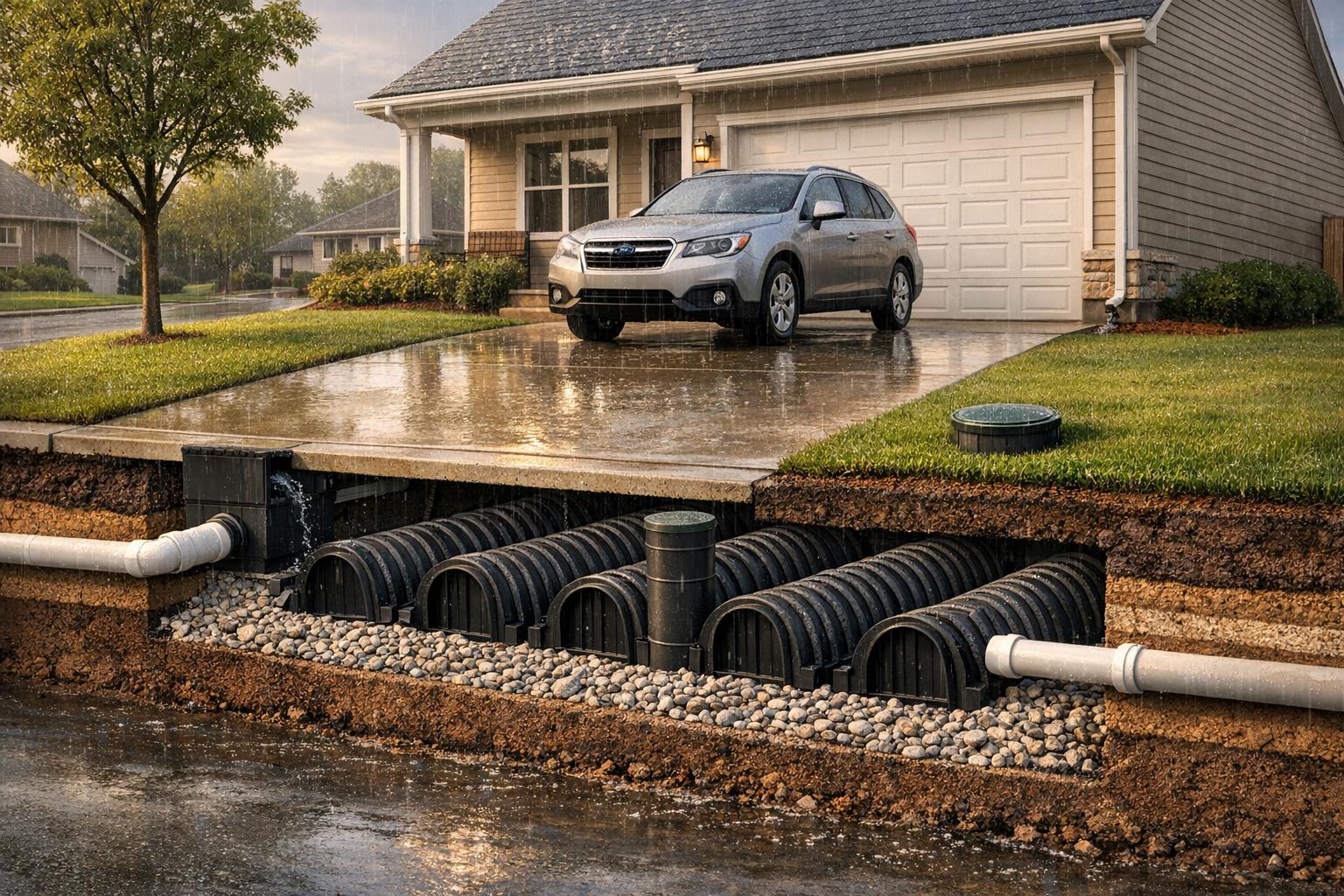
Underground detention systems are a practical solution for managing stormwater on residential properties while preserving outdoor space. These systems store excess water below ground and either release it gradually or allow it to seep into the soil. Key considerations for designing these systems include:
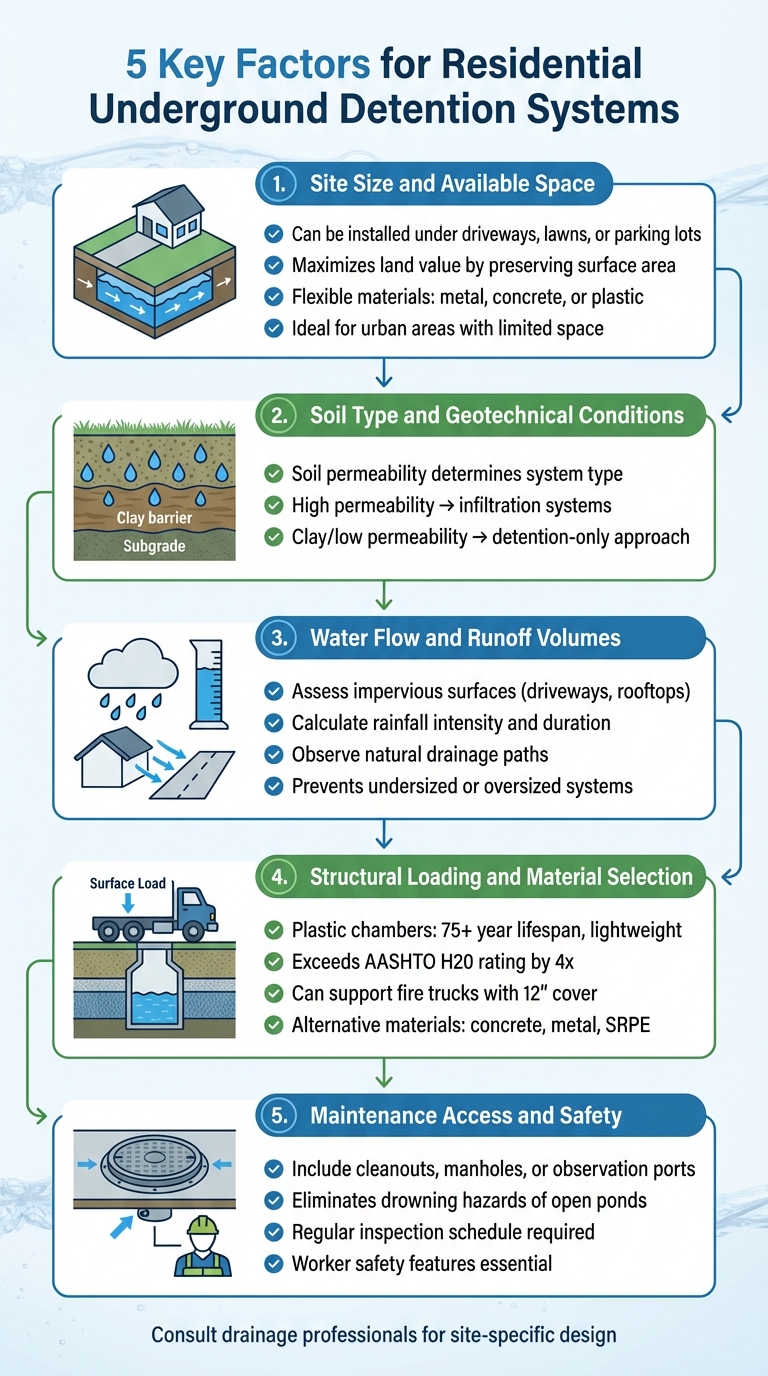
- Site Size: Systems can be installed under driveways or lawns, saving surface space.
- Soil Conditions: Soil type determines whether the system focuses on water storage or infiltration.
- Runoff Volumes: Accurate calculations ensure the system handles water effectively without being oversized.
- Structural Loading: Material selection depends on surface use, like driveways or foot traffic.
- Maintenance Access: Easy access points are critical for inspections and upkeep.
5 Key Factors for Residential Underground Detention Systems
Underground Detention Systems – Explained
sbb-itb-843f8be
1. Site Size and Available Space
The size of your property plays a major role in determining how and where to install a detention system. As Contech explains:
The problem with detention ponds is that they take up valuable land space. While this may not be a major issue in rural areas, it becomes a significant concern in urban environments where land space is limited and expensive [1].
One big advantage of underground detention systems is their ability to serve dual purposes. These systems can be installed beneath areas like driveways, lawns, or parking lots, leaving the surface free for everyday use. Contech highlights this benefit:
This approach maximizes the land value for the owner by allowing the surface area to be used for other purposes, such as building infrastructure, green spaces, or additional parking [1].
When planning, it’s important to account for both the space available for installation and the access needed for construction and maintenance. For instance, heavy equipment may require temporary adjustments, such as removing fencing or landscaping, to reach the site. Underground systems offer flexibility, as they can be made from materials like metal, concrete, or plastic to fit into tight or irregularly shaped spaces.
Placement decisions should strike a balance between storage capacity and practical access. While maximizing detention volume is important, it’s equally critical to ensure maintenance crews can easily reach inspection points without disrupting your property. Collaborating with drainage professionals can help you design a system tailored to your lot’s specific needs, ensuring both efficiency and long-term functionality.
2. Soil Type and Geotechnical Conditions
The type of soil in an area plays a crucial role in how stormwater systems perform and how effectively they support groundwater recharge. Soil composition and its physical properties directly influence the system’s design and functionality.
One of the most important factors to consider is soil permeability – essentially, how easily water can flow through the soil. This determines whether your system should focus on detention (temporarily storing water and releasing it at a controlled rate) or infiltration (allowing water to seep into the ground to replenish groundwater). For example, areas with highly permeable soils are ideal for infiltration systems, as they can reduce runoff and contribute to healthier urban water cycles. On the other hand, soils rich in clay or with low permeability often require a detention-only approach to handle stormwater effectively [1].
Another consideration is the groundwater level. High groundwater can limit infiltration, influencing the choice of materials and the overall system design. Soil tests and geotechnical studies are essential here, as they help determine whether detention or infiltration is the better option. These tests also guide material selection, whether it’s metal, concrete, or plastic, ensuring the system meets site-specific needs [1].
For the best results, it’s wise to consult drainage and stormwater management experts who can tailor a stormwater system to match the local soil and hydrological conditions. These assessments lay the groundwork for managing water flow and runoff volumes effectively during the design process.
Underground detention systems offer versatility. Whether the soil supports infiltration or requires a focus on detention, these systems can be engineered to manage stormwater efficiently while aligning with low-impact development practices that benefit the surrounding environment [1].
3. Water Flow and Runoff Volumes
Getting runoff calculations right is crucial for designing a properly sized detention system. At its core, a stormwater management system is meant to regulate how much runoff leaves a site [1]. Misjudging either the volume or flow rate can result in systems that are either too small to handle the water or unnecessarily large.
Start by assessing impervious surfaces and your area’s rainfall intensity. Impervious surfaces, like driveways and rooftops, increase runoff volume because they prevent water from soaking into the ground. Rainfall intensity and duration in your region will dictate peak stormwater flow. These factors determine whether your system should focus on detention – temporarily holding and releasing water at a controlled rate – or infiltration, which helps replenish groundwater. Accurate runoff estimates also provide insight into how water naturally moves across your property.
Paying attention to natural drainage paths is equally important. Watch where water flows during heavy rain – does it pool near the foundation, head toward the street, or collect in certain low areas? This observation can guide system placement and sizing. It might even uncover spots ideal for subsurface infiltration, which not only reduces runoff but also promotes groundwater recharge, aligning with low-impact development goals. Working with drainage experts ensures precise runoff evaluations and system designs that meet both your property’s requirements and local environmental standards.
4. Structural Loading and Material Selection
When designing a detention system, it’s essential to choose materials that can handle the structural loads from driveways, parking areas, or lawns while meeting the performance and design standards outlined earlier. For underground systems, the materials must support the surface weight while ensuring durability and functionality over time.
Plastic chamber systems are a go-to choice for residential projects. They are lightweight, easy to handle, and surprisingly strong. Many high-performance stormwater chambers made from high-density polyethylene (HDPE) boast a service life of at least 75 years [2]. Their arch-shaped design helps distribute weight effectively, with some systems exceeding the AASHTO H20 wheel load rating by more than four times [3]. Roger Blair, a Design Specialist at Stormwater Systems, highlights their strength:
The system is also strong, with options capable of supporting a fire truck with only 12" of cover [3].
While plastic systems are excellent for many residential uses, specific site conditions might require alternative materials.
For instance, corrugated metal pipe (CMP) and concrete offer different benefits. Metal pipes are ideal for flexible layouts and can be adapted to custom site designs. However, they may need corrosion-resistant coatings depending on the soil’s chemical properties [1]. Concrete, on the other hand, provides unmatched load-bearing capacity, making it a solid choice for larger installations. Keep in mind, though, that concrete typically requires heavier equipment for installation [1]. Another option is steel-reinforced polyethylene (SRPE), which combines the strength of steel with the corrosion resistance of plastic [1].
When placing systems under traffic areas, load ratings become critical. For driveways or areas accessible to vehicles, it’s important to specify components rated for HS-20 or HS-25 loads [3]. Systems installed beneath landscaped areas with only foot traffic can usually rely on lower-rated materials. Additionally, incorporating geotextile fabrics during installation helps stabilize the soil and extends the system’s lifespan [2]. These fabrics also provide filtration, preventing fine particles from clogging the chambers over time.
5. Maintenance Access and Safety Features
To keep any detention system functioning as intended, access for inspection and maintenance is non-negotiable. That’s why it’s crucial to plan for accessible entry points and safety features right from the design phase.
Your setup should include clearly defined access points, allowing maintenance teams to inspect subsurface storage and infiltration systems without the need for extensive digging. Common access features include cleanouts, manholes, or observation ports strategically placed to monitor for sediment buildup, assess structural integrity, and verify proper water flow.
In addition to improving reliability, underground systems eliminate the safety concerns tied to open detention ponds. As Contech explains:
detention ponds can sometimes pose safety risks and require ongoing maintenance to ensure they function properly and remain compliant with environmental regulations [1].
By shifting storage underground, you eliminate drowning hazards and free up surface space for practical uses like driveways, lawns, or landscaped areas.
Equally important is sticking to a regular maintenance routine. The inspection frequency will depend on factors such as the system’s material – whether it’s metal, concrete, or plastic – and local environmental conditions. To create a tailored maintenance plan, consult drainage professionals or refer to the manufacturer’s guidelines. This ensures your system continues to manage runoff effectively, recharge groundwater, and align with low-impact development goals over the long term. Pairing these scheduled inspections with well-designed access points directly supports the safety measures discussed next.
When planning access features, don’t overlook worker safety. Inspection points should be accessible year-round, and safety precautions – like proper ventilation for confined spaces and secure covers – must be in place to protect maintenance crews during routine checks.
Working with Drainage Professionals
Installing residential underground detention systems is a job that calls for professional expertise. Drainage specialists play a key role in addressing site-specific challenges – like choosing the right materials (metal, concrete, or plastic) and ensuring compliance with Maryland’s environmental regulations and Low-Impact Development (LID) standards. This expertise is especially crucial in urban areas, where making the most of every square foot is non-negotiable.
In central Maryland’s urban and suburban regions, where space is tight and land values are high, professionals design underground systems that maximize usable surface areas. These systems are often installed beneath driveways, lawns, or patios, helping you retain functional outdoor space while managing stormwater effectively.
Regulatory compliance is a major factor in these projects, requiring precise control over runoff. Drainage experts make sure your system not only meets Maryland’s strict standards but also promotes healthier watersheds through controlled subsurface infiltration.
Pro Landscapes MD offers a range of stormwater management services across Howard County, Montgomery County, Carroll County, Frederick County, Prince George’s County, and Baltimore County. Their services include designing and installing underground detention systems, French drains, grading, land leveling, and erosion control – all tailored to the specific needs of your property. Their expertise doesn’t stop at installation; they also provide long-term system maintenance to ensure everything works as intended.
Proper maintenance is just as important as good design. Drainage specialists develop maintenance plans based on your system’s materials and the local environment, ensuring it stays compliant and operates efficiently over time. This professional oversight is essential for avoiding the safety risks and inefficiencies often associated with traditional detention ponds.
Conclusion
Designing a residential underground detention system involves carefully balancing several factors: site size, soil conditions, runoff management, structural loading, and maintenance access. Each of these elements plays a critical role in shaping the system’s layout and determining the right materials.
These underground systems are especially valuable in urban and suburban areas of Maryland, where they help preserve land while effectively managing stormwater to meet local regulations. By maximizing surface area use, they provide a smart solution for properties facing space constraints or environmental compliance challenges.
To achieve the best results and ensure the system performs well over time, it’s essential to seek expert advice. Central Maryland’s specific conditions require professionals with local knowledge to assess and implement solutions tailored to the area.
Pro Landscapes MD offers a full range of services, including site evaluations, custom stormwater system designs, installation, and ongoing maintenance. Serving areas like Howard County, Montgomery County, Carroll County, Frederick County, Prince George’s County, and Baltimore County, their team ensures your system is built to last.
Whether you’re addressing flooding concerns or planning a new project, working with experienced professionals helps protect your property and supports healthier watersheds in your community.
FAQs
Do I need detention or infiltration on my property?
When deciding between detention or infiltration systems, it all comes down to your stormwater management goals and the conditions of your site. Detention systems are designed to temporarily hold water, helping to control flooding and regulate water flow. On the other hand, infiltration systems let water seep into the ground, which not only improves water quality but also helps replenish groundwater supplies.
The choice between the two largely depends on factors like soil type, the size of your site, and the way water flows through the area. To make the right call, it’s a good idea to consult a professional who can evaluate your property’s specific needs.
How do I know what size system I need?
To figure out the proper size for a residential detention system, start with the water quality volume (WQV). This is influenced by your area’s rainfall data and how much of your property is covered by impervious surfaces like driveways or rooftops. Additionally, factors such as the size of the site, soil characteristics, and how water flows across the property are important to consider. Checking local stormwater regulations and assessing the specific conditions of your site will help ensure the system handles stormwater efficiently and safely.
How often does an underground system need maintenance?
Underground detention systems need inspection and maintenance at least once or twice a year. Routine maintenance ensures water flows smoothly and prevents debris from accumulating, which could reduce the system’s efficiency.
Chat with Us