









- bhavya gada
- No Comments
Key Points:
- Routine Inspections Save Money: Emergency repairs are far more expensive than regular maintenance. Inspections catch small issues like sediment buildup or cracks before they escalate.
- Compliance is Mandatory: Maryland property owners must meet MS4 and NPDES regulations. Missing inspections or failing to maintain systems can result in Notices of Violation (NOVs), fines, and even property liens.
- Aging Systems Are Vulnerable: Stormwater pipes installed 30–50 years ago are prone to corrosion and collapse, especially with today’s intense rainfall.
- Health and Environmental Risks: Standing water promotes mosquito breeding, while runoff pollution harms local waterways.
Pro Landscapes MD offers expert stormwater inspections and maintenance across central Maryland, helping property owners stay compliant and avoid costly repairs.
Stormwater BMP: Infiltration Practices – Visual Inspection Guide
sbb-itb-843f8be
Common Stormwater System Failures and Their Causes
Knowing how stormwater systems fail is key to spotting problems early. Over time, issues like material fatigue, corrosion, and cracks in aging pipes and culverts can escalate if left unchecked [4]. Let’s dive into the most common failure modes and what causes them, along with how regular inspections can help prevent major breakdowns.
Sediment Buildup and Blockages
When sediment builds up, it narrows water passages, speeds up water flow, and encourages even more debris to collect [4]. This reduced capacity can lead to blockages in inlets and catch basins, often causing water to overflow onto roads and nearby properties. Surface runoff is a major culprit, carrying silt, leaves, trash, and organic matter into the system. On top of that, tree roots can invade pipes, further clogging them [2] [6]. A telltale sign of this issue? Standing water that lingers for more than 72 hours after rain [8]. Spotting these problems early through inspections can help avoid more serious failures.
Erosion and Structural Damage
Erosion weakens the foundation of stormwater systems by washing away soil around culverts and outfalls. Older systems made of metal or cracked concrete struggle to handle today’s intense, short bursts of rainfall, which often exceed their original design limits [2] [4]. This speeds up erosion and structural wear. Outfalls showing signs of erosion are a clear warning that high-velocity water flows are putting nearby infrastructure at risk [4]. Regular inspections can catch these warning signs in time to prevent costly damage.
Vegetation Overgrowth and Reduced Capacity
Uncontrolled vegetation, including invasive plants like phragmites and cattails, can block water flow and reduce the system’s efficiency. Even non-invasive plants can disrupt flow patterns and make maintenance harder [2] [6]. Roots from nearby landscaping often infiltrate pipe joints, leading to internal blockages and quicker structural decay [2]. Routine mowing and the careful removal of invasive species are crucial to keeping the system running smoothly and accessible for maintenance [6] [8]. Early detection of these problems highlights why regular inspections are so important.
Maryland’s Stormwater Inspection Regulations
Maryland requires regular inspections and detailed documentation for stormwater systems. Staying informed about these regulations helps you avoid penalties and ensures your system operates effectively.
Maryland Department of the Environment Requirements
To prevent system failures, Maryland enforces specific rules aimed at early detection and consistent upkeep. The Maryland Department of the Environment outlines a tiered inspection schedule for stormwater facilities. Depending on your site’s Stormwater Pollution Prevention Plan (SWPPP), inspections may be daily, weekly, or monthly. These routine checks ensure the system is functioning properly and flag any components needing repair [5].
Quarterly inspections go a step further, requiring visual assessments of outflow areas and stormwater sampling at multiple points, which must then be analyzed in a lab [5]. Annually, a certified professional must conduct a thorough inspection. This includes reviewing all storm drains under your permit, documenting exposed materials, routine data, and any incidents like spills or leaks [5].
Most of Maryland’s inspection standards align with MS4 (Municipal Separate Storm Sewer System) jurisdictions and NPDES (National Pollutant Discharge Elimination System) permitting guidelines [6]. Your inspection checklist should include key details like the date and time, inspector’s name, weather conditions, compliance status, and any components needing repair [5]. These steps emphasize the importance of regular and thorough inspections.
Documentation and Compliance Requirements
Accurate and organized documentation is just as critical as the inspections themselves. Missing inspection records during an audit can result in compliance violations [6]. To avoid this, maintain a centralized digital record of all inspections, maintenance activities, and repairs. Include before-and-after photos, invoices, and detailed notes [6].
If your property falls out of compliance, you may receive a Notice of Violation (NOV). This official warning outlines the corrective actions you must take within a set timeframe. Ignoring an NOV can lead to daily fines, legal action, or even property liens [6]. Addressing issues promptly and documenting every corrective action not only helps you avoid escalating penalties but also keeps your compliance record intact.
Step-by-Step Routine Inspection Procedures
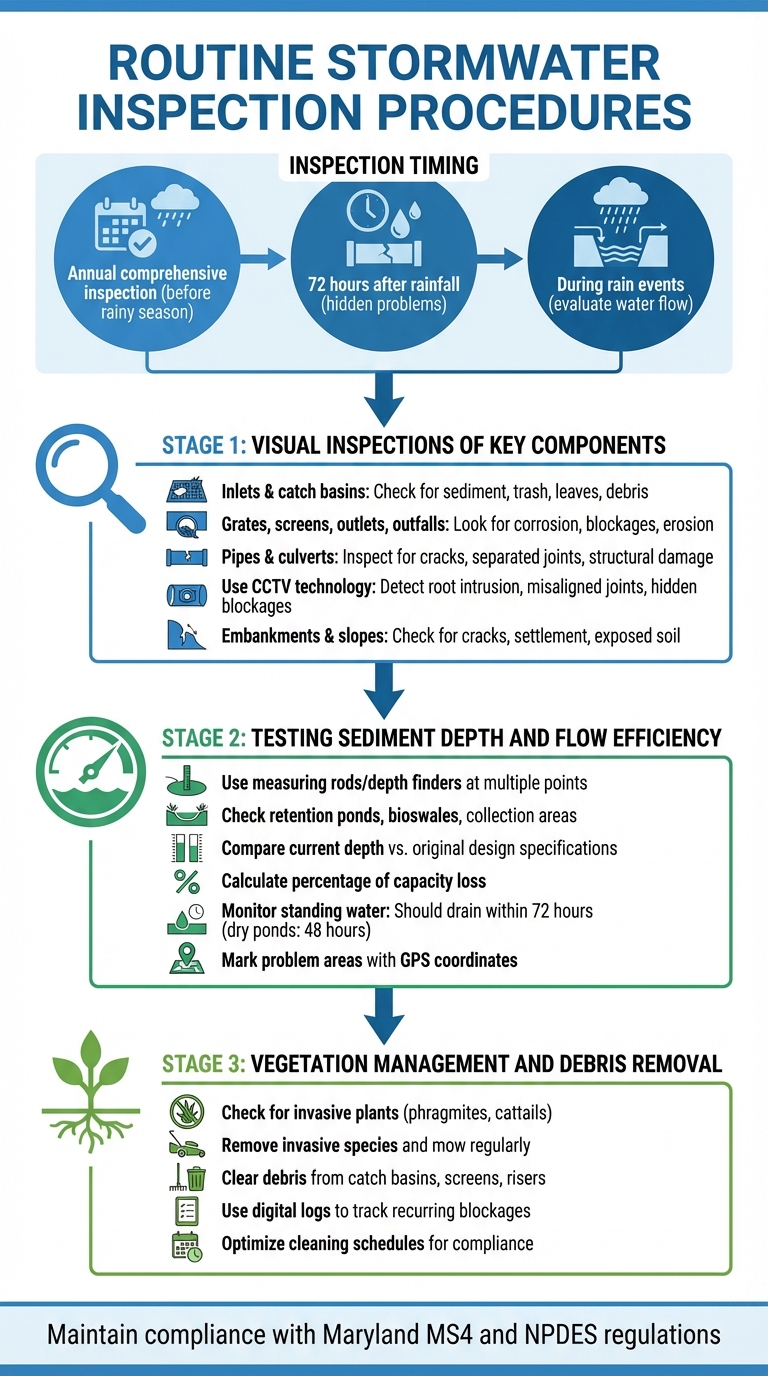
Step-by-Step Stormwater System Inspection Process
Routine inspections are essential for managing stormwater systems effectively. They help catch issues early and prevent costly repairs. Aim to conduct at least one comprehensive inspection annually, ideally before the rainy season begins [7]. Additionally, inspect systems 72 hours after rain to uncover hidden problems, and during rain events to evaluate water flow. These practices align with Maryland’s stringent maintenance standards and help keep systems functioning properly.
Visual Inspections of Key Components
Start by examining inlets and catch basins for sediment buildup, trash, leaves, and other debris that can reduce hydraulic capacity [4][9]. Check grates, screens, outlets, and outfalls for signs of corrosion, blockages, or erosion [9][6][4]. Inspect pipes and culverts for cracks, separated joints, or structural damage. Pay close attention to metal surfaces for corrosion and concrete for signs of wear. Use CCTV technology to detect internal problems like root intrusion, misaligned joints, or hidden blockages [2][4]. Lastly, examine embankments and slopes for cracks, settlement, or exposed soil that could lead to erosion [9].
Testing Sediment Depth and Flow Efficiency
After the visual inspection, move on to measuring sediment levels and evaluating flow efficiency. These tests provide precise data on how much capacity the system has lost. Use tools like measuring rods or depth finders to check sediment levels at multiple points in retention ponds, bioswales, and collection areas [9]. Compare current depth readings with the system’s original design specifications to calculate the percentage of capacity loss [9]. Standing water that remains for more than 72 hours after a storm often indicates a problem, such as sediment buildup or a downstream blockage [9]. Keep in mind that many dry ponds are designed to fully drain within 48 hours [10]. Mark problem areas with GPS coordinates to make it easier for maintenance crews to locate and address issues [9].
Vegetation Management and Debris Removal
Check bioretention areas and wetlands for invasive plants like phragmites or cattails, which can disrupt water flow and hinder access. Regularly remove these species and mow as needed [6][9]. Clear debris and organic matter from catch basins, screens, and risers to maintain functionality. Use digital logs to track recurring blockages, which can help optimize cleaning schedules and support compliance audits [6].
Benefits of Regular Inspections
Routine inspections are a proactive way to catch problems early, saving money and preventing system failures before they escalate.
Cost Savings from Early Problem Detection
Spotting issues early can slash maintenance costs. Routine upkeep is far less expensive than emergency repairs, which often come with hefty price tags – especially during peak storm seasons [1][2]. For example, removing sediment from inlets and forebays regularly can help you avoid the need for large-scale dredging. Plus, staying on top of maintenance keeps your documentation up-to-date, helping you dodge regulatory fines, environmental fees, or even legal liens [1][6].
Extended System Lifespan
Frequent inspections can add years to your infrastructure’s lifespan by identifying wear and tear early. Small fixes, like repairing metal culverts or patching concrete structures, are much cheaper than full replacements [4].
"Appropriate operation and maintenance activities ensure that stormwater practices will continue to function properly and yield expected water quality and environmental benefits, protect public safety, meet legal standards, and protect communities’ financial investment." – U.S. Environmental Protection Agency [3]
Routine cleaning also keeps hydraulic systems functioning properly. Without it, sediment buildup can reduce capacity, causing wear to accelerate over time [4].
Reduced Flood Risk and Property Value Protection
Well-maintained systems efficiently manage water flow, reducing the risk of flooding in areas like parking lots, green spaces, and roadways. This is especially important as short, intense rainfall events become more common [4]. Regular inspections also protect property values by catching potential hazards early, preserving both safety and curb appeal [1].
Pro Landscapes MD: Your Partner in Stormwater Management

Pro Landscapes MD focuses on keeping stormwater systems in top shape through detailed inspections and maintenance, helping to avoid expensive repairs and failures.
Inspection and Maintenance Services
Pro Landscapes MD offers routine inspections designed to keep stormwater systems functioning properly. Their team follows a structured inspection schedule that meets regulatory standards. This includes quarterly visual checks of outflow areas and annual in-depth inspections performed by certified experts. They also use advanced CCTV technology to identify underground problems like blockages, root intrusions, cracks, or misaligned joints early on. These inspections help catch issues such as sediment buildup and structural wear before they become major problems.
Beyond inspections, they handle proactive maintenance tasks like removing sediment and debris, managing vegetation, preventing erosion, and installing drainage solutions like French drains and grading. These services not only extend the life of stormwater systems but also ensure compliance with regulations. Pro Landscapes MD provides these services across central Maryland.
Service Areas Across Central Maryland
Pro Landscapes MD proudly serves various communities in central Maryland, including Howard County, Montgomery County, Prince George’s County, Anne Arundel County, and Baltimore County. Key areas include Columbia, Bethesda, Rockville, Gaithersburg, Bowie, Annapolis, Glen Burnie, Ellicott City, Silver Spring, and Towson. With a 5-star rating from clients [5], the company is praised for its clear communication and efficient repairs for stormwater ponds. Their deep understanding of local needs allows them to deliver solutions tailored to the specific stormwater challenges of each area.
Custom Plans for Compliance and Environmental Solutions
Acknowledging that every property has unique stormwater needs, Pro Landscapes MD develops customized Operation and Maintenance (O&M) plans. These plans are ideal for HOAs, commercial properties, and industrial sites, ensuring compliance with MS4 (Municipal Separate Storm Sewer System) and NPDES (National Pollutant Discharge Elimination System) permitting requirements. Each plan includes tiered inspection schedules, clear responsibilities, maintenance timelines, and funding guidelines [6].
Additionally, Pro Landscapes MD maintains detailed digital records of all inspections, repairs, and sediment removal. These logs serve as essential documentation during regulatory audits or property sales [5][6]. By keeping accurate records, property owners can avoid violations, fines, and legal complications while promoting environmentally responsible practices.
Conclusion
Regular stormwater inspections are key to avoiding system failures and steep regulatory penalties. Catching issues like sediment buildup or small cracks early can save property owners from emergency repairs that might cost tens of thousands of dollars [9]. Scheduling inspections at least four times a year – preferably at the end of each season – helps ensure systems drain properly within 72 hours of rainfall, maintaining their effectiveness for decades [8][6]. This proactive approach not only reduces costs but also keeps properties compliant with regulations.
In Maryland, property owners face strict requirements to document maintenance activities. According to the US EPA, this makes professional oversight indispensable for those in central Maryland. Routine inspections that combine early problem detection with strict compliance practices help maintain operational efficiency while meeting environmental standards.
Pro Landscapes MD is committed to helping you meet these requirements. Their certified technicians use advanced CCTV technology to identify underground issues, maintain detailed digital records for audits, and create custom Operation and Maintenance plans tailored to your property. Serving areas like Howard County, Montgomery County, Prince George’s County, Anne Arundel County, and Baltimore County, they offer solutions designed to tackle the unique stormwater challenges of each community. These efforts ensure your system is prepared to handle changing environmental conditions.
Staying ahead with stormwater management safeguards your property from flooding, extends the life of your system, and supports environmental goals. Whether you manage an HOA, industrial site, or commercial property, working with seasoned professionals eliminates the risks and uncertainties of handling inspections on your own [5]. Reach out to Pro Landscapes MD today to secure reliable, long-term protection for your property.
FAQs
How do I know if my property needs stormwater inspections?
If you’re seeing problems like flooding, erosion, standing water, strange odors, unusual discoloration, or debris in drainage areas, it might be time for a stormwater inspection. Properties with impervious surfaces – like rooftops or driveways – or stormwater systems such as ponds or underground pipes should schedule inspections regularly. Whether it’s monthly, quarterly, or after heavy rainfall, these checks help ensure everything is working as it should and can save you from expensive repairs down the line.
What counts as a stormwater compliance violation in Maryland?
When stormwater management systems in Maryland aren’t properly maintained, it can lead to a compliance violation. This might happen if routine inspections are skipped, necessary repairs are ignored, or required documentation isn’t kept up to date. These measures are essential to ensure the systems operate as intended and meet legal requirements.
When should I call Pro Landscapes MD instead of inspecting myself?
When you need expert help to stay compliant and avoid expensive stormwater issues, reach out to Pro Landscapes MD. They offer advanced services like CCTV inspections for underground pipes, annual regulatory evaluations, and solutions for intricate systems involving landscaping or drainage. Their team can identify problems such as sediment buildup, root intrusion, or structural damage – issues that are often overlooked during self-inspections – ensuring every assessment is thorough and precise.
Chat with Us