









- bhavya gada
- No Comments
When icy conditions hit, choosing between salt and sand for your pavers boils down to safety and long-term care. Here’s the quick answer:
- Salt melts ice by lowering water’s freezing point. It’s effective above 15°F but can damage pavers, plants, and metal over time.
- Sand doesn’t melt ice but improves traction in all temperatures. It’s safer for pavers but requires frequent cleanup.
If you’re protecting new pavers or facing extreme cold, sand is gentler. For quicker ice removal in moderate cold, salt works better. A combined approach – salt for melting and sand for traction – can balance safety and preservation.
Quick Comparison:
| Factor | Salt | Sand |
|---|---|---|
| Ice Melting Ability | Yes (above 15°F) | No |
| Traction | After ice melts | Immediate |
| Paver Damage Risk | High | Low |
| Temperature Range | Limited | Any |
| Cleanup Effort | Low | High |
Choose based on weather, paver condition, and cleanup effort. Always shovel first and use materials sparingly to minimize damage. For Maryland winters, alternating between salt and sand often works best.
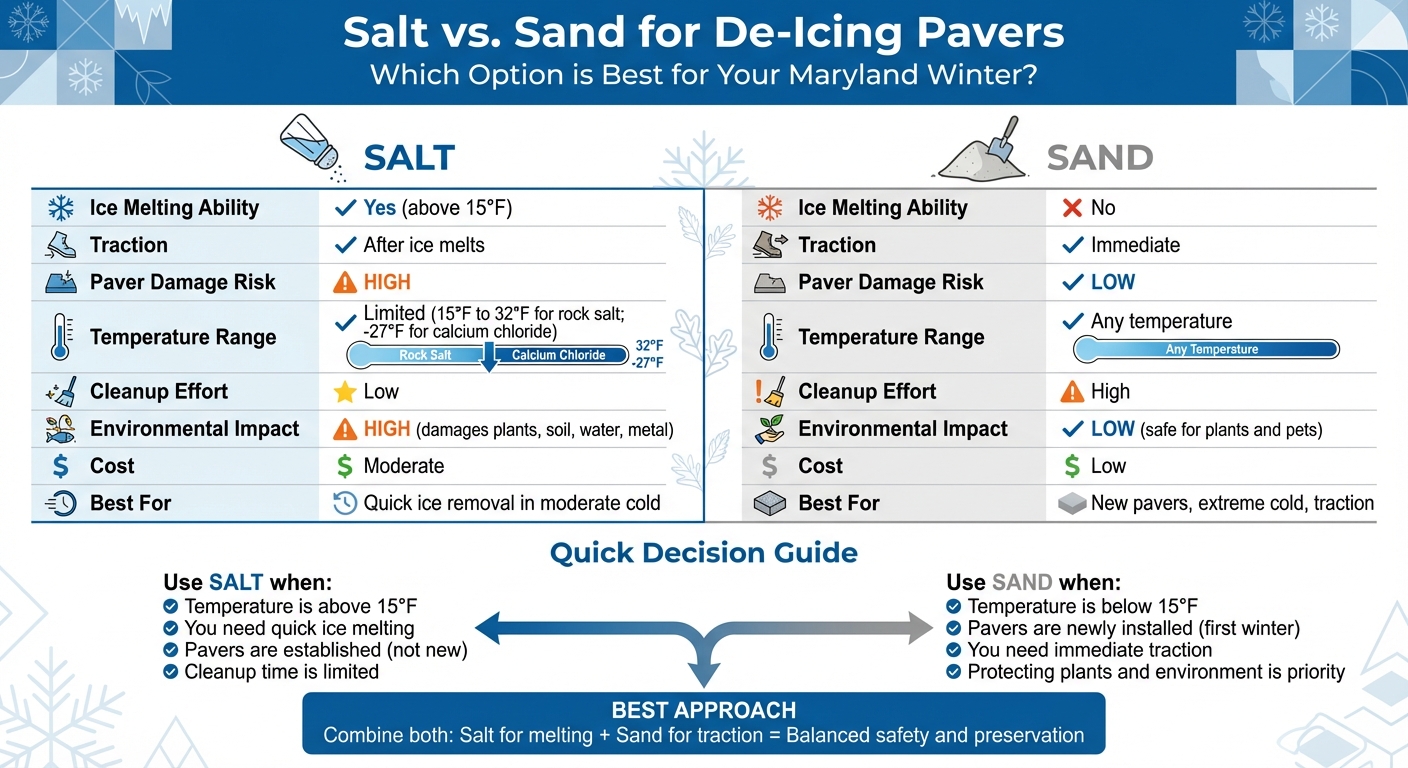
Salt vs Sand for De-Icing Pavers: Complete Comparison Chart
Salt for De-Icing Pavers: How It Works and What to Consider
How Salt Melts Ice
Salt works by a process called freezing point depression – a chemical reaction that lowers the freezing point of water below the usual 32°F. When salt comes into contact with moisture, it forms a brine that breaks the bond between ice and the surface beneath it. This transforms solid ice into a slushy layer, making it much easier to clear away. Rock salt performs best when temperatures are above 15°F, while calcium chloride can handle much colder conditions, working effectively down to -27°F[2][3][5].
Benefits of Using Salt
Salt is a practical solution for de-icing pavers, offering several advantages. It melts ice quickly, which helps reduce the risk of slips and falls for pedestrians while also minimizing vehicle skids[1]. Unlike sand, which only provides traction, salt actively removes ice while offering a slight abrasive effect for grip[2]. Its affordability and wide availability make it a go-to choice for many. Plus, application is straightforward – about one handful per square yard is typically enough. Pre-treating surfaces with salt before a storm can also prevent ice from bonding to pavers, making cleanup easier[5].
However, these benefits come with some serious trade-offs.
Drawbacks of Using Salt
Salt can cause significant damage to pavers over time. It accelerates surface deterioration, leading to issues like scaling, flaking, and spalling[4]. Meltwater can seep into the pores of the material, and when it refreezes, the resulting expansion adds stress to the pavers[6].
"Any product with ammonium nitrate or ammonium sulfate should never be used on concrete, pavers, or natural stone… These chemicals can aggressively attack the cement binder and rapidly destroy the surface." – G Construction & Landscape[4]
Another concern is environmental impact. Salt runoff can harm nearby vegetation, kill grass and plants, and alter soil composition. It can also pollute local waterways[2]. On top of that, its corrosive nature may damage vehicles, outdoor fixtures, and metal railings. Manufacturers often recommend avoiding chemical de-icers altogether on newly installed pavers during their first winter, as the curing process makes them particularly vulnerable to damage[4].
Salt Pros and Cons Table
| Advantages | Disadvantages |
|---|---|
| Quickly melts ice above 15°F[4] | Causes scaling, flaking, and spalling on pavers[4] |
| Affordable and easy to find[4] | Ineffective below 15°F[4] |
| Simple to apply[1] | Corrodes metal fixtures and vehicles[4] |
| Breaks ice bond for easier removal[3] | Damages plants, soil, and waterways through runoff[2] |
| Prevents ice bonding if applied before storms[5] | Meltwater refreezing stresses paver structure[6] |
sbb-itb-843f8be
Sand for De-Icing Pavers: How It Works and What to Consider
How Sand Creates Traction
Sand doesn’t melt ice – it helps by creating traction. When spread over a frozen surface, it forms a gritty layer that increases friction, making it safer to walk or drive on [2][5][6]. Unlike chemical deicers, sand doesn’t alter the ice itself; it simply sits on top, offering grip. Plus, it provides a visible path, helping people navigate icy areas more confidently [6]. Its effectiveness doesn’t waver, even in extreme cold below 15°F, where rock salt typically fails to work [9].
Benefits of Using Sand
Sand has several perks for paver driveways and walkways, especially in places like Maryland. It’s non-corrosive, so it won’t harm pavers, plants, or pets [1]. This makes it an excellent option for newly installed pavers during their first winter, as they are more sensitive to chemical damage while they cure [4]. Sand is also a great choice for sloped or shaded areas where melting is harder but traction is essential. Another bonus? You can use it generously without worrying about harming your hardscape.
"Sand offers distinct advantages over deicing chemicals. Sand provides traction as ice melts… Clean, untreated sand has no corrosive effect on steel, metal, clay brick, cast in-place concrete or concrete pavers." – Ideal Concrete Block Company [6]
While sand has its strengths, it’s not without its challenges.
Drawbacks of Using Sand
The main downside to sand is that it doesn’t remove ice – it only makes icy surfaces safer by improving traction [2]. This means you’ll likely need to reapply it often, especially after wind or fresh snow covers it [5]. Sand can also be a bit messy, as it tends to get tracked indoors or into vehicles, requiring extra cleanup during winter and even into spring [2]. To avoid clogging storm drains, you’ll need to sweep or vacuum your pavers once the snow season ends [2]. Over time, the abrasive nature of sand can wear down paver surfaces, especially with heavy use [5]. For the best results, apply sand after shoveling or plowing; if you put it down before a storm, it might just get buried and lose its effectiveness [1].
Sand Pros and Cons Table
| Advantages | Disadvantages |
|---|---|
| Non-corrosive; safe for paver surfaces, plants, and pets | Does not melt ice or snow |
| Works at any temperature, even below 15°F | Needs frequent reapplication after wind or snowfall |
| Perfect for new paver installations during the first winter | Can be messy – easily tracked indoors or into vehicles |
| Provides traction on slopes and shaded areas | Can clog storm drains; requires spring cleanup |
| Can be applied as often as needed without damaging surfaces | Abrasive particles may wear down pavers over time |
The Best Ice Melt for Driveways | Ask This Old House

Salt vs. Sand: Which Option Protects Pavers Better
When choosing between salt and sand for your paver driveway or walkway, it’s essential to weigh their immediate benefits against their long-term effects on paver durability. Here’s a detailed comparison to help you make an informed decision.
Salt vs. Sand Comparison Table
| Factor | Salt (De-icers) | Sand (Traction) |
|---|---|---|
| Ice Melting Ability | High – lowers freezing point to melt ice | None – does not melt ice |
| Traction | Provides traction after ice melts | Offers immediate grip when applied |
| Temperature Range | Effective down to 15°F–20°F (rock salt); calcium chloride works to -20°F [4] | Works in all temperature ranges |
| Paver Damage Risk | High – can cause scaling, spalling, and cracking due to freeze-thaw cycles [7] | Low – non-corrosive but may cause minor surface wear [5] |
| Environmental Impact | High – damages plants, soil, water, and metal fixtures [2] | Low – generally safe but can clog storm drains [2] |
| Cost | Moderate – requires less product per use | Low – inexpensive but often needs reapplication |
While both options have their uses, their long-term effects on paver preservation are crucial to consider.
Effects on Paver Lifespan
Salt is much harsher on pavers over time, primarily due to its role in the freeze-thaw cycle. When salt melts ice, it allows water to seep into the tiny pores of your pavers. As temperatures drop again, this water refreezes and expands, causing internal stress that leads to cracking and deterioration. Research shows that while sodium chloride (rock salt) causes minor damage, other salts like magnesium chloride or calcium magnesium acetate can severely weaken concrete by accelerating mass loss and reducing compressive strength [7].
"Rock salt (sodium chloride or NaCl) is the least damaging to concrete materials and should be used whenever possible." – Concrete Masonry and Hardscapes Association [7]
On the other hand, sand is far gentler on pavers. It doesn’t trigger the chemical reactions that degrade concrete, making it an excellent choice for preserving newly installed pavers during their first winter [4][8]. Although sand’s abrasiveness can wear down decorative finishes over time, this surface-level wear is far less destructive than the internal damage caused by salt [5].
Additionally, salt’s corrosive properties extend beyond pavers. It can damage nearby metal fixtures, such as railings and outdoor lighting, and its brine can seep into the soil, harming plants and grass. These side effects often lead to higher repair and maintenance costs [2][4]. Sand, while requiring more frequent cleanup – especially in spring to prevent clogged drains – helps maintain the structural integrity of your hardscape investment.
How to De-Ice Pavers in Maryland: Practical Tips
When to Use Salt vs. Sand Based on Temperature
Maryland winters often hover around freezing, making temperature the key factor in deciding between salt and sand. Rock salt works well when temperatures are above 15°F–18°F, as it efficiently melts ice in this range. However, when the mercury dips below this threshold, salt becomes less effective, and sand becomes the better choice for improving traction.
If temperatures plummet to extreme lows, like below -20°F, calcium chloride can still melt ice but should be used sparingly to minimize potential damage to pavers. A combined approach – using salt to kickstart melting and sand for immediate grip – can help you reduce the overall use of de-icing chemicals.
"Salt works best when temperatures hover near freezing, where it can work efficiently without excess use." – JK Meurer Paving
Prevention and Maintenance Steps
Before applying any de-icing material, always start by removing snow with a shovel or snow blower. This step reduces the need for chemicals and protects your pavers. Opt for non-metal shovels to avoid scratching the surface or leaving behind metal fragments that could rust. If possible, pre-treat your pavers with a light layer of salt before a storm to make it harder for ice to bond.
"If you see a pile of salt on a dry pavement that has no ice – that’s a sure sign you’re using too much." – Ben, ACM Chemistries
Stick to the rule of one handful of salt per square yard to avoid overuse. Also, avoid piling salty snow near retaining walls or plants, as this can cause damage. Once spring arrives, rinse your pavers thoroughly to remove any lingering salt residue and sweep away sand to prevent clogged drains. Keep in mind that Maryland’s Lawn Fertilizer Law prohibits nitrogen- or phosphorus-based fertilizers as de-icers, as they can harm local waterways.
For a more tailored approach to winter maintenance, consider consulting local experts who can help protect your pavers effectively.
Pro Landscapes MD Services

Combining these preventive steps with professional care can significantly extend the life of your pavers. Pro Landscapes MD specializes in keeping pavers durable and functional through proper installation, drainage solutions, and expert sealing techniques that complement winter care strategies. Their team uses advanced penetrating sealers designed to limit salt damage and preserve your hardscape investment for years.
Whether you’re planning a new paver project or need maintenance for existing surfaces, Pro Landscapes MD serves central Maryland, including Howard, Montgomery, Carroll, Frederick, Prince George’s, and Baltimore Counties. Their expertise ensures your outdoor spaces stay both attractive and durable, even during Maryland’s toughest winters.
Conclusion
Deciding between salt and sand for de-icing your pavers involves weighing the pros and cons of each option. Salt is effective for melting ice when temperatures are above 15°F, as it lowers water’s freezing point. However, it can lead to scaling and corrosion over time. Sand, on the other hand, provides dependable traction in any temperature without causing chemical damage, though it requires more effort to clean up. A smart approach combines the two – using salt sparingly to melt ice and adding sand for immediate grip.
When making your choice, consider Maryland’s winter weather, the condition of your pavers, and any environmental concerns. To maintain your pavers, follow essential winter care steps and rinse them thoroughly each spring to remove residual salt. This kind of upkeep pairs well with professional services available in your area.
"The wrong ice melt or shovel can undo that investment in just a few winters." – G Construction & Landscape
Protecting your hardscaping investment starts with a balanced de-icing strategy, along with proper installation, drainage, and regular maintenance. For personalized solutions, expert advice is just a call away. Pro Landscapes MD specializes in installing pavers with advanced sealing techniques, offering comprehensive winter care to extend the life of your hardscape, and providing tailored recommendations for your specific needs.
For professional winter paver maintenance and hardscaping services in central Maryland, visit Pro Landscapes MD.
FAQs
What’s the safest de-icer for new pavers?
When it comes to protecting your new pavers during icy weather, sand is your safest choice. While deicing salts like sodium chloride do a great job melting ice, they come with a downside: over time, they can erode the surface of your pavers and increase moisture absorption. This can lead to long-term damage.
Sand, however, offers a simple solution. It doesn’t melt ice, but it provides excellent traction. Plus, it avoids the chemical and physical harm caused by salts, helping to keep your pavers in good condition for years to come.
How can I de-ice without harming nearby plants?
When dealing with icy conditions near plants, it’s important to avoid using harsh chemical deicers like rock salt. These can harm both the soil and nearby vegetation. Instead, consider alternatives like sand or eco-friendly de-icing products that are gentler and less corrosive.
Here are a few tips to protect your plants while keeping walkways safe:
- Use deicers sparingly: Apply only the amount needed, and keep the product away from plants whenever possible.
- Try physical methods: Shoveling snow or using heated mats can help minimize the need for chemical deicers altogether.
By choosing these methods, you can help safeguard your plants and maintain the health of your landscape during winter.
How do I clean up sand after winter?
To get rid of sand left behind after winter, begin by sweeping away the excess with a broom or using a leaf blower. This step helps prevent wear on the surface. Next, use a garden hose with a spray nozzle to rinse off the remaining sand. Be cautious and avoid using high-pressure washers, as they can harm your pavers. By regularly sweeping and rinsing, you can keep your driveway or pavers looking great and lasting longer.
Chat with Us