









- bhavya gada
- No Comments
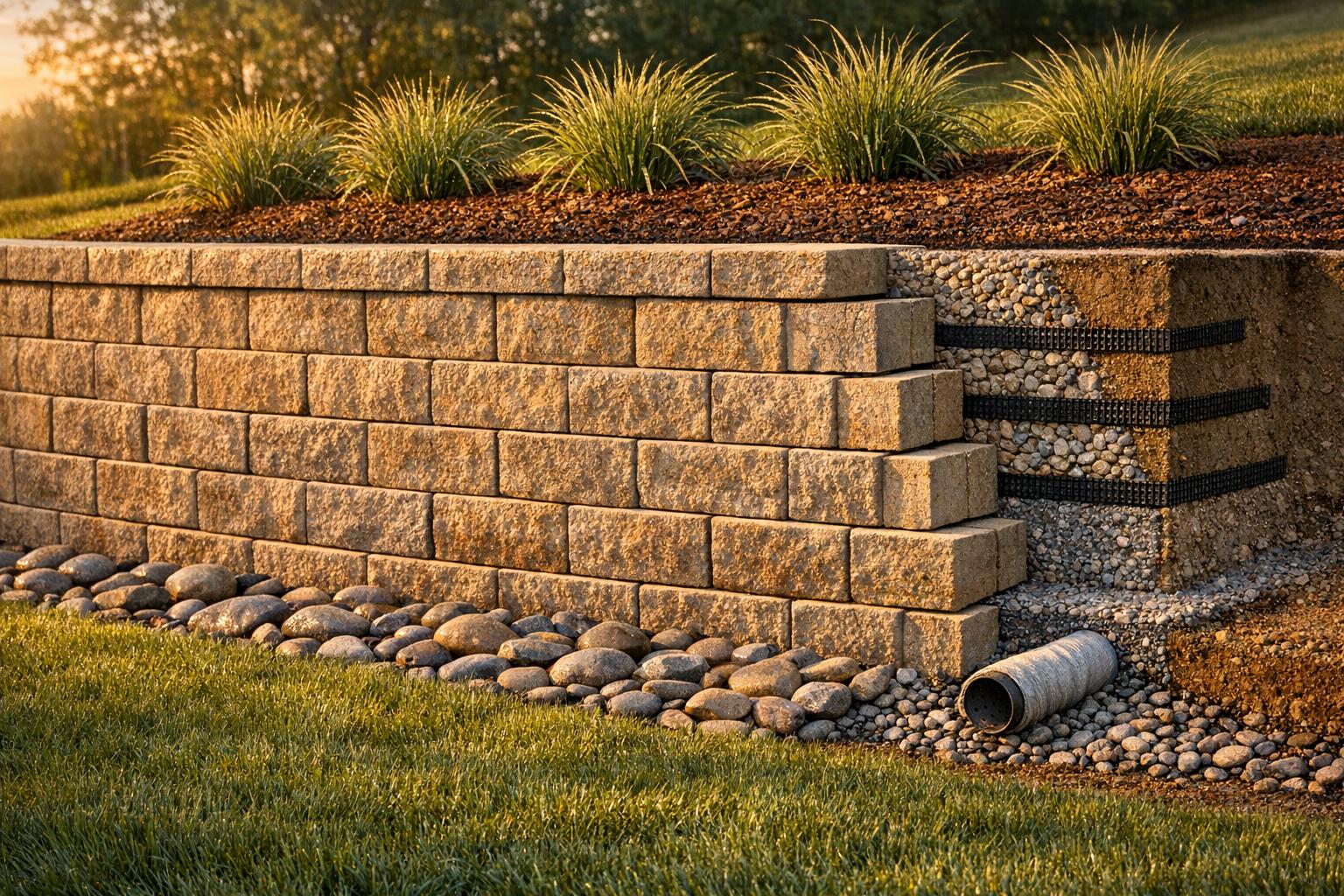
Segmental retaining walls (SRWs) are an effective solution for controlling soil erosion, particularly in areas with heavy rainfall or sloped terrain. These walls use interlocking concrete blocks to stabilize soil, manage water flow, and prevent damage caused by runoff. Unlike rigid concrete walls, SRWs are mortar-free, making them flexible and resistant to cracking during freeze-thaw cycles. Key features include:
- Drainage Systems: Layers of gravel, perforated pipes, and geotextile fabric prevent water buildup and hydrostatic pressure.
- Geogrid Reinforcement: High-strength mesh strengthens taller walls by anchoring them into the soil.
- Terracing: Reduces slope steepness, slowing water runoff and protecting topsoil.
- Durability: Properly installed SRWs can last 75–100 years and cost 50–70% less than traditional concrete walls.
These walls are ideal for residential, commercial, and infrastructure projects, offering both erosion control and functional outdoor spaces. Regular maintenance, including drainage checks and vegetation management, ensures their long-term performance.
Segmental Retaining Walls (SRW) Used in Emergency Flood Repair (Redi-Rock)

sbb-itb-843f8be
How Segmental Retaining Walls Control Erosion
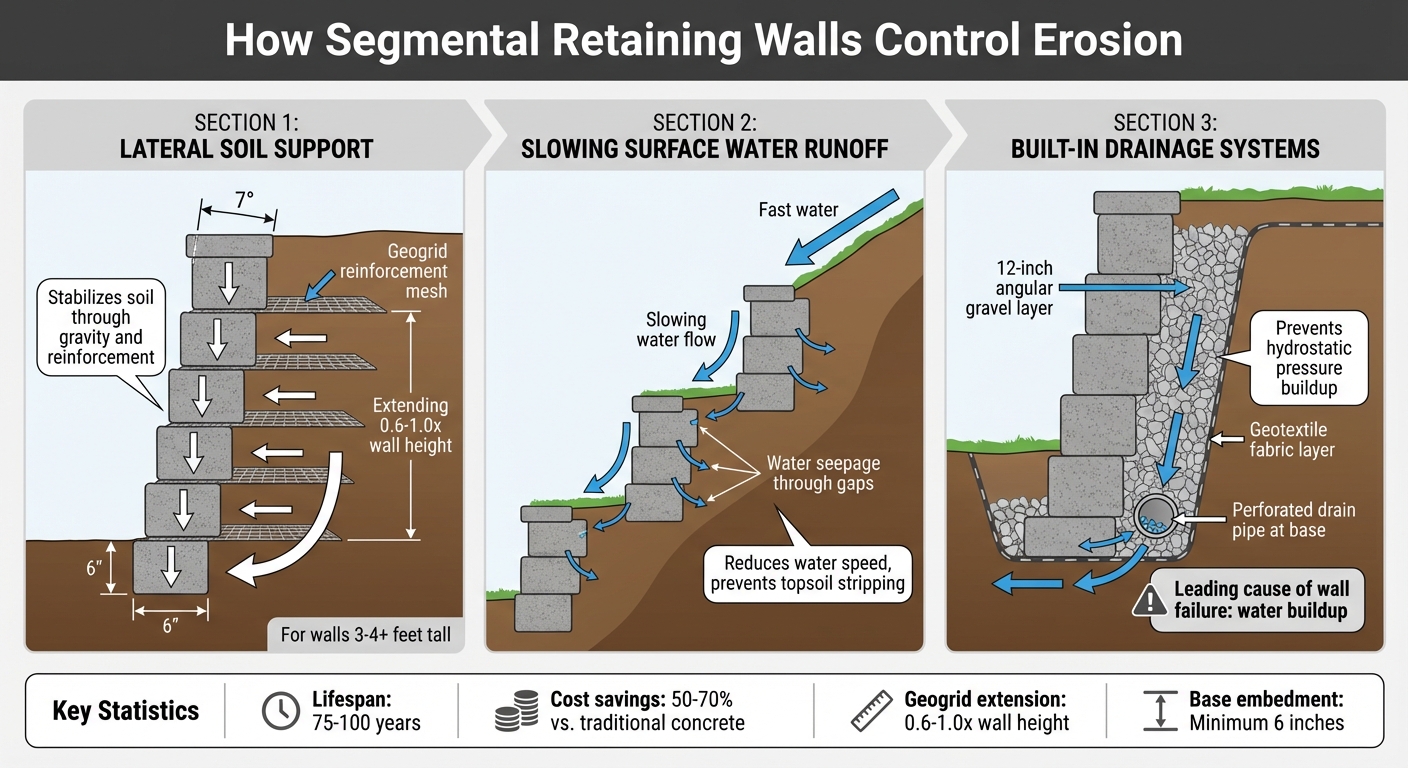
How Segmental Retaining Walls Control Erosion: 3-Step System
Segmental retaining walls (SRWs) help control erosion by stabilizing soil, managing water flow, and preventing pressure buildup. These functions work together to shield properties from the damaging effects of heavy rainfall and runoff.
Providing Lateral Soil Support
SRWs stabilize soil by offering lateral support. Traditional gravity walls rely on the weight of interlocking concrete blocks to counteract the outward pressure of the soil. A slight backward tilt, or a 7° batter, helps evenly distribute this pressure using gravity.
For walls taller than 3 to 4 feet, engineers incorporate geogrid reinforcement. This high-strength mesh is layered between the blocks and extends into the soil, typically at a distance of 0.6 to 1.0 times the wall’s height. This creates a reinforced soil mass that acts as a unified, stable structure.
"A segmental wall is not subject to heavy lateral forces because the geogrid strengthens the soil, making it laterally stable" [3].
The mortarless design of SRWs allows flexibility, accommodating natural ground movement and freeze-thaw cycles. Stability also relies on proper embedment, where the base course is buried at least 6 inches below ground level. This prevents the wall from being undermined, ensuring a solid foundation. These structural features also enhance how SRWs handle water flow.
Slowing Surface Water Runoff
SRWs do more than just hold back soil – they also regulate water flow to combat erosion. On steep slopes, they create terraces that reduce the slope’s steepness. This is crucial because water rushing down a steep incline gains speed and strips away topsoil. By forming flat "benches", the wall slows the water, allowing it to seep into the ground rather than racing downhill.
For example, a five-tiered system installed at Schenley Gardens in Manassas, VA successfully stabilized a steep slope and controlled runoff [3].
The gaps between the interlocking blocks also help manage water flow. Unlike solid concrete barriers that force water to flow over the top, SRWs allow minor seepage through the joints. This permeability prevents large amounts of water from building up and spilling over the wall, which could carry soil with it.
Built-In Drainage Systems
Proper drainage is essential to prevent wall failure and erosion [1]. Hydrostatic pressure, caused by water buildup behind the wall, is the leading cause of retaining wall collapses. SRWs address this issue with a layered drainage system.
Behind the wall, a 12-inch layer of angular gravel works with perforated drain pipes and geotextile fabric to channel water away efficiently, keeping hydrostatic pressure at bay.
"The 1- to 2-ft.-thick aggregate drainage zone immediately behind the segmental blocks allows water to flow from the backfill through the aggregate blanket and through the nonmortared spaces between the blocks, ensuring that no wall-damaging hydrostatic pressures build up" [3].
Additionally, surface grading at the top of the wall directs runoff toward designated drainage areas, keeping water from saturating the backfill zone.
A failure in York, PA, highlights the importance of proper drainage. A 28-foot-high, 200-foot-long SRW collapsed just two months after its construction due to poor surface-water management. Excessive seepage into the backfill created loads that the wall wasn’t designed to handle [3]. This underscores the need to prioritize drainage design from the very beginning.
Design Features That Prevent Erosion
Segmental retaining walls are engineered with specific features to combat erosion effectively, ensuring they perform well under various conditions. These design elements work together to provide stability, durability, and adaptability.
Modular and Dry-Stack Construction
Unlike walls bound by mortar, segmental retaining walls are built using a modular, dry-stack approach. This design allows the wall to flex slightly during ground shifts or freeze-thaw cycles, minimizing the risk of cracking – a common issue with rigid concrete walls.
"A segmental wall can move slightly to relieve these forces because the foundation is aggregate, not concrete." – Jim Weber, President, Segmental Wall Specialists [3]
The gaps between blocks naturally enhance drainage, working alongside engineered drainage systems to reduce water buildup. Interlocking designs, often using pins or specially shaped blocks, ensure structural stability without needing chemical adhesives. This modular construction also allows for creative designs, such as curves, corners, and terraces, which help direct water flow on sloped terrain, further reducing erosion risks.
To handle higher lateral forces, geogrid reinforcement is often integrated into the wall structure.
Geogrid Reinforcement
When segmental retaining walls exceed 3 to 4 feet in height, geogrid reinforcement becomes critical. This high-strength mesh is placed between block layers and extends into the backfill, anchoring the wall into the surrounding soil. Typically, the geogrid extends 0.6 to 1.0 times the wall’s height, creating a unified structure that resists both lateral pressure and erosion.
A notable example is the 2,000-foot-long segmental retaining wall built in 2001 at The Forum Shopping Center in Atlanta, GA. Designed by civil engineer Lance Paradis, the wall reached a height of 54 feet using Keystone Standard blocks weighing 128 pounds each. To manage erosion from a nearby detention pond, geogrid reinforcement extended up to 48 feet into the embankment – equal to the wall’s height [3].
Reinforced walls can reach heights of over 40 feet, while gravity walls without geogrid are typically limited to 3 to 4 feet [1]. This method also provides significant cost savings, reducing expenses by 50% to 70% compared to traditional cast-in-place concrete or anchored steel sheet piles [3]. These savings make erosion control more feasible for a range of projects.
In addition to modular design and reinforcement, proper base preparation plays a vital role in ensuring long-term stability.
Base and Footing Preparation
A well-prepared base is essential for the durability of segmental retaining walls. A 6-inch compacted crushed stone leveling pad provides a stable and flexible foundation, evenly distributing the weight of the blocks and lateral soil pressure. Unlike rigid concrete, this aggregate base allows the wall to adapt to ground movements.
Embedment, or burying the wall’s "toe" below grade, is another critical factor. This feature prevents sliding and protects against soil erosion beneath the wall, which could compromise the entire structure.
| Element | Specification | Purpose |
|---|---|---|
| Leveling Pad | 6-inch thick compacted crushed stone | Ensures a stable, level foundation for the wall |
| Wall Embedment | Minimum 6 inches below grade | Adds lateral stability and prevents undermining |
| Drainage Pipe | Perforated pipe at the base | Channels water away to reduce pressure buildup |
| Backfill | Clean gravel/aggregate | Facilitates drainage and prevents water retention |
During backfilling, soil should be compacted in 8-inch lifts as the wall is constructed. This process prevents settling and ensures the backfill remains dense enough to resist erosion. When properly installed, segmental retaining walls can last 75–100 years [1], but their longevity depends on meticulous base preparation and construction practices.
Where Segmental Retaining Walls Are Used
Segmental retaining walls, with their practical and efficient design, have become a go-to solution for various property types and infrastructure projects.
Residential and Commercial Properties
These walls are especially useful for transforming steep, erosion-prone areas into functional outdoor spaces. For homeowners, they create terraced gardens, stable patios, and raised planter beds, making sloped yards more usable. Sloped driveways also benefit from the stability these walls provide, helping to prevent soil erosion and maintain safe, level surfaces.
In commercial settings, segmental retaining walls are often used to manage grade changes in shopping centers, office parks, and parking lots. They not only make challenging terrain more functional but also help control erosion and manage water runoff effectively.
"The only option today for a retaining wall is the earth-reinforced segmental wall because of the substantial cost advantages over a reinforced-concrete wall." – Norm Amend, Designer and Builder, Veco Inc. [3]
These walls don’t just enhance usability – they also play a key role in protecting communities from flood risks.
Stormwater and Riverbank Protection
Beyond aesthetics, segmental retaining walls are engineered for critical infrastructure needs. They are vital for managing stormwater runoff and shielding riverbanks from erosion. Thanks to their integrated drainage systems – which include components like aggregate blankets, perforated pipes, and weep holes – these walls effectively channel water away, reducing hydrostatic pressure and controlling water flow.
A notable example is the 700-foot reinforced-soil segmental wall installed by the US Army Corps of Engineers along the Zumbro River in Rochester, MN, in 1993. This wall was designed to manage flooding and increase the river’s capacity for flood control. By November 2001, geotechnical engineer Neil Schwanz reported that the wall, built to last 100 years, showed no signs of deterioration despite constant exposure to water saturation [3].
"With more favorable field experience, I believe, the [US Army Corps of Engineers] will build many segmental walls in the future, especially given their 50-70% cost savings over the alternatives." – Neil Schwanz, Geotechnical Engineer, St. Paul District of the US Army Corps of Engineers [3]
Durability and Environmental Impact
Segmental retaining walls are built to last, often holding up for 75 to 100 years or more when installed correctly [1]. Their longevity is thanks to quality materials, effective drainage, and a mortarless construction that allows for flexibility under environmental stresses. By stabilizing slopes, these walls also help prevent topsoil from washing into nearby water bodies, reducing pollution and keeping urban drainage systems clear [2].
On top of this, segmental retaining walls can incorporate plantable faces or vertical gardens, which further stabilize soil and improve water absorption. Their cost-effectiveness – offering 50% to 70% savings compared to cast-in-place concrete – makes them an attractive choice for large-scale erosion control projects [3]. This combination of durability, environmental benefits, and affordability ensures they remain a reliable solution for years to come.
Maintaining Your Segmental Retaining Wall
Even the best-built segmental retaining wall requires regular care to keep it functioning properly. Routine checks and timely repairs ensure your wall continues to do its job of controlling erosion effectively.
Checking Drainage Systems
The drainage system is the backbone of your retaining wall. Conduct annual inspections to catch any blockages or damage early, as neglecting this can lead to costly repairs. The 1- to 2-foot aggregate drainage zone behind the wall must remain clear to prevent water buildup and hydrostatic pressure – one of the leading causes of retaining wall failure [5].
"Improper drainage is one of the most common reasons for the failure of retaining walls." – Ocean Geosynthetics [5]
Keep an eye on drain pipes and weep holes, especially during the fall when debris can clog them. After winter, check for cracks or blockages caused by freeze-thaw cycles [4]. Make sure the gaps between the blocks, which naturally allow water to escape, aren’t clogged with dirt, nests, or vegetation. If you notice water pooling behind the wall or gushing out of specific spots, it’s a sign that the filter fabric or aggregate drainage blanket may be clogged and needs immediate attention [3].
In addition to maintaining drainage, keeping vegetation under control is another key step in preserving your wall.
Managing Vegetation and Weeds
While certain plants can aid in erosion control, unchecked vegetation can harm your wall. Aggressive plant growth can shift blocks or interfere with the wall’s interlocking system. Remove weeds and small plants from the joints as soon as you see them – if roots are allowed to grow, they can cause misalignment and structural issues.
When building or repairing your wall, make sure to include a layer of geotextile filter fabric over the aggregate backfill. This prevents topsoil from mixing with the drainage stone, which could otherwise create the perfect breeding ground for weeds within the wall structure.
Fixing Damage Early
Addressing small issues quickly can save you from bigger headaches down the road. Check regularly for shifting or damaged blocks, especially after winter when freeze-thaw cycles can cause problems [4]. While slight movement is normal for mortarless, flexible walls, significant misalignment should be evaluated by a professional.
For walls under 4 feet, homeowners can usually handle minor repairs. However, if a taller wall shows signs of structural failure, it’s best to call in a professional for a thorough assessment [4].
Conclusion
Key Points
Segmental retaining walls offer a blend of erosion control, structural adaptability, and durability that surpasses traditional concrete options. Thanks to their mortarless construction, these walls can flex with freeze-thaw cycles and ground shifts without cracking. Additionally, integrated drainage systems prevent hydrostatic pressure buildup, which helps maintain their stability. When installed correctly, these walls can last an impressive 75 to 100 years [1] and provide 50% to 70% cost savings compared to cast-in-place concrete or steel sheet piling [3]. Their modular nature also allows for creative landscaping features, such as terraced gardens, curved pathways, and integrated seating areas. Whether stabilizing residential slopes or managing stormwater on commercial properties, these walls turn erosion challenges into functional and visually appealing outdoor spaces, all while safeguarding topsoil and property foundations.
Pro Landscapes MD Services

For Maryland property owners, especially those dealing with the area’s clay-heavy soils and freeze-thaw cycles, professional installation is crucial. Pro Landscapes MD specializes in designing and constructing segmental retaining walls tailored to central Maryland’s unique terrain and climate challenges. Their expertise covers every step of the process, from site evaluation and soil testing to designing drainage systems and adding geogrid reinforcement for taller walls.
Serving communities across Howard, Montgomery, Carroll, Frederick, Prince George’s, and Baltimore Counties – including Ellicott City, Columbia, Bethesda, Gaithersburg, and Towson – Pro Landscapes MD ensures compliance with local building codes and engineering standards. They also incorporate advanced drainage solutions, such as French drains and stormwater management systems, to protect your investment for decades. With professional installation costs typically ranging from $35 to $65 per linear foot [4], you’ll receive a solution that balances erosion control with long-term landscape stability.
FAQs
Do I need geogrid for my retaining wall?
Geogrid is commonly suggested for taller or reinforced segmental retaining walls. Its primary function is to improve the wall’s stability, making it more resistant to pressure from the surrounding soil. This added reinforcement is especially important for walls built to control soil erosion, as it helps reduce the risk of structural failure over time.
What drainage does an SRW need to prevent failure?
Proper drainage is key to ensuring the stability of a segmental retaining wall (SRW). Without it, water can accumulate behind the wall, increasing pressure and causing potential failure. To address this, several methods are commonly used:
- Weep holes: These small openings allow water to escape from behind the wall, reducing hydrostatic pressure.
- Gravel backfill: A layer of gravel behind the wall improves drainage by letting water flow freely through the material.
- Geosynthetics: These materials, like geotextiles, help manage water movement and reinforce the soil, enhancing the wall’s durability.
By incorporating these elements, water is effectively directed away, ensuring the wall remains stable and lasts longer.
When should I call a pro for an SRW repair?
If you notice your segmental retaining wall (SRW) showing signs of trouble – like leaning, cracking, shifting, or water damage – it’s time to call in a professional. These issues can compromise the wall’s stability and shouldn’t be ignored. For taller walls, especially those over 10–15 feet, or if there are drainage or foundation concerns, expert assistance becomes even more critical to ensure safety and long-term reliability. Regular inspections can also help identify small problems early, saving you from expensive repairs down the line.
Chat with Us