









- bhavya gada
- No Comments
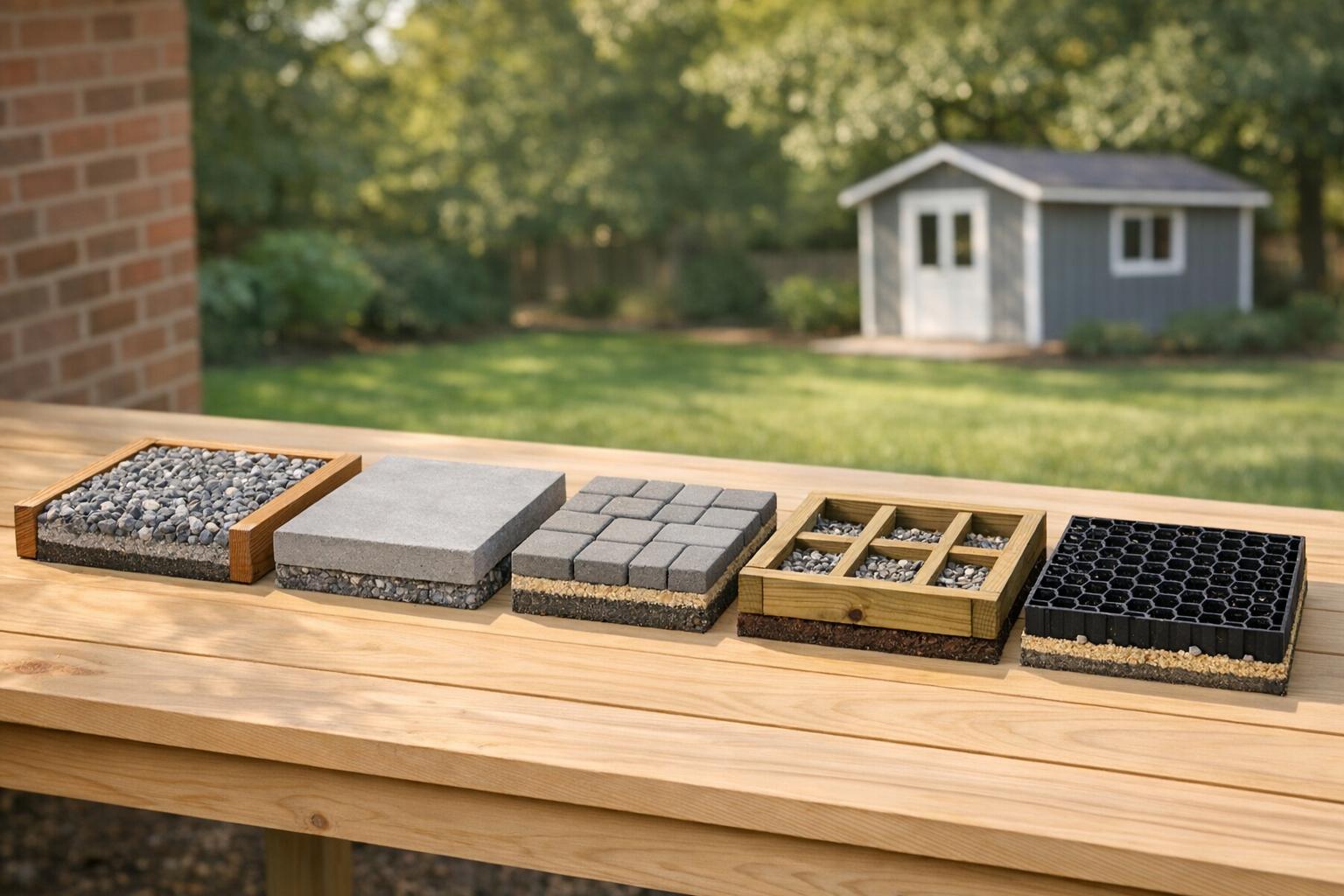
When building a shed in Maryland, choosing the right foundation is critical due to the state’s variable weather and soil conditions. Here are the five main foundation types to consider:
- Gravel Pad: Affordable ($5–$10 per square foot), excellent for drainage, and ideal for firm, well-draining soil. Works well for sheds up to 12′×24′.
- Concrete Slab: Durable and long-lasting, suitable for heavy equipment or larger sheds. Costs start around $1,000 but require permits and professional installation.
- Concrete Pavers: Budget-friendly and flexible, great for smaller sheds under 160 sq. ft. Easy to install but less stable on soft or waterlogged soil.
- Timber Frame: Cost-effective ($5–$10 per square foot) and DIY-friendly. Provides good drainage but may require reinforcement for soft or sloped soil.
- Plastic Base: Lightweight and easy to install, suitable for small or temporary sheds. Best on level, firm ground but less durable for heavy structures.
Each option has its pros and cons depending on your shed size, soil type, and budget. For larger or permanent sheds, concrete options provide better stability, while gravel and timber frames are better suited for smaller or temporary setups.
Quick Comparison
| Foundation Type | Cost Estimate | Durability | Best For | Limitations |
|---|---|---|---|---|
| Gravel Pad | $5–$10 per sq. ft. | High | Well-draining soil, mid-size sheds | Requires compact soil, not ideal for soft ground |
| Concrete Slab | Starting at $1,000 | Very High | Large sheds, heavy equipment | High cost, permits needed |
| Concrete Pavers | Low to Moderate | Moderate | Small sheds, DIY projects | Less stable on soft or wet soil |
| Timber Frame | $5–$10 per sq. ft. | Moderate | Small to mid-size sheds, sloped yards | May shift on soft soil |
| Plastic Base | Moderate | Low to Moderate | Small or temporary sheds | Limited durability for heavy loads |
Choosing the right foundation ensures your shed remains level, secure, and protected from Maryland’s challenging climate.
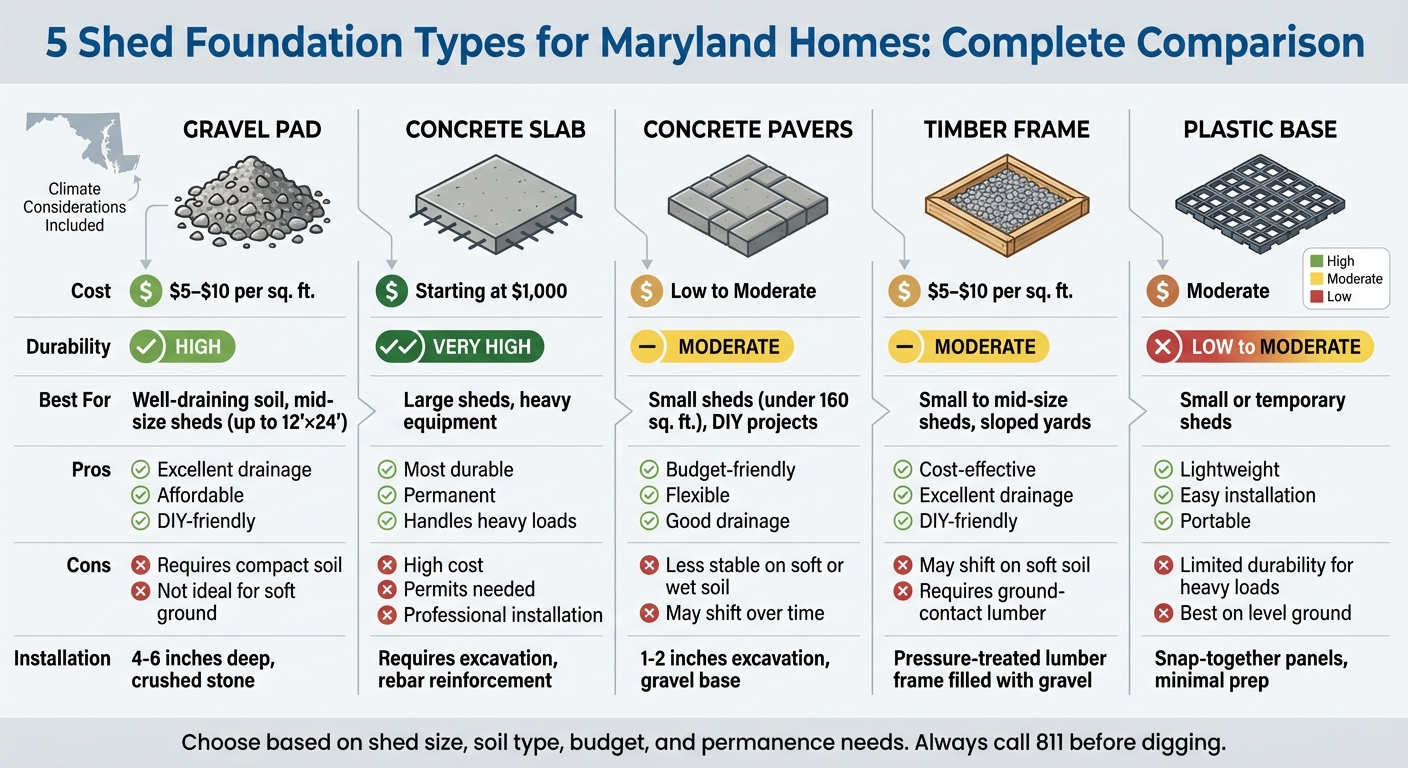
Maryland Shed Foundation Types Comparison Chart
Shed Foundation Options (Concrete Slab, Gravel Base, Deck Block, etc.)
1. Gravel Pad Foundations
Gravel pads are a popular choice for shed foundations in Maryland, thanks to their ability to handle heavy rainfall. By allowing water to drain through the crushed stone, they prevent pooling around the shed’s base. This feature helps protect wooden runners from rotting and keeps moisture away from stored items – especially valuable during Maryland’s humid summers.
Drainage Effectiveness
The secret to proper drainage lies in the right materials. Using 3/4-inch clean crushed stone (also known as #57 stone) works best. Its jagged edges lock together when compacted, creating a stable base while still allowing water to flow freely [1][2]. On the other hand, avoid materials like crusher run or stone mixed with fines, as they compact too tightly, restricting drainage. To further enhance performance, extend the gravel pad 1 foot beyond the shed’s perimeter on all sides. This prevents mud from splashing onto the shed’s siding during heavy rains [3][4].
Suitability for Maryland Soil Types
Gravel pads perform best on firm, undisturbed, and well-draining soil [2][9]. However, if your site has soft, sandy, or soggy soil, a concrete slab might be a better option [3][9]. It’s also crucial to build on undisturbed ground. Recently excavated or backfilled soil can settle unevenly over time, potentially causing foundation issues [2].
Cost and Installation Complexity
Gravel foundations are one of the most budget-friendly options, typically costing $5 to $10 per square foot [1]. They are also relatively easy to install yourself. The process includes:
- Excavating 4 to 6 inches deep
- Framing the area with pressure-treated lumber rated for ground contact
- Adding a layer of stabilization fabric
- Filling the frame with crushed stone [2][4]
To ensure a stable base, consider renting a plate compactor – usually around $80 to $100 per day – to lock the stone in place. And don’t forget to call 811 before digging to mark any utility lines [2]. This simple installation process creates a durable base that can handle Maryland’s unpredictable weather.
Durability in Maryland’s Variable Climate
Crushed stone stands up well to Maryland’s changing moisture levels, making it a durable choice [1]. In areas like Western Maryland, where frost penetration runs deeper, you may need to pair a gravel pad with concrete piers to meet frost-proofing requirements [2]. A 4–6-inch depth is critical for freeze-thaw stability, and this type of foundation can support sheds up to 12′×24′ [3][4].
2. Concrete Slab Foundations
Concrete slab foundations are one of the most durable and long-lasting options for sheds in Maryland. These foundations provide a stable, permanent base that resists settling and can handle the weight of heavy equipment. This makes them a solid choice for larger sheds or those used to store items like tractors, mowers, or workshop machinery [3][4].
Suitability for Maryland Soil Types
Concrete slabs are particularly well-suited for Maryland’s diverse soil conditions. For soft or sandy soils, a 4- to 6-inch thick concrete slab reinforced with steel rebar or mesh offers a sturdy foundation. Contractors typically prepare the site by excavating and adding a 4-inch layer of compacted crushed rock to improve drainage and ensure stability [3][7].
Durability in Maryland’s Variable Climate
Maryland’s climate, with its mix of hot summers and freezing winters, can be tough on foundations, but concrete slabs hold up exceptionally well. They resist moisture damage, provide built-in frost protection during freeze-thaw cycles, and prevent animals from burrowing beneath the shed [4][10]. In many cases, the slab can even double as the shed’s floor, eliminating the need for a separate wooden base [4]. However, due to the strength and permanence of concrete, installation requires careful planning and budgeting.
Cost and Installation Complexity
The cost of a concrete slab foundation typically starts around $1,000, but prices vary depending on the size and complexity of the project [9]. Installation requires specialized equipment, precise leveling, and compliance with local building codes. Additionally, many municipalities in Maryland mandate permits for permanent concrete foundations, adding another step to the process [9].
Drainage Effectiveness
While concrete slabs provide excellent stability, they don’t offer natural drainage. Given Maryland’s frequent heavy rainfall, adding a gravel base and ensuring proper site grading is essential to manage water runoff effectively. These measures help prevent pooling and protect the foundation over time [1][2][4].
3. Concrete Paver Foundations
Concrete paver foundations are a budget-friendly and flexible alternative to traditional concrete slabs or loose gravel pads. These foundations strike a balance between stability and adaptability, making them a popular choice for smaller sheds – usually under 160 square feet. For Maryland homeowners, paver foundations offer an affordable middle ground that avoids the permanence and cost of poured concrete. Individual pavers are placed directly on the ground, providing a stable base without the commitment of a full concrete slab [9].
Cost and Installation Complexity
Installing a paver foundation is relatively simple and perfect for DIY enthusiasts. The process involves digging out 1–2 inches of soil, laying down landscape fabric to block weeds, and adding a gravel base for leveling. Once the base is prepared, you arrange the pavers, ensuring they are level using a laser or string level [9]. Quality pavers are readily available from local suppliers, making this an accessible option for homeowners on a budget. This straightforward installation approach is well-suited for Maryland’s varying soil conditions, as described below.
Suitability for Maryland Soil Types
Paver foundations work best on firm, well-draining, and level soil. However, they may not be ideal for soft or waterlogged ground, as even a gravel sub-base might not prevent shifting over time [9]. In rural areas like Cumberland, similar block-style setups are preferred for their easy, no-dig installation on uneven terrain [3].
Drainage Effectiveness
One of the advantages of pavers is their ability to promote better drainage compared to solid concrete slabs. The individual pavers allow air to circulate beneath the shed, keeping the floor joists elevated and reducing the risk of rot, mold, and mildew. This is especially important in Maryland, where heavy rainfall is common [8]. The gravel base underneath further enhances drainage by directing water away from the shed, preventing pooling and water damage [8].
Durability in Maryland’s Variable Climate
While pavers handle Maryland’s freeze-thaw cycles fairly well, they are not as long-lasting as concrete slabs. Over time, ground movement or vibrations may cause the pavers to shift [9]. In areas with strong winds, opting for larger, heavier pavers can provide a sturdier base for concrete anchors [9]. It’s also worth noting that many shed manufacturers void warranties if the foundation is unstable or poorly drained, so proper installation is crucial [8].
sbb-itb-843f8be
4. Timber Frame Foundations
Timber frame foundations rely on pressure-treated lumber to create a sturdy perimeter, which can then be filled with gravel or topped with wood decking. This approach is both budget-friendly and DIY-friendly, while also offering excellent drainage. The key is to use lumber rated for "Ground Contact" (GC), such as 4×4, 4×6, or 6×6 timbers [2][9]. As emphasized:
You can’t have your shed sitting on the ground, or it will rot from the moisture [9].
Cost and Installation Complexity
One of the biggest advantages of timber frame foundations is their affordability. Gravel-filled versions typically cost between $5 and $10 per square foot [1]. The installation process is simple enough for most DIY enthusiasts: you construct a square, level box frame using pressure-treated lumber and fill it with 3/4-inch crushed stone [2][6].
For sloped yards, which are common in areas like Western Maryland, you can stack the timber frames or use "deadman" bracing – perpendicular lumber pieces that prevent shifting under the weight of the fill [2]. Secure the frame using galvanized or polymer-coated fasteners and anchor it with 1/2-inch rebar stakes placed every 6 to 8 feet [2].
Suitability for Maryland Soil Types
Timber frame foundations work particularly well in Maryland’s firm, well-draining soils, such as those found in areas like Hagerstown and Frederick [3][8]. For sheds up to 160 square feet, an on-grade timber frame is typically sufficient [9]. However, if your property has soft or overly wet soil, anchoring the timber frame to concrete piers set below the frost line can provide a more stable, permanent solution. This setup helps counter frost heave during Maryland’s freeze-thaw cycles [2][9]. For sloped areas, timber frames can also be stacked on concrete blocks to accommodate grades up to 6 degrees [9].
Drainage Effectiveness
One of the standout benefits of timber frames is their ability to handle drainage effectively. When filled with clean crushed stone, the foundation allows water to flow directly into the soil, preventing pooling beneath the shed [2]. This keeps the shed’s floor joists elevated and promotes air circulation, reducing the risk of mold, mildew, and rot [1][2]. As noted by Hometown Structures:
A gravel shed foundation [within a timber perimeter] helps to distribute the weight of your shed to more points of the frame rather than just a few [1].
To maintain proper drainage, avoid materials that compact too tightly and trap water [2].
Durability in Maryland’s Variable Climate
Timber frames are designed to hold up well against Maryland’s unpredictable weather patterns. Using stabilization fabric (200 lb tensile, 90 lb puncture strength) beneath the gravel can improve the foundation’s long-term performance [2]. While on-grade timber frames might shift slightly during harsh winters, combining them with concrete piers adds extra stability [2][9].
To further protect your shed, build the timber frame at least 12 inches wider than the shed on all sides. This prevents mud splash-back and ensures proper ventilation around the structure [2][3].
5. Plastic Base Foundations
Plastic base foundations provide a modern, hassle-free alternative to traditional options. These interlocking panels create a stable, level surface without the need for excavation or heavy-duty materials. Lightweight and portable, they can be installed in just a few hours, making them a practical choice for smaller sheds or temporary setups.
Cost and Installation Complexity
Plastic bases fall into the mid-price range and are incredibly easy to assemble. The panels snap together without tools and rest directly on leveled ground or a thin layer of compacted gravel. This eliminates the need for mixing concrete or handling bulky timber, simplifying the entire process.
Drainage Effectiveness
Thanks to their grid design, plastic foundations allow water to drain freely, reducing the risk of pooling. This feature is especially important in Maryland’s humid climate, where managing moisture is key to avoiding issues like rot, mold, or mildew [5][2]. However, proper site preparation is still essential to ensure the foundation remains stable during colder months [4][2].
Suitability for Maryland Soil Types
Plastic bases perform best on firm, level ground. In sandy soil areas, concrete foundations are often a better option [3]. For softer, clay-heavy soils – common in parts of central Maryland – plastic bases may shift over time. To handle such conditions, pairing the plastic base with a gravel bed or concrete piers can provide extra stability.
Durability in Maryland’s Variable Climate
While plastic foundations excel at managing moisture, they lack the structural strength of concrete or timber. Freeze-thaw cycles can cause slight shifting, particularly if the ground beneath isn’t compacted properly. These foundations are ideal for lightweight sheds, but heavier or permanent structures might require sturdier alternatives. This discussion sets the stage for exploring how Maryland’s unique climate and soil affect shed stability.
What to Know About Maryland’s Climate and Soil
Maryland’s frost line runs between 30 and 48 inches below ground. For larger or permanent structures, foundations need to extend below this depth to avoid frost heave – when freezing moisture expands and disrupts the soil. For smaller sheds, simpler options like gravel pads might work, but keep in mind that freeze-thaw cycles can require occasional re-leveling [2].
The state’s varied climate and soil conditions play a big role in foundation decisions. In central Maryland, soil types range widely. Sandy soils, which lack natural compaction, often call for a concrete slab to provide a solid, lasting base. On the other hand, clay-rich soils hold moisture, which can cause on-grade foundations like pavers or blocks to sink over time. A quick way to identify clay soil is to check for water pooling after heavy rain – standing water is a strong clue.
Maryland’s frequent heavy rainfall makes drainage a critical factor. Using the right materials and techniques, as mentioned earlier, helps maintain the stability of your foundation [2].
Local building codes also influence your foundation choices. In cities like Baltimore and Frederick, regulations may dictate whether frost-protected footings are required, depending on the shed’s size and purpose. These codes also cover setbacks and anchoring requirements, ensuring your shed is equipped to handle Maryland’s unpredictable weather.
Conclusion
Choose your shed foundation based on factors like size, permanence, budget, and site conditions. For example, a smaller shed might work well with a gravel pad ($5–$10 per square foot), while a larger, heavier structure like a workshop would require the durability of a concrete slab (starting around $1,000).
"Think of your shed foundation like your home’s foundation – it’s the base that supports everything else. The right choice can make your shed last longer, look better, and work the way you need it to."
A solid foundation prevents issues like uneven settling, which can lead to warped frames, cracked roofs, and sticking doors. It also keeps moisture away from wooden structures, guarding against rot and mold over time.
From gravel pads to concrete slabs, each foundation type addresses challenges specific to Maryland’s conditions, as outlined earlier. Before starting any project, always call 811 to locate underground utility lines. To improve drainage and reduce mud splashes, ensure the foundation extends at least one foot beyond the shed’s perimeter.
If your shed is part of a larger outdoor design with patios, walkways, or retaining walls, professional installation can create a seamless, durable result. Pro Landscapes MD offers hardscaping services throughout central Maryland, including paver installations, retaining walls, and drainage solutions. They can help integrate your shed foundation into your outdoor space while addressing site-specific concerns like slopes or poor drainage.
FAQs
What type of shed foundation works best for Maryland’s clay-heavy soil?
For Maryland’s clay-heavy soil, a gravel foundation is often a smart option. Gravel promotes excellent drainage, helping to prevent water accumulation that could weaken your shed’s stability. Plus, it creates a solid, long-lasting base that can handle the weight of most shed structures, even on uneven or tricky ground.
Gravel foundations are not just budget-friendly – they’re also straightforward to set up and maintain, making them a practical choice for many Maryland homeowners.
How can I ensure my shed foundation has proper drainage in Maryland?
To keep your shed foundation dry and sturdy in Maryland, it’s important to pick a foundation type that directs water away from the structure. Gravel foundations work well because they create a stable surface that lets water pass through, preventing puddles from forming underneath. Typically, this involves digging a shallow area, adding 4–6 inches of crushed stone or gravel, and compacting it to ensure stability.
Getting the site ready is just as important. The area should be level, free of debris, and, if necessary, slightly sloped to promote water runoff. For concrete slabs or paver foundations, you might need to include a slight slope or add drainage channels to guide water away effectively. Working with local experts, such as Pro Landscapes MD, can help you create a drainage plan that fits Maryland’s climate and terrain. Proper drainage minimizes risks like rot, mold, and structural damage, helping your shed stand strong for years.
Do I need a permit for my shed foundation in Maryland?
In Maryland, whether you need a permit for a shed depends on its size and your county’s rules. Generally, sheds larger than 150 square feet require a permit. However, some counties have their own guidelines. For instance, Montgomery County requires permits for all sheds, no matter the size. On the other hand, Prince George’s County usually doesn’t require permits for sheds under 150 square feet. It’s important to reach out to your local county office to confirm the regulations in your area and stay compliant.
Chat with Us