









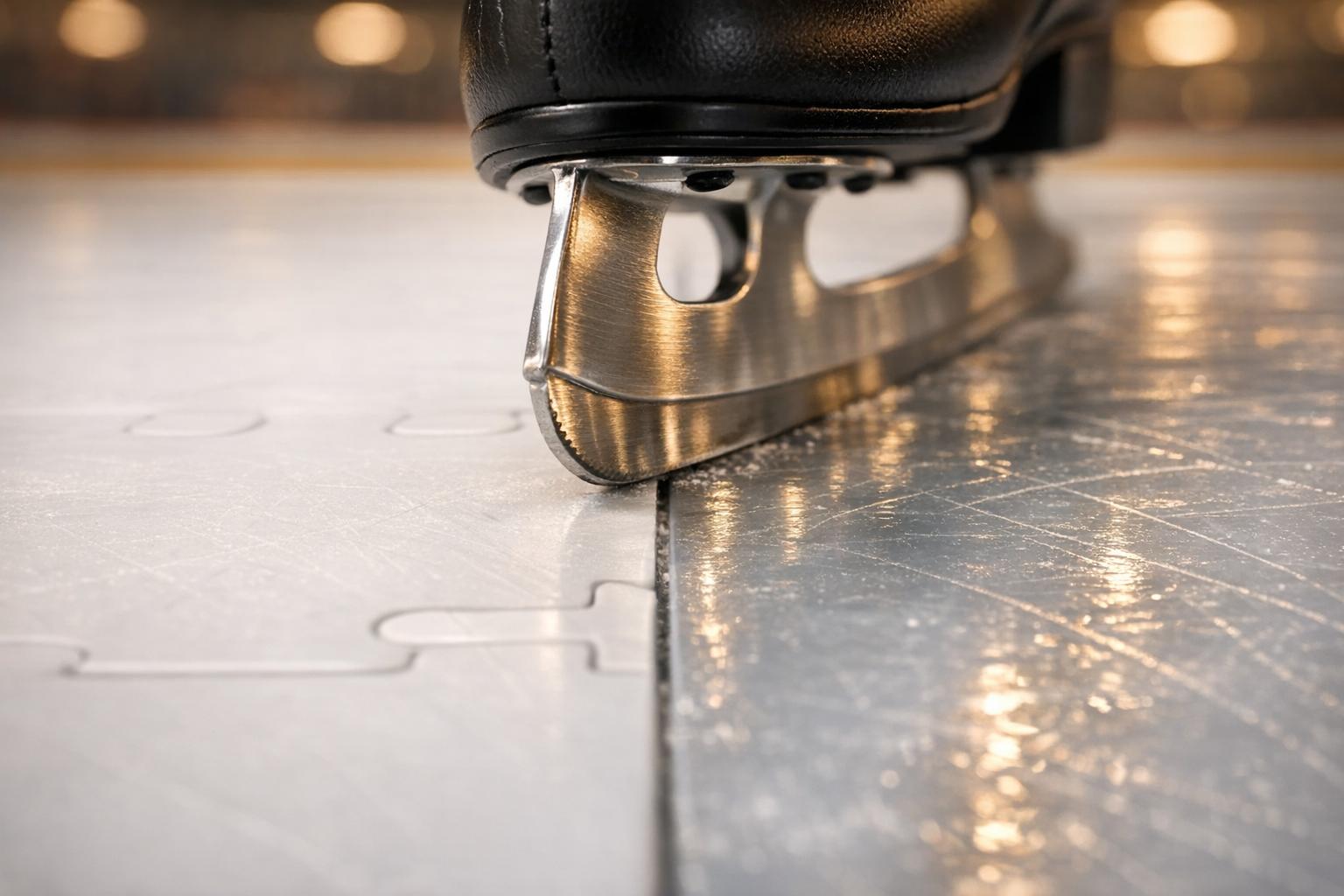
- bhavya gada
- No Comments
Choosing between synthetic and natural ice for your skating rink depends on your budget, location, and purpose. Synthetic ice works well for year-round training and lower costs, while natural ice offers the best glide for competitive performance. Here’s a quick breakdown:
- Synthetic Ice: Made from polymer panels, costs $30,000–$50,000 to install, and requires minimal maintenance ($1,000–$2,000 annually). It’s usable in any climate, but skaters face 10–15% more friction, and blades need frequent sharpening.
- Natural Ice: Provides the smoothest glide, ideal for professional use. Installation costs $50,000–$100,000, with high maintenance ($7,000–$13,000 annually) due to refrigeration and water needs. Best suited for colder climates or indoor rinks.
Quick Comparison:
| Feature | Synthetic Ice | Natural Ice |
|---|---|---|
| Installation Cost | $30,000–$50,000 | $50,000–$100,000 |
| Annual Maintenance | $1,000–$2,000 | $7,000–$13,000 |
| Climate Suitability | Any climate | Cold or refrigerated spaces |
| Glide Factor | ~90% of natural ice | 100% |
| Blade Sharpening | Every 30–120 minutes | Standard intervals |
If you want a cost-effective, versatile option for training, synthetic ice is a solid choice. For professional-level skating, natural ice is unmatched.
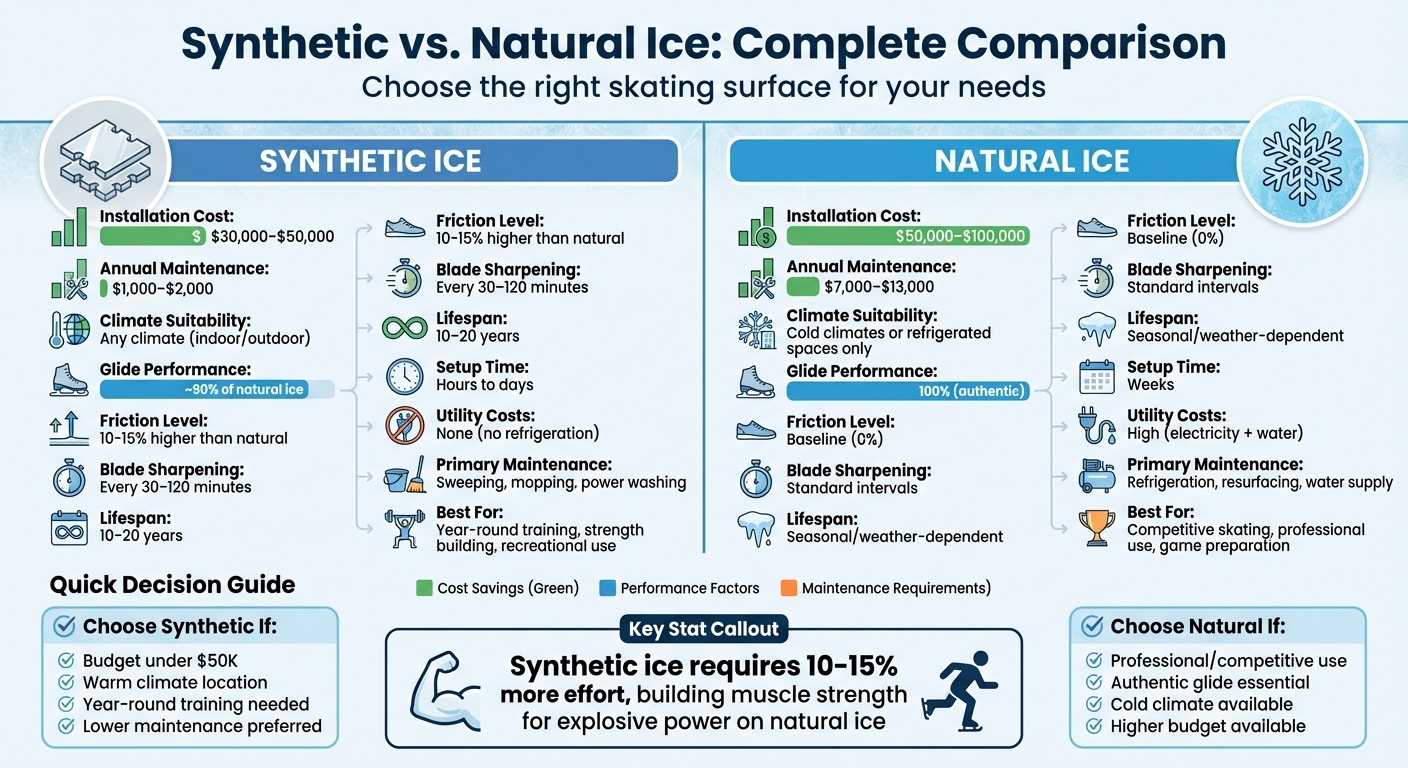
Synthetic vs Natural Ice Skating Rink Comparison: Costs, Performance and Maintenance
Real Ice or Synthetic? Most Skaters Can’t Tell the Difference
sbb-itb-843f8be
Material and Installation Differences
The way synthetic and natural ice surfaces are constructed and installed varies greatly. Synthetic ice is simpler to set up, requiring minimal tools and a flat surface. On the other hand, natural ice demands a more complex setup involving refrigeration systems, water supply, and cooling infrastructure. These differences significantly affect performance, upkeep, and overall costs.
Synthetic Ice Setup and Base Requirements
Setting up synthetic ice is a relatively simple process. The panels are designed to interlock using systems like dovetail or tongue-and-groove, and they can be assembled using just a rubber mallet. The most crucial factor is having a solid and level sub-floor – think concrete, wood decking, or asphalt.
Jim Loughran, the Founder of PolyGlide Ice, highlights the importance of a proper base:
"Synthetic ice surfaces are no different than any other flooring products… you must have a firm and flat sub-floor." [6]
Another key consideration is allowing for expansion and contraction due to temperature changes. Synthetic ice should be installed as a "floating floor", leaving a small gap around the perimeter. Loughran adds:
"Mechanical fasteners are NOT to be used to secure your ice in place as this will prevent expansion and contraction and stress out your surface." [4]
For outdoor setups on uneven surfaces like grass, creating a stable base is essential. This can be achieved using a shed deck made from exterior-grade plywood supported by pressure-treated stringers or modular plastic flooring panels. If the surface is uneven concrete, a plywood underlayment, such as DriCore, can be used to level it.
Natural ice, however, requires a much more elaborate infrastructure.
Natural Ice Installation: Infrastructure Needs
Installing natural ice is a more demanding process. It requires refrigeration systems equipped with compressors, a water supply for flooding, and climate control systems to maintain freezing conditions. The cooling system must be embedded beneath the ice surface, adding to the complexity.
This setup is not only time-intensive but also expensive. As highlighted by Sanghavi in 24NewsDaily:
"Natural ice rinks require a below-freezing climate and refrigeration systems to maintain performance. This can be costly for some outdoor rinks and indoor ones." [5]
While synthetic ice can be installed in a matter of hours or days, setting up natural ice can take weeks. Additionally, maintaining natural ice involves ongoing electricity costs for refrigeration and significant water usage for resurfacing, further increasing both operational and maintenance expenses.
Performance and Skating Experience
The feel of the skating surface plays a key role in performance. Natural ice provides an almost frictionless glide, thanks to a microscopic "quasi-fluid" layer that acts as a natural lubricant [1]. Synthetic ice, typically made from polymers like High-Density Polyethylene (HDPE) or Ultra-High-Molecular-Weight Polyethylene (UHMW-PE), doesn’t quite replicate this smoothness, but modern advancements have brought it surprisingly close [1].
Friction and Glide Efficiency
Today’s synthetic ice has made significant strides in reducing friction. UHMW-PE surfaces now have friction levels only 10%–15% higher than natural ice [1][8]. As Jim Loughran from PolyGlide Ice explains:
"Synthetic Ice technology has come a long way to close the gap and feel of skating on real ice." [8]
This marks a big improvement compared to older synthetic surfaces, where friction levels were over 30% higher. Self-lubricating panels embedded with lubricants enhance the glide by releasing these lubricants as skates make contact [5].
| Surface Type | Glide Rating | Friction Level (vs. Natural Ice) | Physical Demand |
|---|---|---|---|
| Natural Ice | 10/10 (100%) | Baseline (0%) | Low (Effortless) |
| Premium Synthetic (UHMW-PE) | 9/10 (90%) | 10%–15% Higher [1][8] | Moderate (Resistance Training) |
| Standard Synthetic (HDPE) | 7/10 – 8/10 | 20%–30% Higher | High (Strength Building) |
However, one drawback of synthetic ice is the impact on skate blades. Blades on synthetic surfaces often need sharpening after just 30 to 120 minutes of use [1], compared to much longer intervals on natural ice. The extra friction generates heat, causing the blades to dull faster [8].
This added friction not only affects the glide but also influences skating technique and muscle engagement.
Impact on Skating Technique and Muscle Engagement
The slightly increased resistance on synthetic ice translates to more effort, which can actually be a training advantage. Skating on synthetic surfaces requires 10–15% more effort than natural ice [9][10]. This extra resistance activates muscles in the legs and core more intensely, offering a unique strength-building opportunity.
Riedell Ice highlights this benefit:
"Since the surface friction is higher on synthetic ice, it helps build muscle. This can give skaters an edge, making them move more powerfully on natural ice." [9]
For hockey players, the added resistance enhances training. Shooting and puck handling on synthetic ice require about 10–15% more force compared to natural ice [10]. This added effort builds strength and improves precision. Goalies also gain from the challenge, as the friction exposes inefficiencies in lateral movements and transitions that might go unnoticed on natural ice [10].
That said, stopping and coasting are more difficult on synthetic ice [9]. Natural ice allows for smooth, effortless transitions, while synthetic surfaces demand more deliberate technique. This makes synthetic ice a great option for resistance and strength training, though natural ice remains the go-to for game-speed practice and fine-tuning competitive skills.
Cost and Maintenance Considerations
Deciding between synthetic and natural ice isn’t just about how they perform – it’s also about understanding the financial commitment, both at the start and over time.
Initial Installation Costs
Synthetic ice installation typically ranges from $30,000 to $50,000, while natural ice can cost significantly more, between $50,000 and $100,000 [7]. This price gap is largely due to the infrastructure needed for natural ice. Maintaining a frozen surface requires expensive refrigeration systems, compressors, and specialized piping to keep the temperature below freezing [5]. Synthetic ice, on the other hand, only requires a flat, stable surface like concrete or plywood [6]. However, if the base surface is uneven, additional preparation may add to the cost.
Ongoing Maintenance Requirements
The real financial difference becomes clear when you factor in maintenance. Natural ice racks up annual costs of $7,000 to $13,000, driven by refrigeration, regular resurfacing with a Zamboni, and high water consumption [7]. Synthetic ice is much more budget-friendly, with yearly maintenance costs of just $1,000 to $2,000 [7]. Its upkeep is straightforward: routine sweeping, mopping with pH-neutral soap, and occasional power washing [6].
Peter Ross from Hockey Gyms emphasizes this point:
"Regular cleaning is essential for the product, constituting its primary maintenance requirement" [7].
Additionally, many high-quality synthetic ice panels are self-lubricating, removing the need for glide enhancers. These distinctions in ongoing costs play a significant role in evaluating the long-term value of each option.
Here’s a quick comparison of the financial aspects:
| Feature | Synthetic Ice | Natural Ice |
|---|---|---|
| Installation Cost | $30,000–$50,000 [7] | $50,000–$100,000 [7] |
| Annual Maintenance | $1,000–$2,000 [7] | $7,000–$13,000 [7] |
| Primary Upkeep | Sweeping, mopping, power washing [6] | Refrigeration, resurfacing, water [5] |
| Lifespan | 10–20 years [11] | Seasonal/weather-dependent [7] |
| Utility Costs | None | High (electricity, water) |
Durability and Longevity
When planning a skating rink, it’s important to weigh the durability and upkeep of different surfaces. The lifespan and maintenance needs of synthetic and natural ice vary significantly, which can influence both costs and overall performance.
Synthetic Ice: Built to Last
High-quality synthetic ice panels can last more than 10 years with proper maintenance [7]. Made from materials like HDPE or UHMW-PE, these panels are tough – resisting cracks, chips, and even melting [1][5]. Many premium panels are reversible, meaning you can flip them over when one side starts to wear, effectively doubling their lifespan [8].
Synthetic ice is also designed to handle different climates. Thanks to UV-resistant properties, it won’t fade or break down, regardless of whether it’s exposed to intense heat, heavy rain, or freezing temperatures [3][5][8]. To ensure durability, it’s recommended to install synthetic ice as a "floating floor" with small expansion gaps (about 1/4 inch) around the edges to prevent buckling or cracks under stress [6][7].
Jim Loughran from PolyGlide Ice highlights an important consideration:
"One of the biggest enemies of synthetic ice is REAL ICE. During extreme cold weather freezing of the surface from ice build-up must be prevented" [6].
This means that during very cold weather, it’s essential to stop real ice from forming on synthetic panels, as it can interfere with expansion and cause stress fractures [4][6].
Natural Ice: High Maintenance and Weather-Driven
Unlike synthetic ice, natural ice requires constant attention to maintain. Its durability depends heavily on freezing temperatures or the use of costly refrigeration systems [5]. When temperatures rise, natural ice melts quickly, demanding a steady supply of energy and water to stay functional [5][7]. This makes natural ice far more dependent on weather conditions and energy consumption compared to synthetic options.
Natural ice also requires frequent resurfacing to remain usable, which adds to its maintenance demands [2][5][7]. While synthetic ice can last over a decade, natural ice is inherently temporary and must be recreated regularly. Even indoor rinks, which can operate year-round, rely on significant electricity and water to keep the surface frozen. This makes natural ice less practical as a long-term investment.
Training and Use Cases
When it comes to training, the type of ice you choose – synthetic or natural – can make a big difference. Each surface offers unique advantages depending on your goals.
Synthetic Ice for Year-Round Strength Training
Synthetic ice is a popular choice for off-season workouts and building strength. The surface has about 10% to 15% more friction than natural ice, which means your muscles have to work harder. That extra effort translates into stronger legs and better endurance.
As HockeyShot puts it:
"With about 10-15% more friction than real ice, synthetic ice forces your muscles to work harder, building power in your stride that translates to more explosive speed on the rink." [13]
One of the biggest perks of synthetic ice is that you can use it anytime, anywhere – indoors or outdoors[12]. Whether it’s in your basement, garage, or backyard, synthetic ice provides a reliable training option without worrying about seasons or refrigeration. Even professional facilities use it for specialized drills[1].
But there are trade-offs. The higher friction means you’ll need to sharpen your skates more often – every 30 to 120 minutes[1]. And while synthetic ice offers about 90% of the glide of natural ice, it doesn’t quite match the smoothness of the real thing[1].
Natural Ice for Authentic Game Conditions
For athletes focused on game-day performance, natural ice is unbeatable. Its microscopic "quasi-fluid" layer creates a smooth glide that synthetic ice can’t fully replicate[1]. If you’re preparing for tournaments or competitive events, training on natural ice is crucial. It gives you the same feel, speed, and blade response you’d experience during actual gameplay. This makes it ideal for refining skills like technique and timing.
Comparison Table: Training Benefits
| Training Benefit | Synthetic Ice | Natural Ice |
|---|---|---|
| Muscle Development | High (added resistance) | Standard (authentic movement) |
| Blade Control | Demands precise control | Fluid and effortless |
| Year-Round Access | 365 days (indoor or outdoor) | Seasonal or requires refrigeration |
| Cost Efficiency | High (no refrigeration needed) | Lower (higher utility costs) |
| Game Realism | Moderate (about 90% glide) | Excellent (100% authentic) |
| Blade Maintenance | Frequent sharpening (every 30–120 mins) | Standard sharpening intervals |
These insights into training benefits tie back to earlier discussions about installation and maintenance costs. Whether you’re looking for strength training or game-ready performance, understanding these differences can help you pick the right surface for your needs.
Choosing the Right Skating Rink Flooring
When deciding on the best flooring for your skating rink, factors like budget, climate, and how the rink will be used play a big role.
Budget is a major factor. Synthetic ice typically costs between $30,000 and $50,000 to install, while natural ice can range from $50,000 to $100,000. However, the ongoing maintenance costs differ significantly. Synthetic ice requires $1,000–$2,000 annually, compared to $7,000–$13,000 for natural ice [7]. If you’re looking to save money upfront or avoid high utility bills, synthetic ice is the more economical choice.
Climate is another important consideration. Natural ice depends on freezing temperatures or costly refrigeration systems to stay frozen. For areas with warmer or unpredictable weather, synthetic ice offers a practical solution, allowing year-round skating without the added expense of refrigeration.
Think about how the rink will be used. Competitive athletes often prefer natural ice for its authentic glide and blade response, which are crucial for game-day preparation. On the other hand, synthetic ice works well for strength training, skill-building, or recreational use. For example, HC Davos in Switzerland uses synthetic rinks for shooting and goalie drills, helping to preserve their natural ice sheets for other activities [1].
For residential or casual use, thinner 3/8-inch synthetic panels are sufficient. For commercial spaces or high-traffic training facilities, 1/2-inch panels are recommended [7]. Keep in mind, though, that skating on synthetic ice tends to dull blades faster, so more frequent sharpening will be necessary.
FAQs
Which ice type is best for my goals?
The best option comes down to what matters most to you. Natural ice provides a smooth glide and a feel that closely mimics real gameplay – perfect for practicing in a realistic environment. However, it comes with high upkeep, requires climate control, and can be expensive. On the other hand, synthetic ice is easier to maintain, available all year, and can be set up virtually anywhere. It’s excellent for consistent training and even helps build strength due to its added resistance, though it does have a bit more friction compared to natural ice.
What base does synthetic ice need?
Synthetic ice needs a solid, flat surface for proper installation. Ideal options include concrete or plywood, as they provide the even support necessary to keep the panels stable and prevent issues like lifting or bouncing.
How long does synthetic ice last?
Synthetic ice can last anywhere from 12 to 20 years, depending on factors like the quality of the material, how often it’s used, and how well it’s maintained. Higher-end options, when cared for properly, can even last up to 30 years. To get the most out of your synthetic ice, regular cleaning and proper storage are essential.
Chat with Us