









- bhavya gada
- No Comments
Small outdoor storage solutions help you keep your yard tidy, protect your belongings from the weather, and maximize limited space. Whether you need a compact shed for tools or dual-purpose furniture for small patios, the right storage option can make a big difference. Here’s what you need to know:
- Benefits: Organize tools, seasonal items, and recreational gear while protecting them from harsh weather. Portable options can even be relocated easily.
- Who Needs It: Ideal for small yards, patios, or narrow spaces. Perfect for families, gardeners, and outdoor entertainers.
- Key Considerations: Measure your space, plan your layout, and choose materials like vinyl, metal, or treated wood for durability. Prices range from $89 for storage boxes to $3,999 for premium cedar sheds.
- Tips for Layout: Use vertical storage (shelves, hooks, pegboards), group items by use, and ensure proper ventilation to prevent moisture buildup.
- Maintenance: Keep your storage clean, reapply protective coatings as needed, and adjust shelving or organization as your needs change.
Top 100+ Clever Outdoor Storage Ideas for Gardens That Blend Seamlessly
sbb-itb-843f8be
Planning Your Small Outdoor Storage
When you know exactly what you need to store, planning your outdoor storage becomes a game-changer. Thoughtful organization can turn a cluttered yard into a well-ordered space through professional landscape design and restoration.
Determining What You Need to Store
Start by listing everything currently scattered around your outdoor areas. This will give you a clear idea of how much storage space you’ll need. Once you’ve got your list, group items by type and how often you use them. For instance, keep daily-use tools near the entrance and stash seasonal items on higher shelves or in less accessible spots.
Here are some common categories to consider:
- Yard & Lawn Equipment: Rakes, shovels, hedge trimmers, and small lawnmowers.
- Seasonal Decorations: Holiday lights, inflatable props, and Halloween decor.
- DIY & Hardware Supplies: Extension cords, power tools, paint cans, and sawhorses.
- Sports Gear: Bikes, skateboards, pool floaties, and basketballs.
- Garden Supplies: Fertilizer, planters, watering cans, and potting soil.
- Maintenance Tools: Step ladders, buckets, hoses, and gas cans.
For a quick overview, here’s a handy reference table:
| Category | Examples of Items to Store |
|---|---|
| Yard & Lawn | Rakes, shovels, hedge trimmers, push lawnmowers |
| Seasonal Decor | Holiday lights, inflatable decorations, props |
| DIY & Hardware | Extension cords, power tools, paint cans, sawhorses |
| Sports & Play | Bikes, skateboards, basketballs, pool floaties |
| Garden Supplies | Fertilizer, planters, seeds, watering cans |
| Maintenance | Step ladders, buckets, hoses, gas cans |
For smaller collections, like basic gardening tools or up to three bikes, a shed under 50 square feet (e.g., a 4×6- or 6×6-foot unit) should do the trick. If you’re storing larger items – think wheelbarrows or potting benches – a medium-sized shed (50–100 square feet, such as 8×8 or 10×10) might be better. Planning ahead for future needs can save you from having to upgrade later.
Measuring Your Available Space
Once you know what you need to store, it’s time to measure your yard. Accurate measurements ensure your shed will fit comfortably in its designated spot. Always measure twice to avoid surprises, and don’t forget to account for door clearance. Make sure the doors can open fully without hitting fences, walls, or other obstacles.
Choose a level, well-drained area to place your shed. Avoid grass or dirt, as these can shift over time and hold moisture. A solid foundation is essential. Gravel pads are great for plastic or metal sheds, offering excellent drainage, while paver blocks are a quick and sturdy option for lighter structures. Sheds with proper foundations experience 40% fewer maintenance issues within the first five years [2].
Before finalizing the location, check local zoning laws and HOA rules. Larger sheds or specific placements might require permits or have setback requirements. Also, ensure there’s enough airflow around the shed, or plan to install vents to prevent moisture buildup, which can lead to mold or rust.
Once you’ve nailed down the location, think about how to arrange the interior to make the most of the space.
Creating an Efficient Storage Layout
Making the most of a small storage space means going vertical. Use floating shelves, adjustable shelving units, and pegboards to keep the floor clear and maximize wall space. A smart layout will save you time and frustration later.
Organize items based on how often you use them. Place frequently used tools at eye level or near the entrance, while seasonal decorations or camping gear can go on higher shelves or toward the back. The inside of shed doors is ideal for shallow shelves or hooks to hold everyday items within easy reach.
Here are some ideas for specialized storage solutions:
- Saddle brackets: Perfect for hanging hoses.
- Magnetic strips: Keep small metal tools organized and easy to grab.
- Heavy-duty hooks: Great for bulky items like wheelbarrows or ladders.
- Vertical mounts for wheelbarrows: These can free up 6–10 square feet of floor space.
- Sealed metal containers: Use these for fertilizers or seeds to protect them from rodents.
Adjustable shelving tracks are a smart choice since they can adapt as your storage needs change. Transparent plastic bins with labels can save you from digging through opaque boxes, and rolling storage carts can double as a mobile workspace when tucked under a bench. As Shannon Cowan puts it, "A place for everything, and everything in its place."
An efficient layout ensures that every item has a dedicated spot, keeping your storage space neat and functional – exactly what you need for small outdoor storage.
Small Outdoor Storage Options
Once your layout is ready, it’s time to pick storage solutions that make the most of your space while staying durable and stylish. These options not only help you stay organized but also enhance your outdoor setup and hardscaping.
Vertical Storage Systems
Using wall-mounted shelves, pegboards, and hooks can turn unused vertical surfaces into efficient storage areas. These systems not only save floor space but also make it easy to find and grab what you need. For example:
- Pegboards let you rearrange hooks and holders as your storage needs evolve.
- Saddle brackets mounted on walls or fences are perfect for keeping garden hoses untangled and off the ground.
- Magnetic strips are handy for keeping small metal tools accessible.
These options are especially useful for bulky or frequently used items, keeping everything tidy and within reach.
Dual-Purpose Furniture
Storage benches and deck boxes are a smart way to combine seating with hidden storage. They’re great for stashing cushions, garden tools, or pool floats. Here are some ways to make the most of them:
- Deck boxes with flat, sturdy lids can double as buffet tables or extra seating during gatherings.
- Wheeled under-bench boxes make it easy to access items, even in tight spots.
- Bar credenzas offer storage for drinks and party supplies, often with modern perks like wireless chargers or power outlets [1].
- Coffee tables and ottomans with hidden compartments are perfect for storing games, blankets, or accessories while providing a surface for activities [1][3].
Even bar carts can pull double duty as side tables, offering multiple levels of storage for smaller items [3].
| Furniture Type | Primary Function | Best For |
|---|---|---|
| Storage Bench | Seating | Cushions, garden tools, toys [1] |
| Deck Box | Storage / Table | Pool floats, seasonal gear [1] |
| Bar Credenza | Serving Station | Drinks, party supplies [1] |
When choosing furniture, focus on weather-resistant materials to avoid mold or mildew on fabrics like cushions [1]. Foldable storage boxes are another great option – they’re easy to use when needed and can be stored away flat during the off-season [1].
Small Sheds and Outdoor Cabinets
If you need space for larger items, sheds and cabinets are a practical choice. They keep your yard organized while protecting your belongings from weather and critters.
- Resin or plastic sheds are low-maintenance and resist rust, peeling, and fading. Many are even made from recycled materials.
- Galvanized steel or aluminum sheds offer excellent durability with waterproof and UV-resistant coatings.
- Wood sheds bring a rustic charm but require more upkeep, such as waterproof roofing and regular treatments to prevent rot.
Features like sloped roofs help prevent water or snow from pooling, while built-in ventilation keeps odors and mold at bay. Some sheds include flooring to protect items from ground moisture. Lean-to designs are ideal for narrow spaces like side yards or small patios, as they sit snugly against your house.
For smaller storage needs, outdoor cabinets at console height can double as serving surfaces while offering up to 135 gallons of storage space. Look for models with slow-close lids and lockable doors to prevent accidents and secure valuables. In harsher climates, store delicate items like patio cushions in airtight plastic bins inside the shed to keep them safe and dry.
Choosing Materials and Weather Protection
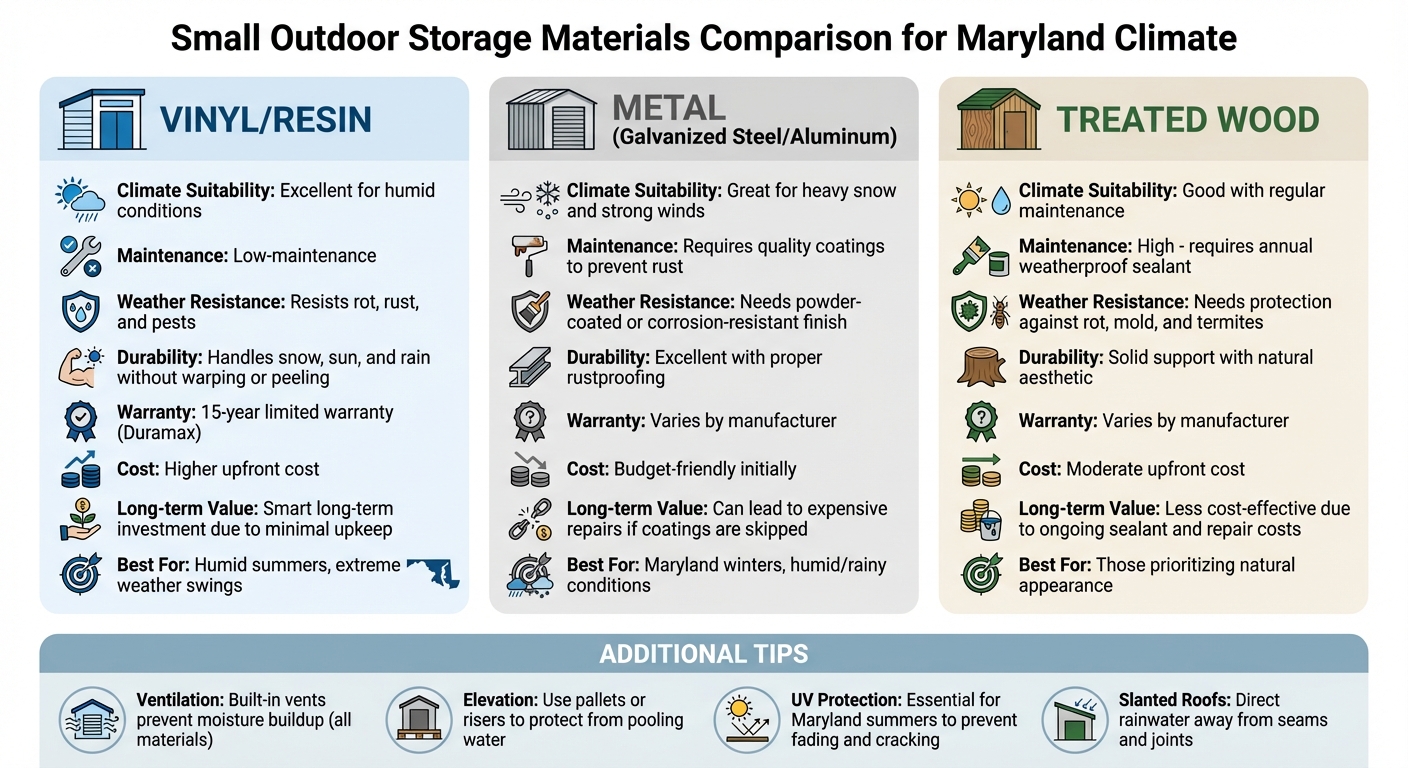
Small Outdoor Storage Materials Comparison: Vinyl vs Metal vs Wood
Once you’ve planned your compact storage layout, the next step is picking materials and weather protection strategies that can handle Maryland’s unpredictable climate. With humid summers, snowy winters, and frequent heavy rain, choosing the right materials ensures your storage solution lasts without constant maintenance or replacements.
Materials That Can Handle Maryland‘s Climate
The materials you select play a huge role in how well your storage stands up to weather. Adding protective coatings or covers further boosts durability.
- Vinyl and resin: These materials are ideal for Maryland’s humid conditions because they resist rot, rust, and pests. They’re also low-maintenance. As Duramax Sheds Online notes, "Vinyl sheds… handle snow, sun, and rain without warping or peeling, making them especially reliable in regions with extreme weather swings" [5]. Many vinyl sheds, like those from Duramax, even come with a 15-year limited warranty [5]. While vinyl may cost more upfront, its durability and minimal upkeep make it a smart long-term choice.
- Metal storage: Galvanized steel or aluminum sheds are great for heavy snow and strong winds, both common in Maryland winters. Ensure the metal has a powder-coated or corrosion-resistant finish to protect against rust in humid conditions. According to CheryLife, "The humid and rainy conditions make both metal and plastic sheds suitable. Metal sheds should have good rustproofing, while plastic sheds handle humidity well and are less prone to rot" [4]. While metal is often budget-friendly at first, skipping quality coatings can lead to expensive repairs later [5].
- Treated wood: Wood offers a natural aesthetic and solid support, but it requires regular maintenance. Annual applications of weatherproof sealant are necessary to protect against rot, mold, and termites [4][5][6]. However, the ongoing costs for sealants and repairs can add up, making wood less cost-effective in the long run [5].
No matter the material, ventilation is key. Built-in vents improve airflow, preventing moisture buildup that can cause rust in metal or rot in wood [5][6]. Additionally, elevating the storage unit on pallets or risers helps protect it from pooling water during heavy rains [6].
Protective Coatings and Covers
To extend the life of your storage materials, consider adding protective coatings and covers.
- UV protection: Maryland summers bring intense sunlight that can fade colors and crack unprotected materials. Look for storage units labeled as UV-resistant to avoid sun damage [6]. Waterproof covers or tarps can also add an extra layer of protection during extreme weather or off-season storage [6].
- Rust prevention: If you’re storing metal tools or equipment, covers with Vapor Corrosion Inhibitor (VCI) additives can actively prevent rust. For areas prone to high winds, multi-ply laminates reinforced with polyester offer better tear resistance compared to basic covers.
Design features like slanted roofs or overhangs can also make a difference. These features help direct rainwater away from seams and joints, reducing the risk of leaks. While high-quality materials and protective coatings may cost more upfront, they save money over time by lowering repair costs and extending the storage unit’s lifespan.
Organization and Maintenance
A well-thought-out layout combined with regular upkeep ensures your small outdoor storage remains practical and easy to use.
Keeping Storage Organized
Start with labeled clear tubs. These allow you to see the contents without rummaging through every container, saving both time and effort. Group similar items together – store gardening tools in one section, power tools in another, and keep pool toys in their own designated area. This kind of zoning ensures you’ll always know exactly where to find what you need.
Make the most of vertical space with mountable storage solutions like pegboards, slat walls, and magnetic strips. These keep frequently used items visible and within easy reach. For long-handled tools like rakes and shovels, try tool hangers or mount PVC pipes vertically on the wall to keep them organized and off the floor.
Don’t forget the shed doors – they’re perfect for hooks, baskets, or small compartments to store smaller items. For tiny hardware like nails and screws, use clear jars with lids secured to the underside of a shelf. This way, you can twist the jars on and off while keeping them accessible. Foldable storage boxes are another great option for seasonal items since they collapse flat when not in use.
A clear and efficient organization system makes ongoing maintenance much easier.
Regular Maintenance Tasks
Keep your storage space in top shape by regularly clearing out debris. For metal shelving with grated bottoms, sweeping them out occasionally prevents buildup and keeps the area tidy. If your storage includes wooden elements, reapply weatherproof sealant annually to protect against Maryland’s humid and rainy conditions.
Adjusting Storage as Needs Change
Storage needs aren’t static, so it’s important to adjust as they evolve. Modular shelving and rolling carts offer flexibility, allowing you to adapt without having to overhaul your entire setup. Adjustable shelves can be repositioned to fit taller items, and free-standing units can be moved as needed.
If you find yourself running out of room, explore unused spaces. Overhead racks near the ceiling are perfect for seasonal bins or items you don’t access often. Adding wheels to storage boxes can also make reorganization easier without requiring permanent changes to your layout. Small tweaks like these keep your storage functional and efficient over time.
Conclusion
Creating effective small outdoor storage takes a bit of planning, smart material choices, and regular care. Start by setting clear goals and measuring your space carefully to avoid common pitfalls.
In compact areas, every inch counts. Vertical storage options like hooks, shelves, and wall-mounted systems free up floor space while keeping everything within easy reach. For balconies or small patios, consider dual-purpose furniture like storage benches that combine practicality with space-saving design.
The materials you choose play a big role in durability and maintenance. Resin is low-maintenance and only needs the occasional rinse. Treated wood adds natural charm but requires yearly sealing to handle Maryland’s humid weather. Metal, when treated with rust-resistant coatings, offers long-lasting strength. Protecting your storage from the elements is key to avoiding damage from rain, sun, and moisture.
To keep your storage in top shape, clear debris regularly, address rust spots immediately, and ensure proper ventilation. Modular systems and adjustable shelving are great for evolving needs, allowing you to reconfigure without starting over. With the right approach, you can turn clutter into a well-organized, functional space that lasts for years.
FAQs
Do I need a permit for a small shed in Maryland?
Yes, in Maryland, you’ll need a building permit to install, move, or construct any shed, even smaller ones. Skipping this step can result in fines or other penalties. It’s always a good idea to review local regulations to make sure you’re following the rules.
What’s the best shed foundation for a small yard?
When choosing a shed foundation for a small yard, factors like shed size, climate, and budget play a big role. For sheds up to 160 square feet, on-grade foundations work well. Options like a gravel pad with a timber frame or a cinder block base are affordable, simple to set up, and help with drainage. If you live in a colder area, frost-proof foundations such as concrete footings are a better choice, as they prevent issues like frost heave.
How do I prevent moisture and mold inside outdoor storage?
Keeping moisture and mold at bay in outdoor storage requires taking a few smart precautions. Here’s how you can safeguard your items:
- Use weatherproof solutions: Shield your belongings from rain and humidity with covers or storage units designed to withstand the elements.
- Ensure proper ventilation: Good airflow helps prevent moisture from getting trapped, reducing the chance of mold growth.
- Elevate storage units: Keep items off the ground to avoid water seepage, especially during heavy rains.
- Inspect and clean regularly: Check the area frequently for signs of dampness or mold, and clean it to prevent buildup.
- Utilize moisture-absorbing materials: Products like silica gel can help absorb excess moisture and keep the environment dry.
- Seal the unit properly: Make sure there are no gaps or cracks where water or humidity can sneak in.
- Choose mold-resistant materials: Opt for materials that naturally resist mold to add an extra layer of protection.
By combining these steps, you can create a storage environment that stays dry and mold-free, even in challenging outdoor conditions.
Chat with Us