









- bhavya gada
- No Comments
Soil erosion can wreak havoc on your property and nearby ecosystems, leading to nutrient loss, unstable ground, and costly repairs. The solution? Native grasses. These plants are a natural, low-maintenance way to stabilize soil and prevent further erosion. Their deep root systems hold soil in place, resist drought, and thrive in Maryland’s challenging climate. Popular options like Big Bluestem, Switchgrass, and Little Bluestem excel at tackling erosion across various soil and moisture conditions. By planting these grasses and following proper installation techniques, you can protect your land while reducing runoff and sediment buildup.
For professional help, companies like Pro Landscapes MD offer tailored solutions, combining native grass planting with effective drainage systems to address erosion at its source.
Why Native Grasses Work for Erosion Control
Deep and Fibrous Root Systems
Native grasses come equipped with deep, fibrous root systems that hold soil in place effectively. Unlike many common lawn grasses with shallow roots, native varieties develop intricate root networks that penetrate deep into the ground. This natural web secures soil particles, making it harder for heavy rains to wash them away.
"With their deep, fibrous root systems, established stands of native grasses provide excellent long term erosion control and soil stabilization." – TxDOT Roadside Vegetation Management Manual [1]
These deep roots also give native grasses an edge during droughts, ensuring they remain a reliable ground cover when shallow-rooted plants fail. This makes them especially suited for Maryland’s unique climate challenges, where maintaining soil stability is crucial.
Well-Suited to Maryland’s Climate
Beyond their root strength, native grasses thrive in Maryland’s diverse climate. The state experiences humid summers, cold winters, and unpredictable rainfall, conditions that demand tough, adaptable vegetation. Native grasses fit the bill perfectly – they handle saturated soils during spring storms and endure the dry spells that often occur in late summer.
"Because the root systems of native grasses extend deeper, they can obtain access to essential soil moisture that shallower rooted introduced grasses cannot. This allows native grasses to grow on poorer soils and resist drought." – TxDOT Roadside Vegetation Management Manual [1]
What’s more, these grasses can establish themselves in difficult environments, such as compacted clay, rocky slopes, or nutrient-poor soils. For steeper inclines, retaining garden walls can provide additional structural support alongside vegetation. This ability makes them an excellent choice for areas already suffering from erosion, where soil quality has been significantly degraded.
Low Maintenance and Long-Lasting Results
Once native grasses take root, they require very little upkeep. Their strong root systems allow them to draw nutrients and water from deeper soil layers, reducing the need for regular maintenance. This durability ensures lasting erosion control while also helping to suppress weeds, making them a practical, long-term solution for stabilizing soil. Our comprehensive landscaping services include professional assessment and installation of these erosion control systems.
Altogether, these characteristics highlight why native grasses are an effective and enduring choice for erosion control in Maryland.
sbb-itb-843f8be
Native Plants are one of the BEST Solutions for Soil Erosion! #nativegrasses #nativevegetation
Best Native Grasses for Maryland Erosion Control
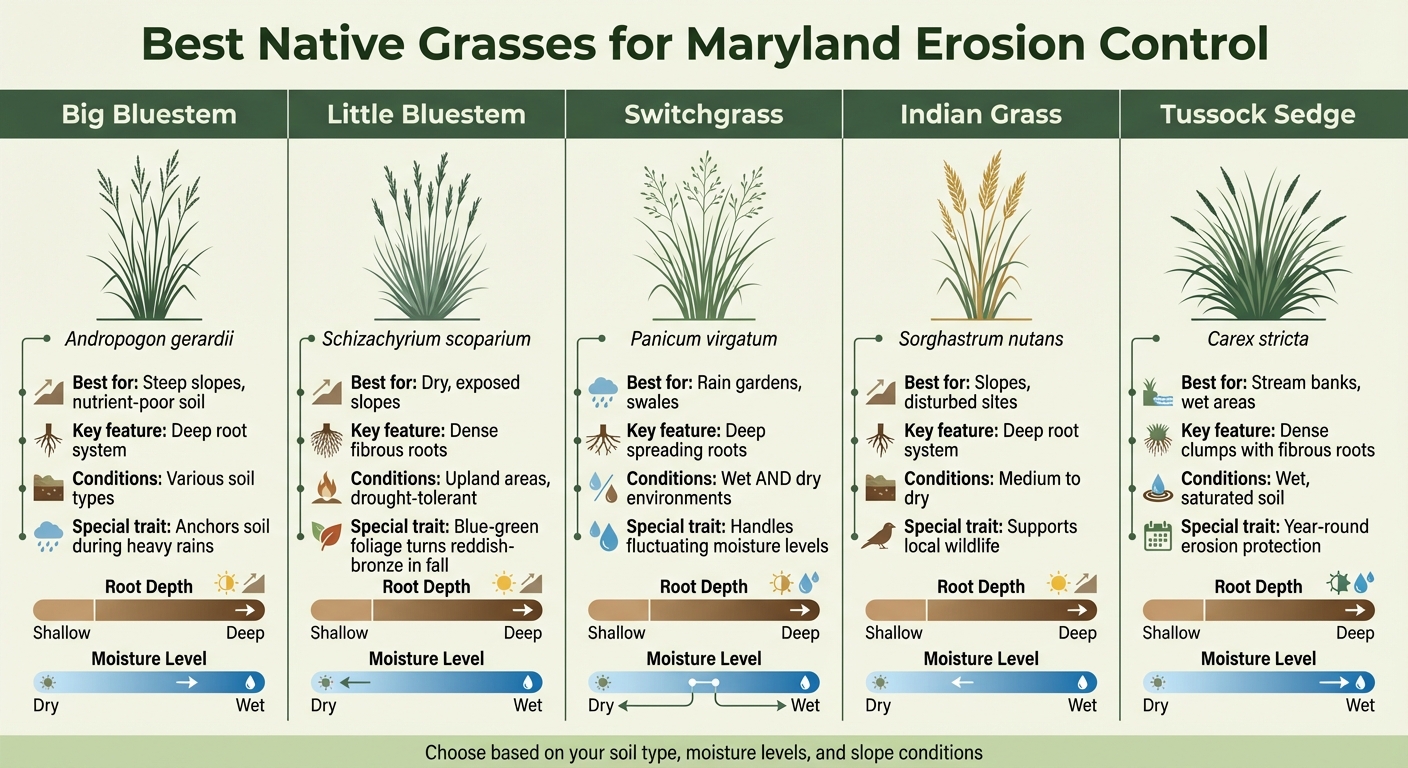
5 Best Native Grasses for Maryland Erosion Control Comparison
Choosing the right native grasses for erosion control means considering your soil type, moisture levels, and slope conditions. Maryland’s diverse climate supports several grass species that are especially effective at stabilizing soil. Here’s a closer look at five grasses that excel at erosion control in the region.
Big Bluestem (Andropogon gerardii)
Big Bluestem is a powerhouse for erosion control, thanks to its deep root system. It thrives on steep, nutrient-poor slopes, anchoring soil even during heavy rains. Its ability to adapt to various soil conditions makes it a reliable option for areas prone to erosion.
Little Bluestem (Schizachyrium scoparium)
If you’re dealing with dry, exposed slopes, Little Bluestem is an excellent choice. Its dense, fibrous roots grip the soil tightly, while its compact size and drought tolerance make it perfect for upland areas. Plus, its striking blue-green summer foliage turns a reddish-bronze in the fall, adding visual appeal.
Switchgrass (Panicum virgatum)
Switchgrass is a versatile option that handles both wet and dry environments with ease. It’s a top pick for rain gardens and swales, where its deep, spreading roots stabilize the soil and manage fluctuating moisture levels. This adaptability makes it a go-to for areas with inconsistent drainage.
Indian Grass (Sorghastrum nutans)
Indian Grass is ideal for medium to dry conditions, especially on slopes and disturbed sites. Its deep root system not only keeps soil in place but also supports local wildlife, offering both practical and ecological benefits in erosion-prone areas.
Tussock Sedge (Carex stricta)
For wet, saturated areas, Tussock Sedge is hard to beat. It forms dense clumps with fibrous roots that prevent soil from washing away along stream banks and other low-lying spots. Where traditional grasses might fail, this sedge provides year-round protection against erosion.
How to Install Native Grasses for Erosion Control
Site Preparation and Soil Testing
Before planting, take a close look at your site’s soil quality and moisture levels. While native grasses are hardy and thrive in tough conditions, proper preparation is still key. One essential step is to stockpile any existing topsoil. This helps preserve the native seed banks and nutrients already present [1].
Understanding how water flows across your site is equally important. Native grasses are particularly good at tapping into deep soil moisture, but compacted soil can hinder their growth. To avoid this, steer clear of working on saturated soil, as heavy equipment or foot traffic can cause lasting damage to the soil structure [1].
Planting and Seeding Methods
Accurate seeding starts with calculating your needs using Pure Live Seed (PLS) – a measure that ensures reliable germination rates [1]. On slopes or erosion-prone areas, erosion control blankets made from jute can be a game-changer. These blankets hold soil and mulch in place while the grasses establish their roots. If jute blankets aren’t an option, you can lay branches across the slope as a simple, low-cost alternative to reduce soil and mulch runoff during heavy rain [2].
Timing matters, especially in Maryland. Aim to plant in early spring or fall, when moisture levels are naturally higher – ideal conditions for germination. For guidance on which species work best in your region, the Chesapeake Bay Native Plant database is a great resource, particularly for the Piedmont area [2]. After seeding, early maintenance is critical to help the grasses take root and grow strong.
Maintenance for Long-Term Success
Hold off on mowing or using heavy equipment in the area until the grasses are firmly established, especially when the ground is wet [1]. Once they’ve matured, native grasses require very little upkeep. Their deep, fibrous roots not only stabilize the soil but also make them highly drought-resistant, ensuring long-term erosion control with minimal effort.
Working with Pro Landscapes MD for Professional Installation

Expertise in Native Plantings
Pro Landscapes MD specializes in native grass installations across central Maryland, offering solutions tailored to the region’s unique environmental challenges. With their in-depth horticultural knowledge, they carefully select grasses that thrive in local conditions. These native species feature deep root systems that access moisture even in tough environments, ensuring soil stability and reducing erosion over time. This thoughtful approach forms the backbone of their erosion and drainage management services.
Comprehensive Erosion and Water Management Solutions
Pro Landscapes MD goes beyond planting by providing a full suite of water management services. They know that native grass installations work best when paired with effective drainage systems. By integrating services like grading, yard leveling, and stormwater management with native plantings, they address the underlying causes of erosion. Their offerings include French drains, dry riverbeds, and drainage repairs, all designed to complement the soil-stabilizing effects of native grasses. This holistic approach ensures water is managed effectively while the grasses’ deep roots secure the soil. Pro Landscapes MD serves a wide range of communities, including Howard County, Montgomery County, Carroll County, Frederick County, Prince George’s County, and Baltimore County, reaching areas from Bethesda to Towson.
A History of Success and Satisfied Clients
Pro Landscapes MD is committed to ensuring native grasses take root and thrive, providing long-term erosion control and soil stabilization. Their attention to detail and reliable methods have transformed properties in areas like Potomac, Gaithersburg, and Silver Spring. With a track record of success, they bring professionalism and expertise to every project, meeting the erosion control needs of their clients with confidence.
Conclusion
Key Takeaways
Native grasses offer a reliable, low-maintenance solution for long-term erosion control. Their deep, fibrous root systems firmly anchor soil, even in tough conditions. Grasses like Big Bluestem, Switchgrass, and Little Bluestem are particularly effective for stabilizing soil in Maryland’s climate. Success hinges on careful planning – choosing high-quality Pure Live Seed (PLS) and following maintenance plans that encourage seed production and root growth. A thoughtful installation process ensures these benefits are fully realized.
Next Steps
For professional native grass installation to tackle soil erosion, visit Pro Landscapes MD. Their team specializes in everything from soil preparation and species selection to integrating drainage solutions like French drains and grading, which work alongside native plantings for maximum effect. Serving areas like Bethesda, Columbia, and Towson, they provide a comprehensive approach to address both the symptoms and root causes of erosion. Reach out to Pro Landscapes MD for a lasting, tailored solution to your erosion challenges.
FAQs
How long do native grasses take to stop erosion?
Native grasses typically need 2 to 4 years to fully establish and start effectively controlling erosion. However, this timeline can shift depending on the type of grass and the specific conditions of the site.
Which native grass is best for my slope and soil type?
Native grasses such as switchgrass, little bluestem, big bluestem, and indiangrass are excellent choices for Maryland’s slopes and soil types. Thanks to their deep root systems, these grasses not only help stabilize the soil but also adapt well to a variety of conditions. They’re a reliable solution for maintaining soil health and managing erosion over the long term.
Do I need drainage work along with native grass planting?
Yes, planting native grasses is a great step toward controlling soil erosion, but pairing it with drainage solutions can make a big difference. Native grasses have deep roots that hold soil in place, but adding features like berms, swales, or retaining walls improves water runoff management and strengthens erosion control. This combination also helps prevent water from pooling and protects slopes, especially in areas that experience heavy rainfall.
Chat with Us