









- bhavya gada
- No Comments
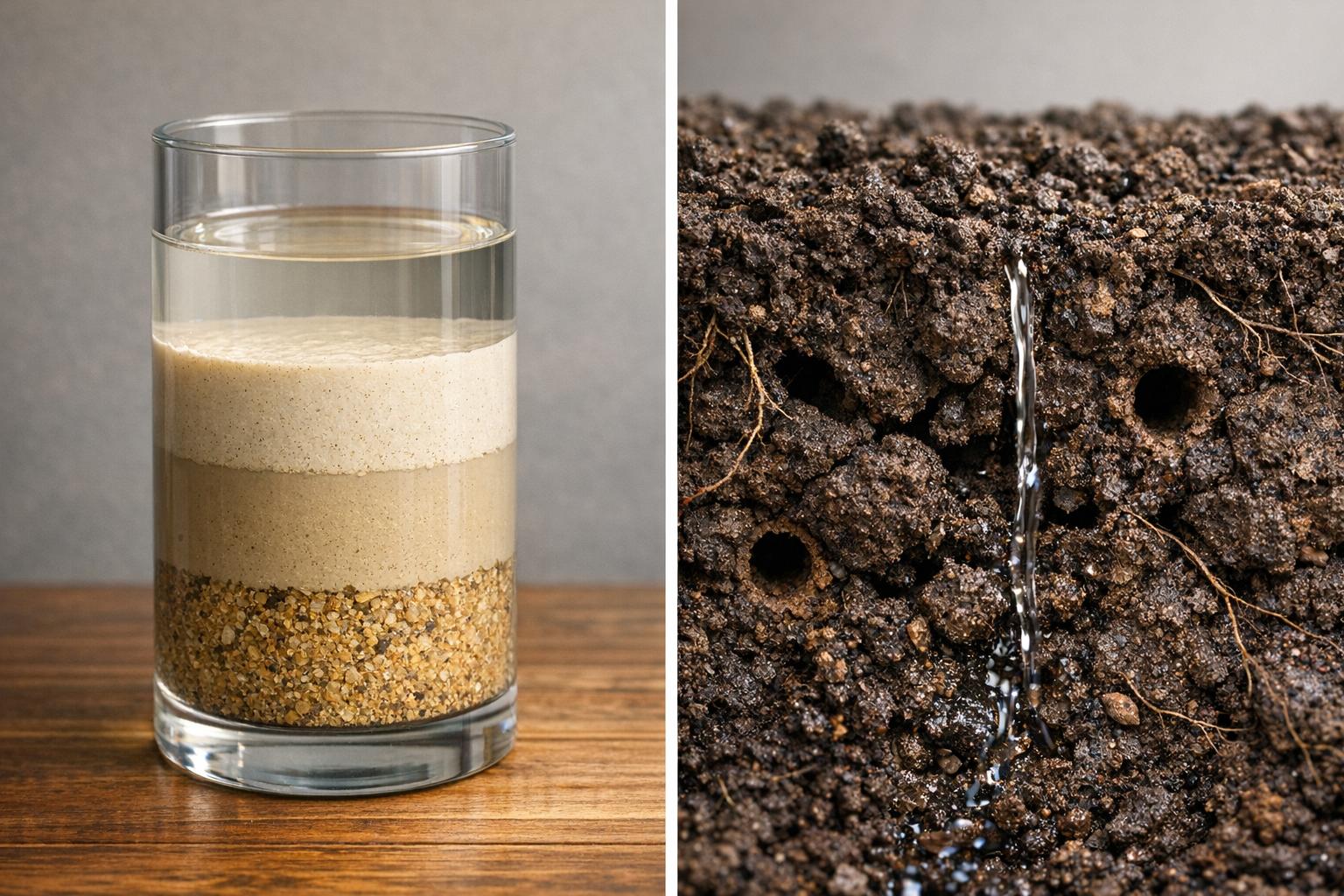
Soil structure and soil composition are two distinct concepts that directly impact plant health and landscaping outcomes. Here’s the short version:
- Soil Composition refers to the fixed ratio of sand, silt, clay, and organic matter in soil. This ratio is determined by parent rock and climate and cannot be changed.
- Soil Structure describes how these particles are arranged into aggregates. Unlike composition, structure is dynamic and can be improved or degraded through management practices.
Key Points:
- Composition affects water retention, drainage, and nutrient availability. For example, sandy soil drains quickly but holds fewer nutrients, while clay retains water and nutrients but drains poorly.
- Structure determines how well air, water, and roots move through the soil. Poor structure (e.g., compacted or platy soil) restricts plant growth, while good structure (e.g., granular soil) promotes healthy root systems.
Quick Comparison:
| Factor | Soil Composition (Texture) | Soil Structure |
|---|---|---|
| Definition | Ratio of sand, silt, and clay | Arrangement of soil particles into aggregates |
| Permanence | Fixed; cannot be changed | Can be improved or degraded |
| Impact | Affects water/nutrient holding | Influences air, water, and root movement |
| Key Influences | Parent material and climate | Organic matter, biological activity, and human practices |
Improving soil structure through organic matter, reducing compaction, and supporting biological activity can transform compacted soils into healthier, more productive landscapes – even if the composition remains the same.
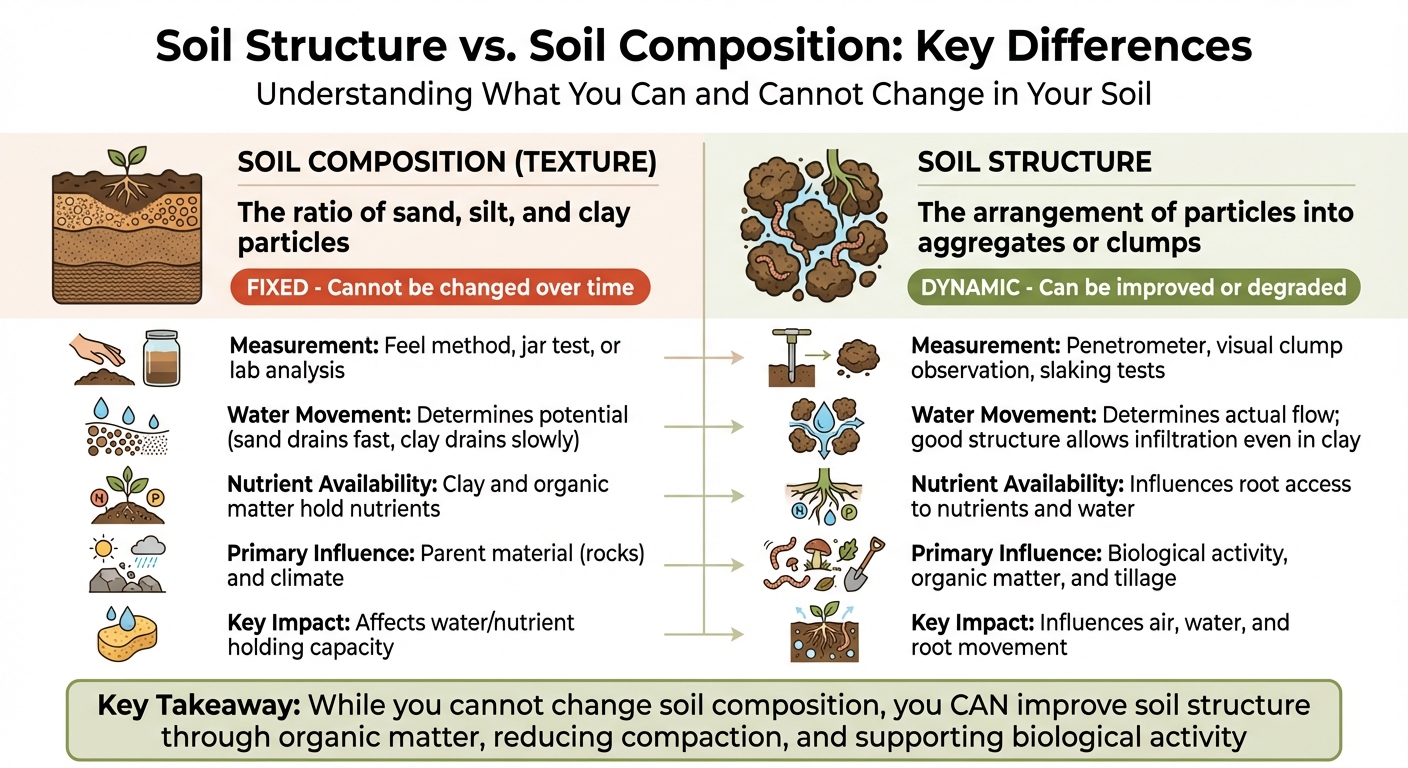
Soil Structure vs Soil Composition: Key Differences Comparison Chart
FUNDAMENTALS: Soil Composition and Structure
What Is Soil Composition?
Soil composition refers to the mix of materials that make up soil – mainly mineral particles like sand, silt, and clay, along with organic matter [1]. This "recipe" is shaped by the area’s geological history and climate. While soil structure can be altered through management, the composition itself is fixed [1].
These components form a dynamic ecosystem. As the University of Maryland Extension explains:
Soils provide water, air, nutrients, and mechanical support for plants. Soils also tie up, filter, and break down natural and man-made toxins [1].
Healthy, well-balanced soil typically consists of about 45–47% mineral particles, 3–5% organic matter, and the rest is pore space – split evenly between air and water (around 25% each) [5][3]. This balance ensures roots get oxygen and access to essential resources.
Components of Soil Composition
Four main components support plant growth [1]:
- Mineral particles: These include sand (0.05–2 mm), silt (0.002–0.05 mm), and clay (< 0.002 mm). Clay particles, due to their negative charge, attract key nutrients like calcium, magnesium, and potassium [1].
- Organic matter: Although it makes up just 1–5% of soil weight, organic matter is crucial. A single teaspoon of healthy soil can host billions of microorganisms, forming the foundation of the soil food web [1].
- Pore space: The gaps between particles, making up about 50% of soil volume, hold air and water. In compacted soils, such as those found in Maryland’s developed areas, air volume can drop to as low as 10%, severely limiting root growth [1][5].
Understanding these elements helps explain how soil texture impacts plant performance.
How Soil Composition Affects Landscaping
The ratio of sand, silt, and clay – known as soil texture – plays a major role in how soil performs in a landscape. Sandy soils, which feel gritty, drain quickly and are easy to work with but struggle to retain water and nutrients. On the other hand, clay soils drain slowly, feel sticky when wet, and hold nutrients well but are harder to manage and prone to compaction [1].
| Property | Sand (Coarse) | Silt (Medium) | Clay (Fine) |
|---|---|---|---|
| Particle Size | 0.05–2 mm | 0.002–0.05 mm | < 0.002 mm |
| Water Retention | Low | Moderate | High |
| Drainage | Fast | Moderate | Slow |
| Nutrient Holding | Low | Moderate | High |
| Workability | Easy | Moderate | Difficult |
In Central Maryland, many urban and suburban soils have been stripped of their native topsoil during construction. This leaves them low in organic matter and prone to compaction [1]. Such disturbed soils often struggle with drainage and plant health. For sandy soils, which lose nutrients quickly, frequent but smaller applications of water and fertilizer are necessary. Meanwhile, clay soils require careful management to prevent crusting, which can block oxygen from reaching plant roots [1].
To identify your soil’s texture, you can use simple techniques like the "feel method" or a "jar test" [1]. For more detailed information, the U.S.D.A.’s Web Soil Survey offers maps and data specific to Maryland [1]. Testing your soil every three to four years helps track organic matter levels and nutrient availability [3].
Next, we’ll dive into soil structure and how it impacts landscaping.
What Is Soil Structure?
If soil composition is the recipe of what makes up your soil, soil structure is all about how those ingredients are mixed and arranged. Think of it like the difference between a bag of loose flour and a perfectly baked cake. Soil structure refers to the way sand, silt, clay, and organic matter come together to form clumps, known as aggregates or "peds" [1][2].
These aggregates stick together thanks to fungal hyphae, microbial secretions, root exudates, and minerals like calcium and iron [1][2]. But the spaces between these aggregates – called pore spaces – are just as critical. These pores let oxygen flow, water soak in (especially during Maryland’s heavy rainstorms), and roots grow with ease [1][3].
Unlike soil texture, which is permanent, soil structure can change. With the right care, it can improve, but poor practices like compaction can quickly degrade it [2][7]. For instance, about 80% of soil compaction happens during just one pass of heavy machinery [7]. This is why many urban and suburban Maryland areas struggle with poor soil structure after construction [1]. Below, we’ll break down the common types of soil structures found in Maryland.
Types of Soil Structure
The type of soil structure in your landscape can make or break plant health. Here’s a closer look at the different types:
- Granular or crumb structure: This is the ideal structure for topsoil. It features small, round aggregates that resemble cookie crumbs. Granular soil provides excellent pore space, allowing water to infiltrate quickly, oxygen to circulate freely, and roots to grow without restriction [1][4]. This structure forms naturally in soils rich in organic matter and active microbes.
- Blocky structure: Found mostly in subsoils, this structure involves irregular, cube-like aggregates. It allows moderate water movement and reasonable root growth, though not as easily as granular soil [4].
- Platy structure: This is a warning sign for landscapers. Thin, flat, horizontal layers often result from heavy machinery or repeated foot traffic. Platy soil slows water movement, leading to ponding, and forces roots to grow sideways instead of downward [2][4].
- Massive structure: This structure lacks any visible aggregates and appears as a solid, compact mass. It’s common in heavily compacted clay or severely disturbed areas, where root growth is nearly impossible [2].
| Structure Type | Water Movement | Root Penetration | Common Locations |
|---|---|---|---|
| Granular/Crumb | Rapid infiltration | Easy and extensive | High-organic topsoil |
| Blocky | Moderate drainage | Moderate; follows cracks | Subsoils |
| Platy | Very slow; causes ponding | Difficult; lateral growth | Compacted areas |
| Massive | Poor; high runoff | Severely restricted | Heavy clay or disturbed sites |
Note: These structures are common in Maryland landscapes, where natural conditions and construction often disturb the soil.
How Soil Structure Affects Landscaping
The impact of soil structure goes beyond just appearance – it directly affects water, air, and root access. Even if soil composition is ideal, poor structure can choke roots of oxygen and water, leading to plant stress.
- Water infiltration: Good soil structure acts like a sponge, soaking up rainfall and preventing runoff. On the flip side, compacted soils with platy or massive structures repel water, causing it to pool or run off. Stable aggregates also protect against raindrop impact, reducing surface crusting that blocks water entry [4][7].
- Air circulation: Roots need oxygen to function. In compacted soils, limited pore space reduces oxygen flow, while carbon dioxide builds up around roots, stunting growth [3][4].
- Root growth: Roots naturally grow where they encounter the least resistance. In granular soils, they spread freely. But in platy or massive soils, roots are forced to grow laterally, creating shallow systems that leave plants more vulnerable to drought and wind damage. This is a common issue in Maryland, where construction often removes nutrient-rich topsoil, leaving compacted subsoil behind [1].
The good news? Unlike texture, soil structure can be improved. Adding organic matter, reducing tillage, and avoiding compaction are all steps that can breathe new life into poor soil.
sbb-itb-843f8be
Key Differences Between Soil Structure and Soil Composition
To tackle soil challenges in Maryland effectively, it’s crucial to understand the distinction between soil structure and soil composition. Soil composition is permanent, referring to the ratio of sand, silt, and clay particles that originate from the parent rock and local climate [1][4]. This ratio doesn’t change over time. On the other hand, soil structure is dynamic, describing how these particles group into aggregates. Unlike composition, structure can be improved – or harmed – by landscaping practices [2][4].
Think of composition as the soil’s "ingredients" and structure as how those ingredients are "arranged." For example, clay particles are over 1,000 times smaller than sand [1][4]. This size difference defines composition, while structure determines whether these particles form stable clumps with sufficient pore space or compress into a dense, compacted mass.
Comparison Table: Structure vs. Composition
| Factor | Soil Composition (Texture) | Soil Structure |
|---|---|---|
| Definition | The ratio of sand, silt, and clay particles [1][4] | The arrangement of particles into aggregates or clumps [2][1] |
| Permanence | Permanent; does not change over time [1][4] | Dynamic; can be improved or degraded through management [2][4] |
| Measurement | Feel method, jar test, or lab analysis [1][4] | Penetrometer, visual clump observation, or slaking tests [2] |
| Water Movement | Determines potential (e.g., sand drains fast, clay drains slowly) [1] | Determines actual flow; good structure allows infiltration even in clay [2][4] |
| Nutrient Availability | Clay and organic matter hold nutrients [1][4] | Influences root access to nutrients and water [4] |
| Primary Influence | Parent material (rocks) and climate [1][5] | Biological activity, organic matter, and tillage [2][1] |
Practical Implications for Maryland Landscapes
In Maryland, heavy clay soils often puddle after storms. While you can’t change the clay content, you can improve soil structure. For instance, adding a 2–3 inch layer of compost and mixing it 6 inches deep creates pore spaces that allow water to infiltrate [3].
Soil composition dictates which plants are likely to thrive naturally. For example, clay retains nutrients like calcium and potassium due to its negative charge [1][4], making it nutrient-rich despite its poor drainage. Meanwhile, sandy soils drain quickly and may lose fertilizers unless organic matter is added to improve structure and retention [1]. Soil structure plays a key role in whether plants can access these nutrients and whether their roots have enough oxygen. Ideally, healthy soil is about 50% solid material and 50% pore space, with an even split between air and water [1][5][6]. When soil becomes compacted, air space can drop to just 10% [5], effectively suffocating roots.
Urban homeowners in Maryland often deal with compacted soils where construction has stripped away the topsoil [1]. In these cases, rebuilding structure by adding organic matter and avoiding further compaction is critical. While you’re stuck with the composition you have, improving structure provides the environment plants need to thrive.
Understanding these differences lays the groundwork for strategies to improve soil structure in Maryland landscapes.
Improving Soil Structure in Maryland Landscapes
Homeowners in Maryland have the ability to restore and protect healthy soil structure, even in areas where construction has stripped away native topsoil. In counties like Howard, Montgomery, and Baltimore, many properties are left with compacted soil containing only 1% to 2% organic matter – far below the recommended 5% level [3]. Thankfully, with some focused effort, it’s possible to improve soil health by increasing pore space for water and oxygen [3]. Here’s how to get started.
Adding Organic Matter
One of the most effective ways to rebuild soil structure is by adding organic matter. Spread a 2–3-inch layer of decomposed compost over the soil and mix it into the top 6 inches using a spade or rototiller [3]. This step provides essential nourishment for soil organisms that naturally bind particles into stable aggregates [3]. To put it into perspective, a single teaspoon of healthy soil can house billions of microorganisms [1]. These tiny workers need a consistent food supply to thrive.
Looking for an affordable option? Shred fallen leaves with your lawnmower in the fall to speed up decomposition [3][8]. You can also leave grass clippings on your lawn or incorporate well-aged manure to boost organic carbon levels [3]. For best results, get your soil tested every three to four years at a lab to track progress and fine-tune your approach [3].
Preventing and Reducing Compaction
Compaction is a major issue in Maryland’s clay-rich soils, with up to 80% of compaction occurring during the first pass of heavy machinery [1][7]. To minimize this, avoid walking, driving, or working on wet soil – it’s most vulnerable to compression when damp [2][7]. If machinery use is unavoidable, stick to the same tracks to limit the damage to a smaller area [7]. These practices help maintain the soil’s aggregate stability, ensuring proper airflow and water movement.
For properties needing grading or land leveling, hiring professionals can ensure proper drainage without unnecessary soil damage. Mulching exposed soil can also protect against compaction caused by foot traffic or lawn equipment [8]. If compaction is already an issue, skip excessive tilling, which can break down the very aggregates you’re trying to build [3][6]. Instead, plant deep-rooted species to naturally loosen compacted soil layers – a process often referred to as "biological tillage" [2].
Encouraging Biological Activity
Healthy soil depends on the activity of earthworms and beneficial microbes. Earthworms create stable aggregates through their burrowing and pellet production, while microbes produce humus – a binding agent that results from decomposed organic matter [1][6]. To keep this underground ecosystem thriving, regularly add organic materials like grass clippings, shredded leaves, and compost [3].
"Organic matter is the sticky stuff that holds soil particles together." – John Howell, Extension Educator, University of Massachusetts [6]
Interestingly, stabilized organic matter attached to clay accounts for about 75% of a soil’s total organic matter [1]. This highlights how biological activity directly supports soil structure. By feeding the soil food web, you create a self-sustaining system that continuously strengthens aggregates and preserves the pore space plants need to grow.
Conclusion
Grasping the difference between soil structure and soil composition is key to cultivating healthy landscapes in central Maryland. While soil composition determines how well soil can retain nutrients and water [1][4], soil structure impacts how air, water, and roots move through the soil [1][4].
The ideal soil mix includes about 45% mineral particles, 5% organic matter, and 50% pore space, striking a balance between water retention and oxygen availability [3]. Unfortunately, many properties in areas like Howard, Montgomery, and Baltimore counties face challenges with compacted urban soils. These soils often contain only 1% to 2% organic matter and have pore space reduced to just 10%, causing drainage issues, restricting root growth, and weakening plant vitality [3][5].
Although soil texture is permanent, you can improve soil structure through methods like adding organic matter, minimizing compaction, and boosting biological activity. Regular soil testing – every three to four years – helps track these improvements and refine your approach [3].
To address these challenges, local solutions are available. In central Maryland, Pro Landscapes MD specializes in restoring soil health and enhancing landscape performance. Their landscaping services, including design, planting, and lawn care, are tailored to the region’s specific soil conditions. Whether you’re dealing with compacted clay and need drainage solutions or want to revive biological activity in your garden, their team of expert horticulturists can create outdoor spaces that thrive in Maryland’s diverse soils.
FAQs
What are some ways to improve soil structure without altering its composition?
To improve soil structure while keeping its composition intact, try incorporating organic matter such as compost, shredded leaves, or well-aged manure. These additions help bind soil particles together, create more pore space, and support better water absorption and root development.
Steer clear of actions that might damage soil structure, like over-tilling or compacting the soil by walking or driving on it when it’s wet. Instead, opt for gentle management methods to preserve the soil’s balance and promote healthier plants.
How can I prevent soil compaction in my garden?
Keeping your soil in good shape means protecting its structure and promoting biological activity. One of the simplest steps is to avoid walking or working in your garden when the soil is wet. Wet soil is more prone to compaction, which can squeeze soil particles together and reduce airflow. Instead, use pathways, stepping stones, or raised beds to spread out weight and keep your planting areas protected.
Adding organic matter is another key strategy. Materials like compost, mulch, or well-rotted manure can improve the soil’s texture, allowing air and water to move more freely. Be mindful of watering habits, too – overwatering, especially in clay-heavy soils, can lead to compaction and poor drainage.
Planting cover crops or native plants with fibrous root systems is a great way to naturally stabilize soil and preserve its structure over time. These plants help create a network of roots that keep the soil loose and aerated. Finally, regular soil testing can help you figure out what amendments your soil needs to stay healthy and resistant to compaction.
What is soil structure, and why does it matter for plant health?
Soil structure describes how particles like sand, silt, and clay come together to form aggregates or clumps. It’s a key factor in plant health because it affects how water, air, and nutrients move through the soil. A well-structured soil provides the pore spaces roots need to access oxygen and water, helping plants grow strong and healthy.
On the flip side, compacted or poorly structured soil reduces these pore spaces. This makes it harder for roots to penetrate and absorb vital resources, leading to poor drainage, limited oxygen, and stressed plants. To keep soil structure in good shape, adding organic matter and reducing disturbance are essential steps. These practices support healthy roots and thriving plants.
Chat with Us