









- bhavya gada
- No Comments
Wildflower meadows are a low-maintenance, ecologically friendly alternative to traditional lawns. In Maryland, you can create a thriving meadow that supports pollinators and reduces yard upkeep by following these steps:
- Pick the Right Spot: Choose an area with 4–6 hours of sunlight daily.
- Prepare the Soil: Remove turf and topsoil to minimize weeds; avoid fertilizers.
- Choose Native Plants: Combine wildflowers like Black-eyed Susans and Milkweed with 50–70% native grasses.
- Plant Smart: Sow seeds in late fall or early winter, or use plugs in spring for faster results.
- Maintain Annually: Mow once a year and overseed bare patches as needed.
Starting small, such as a 5×5-foot plot, is a practical way to experiment. With patience (2–3 years for full bloom), your meadow will require less water, no chemicals, and only occasional maintenance. Maryland even offers rebates in some areas to offset costs. Transitioning your yard to a wildflower meadow is a rewarding way to support local wildlife while simplifying your gardening routine.
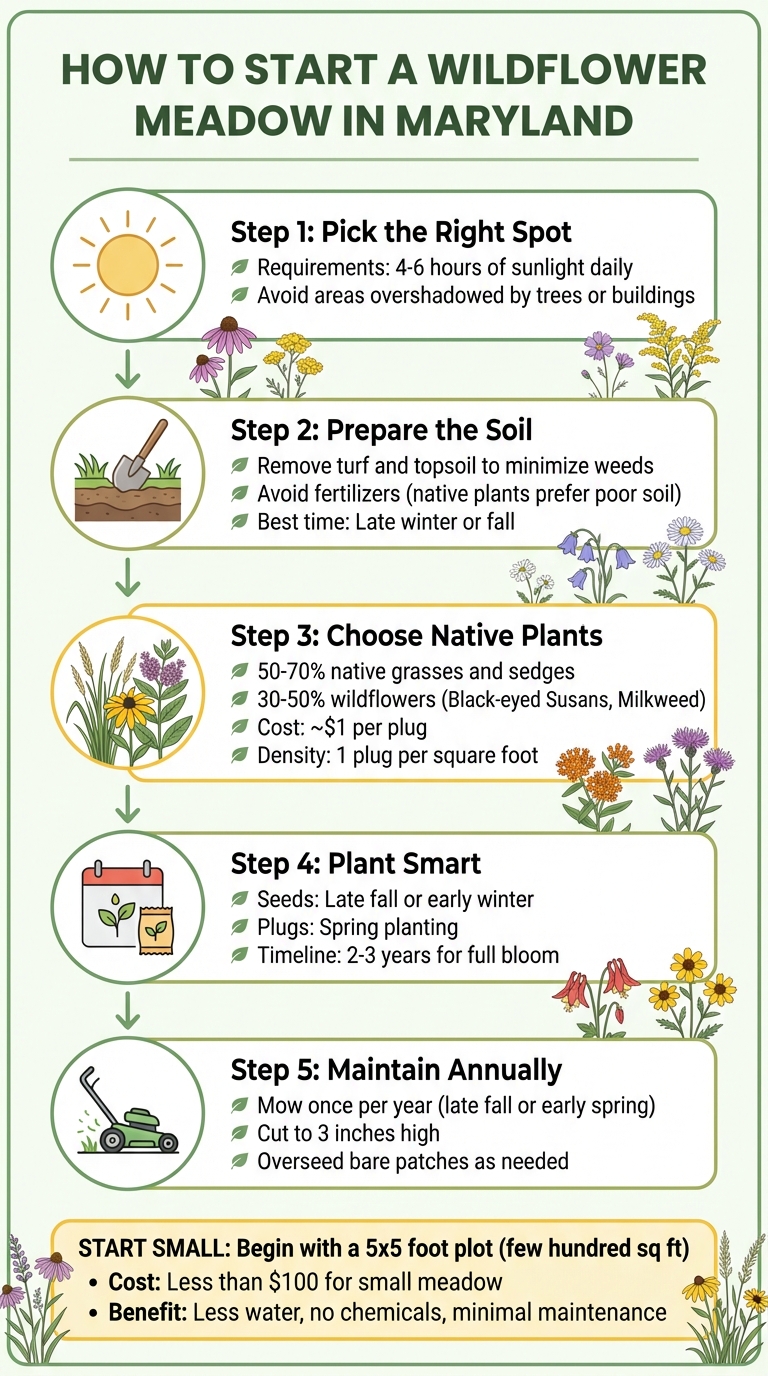
5 Steps to Start a Wildflower Meadow in Maryland
Assessing Your Site and Choosing Wildflowers
Evaluating Soil, Sunlight, and Drainage
To create a thriving wildflower meadow, your chosen site needs at least 4 to 6 hours of direct sunlight each day. Spend some time observing how sunlight moves across your property to ensure the area gets adequate exposure. Avoid spots overshadowed by trees or buildings. As Miri from the University of Maryland Extension notes, "Meadows are for full sun areas; in more shade, other plantings are more suited to the lower light level" [2].
Interestingly, Maryland’s native meadow plants actually prefer poor soil over the nutrient-rich topsoil commonly found in lawns. Fertile soil tends to encourage weeds, which can outcompete wildflowers [3]. According to the University of Maryland Extension, "Native meadow plants are generally happier growing on the poor soil beneath your topsoil anyhow" [3]. When prepping your site, remove the turf and topsoil to eliminate weed seeds and expose the nutrient-depleted soil that supports native species. Skip the fertilizer – it helps weeds more than wildflowers [3][4].
If your site has tricky drainage patterns or other complexities, it’s worth consulting a Chesapeake Bay Landscape Professional (CBLP). These experts specialize in sustainable landscaping tailored to the Mid-Atlantic region [2]. Once you’ve confirmed your site conditions, you’re ready to move on to selecting the right native species.
Selecting Native Wildflower Species
With the site prepped and meeting the necessary sun, soil, and drainage requirements, it’s time to pick your plants. A balanced Maryland meadow isn’t just about flowers – it should include 50% to 70% native grasses and sedges. As the University of Maryland Extension explains, "The desire to plant flowers is strong, however stable meadows are composed of 50 to 70% grasses" [3]. These grasses provide essential structure and help suppress weeds, giving wildflowers the space they need to flourish.
For the best results, choose species that are native to Maryland and suited to your specific ecoregion. Local nurseries specializing in native plants can guide you in selecting species that match your soil and drainage conditions [3]. Native grass and wildflower plugs typically cost about $1 each, and planting one plug per square foot ensures proper coverage [3]. To support pollinators throughout the year, include a mix of species that bloom from spring to fall [1].
sbb-itb-843f8be
Preparing the Plot
Removing Turf and Existing Vegetation
If you’re starting a meadow, don’t bite off more than you can chew. The University of Maryland Extension suggests beginning with a small area – just a few hundred square feet – rather than tackling your entire lawn at once. This way, you can experiment and figure out what works before scaling up [3].
The most straightforward way to prepare your plot is to physically remove the turf and topsoil. This step eliminates both existing weeds and dormant weed seeds that could outcompete your wildflowers. As the University of Maryland Extension puts it, "Remove the turf and the topsoil underneath it. This eliminates weeds and the weed seeds that would compete with your meadow" [3]. Late winter and fall are the best times to take on this task.
Looking for a less labor-intensive, chemical-free option? Consider soil solarization. This involves tilling the ground and covering it with black plastic for about three months during the warmest part of the year. Landscape designer Owen Wormser explains, "The intense heat under the plastic not only kills grass and weeds but also cooks their root systems and seeds, providing a fresh slate for meadow plants" [1]. Keep in mind, though, that solarization requires patience due to the lengthy waiting period.
Another chemical-free method is sheet mulching, which works well for killing lawn grasses before planting [5]. If the site is heavily infested with weeds, planting a deep-rooted cover crop such as buckwheat, clover, or oats for one growing season can help suppress weeds and improve soil structure before introducing native seeds [5].
Once you’ve cleared the unwanted vegetation, it’s time to shift your attention to the soil.
Preparing the Soil for Wildflowers
With the vegetation removed, the next step is to create the ideal conditions for wildflowers to thrive. Start by addressing soil compaction, which can be a major barrier for plant growth. Heather McCargo, founder of Wild Seed Project, stresses the importance of this step: "Loosening the compacted soil is crucial before planting, as this is a human-induced compaction that few plants appreciate" [5]. Use a garden fork to loosen compacted soil, particularly in areas that have been heavily trafficked or disturbed by construction.
Avoid roto-tilling whenever possible, as it can bring dormant weed seeds to the surface. If tilling is unavoidable, immediately plant a cover crop to suppress the weeds that will inevitably sprout [5]. Additionally, keep lawn mower clippings away from the meadow area to avoid introducing grass seeds and excess nutrients [3].
Finally, skip the fertilizer. Native meadow plants actually thrive in nutrient-poor soils, and adding fertilizer can encourage aggressive weeds to take over [3]. The exposed subsoil left behind after removing the topsoil provides the low-nutrient environment these plants need to flourish.
Planting Your Wildflower Meadow
Sowing Wildflower Seeds
The best time to sow wildflower seeds is in late fall or early winter, giving them the chance to germinate naturally in the spring [3]. As the University of Maryland Extension explains, “In late fall or early winter, sprinkle your seeds over the soil. Scratch them into the soil very shallowly, 1/8" or less.”
For smaller areas, you can scatter the seeds by hand as part of our landscaping services. If you’re working with a larger space, a hand-pushed broadcast spreader will help distribute the seeds evenly. After sowing, press the soil down with your feet, water lightly, and cover the area with a thin layer of weed-free straw. This helps protect the seeds and keeps the soil moist [3].
Keep in mind, native meadows don’t bloom overnight. It typically takes 2–3 years for them to start flowering and producing seeds, so patience is key during this process [5]. If you want quicker results, consider combining seed sowing with planting wildflower plugs, as explained below.
Planting Wildflower Plugs for Faster Growth
Wildflower plugs, though costing about $1 each, can speed up the process of establishing your meadow. In Maryland, spring is the ideal time to plant these plugs because seasonal rains help the young plants settle in before the heat of summer. Landscape designer Owen Wormser advises, “If you’re going with plugs, plant in spring to coincide with seasonal rains, which will make your job easier” [1].
For the best results, plant one plug per square foot. This density not only suppresses weeds but also helps the meadow fill in quickly [3]. Use a trowel to dig small holes, place the plugs at the same depth as they were in their containers, and mulch around them with materials like straw, bark, or shredded leaves to retain moisture. Water the plugs regularly during the first few weeks to help them establish, but skip the fertilizer – native meadow plants thrive without it [3].
If you plan to use plugs, order them in the fall to ensure they’re available for spring planting [3].
Caring for Your Meadow: Establishment and Maintenance
Watering and Weed Control in Year 1
The first year of your meadow’s life needs some care, but it’s still much less work than maintaining a traditional lawn. For newly planted plugs, consistent watering is key until their roots are well-established. Skip the fertilizer – native wildflowers actually thrive in low-nutrient soils.
If you’re starting your meadow from seeds, give the area a light watering right after pressing the seeds into the soil in late fall or early winter. After that, let nature handle the rest [3]. Once your meadow takes root, you’ll find it’s remarkably drought-tolerant and uses far less water than a typical lawn [6].
Weeds can be a challenge in the first year, so it’s essential to learn how to identify your native seedlings to avoid accidentally pulling them out [3]. Mowing during this early phase can help prevent weeds from spreading seeds, giving your native perennials the time they need to develop strong roots [2]. For invasive plants like thistles or docks, remove them by hand as soon as you spot them. After that first year, your meadow will need less intervention, transitioning to seasonal upkeep.
Seasonal Maintenance: Mowing and Overseeding
Once your meadow is established, maintenance becomes simple. Typically, it only needs one annual mowing, either in late fall (November) or early spring. Cut the meadow down to about 3 inches high, and leave the clippings on the ground for a few days to let seeds fall naturally. Afterward, rake up and remove the clippings to keep soil nutrients low.
If you notice bare patches or find that some plants didn’t make it through the first year, overseed those areas in spring or fall with more native wildflower seeds [1]. As noted by the Maryland Department of Natural Resources:
Once established, meadows attract more wildlife and require less maintenance than lawns. In addition, meadows need less water and little to no fertilizer [6].
How To Plant A Wildflower Meadow | Part I
Conclusion
By following these steps, you can turn your yard into a flourishing wildflower meadow. Starting a meadow in Maryland not only beautifies your property but also helps reduce stormwater runoff and provides essential support to local pollinators. Once established – usually within three to four years – your meadow will require just one annual mowing, a far cry from the weekly upkeep of a traditional lawn.
Maryland has even taken steps to encourage eco-friendly yard transformations. On October 1, 2021, the state enacted legislation to protect homeowners’ rights to maintain environmentally friendly yards [7]. A wildflower meadow, once established, demands minimal maintenance, cutting down on the need for fertilizers, pesticides, and constant watering.
Starting a small native meadow can cost less than $100, and some Maryland counties offer rebates through initiatives like RainScapes to help offset the cost.
Pro Landscapes MD offers expert guidance throughout the process. From assessing your site and choosing native plants to preparing the soil and planning for long-term care, their team of professional horticulturists understands Maryland’s unique ecosystems. They can create a meadow tailored to your conditions while boosting local biodiversity.
Whether you’re converting a small area or your entire yard, a wildflower meadow is a meaningful investment in your property and Maryland’s environment. The end result? A vibrant, low-maintenance landscape that conserves water and provides a haven for wildlife.
FAQs
How big should I start my meadow?
Starting your wildflower meadow with a small patch – around a few hundred square feet – is a smart approach. A smaller area is much easier to manage, allowing you to closely monitor germination and help the plants take root. It also gives you the chance to learn about the specific conditions of your site, like how much sunlight it gets or the quality of the soil, before committing to a larger project down the line.
What seed mix works best in my part of Maryland?
If you’re planting in Maryland, the ideal seed mix includes native wildflowers that are well-suited to the state’s climate and ecosystems. These plants not only flourish in the local environment but also play a key role in supporting pollinators and other wildlife.
To get started, choose a diverse mix of species that match the specific conditions of your area – whether you’re in the Eastern Shore or Western Maryland. Native plants are crucial for creating habitats that attract bees, butterflies, and birds, ensuring your garden contributes to the health of the local ecosystem.
For the best results, reach out to local nurseries or garden centers that specialize in Maryland’s native plants. They can provide expert advice and recommend seed mixes tailored to your region.
Will my HOA allow a wildflower meadow?
Whether you can plant a wildflower meadow depends entirely on your HOA’s rules. Many homeowners’ associations have strict guidelines about how lawns and landscaping should look. While some might appreciate the charm of a neatly maintained meadow, others may enforce rules favoring uniform, traditional lawns.
To find out, start by reviewing your HOA’s covenants, conditions, and restrictions (CC&Rs). If you’re unsure, reach out to the HOA board for clarification.
For example, in Maryland, wildflower meadows can provide essential support for local wildlife and might even align with certain environmental programs. If your HOA permits it, this could be a great way to enhance biodiversity in your area.
Chat with Us