









- bhavya gada
- No Comments
Managing heavy rainfall and reducing energy use in outdoor spaces is key for Maryland homeowners. Traditional materials like concrete and asphalt worsen flooding and require significant energy to produce. Instead, permeable hardscapes and low-energy materials offer practical solutions. These materials allow water to seep into the ground, reduce runoff, and use less energy during production.
Key Takeaways:
- Permeable Pavers: Reduce runoff by up to 90% and filter water through gravel layers.
- Recycled Materials: Reclaimed concrete, stone, and bricks cut energy use and divert waste from landfills.
- Low-Carbon Cement: Alternatives like fly ash and slag cement reduce emissions by up to 60%.
- Locally Sourced Materials: Crushed stone, gravel, and decomposed granite lower transportation impact and suit Maryland’s climate.
Combining these materials with systems like rain gardens and bioswales creates outdoor spaces that manage stormwater effectively while reducing environmental impact. Proper installation and maintenance ensure long-term performance.
Why Choose Permeable Paving For Sustainable Stormwater Management? – Civil Engineering Explained
Permeable Pavers
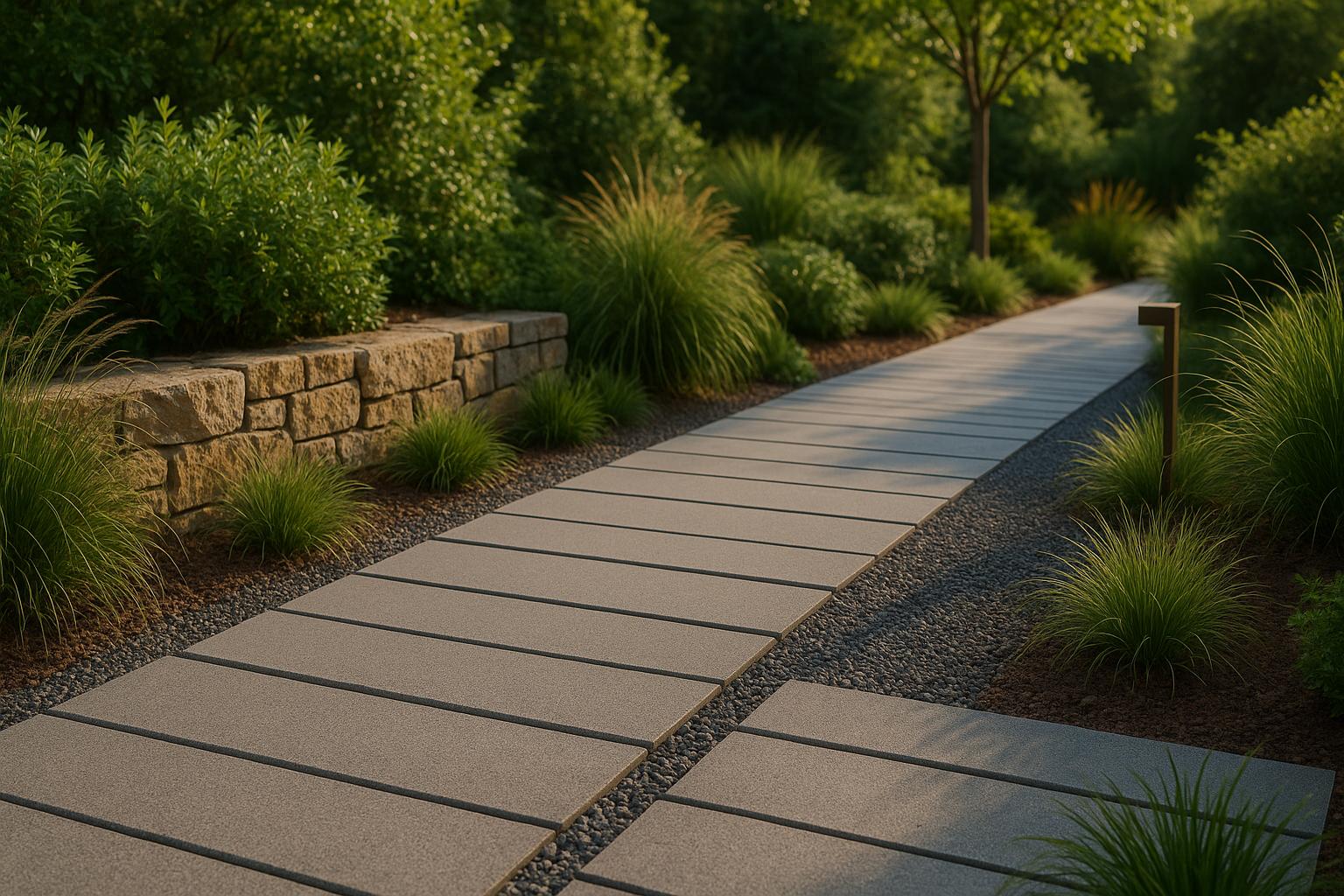
Permeable interlocking concrete pavers are a smart solution for addressing both water management challenges and reducing energy use. These pavers are designed with open joints filled with aggregate, sitting on a 2–4 inch surface layer over porous, gravel-filled subsurface layers. This setup allows water to naturally seep into the ground rather than running off into storm drains like it would with traditional concrete or asphalt. The fine gravel between the pavers and the crushed stone beneath them work together to filter and drain water effectively, turning what would usually be an impervious surface into a practical stormwater management system[1][9].
Water Management Advantages
One of the standout benefits of permeable pavers is their ability to significantly reduce stormwater runoff. Research indicates that these systems can cut peak water flow by as much as 90%[9]. This makes them ideal for areas with heavy foot or vehicle traffic. By lessening the strain on sewer systems and minimizing erosion, they offer a sustainable way to handle stormwater.
But it’s not just about runoff volume. The gravel layers beneath the pavers also filter out contaminants, improving the quality of water that recharges groundwater supplies and flows into nearby water bodies[9]. This dual function supports healthier ecosystems while maintaining soil moisture levels that benefit surrounding greenery[3].
The versatility of permeable pavers adds another layer of appeal. Their modular design and refined textures allow for a variety of layouts and styles, making them suitable for both formal and casual settings. For example, a homeowner in Willowbrook, Illinois, used H₂O PRO® Pavers from County Materials to transform their driveway into an eco-friendly feature. The design blended clean lines, subtle textures, and complementary colors to enhance the home’s aesthetic while promoting effective stormwater management[1].
In Maryland, where driveways and patios often dominate hardscape areas, permeable pavers achieve two key objectives: they manage rainwater efficiently while also enhancing the visual appeal of a property[3].
And while water management is a big draw, the environmental benefits extend to their production process as well.
Production Energy Requirements
The energy efficiency of permeable pavers starts with their production. Some systems, like TRUEGRID permeable pavers, are made entirely from recycled plastic[6]. This approach uses far less energy compared to traditional materials like concrete or asphalt, which require energy-intensive processes involving high-temperature kilns and petroleum-based components.
When you look at the full lifecycle, the energy savings become even more apparent. By incorporating recycled materials, permeable pavers avoid much of the energy demand associated with conventional options while still offering excellent performance for stormwater management.
Of course, choosing energy-efficient materials is just the beginning – their effectiveness also depends on proper installation.
Installation Requirements
Getting the installation right is crucial for the performance and durability of permeable paver systems, especially in climates like Maryland’s, where freeze-thaw cycles can pose challenges. A well-prepared base is essential. This includes a geotextile-reinforced foundation with at least 6 inches of compacted angular stone to ensure proper load distribution and maintain water infiltration[6]. The geotextile layer also prevents soil from mixing with the drainage rock, keeping the system functioning smoothly over time.
Before installation, factors like site slope, soil permeability, and local regulations need to be evaluated to ensure the system performs as intended[6]. Once installed, the grid design locks into place, evenly distributing weight and securing the infill. This makes permeable pavers suitable for high-traffic areas while maintaining their drainage capabilities.
A great example of their versatility comes from the Riverside County Flood Control and Water Conservation District in California. They implemented permeable pavement systems – including pervious pavers, porous concrete, and porous asphalt – on their campus to test stormwater management techniques in arid climates. The project showed that permeable pavements can be effective in a variety of conditions[9].
In Maryland, Pro Landscapes MD specializes in designing and installing these systems. Their expertise includes everything from drainage installation and French drains to dry riverbeds and stormwater management. They ensure that each project’s base and drainage layers are tailored to the specific site, which is critical for long-term performance in Maryland’s varied climate.
Maintenance for permeable pavers is relatively straightforward. County Materials’ systems, for instance, are known for their durability, low upkeep, and long-term value[1]. Their modular design allows for customization to fit sloped, narrow, or high-traffic areas[6]. With proper installation and preparation, these systems can efficiently manage stormwater and reduce erosion throughout the year, delivering both environmental and practical benefits.
Recycled and Reclaimed Materials
Using salvaged stone, recycled concrete, and reclaimed bricks can significantly cut energy use while creating functional and attractive hardscapes. These materials skip the energy-heavy processes needed for new ones. Instead of quarrying raw stone, crushing it, and manufacturing finished products, recycled materials only require basic steps like cleaning and sorting[2]. Plus, they improve water permeability in stormwater systems, which is a major win for eco-friendly projects.
The benefits go beyond just saving energy. By using reclaimed materials, you help divert waste from landfills and reduce the need for new quarrying, which helps preserve natural landscapes[4]. And if you source these materials locally, you can shrink the carbon footprint of your hardscaping project even further[2]. It’s a practical way to embrace sustainability and make a real difference.
Energy Reduction Through Reuse
Producing new hardscaping materials demands a lot of energy for extraction, processing, and finishing[2]. Recycled and reclaimed materials bypass most of these steps altogether.
Take recycled concrete, for instance. It can be reused as aggregate for base layers or even as a surface material[2]. Since the concrete has already gone through the energy-intensive production process, reusing it avoids duplicating that effort. The same applies to reclaimed stone and brick – they’re ready for use with minimal preparation.
The energy savings really add up when you consider the entire lifecycle of these materials. Opting for existing materials over new ones aligns with circular economy principles, reducing overall resource consumption. This approach not only lightens the environmental load of traditional hardscape production but also delivers the durability and performance you need[2].
Hardscaping Uses
Recycled materials aren’t just eco-friendly – they’re versatile too. Reclaimed flagstone, pavers, and bricks can create stunning patios and walkways, whether you prefer a formal or informal design style. They come in a range of sizes, shapes, and colors, giving you plenty of flexibility to meet your design goals while staying sustainable[5].
Recycled concrete is a great choice for driveways, pathways, and patio bases. It’s as durable as new concrete and offers excellent drainage when installed correctly[8]. The key to success lies in proper preparation – using geotextile fabric and a base of at least 6 inches of clean, angular stone ensures long-lasting results[6].
Reclaimed stone is perfect for vertical features like retaining walls, garden walls, and seat walls. Its weathered look adds character to your landscape while reducing its environmental impact[4]. In fact, natural aging enhances its aesthetic rather than detracting from it.
For projects that incorporate stormwater management, recycled materials can be paired with other eco-friendly features. Reclaimed stone and gravel are excellent for constructing dry creek beds that handle stormwater overflow, filtering pollutants as water flows through[4]. Recycled concrete and reclaimed bricks can also play a structural role in rain gardens and bioswales, helping to manage water flow around driveways and patios[4]. These combinations improve water infiltration and ease the burden on municipal stormwater systems.
When installed properly, these materials hold up well through seasonal changes[6].
In Maryland and nearby regions, Pro Landscapes MD specializes in using these sustainable materials. Their expertise in drainage, stormwater management, and hardscape construction ensures that recycled and reclaimed materials are installed to the highest standards, aligning with the broader goal of reducing environmental impact.
Maintenance for these materials is straightforward when they’re installed correctly. Reclaimed brick, stone, and flagstone are naturally durable and require little upkeep[4]. The main task is keeping the joint spaces clear to maintain water infiltration – regular cleaning and debris removal keep stormwater systems functioning effectively. Unlike some surfaces that deteriorate with seasonal changes, properly installed recycled concrete and reclaimed stone remain reliable year-round[6].
Low-Carbon Cement Alternatives
Low-carbon cement alternatives not only help cut emissions but also deliver the durability and strength needed for stormwater-friendly hardscaping. Traditional Portland cement production releases about 0.9 tons of CO₂ for every ton produced, contributing significantly to global emissions – around 5–8% of the total. Even small changes in cement production can make a big difference. Thankfully, there are several alternatives that can reduce emissions while meeting the performance demands of hardscaping projects.
Materials like fly ash, slag cement, and lime-based mortars provide practical ways to lower a project’s carbon footprint without compromising quality. These substitutes or additions to traditional mixes are ideal for driveways, patios, walkways, and stormwater management systems.
Reduced Emissions
The environmental benefits of low-carbon cement alternatives begin with their production. Unlike Portland cement, which requires energy-intensive kilns heated to around 1,450°C (2,642°F), these alternatives use industrial byproducts or lower-temperature processes, resulting in significantly less energy consumption.
- Fly ash, a byproduct of coal combustion, can replace 15–50% of Portland cement in concrete. Since fly ash requires minimal processing, using it in concrete can cut emissions by 40–60%, depending on the mix.
- Slag cement, made from iron production waste, can replace similar amounts of Portland cement and reduce emissions by 30–50%. This approach also repurposes industrial byproducts, transforming waste into valuable construction material.
- Lime-based mortars, created with natural hydraulic lime, can lower emissions by up to 80% compared to Portland cement. These mortars are particularly suited for permeable paver systems and restoration work where breathability is essential, though they are typically used in specialized, non-structural applications.
For large-scale hardscaping projects like parking lots or extensive walkway systems, the cumulative environmental savings are significant. Beyond their lower emissions, these materials have proven durability, making them a smart choice for a variety of climates and conditions.
Performance and Durability
Maryland’s fluctuating climate presents unique challenges for hardscaping. Low-carbon cement alternatives not only withstand these conditions but often exceed the performance of traditional Portland cement.
- Fly ash-based concrete strengthens more slowly than standard mixes but offers exceptional long-term durability, particularly over 28 years or more. Its resistance to freeze-thaw cycles and deicing salts makes it ideal for Maryland’s winters, as its dense microstructure improves over time.
- Slag cement excels in freeze-thaw conditions by forming a dense structure that resists water infiltration and ice formation, reducing winter damage. This makes it a great choice for driveways and walkways exposed to salt and temperature swings.
- Lime-based mortars provide flexibility and breathability, making them ideal for permeable paver systems and other non-structural uses. Over time, their weathered appearance can add charm to landscaping features.
Proper curing is essential to achieve these performance benefits, especially in Maryland’s humid climate. Low-carbon alternatives like fly ash and slag cement require a longer curing period – typically 7–14 days compared to Portland cement’s 3–7 days. While this may extend project timelines, the improved quality and reduced risk of thermal cracking are worth the wait. For most hardscaping projects, such as patios and walkways, this extended curing period is manageable since they don’t require immediate use.
In permeable concrete applications, these alternatives maintain infiltration rates between 120 and 1,200 inches per hour, depending on the mix and porosity. Since permeability largely depends on aggregate gradation and void structure rather than the cement type, using fly ash-based pervious concrete can enhance durability by reducing issues like carbonation and chloride penetration over time.
These materials also complement stormwater management systems. Fly ash or slag cement-based permeable mortars allow water infiltration while providing the structural stability needed for paver grids. In hybrid designs that combine permeable surfaces with underground storage chambers, low-carbon concrete can function as effective subsurface layers, cutting project emissions without sacrificing strength.
Pro Landscapes MD brings expertise in drainage, stormwater management, and hardscape installation, ensuring that these alternatives are used effectively. Their knowledge of Maryland’s specific climate challenges and curing requirements ensures optimal results for projects like paver driveways, permeable patios, or comprehensive stormwater systems.
These low-carbon options also reduce maintenance needs – requiring sealing every 2–3 years instead of annually – making them a cost-effective choice over the life of the project.
sbb-itb-843f8be
Locally Sourced Materials
Transportation plays a significant role in a material’s carbon footprint. When materials are shipped over long distances, the environmental toll increases dramatically. By sourcing materials from Maryland and nearby Mid-Atlantic states, much of this transportation impact is avoided. This choice not only supports local economies but also ensures materials are well-suited to the region’s climate, complementing energy-efficient strategies already in place.
The Mid-Atlantic region is rich in natural resources, making it an excellent source for stormwater-friendly hardscaping materials. Maryland’s geology, for example, provides access to various types of stone that require only basic extraction and crushing – processes that consume far less energy than manufacturing concrete or asphalt. Imagine sourcing flagstone for a patio or crushed stone for a driveway base from just 50 miles away instead of 500. The reduction in fuel use and greenhouse gas emissions is substantial.
Crushed Stone and Gravel
Crushed stone and gravel are essential components for stormwater-friendly hardscaping. They allow water to infiltrate the ground while distributing loads effectively. Maryland and neighboring states have numerous regional quarries producing these materials in various grades, such as No. 57 gravel, commonly used for permeable driveways. Compared to manufactured alternatives, their extraction and basic processing consume far less energy. For projects requiring a substantial base layer – typically 6 inches or more for proper infiltration and structural support – local sourcing significantly reduces transportation-related emissions and costs.
Decomposed Granite
Decomposed granite is another excellent option for walkways, patios, and driveways. Its minimal processing, which involves simple screening and grading, makes it an energy-efficient material. When sourced regionally, it provides a compact surface with excellent drainage properties. Additionally, the reduced transportation costs make it a budget-friendly choice, particularly for large-scale projects.
Natural Stone and Flagstone
Natural stone and flagstone from Mid-Atlantic quarries bring both beauty and functionality to hardscape designs. These materials can be arranged in various patterns with permeable joints that allow water to seep through. Unlike manufactured pavers, which require energy-intensive production, natural stone involves straightforward processes like extraction, cutting, and finishing. Beyond their lower energy use, these materials excel in stormwater management by promoting water infiltration. Local suppliers also understand Maryland’s building codes and climate needs, ensuring the stone meets drainage standards and withstands freeze-thaw cycles.
River Rock
River rock serves both decorative and functional purposes in features like drainage systems, dry riverbeds, and rain gardens. Sourcing it locally avoids the added costs of long-distance shipping. Its proven effectiveness in handling Maryland’s heavy rains makes it a reliable choice. Proper grading further enhances its ability to manage water flow effectively.
The Advantages of Local Materials
The benefits of using local materials go beyond reduced transportation emissions. For large projects like driveways and patios, which require significant quantities of material, the cost savings can add up quickly. Faster delivery times help keep projects on schedule, and local materials often outperform generic alternatives in Maryland’s challenging climate. They’re built to endure heavy rainfall, humid summers, and freeze-thaw cycles, making them a durable and practical choice.
Pro Landscapes MD leverages local expertise to select materials that not only meet stormwater management needs but also align with regional climate conditions. Their knowledge of local soil composition, drainage patterns, and building codes ensures that the materials chosen are effective and compliant with stormwater standards.
Professional Installation and Maintenance
When installed correctly, locally sourced materials deliver exceptional performance in stormwater applications. Skilled contractors ensure that crushed stone bases are properly compacted, geotextile fabrics are placed to prevent soil migration, and surfaces like natural stone or decomposed granite are graded to direct water flow. The result? A hardscape that promotes water infiltration, minimizes runoff, and maintains its structural integrity for decades.
Maintenance is often simpler with local materials compared to manufactured options. Natural stone and well-installed crushed stone bases are highly durable in the Mid-Atlantic region, even under freeze-thaw conditions. While decomposed granite may require occasional raking and compaction to prevent rutting, local suppliers and contractors can provide guidance tailored to Maryland’s climate, ensuring long-term performance and cost-effectiveness.
Combining Materials with Stormwater Systems
Using low-energy hardscape materials alongside natural water management features – like rain gardens, bioswales, and strategic grading – can significantly improve how landscapes handle heavy rainfall, especially in places like Maryland. Materials such as permeable pavers, gravel, and decomposed granite work together to promote water infiltration and reduce runoff. The key to success lies in proper underground preparation, which enhances the system’s overall performance.
Permeable pavers play a crucial role in managing water. Rainwater flows through their open joints and voids, soaking directly into the ground instead of pooling on surfaces or overwhelming storm drains. When these pavers are strategically placed to direct water toward rain gardens and bioswales, the system becomes even more efficient. Rain gardens and bioswales, often positioned near pathways, driveways, or patios, not only manage water flow but also filter out pollutants along the way [4]. Beneath the surface, a well-prepared base – featuring excavation, geotextile fabric, and at least six inches of compacted, angular gravel – acts as a temporary reservoir, slowly releasing water as it integrates with rain gardens and bioswales [6].
Proper grading is essential to tie these elements together. By subtly directing water toward infiltration zones, grading ensures that runoff flows smoothly into rain gardens, bioswales, or other catchment areas, all while protecting the landscape’s stability [2]. This careful water management also supports native plants, which help stabilize the soil and enhance the system’s durability [2].
Decomposed granite is another excellent choice for integrated systems. Known for its permeability, it absorbs and gradually releases water, making it ideal for patios, walkways, or driveways. It offers a cost-effective alternative to concrete while naturally directing water to infiltration zones. Its porous structure helps recharge groundwater and reduces the pollution carried into waterways [3].
Surface materials like gravel and river rock also play a key role. They efficiently channel water away from building foundations, create dry creek beds that guide runoff to infiltration zones, and serve as durable infill for permeable systems [4][6].
The combination of permeable surfaces and bioswales offers a dual benefit for water quality. Permeable materials slow down water runoff, allowing it to soak into the ground gradually, which helps limit the amount of pollutants entering streams and aquifers [2]. Bioswales take it a step further by filtering water through vegetation and soil, reducing both the volume and contamination of stormwater entering drainage systems and natural waterways [2].
For properties with slopes or high-traffic areas, modular permeable paver systems provide an effective solution. These systems stabilize the surface with a strong subbase, preventing erosion and washout [6]. During intense storms, the gravel base beneath the pavers temporarily stores water, releasing it slowly into the ground. When paired with rain gardens and bioswales designed to handle overflow, this setup can manage both routine rainfall and heavy storm events. The modular design also allows for customization, making it suitable for sloped, narrow, or high-use areas [6]. Professional installation ensures these systems perform reliably during high-volume events, avoiding the need for costly repairs.
Pro Landscapes MD specializes in combining permeable hardscape materials with comprehensive drainage solutions – such as rain gardens, dry riverbeds, bioswales, and strategic grading – throughout central Maryland. Their expertise ensures that all components work together seamlessly, tackling water-related challenges while maintaining the landscape’s beauty and structure. Their contractors follow best practices and manufacturer guidelines to optimize water infiltration and structural integrity [2].
Choosing locally sourced, permeable materials for these systems brings added environmental benefits. It reduces the emissions associated with production and transportation while effectively managing stormwater. This approach supports sustainable landscaping by minimizing energy use across the material lifecycle and enhancing water infiltration and groundwater recharge. The result? Resilient outdoor spaces that address both climate concerns and water management challenges.
Installation and Maintenance
Importance of Skilled Installation
Getting stormwater-friendly systems installed correctly is key to ensuring they handle water infiltration effectively and last over time. When these systems are set up following best practices and manufacturer guidelines, they not only maintain their structural strength but also manage water flow efficiently [2]. This is particularly important in areas like Maryland, where heavy rainfall demands systems that can handle the pressure without failing.
To ensure proper stormwater management, contractors must focus on a few critical steps: creating a six-inch compacted base using No. 57 gravel, properly excavating the site, and installing geotextiles to prevent soil from migrating [6]. Evaluating the subgrade for its permeability and slope is equally essential before any surface materials are laid down. Mistakes like uneven leveling, poor joint sealing, or incorrect grading can severely impact drainage performance.
The challenge increases when dealing with permeable paver systems on tricky terrains. These modular systems can be tailored for sloped, narrow, or high-traffic areas, but they require skilled contractors who can securely lock the grid structure to the base. This ensures the weight is distributed evenly and the infill remains stable [6].
Each material requires its own specific approach during installation. For example:
- Decomposed granite involves laying a compacted base of coarse aggregate, adding edging material, and finishing with a moistened, compacted DG layer for stability [3].
- Permeable pavers need a precisely compacted base for both stability and effective water infiltration [6].
- Dry-laid flagstone is carefully arranged to create a visually appealing, water-permeable surface [5].
Pro Landscapes MD brings a depth of expertise to every project across central Maryland. With a solid background in landscape design and horticulture, their team knows what it takes to create systems that work efficiently and avoid pitfalls. Their skills are particularly valuable when combining permeable hardscapes with complex drainage solutions like French drains, regrading, and comprehensive stormwater management systems.
Hiring professionals also ensures installations meet local regulations. Skilled contractors understand municipal codes and verify that stormwater systems comply with these standards – an especially crucial step for commercial properties or developments that require formal drainage compliance [6]. This attention to detail sets the stage for low-maintenance, high-performing hardscapes that stand the test of time.
Ongoing Care
Once installed, consistent maintenance is the secret to keeping these systems performing well. Regular cleaning and sealing help maintain water infiltration and protect the materials, while periodic inspections can catch small issues before they grow into bigger problems [2].
Take decomposed granite, for example. It often needs occasional re-compacting and re-moistening to stay firm [3]. For permeable pavers, properly applied sealants that maintain permeability are crucial to preserving both function and appearance over time.
Visual inspections are invaluable. They can help property owners spot early warning signs like pooling water (which might indicate clogging or settling), surface damage, shifting pavers, or eroded joints. Addressing these issues promptly with professional repairs can prevent costly failures down the line.
Maintenance needs will vary depending on factors like local weather, how much traffic the area sees, and the materials used. For instance, properties with heavy leaf fall might need more frequent cleanings, while high-traffic areas may require regular inspections to ensure everything stays in place.
Pro Landscapes MD offers a comprehensive approach to maintenance, ensuring stormwater systems stay in top shape year-round. Their services go beyond basic upkeep, incorporating strategies like rain gardens, bioswales, and strategic grading to keep outdoor spaces both functional and attractive [7].
Drainage is the backbone of a healthy, stable landscape. As Pro Landscapes MD puts it:
Proper drainage is essential to maintaining the health and stability of your landscape
Their drainage services provide:
custom solutions to direct water away from your property and prevent costly damage
Conclusion
Using low-energy, stormwater-friendly materials is a smart choice for homeowners in Maryland. These materials not only tackle water management challenges but also help reduce environmental impact while offering long-lasting performance. From improving water quality to saving money and enhancing durability, the benefits are clear.
Permeable surfaces like pavers and decomposed granite are game-changers when it comes to managing runoff. Unlike traditional concrete, they allow water to seep through, cutting down on runoff significantly [2]. This means less pollution reaching local waterways, reduced pressure on municipal drainage systems, and improved groundwater recharge – all of which support Maryland’s water table [3].
On top of their environmental perks, these materials are cost-effective in the long run. Once installed, they require minimal upkeep, helping homeowners save on maintenance costs. Plus, they protect properties from flooding and erosion, all while boosting curb appeal with a variety of colors and finishes [1]. These qualities make them a practical choice for residential, commercial, and municipal projects throughout the state.
When combined with features like rain gardens, bioswales, and proper grading, the benefits of these materials are even greater. Sourcing them locally also helps reduce energy use and supports the local economy [4][5].
Pro Landscapes MD takes this a step further by offering expert installation and using top-quality materials like Techo-Bloc, Allen Block, and El Dorado Stone. Their team integrates these materials with effective drainage systems to create outdoor spaces that are both functional and visually appealing [7]. Whether you’re envisioning a new patio, driveway, or a complete landscape makeover, these materials provide lasting results while contributing to a healthier environment in Maryland.
FAQs
What are the benefits of using permeable pavers over traditional concrete for stormwater management and the environment?
Permeable pavers bring a host of benefits compared to traditional concrete, especially in managing stormwater and reducing environmental impact. Unlike standard concrete, these pavers let water seep through their surface, cutting down on runoff and replenishing groundwater. This not only lowers the risk of flooding but also eases the burden on stormwater infrastructure.
From an environmental perspective, permeable pavers often use eco-conscious materials and can help combat the urban heat island effect by improving temperature regulation. Plus, they naturally filter pollutants from stormwater, leading to cleaner waterways. These qualities make them an effective and environmentally friendly option for hardscaping projects.
What are the advantages of using recycled and reclaimed materials in outdoor designs, and how do they help save energy?
Using recycled and reclaimed materials in outdoor projects offers a double advantage: it’s kinder to the planet and saves energy. By cutting down on the need for extracting new resources, these materials significantly reduce the energy required for production. Plus, they help keep waste out of landfills by giving old items a second life.
Opting for options like reclaimed stone or recycled pavers allows you to design stunning and long-lasting outdoor spaces while staying mindful of the environment. These choices not only promote energy conservation but also play a role in building a cleaner, greener future.
Why is using locally sourced materials important for eco-friendly stormwater hardscaping?
When it comes to stormwater-friendly hardscaping, opting for locally sourced materials is both practical and eco-conscious. By cutting down on transportation distances, you significantly reduce emissions and the energy required for your project, which helps lower its overall carbon footprint.
On top of that, choosing local materials is a great way to support nearby businesses and contribute to the regional economy. Plus, these materials are often better suited to the local climate and environmental conditions, which can boost the durability and performance of your hardscape design.
Chat with Us