









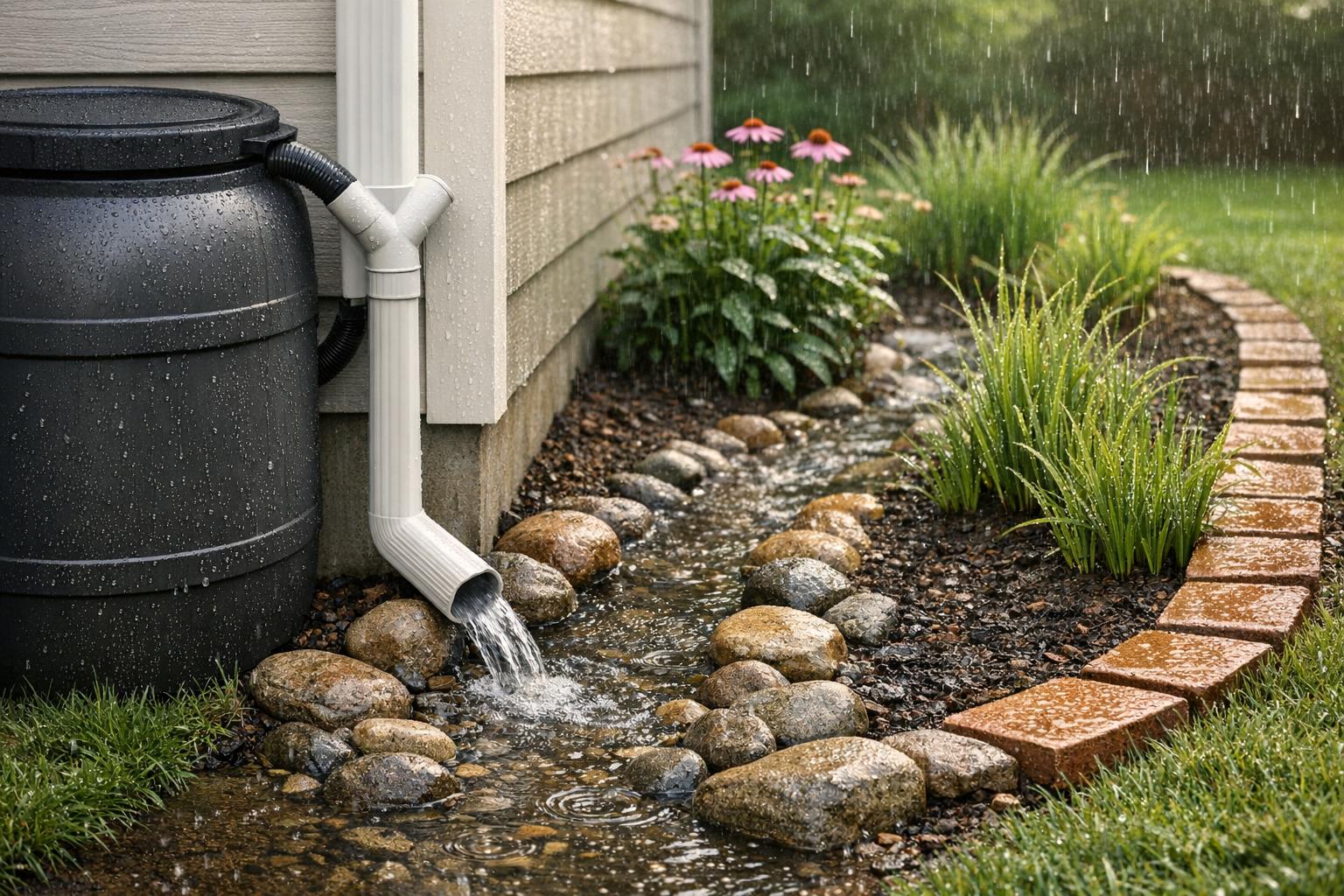
- bhavya gada
- No Comments
Redirecting your downspouts is a simple, cost-effective way to manage stormwater, reduce flooding, and protect your property. Instead of letting rainwater from your roof flow onto hard surfaces or into storm drains, you can channel it to lawns, gardens, or other permeable areas. This allows the water to naturally soak into the ground, filtering out pollutants, recharging groundwater, and easing the strain on drainage systems.
Key Benefits:
- Flood Prevention: Slows runoff and reduces strain on stormwater systems.
- Pollution Reduction: Filters contaminants like oil, nitrogen, and heavy metals through soil.
- Soil Protection: Prevents erosion by dispersing water flow.
- Groundwater Recharge: Helps replenish local water supplies.
How It Works:
- Redirect Water Flow: Use downspout extensions and elbows to route water away from your foundation.
- Discharge to Permeable Areas: Direct water to lawns, rain gardens, or mulched beds.
- Optional Additions: Install splash blocks, rain barrels, or create bioswales for added efficiency.
Costs:
- Basic setups cost as little as $20–$100.
- Advanced systems like rain gardens or drywells range from $500–$3,000+.
Redirecting downspouts is a straightforward DIY project for most homeowners, but professional help may be needed for complex systems. Proper planning ensures water is safely managed without damaging your property or nearby areas.
How Downspout Redirection Works
What Downspout Redirection Is and Why It Matters
Downspout redirection involves rerouting water from downspouts so it flows into permeable areas – like lawns or rain gardens – instead of impervious surfaces like driveways or sewer-bound pipes. This simple adjustment allows stormwater to soak into the ground naturally, rather than overwhelming drainage systems or polluting waterways [4].
"Downspout redirection changes the flow of rooftop stormwater so that it is no longer directed to an impervious surface or piped into a sewer system or body of water." – University of Maryland Extension [4]
Why does this matter? For one, soil and plants act as natural filters, removing pollutants from the water before it reaches local streams [3]. Plus, this process helps replenish groundwater supplies and reduces the amount of water entering storm drains. The result? Less flooding and less erosion along stream banks [5]. And here’s the best part: most homeowners can implement this solution for less than $100. It’s an affordable way to protect local waterways and ease the strain on municipal systems.
Now, let’s look at the key components that make up an effective downspout redirection system.
Main Components of Downspout Redirection Systems
A downspout redirection system is fairly simple but relies on a few essential pieces working together. First, elbows are used to redirect water flow away from the house, and extensions ensure the water is carried at least 5 to 6 feet from the foundation. This prevents issues like basement leaks or structural damage [3][5].
At the discharge point, a splash block spreads the water out to avoid erosion [3]. If you’re disconnecting from an underground pipe, you’ll need a standpipe cap to seal off the old connection and keep out debris [5]. For those looking to conserve water, adding a rain barrel is a great option. A single 50-gallon barrel can collect enough water from just 80 square feet of roof during a 1-inch rainstorm [3].
If you have more space, you can enhance the system with additional features like rain gardens, bioswales, or drywells. Rain gardens are shallow depressions (4 to 12 inches deep) that hold and filter water, while bioswales are vegetated channels designed to slow and clean runoff. Drywells, on the other hand, allow water to gradually seep into the ground. Together, these elements not only slow water flow but also filter out pollutants and promote natural infiltration. What could have been a drainage problem becomes an opportunity to make better use of rainwater.
sbb-itb-843f8be
Research Findings on Downspout Redirection Benefits
Reducing Flooding
Redirecting downspouts to areas that allow water to soak into the ground helps cut down on runoff volume and speed, which lowers the risk of localized flooding during heavy rainstorms [3]. Consider this: a 1,200-square-foot roof can generate hundreds of gallons of water during a single rainstorm [3]. Without proper redirection, all that water flows into streets and sewer systems in a matter of minutes, creating strain on urban infrastructure.
In cities filled with hard, impervious surfaces, nearly all rainwater becomes runoff [2]. By directing water to permeable areas, infiltration into the soil is encouraged, reducing the amount of water rushing into local waterways. This not only prevents sewer systems from becoming overwhelmed but also helps stabilize soil and improves water quality [2][3].
Preventing Erosion and Protecting Soil
Uncontrolled water discharge from downspouts can wreak havoc on landscapes by causing erosion. When water pours directly onto exposed soil, it creates channels and strips away valuable topsoil. Using tools like splash blocks at the downspout outlet can help slow the flow and spread it out, reducing the risk of erosion [2].
Carefully designing the area where water is discharged can further minimize erosion while boosting infiltration [2]. These measures work hand-in-hand with efforts to improve water quality and recharge groundwater supplies.
Improving Groundwater Recharge and Reducing Pollution
Redirecting runoff does more than just curb flooding and erosion – it also plays a key role in improving water quality over time. Soil acts as a natural filter, trapping pollutants and helping recharge groundwater [2]. When stormwater flows over hard surfaces, it picks up a cocktail of contaminants, including nitrogen, phosphorus, heavy metals, oil, pesticides, and even animal waste, before it enters storm drains [1][2].
"By promoting infiltration, the peak discharge decreases and surface water quality improves through the reduction of pollutant loading to receiving water bodies." – Oklahoma State University [2]
Redirecting downspouts changes this dynamic. Instead of polluting streams and rivers, the water seeps into the ground, where soil microbes and plant roots filter out contaminants. This process not only protects local water bodies but also replenishes groundwater levels and helps maintain steady flows in nearby rivers and streams [2][3]. It’s a simple, low-cost, and low-maintenance way to manage stormwater effectively [2].
How to Implement Downspout Redirection Correctly
Assessing Your Property and Planning
Take a close look at how water behaves on your property during rainfall. Notice where water tends to collect, how quickly it absorbs into the ground, and how it moves across your lawn or driveway. Pay attention to the distance between your home and the nearest street gutter, storm drain, or natural water body to gauge how your runoff might be affecting the environment. According to Maryland guidelines, rooftop stormwater should ideally be directed to areas like lawns, rain gardens, or conservation landscapes, which allow water to soak into the ground [4].
Before you start digging, call 811 to locate underground utilities – this step can save you from accidents and costly repairs. Test your soil’s ability to absorb water (known as percolation) to ensure it can handle the redirected flow. Keep key distances in mind: extend downspouts at least 5 feet away from your house to avoid basement leaks [3]. If you have a septic system, it’s crucial to maintain at least 50 feet of distance from septic tanks or drainfields to prevent problems [3]. For areas with vegetation, aim for a gentle slope of about 2% (a 2-inch drop over 8 feet) to encourage water to drain away from your home effectively [3]. Once you’ve mapped out your property’s water flow and requirements, you can move on to choosing the right materials and installation approach.
Recommended Materials and Installation Methods
For a basic setup, you’ll need materials like PVC pipes, downspout extensions, and splash blocks [3]. Extending your downspout with additional piping and placing a splash block at the outlet is a simple yet effective way to divert water away from your foundation while reducing soil erosion. These tools work well for most homes and align with research that shows their effectiveness in minimizing flooding and erosion.
If you’re looking for more advanced solutions, consider options like rain gardens, drywells, bioswales, or underground infiltration trenches. These systems often use perforated pipes and gravel to manage water more efficiently [3]. Rain barrels are another great addition – they capture runoff for later use, like watering your garden, while reducing the amount of water entering storm drains. To give you an idea of their capacity, a 1-inch rainfall on just 80 square feet of roof can fill a standard 50-gallon rain barrel [3].
"Downspout redirection changes the flow of rooftop stormwater so that it is no longer directed to an impervious surface or piped into a sewer system or body of water. Instead, it is directed to a pervious or permeable surface such as a yard, garden, or conservation landscape." – University of Maryland Extension [4]
Mistakes to Avoid
Even with careful planning, some common mistakes can undermine your efforts. Never direct water too close to your foundation, as it could lead to basement flooding or structural issues. Avoid routing downspouts into sanitary sewer systems – this practice is illegal in most Maryland jurisdictions and across the U.S. Similarly, don’t discharge water onto driveways or sidewalks, as this prevents infiltration and may carry pollutants into storm drains.
If you’re using rain barrels or cisterns, make sure to plan for overflow. Once these systems are full, excess water needs a clear and safe path to a permeable area [3]. Regular maintenance is also key – clean your gutters and downspouts at least twice a year to prevent clogs and overflow near your foundation [3]. Finally, check your property to ensure that redirected water doesn’t flow onto neighboring lots or cause damage to adjacent structures. Proper planning and upkeep can help you avoid these pitfalls and keep your water management system running smoothly.
How to Drain Downspout Water Flow Away from a House | This Old House

Costs and Planning Factors for Downspout Redirection
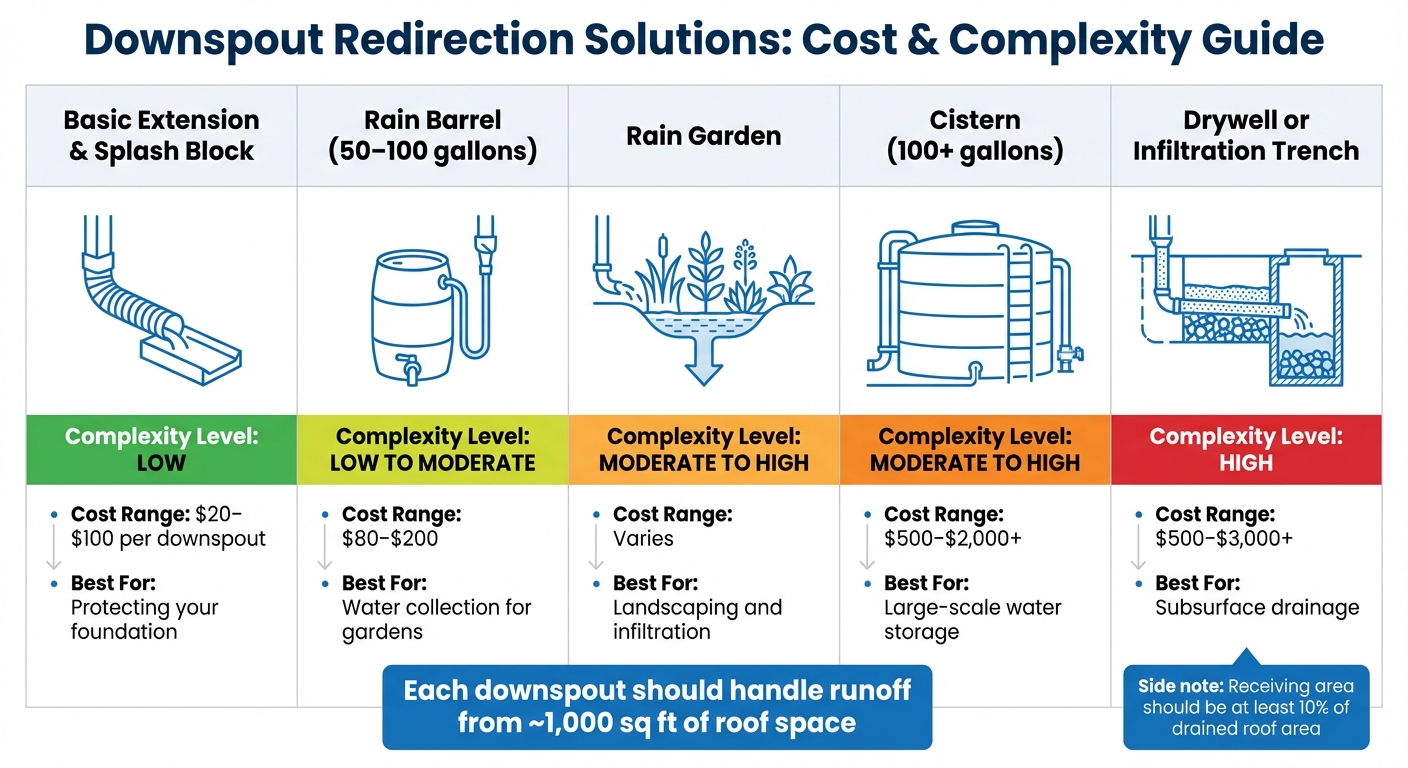
Downspout Redirection Solutions: Costs, Complexity, and Best Uses Comparison
Comparing Costs of Different Solutions
Redirecting downspouts is an affordable and low-maintenance way to manage stormwater runoff [6]. The total cost of your project will depend on whether you stick to a basic setup or choose a more advanced system with features like rain barrels, cisterns, or rain gardens.
For a simple DIY project, you’ll only need a few materials: downspout elbows, extension pipes, sheet metal screws, splash blocks, and possibly test plugs to seal off underground sewer connections [3].
If you’re aiming for something more advanced, costs will increase. Rain barrels with a capacity of 50 to 100 gallons typically range from $80 to $200, while larger cisterns for 100+ gallons can cost anywhere from $500 to over $2,000 [3]. Similarly, subsurface systems like drywells or infiltration trenches – using plastic chambers and perforated pipes – can range from $500 to $3,000, depending on the complexity of the installation [3].
| Solution Type | Typical Cost Range | Best For | Complexity |
|---|---|---|---|
| Basic Extension & Splash Block | ~$20–$100 per downspout | Protecting your foundation | Low |
| Rain Barrel (50–100 gallons) | ~$80–$200 | Water collection for gardens | Low to Moderate |
| Cistern (100+ gallons) | ~$500–$2,000+ | Large-scale water storage | Moderate to High |
| Rain Garden | Varies | Landscaping and infiltration | Moderate to High |
| Drywell or Infiltration Trench | ~$500–$3,000+ | Subsurface drainage | High |
These estimates can help you decide between a DIY approach and hiring a professional. Keep in mind that the area receiving redirected runoff should be at least 10% of the drained roof area [6]. Ideally, each downspout should handle runoff from about 1,000 square feet of roof space [6].
DIY vs. Hiring a Professional
Once you’ve reviewed material costs, it’s time to decide whether to tackle the project yourself or bring in a professional. Straightforward redirection projects – like adding extensions, splash blocks, or basic rain barrels – are great for homeowners with basic tools and a free weekend [3]. If you’re comfortable using a hacksaw and drill, you can extend your downspouts to ensure water is discharged at least 5 feet from your foundation [3].
However, more complex systems often require professional expertise. Projects involving bioretention basins, large-scale grading, permeable pavers, or infiltration trenches can be technically challenging and go beyond the scope of typical DIY work [3]. Professionals bring specialized tools, surveying equipment, and soil knowledge to ensure proper installation and compliance with local regulations.
Before starting any project, make sure your downspouts discharge at least 5 feet from your foundation and 50 feet from septic systems [3]. Always call 811 before digging to locate underground utilities [3]. For projects involving soil percolation tests, precise grading (like creating a 2% slope for vegetated areas), or managing runoff from large impervious surfaces, hiring a professional can help you avoid costly mistakes in the long run.
Pro Landscapes MD: Stormwater Management Services

Drainage Services Offered
Pro Landscapes MD provides expert stormwater management services tailored to the needs of properties across central Maryland, including Howard, Montgomery, Carroll, Frederick, Prince George’s, and Baltimore Counties. Their drainage solutions go beyond basic downspout extensions, offering comprehensive systems designed to address Maryland’s specific soil conditions, weather patterns, and watershed requirements.
Their services include French drains, dry riverbeds to slow runoff and trap sediment, and precision grading to ensure proper water flow. Before any installation, they conduct percolation tests to assess soil infiltration, a critical step given the diverse soil compositions in the region. For properties with limited space, drywells provide an efficient underground storage option. All installations comply with local guidelines, ensuring both functionality and environmental responsibility.
To further enhance stormwater management, Pro Landscapes MD integrates native plants with deep roots and compost-amended soils. These additions improve water infiltration and evapotranspiration while filtering out pollutants like nitrogen, phosphorus, and sediment before they enter nearby waterways.
Their carefully designed systems have received widespread praise from homeowners throughout central Maryland.
Customer Feedback
Homeowners across the region have experienced noticeable improvements thanks to Pro Landscapes MD’s stormwater solutions. Known for their quality workmanship and attention to detail, the company has earned a strong reputation in communities such as Annapolis, Towson, Baltimore, Bethesda, Columbia, Ellicott City, and Gaithersburg. Customers consistently commend their dedication to creating effective and well-executed drainage systems.
Conclusion
Downspout redirection offers a practical way for homeowners to manage stormwater while contributing to environmental health. By channeling rooftop runoff away from impervious surfaces like driveways and toward pervious areas such as gardens or lawns, you can reduce the amount of polluted water entering local storm systems and waterways. Laurie J. Fox, a Research Associate at Virginia Tech, emphasizes this point:
"Rooftop redirection is the simplest stormwater management practice for homeowners, and it addresses the largest impervious surface on most residential properties – the roof" [7].
This simple adjustment provides more than just pollution control. Redirected stormwater filters naturally through the soil, removing contaminants like nitrogen, phosphorus, heavy metals, and sediment before they can reach streams or rivers. It also helps recharge groundwater and supports stable water flow in local ecosystems. For homeowners, the benefits include preventing foundation damage, reducing soil erosion, and promoting healthier landscapes that require less irrigation.
However, Maryland’s varied soil types and weather patterns may require a professional evaluation to ensure proper installation. Mismanaged runoff can lead to property damage or unsafe conditions, especially during heavy rainfalls. Careful planning is critical to avoid these issues.
Pro Landscapes MD specializes in creating custom stormwater solutions for homeowners in Howard, Montgomery, Carroll, Frederick, Prince George’s, and Baltimore Counties. Their team integrates downspout systems with features like French drains, dry riverbeds, and precision grading to meet the unique needs of your property while adhering to local regulations. With their expertise, you can protect your home while helping to maintain cleaner waterways throughout Maryland.
Taking action now safeguards both your property and the environment.
FAQs
Where should my downspouts drain to avoid foundation problems?
To avoid foundation problems and cut down on runoff pollution, make sure your downspouts direct water onto permeable surfaces such as your yard, garden, or a conservation landscape. This allows water to absorb naturally into the ground, reducing the risk of erosion or water pooling around your home.
How can I tell if my soil absorbs redirected runoff?
To determine if your soil can handle redirected runoff, you can start by observing how quickly water soaks into the ground – ideally within 24 to 48 hours. Another option is to conduct a percolation test. If the soil drains effectively and absorbs water without leaving puddles, it’s a good candidate for stormwater infiltration. The key is ensuring the soil is permeable enough to let water seep through rather than collect on the surface.
When should I hire a pro instead of doing it myself?
Hiring a professional for complex stormwater management tasks is a smart move, especially for projects like redirecting downspouts to permeable surfaces or installing proper drainage systems. These experts are well-versed in handling local regulations, which can save you from potential legal headaches. Plus, they know how to prevent property damage while managing runoff, flooding, and erosion effectively.
If you’re not familiar with grading, drainage systems, or the finer details of water management, tackling these tasks on your own can lead to costly mistakes. A professional ensures the job is done right, setting up your landscape for long-term success.
Chat with Us