









- bhavya gada
- No Comments
Anne Arundel County, located in the Chesapeake Bay watershed, has strict stormwater management rules to combat erosion, reduce runoff, and protect water quality. Here’s a quick summary of key regulations and solutions:
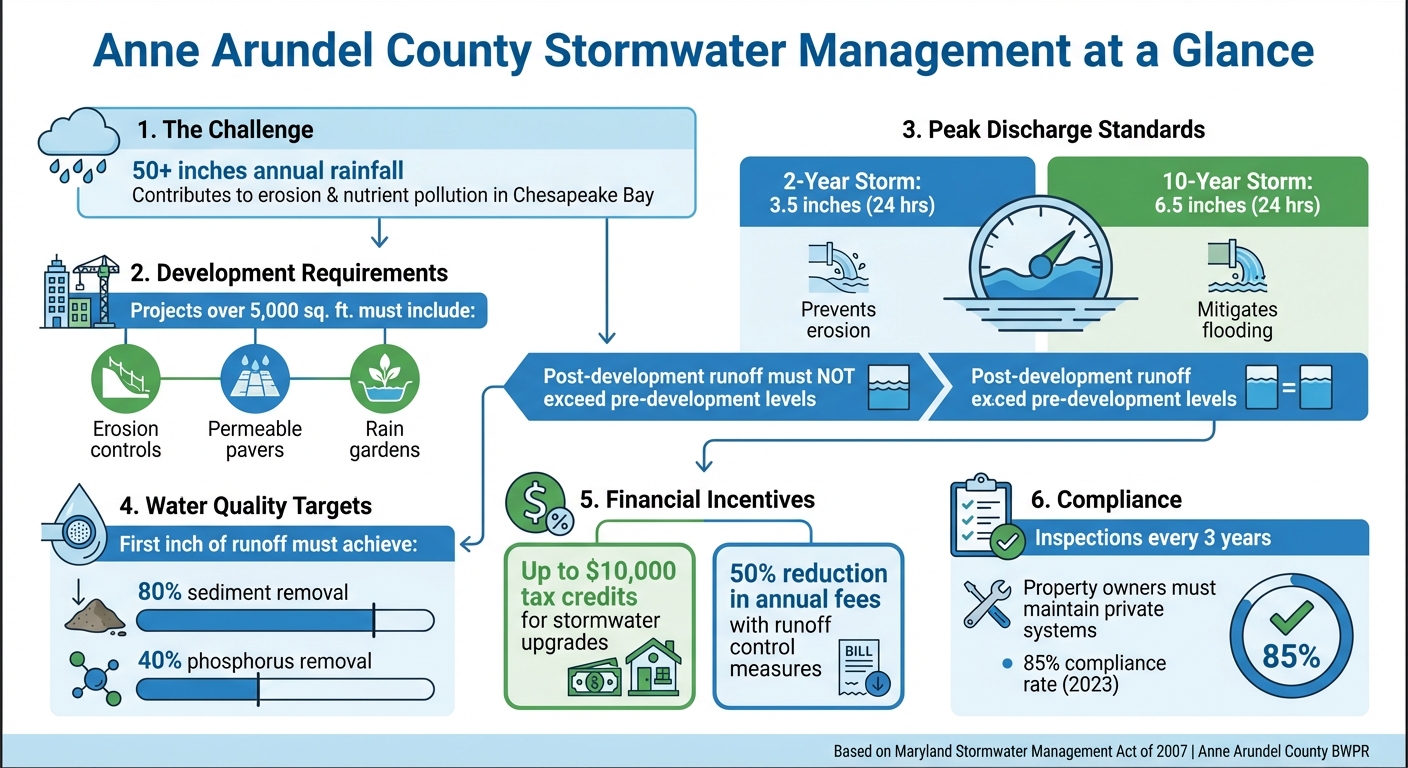
- Rainfall Impact: Over 50 inches of annual rainfall contributes to erosion and nutrient pollution in the Bay.
- Regulations: Developments over 5,000 sq. ft. must include erosion controls like permeable pavers and rain gardens.
- Peak Discharge: Post-development runoff must not exceed pre-development levels for 2-year (3.5 inches) and 10-year (6.5 inches) storms.
- Water Quality: Projects must manage the first inch of runoff, targeting 80% sediment and 40% phosphorus removal.
- Incentives: Property owners can claim up to $10,000 in tax credits for upgrades and reduce fees by 50% with runoff control measures.
- Maintenance: Inspections occur every three years, and owners must maintain private systems to avoid penalties.
For property owners and developers, compliance means detailed planning, effective drainage design, and regular upkeep. Local professionals like Pro Landscapes MD specialize in creating drainage systems that meet these requirements.
Anne Arundel County Stormwater Management Requirements and Incentives
Your Role in Stormwater Management
sbb-itb-843f8be
Key Regulations Overview
Anne Arundel County takes a proactive approach to stormwater management through its Bureau of Watershed Protection and Restoration (BWPR). Recognized for its efforts, the BWPR received the 2025 MS4 Phase I Innovation & Program Management Award for achievements in pollution reduction, stream restoration, and infrastructure repair[1].
The county operates under Maryland’s MS4 Phase I permit, which prioritizes nature-based restoration techniques. This includes transforming dry and detention ponds and creating infiltration basins. These practices align with significant legislation like the Stormwater Management Act of 2007.
The Stormwater Management Act of 2007
The Stormwater Management Act of 2007 established Environmental Site Design (ESD) principles across Maryland. Anne Arundel County embraced these guidelines by requiring development projects to mimic natural water flow. This means focusing on infiltration, evapotranspiration, and rainwater harvesting instead of relying on traditional pipe-and-pond systems.
To encourage these practices, the county offers financial incentives to property owners. The Stormwater Management Property Tax Credit reimburses 10% of material and installation costs for eligible upgrades – such as living roofs, permeable pavers, or sidewalk infiltration planters – up to a maximum of $10,000 over five years[1]. Additionally, property owners can cut their annual Watershed Protection and Restoration Fee (WPRF) by as much as 50% through runoff management measures[1].
County Watershed Protection Plans
While the Act provides a legislative framework, Anne Arundel County’s watershed plans tackle real-world challenges. Stream erosion stands out as the leading source of sediment and phosphorus in local rivers[1]. To combat this, the county prioritizes streambank stabilization and stream restoration to improve water quality and reduce flooding risks.
The BWPR also maintains critical infrastructure, such as inlets, pipes, headwalls, and outfall protections, to handle heavy water flows effectively. For property owners, the "Our wAAter" website offers tools to check their annual WPRF and determine eligibility for fee reductions based on runoff control measures[1].
Stormwater Management Standards
Anne Arundel County has established a detailed framework for managing stormwater, aimed at reducing erosion and maintaining healthier landscapes. These standards are designed to regulate both the volume and quality of stormwater, ensuring local waterways are safeguarded against flooding, pollution, and erosion. Developers and property owners are required to meet specific targets for peak discharge and water quality, aligning their efforts with broader county initiatives for erosion control.
Peak Discharge Control
Development projects must ensure that post-development peak discharge rates do not exceed pre-development levels for both 2-year and 10-year storm events. In Anne Arundel County, the 2-year storm is defined as 3.5 inches of rainfall over 24 hours, while the 10-year storm is 6.5 inches. The 2-year standard focuses on preventing erosion and protecting channels, while the 10-year standard is aimed at mitigating flood risks.
To meet these requirements, developers often use detention ponds, infiltration systems, or other structural best management practices (BMPs). Hydrologic modeling is mandatory for sites smaller than 100 acres, and these calculations must be included in stormwater management plan submissions. The county conducts annual inspections on over 1,200 stormwater BMPs, with an 85% compliance rate for maintenance reported in 2023. By controlling peak discharge, projects establish a foundation for meeting more rigorous water quality goals.
Water Quality Standards
The county places a strong emphasis on managing the first inch of runoff from impervious surfaces, as this runoff typically contains the most pollutants. The water quality volume (WQv) is calculated using the formula: WQv = (0.9 × Impervious Area) + (0.4 × Landscape Area), with a minimum of 0.4 inches required across the entire site. This method captures runoff from the 90th percentile storm event, helping to reduce pollution and limit erosion.
Preferred methods for water quality management include bioretention areas, dry wells, and permeable pavers. However, if site conditions result in soil infiltration rates below 0.52 inches per hour, extended detention systems must be implemented. These systems are designed to hold runoff for 24 to 48 hours, allowing sediments to settle and achieving at least 80% sediment removal and 40% phosphorus removal. All designs must adhere to the Maryland Stormwater Management Act of 2007 and local county regulations.
Design and Maintenance Requirements
Meeting Anne Arundel County’s stormwater standards involves a detailed three-phase design review process and ongoing maintenance responsibilities for property owners. These steps are essential to uphold the county’s rigorous water quality and peak discharge standards.
Effective design and diligent maintenance play a key role in preventing erosion and maintaining water quality over time.
Stormwater Management Plan Submission
Developers must navigate a three-phase submission process for stormwater management plans:
- Concept Plan: This phase outlines the initial site layout and highlights natural resources on the property.
- Site Development Plan: In this step, detailed drawings and preliminary hydrologic calculations are provided.
- Final Stormwater Management Plan: This final phase requires submission of complete construction drawings, performance reports, and maintenance schedules.
Designs are expected to focus on Environmental Site Design (ESD) to the Maximum Extent Practicable (MEP). This means incorporating non-structural features like rain gardens, grass swales, and permeable pavements into the early stages of site planning. The Maryland Department of the Environment explains:
The goal of Maryland’s stormwater management program is to maintain after development, as nearly as possible, the predevelopment runoff characteristics.
Stormwater systems must be equipped to manage specific storm events to minimize downstream flooding risks [2]. Final plans should include detailed construction drawings, a cost estimate, a performance bond, and an operations and maintenance manual. Early soil testing is also critical to determine infiltration rates and to choose appropriate ESD measures. Additionally, designs must ensure permanent and stable access routes for heavy equipment to facilitate future repairs or sediment removal.
Private System Maintenance
Once the design is approved and construction is complete, property owners must sign a Maintenance Agreement with the county, committing to the long-term functionality of the stormwater system. Anne Arundel County performs inspections roughly every three years to confirm that private systems remain structurally sound and continue to function as intended.
Routine maintenance tasks include mowing, debris removal, replacing plants in bioretention cells, and clearing inlets and outlets. Property owners are encouraged to maintain a detailed log of all maintenance activities, noting dates and the work completed. This documentation is essential for demonstrating compliance during county inspections. Failure to fulfill these responsibilities can lead to enforcement actions and fines, as the county remains vigilant in safeguarding water quality and preventing erosion throughout the watershed.
Stormwater Management and Erosion Control Solutions
Stormwater systems play a crucial role in preventing erosion and safeguarding property. By intercepting runoff, these solutions help protect topsoil, landscaping, and ground stability while also reducing pollutants. Without proper management, unchecked runoff can erode soil, damage landscaping, and destabilize the ground. Effective drainage solutions capture and redirect excess water, ensuring it flows safely away from vulnerable areas.
Regular system inspections, especially after severe weather, are key to maintaining functionality. Professional services can provide swift responses during critical weather events, ensuring systems remain effective and reliable [3].
Grading and Sediment Control
Grading is essential for controlling erosion, as it shapes the land to direct water away from structures and maintain stable slopes that resist washouts. In new developments like shopping centers or apartment complexes, incorporating tailored strategies during the planning and construction phases is vital for long-term erosion control. Consulting experts early and conducting post-storm inspections can help detect and repair drainage system damage, preventing further soil instability [3]. These efforts work hand-in-hand with specific drainage practices, which are discussed below.
Drainage Practices
Different drainage methods target specific needs:
- French drains: These use perforated pipes surrounded by gravel to redirect subsurface water effectively.
- Dry riverbeds: Designed with arranged stones and native plants, they channel stormwater naturally.
- Land leveling: This technique prevents water from pooling by creating a smooth, even surface for proper drainage.
Pro Landscapes MD offers a range of drainage solutions, including French drains, dry riverbeds, grading, land leveling, and yard repairs. Serving Anne Arundel County communities like Annapolis, Edgewater, and Severna Park, they also help homeowners establish inspection schedules to meet local government and EPA standards. Regular maintenance of stormwater ponds further enhances their role in sediment control [3].
Pro Landscapes MD: Professional Stormwater Management Services

Pro Landscapes MD offers solutions that align with Anne Arundel County’s strict stormwater management requirements. With a strong grasp of local regulations and practical expertise, they design drainage systems that protect properties from water damage. Their work reflects a balance between regulatory compliance and effective erosion and water control. Here’s a closer look at their custom drainage and environmentally conscious landscaping services.
Custom Drainage Solutions
Pro Landscapes MD tackles stormwater challenges with tailored approaches for every property. Their services include installing drain pipes, French drains, and regrading to direct water away from buildings and sensitive areas. Beyond new installations, they also repair and restore existing drainage systems. To provide comprehensive solutions, they use methods like land leveling and dry riverbed installations, effectively managing both surface and underground water flow.
Eco‑Friendly Landscaping Approach
Sustainability is a core focus for Pro Landscapes MD. They install environmental pavers that support water infiltration while creating durable surfaces for patios, walkways, and driveways. These pavers help reduce runoff and encourage groundwater replenishment. Their landscaping services also incorporate strategic planting designs, enhancing water management while improving the property’s overall appearance.
Clients across central Maryland frequently praise Pro Landscapes MD for their dedication to quality and meticulous attention to detail, solidifying their trusted reputation in the region.
Conclusion
Anne Arundel County’s stormwater management regulations, rooted in the Stormwater Management Act of 2007, focus on protecting water quality and controlling erosion. These rules cover everything from peak discharge control to watershed protection, ensuring that development aligns with environmental preservation. This framework supports practical solutions that safeguard both the land and surrounding communities.
For property owners, compliance means submitting detailed stormwater plans, maintaining systems, and implementing proper grading practices. Thoughtful drainage design and smart landscaping are essential to prevent soil erosion and protect nearby properties from water damage during construction.
Pro Landscapes MD offers the expertise needed to navigate these regulations seamlessly. Their tailored drainage solutions not only meet county requirements but also ensure long-term property protection. With professional design, precise installation, and reliable maintenance, their systems remain effective for years to come.
Homeowners in areas like Annapolis, Edgewater, and Severna Park benefit from solutions that reduce flooding, minimize erosion, and boost curb appeal. Whether you’re embarking on new construction or upgrading your current drainage, partnering with experienced professionals ensures compliance while enhancing your property’s functionality and value.
FAQs
Do I need stormwater controls for a small home project?
Whether or not stormwater controls are needed for a small home project depends on the local rules and the unique features of your property. Be sure to review Anne Arundel County’s stormwater management guidelines to understand the requirements and identify any steps you may need to take to stay compliant.
What stormwater features work if my soil won’t infiltrate well?
If your soil struggles to absorb water properly, you might want to look into adding features like French drains, dry riverbeds, or stormwater management systems. These solutions are designed to effectively redirect water, helping to prevent issues like pooling and erosion.
How can I apply for the tax credit or 50% fee reduction?
The information provided doesn’t detail the process for applying for the tax credit or the 50% fee reduction for stormwater management in Anne Arundel County. For more specific instructions, it’s a good idea to contact the county’s stormwater management department directly or check their official website for updated guidance.
Chat with Us