









- bhavya gada
- No Comments
In Maryland, failing to follow stormwater regulations can lead to daily fines, legal actions, and project delays. These rules are designed to manage rainwater runoff and protect water quality. Violations include poor maintenance of drainage systems, unapproved construction, or non-compliance with permits.
Key points to know:
- Fines: Up to $10,000 per day for violations, with penalties increasing for willful neglect.
- Legal Risks: Permit revocations, lawsuits, and even criminal charges in severe cases.
- Project Delays: Non-compliance can halt construction and lower property values.
To avoid these consequences, property owners should act quickly to address violations, submit compliance plans, and maintain systems regularly. Partnering with experts like Pro Landscapes MD can help ensure compliance and reduce risks.
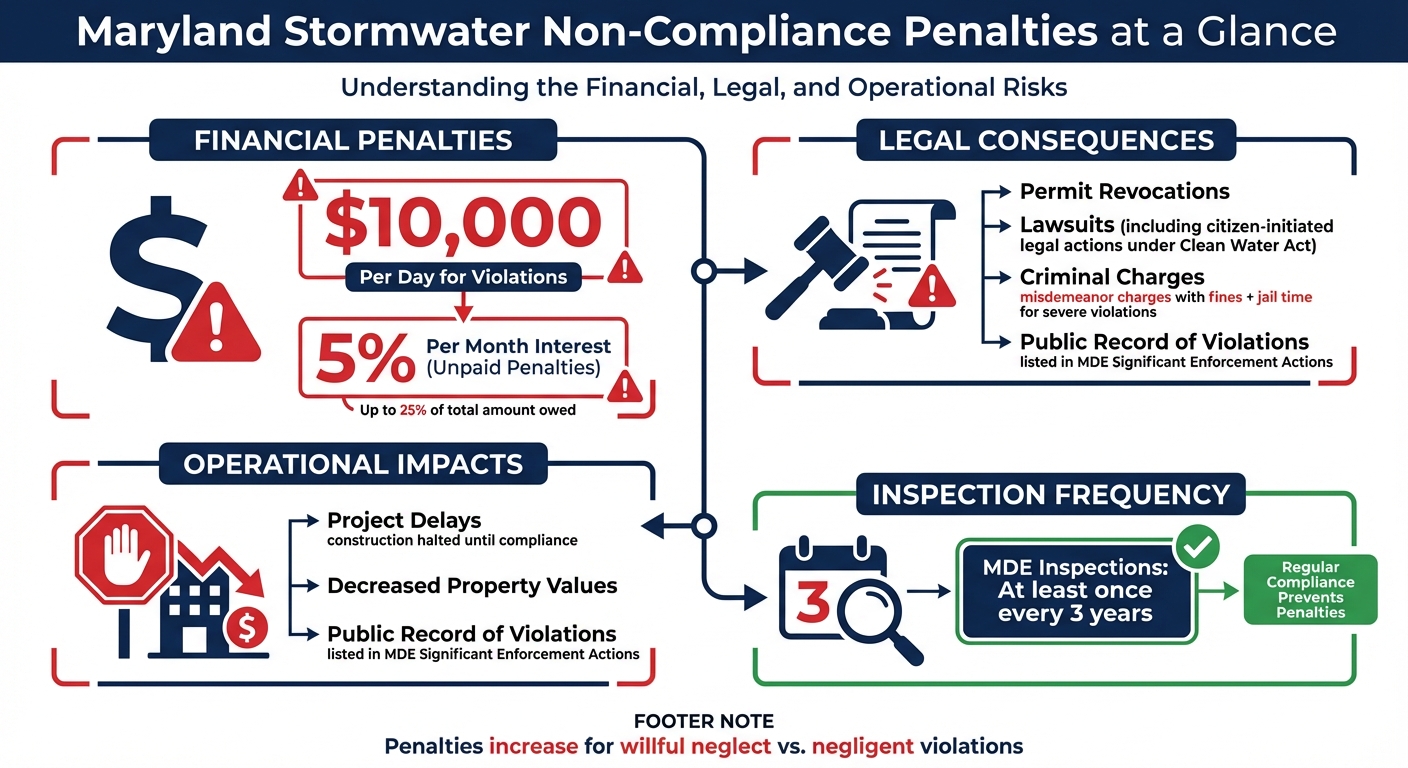
Maryland Stormwater Non-Compliance Penalties and Fines Overview
Penalties for Stormwater Non-Compliance
Understanding the potential consequences of stormwater non-compliance is essential for protecting your projects and avoiding costly setbacks.
Fines and Daily Penalties
In Maryland, stormwater regulations are enforced through administrative, civil, and even criminal actions [2][3]. While the Maryland Department of the Environment (MDE) doesn’t provide a standardized fine schedule for all violations, the financial penalties can quickly add up, with fines often assessed on a daily basis until compliance is restored.
The amount of the fines typically hinges on the nature of the violation. Negligent violations may result in lower penalties, while willful disregard of legal requirements often leads to much steeper fines [2][3]. Beyond the financial burden, these violations can also attract additional legal scrutiny.
Legal and Administrative Actions
The repercussions of non-compliance go beyond just fines. Property owners and contractors may face significant legal challenges. Under the Clean Water Act, citizens have the right to take legal action against non-compliant permits [4].
Courts can also declare stormwater permits "unlawfully vague" or "unenforceable" if they lack clear pollution discharge limits or specific compliance schedules [4]. The Maryland Department of the Environment is required to issue permits with defined limits, and failure to adhere to these can result in permit revocations or even criminal charges for severe violations [4]. These legal complications can disrupt project timelines and create long-term challenges.
Project Delays and Property Value Impact
Non-compliance with stormwater regulations doesn’t just lead to legal and financial issues – it can also bring construction to a grinding halt. Projects may be delayed until compliance is achieved, leading to higher costs and extended timelines. Additionally, unresolved violations can decrease property values due to lingering legal and environmental concerns, making compliance an essential part of protecting your investment.
sbb-itb-843f8be
Solutions to Address Stormwater Non-Compliance
When a stormwater violation occurs, quick action is crucial. It not only halts daily fines but also helps restore compliance with Maryland’s regulations. The law outlines clear steps to address violations, but timing and understanding the process are critical for success.
Corrective Actions and Compliance Plans
If the Maryland Department of the Environment (MDE) deems a stormwater management program "unacceptable" during a review, it has the authority to issue orders for corrective actions [5]. These orders come with strict deadlines, and missing them can lead to further legal and financial penalties.
Property owners should act fast by submitting a detailed compliance plan that directly addresses the deficiencies identified by the MDE. Implementing these corrective measures immediately can help minimize financial risks [6]. Keep in mind that the MDE’s power to enforce corrective actions works alongside other legal penalties, meaning any delay can worsen the situation. Bringing in professionals to assess the site is another way to demonstrate due diligence and potentially reduce penalties.
Professional Site Assessments
Hiring experts to evaluate your property can make a big difference in reducing penalties. Maryland law takes into account whether the violator exercised reasonable care when determining penalties [6]. A professional site assessment provides written documentation of that care.
Experts can also evaluate the available technology and the economic feasibility of addressing the violation – two key factors the state uses to calculate penalties [6]. With civil fines reaching up to $10,000 per day and possible misdemeanor charges carrying similar fines plus jail time, professional guidance is invaluable [6]. These assessments ensure that restoration plans comply with regulations and that all site activities meet approved stormwater management standards.
Regular Maintenance and Monitoring
Taking corrective action is just the start. Long-term compliance requires consistent upkeep. The MDE is required to inspect stormwater management programs and their implementation at least once every three years [5]. Property owners should be ready for these inspections by keeping all systems in proper working order.
Routine monitoring is essential to catch issues early, before they escalate into violations. Regularly inspect drainage systems, erosion controls, and discharge points to ensure everything meets the required standards. Staying proactive not only protects your property but also helps maintain compliance over time.
How Pro Landscapes MD Can Help

Navigating Maryland’s strict stormwater regulations can be tricky, especially with the risk of hefty penalties for non-compliance. Pro Landscapes MD specializes in creating and installing stormwater systems that align with the state’s stringent requirements. Their team knows exactly how the Maryland Department of the Environment assesses properties and what’s needed to pass inspections. By focusing on compliance, they help property owners avoid fines, stay on schedule, and protect their investments.
Stormwater Management Services
Pro Landscapes MD offers a range of services to tackle stormwater compliance. They design effective drainage systems and adjust terrain grading to manage runoff and minimize erosion. Their erosion control methods are designed to stabilize soil and safeguard the surrounding environment. For properties facing persistent drainage issues, they provide solutions like French drains and dry riverbeds, seamlessly integrating water management into the overall landscape design.
Custom Solutions for Maryland Properties
Each county in Maryland has its own specific MS4 permit requirements, as set by the Maryland Department of the Environment. Pro Landscapes MD tailors its strategies to meet these localized regulations. Serving central Maryland’s major counties and communities, they craft solutions that not only comply with local standards but also ensure long-term functionality. This area-specific approach has consistently delivered reliable results for their clients.
Client Testimonials
Clients frequently commend Pro Landscapes MD for their expertise in solving drainage and compliance problems. From small residential repairs to large-scale commercial site grading, their work reflects a commitment to providing stormwater solutions that are both practical and visually pleasing. Their reputation for delivering dependable results has earned them high praise from property owners throughout the region.
Conclusion
Stormwater non-compliance in Maryland comes with serious consequences that extend well beyond financial penalties. The Maryland Department of the Environment keeps a close watch on properties and publicly lists Significant Enforcement Actions against violators. This creates a public record that can harm both reputations and property values [1]. On top of that, penalties can grow quickly, with interest compounding at 5% per month on unpaid balances, up to 25% of the total amount owed [3].
The NPDES MS4 permit program enforces strict compliance standards, underscoring the wide-ranging risks of non-compliance [2]. Property owners who neglect stormwater system maintenance could face more than just fines – they risk project delays, legal complications, and violations that are reported across multiple state agencies, amplifying the consequences [3].
Taking action promptly is essential to reduce liability. Addressing issues voluntarily before investigations begin can help avoid the steepest penalties [3]. Keeping detailed records and conducting regular system checks can also go a long way in preventing enforcement actions [1][2].
Pro Landscapes MD offers the expertise needed to navigate Maryland’s complex stormwater regulations. Their team specializes in ensuring properties remain compliant, with a deep understanding of county-specific MS4 requirements. From designing effective drainage systems to maintaining compliance, Pro Landscapes MD helps property owners avoid costly mistakes and safeguard their investments.
FAQs
What causes an MDE stormwater violation?
An MDE stormwater violation happens when someone fails to comply with permit conditions, allows unauthorized discharges, or doesn’t meet regulatory standards. Consequences can be serious, including fines reaching up to $10,000 or even imprisonment, depending on how severe the violation is.
How can I reduce penalties after a violation notice?
If you’ve received a violation notice, the best way to reduce penalties is to act quickly. Address the issues outlined in the notice and engage with the Maryland Department of the Environment. They often work alongside facilities to help them meet compliance requirements without resorting to formal enforcement actions. By taking initiative and resolving the problems early, you can potentially lower fines and steer clear of legal complications.
What records should I keep for stormwater compliance?
Keeping detailed records is essential when it comes to stormwater management. Make sure to maintain documentation such as enforcement and compliance reports, inspection results, violation notices, corrective actions, and enforcement actions. These records not only help demonstrate compliance but may also be requested during inspections or audits.
Chat with Us