









- bhavya gada
- No Comments
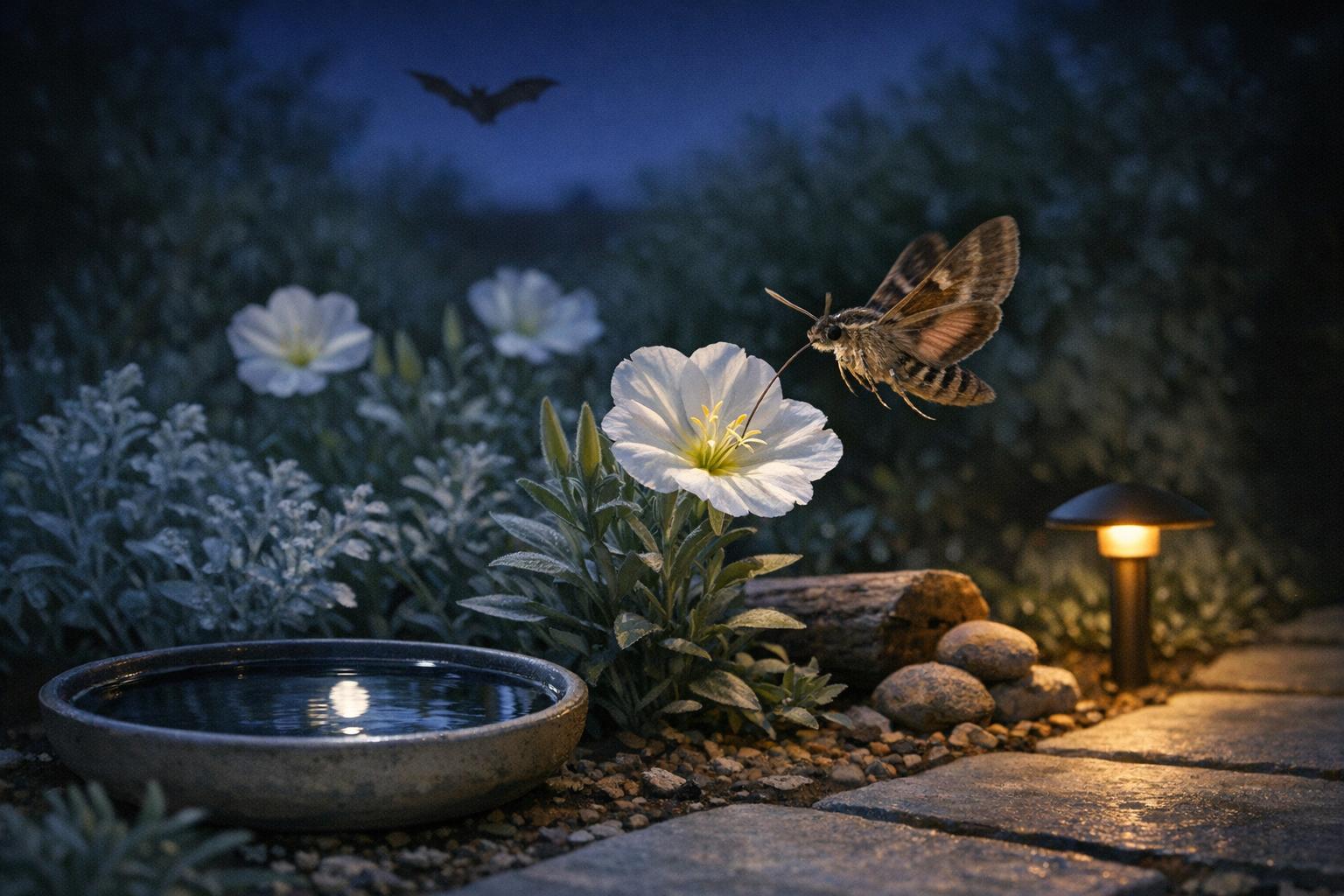
When planning your garden, don’t overlook the nighttime pollinators like moths, bats, and beetles. These creatures play a crucial role in supporting plant life and biodiversity but often go unnoticed. A moon garden is designed specifically for them, featuring pale, nectar-rich flowers that reflect moonlight, evening fragrances, and safe habitats. Here’s how to create one:
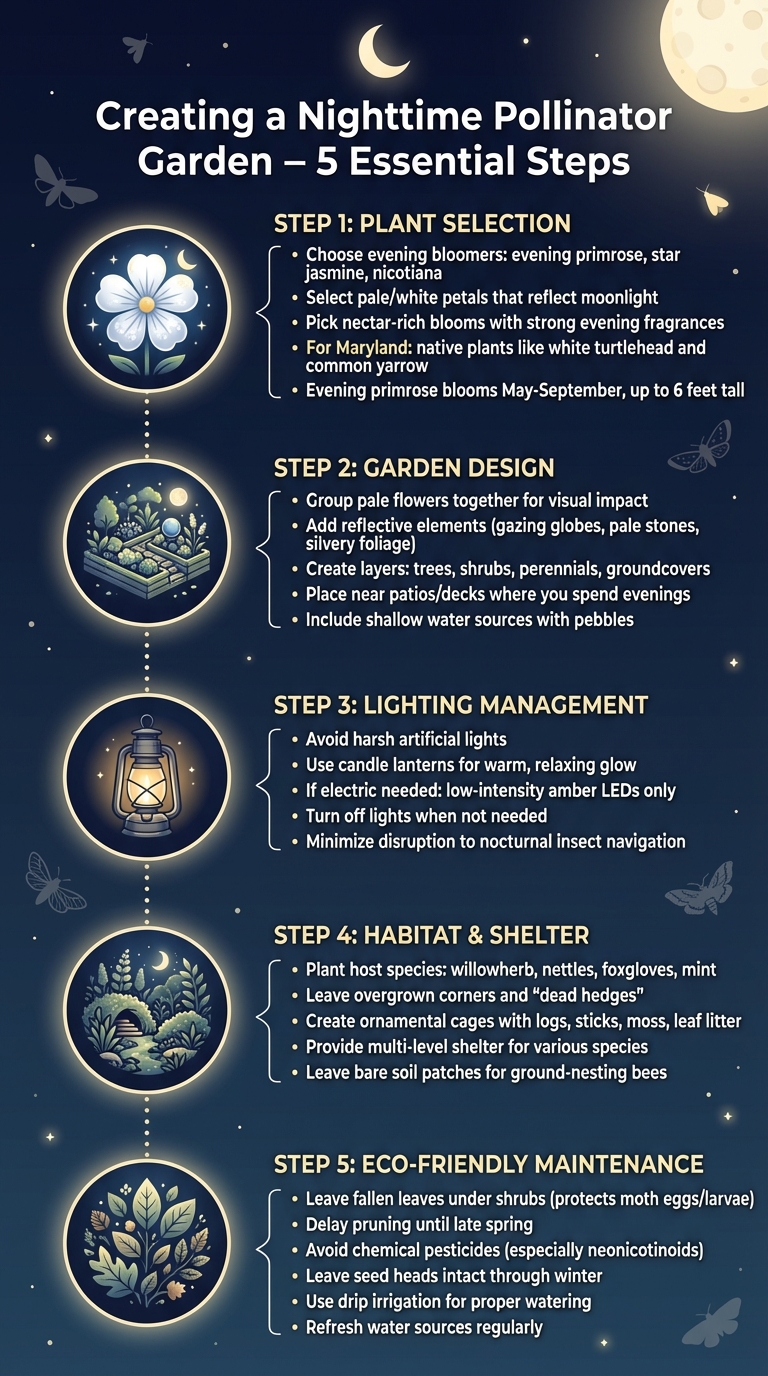
- Plant Selection: Choose evening bloomers like evening primrose, star jasmine, and nicotiana. Native plants such as white turtlehead and common yarrow are especially suited for Maryland gardens.
- Garden Design: Group pale flowers together for visual impact, add reflective elements, and include layers of trees, shrubs, and groundcovers for shelter.
- Lighting: Avoid harsh lights. Opt for candles or warm, low-intensity LEDs to minimize disruption to nocturnal insects.
- Maintenance: Leave fallen leaves, delay pruning, and avoid chemical pesticides to protect pollinators at all life stages.
- Watering: Provide shallow water sources with pebbles for safe access and ensure proper drainage to prevent waterlogging.
5 Essential Steps to Create a Nighttime Pollinator Garden
Guide to Growing a Moon Garden – Class Recording
sbb-itb-843f8be
Selecting Plants for Nighttime Pollinators
Creating a moon garden that supports nocturnal pollinators starts with picking the right plants. These choices can make all the difference in attracting and sustaining nighttime visitors like moths and other insects.
What Makes a Good Night-Blooming Plant
Certain features make night-blooming plants especially appealing to nocturnal pollinators. The key traits to look for include pale or white petals that reflect moonlight, strong evening fragrances, and nectar-rich blooms. Together, these traits act as both visual and aromatic signals, guiding pollinators to their food sources.
Many of these plants release powerful scents – sweet, spicy, or musky – once the sun sets, creating a scent trail that pollinators can detect from far away. Flowers like the common evening primrose even have ultraviolet nectar guide patterns. While invisible to the human eye, these UV markings are like landing strips for moths and bees, leading them straight to the nectar [3].
Best Plants for Nighttime Pollinator Gardens
For Maryland gardens, evening primrose (Oenothera species) is a standout choice. The common evening primrose (Oenothera biennis) blooms from May to September, reaching heights of up to 6 feet [3]. Beyond its blooms, it serves as a larval host for moths and offers seeds that attract birds like American goldfinches, mourning doves, and Northern bobwhites [3].
Other excellent options include star jasmine (Trachelospermum jasminoides) with its highly fragrant white flowers, and nicotiana (Nicotiana spp.), which is known for its strong evening scent [1]. If your garden includes a water feature, consider American white waterlily (Nymphaea odorata), which produces fragrant, pale blooms [2]. Grouping these night-scented plants together helps conserve pollinators’ energy by reducing the distance they need to travel [1].
Native Plants for Central Maryland Gardens
For gardeners in Maryland’s Piedmont plateau, native plants are an excellent choice. Once established, they require less water and fertilizer, making them ideal for low-maintenance moon gardens [4]. These plants also play a vital role in supporting specialist insects during critical stages of their life cycles.
The common evening primrose is especially well-suited to this region, with confirmed occurrences in counties like Anne Arundel, Baltimore, Howard, Montgomery, and Prince George’s [3]. Its seeds can remain viable in the soil for over 70 years, ensuring a long-lasting presence in your garden [3].
Other native plants to consider include common yarrow (Achillea millefolium), widowsfrill (Silene stellata), and white turtlehead (Chelone glabra). White turtlehead blooms from August to October, offering much-needed nectar when other food sources are scarce [2]. Be sure to select plants that align with your garden’s specific conditions [4].
With these thoughtful plant selections, your garden can become a haven for nighttime pollinators, ensuring their survival while enhancing your outdoor space.
Designing Your Nighttime Pollinator Garden
Moon Garden Layout and Design
The way you design and position your moon garden can make a big difference in how well it works and how much you enjoy it. According to the U.S. Fish & Wildlife Service, "Ideally, a moon garden will be established in an area of the garden where people congregate and can enjoy the ghostly white and shimmery silver-colored blossoms and plants" [5]. With this in mind, place your garden near a patio, deck, or any outdoor seating area where you’ll naturally spend your evenings.
When arranging plants, group flowers of the same color together to create a bold visual impact. Mixing too many shades, such as bright whites with cream tones, can dilute the effect under moonlight. To enhance the glow of moonlight, add reflective elements like gazing globes, pale stones, or plants with silvery foliage. These reflective accents not only improve visibility but also help attract nocturnal pollinators. For example, "ever-silver" native grasses can replace traditional evergreens, while plants like agave or yucca add dramatic, shadowy shapes to your garden. A small water feature, even something as simple as a rustic bowl, can provide hydration for wildlife and attract insects that bats feed on.
In addition to creating an eye-catching design, make sure your garden also supports the needs of nocturnal pollinators by incorporating essential shelter elements.
Adding Shelter and Habitat Elements
To truly support nighttime pollinators, your garden needs more than nectar-producing plants. Shelter is vital. As garden designer Sharon Hockenhull puts it, "Shelter is another key ingredient to sustain moths in your garden. Hedges, grasses, or ferns offer them a safe place to hide from predators" [1]. By layering your garden with trees, shrubs, perennials, and groundcovers, you can create a multi-level habitat that serves a variety of species.
Plant host species such as willowherb for moths or nettles, foxgloves, and mint for caterpillars to support their entire life cycles. Letting parts of your garden grow wild – like leaving overgrown corners or creating "dead hedges" from pruned branches and leaves – can provide critical hiding spots. Hockenhull also suggests blending functional habitats into your design by creating ornamental features like cages filled with logs, sticks, moss, and leaf litter. These not only look natural but also give moths and other insects safe places to rest. Instead of clearing away fallen leaves in the fall, consider piling them under shrubs and hedges. This natural mulch can protect moth eggs, pupae, and larvae, allowing them to develop safely.
Managing Artificial Light in Your Garden
Artificial lighting can interfere with the natural behavior of nocturnal insects, disrupting their mating and navigation. To reduce this impact, limit the use of artificial lights in your garden. Sharon Hockenhull recommends, "Simple lanterns with candle light is one of my favorite ways to light a garden as it creates a much more relaxing atmosphere" [1]. Lanterns with candles offer a warm and inviting glow without disturbing pollinators. If you prefer electric lighting, choose low-intensity amber LEDs instead of harsh white or blue-toned lights, and make it a habit to turn them off when they’re not needed. This way, you can enjoy your garden’s beauty without compromising its role as a haven for nighttime pollinators.
Maintaining Your Nighttime Pollinator Garden
Seasonal Maintenance Tasks
Caring for a nighttime pollinator garden changes with the seasons, and sometimes, less effort can mean better results. In spring, hold off on pruning old stems and twigs until late spring. This delay helps protect nesting spots for solitary bees and other insects [7]. The U.S. Fish & Wildlife Service puts it best:
"In readying gardens and yards for winter, keep in mind that by doing less you may be doing more for pollinators" [7].
During summer, ensure that your garden provides a continuous food supply. Choose plants that bloom in succession from spring to fall, giving nocturnal pollinators a steady source of nourishment [6]. When fall rolls around, consider leaving fallen leaves under trees and shrubs. Those leaves provide vital nutrients, insulation, and shelter for insects preparing to overwinter [7]. In winter, resist the urge to clear out seed heads or dead logs. These natural elements create burrowing and nesting spaces for ground-nesting pollinators like bumblebees. Bare, mulch-free patches of soil are another great way to support these species [7].
Eco-Friendly Pest Control Methods
Natural pest control is a key part of maintaining a healthy nighttime garden. Chemical pesticides, especially those containing neonicotinoids, can be harmful to the pollinators you want to attract. Amber Aguilera of the U.S. Fish and Wildlife Service explains:
"Neonicotinoids can be found in garden pest control sprays. While they are designed to target specific pests, they also can also be lethal to pollinators" [8].
Instead of chemicals, consider biological solutions. Introducing natural predators like ladybugs and praying mantises can help manage pests such as aphids and whiteflies [8]. Companion planting is another great option – plants like marigolds, onions, and garlic can deter pests, while lavender and basil attract helpful insects [8]. For more immediate problems, hand-pick larger pests like tomato hornworms or use a strong spray of water to dislodge aphids [10]. Physical barriers like floating row covers can also prevent insects from laying eggs on young plants [10]. If you absolutely must use pesticides, apply them early in the morning or late in the evening when pollinators are less active. Granular formulas are a better choice than liquid sprays because they leave less residue on plant surfaces [9].
Proper Watering and Drainage
Keeping your garden hydrated is just as important as pest control and seasonal care. Night-blooming plants need consistent moisture but can suffer if their roots sit in water for too long. To avoid waterlogging, use drip irrigation or soaker hoses to deliver water directly to the roots [6]. For pollinators, set up a shallow water source, like a dish with pebbles, so they can drink safely. Be sure to refresh the water regularly to prevent mosquitoes from breeding [6].
If your garden struggles with poor drainage, it’s worth seeking professional help. Poorly drained soil can suffocate plant roots by cutting off their oxygen supply. For properties in central Maryland, Pro Landscapes MD offers solutions like French drains, dry riverbeds, grading, and stormwater management. Fixing drainage issues not only helps your plants thrive but also ensures your garden remains a welcoming habitat for nocturnal pollinators.
Conclusion
Main Points to Remember
A nighttime pollinator garden does more than enhance your yard’s appearance – it plays a key role in supporting local biodiversity.
To get started, focus on choosing the right plants. Look for night-scented options like star jasmine, evening primrose, and nicotiana. Pale or white flowers are also great choices since they reflect moonlight, helping nocturnal insects find their way to food sources. If you’re in Central Maryland, prioritize native plants that are naturally suited to the area and provide the resources local pollinators need to thrive[1][6].
The garden’s design matters just as much as the plant selection. Incorporate layers – trees, shrubs, and perennials – to create habitats at different heights. Add shallow water sources with pebbles for safe drinking spots, and leave some areas "messy" with fallen leaves or bare soil to support ground-nesting pollinators[1][6]. Minimize artificial lighting, and when necessary, stick to warm-toned, low-voltage options to reduce disruption to nocturnal insects[1].
When it comes to maintenance, think about the pollinators first. Steer clear of chemical pesticides, as they can harm the very insects you’re trying to attract. Let fallen leaves act as natural mulch, avoid pruning too early in the spring, and leave seed heads intact through the winter. These small actions help protect hibernating larvae and provide nesting spaces[1][7]. Remember, pollinators are essential – they sustain most flowering plants and contribute to a large share of food crops[6].
If you’re unsure about implementing these steps, professional help can ensure your garden thrives.
Professional Help from Pro Landscapes MD

While many aspects of creating a nighttime pollinator garden can be tackled on your own, bringing in professionals can elevate the results, especially for complex tasks like native plant selection, garden design, and drainage solutions. Pro Landscapes MD is a trusted name in eco-friendly landscaping across central Maryland, serving areas like Howard County, Montgomery County, and Baltimore County.
Their team of horticulture experts knows which native Maryland plants will thrive in local soil and how to design multi-layered habitats that support pollinators at every stage of their life cycles. They also specialize in drainage solutions, offering services like French drains, dry riverbeds, grading, and stormwater management to prevent waterlogged soil that could harm plants and ground-nesting insects. Additionally, they can install shallow water features and design low-impact lighting systems to keep your garden pollinator-friendly.
From Ellicott City to Bethesda, Columbia to Silver Spring, Pro Landscapes MD ensures your garden remains a thriving, eco-conscious haven for pollinators and a beautiful addition to your community.
FAQs
How can I tell if my garden is attracting nighttime pollinators?
To see if your garden is attracting nighttime pollinators, take a closer look in the evening. Moths and other nocturnal insects are often drawn to flowers that are fragrant, pale-colored, or tubular in shape – especially those that bloom or release their scent at night.
Another way to confirm their activity is by checking for signs of pollination. Look for seed pods or fruit beginning to develop, as these are clear indicators that nocturnal pollinators are doing their job.
What are the best night-blooming plants for shade or part shade?
Night-blooming plants that do well in shade or partial shade include a mix of perennials, shrubs, and vines that have adapted to lower light levels. These plants not only thrive in less sunny spots but also draw in nocturnal pollinators such as moths, adding life and activity to your garden after the sun goes down.
How can I prevent outdoor lights from harming moths and other night insects?
To help safeguard moths and other nocturnal insects, consider dimming outdoor lights and opting for bulbs that emit warmer tones like red or amber. Steer clear of bright, upward-facing lights, and include some dark, unlit spaces in your garden design. These simple actions can lessen disturbances to their natural behaviors and lower their chances of falling prey to predators.
Chat with Us