









- bhavya gada
- No Comments
Building an outdoor kitchen in Maryland is a long-term investment, but its lifespan depends heavily on the materials you choose, the installation quality, and regular maintenance. Maryland’s climate – with hot summers, harsh winters, and frequent rain – can cause materials like concrete, stone, and metal to degrade over time. Here’s what you need to know to make your outdoor kitchen last:
- Material Lifespan: Conventional concrete lasts 15–25 years, while Ultra-High-Performance Concrete (UHPC) can exceed 100 years. Marine-grade HDPE cabinets withstand extreme conditions, including hurricane-force winds.
- Weather Challenges: Freeze-thaw cycles, UV exposure, and water damage are the biggest threats. Proper sealing, drainage, and UV-resistant materials are essential.
- Installation Matters: A stable foundation and professional installation reduce risks like shifting, cracking, and water pooling.
- Maintenance Tips: Seal stone and concrete every 1–3 years, clean metal surfaces to prevent rust, and inspect plumbing and appliances regularly.
Concrete Outdoor Kitchen Countertops | Pros and Cons Before You Purchase
sbb-itb-843f8be
Factors That Affect Material Lifespan
How long your outdoor kitchen lasts – whether it’s 15 years or over a century – depends on three key factors: the climate it endures, the materials you choose, and the care it receives. By understanding these elements, you can make choices that protect your investment and extend its lifespan.
Climate and Weather Conditions
Maryland’s weather can pose serious challenges for outdoor kitchens. Freeze–thaw cycles are a major issue. Water can seep into porous materials like unsealed stone or standard concrete. When temperatures drop below 32°F, the water freezes and expands, causing cracks and structural damage. This cycle can occur repeatedly throughout Maryland’s winters.
Water damage isn’t limited to freezing conditions. James Moylan from Design Builders MD highlights the importance of proper installation, which includes sloping surfaces 3/16th of an inch to direct water away from seams and joints [1]. Without this slope, water can pool, penetrate joints, and accelerate material breakdown.
Maryland’s hot summers also bring UV exposure, leading to temperature stress. For example, indoor quartz countertops can yellow or fade as their resins break down under direct sunlight [3]. In coastal areas like the Chesapeake Bay, salt spray adds another layer of risk, causing corrosion, pitting, and staining on metal components [3].
Material Quality and Selection
The durability of your outdoor kitchen largely depends on the materials you select. For instance, Ultra-High-Performance Concrete (UHPC) has about 10 times the compressive strength of standard concrete, lasting over 100 years compared to the 15–25 years typical of conventional options [2]. Similarly, 304-grade stainless steel can handle temperatures up to 2,500°F, while aluminum begins softening at just 400°F [2].
Choosing materials suited to your environment is crucial. In coastal areas, 316 stainless steel – with its added molybdenum content – offers better resistance to salt corrosion than 304-grade steel [2]. For Maryland’s freeze–thaw cycles, premium porcelain pavers designed to endure temperatures as low as -60°F can prevent cracking [2]. Additionally, marine-grade HDPE cabinets are built to withstand extreme conditions, including hurricane winds over 150 mph, without damage [2].
Ultimately, even the best materials require proper installation and consistent care to maximize their lifespan.
Installation and Maintenance Practices
Premium materials can fail without a properly engineered foundation. A solid base prevents shifting and cracking, both of which are common in Maryland’s challenging climate [1]. Professional installation also involves key details like adding heat shields and insulating panels around appliances to protect countertops and adhesives from radiant heat [3].
Maintenance is equally important. Natural stone and concrete surfaces should be sealed every 1–3 years to block moisture and prevent staining from environmental exposure [2]. Even stainless steel requires regular cleaning to avoid salt-induced pitting. Following manufacturer guidelines for installation and upkeep is essential – not only to extend the life of your materials but also to keep warranties intact [1].
How Long Different Materials Last

Outdoor Kitchen Material Lifespan Comparison Chart
When choosing materials for an outdoor kitchen, understanding their durability is key. Here’s a closer look at how long some popular options typically last.
Stainless Steel for Frames and Appliances
Stainless steel is a standout material for outdoor kitchens because it holds up well against UV rays, rust, and discoloration [6]. It’s built to handle rain, snow, and extreme temperatures [5][6]. That said, while stainless steel is rust-resistant, it’s not completely immune to rust. In humid or coastal areas, corrosion can occur if the material isn’t properly cared for [4][7]. Another thing to keep in mind is that stainless steel can get very hot when exposed to direct sunlight. Its longevity ultimately depends on the material’s quality and how well it’s maintained. Beyond metal, natural materials are also worth considering for countertops.
Natural Stone Countertops
Natural stone is a favorite for outdoor countertops, and granite leads the pack. Granite handles extreme heat, direct sunlight, and minor scratches without losing its color. To prevent staining from oils, wine, or other substances, sealing it every 2–3 years is essential. Quartzite, with its marble-like look, offers impressive strength and UV resistance, though it requires annual resealing to stay protected. Soapstone, on the other hand, is naturally dense and non-porous, making it resistant to chemicals, heat, and bacteria – no sealers needed.
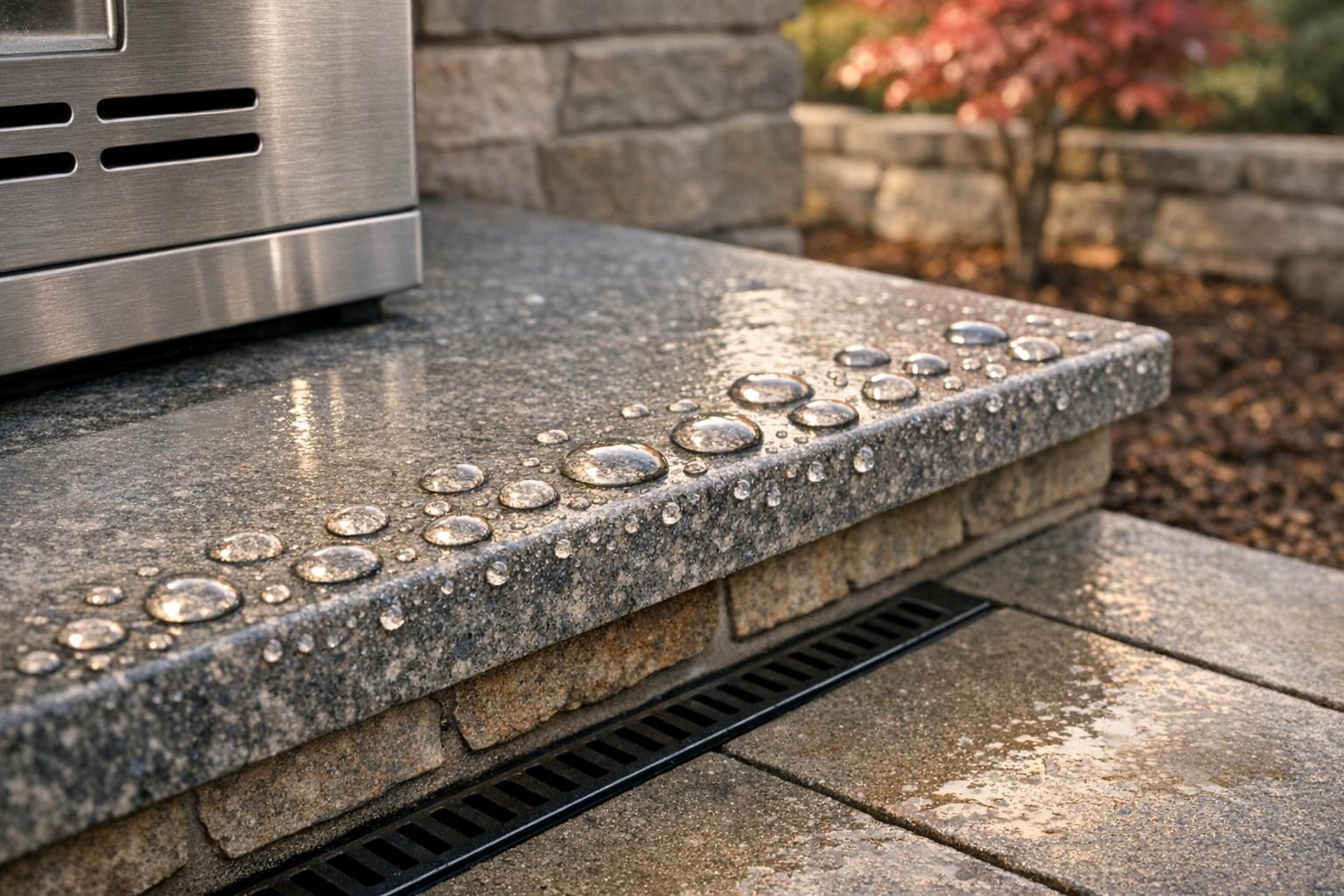
Here’s a quick tip: To check if your stone needs resealing, drop some water on the surface. If the stone darkens quickly, it’s time to reapply the sealer. For areas that get strong sunlight, a honed finish can reduce glare, while a polished finish simplifies cleaning after meal prep.
Wood and Polymer Cabinets
Teak is a natural choice for outdoor cabinets, thanks to its resistance to moisture, decay, and insects [2]. However, it does need periodic resealing to maintain its water resistance and prevent warping. High-Density Polyethylene (HDPE), a marine-grade polymer, is another excellent option. Its color runs through the entire material, making it highly resistant to water and UV fading [2]. HDPE cabinets are incredibly durable, even standing up to hurricane-force winds over 150 mph [2].
"We’ve watched HDPE cabinets survive hurricane winds exceeding 150 mph without damage."
Concrete, Brick, and Masonry
Cinder block frames and standard concrete can last 15–25 years in Maryland’s climate, while high-performance concrete frames can reach up to 100 years [2]. The key to their durability lies in their compressive strength and resistance to freeze-thaw cycles. Porous materials like unsealed concrete or brick can absorb water, which may freeze and cause cracking. To avoid this, ensure proper drainage by using a compacted gravel base for pavers and brickwork. Additionally, constructing surfaces with a slight pitch (around 3/16 inch) helps direct water away from the structure [1]. Knowing these lifespans can help you plan the right maintenance routine.
How to Extend Material Lifespan
Protecting your outdoor kitchen from Maryland’s challenging weather – like moisture and freeze-thaw cycles – requires a mix of smart sealing, regular inspections, and seasonal prep. These steps can add years – or even decades – to your materials’ durability.
Sealing and Protecting Surfaces
Water is the biggest enemy of outdoor kitchens. When it seeps into porous materials like granite, concrete, or wood, freezing temperatures can cause it to expand, leading to cracks and surface damage [3]. The best defense? Proper sealing. But not all sealers are created equal.
For materials like natural stone and concrete, opt for a penetrating sealer. Unlike surface coatings, these soak into the material to provide deeper protection [3]. Wondering if your sealer needs a refresh? Try the water test: drop a bit of water on the stone. If it darkens quickly, it’s time to reapply [3].
How often should you seal?
- Granite countertops: Every 2–3 years [2]
- Quartzite: Annually [2]
- Natural stone flooring (high-traffic areas): Every 1–2 years [2]
- Teak cabinets: Periodically, to prevent warping [2]
Even stainless steel benefits from extra care. While 304 and 316 stainless steel resist corrosion, powder coating adds an extra layer of protection, shielding the metal from the elements and simplifying cleaning [2]. Be sure to focus on seams, joints, and crevices – these spots are most vulnerable to water, wind, and debris [1].
Routine sealing is just one part of the equation. Regular inspections and timely repairs are just as important to keep everything in top shape.
Regular Inspections and Repairs
Spotting small problems early can save you from costly repairs later. A quarterly inspection schedule works well for checking plumbing connections, electrical fittings, and surface conditions [5]. Watch for rust on metal parts, cracks in stone or concrete, and loose fittings that could worsen with time.
Clean grills and surfaces after every use to avoid grease buildup and rust [8]. For stainless steel, use warm water and mild detergent, then dry immediately to prevent water spots [8].
"Apply a weatherproof sealant to your countertops annually to protect against stains, moisture and UV rays."
Appliances like grills and refrigerators also need attention. Schedule a professional tune-up at least once a year to keep them running efficiently [5]. Seal any gaps in cabinetry or masonry as soon as you notice them – this helps block insects and rodents [5]. If you’re not using appliances for a while, disconnect gas and electrical connections to minimize wear and tear [8].
Preparing for Maryland Winters
Maryland winters call for extra precautions. Before freezing temperatures hit, drain all water lines and shut off the water supply to avoid pipe bursts [5]. Even a small amount of trapped water can freeze and expand, causing serious damage.
Drainage is another critical factor. Your outdoor kitchen should be designed to direct water away from the structure [1]. For natural stone flooring, a compacted gravel base is ideal – it helps with drainage and reduces the risk of freeze-thaw cracking [2].
When winter arrives, cover all appliances and furniture with high-quality, UV-resistant, waterproof covers [8]. Before covering metal components, clean them to remove any debris or soot that might trap moisture. For natural stone countertops, double-check that they’ve been sealed properly – unsealed stone can absorb water, which may freeze and crack the surface [3].
| Maintenance Task | Frequency | Winter Priority |
|---|---|---|
| Drain water lines | Pre-winter (yearly) | Critical |
| Clean and cover appliances | Pre-winter | High |
| Seal natural stone | Every 1–3 years | High |
| Inspect plumbing/electrical | Quarterly | Moderate |
| Clean metal surfaces | Before covering | Moderate |
One last tip: Maryland’s freeze-thaw cycles can cause the ground to shift, even under the best materials. If you’re planning a new outdoor kitchen or a renovation, make sure the base is properly prepared to prevent cracking down the line [1].
Pro Landscapes MD: Your Partner in Durable Outdoor Kitchens

Creating an outdoor kitchen that can withstand Maryland’s unpredictable weather takes more than just high-quality materials – it requires a deep understanding of the region’s climate and expert construction techniques. Pro Landscapes MD brings this expertise to every project, serving communities across central Maryland, including Howard County and Baltimore County.
The process starts with a solid foundation. By building on a reinforced base, they minimize the risk of cracking and structural issues. They also incorporate proper drainage systems throughout the construction, ensuring water is directed away from seams and adhesion points instead of pooling where it could cause damage.
Material selection plays a key role as well. Pro Landscapes MD uses materials specifically designed to endure Maryland’s intense UV exposure, snow, extreme heat, and freeze-thaw cycles [1][2]. They include cutting-edge options like Ultra-High-Performance Concrete (UHPC), which boasts 10 times the compressive strength of standard concrete and a lifespan exceeding 100 years [2]. Marine-grade metals are another go-to choice, offering exceptional resistance to corrosion, even in the harshest conditions.
To ensure durability and protect your investment, every installation adheres to manufacturer guidelines. This not only upholds warranties but also guarantees long-term performance [1]. Beyond outdoor kitchens, their expertise extends to patios, walkways, retaining walls, and comprehensive drainage solutions. These elements are designed to function together as part of a cohesive outdoor living system, aligning with best practices for extending the lifespan of outdoor kitchens.
Serving areas like Ellicott City, Bethesda, Columbia, Towson, and other parts of Montgomery, Howard, and Baltimore Counties, Pro Landscapes MD transforms backyards into stunning, functional spaces. Their local knowledge and dedication to structural integrity ensure your outdoor kitchen is built to last for decades, making them a trusted partner for your outdoor living needs.
Conclusion
This guide has explored how factors like climate, material choices, and proper installation directly impact the lifespan of your outdoor kitchen. To ensure durability, it’s crucial to choose resilient materials, invest in professional installation with a stable foundation, and commit to regular upkeep. Remember, water is the biggest challenge for any outdoor kitchen, so effective drainage is a must[1].
When selecting materials, focus on those with UV resistance, freeze–thaw durability, and non-porous surfaces. While porous materials like granite and concrete need annual sealing to protect against stains from oils and leaf tannins, options such as porcelain or Dekton provide nearly maintenance-free performance[9]. Make it a habit to inspect stone surfaces for signs of moisture absorption[3].
Professional installation not only protects your investment but also ensures compliance with manufacturer guidelines, keeping warranties intact and avoiding structural issues[1]. Skilled installers take care of essential details, like reinforcing bases, directing water flow, and managing heat zones around appliances to enhance longevity. For homeowners in Maryland, these practices can turn an outdoor kitchen into a lasting feature that stands up to the region’s unique weather challenges.
Maryland’s mix of UV exposure, freeze–thaw cycles, and unpredictable weather demands expertise. Collaborating with professionals like Pro Landscapes MD ensures your outdoor kitchen is designed to endure. Serving Howard, Montgomery, and Baltimore Counties, Pro Landscapes MD blends climate-specific material expertise with precise construction techniques to create outdoor spaces that thrive in any condition.
FAQs
Which materials handle Maryland’s freeze-thaw cycles best?
Natural stone and granite are excellent choices for handling Maryland’s freeze-thaw cycles. With proper care, these materials offer impressive durability and resistance to weather, making them perfect for outdoor kitchens and similar uses.
How do I choose between 304 and 316 stainless steel?
The key distinction between 304 and 316 stainless steel lies in their ability to resist corrosion. Grade 316 contains molybdenum, which provides extra protection against rust and salt exposure. This makes it a better choice for environments with high humidity or near the coast.
While 304 stainless steel is strong and offers good general corrosion resistance, 316 is better suited for outdoor kitchens in Maryland. Its improved durability helps extend the life of countertops, appliances, and fixtures, even in challenging weather conditions.
What are the first signs my countertops need resealing?
If you notice watermarks, cracks in the seal larger than 1/4 inch, an uneven finish, or the surface starts darkening or absorbing water, it’s a clear sign your countertops need resealing. These problems suggest that the protective layer is breaking down, which can impact both the durability and appearance of your countertops.
Chat with Us