









- bhavya gada
- No Comments
Gutter extensions are essential for protecting your home from water damage. They direct rainwater and snowmelt away from your foundation, preventing issues like basement flooding, soil erosion, and cracks. This guide explains the types of gutter extensions, their pros and cons, and how to maintain them effectively.
Key Takeaways:
- Types of Gutter Extensions:
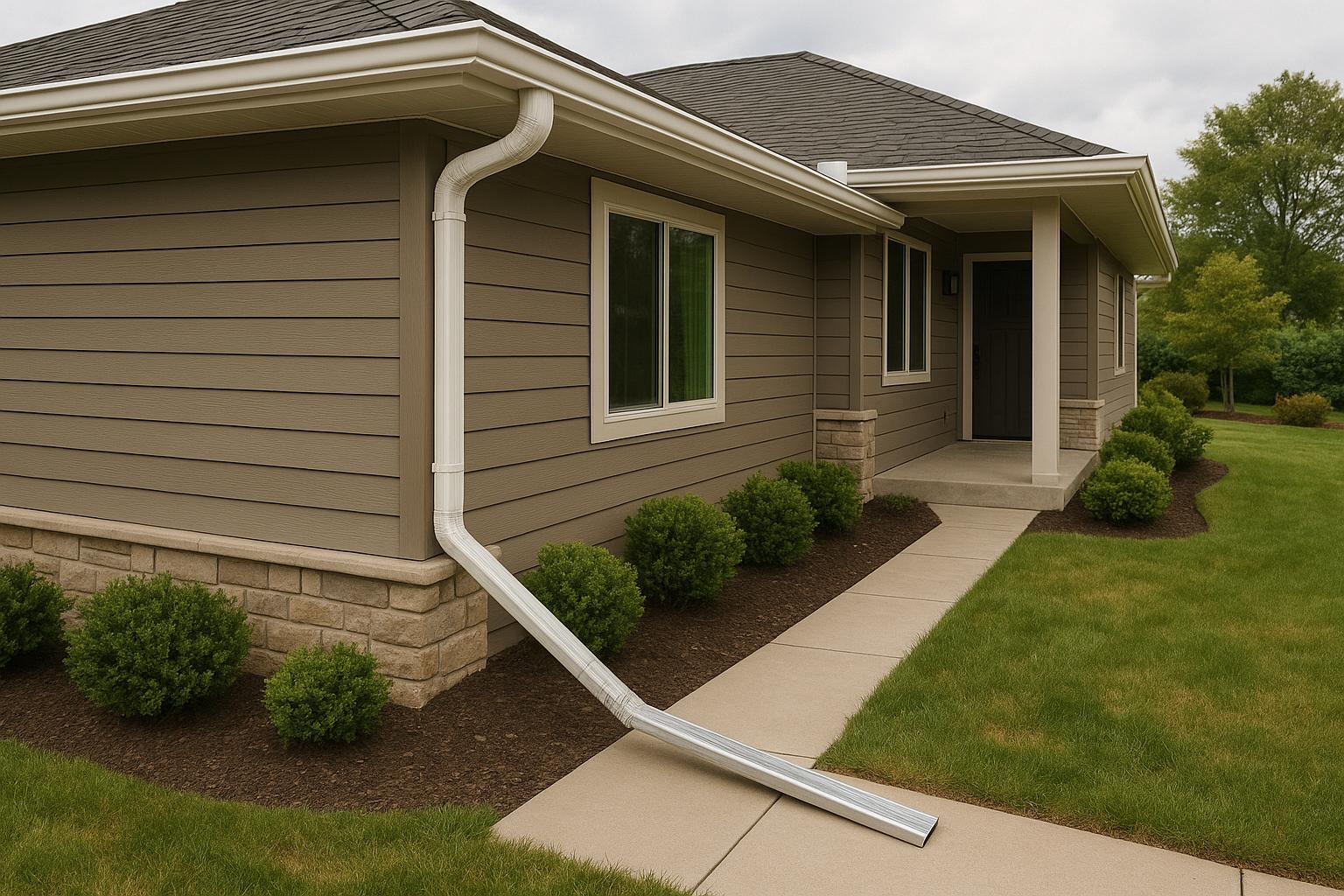
- Rigid Extensions: Durable, visible, and effective for flat areas.
- Flexible Extensions: Easy to install, adjustable for landscaping, but less durable.
- Buried Drain Systems: Hidden, long-term solutions requiring professional installation.
- Choosing the Right Extension: Consider your roof size, soil type, and Maryland’s heavy rainfall.
- Installation Tips: Ensure proper slope and secure connections to avoid water pooling.
- Maintenance: Clean debris, inspect connections, and flush buried systems regularly.
For Maryland homeowners, these systems are particularly important due to clay-heavy soils and unpredictable weather. Whether you go for surface-level or buried options, proper installation and upkeep can save you from costly repairs.
3 Options for Extending Your Downspouts
Types of Gutter Extensions
Selecting the right gutter extension depends on your home’s drainage needs, budget, and desired level of performance. Options range from quick, temporary fixes to more robust, long-term solutions. Here’s a breakdown of the three main types of gutter extensions.
Rigid Downspout Extensions
Rigid extensions attach directly to your downspout, guiding water away from your home. These are typically made from metal, like aluminum or galvanized steel, or vinyl. Metal options are durable and resistant to rust, making them ideal for areas with steady water flow where precise redirection is key. Vinyl extensions, on the other hand, are more affordable but can become brittle in Maryland’s freeze-and-thaw cycles. One downside of rigid extensions is their visibility, which can create a tripping hazard if the runoff area isn’t clear.
Flexible Corrugated Extensions
Flexible corrugated extensions are designed to navigate around landscaping or walkways. Made from corrugated plastic or aluminum, they can bend to follow your property’s natural contours while still directing water effectively. These extensions are lightweight, easy to install, and can be adjusted for seasonal changes or lawn care needs. Their design reduces sediment buildup, but sharp bends may cause kinks, and they’re more prone to damage from lawn equipment or foot traffic. This can shorten their lifespan compared to more rigid alternatives.
Buried Drain Pipes and Pop-Up Emitters
Buried drainage systems provide a more comprehensive solution by channeling water away from your home through underground PVC pipes. These pipes direct water to pop-up emitters or drainage ditches. Pop-up emitters open with water flow, keeping debris out while maintaining your lawn’s appearance. Although these systems require a higher initial investment and careful planning, they offer several benefits, including being out of sight, low maintenance, and blending seamlessly with your landscaping. To ensure success, proper design is crucial – pipes need to be installed at the correct slope and depth to prevent backups and freezing, and their placement must avoid interference with utility lines, septic systems, or tree roots.
How to Choose the Right Gutter Extension
Selecting the right gutter extension is key to avoiding water damage and expensive repairs.
Assessing Your Property’s Drainage Needs
The size of your home and the design of your roof play a major role in determining how much water you need to manage. For instance, a 1,600-square-foot home can collect nearly 1,000 gallons of water from just one inch of rain. If a severe storm brings 6 to 12 inches of rain, that same roof could see almost 12,000 gallons[1]. Roof pitch matters too – a steep 45-degree roof can gather up to 30% more rain, meaning that same home might collect close to 1,300 gallons per inch of rainfall[1].
Your local climate also impacts your drainage needs. Maryland, for example, experiences everything from light spring rains to intense summer storms and hurricane remnants. Your system should be designed to handle the heaviest rainfall typical for your area – not just the average conditions.
Soil type around your foundation is another critical factor. Clay-heavy soils drain slowly and can trap water, creating hydrostatic pressure against your foundation walls. On the other hand, sandy soils allow water to seep through quickly. Even if surface water is directed away, backfilled clay soil can still pose a risk. Observing your property during heavy rains can reveal pooling water, erosion patterns, and areas where water flows toward your home – key insights for choosing the right gutter extension.
Material and Style Considerations
When selecting materials, think about durability, appearance, and upkeep. Metal extensions are weather-resistant but may show wear over time. Plastic options are more affordable but can become brittle during Maryland’s freeze-thaw cycles. To maintain a cohesive look, match the style of your extension to your home’s exterior.
Your landscaping and foot traffic patterns also play a role. Rigid extensions are ideal for areas with little interference, while flexible options can navigate around obstacles. If you prefer a cleaner look, buried systems hide the extension entirely, though they typically require professional installation.
Compliance with Local Regulations
Beyond physical considerations, it’s essential to ensure your gutter extension complies with local codes. In Maryland, regulations emphasize effective water management, requiring roofs on new homes to slope in a way that directs water toward drains or gutters[2]. While gutter extensions aren’t explicitly regulated, they are a vital part of your home’s drainage system and should align with these water management goals.
Hiring certified contractors can help ensure your system meets local standards. FEMA reports that even one inch of water entering a home can lead to repair costs of up to $25,000[1]. Choosing the right drainage system is a smart investment in protecting your property.
sbb-itb-843f8be
Installing Gutter Extensions
Installing gutter extensions properly is key to directing water away from your home’s foundation, helping to minimize potential damage. The installation process varies depending on whether you choose a surface-level extension or a buried drain system. Let’s break down the steps for both methods.
Surface Installation Methods
Surface extensions are a simple and practical choice, especially for homeowners who enjoy tackling DIY projects. For rigid extensions, start by measuring the distance needed to divert water safely away from your home. Attach the extension to your existing downspout using the included clamps, ensuring a secure fit to prevent leaks or backflow. Position the extension so it gently slopes away from your house to encourage smooth water flow.
Flexible corrugated extensions are great for navigating around obstacles like garden beds or walkways. These are installed similarly to rigid extensions, but take extra care to avoid dips or low spots where water could collect. At the outlet, place splash blocks to help disperse water evenly and reduce the risk of soil erosion.
If you’re looking for a more seamless solution, you might want to consider a buried drain system, which we’ll cover next.
Installing Buried Drain Systems
Buried drain systems provide a cleaner look and a longer-term solution, though they require more effort and planning. Start by mapping out the drainage path. Decide where you want the water to exit your property, steering clear of utility lines, septic systems, or tree roots. Before digging, call 811 (Dig Safe) to have underground utilities marked.
When digging the trench, use a level and string line to ensure a consistent slope. The trench should be wide enough to fit the drain pipe and allow space for backfilling.
Choose a solid drain pipe that can handle the water flow from your gutters. Connect the pipe to your downspout with a downspout adapter, and seal the connection with waterproof tape to prevent leaks.
Add a layer of gravel to the trench before placing the pipe. This gravel layer improves drainage and protects the pipe from pressure caused by the surrounding soil. After placing the pipe, continue backfilling the trench with soil, compacting it in layers to prevent settling over time. At the pipe’s exit, install a pop-up emitter to disperse water safely while keeping debris out of the system.
Watch out for common mistakes such as insufficient slope, pipes that are too small, or loose connections. For instance, a pipe with too little slope or an inadequate diameter can lead to water backing up during heavy rain. Loose connections may also result in water seeping back toward your foundation.
If you’re working with clay soil, consider adding a thin layer of sand beneath the gravel. This helps stabilize the base and accommodates shifts in moisture levels.
For challenging drainage issues, steep terrain, or large-scale projects, hiring a professional can ensure everything is done correctly and up to code. Pro Landscapes MD offers expert installation services throughout Maryland, providing tailored solutions to meet your home’s drainage needs.
Maintaining and Troubleshooting Gutter Extensions
Taking care of your gutter extensions is key to keeping your drainage system working properly and protecting your home’s foundation. Regular maintenance helps you avoid expensive water damage and ensures your system stays in top shape. Here’s how to keep things running smoothly and address any issues that come up.
Routine Maintenance Tips
Check your extensions monthly, especially in the fall, and observe water flow after heavy rain. If you see water pooling, it could mean there’s a blockage or the slope isn’t right.
Clear debris from surface extensions. Leaves and other debris tend to collect at connection points and outlets. For flexible corrugated extensions, straighten them out and hose them down to remove any sediment. Pay extra attention to the ridges, as small debris often gets stuck there.
Inspect and secure all connections twice a year – once in spring and again before winter. Tighten any loose clamps and replace damaged sections as needed. Metal extensions can develop rust, especially where they connect to the downspouts. If you notice rust, sand the area lightly and apply a rust-resistant primer and paint to stop further corrosion.
For buried systems, test pop-up emitters to make sure they’re working properly. If they stick open, clean the mechanism and apply a little silicone spray to lubricate the moving parts.
Document any issues with photos and notes. This makes it easier to track recurring problems and explain the situation to a professional if needed.
Staying on top of these tasks ensures your system continues to perform as intended.
Troubleshooting Common Issues
Sometimes, even with regular maintenance, problems can arise. Here’s how to handle a few common ones:
- Standing water near your foundation often means your extension isn’t long enough or doesn’t have the right slope. Measure the distance from your downspout to where the water exits – it should extend at least 6 feet away from your foundation. If the extension is long enough, check for low spots or backward slopes that might be disrupting the flow.
- Disconnected surface extensions can happen during lawn mowing or storms. Reattach them immediately using spare clamps for a secure fit.
- Flexible extensions should be disconnected before freezing weather and stored safely. For fixed installations, make sure they drain properly and replace any cracked sections after winter.
- Clogged buried drains might cause water to back up at the downspouts or create soggy spots along the drain path. Start by flushing the system. If that doesn’t work, use a drain snake. If tree roots have invaded the pipes, professional tools will be needed to clear them out effectively.
- Soil settling around buried drains can create dips in your lawn that affect drainage. Fill these areas with good-quality topsoil, but don’t compact it too much. Some settling is normal, especially in the first year after installation.
Professional Assistance for Complex Problems
If you’ve tried everything and the problem persists, it’s time to call in the pros. Some drainage issues are too complex to handle on your own and require expert attention.
- Persistent water around your foundation could mean your extensions are too short, your yard isn’t graded properly, or the soil conditions are causing drainage challenges. A professional can assess the situation and recommend the best solution.
- Tree root intrusion in buried systems often requires specialized equipment to clear the pipes without causing further damage. Trying to remove roots with household tools can make the problem worse.
- Code compliance issues can arise if local regulations have changed or if you’re planning an addition to your home. Professional contractors are familiar with these requirements and can ensure your system meets all the necessary standards.
Pro Landscapes MD offers a range of drainage solutions in Maryland, covering areas like Howard County and Montgomery County. Their services include everything from simple gutter extension repairs to complete system redesigns. If you’re dealing with tricky terrain, clay soil, or need to integrate the system with your landscaping, their expertise can ensure everything works as it should.
In emergency situations – like basement flooding or severe foundation settling – don’t wait. Call a professional immediately. Addressing the problem now can save you from much bigger repair costs later, not to mention the stress of dealing with water damage to your home and belongings.
Conclusion
Gutter extensions are a smart, budget-friendly way to shield your Maryland home from water damage. Whether you go for sturdy rigid downspout extensions, flexible corrugated ones for ease of use, or opt for buried drain systems for a cleaner look, choosing the right option can help you avoid expensive foundation repairs and landscape damage.
The right choice and proper installation make all the difference. Maryland’s clay-heavy soils and uneven terrain pose unique drainage challenges. Rigid extensions work well on flat ground, while buried systems are ideal for sloped areas. Once installed, regular upkeep is essential to ensure your system continues to protect your home.
Maintenance is just as important as installation. Regularly inspect your gutter extensions and address any issues quickly. Even small problems can escalate into major damage during Maryland’s wet springs, summer storms, and freeze-thaw cycles.
Don’t hesitate to call in the pros for tricky situations. If you’re dealing with persistent drainage problems, foundation issues, or challenging terrain, professional help can save you time and money. Pro Landscapes MD offers tailored drainage solutions across central Maryland, from minor fixes to full system overhauls designed to blend seamlessly with your outdoor space.
Protecting your home is an investment in its future. With the right gutter extensions and consistent care, you can safeguard your foundation, basement, and landscaping for years to come.
FAQs
How can I choose the right gutter extension for my home and local weather conditions?
To choose the right gutter extension for your home, think about your local climate and what your home specifically requires. If you live in an area with heavy rainfall, larger gutters – like 6-inch options – and gutter guards can handle higher water volumes and help prevent clogs. In coastal areas, aluminum or galvanized steel gutters work well because they resist rust and corrosion. Meanwhile, for drier regions, copper gutters are a durable and stylish option, offering both functionality and a touch of elegance.
By selecting the right gutter material and size for your climate, you can ensure your home stays protected from water damage while extending the life of your gutters.
What maintenance is needed for gutter extensions, and how often should it be done?
To ensure your gutter extensions do their job efficiently, regular inspection and cleaning are a must. Focus on clearing out debris like leaves and dirt, checking for any signs of damage or leaks, and making sure they’re properly aligned. Aim to clean and inspect them at least twice a year – early spring and fall are ideal times – or after any heavy storms. This routine helps prevent clogs, avoids water damage, and ensures water runoff is managed effectively. Staying on top of this maintenance keeps your gutter system working smoothly and shields your home from potential water-related problems.
Should I install gutter extensions myself or hire a professional?
Deciding whether to tackle gutter extensions on your own or hire a professional comes down to your skill level and the job’s complexity. If you’re handy and the task seems straightforward, a DIY approach can help you cut costs. But keep in mind, mistakes in installation can lead to serious problems like water damage, foundation issues, or poor drainage – potentially costing you more in repairs later.
On the other hand, bringing in a professional ensures the work is done right. They’ll handle proper grading and alignment, reducing the risk of future headaches. Plus, they come equipped with the tools and know-how to manage tricky setups, like steep roofs or unusual gutter layouts. This is particularly important in regions with heavy rain or snow, where precision is key to keeping drainage systems working effectively.
Chat with Us