









- bhavya gada
- No Comments
Native plants are an effective way to manage stormwater runoff in Maryland. Their deep roots improve water infiltration, reduce erosion, and support local ecosystems. By incorporating native species into rain gardens and landscapes, homeowners can address drainage issues, lower maintenance needs, and enhance water quality. Key highlights:
- Native Perennials: Swamp Milkweed, Cardinal Flower, and Virginia Blue Flag Iris thrive in wet areas and aid water absorption.
- Shrubs for Erosion Control: Virginia Sweetspire and Buttonbush stabilize slopes and stream banks.
- Trees for Flood Control: River Birch and Sweetbay Magnolia absorb excess water and reduce flooding.
- Grasses and Ferns for Filtration: Switchgrass and Cinnamon Fern filter pollutants and improve soil drainage.
Designing a native rain garden involves selecting plants suited to your property’s soil and moisture conditions. Proper planting, seasonal maintenance, and monitoring water flow are essential for success. Programs like Montgomery County’s RainScapes Rewards and Maryland’s $25 tree rebate help offset costs. For expert assistance, local professionals like Pro Landscapes MD provide tailored solutions for stormwater challenges.
How to Build a Native Plant Rain Garden – A Step-by-Step Tutorial
sbb-itb-843f8be
Best Native Plants for Stormwater Management in Maryland
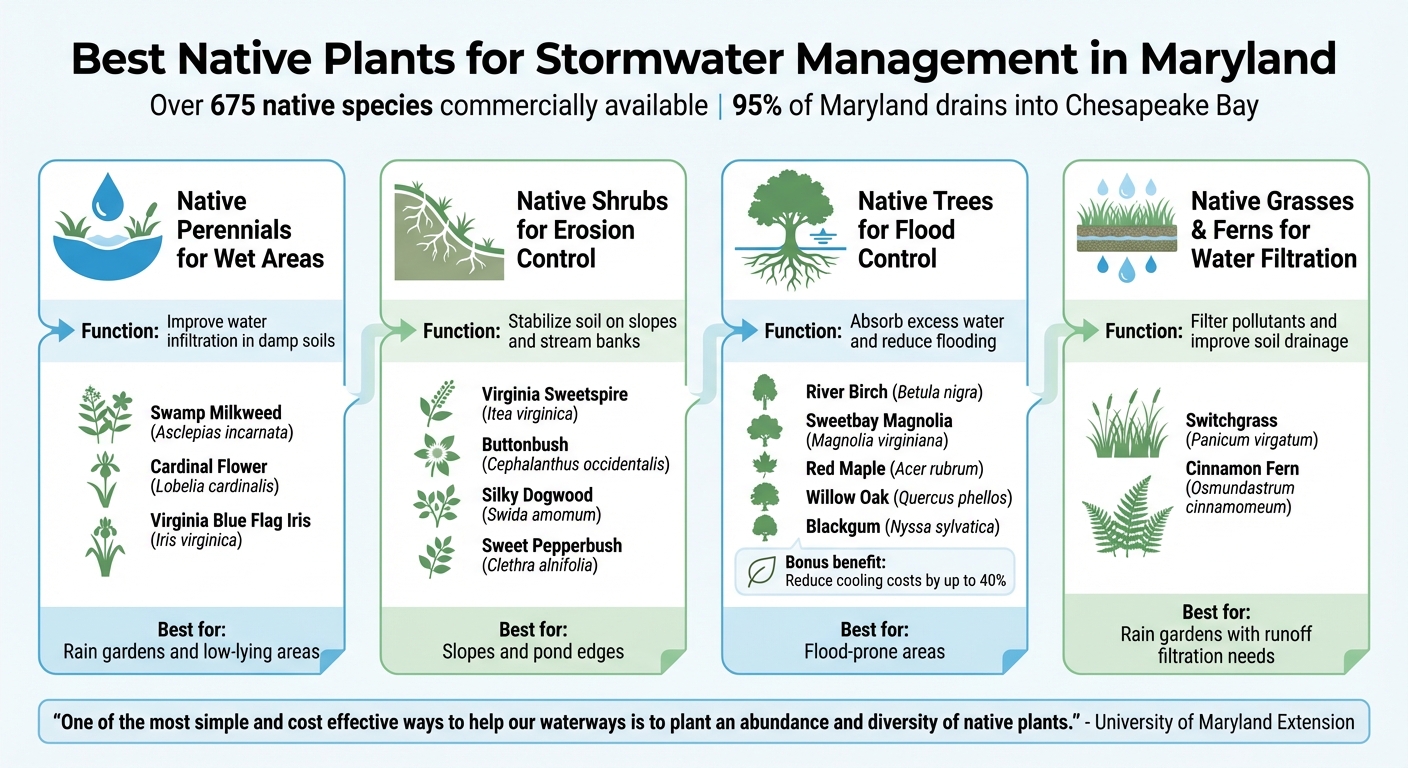
Native Plants for Stormwater Management in Maryland by Category
Central Maryland’s Piedmont ecoregion is home to over 300 native plant species that are perfect for local landscapes [3]. Since about 95% of Maryland’s land drains into the Chesapeake Bay, choosing native plants can have a direct impact on water quality and the health of surrounding watersheds [3]. Out of the 2,918 established plant species in the state, 71.8% (or 2,095) are native, and more than 675 of these are commercially available for residential use [3].
"One of the most simple and cost effective ways to help our waterways is to plant an abundance and diversity of native plants." – University of Maryland Extension [3]
Here’s a closer look at some standout native plants that are particularly suited for managing stormwater, controlling erosion, reducing flooding, and improving water filtration.
Native Perennials for Wet Areas
These perennials not only brighten up wet spaces but also help manage excess water effectively. Swamp Milkweed (Asclepias incarnata), Cardinal Flower (Lobelia cardinalis), and Virginia Blue Flag Iris (Iris virginica) thrive in damp soils and are ideal for rain gardens or low-lying areas. Their roots improve infiltration, helping to manage stormwater [3]. For detailed guidance on growing conditions, the Maryland Native Plant Guide Piedmont Region is a great resource [3].
Native Shrubs for Erosion Control
Shrubs play a key role in stabilizing soil on slopes and stream banks. Species like Virginia Sweetspire (Itea virginica), Buttonbush (Cephalanthus occidentalis), Silky Dogwood (Swida amomum), and Sweet Pepperbush (Clethra alnifolia) are excellent for erosion control along slopes and pond edges [4]. Beyond their practical benefits, these shrubs provide year-round structure and support local wildlife.
Native Trees for Flood Control
When it comes to flood-prone areas, trees like River Birch (Betula nigra) and Sweetbay Magnolia (Magnolia virginiana) are excellent choices. Their deep root systems absorb pollutants before they enter waterways [5]. Additional options, such as Red Maple (Acer rubrum), Willow Oak (Quercus phellos), and Blackgum (Nyssa sylvatica), further enhance flood control. Plus, these trees provide shade that can reduce cooling costs by up to 40% [5][6]. To make these trees more affordable, Maryland’s "Marylanders Plant Trees" program offers a $25 rebate for approved native species [5].
Native Grasses and Ferns for Water Filtration
Switchgrass (Panicum virgatum) and Cinnamon Fern (Osmundastrum cinnamomeum) are top picks for filtering pollutants and improving soil drainage in rain gardens. Their fibrous roots act like a sponge, slowing runoff and trapping sediment. These plants can handle short periods of flooding and require little maintenance once established [5]. Incorporating a variety of native grasses and ferns not only boosts water filtration but also supports pollinators effectively [3].
How to Design and Plant a Native Rain Garden
Selecting and Preparing Your Site
Start by identifying your Maryland EPA Level II ecoregion – Mountain, Piedmont, or Coastal Plain. This is an important first step since plants native to one area might not thrive in another. Once you’ve determined your ecoregion, observe how rainwater moves across your property during heavy storms. Look for natural low spots where water tends to collect – these are ideal spots for a rain garden.
Next, check the soil type and sunlight exposure at your chosen location. The Maryland Native Plant Guide series provides plant recommendations for different conditions, such as wet soils or varying light levels. To ensure your choices are truly native, use resources like the Maryland Plant Atlas or the Maryland Native Plant Program list. Choosing the right site not only boosts your garden’s success but also helps improve local water quality [3].
Once you’ve gathered all the details about your site, design your rain garden with a variety of native plants suited to the specific moisture levels across the area.
Selecting Plant Combinations
After defining your site, it’s time to create a plant selection that works with the garden’s moisture zones.
"Developed landscapes need to be more than beautiful. They have to serve multiple functions, from supporting pollinators and local wildlife to protecting one of the region’s most treasured natural resources: the Chesapeake Bay." – University of Maryland Extension [3]
Opt for a diverse mix of native plants rather than sticking with just a few species. With over 675 native Maryland plant species available commercially, you have a wide range of options. Use the Commercial Maryland Native Plant List to ensure your selections are easy to source. Experts recommend "thoughtful, bold designs" that go beyond typical landscaping to create something functional and visually striking.
When planning, match each plant to the appropriate zone within your rain garden. For example, some plants will thrive in the wetter center, while others are better suited to the drier edges. Include plants of varying heights and staggered bloom times to keep your garden visually appealing throughout the year. This approach also enhances water filtration and attracts pollinators.
Planting and Early Care
The best time to plant is during spring or fall, when the weather is mild and rainfall is more consistent. Dig holes that are slightly wider than the root ball, ensuring the plant’s crown sits flush with the ground. Space your plants according to their mature size, which helps with airflow and healthy growth.
After planting, water deeply to help the roots settle. During the first growing season, keep the soil consistently moist to allow the plants to establish strong roots. Although most native plants won’t need much watering once they’re established, that first year is crucial. Keep an eye out for invasive species and take steps to protect young plants from deer browsing.
Maintaining Your Native Plant Landscape
Keeping your native plant landscape in good shape is key to ensuring it continues to manage stormwater effectively. For the first 2–3 years, regular watering is essential to help roots establish [7]. Once the plants are settled, maintenance becomes much easier.
Seasonal Maintenance Tasks
Caring for your native plant landscape varies by season, but each task plays a role in keeping it healthy and supporting stormwater management.
In spring (March through May), trim perennial stems down to about 12 inches instead of removing them entirely. This creates nesting spots for native bees [8]. Prune damaged branches on shrubs and trees, but leave fallen leaves in place – they’re vital for pollinators and beneficial insects [8]. Add a 2–3 inch layer of mulch each year to help with soil temperature regulation and weed control [7].
During summer (June through August), water deeply in the morning during hot spells to minimize evaporation [8]. Soaker hoses or drip irrigation work better than shallow, frequent watering because they encourage deeper root growth [8]. Hand-pull weeds before they spread, and keep an eye out for disease. In mature landscapes, leaving some seedheads provides food for wildlife [8].
In fall (September through November), allow leaves to remain on the ground to support birds and insects through the winter [8]. For winter (December through February), avoid pruning but use a broom to gently remove heavy snow from branches to prevent breakage [8]. Don’t pile snow from driveways onto your native landscape – salt and compacted snow can harm plants and disrupt drainage [10].
Seasonal care ensures your landscape continues to manage water effectively. Regularly checking for proper drainage is also important.
Checking Water Flow and Drainage
A properly functioning rain garden or native landscape should never hold standing water for more than 24 to 48 hours after a storm [7][10]. If water lingers, it’s a sign of a drainage issue that needs fixing. After heavy rain, inspect the area for signs of erosion, pooling, or stressed plants [7].
Perform soil infiltration tests now and then by digging a hole, filling it with water, and timing how long it takes to drain. If water sits for more than 24 hours, mix sand or compost into the soil to improve drainage [7]. Regularly clear out sediment, trash, and organic debris to prevent clogging, as runoff often brings sediment that can block water absorption [10]. During the growing season, check plants monthly for signs of overwatering (“wet feet”) or drought stress, and ensure they’re planted in areas that match their moisture needs [10].
When challenges arise, addressing them quickly can keep your landscape thriving.
Solving Common Problems
One of the biggest challenges is invasive vegetation, such as weeds, aggressive tree species like Red Maple or Tree of Heaven, and turf grasses encroaching on your native plants [13]. Remove invasive plants immediately using hand-pulling, mechanical tools, or targeted herbicides [13]. Native plants are naturally resistant to local pests and diseases, so chemical pesticides are rarely necessary [8].
If your landscape is seen as “messy” by neighbors or visitors, consider adding “cues to care,” like mown turf borders, fences, or clean edges to show that the space is intentionally maintained [12]. Trim native and ornamental grasses every 2–3 years in late winter, but avoid cutting evergreen species like Juncus, as they continue filtering pollutants even in winter [13]. Watch out for damage caused by equipment, vandalism, or deer browsing, and replace any harmed plants during the correct planting season for that species [13][3].
With consistent care, your native plant landscape can balance beauty with effective stormwater management, creating an outdoor space that benefits both your property and the environment.
Pro Landscapes MD: Your Partner for Stormwater Solutions

Landscaping and Stormwater Services
Pro Landscapes MD specializes in creating green stormwater infrastructure that blends native plants with engineered drainage systems. Their offerings include bioretention cells, bioswales, rain gardens, and stormwater wetlands. These features are designed to control runoff, filter out pollutants, and improve water infiltration [10][11]. From start to finish, they handle everything – choosing native plants suited to various moisture levels and installing drainage systems like French drains, dry riverbeds, and grading.
By focusing on native plants adapted to local conditions, Pro Landscapes MD minimizes the need for synthetic fertilizers and chemicals, which can harm nearby waterways [9]. Catherine Neal, a Landscape and Nursery Horticulture Specialist, explains:
"Modern storm water management systems rely on vegetation to hold the soil, filter contaminants, absorb nutrients, intercept and transpire water, and support healthy and diverse soil biology" [10].
Pro Landscapes MD takes this concept to heart by designing layered plantings that combine deciduous trees, shrubs, and groundcovers. This technique increases foliage density and transpiration, helping to return more water to the atmosphere. This thoughtful approach addresses Maryland’s specific stormwater challenges while promoting healthier ecosystems.
Local Knowledge in Central Maryland
Pro Landscapes MD brings a deep understanding of central Maryland’s unique environmental conditions to every project. They serve Howard, Montgomery, Carroll, Frederick, Prince George’s, and Baltimore Counties, tailoring their designs to the region’s Piedmont ecoregion. By selecting native plants that thrive in local soils, they not only enhance stormwater management but also support pollinators and protect the Chesapeake Bay, which receives runoff from nearly all of Maryland’s land [3].
Their horticulture team expertly manages the area’s diverse soil conditions, from temporary flooding to prolonged drought [11]. Whether the goal is to improve rapid water infiltration in engineered systems or manage water retention in clay-heavy soils, their designs are customized to meet each site’s drainage needs [10].
Client Success Stories
Pro Landscapes MD’s custom solutions have delivered real benefits for Maryland property owners. Clients often highlight how their projects balance environmental functionality with aesthetic appeal. Many also appreciate the lower maintenance costs compared to traditional lawns, as well as the eco-friendly features like environmental pavers and wildlife-friendly outdoor spaces [9][12]. These designs not only enhance properties but also contribute to biodiversity and sustainability in the region.
Conclusion
Native plants play a key role in managing stormwater and cutting maintenance costs, which is especially important since nearly 95% of Maryland’s land drains into the Chesapeake Bay [3]. These plants help capture and filter runoff from impervious surfaces, solve drainage challenges like ponding and erosion, and create habitats for pollinators and wildlife – all while needing much less water and fertilizer compared to traditional turf [1].
To make the most of these benefits, success hinges on choosing the right plants and following smart design practices. For instance, rain gardens should drain standing water within 24 to 48 hours to avoid mosquito problems and should be located at least 10 feet away from building foundations in naturally low-lying areas [1][2]. Careful site assessment and strategic zoning of native plants are crucial for effective drainage and long-term performance.
Maryland homeowners can also take advantage of various support programs. Montgomery County offers a RainScapes Rewards rebate of $10 per square foot for qualifying projects (minimum 75 square feet), while Prince George’s County provides Rain Check Rebates to help with installation expenses [2]. Additionally, Maryland’s Low-Impact Landscaping Law, effective as of October 1, 2021, ensures that homeowners can install rain gardens and pollinator-friendly landscapes, even in HOA-regulated neighborhoods [14].
Preventing issues like invasive species or drainage failures requires expert site analysis and ongoing upkeep. Catherine Neal, a Landscape and Nursery Horticulture Specialist at the University of New Hampshire, highlights:
"Selecting appropriate plants for biofilters, bioswales, rain gardens and other vegetated storm water management systems is a critical first step to their success. But remember that plant selection only goes so far; though not discussed here, for long term success a maintenance plan must be implemented" [10].
To bring these concepts to life, partnering with local professionals is invaluable. Pro Landscapes MD combines deep knowledge of native plants with engineered drainage solutions tailored to central Maryland’s unique soil and regulatory environment. Whether you’re planning a small residential rain garden or a large-scale stormwater project, investing in native plants with expert guidance ensures both environmental and financial rewards.
FAQs
How can I tell if my yard is suitable for a rain garden?
To figure out if your yard could support a rain garden, look for these important factors:
- Natural water collection spots: Areas where stormwater tends to gather or places where you can direct runoff.
- Good soil drainage: Soil that absorbs water effectively is crucial.
- Safe distance from your home: The location should be at least 10 feet away from your foundation to avoid water damage.
- Clay-free soil: Avoid areas with heavy clay content or spots prone to flooding.
If your yard checks these boxes, it might be a solid option for a rain garden.
What native plants work best for clay soil and poor drainage?
Native plants that do well in clay soil and areas with poor drainage include Gray’s Sedge, Woodland Sedge, and Tussock Sedge. Additional great choices are Soft Rush, Woolgrass, Ostrich Fern, Swamp Milkweed, Cardinal Flower, and Obedient Plant. These plants aren’t just tough – they excel in difficult conditions, help absorb water, minimize erosion, and provide vital support to local ecosystems. They’re perfect for stormwater management and eco-friendly landscaping.
Do I need a permit or HOA approval to install a rain garden in Maryland?
In Maryland, you typically won’t need a permit or HOA approval to install a rain garden, provided it follows local regulations and doesn’t drastically change existing drainage systems. Still, it’s wise to check your county or HOA’s specific guidelines beforehand to make sure everything is in line with their requirements.
Chat with Us