









- bhavya gada
- No Comments
When choosing outdoor seating for Maryland’s unpredictable weather, durability, weather resistance, and maintenance are key. Materials like stone, teak, HDPE, aluminum, and resin wicker each offer unique benefits and trade-offs. Here’s a quick summary:
- Stone seat walls: Long-lasting (50+ years), low maintenance, but high installation costs.
- Teak wood benches: Naturally resistant to rot and pests, lasts decades, but requires regular oiling to maintain color.
- HDPE Adirondack chairs: Eco-friendly, low maintenance, highly durable, with prices starting at $200.
- Powder-coated aluminum: Lightweight, rust-resistant, minimal upkeep, but prone to dents if not handled carefully.
- Resin wicker sectionals: Affordable, weather-resistant, but lifespan depends on frame quality.
| Material | Durability | Weather Resistance | Maintenance | Cost Range |
|---|---|---|---|---|
| Stone Seat Walls | 50+ years | Excellent | Minimal cleaning | High installation |
| Teak Wood Benches | 25–70 years | Naturally resistant | Moderate (oiling) | Premium ($9,000+) |
| HDPE Adirondack Chairs | 20+ years | Excellent | Very low | $200–$600 |
| Aluminum Seating | 10–30 years | High | Low (chip repair) | $350–$1,100 |
| Resin Wicker Sectionals | 10–15 years | High | Low | $300–$3,500+ |
Each option suits different needs, budgets, and styles. Prioritize materials that align with Maryland’s climate and your outdoor space requirements.
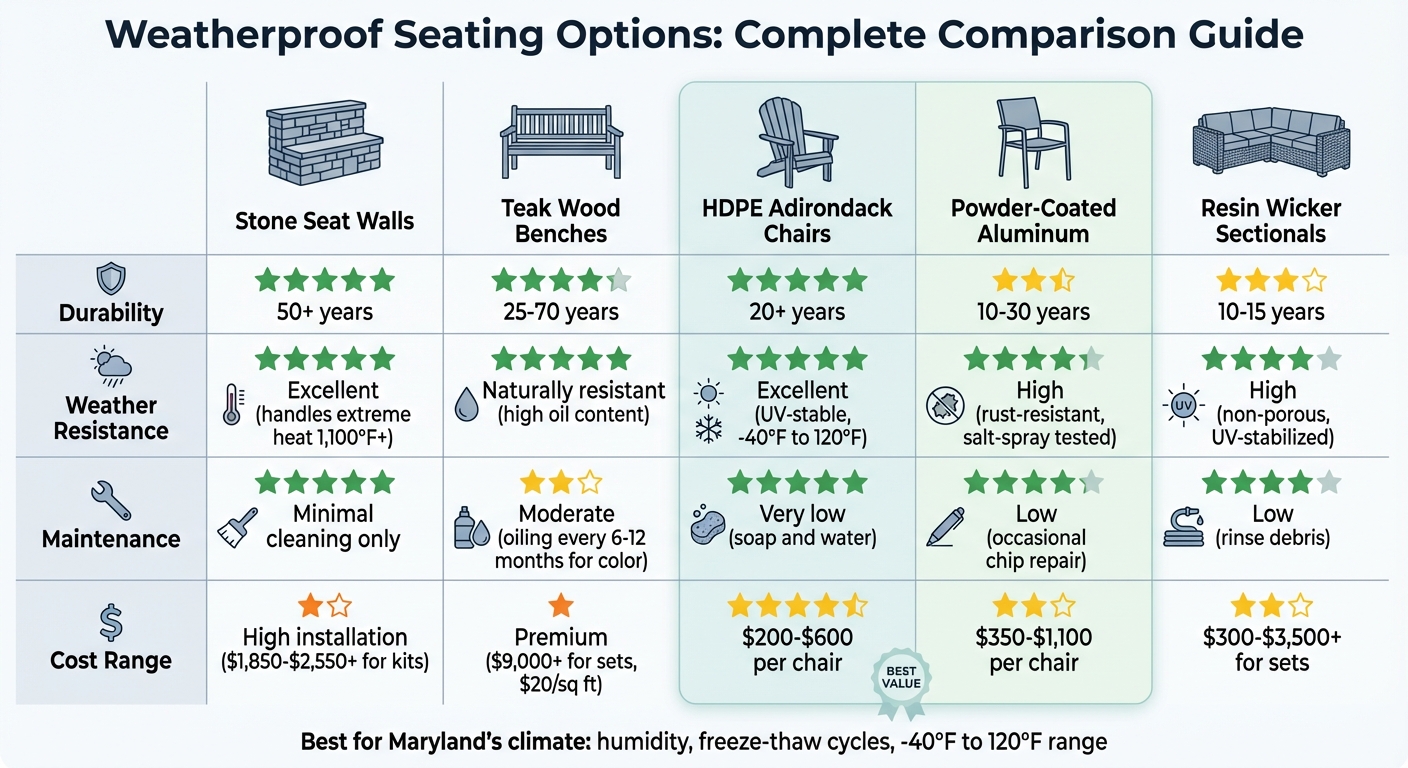
Weatherproof Outdoor Seating Materials Comparison Chart
Outdoor Furniture Materials: Pros & Cons
Choosing the right materials is a key part of Baltimore hardscaping projects designed for local weather.
sbb-itb-843f8be
1. Stone Seat Walls
Stone seat walls are built-in features that add both function and style to outdoor spaces. Typically placed around fire pits or along patio edges, they seamlessly integrate into your hardscape. Unlike portable furniture, these structures are permanent and made to last. Natural stones like granite and fieldstone are excellent choices for these walls because they can handle extreme heat – fire pits can reach temperatures over 1,100°F – without damage[7]. Below, we’ll dive into their durability, weather resistance, maintenance, and costs.
Durability
When professionally installed, natural stone seat walls can last 50 years or more[7]. That’s significantly longer than engineered concrete block systems, which usually last 20 to 30 years[7]. Natural stones are built to endure tough weather conditions, from blazing sunlight to heavy snow and rain, without warping or rotting[5][6]. Additionally, stone’s thermal mass helps retain heat, making these walls ideal for chilly Maryland evenings[5].
Weather Resistance
Freezing temperatures are the biggest challenge for stone seat walls. When water seeps into the stone or behind the wall, it can freeze and expand, causing cracks or structural damage[9][11]. To counter this, it’s essential to install a compacted base of angular crushed stone – 6 to 8 inches deep – for proper drainage[7]. In Maryland’s clay-heavy soils, concrete footings are recommended to prevent settling[7][8]. Applying a silane/siloxane-based penetrating sealer every 3 to 5 years can further reduce water absorption[9]. Adding weep holes every 4 to 6 feet and using gravel backfill also helps prevent water buildup and related issues[12].
Maintenance Requirements
Stone seat walls are relatively low-maintenance. Unlike furniture, they don’t need to be moved, stored, or replaced seasonally[5][6]. Cleaning is simple – just use mild soap and water. For long-term protection, apply a breathable sealer every few years to minimize moisture absorption[9][13]. To ensure comfort, build walls with a height of 16 to 18 inches and a width of about 12 inches[8]. Smooth capstones are a great finishing touch, as they provide a comfortable surface without awkward bumps or dips[8].
Cost Range
The cost of stone seat walls depends on whether you choose a pre-designed kit or a custom installation. Kits typically range from $1,850 to $2,550[6]. However, Maryland’s fluctuating weather often makes custom natural stone installations a better option. These require a higher upfront investment due to material costs, shipping, and the need for skilled masons[7][10]. Professional installation ensures proper drainage, structural stability, and longevity[10][12]. For tailored designs and expert craftsmanship in central Maryland, Pro Landscapes MD offers specialized hardscaping services, including seat walls, garden walls, and fire pits throughout Howard County, Montgomery County, and nearby areas.
2. Teak Wood Benches
Teak wood benches are a top-tier choice for outdoor seating, celebrated for their durability and timeless beauty. Unlike many types of wood that need chemical treatments to survive the elements, teak thrives naturally. High-quality teak benches can last an impressive 50–70 years, with some historic examples enduring nearly a century [17, 18]. This incredible longevity stems from the heartwood of fully mature teak trees, which is rich in protective oils [16]. Let’s break down how teak benches stand out in terms of durability, weather resistance, maintenance, and cost.
Durability
Teak’s natural oils make it incredibly durable. These oils, along with rubber content, act as a built-in defense against water, rot, decay, and even pests like termites – no chemical treatments required [14]. Its tight grain structure also prevents warping, cracking, or splitting, even in Maryland’s fluctuating temperatures [15]. However, not all teak is created equal. Grade A heartwood offers the highest durability and is ideal for Maryland’s outdoor conditions, while Grade C sapwood, which lacks protective oils, falls short for long-term use [16].
"Teak is the king of durable, outdoor woods." – Luis Leonzo, Founder, TableLegsOnline [17]
Weather Resistance
Teak is well-suited to Maryland’s unpredictable weather. Its dense grain and natural oils create a barrier that resists moisture and protects the wood from damage. Unlike cedar or white oak, teak doesn’t need seasonal sealing to stay strong. Over time, the wood naturally transitions from its original golden-brown hue to a silver-gray patina. This change is purely cosmetic and doesn’t affect the bench’s structural integrity, making it a great fit for outdoor seat walls in Maryland [17, 25]. Teak’s reputation for weather resistance is further reinforced by its use in shipbuilding and yacht decking, where it withstands harsh marine environments [18].
Maintenance Requirements
Teak benches are low-maintenance compared to other outdoor furniture. Cleaning once or twice a year with mild soap, warm water, and a soft-bristle brush is usually enough to keep them in good shape and prevent mold buildup [14]. For tougher stains, a mild bleach-soapy solution works well. Owners can either let the wood age naturally to a silver-gray finish or apply a teak sealer every 6 to 12 months to preserve its golden-brown color [17, 18]. Painting is not recommended since teak’s natural oils prevent paint from adhering properly, leading to peeling. While teak can withstand year-round outdoor exposure, storing it in an unheated shelter or using breathable covers during winter can further extend its lifespan [25, 26].
Cost Range
Teak is undeniably a premium option. At about $20 per square foot for 1-inch thickness, it’s roughly five times the price of high-quality white oak [17]. While the upfront cost is higher than alternatives like cedar or acacia, teak’s 50-plus-year lifespan and minimal maintenance make it a worthwhile long-term investment. For the best value, look for machine-made furniture with precise mortise and tenon joinery, as these designs allow for easier part replacement compared to hand-crafted pieces [16].
3. HDPE Polymer Adirondack Chairs
HDPE (high-density polyethylene) Adirondack chairs provide a sleek, modern twist on outdoor seating. These chairs are built from recycled plastics, primarily milk jugs, transforming waste into durable furniture. For example, Loll has recycled over 100 million milk jugs into outdoor furniture, showcasing HDPE as an environmentally conscious option. Unlike wood or metal, HDPE is a solid, nonporous material that resists rot, chipping, peeling, and splintering, which means no painting, staining, or sealing is ever needed [19].
Durability
HDPE chairs are engineered for tough outdoor conditions. Thanks to their high strength-to-density ratio, they’re impact-resistant and stable enough for demanding environments like playgrounds and skateparks. One standout feature is that the color runs through the material, so scratches don’t expose a different layer underneath. High-quality HDPE chairs can support up to 450 lbs and endure extreme temperatures – from -40°F to 120°F – without cracking or warping. For coastal areas, it’s important to use 316 marine-grade stainless steel hardware to prevent rust and corrosion [20] [21].
"HDPE does not rot, chip, or peel; therefore, it doesn’t need to be painted or stained to keep up its intended appearance. HDPE is a solid/nonporous material that is colorized when it is in a melted state." – Nate Heydt, VP of Business Development, Loll [19]
Weather Resistance
HDPE chairs excel in all kinds of weather. Built-in UV inhibitors protect against fading and brittleness, while the nonporous surface prevents moisture absorption that could lead to freeze-thaw damage. These chairs naturally resist rot, mold, mildew, and salt spray, eliminating the need for extra treatments. Their weight adds stability, even on windy docks or decks, and lighter colors stay cooler under direct sunlight. HDPE chairs, much like stone or teak furniture, are designed to handle Maryland’s diverse weather conditions, making them a reliable choice for outdoor living. These weatherproof features also mean minimal upkeep.
Maintenance Requirements
Cleaning HDPE chairs is simple – just use soap, water, and a soft-bristle brush. For tougher cleaning jobs, a pressure washer can be used without harming the material. There’s no need for oiling, staining, or waterproofing, saving you time and effort. Customer reviews on Walmart.com highlight that HDPE chairs retain their vibrant colors even after a year of sun exposure [21]. Designed for year-round outdoor use, these chairs are easy to assemble too – just tighten the hardware with a socket wrench.
Cost Range
The durability and ease of care of HDPE chairs make them worth the investment. Basic models range from $200 to $600, such as the Trex Cape Cod at $209 or DuraWeather chairs priced between $219 and $259. Higher-end options, like the Berlin Gardens Nordic at $855 or LuxCraft Swivel Gliders at $1,186, include extra features like folding designs or built-in cup holders. While HDPE chairs cost more upfront than budget resin options (typically under $200), they’re often called a "buy-it-once" purchase. With warranties spanning 20 years to a lifetime and no ongoing maintenance costs, HDPE chairs are built to last [22].
4. Powder-Coated Aluminum Seating
Powder-coated aluminum seating blends sleek, modern design with strong weather resistance. The coating process involves applying an electrostatically charged dry powder, which is then heat-cured at 390°F–400°F. This creates a thicker, more durable finish compared to liquid paint [4]. An added bonus? This method produces almost no volatile organic compounds (VOCs), making it a more eco-conscious option [38,39]. Many high-end frames are made from 6063-T5 aircraft-grade aluminum, a material that naturally offers better resistance to rust and corrosion than steel or wrought iron [3]. Let’s take a closer look at how this material holds up, especially when integrated into professional landscape services designed for Maryland’s challenging weather conditions.
Durability
With proper care, powder-coated aluminum can last anywhere from 10 to 30 years [23]. In harsher climates, standard powder coatings typically hold up for 5 to 10 years, but architectural-grade finishes can extend that lifespan to 15–30 years [24].
"Powder-coated aluminum can last 10 to 30 years if applied with proper surface preparation" – Steven, Founder of PARTMFG [23]
The material is lightweight, making it easy to move, yet sturdy enough to handle strong winds – especially when cast aluminum frames are used, as they offer better wind resistance than tubular designs [1]. However, aluminum does have its downsides. It’s more susceptible to dents and bending under heavy force compared to polyethylene-coated steel [26]. Scratches in the powder coating can also expose the metal underneath, potentially leading to oxidation if not quickly repaired [39,41].
Weather Resistance
Aluminum performs admirably across various climates, from humid coastal areas to regions with frequent freeze-thaw cycles. High-quality frames from brands like Brown Jordan or Trex undergo rigorous testing, such as 2,000 hours of salt-spray exposure, to ensure resistance to corrosion [3]. The powder coating adds another layer of protection against pitting and oxidation, while many modern finishes include UV stabilizers to reduce fading and chalking [25]. For areas with high salt exposure, architectural-grade anodized finishes provide even better protection than standard powder coatings [24]. However, metal furniture can become uncomfortably hot in direct summer sunlight or very cold in winter, so lighter colors are recommended for pieces placed in open sunlight [2,40].
Maintenance Requirements
Keeping powder-coated aluminum furniture in good shape is simple. A seasonal wipe-down with a soft cloth, mild soap, and warm water is usually enough [5,6]. In salty environments, rinsing with fresh water helps remove any salt deposits and prolongs the finish [2]. Unlike wood furniture, there’s no need for oiling, staining, or sealing. For any deep scratches, a touch-up paint pen can seal the exposed metal and prevent further damage [3,6]. Adding nylon glides or protective pads to the furniture’s feet can also prevent scuffing on both the frames and patio surfaces [2,6]. Avoid using aggressive pressure washers, as they can damage the protective coating [2,39].
Cost Range
While powder-coated aluminum furniture has a higher upfront cost than plastic or untreated wood, it tends to be more cost-effective over time due to its low maintenance and durability [39,42]. Entry-level chairs range from $350 to $495, with premium lounge chairs priced around $1,100 [3]. Small bistro sets start at approximately $350, while larger 7-piece fire-pit dining sets can go up to $1,999 [3]. High-end modular aluminum sectionals typically fall between $1,299 and $4,000 [3]. Additionally, aluminum furniture is fully recyclable at the end of its life, which adds to its appeal for those seeking sustainable options [1].
5. Resin Wicker Sectionals
Resin wicker sectionals bring a timeless woven aesthetic to outdoor spaces without the fragility of natural rattan. Made from high-density polyethylene (HDPE), this synthetic material resists moisture, eliminating concerns like splintering or rotting. Designed to handle humid summers and freeze-thaw cycles – common in Maryland – these sectionals are built for year-round outdoor use. The durability of the furniture also depends on the frame material, with aluminum being a top choice for its rust resistance. Let’s dive into how resin wicker holds up against Maryland’s challenging weather.
Durability
High-quality resin wicker is infused with UV stabilizers, which guard against fading and brittleness caused by strong sunlight. Many premium models are tested for up to 1,500 hours of UV exposure, ensuring that their colors stay vibrant even after several summers [3]. These sectionals often come with warranties for the weave that range from 1 to 5 years. Thanks to their modular design, they can adapt to changes in your outdoor space, and with proper care, they can last 10–15 years.
Weather Resistance
Synthetic wicker is non-porous, meaning it effectively repels water, making it a great fit for diverse weather conditions. Sectionals with aluminum frames are especially durable, with many meeting 2,000-hour salt-spray standards for corrosion resistance [3]. Cushions often feature solution-dyed acrylic fabrics, like Sunbrella, paired with quick-dry foam cores, adding to the furniture’s overall weather resistance. While the wicker can handle long-term exposure to the elements, cushions should be stored or covered during heavy rain unless they are designed with advanced quick-dry technology.
Maintenance Requirements
Caring for resin wicker sectionals is simple. A quick rinse with a garden hose clears away dirt and debris, while mild soap and warm water handle deeper cleaning. For dust trapped in the weave, a vacuum does the trick, and spills should be blotted immediately with a damp cloth to prevent stains. Avoid using high-pressure washers, as they can damage the material. During the off-season, waterproof covers are recommended to prevent mold and keep the furniture looking its best.
Cost Range
Resin wicker sectionals come in a variety of price points to match different budgets. Entry-level options, typically built with powder-coated steel frames, cost between $300 and $700 for smaller 3–5 piece sets. Mid-range models, often found at warehouse clubs, range from $800 to $1,500 and feature aluminum frames and improved synthetic wicker. High-end designer sets, which might include high-density resin, Sunbrella cushions, and extended warranties, can cost anywhere from $1,200 to $3,500 or more. While the upfront cost is higher compared to basic plastic furniture, the durability and minimal upkeep make resin wicker a smart long-term choice.
Comparison of Pros and Cons
Choosing weatherproof seating is all about balancing durability, ease of upkeep, and cost. Here’s a closer look at the pros and trade-offs of various options.
Stone seat walls are the ultimate long-term solution. They double as architectural features and are immune to rot, rust, and UV damage. Maintenance is minimal – just an occasional cleaning – but the installation can be pricey. On the other hand, resin wicker sectionals are more budget-friendly at first, though their lifespan depends on the frame material. Aluminum frames hold up much better than steel ones over time.
HDPE polymer Adirondack chairs are a fantastic pick for those who prefer low-maintenance options. They clean up easily with soap and water and boast impressive eco-credentials – Loll Designs, for instance, has recycled over 100 million milk jugs into HDPE furniture. These chairs often come with 20-year warranties and resist rot, chipping, and peeling without the need for painting or staining.
Teak benches are naturally rot-resistant thanks to their high oil content, but they require periodic treatment to preserve their signature golden color [28][2]. While teak is durable, its slow growth makes it a premium-priced material. Powder-coated aluminum seating offers a solid middle ground. It resists rust and requires little upkeep, though any chips in the coating should be repaired promptly to avoid oxidation [19].
To make things easier, the table below highlights how these options stack up in terms of durability, weather resistance, maintenance, and cost:
| Seating Option | Durability | Weather Resistance | Maintenance Needs | Cost Range |
|---|---|---|---|---|
| Stone Seat Walls | Extreme | Extreme | Very Low (Occasional cleaning) | High (Installation) |
| Teak Wood Benches | High (25+ years) | High (Natural oils) | Moderate (Oiling for color) | Premium |
| HDPE Adirondack | High (20+ years) | High (UV-stable) | Very Low (Soap and water) | $219–$260 per chair |
| Aluminum Seating | High | High (Rust-proof) | Low (Check for chips) | $350–$1,100 per chair |
| Resin Wicker | Moderate to High | High | Low (Rinse debris) | $300–$3,500+ |
For windy areas, heavier options like stone and teak stay firmly in place, while lighter materials like aluminum or resin wicker might need to be secured [27][28]. Heat retention is another factor to consider – metal and darker HDPE can get uncomfortably hot in direct sunlight, whereas teak stays cooler due to its low thermal conductivity [19]. If you’re near the coast, aluminum and HDPE are the best choices for resisting salt-air corrosion [27][19].
Ultimately, the right seating depends on your outdoor needs and how well it suits Maryland’s climate. Each option has its strengths, so weigh your priorities carefully!
Conclusion
When selecting weatherproof seating for Maryland’s unique climate, it’s essential to balance durability, functionality, and style. With the state’s mix of humidity, freeze-thaw cycles, and intense summer heat – ranging from -40°F to 120°F – your outdoor furniture must handle these extreme conditions effortlessly [3].
Stone seat walls emerge as a top-tier choice for their durability and zero-maintenance longevity. They’re especially ideal for fire pit areas since they’re non-combustible. Right behind them, HDPE polymer chairs offer unmatched convenience with their "set it and forget it" design, while powder-coated aluminum thrives in humid environments, thanks to its resistance to rust [1].
For budgeting, entry-level HDPE Adirondack chairs typically cost $200–$260 each, while high-end teak modular sets can exceed $9,000 [3][2]. Mid-range powder-coated aluminum dining sets, priced between $600 and $1,300, deliver reliable performance in Maryland’s weather [3]. For fire pit seating, heavier options like stone or solid HDPE are better suited to withstand high winds, while lighter aluminum pieces may need anchoring for added stability [2].
Stone seat walls also bring a dual benefit: they enhance the look of paver patios and fire features while providing functional seating and architectural definition. For homeowners in Howard County, Montgomery County, Frederick County, and surrounding areas, Pro Landscapes MD offers tailored hardscaping solutions, including stone seat walls, paver patios, and fire pits, to create a lasting foundation for your outdoor seating.
Whether you prioritize timeless elegance with stone or teak, or modern ease with HDPE and aluminum, your choice should reflect Maryland’s weather demands and your personal style. By selecting materials designed to endure the region’s climate, you’ll ensure your outdoor space remains both beautiful and practical for years to come.
FAQs
Which outdoor seating material is best for Maryland’s freeze-thaw cycles?
Cast aluminum is an excellent choice for outdoor seating in Maryland, where freeze-thaw cycles are common. Its natural resistance to rust and moisture damage makes it a durable option, especially when finished with a powder coating. This added layer of protection helps it endure temperature changes while keeping its look intact over time.
What should I look for to avoid rust or corrosion near salt air?
When dealing with salt air, it’s important to select materials that can handle the harsh conditions without rusting or corroding. Some of the best options include marine-grade stainless steel (316), powder-coated or anodized aluminum, brass, bronze, and titanium. These materials offer strong resistance to salt corrosion, making them perfect for use in coastal areas.
How do I choose between built-in seat walls and movable furniture?
When choosing between built-in seat walls and movable furniture, it’s essential to weigh factors like durability, flexibility, and maintenance.
Built-in seat walls are typically constructed from materials like stone or concrete. They’re permanent fixtures, require minimal upkeep, and can withstand harsh weather conditions – making them a great choice for outdoor spaces with a fixed layout.
On the other hand, movable furniture – often crafted from weather-resistant materials such as teak or aluminum – offers the advantage of flexibility. You can rearrange it easily to suit different occasions or needs. However, it may require added care, like storage or protective covers, to shield it from extreme weather.
Ultimately, your decision should reflect your priorities: whether you value the stability of a permanent feature or the adaptability of furniture that can be moved and rearranged.
Chat with Us