









- bhavya gada
- No Comments
Walkways are essential for creating smooth transitions in outdoor spaces. They connect different areas, improve navigation, and protect lawns and gardens. Beyond their practical use, walkways enhance safety, support physical activity, and even promote mental well-being. Thoughtful designs, durable materials like natural stone or concrete pavers, and proper layouts ensure they blend seamlessly into any environment. Whether in residential yards, commercial properties, or public parks, walkways make outdoor spaces more functional and inviting.
Key Points:
- Functionality: Define zones, guide movement, and prevent soil compaction.
- Health Benefits: Encourage walking, reduce stress, and improve safety.
- Design: Materials like stone, brick, or gravel ensure durability and style.
- Applications: Ideal for homes, businesses, and public spaces.
Walkways are more than paths – they shape how we experience and interact with outdoor spaces.
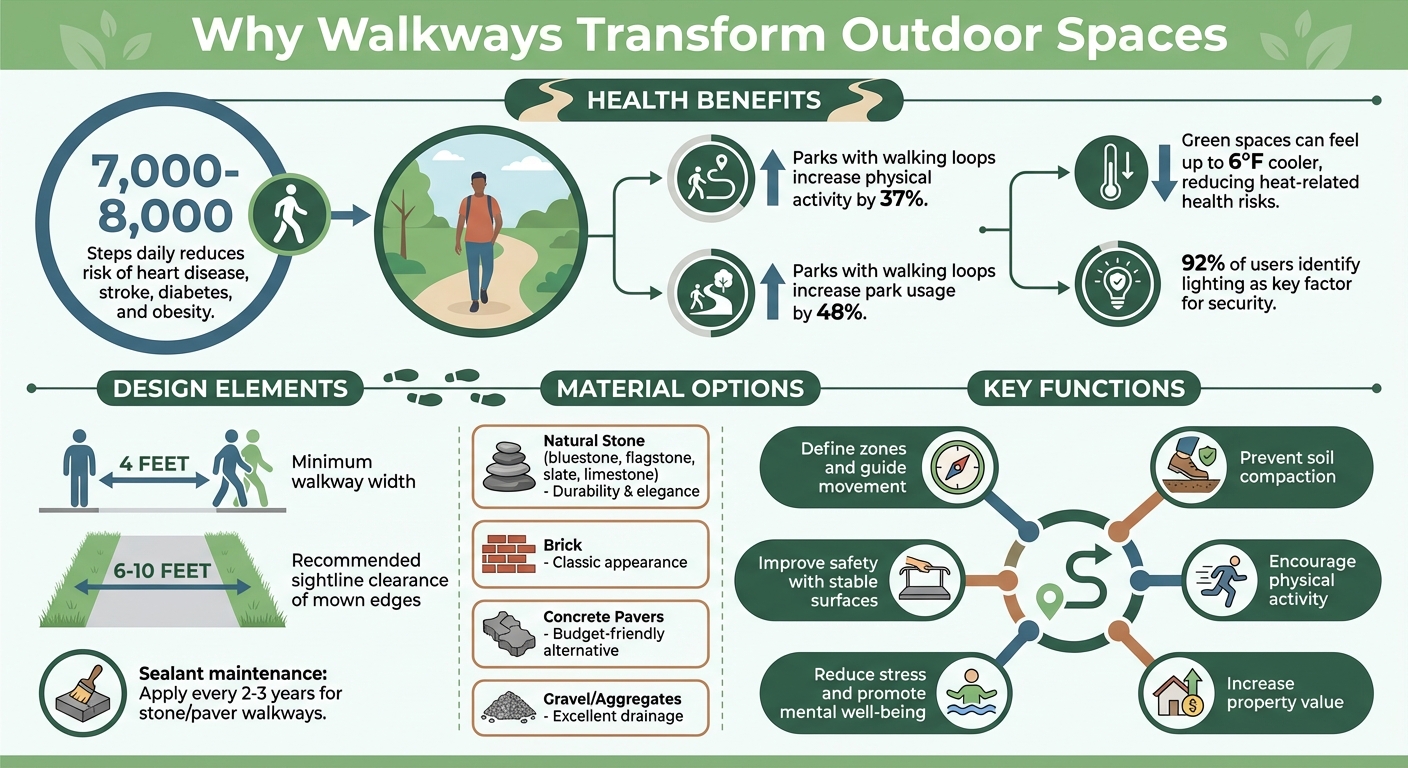
Health and Design Benefits of Walkways in Outdoor Spaces
Make your garden funky with the creative design of paths
sbb-itb-843f8be
Mental and Physical Health Benefits of Walkways
Walkways bring a sense of calm while encouraging physical activity. Studies show that thoughtfully designed paths can reduce stress and make it easier to stay active.
How Walkways Support Mental Health
The way a walkway is designed can shape how we feel in an outdoor space. Gentle, winding paths create a peaceful vibe that encourages exploration, while clearly marked edges and well-organized layouts help reduce the overwhelming feeling of disorder in a busy environment [1][2]. Matthew Ripley, Owner of Inspired Landscapes LLC, captures this perfectly:
"A curved, meandering path can be used to create a relaxing and casual environment" [1].
Walkways also address safety concerns by offering a stable, even surface, which is especially reassuring for older adults or those with mobility challenges. This eliminates the fear of tripping or slipping, making outdoor spaces more accessible and enjoyable [1][2][4]. When these paths lead to quiet spots with shaded seating, they create spaces perfect for reflection or meaningful conversations. In this way, a simple stroll can turn into a deeply restorative experience [1][4]. These mental benefits naturally complement the physical advantages of walking.
Physical Health Benefits of Walking Paths
Walkways make regular physical activity easier and more inviting. Research suggests that walking 7,000 to 8,000 steps a day offers significant health benefits, particularly for older adults [5]. Using these paths regularly can help lower the risk of heart disease, stroke, diabetes, and obesity [5][7]. A 2016 national study even found that parks with walking loops and fitness programs boosted moderate to vigorous physical activity by 37% [7].
Dr. Howard Frumkin, Senior Vice President at Trust for Public Land, emphasizes the wide-ranging health impact of parks:
"If we had a medicine that delivered as many benefits as parks, we would all be taking it. Parks deliver cardiovascular benefits, fight loneliness, combat osteoporosis, counter stress anxiety, and more" [7].
The materials used for walkways also matter. For example, rubberized surfaces, like those at Almansor Park, provide cushioning that protects joints and helps with recovery or managing chronic conditions [5]. Walkways encourage sunlight exposure, which supports vitamin D production – essential for healthy bones and a strong immune system [6][8]. Plus, neighborhoods near green spaces can feel up to 6°F cooler, reducing heat-related health risks [7].
These physical perks, combined with thoughtful design, show how walkways can seamlessly enhance well-being while blending into a functional and inviting outdoor environment.
Design Elements That Improve Landscape Flow
A well-thought-out walkway does more than guide movement – it shapes the entire experience of a landscape. The right mix of materials, layout, and natural features creates paths that feel natural and inviting.
Choosing Materials for Durability and Appearance
The materials you choose for landscape projects like walkways significantly impact both longevity and aesthetic. Natural stone options like bluestone, flagstone, slate, and limestone are durable and bring a timeless elegance, making them ideal for formal entrances and upscale gardens [3][4]. For a more classic touch, brick works beautifully, while concrete pavers offer a budget-friendly alternative. These pavers can mimic the look of natural stone and are easy to replace if damaged [4][1][2].
Matthew Ripley, Owner of Inspired Landscapes LLC, highlights the practicality of solid surfaces:
"For the most stable and flat surface precast concrete pavers, cut and faced natural stone, bricks, or concrete are great options. They allow for a smooth walking surface and unmatched longevity with minimal maintenance." [1]
For informal paths, gravel and aggregates such as decomposed granite or crushed shells provide excellent drainage and are cost-effective [4][1]. If you’re looking to manage stormwater runoff while replenishing groundwater, permeable materials are a smart choice [4][1]. To maintain the look and durability of stone or paver walkways, applying a sealant every 2–3 years is recommended [4].
Planning Layout and Connections
The layout of a walkway should align with how people naturally move through the space. Observing existing foot traffic patterns can help you determine the most intuitive routes [1]. Straight paths work well in formal or modern designs, offering direct access, while curved paths create a more relaxed, meandering feel that invites exploration [4][1][3].
To ensure comfort and usability, walkways should be at least four feet wide, allowing two people to walk side by side [1]. At transition points – like near patios, benches, or flowerbeds – consider widening the path to create natural gathering or resting spots [1]. For stepping stone paths, measure your stride and space the stones accordingly for a comfortable walking rhythm [9].
Proper installation is key to a long-lasting walkway. A compacted base layer of gravel or sand with proper grading prevents water pooling and ensures the surface stays level over time [4][9]. McHale Landscape Design emphasizes the importance of thoughtful transitions:
"A walkway that transitions from one material to another, for example, might signal a change in function or elevation." [3]
Adding natural accents to these structural elements ties everything together seamlessly.
Adding Plants and Natural Features
Plants and natural elements can elevate a walkway from a simple path to an integral part of the landscape. Flower borders, ornamental grasses, and neatly trimmed hedges can frame the walkway, defining its edges and adding a welcoming, natural touch. Low-growing ground covers like creeping thyme or moss planted between stepping stones soften the hard edges, blending the walkway with its surroundings.
Walkways also help protect your garden by guiding foot traffic away from delicate planting areas, reducing soil compaction and preventing damage to flower beds [1][2]. However, keep in mind that shaded areas under tree canopies can lead to moss or mildew growth on stone or concrete, which may create slip hazards. In such cases, consider using aggregate materials instead [1].
Incorporating native plants along the walkway not only reduces maintenance but also ensures the design feels at home in the local environment. For added charm, place boulders along rustic paths or use arbors to frame pathway entrances, marking transitions in the landscape’s purpose or style.
Where Walkways Work Best in Outdoor Spaces
Walkways serve as the connective tissue of outdoor spaces, linking different areas, protecting delicate plantings, and improving usability. Whether in residential yards, commercial properties, or public parks, well-planned walkways enhance both functionality and visual appeal.
Walkways in Residential Yards
In home landscapes, walkways do more than just provide a path – they define spaces and protect fragile plantings. By creating clear divisions between garden beds, lawns, and patios, they prevent soil compaction and maintain the integrity of planting zones. For example, a front walkway can complement a home’s architectural style – brick pairs beautifully with colonial homes, while sleek concrete pavers suit modern designs [1].
Matthew Ripley, owner of Inspired Landscapes LLC, highlights their importance:
"A well-designed walkway helps organize your outdoor space by defining clear borders." [1]
Backyard paths should reflect the daily routines of the household. A four-foot-wide path allows two people to walk side by side comfortably, while wider sections near seating areas or garden features create inviting gathering spots. In areas prone to standing water, materials like gravel or stepping stones can help prevent pooling without sacrificing aesthetics [1].
Walkways for Commercial Properties
Commercial walkways need to balance functionality with a professional appearance. These paths not only guide visitors efficiently but also set the tone for the property. Straight, angular designs often create a clean, formal look, while wider paths reduce congestion and ensure a welcoming atmosphere [1].
Safety and upkeep are critical in these settings. Smooth, even surfaces reduce trip hazards, while features like annual pressure washing keep paths looking fresh. Strategic lighting enhances visibility and highlights walkway features for nighttime visitors. As McHale Landscape Design notes:
"A walkway is often one of the first elements people experience when arriving at your property. It should feel intentional, welcoming, and seamlessly integrated into the larger landscape." [3]
By blending practicality with design, commercial walkways create a cohesive outdoor space that leaves a lasting impression on visitors.
Walkways in Public Parks and Recreation Areas
Public parks rely on walkways to encourage both activity and connection. Walking loops and interconnected paths can increase park usage by 48% and boost moderate-to-vigorous physical activity by 37% when paired with organized programs [7]. These paths also promote "green exercise", which has been shown to reduce anxiety and improve focus [7].
Safety is a top priority in public spaces. Well-lit primary walkways are essential, with 92% of users identifying lighting as a key factor for their sense of security [10]. Maintaining open sightlines – such as 6–10-foot mown edges or low-growing vegetation – helps eliminate hidden areas and enhances visibility [11].
Dr. Howard Frumkin, Senior Vice President at Trust for Public Land, underscores the health benefits:
"If we had a medicine that delivered as many benefits as parks, we would all be taking it. Parks deliver cardiovascular benefits, fight loneliness, combat osteoporosis, counter stress and anxiety, and more." [7]
These thoughtfully designed walkways not only promote physical activity but also create inviting, functional spaces that reflect the same care seen in residential and commercial landscapes.
How Pro Landscapes MD Can Help Transform Your Outdoor Space

Pro Landscapes MD brings decades of expertise to designing and installing walkways across central Maryland, serving areas like Annapolis, Bethesda, Columbia, and Towson. Their process starts with careful site planning – studying foot traffic, evaluating grade changes, and considering sightlines and sunlight exposure. This ensures walkways are not only practical but also seamlessly integrated into the surroundings [1][3]. They also excel at selecting materials and customizing designs to match various architectural styles.
Their team specializes in crafting flagstone and paver walkways using top-tier materials like bluestone, slate, travertine, and limestone. For added design flexibility, they also work with high-quality concrete pavers [3][4]. In historic areas, natural stone is often used to preserve the coastal charm, while in more traditional neighborhoods, classic brickwork or modular pavers are chosen to complement the local aesthetic [4].
Sustainability is a key focus. Pro Landscapes MD incorporates eco-friendly options like permeable pavers, crushed rock, and gravel pathways. These materials allow water to pass through naturally, reducing runoff and helping replenish groundwater [1][4]. This approach not only addresses Maryland’s drainage issues but also ensures walkways remain functional and visually appealing throughout the year.
Every project includes meticulous site preparation, from ground leveling to compacted base layers and reinforced edging, ensuring long-lasting stability [4]. Whether it’s a four-foot-wide path for side-by-side strolling or wider sections near patios and gardens for gathering spots, they tailor each design to meet real-life needs [1]. This attention to detail ensures that their walkways balance beauty with usability.
One satisfied client shared, "They came through with everything promised. I love the stacked stones we placed around our trees and flowerbed." This dedication to fulfilling promises, combined with their advanced drainage solutions and thoughtful landscape integration, has earned Pro Landscapes MD a reputation as a trusted partner for enhancing outdoor spaces across central Maryland and Washington, DC.
Conclusion
Well-designed walkways transform outdoor areas by improving flow, safety, and aesthetics. Studies highlight that carefully planned paths make navigation easier by offering level, stable surfaces that minimize trip risks while protecting the surrounding landscape [1][2]. Beyond their practical benefits, quality walkways can also boost curb appeal and even raise property value [2]. As Matthew Ripley, Owner of Inspired Landscapes LLC, puts it:
"A well-planned walkway gives direction for your eyes as well as where to walk and provides space to move through the landscape without trampling on surrounding plants or compacting soils" [1].
Key elements like material selection, proper sizing, and efficient drainage, paired with expert installation, help prevent issues like shifting or cracking, ensuring the walkway lasts [1][4]. Whether for homes, businesses, or public spaces, these design principles create outdoor areas that are both accessible and enduring. Choosing professional hardscaping services guarantees an outdoor space that stays functional, attractive, and reliable for years to come.
FAQs
How do I choose the best walkway material for my yard?
When picking the right material for your walkway, it’s important to weigh factors like your yard’s design, how the path will be used, and how long you need it to last. Common choices include flagstone, brick, travertine, and natural stone. Each of these options can improve both the look and practicality of your outdoor space.
Ask yourself: Do you want a more natural feel or a sleek, polished finish? Also, consider how much foot traffic the walkway will see. For the best results, consulting a landscaping expert can help you choose a material that not only fits your style but also stands up to wear and tear over time.
What walkway width is comfortable for everyday use?
For most daily needs, a walkway width of 36 to 48 inches works well. While 36 inches is the bare minimum for practical use, 48 inches provides extra room, making it easier and more comfortable to navigate.
How can a walkway help with drainage and runoff?
Walkways play a key role in managing water drainage and runoff. By guiding water away from buildings and other structures, they help prevent issues like pooling or erosion. Subtle slopes or proper grading can ensure water flows along the walkway instead of collecting in unwanted areas. Using permeable materials, like specific types of pavers, allows water to soak into the ground naturally. For added protection, features like French drains can be incorporated to minimize flooding and keep your landscape stable and healthy.
Chat with Us