









- bhavya gada
- No Comments
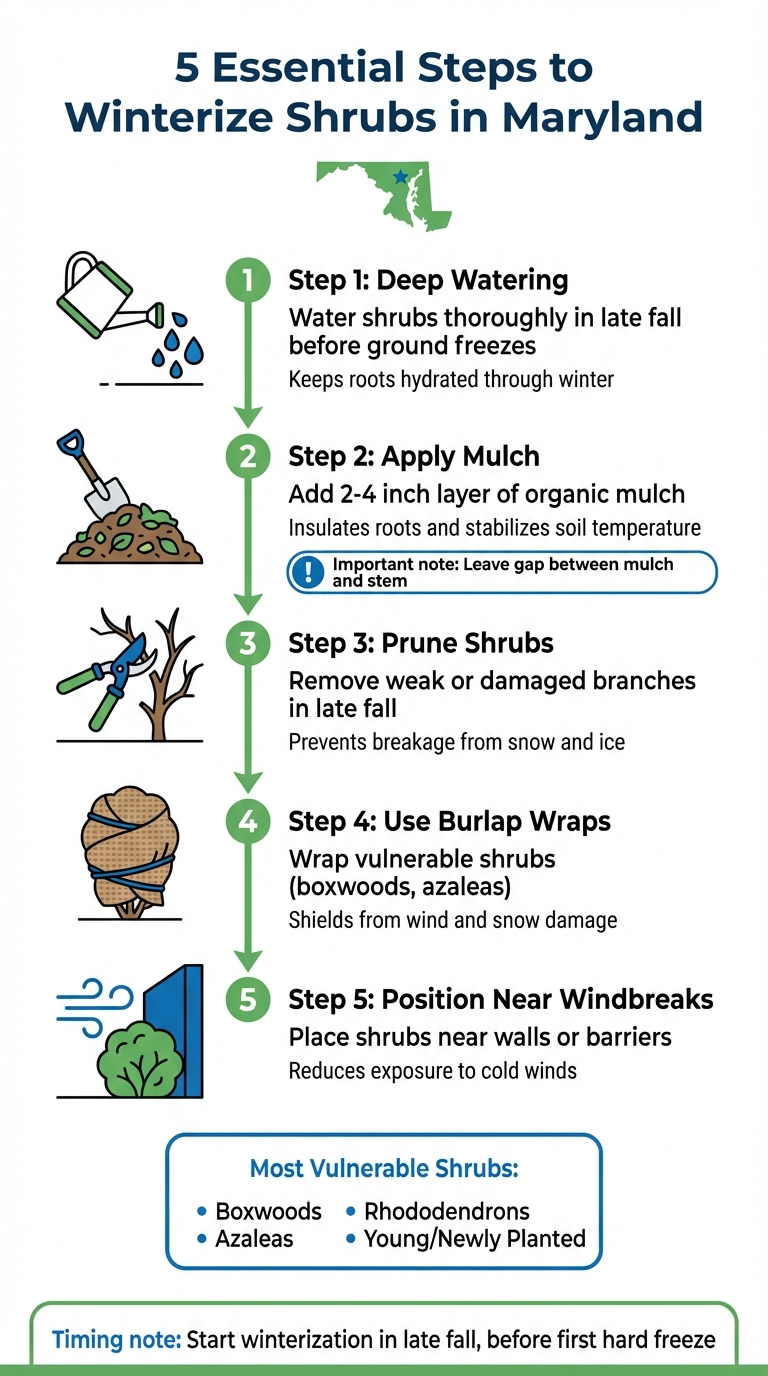
Maryland winters can be harsh on shrubs, with freezing temperatures, strong winds, and heavy snow causing dehydration, root damage, and broken branches. To protect your shrubs and ensure their survival, follow these key steps:
- Deep Watering: Water shrubs thoroughly in late fall before the ground freezes to keep roots hydrated.
- Apply Mulch: Add a 2-4 inch layer of organic mulch around the base to insulate roots and stabilize soil temperatures.
- Prune Shrubs: Remove weak or damaged branches in late fall to prevent breakage from snow and ice.
- Use Burlap Wraps: Wrap vulnerable shrubs like boxwoods and azaleas with burlap to shield them from wind and snow.
- Position Near Windbreaks: Place shrubs near walls or other barriers to reduce exposure to cold winds.
Young shrubs and broadleaf evergreens like azaleas and rhododendrons are especially at risk and require extra protection. Proper care not only prevents winter damage but also sets your shrubs up for a healthy spring.
5-Step Guide to Winterizing Shrubs in Maryland
How to Protect Plants for the Winter | This Old House

sbb-itb-843f8be
How Maryland’s Winter Climate Affects Shrubs
Maryland’s winters kick off around November, as the mild fall days give way to shorter daylight hours and colder temperatures. These seasonal changes bring a mix of challenges for shrubs: freeze-thaw cycles, heavy precipitation, and strong winds all combine to put stress on plants. Knowing how these weather patterns impact shrubs is the first step toward effective winter care.
The freeze-thaw cycle is especially tough on shrubs. When temperatures swing above and below freezing, the soil repeatedly expands and contracts. This constant movement can push roots out of the ground or damage them, leaving shrubs exposed and at risk. Once the soil freezes solid, shrubs lose access to water, even though evaporation continues. Winter storms add another layer of trouble – ice and heavy snow can weigh down branches, particularly on evergreens, causing them to bend, split, or break. Ice makes branches brittle, and winds during icy conditions can cause the most severe damage. On top of this, cold winds lead to windburn and speed up moisture loss, especially for broadleaf evergreens that retain their leaves all winter long. These harsh conditions make winter preparation essential for protecting shrubs.
Why Shrubs in Maryland Need Winter Preparation
Maryland’s winter climate creates a unique set of challenges for shrubs, making proactive care a must. The mix of temperature swings, heavy snow, and drying winds can severely harm unprotected plants. Frozen soil prevents shrubs from taking in moisture, while wind and sun accelerate dehydration, resulting in winter scorch – those brown, dried-out leaves that signal extreme water loss.
"As the ground freezes, it becomes difficult for shrubs to absorb moisture. By watering deeply in the late fall, you ensure that the roots are well-hydrated before the ground freezes." – Peter Doran Lawn
Applying a 2 to 4-inch mulch layer is a simple but effective way to insulate the soil and reduce the impact of Maryland’s fluctuating winter temperatures. Without these precautions, even well-established shrubs can suffer lasting damage or die. Different shrub species face varying risks, so tailored protection strategies are key.
Which Shrub Species Are Most at Risk in Winter
Some shrubs are more vulnerable to Maryland’s winter conditions than others. Broadleaf evergreens, such as boxwoods, azaleas, and rhododendrons, are particularly at risk. These plants keep their leaves through the winter, which means they continue to lose moisture even when the ground is frozen. This makes them especially susceptible to dehydration and damage.
| Shrub Type | Specific Risks in Maryland Winter | Recommended Protection |
|---|---|---|
| Boxwoods | Windburn, snow-related damage | Burlap wrapping, twine tying |
| Azaleas | Dehydration, frost damage | Mulching, protective covers |
| Rhododendrons | Broadleaf moisture loss | Deep watering, windbreaks |
| Young/Newly Planted | Root freezing, plant failure | Heavy mulching, full wrapping |
Young or newly planted shrubs are the most vulnerable, as their root systems haven’t fully developed yet. These plants require thick mulch layers and full protective wrapping to make it through their first winter. Even hardy native shrubs can benefit from basic winterization during their early years or after being transplanted.
Step-by-Step Guide to Winterizing Shrubs in Maryland
Preparing shrubs for Maryland’s tough winter weather involves a few essential steps, timed carefully to ensure maximum protection. These steps address the challenges posed by the region’s freeze-thaw cycles and strong winter winds. Start your winterizing efforts in late fall, well before the first hard freeze sets in.
Water Shrubs Deeply Before the First Freeze
Before the ground freezes, make sure your shrubs have enough moisture to sustain them through winter. This is particularly important for shrubs planted within the past year, as their roots are still developing.
"Water deeply any shrubs or trees you planted this year to send them into the winter fully hydrated. Pay special attention to broadleaf evergreens such as hollies and rhododendrons which dry out faster in winter winds." – Annette Cormany, Master Gardener Coordinator, University of Maryland Extension [4]
Plan your final deep watering for late autumn, just before temperatures start to consistently dip below freezing. Afterward, take the time to winterize your irrigation system by clearing out the lines to prevent damage from freezing and thawing cycles [5]. Once you’ve watered, it’s time to prepare the shrubs themselves for winter by pruning.
Prune Shrubs to Reduce Winter Damage
Pruning is key to protecting shrubs from winter storms. By removing weak or damaged branches, you minimize the risk of breakage from snow and ice. Late fall or early winter, when shrubs are dormant, is the best time for this task. Focus on cutting away dead, diseased, or damaged branches, as well as any that rub against or cross each other. This not only prevents breakage but also improves air circulation and strengthens the plant’s overall structure.
For shrubs prone to spreading under the weight of snow, gently tie branches together with soft twine to help them stay compact [2]. If you’re planning to wrap shrubs in burlap, prune them first to ensure the cover fits well and doesn’t trap decaying material. Be sure to clear away any debris after pruning to prevent pests and diseases [6]. Once pruning is complete, move on to insulating the roots with mulch.
Apply Mulch to Protect Shrub Roots
A layer of organic mulch, 2 to 4 inches thick, provides essential insulation for shrub roots. Use materials like shredded bark, wood chips, pine straw, or leaves, spreading them around the base of each shrub. Extend the mulch out to the drip line (the area beneath the outermost branches) to cover the entire root zone. This helps maintain consistent soil temperatures and prevents freeze-thaw cycles from pushing roots out of the soil.
Make sure to leave a small gap – several inches – between the mulch and the shrub’s stem. Piling mulch directly against the stem can trap moisture, leading to rot or disease. Apply the mulch in late fall, just before the first hard freeze. Avoid using rocks or gravel, as these materials can absorb and release heat in ways that might harm sensitive roots.
Wrap Shrubs with Burlap or Protective Covers
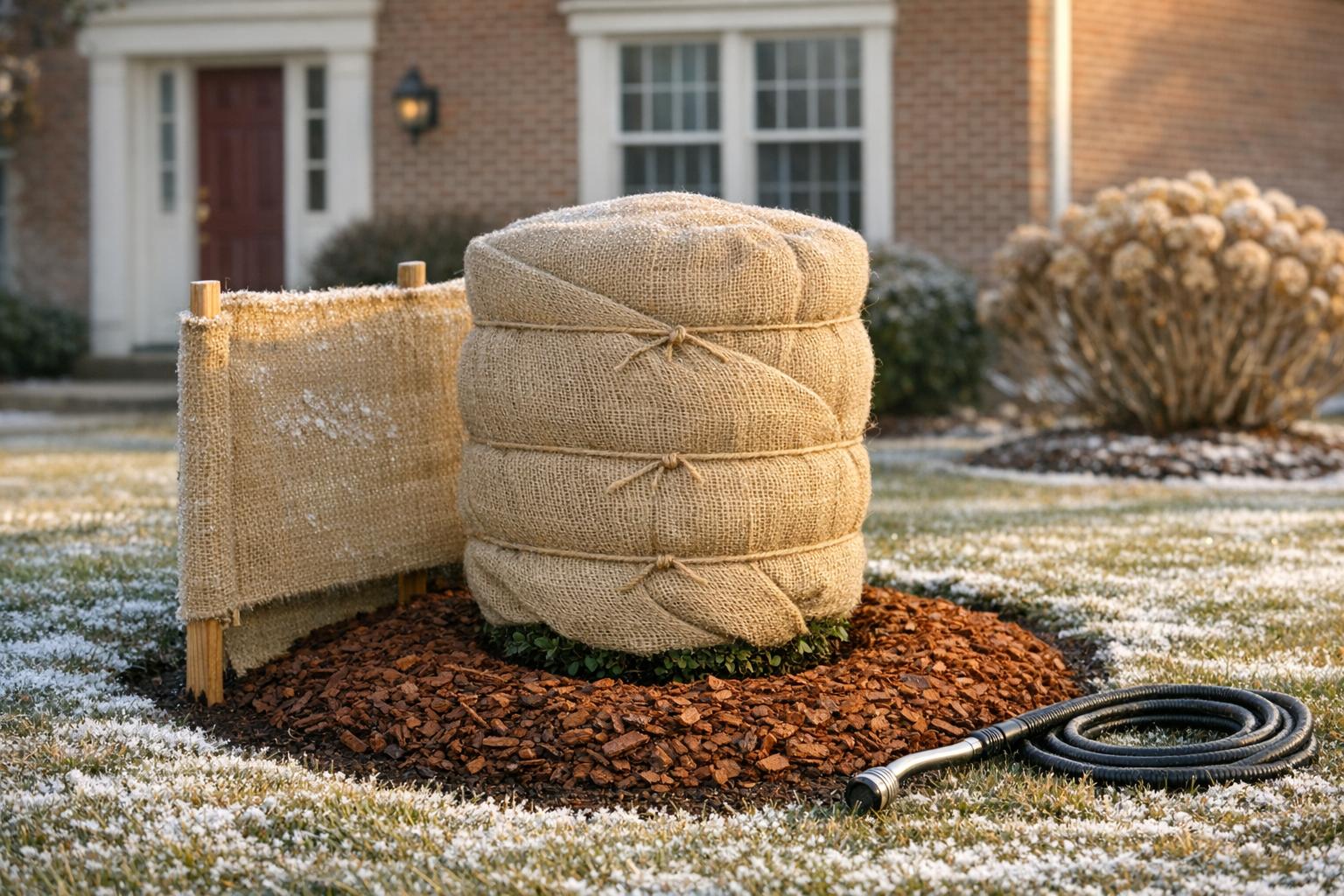
Wrapping shrubs in burlap or similar protective materials creates a physical shield against harsh winter conditions like wind, frost, and heavy snow. This step is especially valuable for vulnerable shrubs such as boxwoods, azaleas, and newly planted varieties. After pruning, loosely wrap the shrubs with burlap and secure it with twine. The wrapping should allow for air circulation – don’t make it too tight.
Focus your efforts on shrubs that are most exposed to winter winds or those located away from natural windbreaks. Young shrubs and broadleaf evergreens, in particular, benefit from this added layer of protection during their first few winters in the ground. Wrapping complements the earlier steps of deep watering, pruning, and mulching, giving your shrubs the best chance to thrive through Maryland’s winter.
Additional Winterization Tips for Maryland Shrubs
Once you’ve tackled the basics of winterizing your shrubs – like deep watering, pruning, mulching, and wrapping – there are a few extra steps you can take to shield them from Maryland’s unpredictable winter weather. These tips focus on using natural windbreaks and professional care to give your shrubs an added layer of protection.
Position Shrubs Near Natural Windbreaks
Placing shrubs near buildings, walls, or other barriers can create small, warmer zones that offer protection against harsh winter winds. This is especially helpful for plants that are better suited for warmer climates, such as those rated for Zone 8, which can struggle with the Mid-Atlantic’s colder spells [7].
"The frigid northern winds and freezing nighttime temps can damage or kill those perennials, shrubs, and trees that are more marginal in our Mid-Atlantic planting zones." – Meadows Farms [7]
Natural windbreaks help reduce the drying effects of winter winds, which can cause damage on sunny, windy days. Broadleaved evergreens like azaleas, hollies, and boxwoods are particularly vulnerable because their shallow roots make it harder to retain water during these conditions [3].
For better results, plant sensitive shrubs near a south-facing wall or a row of tall evergreens. These areas can create a buffer from cold winds and even provide extra warmth – tree bark on the south or west side of a shrub can be up to 18 degrees warmer than the surrounding air on sunny winter days [3]. If natural windbreaks aren’t an option, consider adding a stone wall or earthen berm to block the northern winds that are common in Maryland [7]. On the other hand, avoid planting needled evergreens in exposed spots like roadsides or parking lots, as they’re more likely to suffer from needle scorch due to wind exposure [3].
If you’re unsure about your natural windbreak options, professional winterization services can help tailor a solution to your landscape’s needs.
Work with Pro Landscapes MD for Professional Winterization

For those who prefer expert help, Pro Landscapes MD offers winterization services throughout central Maryland, including areas like Howard County, Montgomery County, Carroll County, Frederick County, Prince George’s County, and Baltimore County.
Their team knows the importance of timing. For example, they avoid pruning shrubs in the fall (from August to late October) to prevent stimulating new growth that wouldn’t survive freezing temperatures [10]. Instead, they focus on techniques that preserve plant structure, improve air circulation, and maintain overall health [5][10].
Professionals can also spot early signs of winter damage, like yellowing or orange leaves on broadleaf evergreens or rust-colored needles on conifers. These symptoms usually indicate that the roots aren’t able to replace water lost to wind and sun [9]. To combat this, they offer services like wrapping broadleaf evergreens to protect against windburn or building custom barriers for shrubs in exposed areas [9][5].
Beyond plant care, Pro Landscapes MD also preps irrigation systems and water features for freezing weather. Their team will blow out irrigation lines and safeguard pumps to prevent cracks and other winter-related damage [5]. Whether you’re in Ellicott City, Columbia, Gaithersburg, Bethesda, Potomac, Towson, or another nearby area, Pro Landscapes MD brings expert horticultural care to homeowners and property managers across central Maryland and Washington, DC.
Removing Winter Protections in Spring
As winter fades and spring approaches, it’s important to carefully remove the protective measures you put in place to help your shrubs survive the cold months. Timing is everything here. The best moment to take off these protections is right before the spring growing season kicks in. However, this timing can vary based on Maryland’s weather conditions [6]. Don’t rush it – leaving protections in place a bit longer ensures the lowest and most delicate buds are safe from any surprise cold snaps [8].
A good rule of thumb is to wait until you see bud break – when buds start to emerge. This helps you identify which parts of the plant made it through winter. Stacey Hirvela from Proven Winners emphasizes this point:
"Waiting until the buds begin to emerge in spring allows you to make the most educated decisions about how much and where to prune" [8].
Once you’ve removed the covers, it’s time to inspect your shrubs closely. Look for any winter damage, like broken branches or signs of drying out (desiccation). Broadleaf evergreens like azaleas and boxwoods are especially prone to desiccation or windburn [2]. At the same time, check for chewing damage at the base of shrubs caused by rabbits, voles, or mice. Evergreens such as rhododendrons and hollies may also show signs of deer browsing [8].
Don’t forget to clean up the area around your shrubs. Fallen leaves and debris left over from winter can harbor pests and create fungal problems. The Scientific Plant Service advises:
"Remove any remaining leaves or debris from fall and winter from around your plants and shrubs to minimize the development of pests and diseases" [6].
This cleanup is crucial because slugs often lay eggs under leftover debris, and lingering moisture can encourage fungal growth as temperatures rise [6].
Finally, if the soil has thawed but feels dry, give your shrubs a deep drink of water to help them bounce back from any winter dehydration [2]. For Maryland homeowners seeking professional assistance, late winter (January or February) is a great time to schedule landscape inspections. This ensures you’re ready for spring before contractors get too busy [6]. By following these steps, you’ll set your shrubs up for a healthy and thriving growing season.
Conclusion
When spring arrives and it’s time to remove winter protections, take a moment to review your shrub care routine to keep them thriving. Preparing Maryland shrubs for winter can be broken down into four straightforward steps: deep watering, applying a 2- to 4-inch mulch layer, using burlap wraps for sensitive evergreens, and pruning during dormancy. As Peter Doran Lawn wisely notes:
"A little preparation now can save you significant time, money, and heartache in the spring" [2].
Throughout the season, it’s crucial to maintain regular care. This means clearing away debris and keeping an eye on moisture levels, especially during dry periods. Scientific Plant Service emphasizes:
"Healthy and hydrated plants have the best chance of surviving winter" [1].
If you’re in Howard County, Montgomery County, Carroll County, Frederick County, Prince George’s County, or Baltimore County, an early inspection with Pro Landscapes MD can make a big difference. Their team of professional horticulturists offers specialized treatments like anti-desiccants to reduce water loss [1]. To ensure availability, consider scheduling with contractors in January or early February before their spring calendars fill up [6].
Whether you choose to winterize your shrubs yourself or enlist the help of seasoned experts, these steps will safeguard your landscape investment and prepare your shrubs for a vibrant comeback when Maryland’s warmer weather returns.
FAQs
When should I winterize shrubs in Maryland?
The best time to prepare shrubs for winter in Maryland is during late winter, usually between February and April. This timing helps reduce stress on the plants and lowers the risk of pest problems. It’s also the ideal time to prune any dead or damaged branches. However, protective measures like mulching should be done earlier – preferably in late fall or early winter – before the harshest cold sets in. Concentrating your pruning and winterizing efforts from late winter into early spring ensures the best results.
How do I know if my shrub needs burlap wrapping?
To figure out if your shrub needs burlap wrapping, think about its ability to withstand cold, where it’s planted, and how likely it is to suffer winter damage. Wrapping is a good idea for fragile shrubs, those in windy or open locations, or types that are susceptible to winter burn. Burlap acts as a protective layer, offering insulation and guarding against cold winds, snow, and frost. On the other hand, hardy shrubs or ones in naturally protected spots might not need this extra layer of care.
What should I do if my shrubs turn brown in winter?
If your shrubs develop brown patches during winter, hold off on pruning until spring. This delay helps safeguard the buds and maintains the plant’s overall health through the chilly months. To protect the roots and minimize stress, consider adding a layer of mulch around the base. If you notice damage or disease, trim only the affected branches after the first freeze, but save any major pruning for when the weather warms up.
Chat with Us