









- bhavya gada
- No Comments
Winter can wreak havoc on patios, especially in areas like Maryland with frequent freeze-thaw cycles. Water seeps into cracks, freezes, and expands, causing damage to surfaces, pavers, and retaining walls. To prevent costly repairs come spring, follow these 5 essential steps:
- Clean and Inspect: Remove debris, wash surfaces, and repair cracks to prevent water damage. Ensure proper drainage by checking slopes and filling soil gaps.
- Seal Surfaces: Apply the right sealer for your patio material to block moisture and de-icing salts. Test for resealing needs using a water bead test.
- Protect Furniture: Clean and cover outdoor furniture with breathable, water-resistant covers. Store cushions and fabric items indoors to prevent mold and damage.
- Winterize Water Features: Drain pipes, fountains, and irrigation systems. Use compressed air to clear water and store pumps indoors.
- Ground Protection: Backfill eroded areas, apply mulch, and elevate planters to prevent water pooling and freezing near the patio.
Start these steps early in the fall to prepare your patio before freezing temperatures hit. For major issues like drainage problems or structural instability, consider hiring professionals to ensure your patio stays intact through winter.
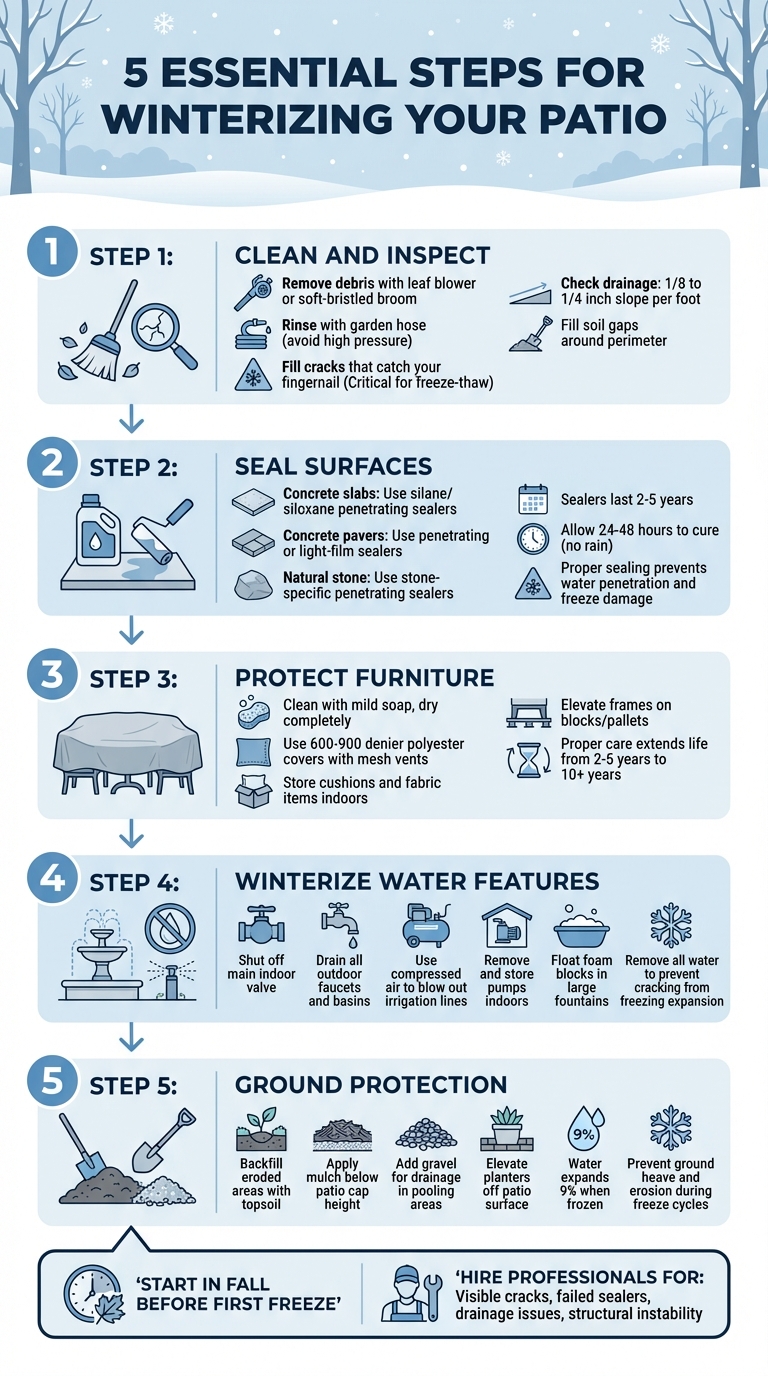
5 Essential Steps for Winterizing Your Patio
How to Winterize Your Outdoor Furniture
sbb-itb-843f8be
1. Clean and Inspect Your Patio Surfaces
Start by clearing away organic debris like leaves, twigs, and pine needles using a leaf blower or a 24-inch soft-bristled push broom. These materials can decompose under snow, leaving behind stains that are hard to remove from your patio [3][6]. Afterward, rinse the surface with a garden hose set to a strong spray or use a low-pressure washer. Avoid high-pressure settings, as they can open up pores in stone or concrete, making them more vulnerable to damage [1][2][6].
For tougher stains, use the right cleaner for the job. For grease, opt for mild degreasers. Rust stains respond well to lemon juice or white vinegar, while algae or mildew call for a masonry-safe, bleach-free cleaner. If your patio features porous natural stone like bluestone, stick to a mild detergent and a soft brush to avoid damage [4][6][2][7].
While cleaning, take time to inspect the patio closely. Check for cracks – if a crack catches your fingernail, fill it with a flexible, UV-stable sealant to prevent water from seeping in and causing freeze-thaw damage [2]. Also, look for loose pavers, sunken areas, or places where water pools. These issues can lead to frost heave, which may tilt or displace parts of your hardscape during freezing weather [2][4].
"Winter patio protection is about controlling water – diverting it, sealing out what you can, and letting whatever remains drain and breathe." – Landscaping by J. Michael [2]
Don’t forget to walk the perimeter of your patio. Fill any gaps in the soil that may have eroded [4]. Make sure downspouts direct water several feet away from your patio – splash blocks alone aren’t enough to handle heavy winter runoff in areas like Maryland [2]. Also, check that your patio slopes 1/8 to 1/4 inch per foot away from your house to prevent ice dams and erosion [2][8][3].
Once your patio is clean, inspected, and free of cracks, it’s time to seal the surface for extra protection.
2. Seal Your Patio and Hardscapes
Once your patio is clean and inspected, the next step is sealing it to keep moisture at bay. This creates a protective barrier against water and de-icing salts – two major culprits for winter damage in Maryland. A good sealant ensures moisture stays on the surface, where it can evaporate or drain away, instead of seeping in and causing freeze-thaw cycles that lead to cracks and other damage [2].
The type of sealer you need depends on your patio material:
- Concrete slabs and steps: Opt for silane/siloxane penetrating sealers. These repel water and chlorides while allowing vapor to escape, which is critical during freezing and thawing.
- Concrete pavers: Choose either penetrating sealers or light-film sealers. Both shed water, and some light-film options can also enhance the color of your pavers.
- Natural stone (e.g., bluestone or flagstone): Use stone-specific penetrating sealers. These help preserve the stone’s natural look while preventing blotchy stains.
Avoid using high-gloss, film-forming sealers on outdoor surfaces. While they might look appealing, they can become dangerously slippery when wet or icy.
Before applying a sealer, make sure the surface is completely dry and free of dirt, oil, or mineral deposits. Not sure if your patio needs resealing? A simple water test can help: drop a little water on the surface. If it beads up, the seal is still intact. If it soaks in, it’s time to reapply. Always test the sealer on a small, hidden area before treating the entire patio. Most penetrating sealers last 2–5 years, depending on factors like weather and foot traffic [2].
Follow the manufacturer’s instructions carefully when applying the sealer, and give it enough time to cure. Make sure there’s no rain in the forecast for at least 24–48 hours after application. Using a high-quality sealant now can save you from expensive repairs caused by freeze-thaw damage later.
Once your patio is sealed and protected, you can turn your attention to securing your outdoor furniture.
3. Store and Cover Outdoor Furniture
Once your patio is sealed, it’s time to protect your outdoor furniture. Maryland’s freeze-thaw cycles can be brutal – furniture that might last over a decade with proper care could deteriorate in just 2 to 5 years if left exposed. Wood absorbs moisture, leading to warping and cracking, while metal can rust after just a couple of winters [13, 14].
Start by cleaning all furniture with mild soap and water to remove dirt and grime. Let everything dry completely before covering to prevent mold growth. For wood furniture, applying teak oil or a weatherproof sealant can help prevent splitting in cold, dry conditions. Metal pieces benefit from a protective wax or rust-resistant spray, especially if you notice early signs of rust [13, 14].
When it comes to covering and storing, choose breathable, water-resistant covers made from 600 to 900 denier polyester with mesh vents. These covers prevent moisture buildup and allow airflow. Secure them with adjustable buckle straps or auto-locking drawcords. Avoid plastic tarps – they trap moisture and can do more harm than good. Taking these steps is far more cost-effective than replacing furniture every few years [9].
Store cushions, umbrellas, and fabric items indoors in a dry area like a basement or attic. Use breathable storage bags or airtight bins to keep out pests. For wicker furniture, either store it indoors or apply a water-repellent finish. If you leave furniture frames outside, elevate them on blocks or pallets to prevent moisture absorption and keep them away from roof drip lines or gutters where ice can accumulate [13, 14].
"Brand-new furniture can look 10 years old in just one winter season. It’s not unusual to see metals rust, wicker unravel, wood split and plastics crack because they were unprotected." – Paul Knapp, Landscape Designer [10]
Don’t forget to remove heavy snow from furniture covers regularly to avoid damage. If you use de-icers nearby, steer clear of rock salt – it can corrode metal and ruin finishes. Instead, opt for calcium magnesium acetate (CMA), which is less damaging [9].
With your furniture secured, you’re ready to focus on winterizing irrigation systems and water features.
4. Prepare Irrigation Systems and Water Features
Maryland’s freeze-thaw cycles can wreak havoc on outdoor plumbing. When water freezes and expands, it can burst pipes, crack pumps, and damage fountain basins. The result? Costly repairs. For example, replacing a single frozen pump often costs more than hiring professionals to winterize your system [2].
Start by shutting off the main indoor valve that supplies outdoor faucets and irrigation lines. Then, open all outdoor spigots to drain any trapped water [11]. For irrigation systems, use compressed air to blow out the lines. This step is crucial because water can get trapped in low spots that gravity drainage misses, and any leftover moisture can freeze and split the pipes [2].
Water features need extra care. Drain all basins and plumbing lines completely, then use compressed air to blow out any remaining water. Remove pumps from fountains and ponds, and store them indoors for the winter. If you have a large fountain that can’t be fully drained, float a foam block in the water. This helps absorb the pressure from ice expansion and prevents cracks [11]. Seal off inlets and splash zones to keep water from re-entering the system [2].
"Water left in outdoor pipes, ponds, or fountains can freeze, expand, and destroy your patio’s plumbing and features." – S&S Brick Paving [11]
For outdoor kitchens with sinks or ice makers, shut off water lines and disconnect any appliances to prevent frozen pipes and moisture damage [5]. Also, check that downspouts direct water away from your patio and water features. Standing water near these areas increases the risk of freeze damage [2].
Taking these precautions ensures your water systems and patio stay intact through the winter. A little preparation now can save you thousands in repairs and protect your outdoor investments.
5. Add Mulch and Ground Protection
Once your patio and its features are secured, it’s time to focus on protecting the surrounding ground to minimize ice-related damage. Maryland’s freeze-thaw cycles can do more than harm your patio surface – they can destabilize the ground around it. When soil erodes along the edges of your patio, it creates pockets where water can collect and freeze. As water freezes, it expands by roughly 9%, which can dislodge pavers, shift stones, or even crack concrete [2].
Start by inspecting the edges of your patio for signs of soil erosion or pooling water. If you spot any areas where the ground has sunk, backfill them with topsoil to create a smooth grade that channels water away from your patio [4].
"Any spot where the soil has eroded is a place for water to pool, freeze, and potentially damage your patio. To avoid this, backfill any crevices with soil." – Meyer Landscape & Design [4]
Next, apply mulch and bedding materials carefully. Make sure they stay below the height of your patio caps and edge restraints to avoid moisture seeping into the hardscape [2]. For areas prone to water pooling, consider adding gravel to enhance drainage and prevent ice dams from forming [2]. If you have large, permanent planters, elevate them slightly off the patio surface to prevent their rims from freezing to the stone. Wrapping them in burlap can also provide extra insulation during the colder months [11].
The good news? These ground protection measures are simple enough to tackle on your own with basic tools like a shovel and some topsoil [3]. By taking these precautions, you’ll not only stabilize the ground around your patio but also help preserve its structure throughout Maryland’s tough winters.
When to Hire Professional Help
While some winterization tasks are straightforward enough to handle on your own, there are times when professional expertise is the smarter choice. Knowing when to bring in the pros can help you avoid expensive repairs and keep your patio in good shape through Maryland’s tough freeze-thaw cycles.
Start by giving your patio a close inspection. Look for visible cracks – if your fingernail catches in a gap, it’s a sign that the crack needs professional attention before winter sets in [2]. These cracks can let water seep in, and when that water freezes, it can cause significant damage. Professionals can address this by routing the cracks and filling them with UV-stable, flexible sealant designed to handle temperature changes.
Next, check your patio’s sealer with a quick water test. Pour water on a few spots. If the water soaks in instead of forming beads, your sealer has failed and needs to be reapplied before freezing temperatures arrive [2]. High-quality penetrating sealers typically last 2 to 5 years, depending on how much wear and tear they endure, while paver sealants generally need reapplication every 3 to 5 years [2][3]. Professionals use specialized equipment to ensure the new sealer is applied evenly and lasts longer.
Drainage problems are another warning sign to watch for. After a rainstorm, check for standing water and mark the spots with chalk. Persistent puddles suggest your patio may not have the proper slope (ideally 1/8 to 1/4 inch per foot away from your home) or that drainage systems are clogged [2]. Companies like Pro Landscapes MD offer tailored drainage solutions for central Maryland, including French drains, regrading, and stormwater management. Addressing these issues early can prevent ice from forming, which could lead to slip hazards or structural damage.
Lastly, pay attention to signs of structural instability – like wobbling pavers, raised stones, or bowing retaining walls. These issues often point to a compromised base, usually caused by moisture freezing beneath the surface [2][6]. Pro Landscapes MD provides services across Howard County, Montgomery County, Carroll County, Frederick County, Prince George’s County, and Baltimore County. Their team can re-level and reset pavers, apply polymeric sand to block water infiltration, and fix drainage backfill to protect retaining walls from frost heave.
Conclusion
Getting your patio ready for winter isn’t just about avoiding headaches – it’s about protecting your investment and saving money in the long run. When water freezes, it expands, leading to freeze-thaw damage that can crack surfaces and shift pavers out of place [2].
Taking the time to winterize properly can make a big difference. Sealing your patio keeps moisture and de-icing salts from seeping in, while covering your furniture helps prevent rust and warping. Managing drainage is equally important – it stops water from pooling and freezing into slippery, dangerous ice patches.
Starting early is key. Tackling these tasks in the fall gives you enough time to prepare before Maryland’s first hard freeze hits. Whether you’re handling basic cleaning and furniture storage yourself or bringing in professionals for sealing and drainage fixes, the goal is to get everything squared away before the cold weather takes hold.
For more complex issues, like persistent water pooling, visible cracks, or structural concerns, it’s smart to call in the experts. Pro Landscapes MD provides patio repair and drainage solutions across Howard County, Montgomery County, Carroll County, Frederick County, Prince George’s County, and Baltimore County. Their team can assess your patio’s condition and make sure it’s ready to handle whatever winter throws its way.
Get ahead of the season now to keep your patio in great shape and avoid costly repairs come spring.
FAQs
When should I winterize my patio?
It’s a good idea to get your patio ready for winter in late fall, before the temperatures dip below freezing. Doing this early helps prevent damage caused by snow, ice, and the constant freezing and thawing. Taking care of it before the first hard freeze not only protects your patio from rough winter conditions but also makes the task easier while the weather is still mild.
What sealer should I use for my patio material?
When it comes to choosing the right sealer for your patio, it all depends on the material and the type of protection you need. For concrete patios, a penetrating sealer works best, offering resistance against water, salt, and stains. If your patio is made of natural stone, a water-based impregnating sealer is a great choice to guard against water damage and de-icing salts. Prefer a sleek, shiny finish? Go for acrylic or polyurethane sealers to achieve a glossy or wet-look effect. For winter months, focus on a durable, water-repellent sealer to keep your patio safe from harsh conditions.
When should I hire a pro for patio drainage or repairs?
When patio issues go beyond basic upkeep, it’s time to call in a professional. Some clear signs include large cracks, uneven surfaces, sinking or shifting pavers, or water damage that threatens the patio’s structural integrity. If the repairs require addressing structural elements, major leveling, or fixing drainage problems, a professional can ensure the job is done right. Their expertise guarantees not just safety but also a durable, long-lasting solution.
Chat with Us