









- bhavya gada
- No Comments
Water pooling in your yard can cause serious damage to your lawn, foundation, and property value. Common causes include poor yard grading, compacted or clay-heavy soil, and clogged gutters or downspouts. These issues can lead to dead grass, soil erosion, mosquito infestations, and even costly foundation repairs.
Here’s how to fix it:
- DIY solutions: Aerate your soil, redirect downspouts 6–10 feet away, and adjust overwatering. These are cost-effective for minor issues.
- Professional options: Install French drains, create dry creek beds, or regrade your yard for severe problems. Costs vary depending on the method and project size.
Regular maintenance like cleaning gutters twice a year and checking for pooling after heavy rain helps prevent long-term issues. For persistent problems, professional services ensure effective and lasting solutions.
How to Identify Water Pooling in Your Yard
Common Signs of Water Pooling
Spotting drainage issues starts with knowing what to look for. Check your yard 24–48 hours after it rains to identify any problem areas [2]. If water is still standing after two days, that’s a major warning sign. Look for puddles that don’t drain or muddy patches that feel soft and squishy underfoot – both point to pooling issues.
Pay attention to soil erosion around slopes or low-lying areas. On flat lawns, erosion often shows up as shallow dips that collect water. On sloped properties, you might notice small channels or grooves (called rills) where water has carved its path downhill. For perspective, just 1 inch of rain on a 5% slope can displace up to 10 tons of soil per acre if not managed [5].
To document these problem spots, measure their distance from your house and use a tape measure to record the water depth. Snap photos for reference. You can also use a moisture meter, which costs around $10–$20, to check if soil saturation levels exceed 20%. This tool is especially helpful in pinpointing areas that need attention [6]. Catching these signs early is key – persistent pooling can quickly lead to bigger problems.
Problems Caused by Water Pooling
Ignoring pooling water can lead to expensive and sometimes irreversible damage. One of the first signs you’ll notice is dead grass. When soil remains waterlogged, grass roots can’t access oxygen, leading to root rot and fungal diseases like brown patch. This happens quickly in warm weather above 70°F, where healthy grass can turn yellow and then brown in just one to two weeks [1].
Mosquitoes are another major concern. They can breed in even tiny amounts of standing water, like what fits in a bottle cap, and complete their life cycle in just seven days. A single female mosquito can lay 100–300 eggs per batch, increasing the risk of diseases like West Nile virus or Zika, which are especially dangerous for children and older adults [4].
Pooling water near your home’s foundation poses an even bigger threat. Water collecting within 10 feet of your house can exert over 1,000 pounds of pressure per square foot. This pressure can crack basement walls, cause water seepage, and lead to uneven settling that damages driveways [3].
It’s not just about structural damage – your property value can take a hit too. Drainage issues can lower your home’s value by 5%–10%, which translates to a $25,000 loss on a $300,000 property. Potential buyers see these problems as signs of neglect and anticipate costly repairs [7].
While minor issues like puddles that dry out within 12–24 hours or small wet spots under trees might be manageable with DIY solutions, more severe problems – like standing water deeper than 2 inches, large patches of dead grass over 100 square feet, or erosion creeping toward your home – are signs you should bring in professionals.
sbb-itb-843f8be
How to Fix Standing Water in the Lawn – Low Spot Drainage with Catch Basin
What Causes Water to Pool in Lawns
Several factors contribute to water pooling in lawns, including yard grading, soil type, and the condition of gutters and downspouts.
Improper Yard Grading
For proper drainage, a yard needs to slope away from the house. When grading is poor or the ground settles unevenly, low spots can develop, trapping water. Even minor depressions as shallow as 1–2 inches can lead to noticeable puddles, creating muddy areas and putting stress on your grass. Over time, a yard that was initially graded well might shift, forming new low points. If the slope channels water toward your home instead of away, it can cause basement flooding and even structural damage to your foundation.
Compacted or Clay Soil
Soil that’s compacted becomes a barrier to water absorption. Without enough air pockets, water can’t seep into the ground properly [9]. This issue is common in areas with heavy foot traffic, past construction activity, or soil that repeatedly cycles through wet and dry conditions.
Clay soil poses a similar problem because its dense structure holds water. When wet, clay expands, further reducing its ability to drain [8][9]. You can check your soil’s drainage by digging a 1-foot-deep hole and filling it with water. If less than 2 inches of water drains per hour, your lawn likely has poor drainage. In some cases, a hardpan layer – essentially a dense, compacted layer of clay or soil beneath the topsoil – can block water from moving downward, even if the surface soil looks fine.
Blocked Gutters and Downspouts
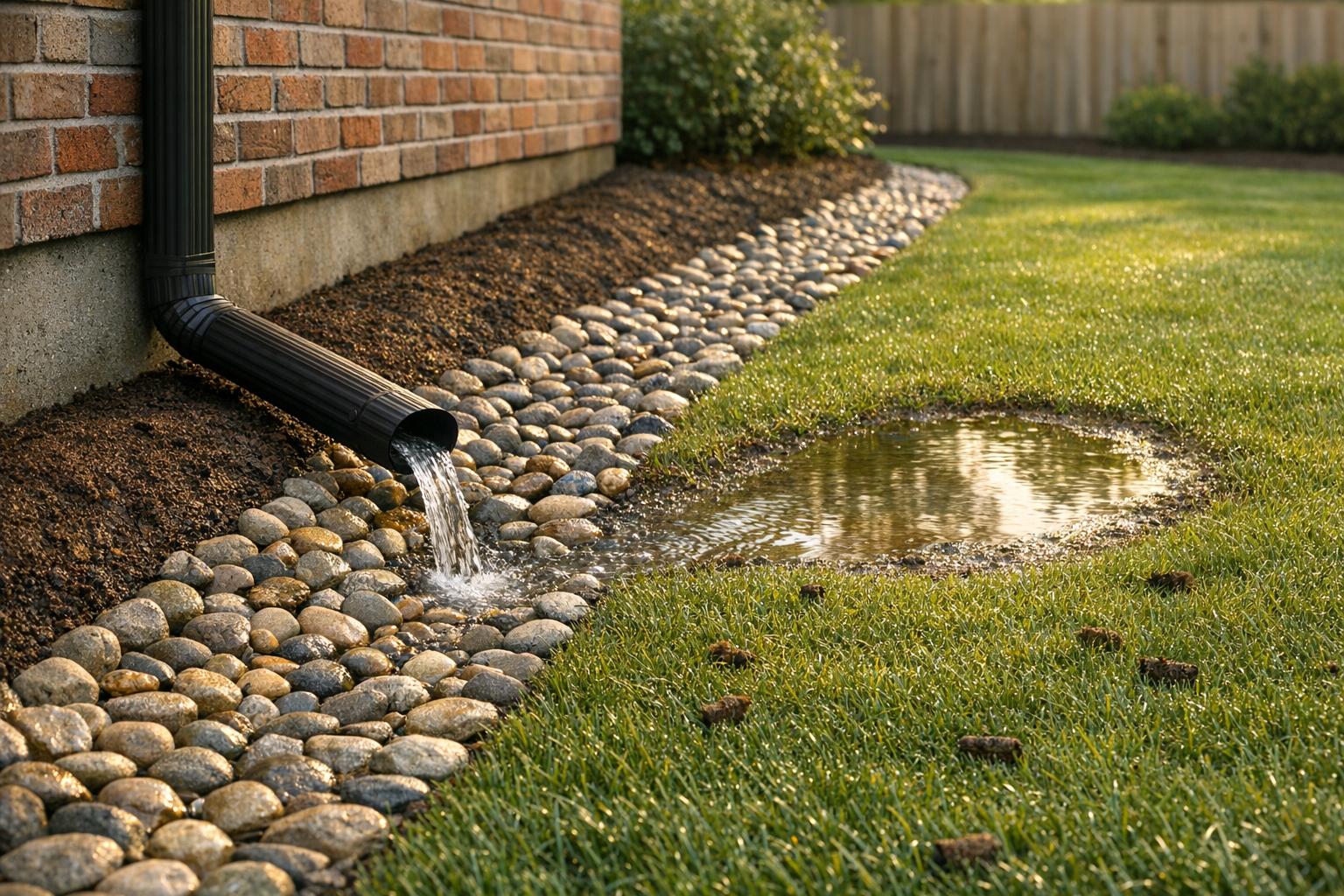
Clogged gutters can cause water to overflow near your home, increasing the risk of pooling. Similarly, downspouts that release water too close to the foundation can lead to localized puddles and soil erosion. Even if gutters and downspouts are functioning, it’s essential to ensure downspouts extend far enough from the house to direct water safely away and protect your property.
Up next, we’ll dive into practical DIY fixes and professional options to tackle these problems.
DIY Fixes for Minor Drainage Problems
If you’re dealing with small puddles or minor pooling in your yard, you might not need to call in the pros. These DIY fixes are perfect for isolated trouble spots rather than larger, more complex drainage issues.
Aerating Soil and Adding Top-Dressing
Aerating your lawn can help water seep into the ground instead of collecting on the surface. This process involves creating small holes in the soil, which improves drainage. For smaller yards, a manual aeration tool will work just fine. If you’ve got a bigger space to cover, renting a motorized aerator is a cost-effective option compared to professional services, which typically cost around $270 for a large lawn [10].
Once the soil is aerated, you can further improve drainage by mixing in materials like organic matter or pea gravel. These additions loosen up heavy clay soils and help prevent future compaction. Together, aeration and soil amendments can tackle the root cause of surface water pooling in compacted areas.
Redirecting Downspouts
Aerating helps with soil issues, but what about water runoff from your roof? Redirecting your downspouts can make a big difference. Runoff from gutters often leads to wet foundations and pooling near your home [11]. By extending your downspouts 6 to 10 feet away from the house, you can quickly address minor pooling problems. Flexible plastic tubes work well for this and typically cost less than $100 for a DIY setup [10].
Before extending your downspouts, it’s important to check the discharge area. Make sure it’s not a low spot and that the ground slopes 2% to 5% away from your home. If the area is flat or slopes toward your foundation, you’ll need to add topsoil to create a gentle slope. Just remember to maintain at least 4 inches of clearance below your siding when adding soil [11].
Fixing Overwatering Problems
Sometimes, the issue isn’t drainage – it’s overwatering. If puddles form where your sprinklers run, you might be watering too much or too often. Adjust your watering schedule to give the soil time to absorb moisture. Water deeply but less frequently to encourage deeper root growth, which can improve the soil’s ability to handle water.
Also, inspect your irrigation system. Broken sprinkler heads or overlapping zones can lead to excess water pooling in certain areas. Fixing these problems and fine-tuning your watering habits can go a long way in preventing minor drainage issues.
For more serious drainage problems, consider professional solutions outlined below.
Professional Drainage Repair Methods
When DIY efforts fall short and persistent water pooling becomes a bigger issue, it’s time to turn to professional solutions. These methods are designed to tackle severe drainage problems that could lead to structural damage if left unresolved. Here’s a breakdown of the most effective professional approaches for long-term drainage repair.
French Drain Installation
French drains are a tried-and-true method for redirecting water underground. This system involves a perforated PVC pipe buried in a gravel-filled trench, which collects water and channels it to a safe discharge location. The gravel not only helps water seep into the pipe but also filters out soil and debris. Installation costs typically range from $10 to $100 per linear foot [10]. French drains are especially useful in areas with heavy clay soil or spots that frequently flood after rainstorms. Unlike surface solutions, these drains work discreetly beneath your lawn.
Dry Creek Beds and Swales
If you’re looking for a functional solution that also enhances your yard’s appearance, dry creek beds and swales are excellent options. A dry creek bed is essentially a stone-lined channel that guides stormwater across your property. For DIY projects, materials generally cost about $3 to $4 per square foot [10]. Swales, on the other hand, are shallow, grass-covered ditches designed to divert water without relying on pipes. Professional swale construction costs around $5 to $15 per linear square foot [10]. Unlike French drains, swales remain visible, blending seamlessly into your landscape while efficiently managing runoff from larger areas.
Yard Regrading
Yard regrading involves reshaping your property to create a slope that directs water away from your home’s foundation. This method is essential when the natural slope of the ground causes water to pool near your house, potentially leading to basement flooding or foundation issues [10]. Before starting, professionals will call 811 to mark any underground utility lines to avoid accidents [10]. The process often includes compacting clay-heavy soil and ensuring at least 4 inches of clearance from your home’s siding. While regrading is labor-intensive and best handled by experts for larger projects, it provides a long-term solution to drainage problems caused by improper grading.
For expert drainage repairs, Pro Landscapes MD offers services tailored to your needs. Their team specializes in French drain installations, custom-designed dry creek beds and swales, and precise yard regrading to ensure effective water management and a healthier landscape.
Drainage Solution Comparison
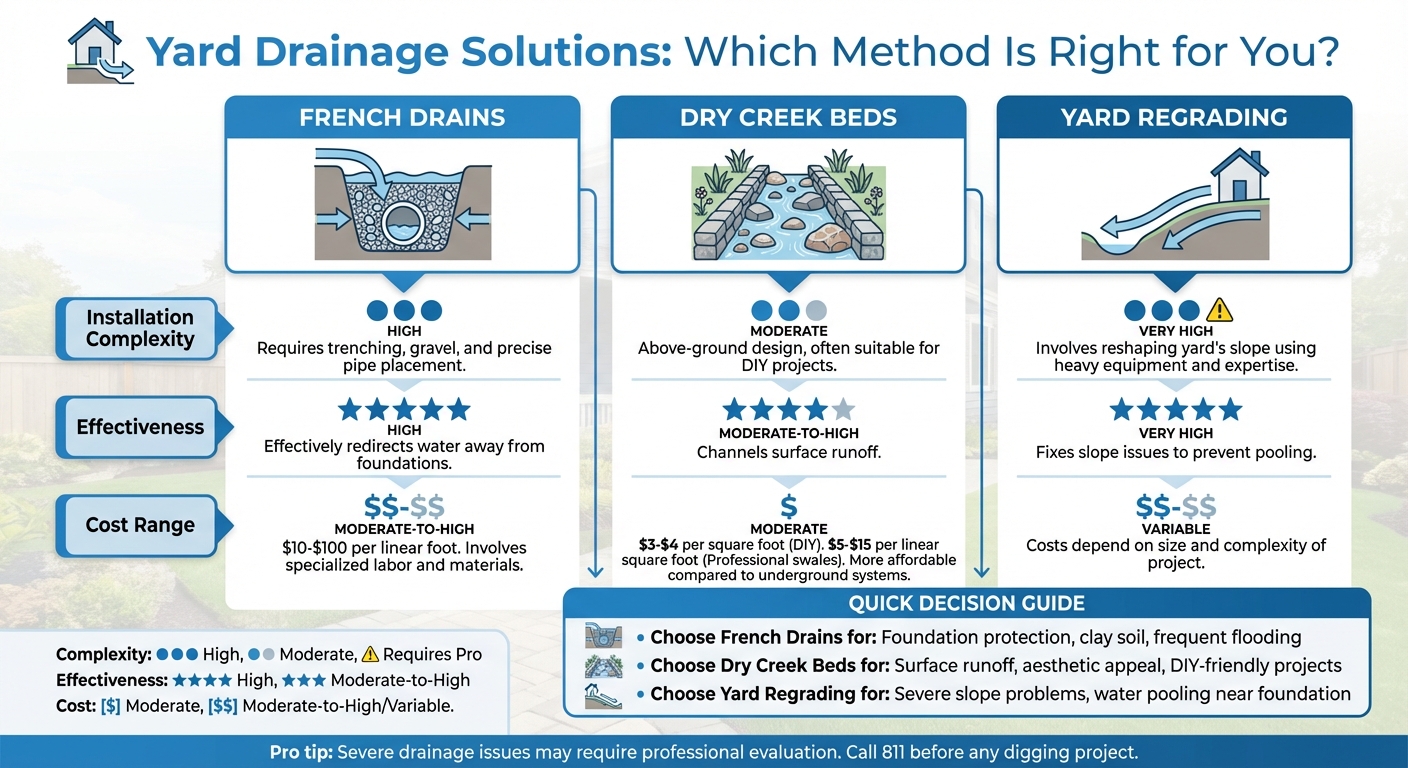
Yard Drainage Solutions Comparison: Methods, Costs, and Effectiveness
When it comes to managing water pooling in your yard, choosing the right drainage solution depends on factors like the severity of the issue, budget, and installation complexity. Below is a quick comparison of three popular drainage methods to help you decide which option works best for your situation.
Drainage Methods Comparison Table
| Method | Installation | Effectiveness | Cost |
|---|---|---|---|
| French Drains | High – Requires trenching, gravel, and precise pipe placement | High – Effectively redirects water away from foundations | Moderate-to-High – Involves specialized labor and materials |
| Dry Creek Beds | Moderate – Above-ground design, often suitable for DIY projects | Moderate-to-High – Channels surface runoff | Moderate – More affordable compared to underground systems |
| Yard Regrading | Very High – Involves reshaping the yard’s slope using heavy equipment and expertise | Very High – Fixes slope issues to prevent pooling | Variable – Costs depend on the size and complexity of the project |
Dry creek beds are a practical middle-ground choice, especially for managing surface runoff without major disruptions. However, if water pooling is severe and poses a risk to your home’s foundation, solutions like French drains or yard regrading provide more reliable, long-term fixes. Carefully evaluate your yard’s specific needs to determine the most effective approach.
If you’re in central Maryland, Pro Landscapes MD specializes in expert drainage solutions to help protect your property while maintaining its aesthetic appeal.
Maintaining Your Drainage System
Keeping your drainage system in good shape takes regular effort, but it’s worth it to avoid problems like debris buildup, soil compaction, or underground blockages that can lead to water pooling. A little care now can save you from costly repairs down the road.
Clean Gutters Twice a Year
Gutters and downspouts are essential for channeling water away from your home’s foundation. To keep them working properly, clean them at least twice a year – once in the spring and again in the fall. This removes leaves, twigs, and dirt that can block water flow and lead to pooling. If you live in an area with lots of trees, it’s a good idea to check your gutters monthly during peak leaf-fall seasons [12].
Aerate Your Lawn Annually
When soil gets compacted, water tends to run off instead of soaking in, which can worsen drainage issues. Aerating your lawn once a year – usually in spring or fall – helps by creating small holes that let water, air, and nutrients penetrate deeper into the soil. This simple step not only improves drainage but also helps prevent compaction problems that lead to pooling. For areas with heavy foot traffic, consider aerating more frequently to keep the soil loose and absorbent.
Check Your Yard After Heavy Rain
Heavy rain is a great opportunity to spot potential drainage issues. Walk around your yard and look for standing water, soggy spots, or erosion near drainage inlets. These signs could mean there’s a clog in your catch basin or a partial blockage in underground pipes. Addressing these problems early – whether by clearing debris or fixing a pipe – can save you from bigger headaches later and keep your system running smoothly [12].
Taking these steps regularly helps keep your drainage system efficient and extends its lifespan.
Conclusion
Water pooling in your yard often stems from issues like poor grading, compacted or clay-heavy soil, or clogged gutters and downspouts [13]. Ignoring these problems can lead to serious consequences, including root rot, soil erosion, foundation damage, and even pest infestations. Tackling these issues early is key to avoiding costly repairs down the line.
Knowing the underlying causes allows you to take the right steps to fix the problem. For smaller drainage concerns, simple DIY solutions – like aerating your lawn, extending downspouts 4 to 6 feet away from your foundation, or filling in low areas with soil – can help manage water accumulation. However, persistent flooding, basement moisture, or large pools of standing water may require professional intervention. Experts can implement more advanced solutions such as French drains, dry wells, or regrading your yard.
If you’re looking for expert help, Pro Landscapes MD provides specialized drainage services throughout central Maryland. Their offerings include French drains, dry riverbeds, stormwater management, grading, and yard leveling. Their team performs detailed site evaluations to pinpoint the exact cause of your drainage issues and creates tailored solutions that not only protect your home’s foundation but also maintain the health and appearance of your landscape.
FAQs
How can I tell if my yard needs regrading?
If you notice water pooling in your yard, flooding after rain, or water flowing toward your house instead of away, your yard might need regrading. These signs often point to an improper slope, which can cause drainage problems and even damage your property over time.
Will a French drain work in heavy clay soil?
A French drain can perform effectively in heavy clay soil when installed correctly. To achieve this, backfill the trench with gravel and cover it with landscape fabric. This combination improves water flow while preventing the clay from clogging the drain, ensuring it works efficiently over time.
Where should my downspouts discharge to stop pooling?
To keep water from pooling in your yard, make sure your downspouts release water at least four feet away from your house or any spot where water tends to gather. Directing the flow toward a lawn or garden lets the water absorb into the soil, which helps reduce both runoff and standing water. This simple step not only protects your home’s foundation but also prevents water from collecting in trouble spots.
Chat with Us