









- bhavya gada
- No Comments
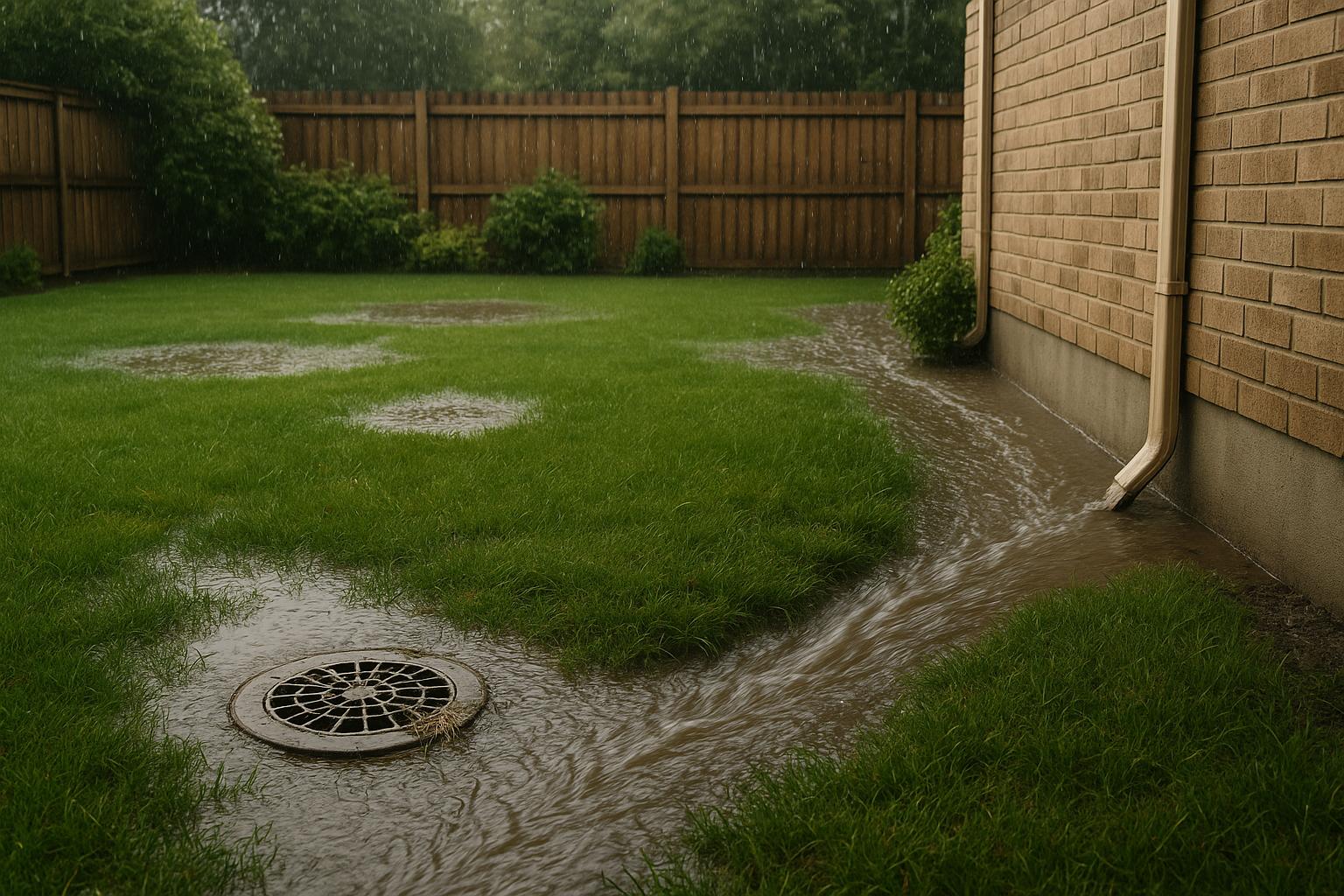
Water issues in your yard can lead to costly damage and health risks. Here’s how to spot the six most common signs that your drainage system might need replacement:
- Standing Water After Rain: Puddles lasting over 24 hours can harm your lawn, breed mosquitoes, and damage your foundation.
- Wet or Spongy Grass: Constantly damp grass suffocates roots, ruins your lawn, and creates muddy, unsafe areas.
- Soil Erosion and Washouts: Exposed roots, bare patches, or washed-out mulch indicate water flow is damaging your property.
- Water Near Your Foundation: Pooling around your home can lead to basement leaks, mold, and structural damage.
- Repeated Flooding: Water collecting in the same spots after every storm signals a failing drainage system.
- Mosquitoes, Algae, and Dying Plants: Stagnant water fosters pests, algae, and plant decay, diminishing your yard’s health and safety.
Ignoring these signs can lead to repairs costing thousands of dollars. Professional solutions like French drains, regrading, and stormwater systems can protect your home and yard. Maryland homeowners, especially in areas with clay-heavy soil, should act quickly to prevent damage caused by poor drainage.
Top 5 Signs Your French Drain May Be Failing
1. Standing Water After Rain
When water lingers for more than 24 hours after a rainstorm, it’s a red flag that your drainage system isn’t doing its job. Catching these issues early can save you from bigger headaches down the road.
Visual Indicators
After a heavy downpour, take a walk around your yard. Do you see puddles that just won’t go away or patches of grass that feel damp and spongy underfoot? These are clear signs that your yard might have drainage problems. Even a light rain can leave water sitting if the soil conditions in your area don’t allow for proper absorption. These clues aren’t just surface-level nuisances – they could be warning you about potential damage to your property.
Impact on Property
Standing water isn’t just bad for your lawn; it can suffocate grass roots, leaving you with unsightly brown patches that will likely need reseeding. But the bigger concern is when water collects near your home’s foundation. This can lead to seepage into your basement, cracking walls, sticking doors, and that all-too-familiar musty smell. Fixing these kinds of problems can easily run into the thousands of dollars.
Health and Safety Concerns
Stagnant water isn’t just an eyesore; it’s a breeding ground for mosquitoes and mold. These can harm the air quality inside your home and lead to expensive cleanup efforts if left unchecked.
System Performance
Several factors can contribute to standing water, such as clogged or undersized drainage pipes, compacted soil, or poor yard grading. For instance, if your yard doesn’t slope at least 6 inches over the first 10 feet away from your house, water will naturally pool near your foundation. Fixing these problems quickly is essential to keep your yard stable and your home safe.
Pro Landscapes MD specializes in tackling these drainage challenges with solutions like French drains, proper grading, and stormwater management systems. Serving Maryland homeowners from Bethesda to Columbia, they provide the expertise needed to resolve standing water issues before they turn into costly structural repairs.
Standing water after a rainstorm isn’t just a minor inconvenience – it’s your yard’s way of telling you that your drainage system needs attention to keep your property protected.
2. Wet or Spongy Grass
If your lawn stays waterlogged for days after it rains, it’s a clear sign that your drainage system isn’t doing its job.
Visual Indicators
Take a walk across your lawn and notice how it feels underfoot. Healthy grass should feel firm and slightly springy – not soft, squishy, or overly damp. Areas that feel bouncy or mushy often start out looking darker green but eventually turn yellow, signaling waterlogged soil and poor drainage.
From a distance, the grass might look fine, but up close, the texture tells a different story. You might also notice random patches of dying grass that appear without warning, leaving your lawn looking patchy and unhealthy. These aren’t just cosmetic issues – they signal deeper problems that can harm your lawn’s overall condition.
Impact on Property
Drainage problems do more than ruin your lawn’s appearance – they can damage its long-term health. Excess water suffocates the grass roots, making it harder for them to absorb oxygen and nutrients. This often leads to dead spots and a lawn that’s harder to care for.
Constantly wet areas also make mowing and upkeep a nightmare. Soggy patches turn into muddy messes, which can be unpleasant to walk on and easily tracked into your home. Over time, this lingering moisture can weaken your drainage system further, leading to bigger, more expensive repairs later.
Health and Safety Concerns
A perpetually damp lawn isn’t just inconvenient – it can also pose health risks. Stagnant water in the soil provides an ideal environment for mosquitoes to breed, increasing the chance of mosquito-borne illnesses. Persistent moisture can also encourage mold and mildew growth, which may spread to nearby structures and cause allergies or respiratory problems for your family.
Additionally, slippery, muddy spots can create safety hazards for kids and pets. What should be a fun and safe outdoor space can quickly turn into a liability when these conditions are left unchecked.
System Performance
These ongoing issues often point to serious drainage system failures. The problem could stem from undersized systems, clogged or deteriorating pipes, or improper grading that directs water toward your lawn instead of away from it. In some cases, compacted or clay-heavy soil prevents water from absorbing properly, overwhelming even a functional drainage system.
For example, a homeowner in Columbia, Maryland, dealt with persistent spongy grass caused by compacted soil and poor grading. After consulting Pro Landscapes MD, they regraded the yard and installed a French drain, which solved the problem and restored the lawn’s health. Another property in Bethesda faced recurring wet spots, which were resolved with core aeration, the addition of organic matter, and regular maintenance to keep the issue from returning.
Pro Landscapes MD specializes in tackling these drainage challenges across central Maryland. Their tailored solutions – like regrading, French drain installations, and soil corrections – help homeowners fix wet grass problems before they lead to more serious damage.
Catching these signs early can save you from costly repairs and prevent long-term structural or landscape damage.
3. Soil Erosion and Washouts
If your yard starts losing soil after every rainstorm, it’s a clear sign your drainage system is struggling to handle water flow. Erosion and washouts don’t happen overnight – they develop over time as water follows the same destructive path through your property.
Visual Indicators
The signs of erosion are easy to spot once you know what to look for. Deep channels or gullies, often forming near downspouts, are a telltale sign of unchecked water flow. These grooves grow wider and deeper with each heavy rain.
Another clear indicator is exposed tree roots, which show that the soil providing support has been stripped away. Similarly, washed-out mulch in flower beds signals that water is carrying off not only the mulch but also the topsoil beneath it.
You might also notice bare patches where grass refuses to grow back. These areas lack the nutrient-rich topsoil that plants need to thrive. Often, these spots appear uneven or sunken, standing out starkly against the surrounding lawn. These visual clues often accompany other drainage issues in your yard, like pooling water or overly wet grass.
Impact on Property
Erosion isn’t just an eyesore – it can lead to serious problems for your property. When soil washes away near your foundation, it removes the support that keeps your home stable. Over time, this can result in foundation settling, cracks, and repairs that can cost anywhere from $2,000 to $10,000, depending on the extent of the damage.
Your landscaping also takes a hit. Plant beds can be destroyed, and new vegetation struggles to take root in areas where soil has been stripped away. Exposed roots leave trees and shrubs weakened, making them more vulnerable to disease and storm damage. Plus, the ongoing loss of soil means you’ll likely face repeated costs for replacing topsoil and replanting.
Erosion can even compromise hardscaping elements like patios, walkways, and retaining walls by eroding the soil that supports them. What starts as minor soil loss can quickly escalate into the need for costly repairs or reconstruction.
Health and Safety Concerns
Eroded areas create uneven ground, increasing the risk of trips and falls. These irregular surfaces also make lawn maintenance more dangerous and can damage mowing equipment.
In addition, standing water that collects in washout areas becomes a breeding ground for mosquitoes, raising the risk of mosquito-borne illnesses during warmer months. The stagnant water and exposed soil can also lead to mold and mildew growth, which may eventually impact your home’s air quality if moisture seeps toward the foundation.
System Performance
Severe erosion is a clear sign that your drainage system isn’t doing its job. When water moves too quickly across your yard without proper absorption or redirection, it indicates your system may be undersized, poorly designed, or deteriorating.
Distinctive washout patterns, such as those caused by collapsed drain pipes, can reveal specific system failures. For instance, one Ellicott City homeowner faced significant erosion when a collapsed underground line allowed water to escape and carve channels through their backyard for months.
Improper grading is another common culprit, as it can direct water toward vulnerable areas instead of away from your home. Local soil conditions often make these problems worse.
Pro Landscapes MD specializes in tackling erosion issues with tailored solutions like regrading, French drain installation, and dry riverbed construction. Their approach combines effective water redirection with retaining walls and erosion control structures to stop soil loss and restore damaged areas. Serving properties in Howard County, Montgomery County, and nearby regions, they create customized plans that account for local soil and rainfall conditions.
Addressing erosion early can save you from costly repairs down the line, turning what might seem like a minor issue into a manageable fix.
4. Water Collecting Near Your Foundation
When water gathers around your home’s foundation, it’s a major red flag that your drainage system needs attention – fast. This pooling water doesn’t just threaten your foundation; it can also lead to significant structural issues and even health risks.
Visual Indicators
Spotting foundation water problems is usually straightforward if you know what to look for. You might notice standing water forming puddles right against your foundation walls or in low areas around your home’s perimeter.
After a rainstorm, damp soil that lingers longer than expected is a clue, as are streaks on your foundation walls, which often indicate repeated water collection. Silt lines – left behind by previous flooding – are another telltale sign.
Keep an eye out for washed-away mulch in garden beds or exposed tree roots in your yard. These signs of erosion, combined with visible pooling, point to a failing drainage system that needs immediate attention.
Impact on Property
When water collects near your foundation, the potential repair costs can be staggering. Fixing foundation damage typically costs between $2,000 and $7,000, while mold remediation can add anywhere from $500 to $6,000 on top of that. Alarmingly, water damage accounts for 23% of all homeowner property losses annually in the United States[2].
Beyond the financial toll, water infiltration can cause foundation cracks, basement leaks, and even compromise the structural stability of your home over time. It doesn’t stop there – excess moisture can harm your landscaping, leading to root rot, dead plants, and uneven ground or sinkholes that lower your property’s value.
Health and Safety Concerns
Standing water isn’t just a nuisance – it’s a health risk. It creates the perfect breeding ground for mosquitoes and accelerates the growth of mold and mildew, which can harm indoor air quality.
Once mold takes root, it spreads quickly, especially in basements. This is a serious concern, considering that 98% of basements in the U.S. will experience water damage at some point in their lifespan[2]. Poor air quality from mold can lead to respiratory problems, making it a threat to your family’s health.
Prolonged water damage can also lead to uneven ground around your home, increasing the risk of trips and falls near walkways and entrances. These safety hazards often signal deeper drainage system failures that require immediate action.
System Performance
Pooling water near your foundation is a clear sign that your drainage system isn’t doing its job. Common culprits include clogged downspouts, undersized pipes, and poor grading that directs water toward your home instead of away from it.
Other warning signs include gurgling noises from drainpipes, which may indicate blockages or pipe deterioration, and gutters that overflow during moderate rainfall – proof that the system is overwhelmed.
Take the story of a homeowner in Montgomery County, for example. Persistent dampness and mold in their basement led to a professional inspection, which revealed clogged downspouts and an undersized French drain system. After upgrading their drainage with extended downspouts and a more robust system, the basement stayed dry, and the mold problem was resolved.
Pro Landscapes MD specializes in tackling foundation water problems with tailored drainage solutions. Their services include French drain installations, proper grading, and stormwater management systems. They combine quick fixes like extending downspouts with long-term solutions such as dry riverbeds and subsurface drainage systems. Serving homeowners in Howard County, Montgomery County, and nearby Maryland areas, they create custom drainage plans designed to protect your home based on local soil types and rainfall patterns.
Addressing these issues early is critical. What starts as minor pooling can quickly spiral into costly structural damage, so don’t wait to act.
sbb-itb-843f8be
5. Repeated Flooding in the Same Areas
When puddles keep forming in the same spots after every rainfall, it’s not just an annoyance – it’s a red flag. Persistent flooding points to drainage problems that, if left unchecked, can lead to significant property damage and safety concerns.
Visual Indicators
Keep an eye out for puddles that linger for more than 24 hours after rain. These problem areas often show muddy, swamp-like patches and stay damp even during dry weather. You might also notice signs of erosion, such as deep grooves in the soil, washed-out mulch, or repeated water stains on your home’s exterior walls or foundation. These visible clues are clear indicators that your drainage system may need a thorough inspection.
Impact on Property
The financial toll of repeated flooding can be steep. According to the Insurance Institute for Business & Home Safety, water damage and freezing claims make up nearly 25% of all homeowners insurance claims, with an average cost of $10,000 per claim [2]. Beyond the monetary aspect, flooding wreaks havoc on landscaping – drowning plant roots, thinning grass, and leaving shrubs or trees unstable. Over time, mulch gets washed away, roots are exposed, and the overall curb appeal of your property takes a hit.
Flooding near your foundation is even more concerning. Chronic water exposure can lead to basement leaks, mildew, and structural issues like cracks in walls or floors. This excess moisture weakens your foundation, makes doors and windows stick, and fosters mold growth inside your home. These problems don’t just damage your property – they can also compromise your family’s safety.
Health and Safety Concerns
Standing water and soggy areas are breeding grounds for pests and mold, both of which pose health risks. On top of that, erosion or sinkholes caused by poor drainage can create tripping hazards and unstable ground, adding to the safety concerns.
System Performance
Repeated flooding is often a sign of deeper issues within your drainage system. Problems like clogged pipes, compacted soil that doesn’t absorb water, or poorly designed systems that channel water into low-lying areas instead of away from your property are common culprits.
Consider a real-life example from Ellicott City: A homeowner dealt with standing water in the same backyard spot after every storm. Despite cleaning gutters and adding more soil, the issue persisted. A professional inspection uncovered the real problem – an undersized French drain clogged with roots. After replacing it with a larger, properly installed system, the flooding stopped, and the lawn recovered.
The National Association of Home Builders notes that homes with effective drainage systems are far less likely to suffer from water-related structural damage, potentially saving homeowners thousands in repair costs [2]. Addressing recurring flooding isn’t just about maintenance – it’s a smart investment in your property.
Pro Landscapes MD offers expert solutions for chronic flooding issues throughout central Maryland. Their services include installing French drains, correcting grading issues, and designing stormwater management systems tailored to the region’s heavy clay soils and frequent storms. They know that Maryland’s unique landscape demands custom solutions, not generic fixes.
If flooding keeps happening despite your best efforts, it’s time to call in the professionals. A systemic issue like this needs expert attention to protect your home and property.
6. Mosquitoes, Algae, and Dying Plants
If your yard is becoming a haven for pests, and your once-thriving plants are struggling to survive, it’s likely a sign that your drainage system isn’t doing its job. These biological red flags often go hand-in-hand with poor water management.
Visual Indicators
Take a closer look at your yard. Are there puddles that linger long after a rainstorm or low spots where water seems to collect? These areas often develop slimy mats of green or brown algae, creating an unattractive film across your lawn. You might also notice patches of grass turning yellow or brown, along with ornamental plants that seem stressed, dropping leaves, or browning. All of these point to water pooling where it shouldn’t.
And it’s not just about aesthetics – stagnant water is the perfect breeding ground for mosquitoes. According to the CDC, these pests can breed in as little as a bottle cap of water, so even tiny puddles can quickly become a big problem [1].
Health and Safety Concerns
Standing water doesn’t just attract mosquitoes; it can also lead to other serious issues. Mosquitoes are known to spread diseases, and algae growth can make surfaces dangerously slippery or even release toxins that are harmful to both pets and children. Prolonged dampness can also encourage the growth of mold and mildew, which are common triggers for allergies and respiratory problems [1][2][3]. These risks don’t just affect your health – they can also undermine the time and money you’ve invested in your landscaping.
Impact on Property
Waterlogged soil can wreak havoc on your yard. It deprives plant roots of oxygen, which can lead to root rot and stunt plant growth by up to 50% [1]. Over time, this can leave your lawn with bare patches and weakened plants, taking a toll on your property’s overall curb appeal [2][3].
System Performance
When mosquitoes, algae, and struggling plants start to become recurring problems, it’s a clear sign that your drainage system isn’t working as it should. Regular maintenance might help for a while, but persistent issues often point to deeper problems, such as clogged, undersized, or damaged components that are no longer effectively managing water.
Pro Landscapes MD has handled many cases like this across central Maryland. For instance, a homeowner in Howard County faced ongoing water pooling and mosquito infestations. The solution? A professionally installed French drain system that not only resolved the drainage issues but also brought noticeable improvements to the lawn’s health.
If you’re constantly battling mosquitoes, algae, and dying plants, it’s time to call in a drainage expert. These signs often indicate that your current system needs more than a quick fix – it may be time for a full replacement.
Comparison Table
Here’s a breakdown of common drainage issues, the risks they pose, and potential solutions – ranging from quick DIY fixes to professional services offered by Pro Landscapes MD.
| Drainage Sign | Risks | DIY Fixes | Professional Solutions | Pro Landscapes MD Services |
|---|---|---|---|---|
| Standing Water After Rain | Lawn damage, mosquito breeding, and foundation risks | Core aeration, extending downspouts, adjusting irrigation | Installing French drains, yard regrading | French drains, drainage installation, grading, stormwater management |
| Wet or Spongy Grass | Root rot, grass death, and muddy conditions | Loosen compacted soil, add organic matter, reduce watering | Subsurface drainage, soil correction, professional grading | Drain pipe placement, yard leveling, drainage repair |
| Soil Erosion and Washouts | Topsoil loss, exposed plant roots, and potential sinkholes | Add mulch, plant groundcover, use simple erosion barriers | Swales, dry creek beds, retaining walls, land leveling | Dry riverbeds, land leveling, yard repair, retaining wall construction |
| Water Collecting Near Your Foundation | Basement leaks, mold growth, structural damage (repairs can cost $2,000–$10,000), and foundation cracks | Clean gutters, extend downspouts at least 6 feet from the house | Storm system drainage solutions, foundation waterproofing | Drainage installation, grading away from the foundation, stormwater management |
| Repeated Flooding in Same Areas | Property damage, persistent lawn death, rising repair costs, and mold risks | Clear gutters, make minor landscape adjustments | Comprehensive stormwater management, French drain systems | French drains, stormwater management, yard repair |
| Mosquitoes, Algae, and Dying Plants | Disease transmission, health risks, and loss of landscaping | Manually remove standing water, improve sunlight exposure | Drainage repair, dry riverbeds, yard restoration | Drainage repair, dry riverbeds, yard restoration |
Cost Considerations
DIY fixes typically range from $100–$500 and are best for short-term relief. For long-term solutions, professional services are more effective. For example, French drains cost between $2,000–$6,000, and yard regrading ranges from $1,000–$3,000. Ignoring these issues can lead to costly foundation repairs exceeding $10,000.
When to Choose Professional Solutions
If you’re dealing with multiple drainage problems or water consistently pools near your foundation, it’s time to call in the pros. Pro Landscapes MD goes beyond surface-level fixes, addressing the root causes of drainage failures to ensure lasting results.
DIY methods might work for minor, one-off issues, but serious or recurring drainage problems demand a professional approach. With the right tools, expertise, and tailored solutions, Pro Landscapes MD ensures your property is protected for the long haul.
Conclusion
Identifying six key drainage warning signs can help you avoid costly repairs. In the U.S., water damage ranks as one of the most frequent and expensive home insurance claims, with the average claim surpassing $10,000[2]. Worse yet, mold can start growing within 24-48 hours of water exposure, posing serious health risks for your family[1][2]. These issues not only jeopardize your home but can also lead to significant repair bills.
When water reaches your foundation, the stakes get even higher. Ignoring drainage problems can result in foundation leaks and cracks. On the other hand, professional drainage solutions – typically costing between $1,000 and $5,000 – offer a cost-effective way to protect your home and maintain its value over time[2][4].
As mentioned earlier, Maryland homeowners face unique challenges like heavy rains and tough soils, which demand specialized drainage solutions. Pro Landscapes MD understands these regional conditions and provides tailored services such as French drains, stormwater management, grading, and dry riverbeds – all designed to meet the specific needs of central Maryland’s climate and soil.
Pro Landscapes MD emphasizes, "Proper drainage is essential to protecting your landscape." Their team of professional horticulturists combines academic expertise with practical experience to design drainage systems that are not only effective but also seamlessly blend into your property’s aesthetics.
Temporary fixes rarely solve the problem. While quick actions like cleaning gutters or adding mulch might provide short-term relief, persistent drainage issues require a thorough professional evaluation. A comprehensive assessment ensures long-term solutions that DIY methods simply can’t match.
Don’t wait for small problems to escalate into expensive repairs. If you’ve noticed any of the six warning signs, reach out to Pro Landscapes MD for a detailed evaluation. Serving Howard County, Montgomery County, and the greater Baltimore-Washington area, their proven expertise protects Maryland homes from water damage while enhancing outdoor spaces for both beauty and functionality. Take action today to safeguard your property with Pro Landscapes MD’s trusted drainage solutions.
FAQs
What happens if I ignore drainage problems in my yard?
Ignoring drainage problems in your yard can snowball into major headaches down the line. Poor drainage doesn’t just make your yard soggy – it can lead to water damage in your home’s foundation, landscape erosion, and frequent flooding. Over time, these issues can rack up hefty repair bills and even chip away at your property’s value.
The good news? Tackling drainage problems early can save you from these costly scenarios. With expert help – like the solutions provided by Pro Landscapes MD – you can protect your yard and ensure your home stays secure and functional for years to come.
How do I know if my yard’s drainage issues are caused by poor grading or something else?
If your yard often deals with standing water, erosion, or flooding, the culprit might be poor grading or drainage issues. When the ground isn’t properly sloped, water can flow toward your home instead of away from it. In addition, problems like clogged drains or broken pipes can worsen the situation.
Bringing in a professional to assess the problem can pinpoint the exact cause and help you find the right solution to safeguard your property from water damage while keeping your yard in good shape.
What are the best professional solutions to fix ongoing yard drainage issues?
Persistent yard drainage issues can be tackled effectively with solutions designed specifically for your landscape. Pro Landscapes MD offers a range of drainage services, including the installation of French drains, dry riverbeds, and drain pipes. They also handle grading, land leveling, and stormwater management to address water flow challenges.
In addition, they provide expert drainage repair and yard restoration services to resolve water-related problems. These tailored solutions help ensure your yard stays safe, usable, and attractive, even during heavy rains or tough weather conditions.
Chat with Us