









- bhavya gada
- No Comments
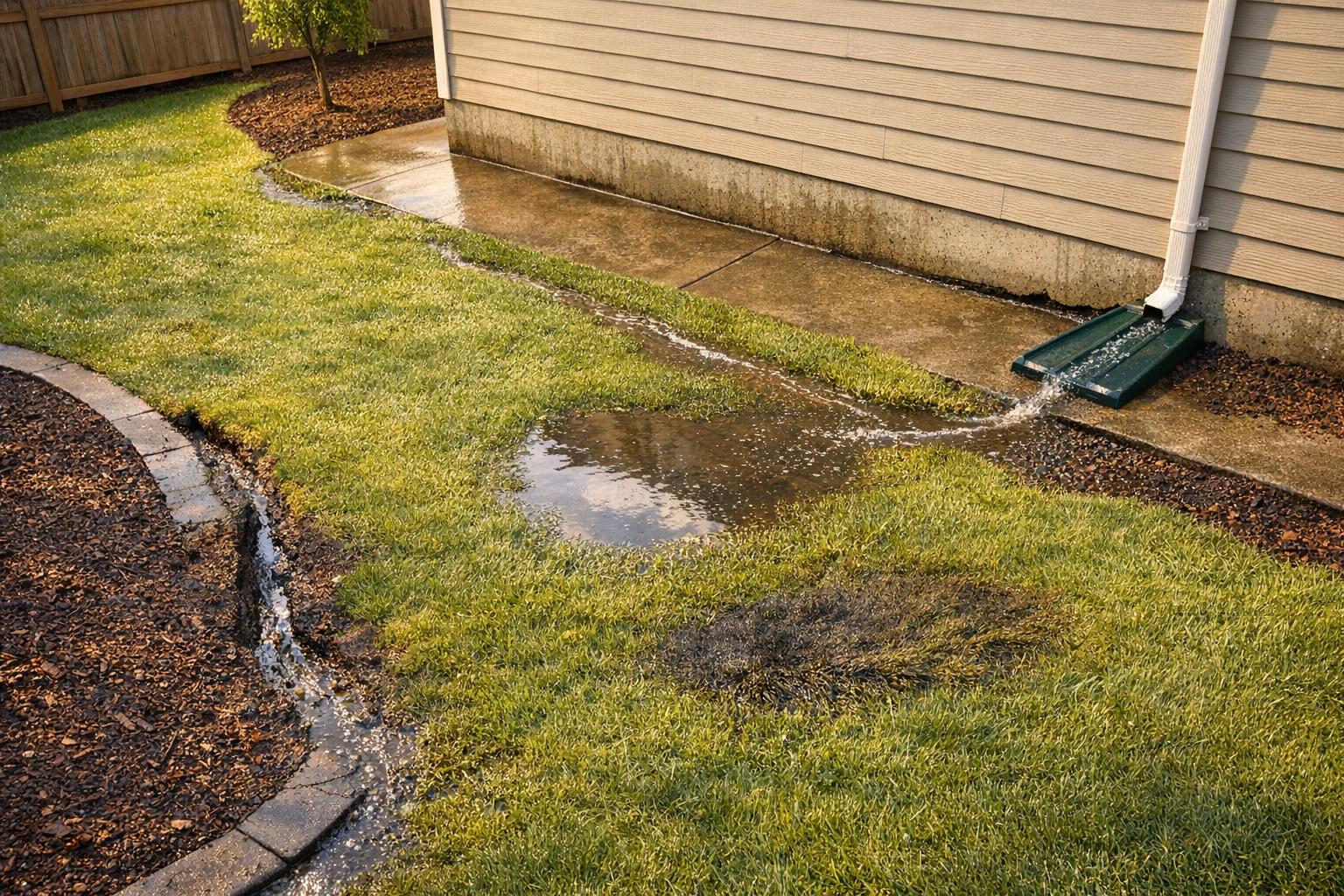
If water pools in your yard after rain, flows toward your house, or your lawn stays soggy for days, your yard may have a slope issue. Poor grading can lead to water damage, basement flooding, soil erosion, and even foundation cracks. In Maryland, where heavy rainfall and clay-rich soils are common, these problems are even more likely.
Here’s what to look for:
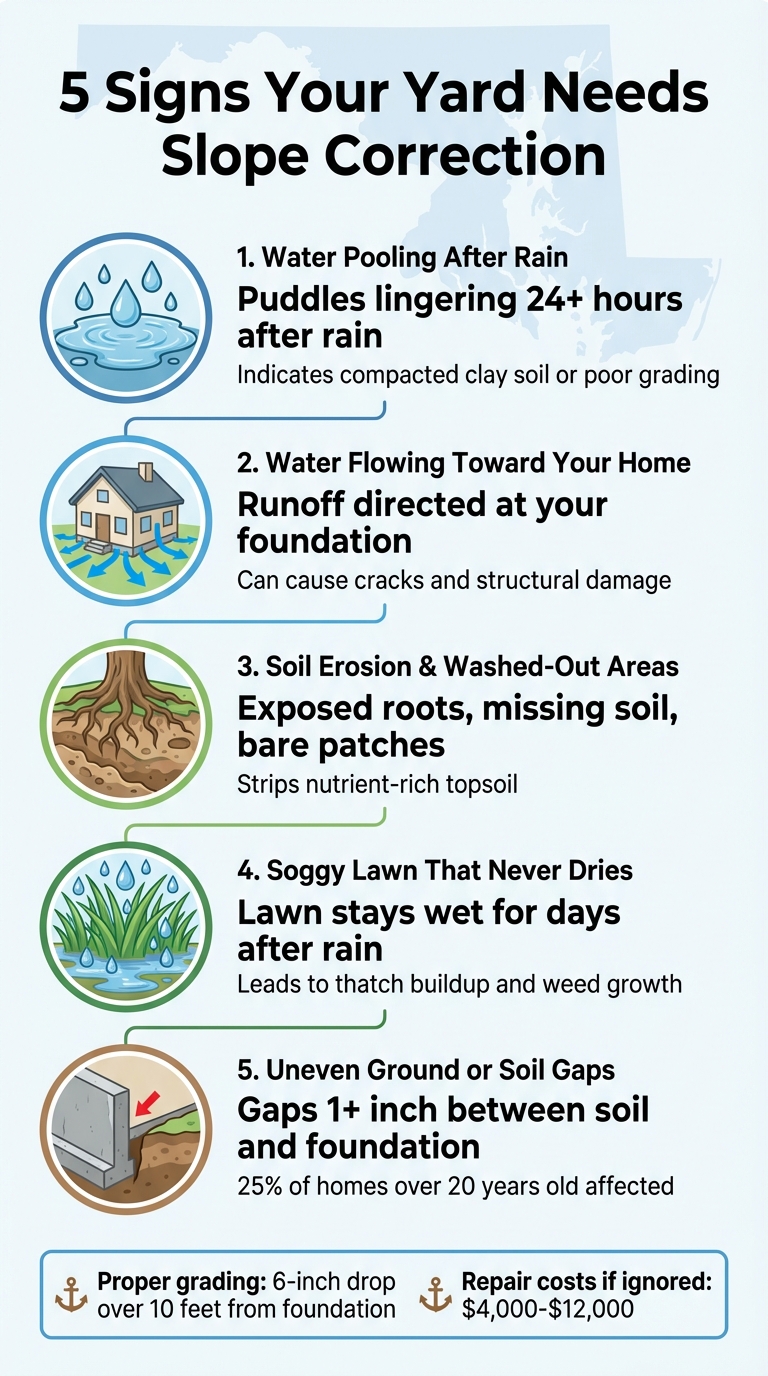
- Water pooling: Puddles that linger for over 24 hours.
- Water flowing toward your home: Rain runoff heading to your foundation.
- Soil erosion: Exposed roots or washed-out areas.
- Soggy lawn: Grass that doesn’t dry out, leading to thinning or weed growth.
- Uneven ground: Gaps between the soil and your foundation or bumpy surfaces.
Fixing these issues early can protect your home from costly repairs and keep your yard healthy.
5 Warning Signs Your Yard Needs Slope Correction
1. Water Pooling After Rain
Water Drainage Issues
If puddles stick around for more than 24 hours after it rains, it’s a sign your yard has drainage problems. The culprits? Often, it’s either compacted clay soil or poor grading that fails to guide water away from low-lying areas [3]. Clay-heavy soil, especially when compacted, blocks water from soaking in, leaving puddles that just won’t go away. You can usually tell if this is the issue – compacted soil feels like modeling clay or becomes rock-hard, making proper drainage nearly impossible.
Foundation and Structural Concerns
Standing water isn’t just an eyesore – it’s a threat to your home’s foundation. Over time, water can seep in, weakening the concrete and leading to expensive cracks or structural shifts [3]. While professional drainage corrections may seem pricey upfront, they’re far cheaper than dealing with a cracked foundation, a sinking deck, or other structural damage [3]. Now, let’s take a closer look at another sign your yard might need slope adjustments.
sbb-itb-843f8be
2. Water Flowing Toward Your Home
Water Drainage Issues
If water consistently flows toward your home, it’s often a sign of poor yard grading. Even slight dips or flat areas can direct water straight to your foundation, especially if the soil is compacted and unable to absorb moisture effectively. This misdirection doesn’t just create drainage headaches – it can also threaten your home’s structural stability[3].
Foundation and Structural Concerns
Over time, water seeping into your foundation can weaken the concrete, leading to cracks that might go unnoticed until the damage becomes severe. As the soil beneath your foundation and walls absorbs this moisture, it can shift, creating instability. These shifts can result in costly structural repairs that are much harder to address than the initial drainage problem[3].
Surface Evenness and Grading
Heavy rain offers a great opportunity to assess your yard’s grading. Walk around and watch where the water flows. If streams of water move toward your home or puddles collect near your walls, it’s a clear sign that your yard’s slope isn’t working in your favor. For a precise evaluation, you can use a laser level to check the grading. Hard, compacted soil near your foundation is another red flag, as it can block proper drainage.
To address these issues quickly, aerate compacted soil to help water escape and fill low spots with a mix of sand and topsoil to prevent pooling near your foundation. While hiring professionals to correct the slope might require an initial investment, it’s a far better option than dealing with expensive foundation repairs down the road.
3. Soil Erosion and Washed-Out Areas
Soil Stability and Erosion Signs
Keep an eye out for washed-out areas, exposed tree roots, or spots where soil seems to be missing. These are clear signs that water is flowing across your property, taking valuable topsoil with it every time it rains. Studies highlight that poor grading is a major contributor to both soil erosion and foundation damage[4]. These warning signs often point to more serious problems affecting not just your landscape but also your home’s foundation.
Foundation and Structural Concerns
Erosion doesn’t just leave bare patches; it can compromise your home’s foundation. As soil is washed away near the foundation walls, water can collect in the empty spaces left behind. Over time, this shifting soil can destabilize the base of your home. What might start as a small washout could eventually lead to significant structural issues.
Lawn Health and Moisture Retention
Erosion also takes a toll on your lawn by stripping away the nutrient-rich topsoil that grass needs to thrive. Without this vital layer, grass struggles to grow, leaving behind unsightly brown patches.
"The uneven surfaces created by this lack of pitch can lead to topsoil loss. When this happens, all of the nutrients your grass needs to grow are washed away." – ScapeWorx Landscaping[5]
In areas where erosion has removed the soil, hardy weeds often take over since grass seeds can’t penetrate the compacted ground[5]. This not only impacts the look of your yard but can also lower your property’s overall value.
Surface Evenness and Grading
Erosion can leave your yard uneven, making mowing a frustrating and even risky chore. Uneven surfaces can cause your mower to scalp the grass, damaging it further. To combat this, professional land grading and soil compaction can help level your yard. Adding proper drainage systems, like French drains or swales, can also redirect water and prevent future erosion problems.
How to Regrade a Yard | Ask This Old House
4. Soggy Lawn That Never Dries
A lawn that stays wet for days after a rainstorm is a clear sign that your yard’s slope might need some attention. This persistent sogginess isn’t just inconvenient – it can lead to a host of other problems.
Water Drainage Problems
When your yard lacks proper grading, water has nowhere to go. Instead of flowing away, it pools on the surface or saturates the soil, leaving you with a marshy, waterlogged mess. This standing water not only looks unappealing but also makes it nearly impossible for the ground to drain effectively[5].
Impact on Lawn Health
Too much moisture can wreak havoc on your lawn. Saturated soil prevents grass seeds from rooting properly, giving weeds the perfect opportunity to take over. On top of that, excess water strips away topsoil and essential nutrients, leaving your grass struggling to grow[5]. Persistent wetness also encourages the buildup of thatch – a thick layer of dead organic matter that blocks airflow to the roots[6]. These issues don’t just harm your lawn’s appearance; they can also create uneven surfaces that make maintenance even harder.
Risks to Your Home’s Foundation
A consistently soggy yard isn’t just bad for your grass – it can also threaten your home. Water pooling near your foundation can seep into basements or crawl spaces, leading to potential structural damage. Adjusting your yard’s slope helps redirect water away from these vulnerable areas, protecting your home from costly repairs.
Uneven Surfaces and Grading Solutions
Waterlogged conditions can also lead to an uneven lawn, full of dips and low spots that make mowing a nightmare. Professional land grading offers a fix by leveling out these problem areas, creating a smooth surface that encourages proper drainage. A well-graded yard not only looks better but also functions better, keeping your lawn healthy and your home safe.
5. Uneven Ground or Soil Pulling Away from Foundation
Another serious warning sign to watch for is when the ground starts pulling away from your foundation. If you notice gaps between the soil and foundation walls – often over an inch wide – it’s a red flag. These spaces typically form due to soil erosion or settling, especially after heavy rains in Maryland. This can even expose foundation footings, putting your home at a much higher risk for cracks and structural issues[1].
Signs of Soil Instability and Erosion
Uneven ground creates an unstable base, often leading to soil shifting or washing away. Keep an eye out for gullies, bare patches, or low areas where topsoil has disappeared. Ideally, the ground should slope away from your home at a 2% grade. When it doesn’t, soil can pull back from your foundation, leaving dangerous voids. This problem is often worse in clay-heavy soils or areas with tree roots, which speed up the settling process[8].
Foundation Risks and Structural Damage
These gaps leave your foundation vulnerable to moisture, which can cause significant damage. Water infiltration increases hydrostatic pressure, potentially bowing walls or leading to uneven settling. During Maryland’s cold winters, gaps larger than an inch can allow frost heave to occur, which might cost you over $5,000 in repairs if ignored[7]. On average, foundation cracks caused by soil movement impact about 25% of U.S. homes over 20 years old, with repair costs ranging from $4,000 to $12,000 per incident[2]. Addressing grading issues early can help prevent these costly problems.
Checking Grading and Surface Levels
You can test your yard’s grading by using a 10-foot board with a level – if you find dips greater than 1/4 inch, there’s an issue. Also, inspect your home’s perimeter for trip hazards or gaps. After a rainstorm, observe where water collects or flows. If you notice soil receding more than 6 inches from your siding, it’s time to regrade. Proper grading should ensure a 6-inch drop over 10 feet away from your foundation[9]. For professional help, Pro Landscapes MD offers yard leveling and grading services to protect your foundation from further damage.
Why Slope Correction Matters in Maryland
Maryland’s weather can be tough on homeowners. Heavy rainstorms, especially during spring and summer, often cause water to run off rather than soak into the ground. This can lead to pooling, soil erosion, and even damage to your home’s foundation.
Studies show that improper grading is one of the main causes of foundation issues and soil erosion[4]. These problems highlight the importance of addressing slope correction early.
Fixing slope issues in Maryland requires solutions tailored to the local environment. Techniques like regrading, yard leveling, and soil compaction help stabilize the land and remove low areas where water tends to collect. Additional measures, such as installing French drains or retaining walls, can redirect runoff and secure slopes that are at risk.
Because Maryland’s soil and drainage conditions vary widely, professional assessments are essential. Local experts can analyze your soil type, slope, and water flow to create a customized plan. Often, the best results come from combining land grading with mechanical drainage systems to effectively manage stormwater and protect your property in the long run.
Proper slope correction doesn’t just protect your home – it also enhances your yard’s appearance. Eliminating eroded areas and encouraging healthier landscaping can boost curb appeal while solving water-related issues. Pro Landscapes MD specializes in grading, drainage installation, and stormwater management, offering solutions designed to tackle Maryland’s unique challenges.
Pro Landscapes MD Slope Correction Services

Pro Landscapes MD specializes in tailored grading and drainage solutions designed to address Maryland’s unique water management challenges. Their skilled team handles everything from regrading residential backyards to implementing large-scale stormwater management systems. A key solution they offer is the French drain system – trenches filled with gravel and equipped with underground pipes that effectively redirect water away from foundations and other critical areas[10][3]. By combining this with precise land leveling and yard regrading, they create stable, even surfaces that help prevent long-term erosion. For moderate slope issues, they also install swales, which guide water runoff to designated drainage zones.
In areas prone to erosion, Pro Landscapes MD employs techniques like soil compaction and terrain reshaping to provide stability. Swale installation is another effective method they use to manage runoff in moderately sloped yards[4]. These solutions address common problems such as water pooling, soil erosion, and uneven grading. Every project begins with a detailed assessment of your property, including soil type, existing slope, and water flow patterns, ensuring that the solution is tailored to your specific needs.
Pro Landscapes MD serves a wide range of communities across central Maryland, including Howard County, Montgomery County, Carroll County, Frederick County, Prince George’s County, and Baltimore County. Their services include drain pipe placement, French drain installation, comprehensive yard repair, and stormwater management grading. This comprehensive approach not only resolves drainage issues but also improves the overall look and value of your outdoor space.
Conclusion
From water pooling to soil erosion, each warning sign highlights the importance of addressing grading issues promptly. Catching these problems early can save you from costly structural damage and basement flooding down the line. Poor grading doesn’t just threaten your foundation – it can also harm your lawn’s health. Garden designer Amy Fedele puts it perfectly:
"Stopping drainage problems before they start will stop leaks before they start. This stops water damage before it starts. This stops you from having to open your wallet."[10]
Fixing grading issues isn’t just about protecting your home’s foundation – it also keeps your lawn looking great and functioning properly. Uneven grading can make mowing a headache, leaving your yard looking patchy and worn. It can also lead to standing water in low spots, creating breeding grounds for mosquitoes and killing your grass. Tackling these problems early ensures your lawn stays healthy and visually appealing.
Pro Landscapes MD specializes in custom grading and drainage solutions designed to meet the unique needs of your property. Their services range from minor yard leveling to advanced stormwater management systems, serving areas like Howard County, Montgomery County, Carroll County, Frederick County, Prince George’s County, and Baltimore County. Whether you’re looking for French drains, land regrading, or a full yard overhaul, their team evaluates your soil, slope, and water flow to design a solution that safeguards your home and enhances your outdoor space.
Don’t wait for minor drainage issues to spiral into major problems. Reach out to Pro Landscapes MD today for a comprehensive property assessment and see how professional slope correction can protect your home while boosting your property’s value.
FAQs
How can I tell if my yard’s slope is wrong?
You can spot slope problems in your yard by keeping an eye out for a few telltale signs. Look for water pooling in certain areas, soil erosion, or patches of uneven ground. These issues often point to poor grading or drainage, which, if left unchecked, could cause more serious damage over time.
What yard slope is recommended away from a foundation?
To keep water from pooling near your foundation and to ensure proper drainage, your yard should slope downward by at least 6 inches over a 10-foot distance away from your home. This simple adjustment helps direct water away, reducing the risk of damage to your property.
What’s the best fix for water pooling in my lawn?
Improving drainage is the best way to tackle water pooling in your lawn. Techniques like slope correction and land grading work by directing water away from areas where it tends to gather. This not only protects your yard but also helps prevent future problems.
Chat with Us