









- bhavya gada
- No Comments
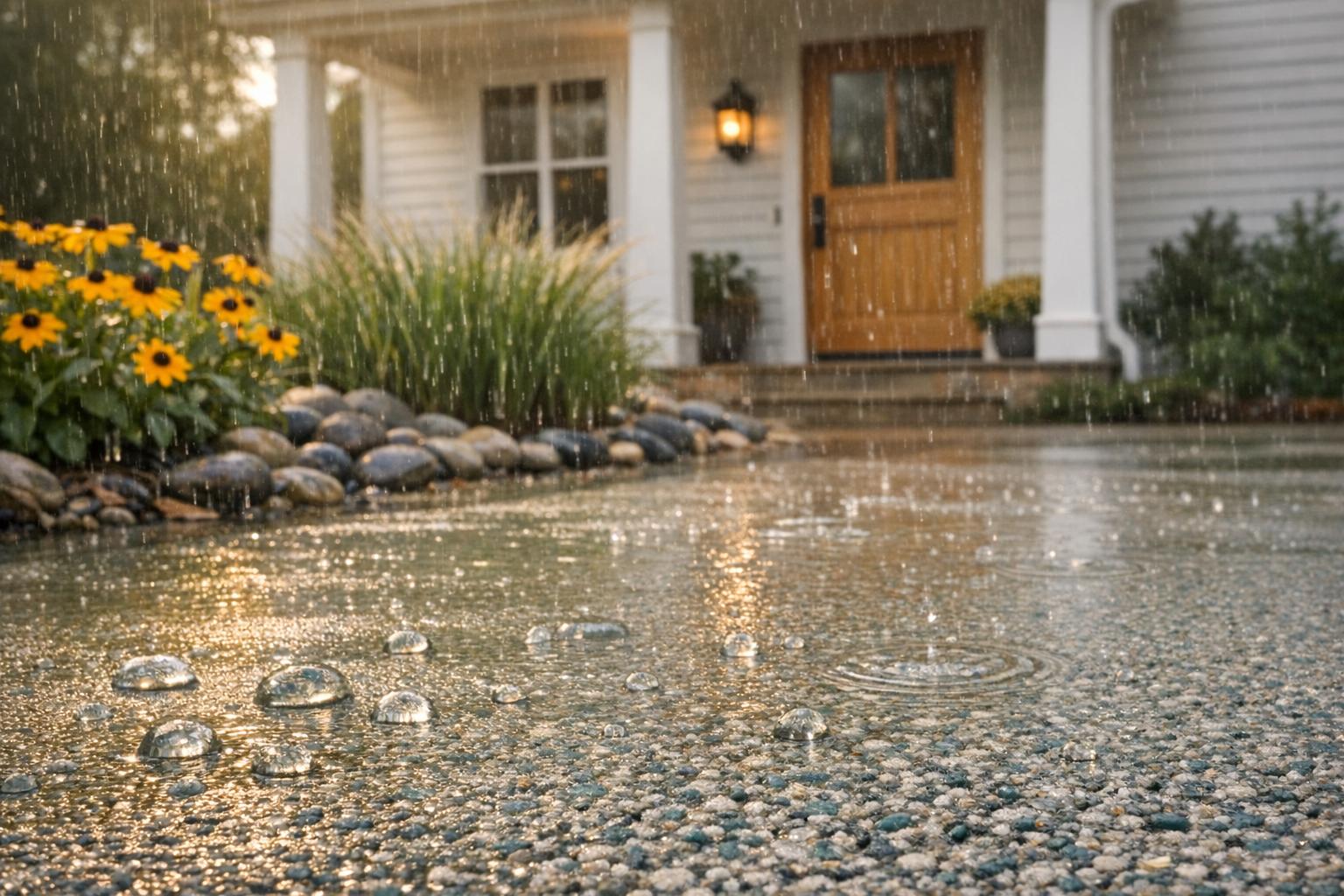
Algae-based concrete is a modern alternative to traditional concrete, offering a lower-carbon option for homeowners in Maryland. This material uses microalgae to produce calcium carbonate at room temperature, avoiding the high-energy process of making Portland cement. It’s particularly well-suited for Maryland’s climate and regulations due to its ability to manage stormwater through permeable designs, reducing runoff and helping meet Chesapeake Bay watershed requirements.
Key Takeaways:
- What It Is: Algae-based concrete uses bio-cement made from microalgae, cutting CO₂ emissions by up to 90% compared to conventional concrete.
- Why It’s Useful in Maryland: Permeable versions help address stormwater runoff issues, meet local regulations, and reduce yard flooding.
- Applications: Ideal for patios, walkways, retaining walls, and driveways, especially in areas prone to heavy rain and clay-rich soils.
- Environmental Benefits: Supports Maryland’s climate goals by significantly reducing carbon emissions and aligning with green building standards.
- Availability: Still emerging, but specialty contractors and manufacturers like Prometheus Materials are bringing it to market.
This material offers a practical and forward-thinking solution for Maryland homeowners tackling drainage challenges while minimizing environmental impact.
Common Landscaping Challenges in Maryland
Drainage Problems in Maryland Yards
Maryland’s weather often brings intense rainstorms that overwhelm the ground’s ability to absorb water. This is especially true in areas with clay-heavy soils, like much of Maryland’s Piedmont and Coastal Plain. These soils drain slowly, leaving yards soggy for days after a storm. Homeowners in places like Ellicott City frequently face eroded slopes, where heavy rains wash away mulch and topsoil.
"Poor drainage can lead to a variety of problems that can damage your landscape, home foundation, and overall property." – Pro Landscapes MD [1]
When water pools near a home, it can seep into crawlspaces and basements, leading to damp walls, efflorescence, and even leaks. Over time, this moisture can cause serious structural issues. Freeze-thaw cycles might crack foundations, shift patios, or destabilize walkways, especially if drainage wasn’t properly addressed during the initial landscaping or hardscaping phases. To combat these issues, some homeowners are turning to innovative materials like algae-based concrete, which offers better drainage solutions.
Stormwater Regulations and Hardscaping Requirements
Dealing with drainage problems isn’t just about protecting your property – it’s also a legal and environmental concern in Maryland. Because the state lies entirely within the Chesapeake Bay watershed, stormwater runoff from residential areas can carry pollutants like sediment and fertilizers into local waterways, ultimately harming the Bay’s ecosystem.
Maryland has responded with strict stormwater management regulations. For example, new developments and major property upgrades must manage the "water quality volume" on-site – meaning the first inch of rainfall must be absorbed into the ground rather than directed into storm drains. Additionally, many counties limit how much of a property can be covered by impervious surfaces, such as traditional concrete. In some areas, like Howard, Montgomery, and Prince George’s counties, homeowners may even face stormwater utility fees based on the amount of hard surface on their property. Without a proper drainage plan, adding something as simple as a concrete patio or driveway could result in permits, fees, or required mitigation measures.
The solution? Smart material choices. Permeable pavers, pervious concrete, and eco-conscious options like algae-based concrete can help homeowners stay within impervious surface limits while still creating functional outdoor spaces. These materials allow water to seep through, reducing runoff and often counting as partially or fully pervious under local stormwater guidelines. Companies like Pro Landscapes MD specialize in integrating French drains, dry riverbeds, environmental pavers, and other stormwater management features into their designs to meet Maryland’s tough regulations. By focusing on these solutions, homeowners can tackle drainage issues while staying compliant with local rules.
sbb-itb-843f8be
106: Zero-carbon bio-cement and bio-concrete ft. Prometheus Materials
How Algae-Based Concrete Works
Algae-Based Concrete vs. Traditional Concrete: Key Differences for Maryland Homeowners
The Science Behind Algae-Based Concrete
Algae-based concrete swaps out traditional Portland cement for a bio-cement created by microalgae or cyanobacteria. These microorganisms are cultivated in controlled environments like tanks or ponds, where they thrive on sunlight, water, nutrients, and CO₂. Through photosynthesis, they increase the water’s pH, initiating a process called microbially induced calcite precipitation (MICP). This process forms calcium carbonate crystals, which act as a natural binder, holding aggregate particles together.
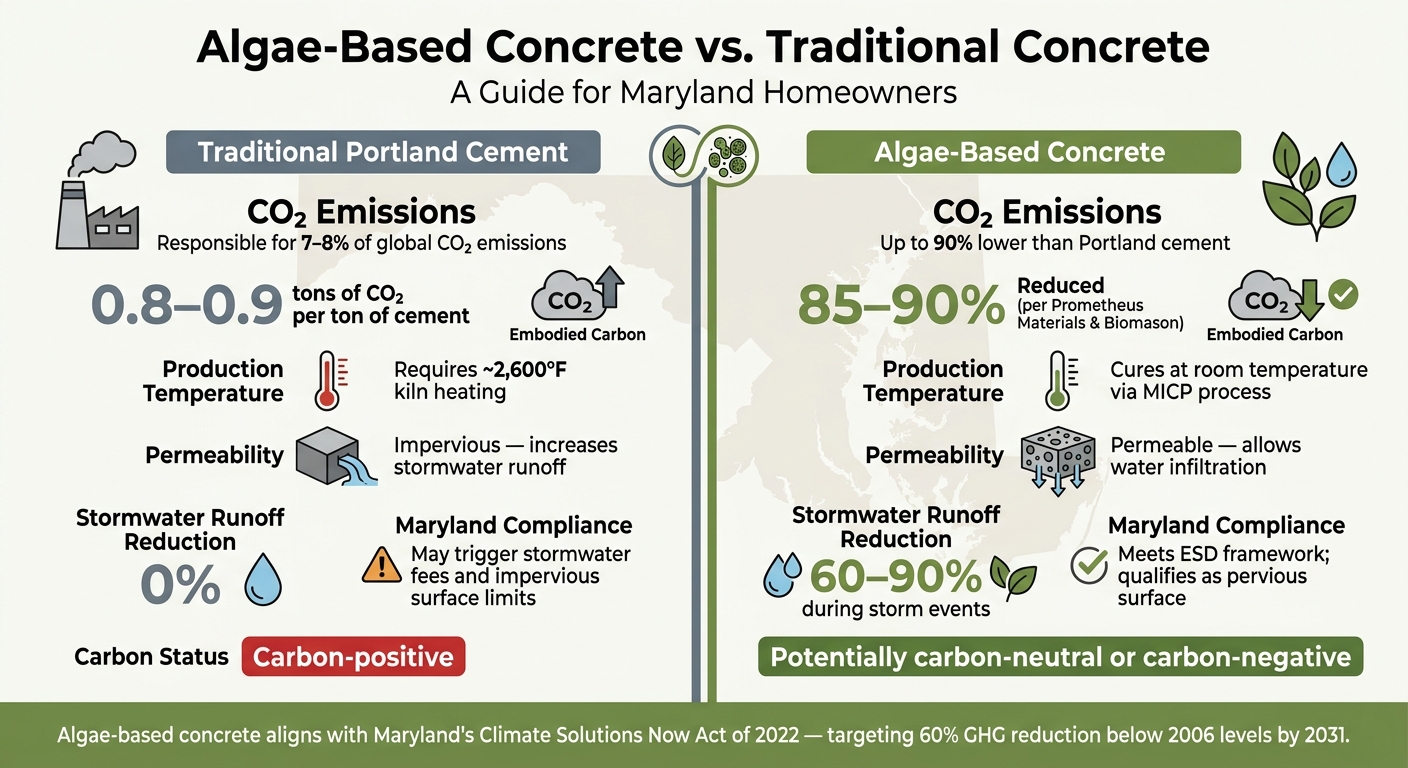
Unlike Portland cement, which requires extreme heat – about 2,600°F – to produce, algae-based biocement cures at room temperature, making it far less energy-intensive. Researchers at the University of Colorado Boulder have showcased this concept with a "living concrete" made from cyanobacteria, sand, and hydrogel. This material not only forms through photosynthetic carbonate precipitation but has also demonstrated the ability to regenerate after being broken apart. Companies like Prometheus Materials are taking this research further, creating commercial products like blocks and pavers with compressive strengths that rival traditional concrete masonry units.
This approach is particularly relevant for Maryland’s stormwater management needs. The formula can be adjusted to improve permeability, helping to reduce runoff. Beyond addressing water issues, this process significantly lowers energy consumption and opens the door to major carbon reductions, as explained below.
Carbon and Emissions Benefits
Algae-based concrete stands out for its ability to cut carbon emissions, making it an appealing choice for environmentally conscious Maryland homeowners. Traditional Portland cement is responsible for roughly 7–8% of global CO₂ emissions, releasing 0.8–0.9 tons of CO₂ per ton of cement due to the intense heating and calcination involved. Algae-based systems tackle emissions in two key ways: during growth, algae absorb CO₂, and some of that carbon becomes permanently embedded in the mineral binder. According to Prometheus Materials, their bio-cement products can slash embodied carbon by up to 90% compared to Portland cement-based alternatives. Some advanced systems even cure the finished blocks in CO₂-rich environments, capturing additional carbon. When paired with renewable energy for cultivation and production, these materials can achieve carbon-neutral – or even carbon-negative – status.
For Maryland homeowners, particularly those in areas with Chesapeake Bay protection programs, these low-carbon materials offer more than just environmental perks. They align with local green building standards and may qualify for sustainability incentives, all while providing a durable and functional solution for outdoor spaces.
Uses of Algae-Based Concrete in Maryland Home Projects
Permeable Patios and Walkways
Algae-based pavers, installed over an open-graded aggregate base, allow rainwater to seep into the ground instead of pooling on the surface. This is especially useful in areas like Columbia, Ellicott City, and Gaithersburg, where heavy rains and clay-rich soils often lead to standing water on patios and pathways.
"Many paver options are permeable, allowing water to pass through the joints, which helps with stormwater management and reduces runoff." – Pro Landscapes MD [2]
To ensure these pavers perform well, proper installation is key. A slight slope of 1–2% directed away from the foundation, combined with a stable base and edge restraints, helps them withstand Maryland’s freeze-thaw cycles. Algae-based concrete can also be used for water-managing structures like retaining walls, which are perfect for sloped yards.
Retaining Walls and Slope Control
Algae-based concrete blocks are a great option for building retaining walls to manage slopes, prevent erosion, or create level terraces. These blocks can be part of a well-thought-out drainage system from the beginning. For example, a retaining wall on a Maryland slope should include drainage aggregate behind the wall, a perforated drain pipe at the base, and weep holes or outlets to relieve water pressure after storms.
Pairing the wall with terraced planting beds or surface swales can further slow runoff, turning a problematic slope into a functional and attractive outdoor area. This approach aligns with Maryland’s eco-conscious building practices, offering both practicality and environmental benefits.
Driveways and Parking Pads
Driveways and parking pads are major contributors to stormwater runoff since they are often impervious surfaces. Using algae-based concrete in a permeable format can help reduce this issue by allowing rainwater to infiltrate the surface rather than flow into streets or neighboring properties. According to EPA guidelines, well-designed systems can absorb 70–90% of annual rainfall.
For driveways that handle vehicle loads, it’s essential to use an 8–12 inch open-graded stone base with clean, washed aggregate in the joints. Regular maintenance, like vacuum sweeping, helps maintain infiltration rates. These driveways work best when paired with complementary drainage features.
Pairing with Drainage Features
Permeable surfaces, like those made from algae-based concrete, perform best when combined with other drainage solutions. In Maryland yards where water tends to collect near foundations or low-lying areas, these hardscapes can be integrated with grading adjustments to direct water safely away from structures.
"Berms and swales often work together to control water flow. Berms divert water toward swales, where it can be absorbed or redirected to a safe drainage area." – Pro Landscapes MD [3]
To enhance drainage, combine these pavers with systems like French drains or dry riverbeds. In areas with compacted soils, installing underdrains beneath the permeable pavement ensures proper water flow, preventing prolonged saturation that could compromise the base. Companies like Pro Landscapes MD already use these methods throughout central Maryland, ensuring that surface materials and drainage systems work together seamlessly.
Benefits and Practical Considerations for Maryland Homeowners
How It Compares to Standard Concrete
One of the standout benefits of algae-based concrete is its dramatically lower carbon footprint compared to traditional concrete. Regular Portland cement is responsible for about 7–8% of global CO₂ emissions, primarily because producing it involves heating limestone in energy-intensive kilns. On the other hand, algae-based binders are created using sunlight, water, and captured CO₂. Some formulations, like those from Prometheus Materials, a startup from the University of Colorado Boulder, claim to cut embodied carbon by as much as 90% compared to ordinary Portland cement.
For homeowners in Maryland, opting for low-carbon hardscaping materials can align with green-building certifications and sustainability goals that are becoming more common in areas like Montgomery, Howard, and Frederick Counties.
Performance-wise, algae-based concrete holds its own against traditional options. It offers comparable compressive strength and freeze–thaw resistance, which is crucial for Maryland winters where freezing temperatures and road salt are the norm. Interestingly, permeable algae-based surfaces can help reduce ice formation around driveways and patios by allowing meltwater to drain rather than refreeze. These advantages can simplify both installation and long-term care.
Installation and Maintenance Tips
Proper preparation is key for algae-based concrete installations. Whether you’re planning a patio, walkway, or driveway, the base should use clean, washed, open-graded crushed stone to support weight and allow water to filter through. Additionally, the surface should slope away from the house at a gradient of 1/8 to 1/4 inch per foot to direct water flow. To handle Maryland’s freeze–thaw cycles, edge restraints are crucial to prevent shifting.
Maintenance is all about staying consistent. Permeable surfaces need regular cleaning to stay effective. Leaves, sediment, and debris can clog the joints, especially under Maryland’s many deciduous trees. Here are some tips to keep your algae-based concrete in good shape:
- Vacuuming or pressure blowing the joints: Every 1–2 years to remove debris.
- Surface cleaning with mild detergent and low-pressure washing: As needed.
- Sealing (if required): Follow the manufacturer’s recommendations. Some products work best unsealed, while others benefit from breathable, water-repellent sealers.
- Drainage system checks: Inspect underdrains or French drains seasonally to ensure proper water flow.
With these steps, homeowners can confidently explore algae-based concrete, even for non-structural uses, as the technology becomes more accessible.
Availability and Adoption in Maryland
Algae-based concrete is still in its early stages, so you won’t find it at your local big-box store just yet. For now, most products are available through specialty manufacturers, regional distributors of sustainable materials, or contractors who focus on green construction. For example, Prometheus Materials is in the process of commercializing its algae bio-cement masonry blocks. Pricing is currently project-specific, so it’s not something you can grab off the shelf.
For homeowners interested in this option, the best approach is to work with a local hardscaping company experienced in permeable systems and stormwater management. Companies like Pro Landscapes MD already install solutions like environmental pavers, French drains, and grading systems across central Maryland. These firms are well-equipped to integrate algae-based concrete into their projects as the technology becomes more widely available and standardized.
Conclusion: Algae-Based Concrete as a Practical Choice for Maryland Homes
Algae-based concrete offers a promising solution to the unique challenges Maryland homeowners face due to the region’s climate. With clay-heavy soils that retain water after summer storms and freeze–thaw cycles that damage traditional concrete, Maryland’s environment demands durable and efficient hardscaping materials. Algae-based concrete, especially when designed as a permeable surface over a stone reservoir base, can reduce stormwater runoff by an impressive 60–90% during many storm events. This makes it an excellent option for maintaining functional outdoor spaces even after heavy rains.
The environmental benefits are equally compelling. Traditional Portland cement is responsible for about 7–8% of global CO₂ emissions, but algae-based alternatives from innovators like Prometheus Materials and Biomason can slash embodied carbon by 85–90% compared to conventional mixes. For Maryland residents, this aligns perfectly with the state’s Climate Solutions Now Act of 2022, which sets ambitious goals for reducing greenhouse gases by 60% below 2006 levels by 2031 and achieving net-zero emissions by 2045.
On top of that, algae-based concrete integrates seamlessly into Maryland’s Environmental Site Design (ESD) framework, which recognizes permeable pavements as effective stormwater management tools. By choosing permeable algae-based hardscaping for patios, driveways, or retaining walls, homeowners can meet county stormwater requirements while avoiding the expense of larger drainage systems. This practical advantage makes it a smart choice for those looking to combine functionality with environmental responsibility.
While the technology is still evolving, partnering with local hardscaping professionals experienced in permeable systems, drainage solutions, and stormwater compliance is the best way to explore this option. Companies like Pro Landscapes MD already specialize in eco-friendly pavers, French drains, and grading solutions, making them well-positioned to incorporate algae-based materials as they become more widely available.
Algae-based concrete may not replace traditional options overnight, but for Maryland homeowners planning new hardscaping projects, it’s worth serious consideration. With its combination of reduced carbon footprint, superior drainage capabilities, and alignment with environmental regulations, algae-based concrete is a forward-thinking choice that meets both practical needs and regional sustainability goals.
FAQs
Is algae-based concrete approved under Maryland stormwater rules?
No, the provided sources do not indicate that algae-based concrete is approved under Maryland stormwater regulations. While Pro Landscapes MD focuses on eco-friendly drainage solutions such as permeable pavers, berms, and swales to comply with local runoff standards, there is no mention or certification of algae-based concrete for these applications.
Will algae-based concrete handle Maryland freeze-thaw and road salt?
The performance of algae-based concrete under Maryland’s freeze-thaw cycles or exposure to road salt remains uncertain. For materials that can handle the region’s climate, Pro Landscapes MD specializes in hardscaping and drainage solutions designed for local conditions. Reach out to their team to discuss materials and installation techniques that can help your landscape stand up to Maryland’s unique weather challenges.
What does algae-based concrete cost in Maryland?
Pricing details for algae-based concrete in Maryland aren’t mentioned in the provided information. However, Pro Landscapes MD specializes in eco-friendly hardscaping options, including permeable pavers and pervious pavement, which are excellent for managing stormwater in Maryland’s climate. To get precise pricing or to discuss your specific project requirements, reach out to Pro Landscapes MD for a consultation and a tailored estimate.
Chat with Us