









- bhavya gada
- No Comments
Your yard can be both visually stunning and a haven for pollinators like bees, butterflies, and hummingbirds. By choosing the right plants, understanding your yard’s conditions, and incorporating eco-friendly design, you can create a space that supports pollinators without sacrificing aesthetics. Here’s how:
- Pollinators are crucial: They help 80% of flowering plants and 30% of food crops thrive, but their populations are declining.
- Choose native plants: Species like Black-eyed Susan, Purple Coneflower, and Butterfly Weed attract pollinators and thrive in local conditions.
- Plan smart designs: Layered plantings, curved garden beds, and clusters of flowers make your yard more inviting to pollinators.
- Use eco-friendly materials: Permeable pavers and natural mulches protect pollinators while enhancing your yard’s functionality.
- Avoid chemicals: Opt for natural pest control and leave no-mow zones for ground-nesting bees.
- Provide water and shelter: Shallow water dishes, bare soil, and leaf litter help pollinators survive and thrive.
With the right approach, you can create a yard that’s both beautiful and buzzing with life.
Pollinator Garden Design Ideas – How to Attract Bees, Butterflies & Hummingbirds 🐝 🦋
sbb-itb-843f8be
Evaluating Your Yard for Pollinator Potential
Designing a yard that supports pollinators while maintaining its aesthetic appeal starts with understanding the natural characteristics of your space. By analyzing sunlight, soil, and available space, you can make informed decisions about plant placement and hardscape design. This groundwork is key to creating a pollinator-friendly environment.
Sunlight and Shade Analysis
Start by determining how much sunlight each part of your yard receives. Light levels typically fall into three categories: full sun (6+ hours), part sun/part shade (3–6 hours), or full shade (less than 3–4 hours) [4][5]. Plants that thrive in part shade often need protection from the intense midday sun, even if they require several hours of light [5].
Observe your yard at different times of day – morning, noon, and afternoon – to see how sunlight shifts across your space. Trees, buildings, or other structures may cast shadows that change throughout the day [5]. Look for signs of sun stress, such as scorched leaves, to identify areas that might be too intense for certain plants [5]. Keep in mind that sunlight intensity varies by location: for example, what counts as "full sun" in Ohio might be less intense than in Texas [5].
Shaded areas have their own advantages. They retain moisture longer due to reduced evaporation, meaning less frequent watering [5]. While many pollinator plants thrive in sunny spots, some pollinators, like carpenter bees, prefer shadier areas for nesting [4]. This means every light level in your yard can play a role in supporting wildlife.
Once you’ve mapped out the light zones, the next step is to assess your soil.
Soil Types and Drainage Basics
Understanding your soil type is crucial for choosing the right plants. A simple test involves filling a jar one-third full with soil, adding water, shaking it for three minutes, and letting it settle. Sand will settle within a minute, silt within five minutes, and clay within 24 hours [6]. Sandy soils drain quickly but lose nutrients faster, while clay and silt soils retain water longer, which might harm sun-loving plants [6][8].
"Success in the garden starts with healthy soil. Soil – as much as water and sunlight – determines whether plants thrive or die." – Robin Sweetser, Gardener, Almanac.com [6]
For a deeper understanding of your soil’s pH and nutrient levels, consider professional lab testing, which costs between $24 and $71 and provides detailed amendment recommendations [7][9]. Alternatively, DIY pH tests can give you a general idea: alkaline soils fizz with vinegar, while acidic soils react with a mix of baking soda and distilled water [6]. To improve sandy soil, add aged manure or compost for better nutrient retention. For clay soils, coarse sand and compost can enhance drainage [6]. Using compost-amended soil can even reduce water usage by up to 25% [9].
When mulching, avoid overdoing it, especially with dyed mulches, as they can deter ground-nesting bees. Leave about 5% of your yard unmulched to create spaces for beneficial insects [9][1].
Planning Space for Layered Plantings
Layered planting designs combine trees, shrubs, perennials, and groundcovers to create habitats at various heights while enhancing visual appeal [1][3]. Before planting, check each plant’s mature size to avoid overcrowding, which can lead to problems like mold or mildew [2]. Taller plants should be placed behind shorter ones to ensure every layer gets adequate light [2].
Grouping plants of the same species makes it easier for pollinators to forage efficiently [1][3]. Design garden beds with curved, natural shapes to mimic the environments pollinators are drawn to [1]. Set aside areas of bare soil for ground-nesting bees and leave some seed heads standing through the winter to provide shelter [1]. By matching each plant to its ideal sunlight and drainage conditions, you can create a layered design that thrives throughout the year [3].
Selecting Plants for Beauty and Pollinator Support
Transforming your yard into a pollinator-friendly space starts with selecting plants that provide both nourishment and visual appeal. The trick is to pick species that thrive in central Maryland’s Piedmont plateau conditions while offering nectar and pollen. Native plants are a smart choice – they’re well-suited to local weather and pests, and once established, they typically require less water and fertilizer[10].
Native Perennials for Pollinators
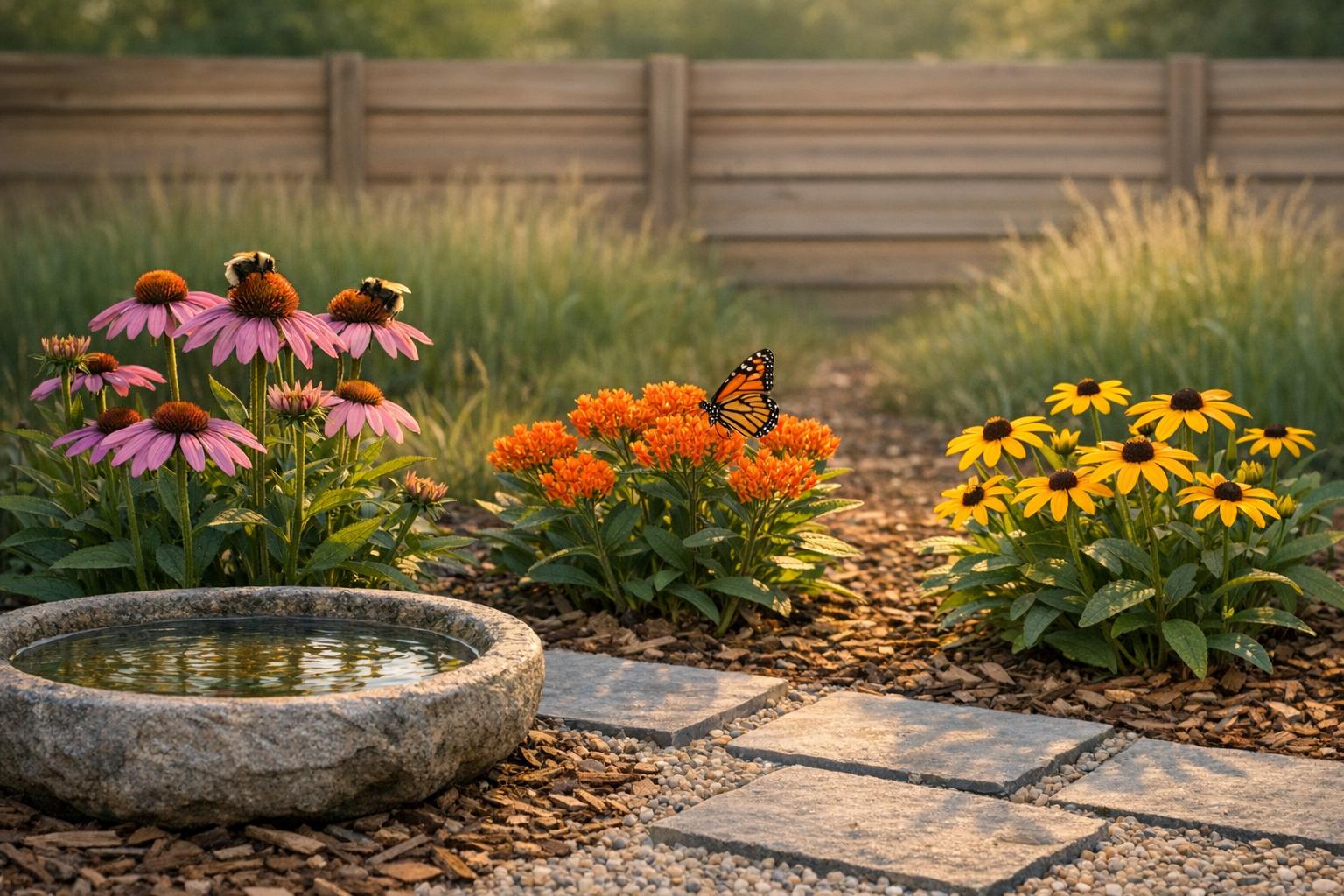
Once you’ve assessed your yard’s conditions, focus on native perennials that flourish in Maryland’s climate. These plants not only bring lasting color to your garden but also play a key role in supporting pollinators. Take the Black-eyed Susan (Rudbeckia hirta), for instance – it’s Maryland’s state flower and a favorite of native bees, thanks to its cheerful yellow blooms and low-maintenance nature. Another standout is the Purple Coneflower (Echinacea purpurea), with its broad petals that make perfect landing spots for butterflies during the summer. Butterfly Weed (Asclepias tuberosa) is another essential plant, serving as a host for Monarch caterpillars.
For shadier spots, consider Wild Bergamot (Bee Balm), which attracts hummingbirds and honeybees with its tubular flowers. Joe Pye Weed, which can grow up to 6 feet tall, adds vertical interest and offers nourishment for migrating Monarchs. In moist areas, the Cardinal Flower provides striking red blooms, while False Blue Indigo offers early-season color. Planting these perennials in clusters of three to five not only makes them easier for pollinators to find but also creates a more striking visual effect.
Annuals, Shrubs, and Trees for Your Design
While perennials form the backbone of your garden, adding annuals, shrubs, and trees can create diversity and habitat at different heights. Eastern Redbud is a great choice for early spring, offering vital food for bees. Spicebush provides fragrant yellow flowers in March and serves as a host for Spicebush Swallowtail butterflies. Summersweet (Clethra) thrives in wetter areas and fills late summer with its fragrant white blossoms.
For trees, the Tulip Poplar stands out with its tall stature and nectar-rich flowers that attract bees and hummingbirds. Flowering Dogwood not only provides spring blossoms but also produces fall berries that feed birds. Oaks – whether White, Pin, or Red – are considered keystone species, supporting a wide range of pollinators throughout their life cycles. Winterberry Holly adds structure to your garden in winter and offers berries that provide shelter for pollinators. To protect native plant life, steer clear of invasive species like butterfly bush. Instead, consider alternatives such as blazing star or New York ironweed, which contribute to a continuous seasonal bloom cycle.
Seasonal Blooms for Year-Round Support
To create a pollinator haven, aim for a steady bloom cycle from spring through fall. This ensures a constant supply of nectar, which is crucial given the alarming loss of nearly 50% of North America’s managed honeybee colonies over the past 20 years[1]. Early spring blooms like Virginia Bluebells, Wild Geranium, and Serviceberry support the first bees and butterflies of the season. By summer, plants such as Bee Balm, Purple Coneflower, and Joe Pye Weed take center stage.
Fall brings Goldenrod (Solidago) and New England Aster, which are essential for migrating butterflies and bees preparing for winter. Resist the urge to deadhead fall bloomers – leaving seed heads intact provides food for goldfinches and shelter for overwintering insects.
"Native plants form the ecological foundation of a resilient landscape. They support insects, birds and soil life in ways non-native plants often cannot." – Hayley Bush, Marketing Manager, Homestead Gardens[3]
When choosing plants, stick to varieties that maintain their natural flower shapes and colors. While ornamental hybrids may look appealing, their doubled petals can block access to nectar and pollen. Opt for true native species or carefully selected cultivars that retain pollinator-friendly traits.
Adding Hardscaping While Protecting Pollinators
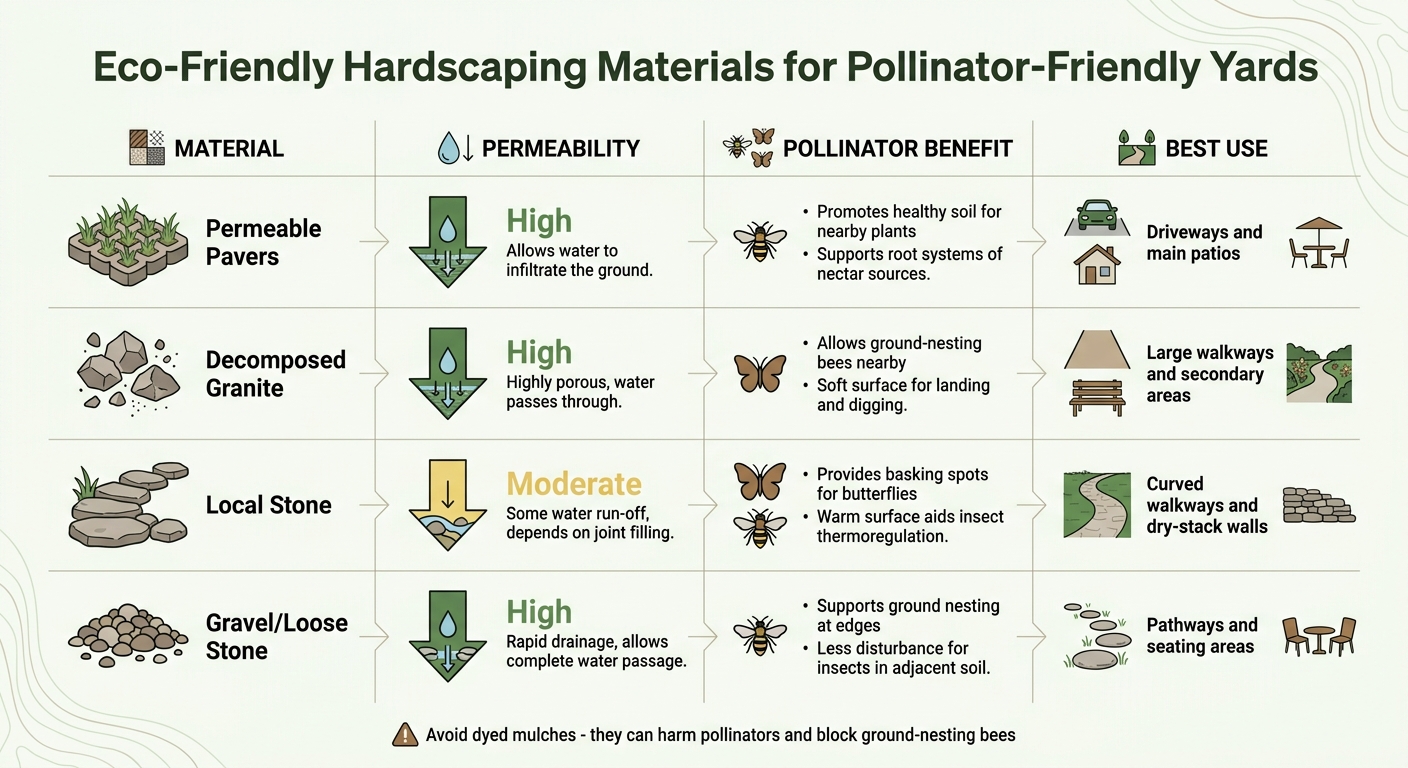
Eco-Friendly Hardscaping Materials for Pollinator-Friendly Yards
Creating a pollinator-friendly yard isn’t just about choosing the right plants – thoughtful hardscaping plays a big role too. By incorporating patios, walkways, and retaining walls into your garden, you can create a functional and visually appealing space that also supports pollinators. For example, designing patios alongside pollinator "islands" and native hedgerows can form outdoor "rooms" that encourage habitat diversity[11].
Eco-Friendly Pavers and Permeable Materials
When it comes to hardscaping, permeability is key. Native plants rely on deep roots to absorb water and filter out nutrients and pollutants[11]. Choosing materials like permeable pavers, decomposed granite, or gravel allows water to seep through, reducing harmful stormwater runoff and supporting the natural filtration process.
| Material | Permeability | Pollinator Benefit | Best Use |
|---|---|---|---|
| Permeable Pavers | High | Promotes healthy soil for nearby plants | Driveways and main patios |
| Decomposed Granite | High | Allows ground-nesting nearby | Large walkways and secondary areas |
| Local Stone | Moderate | Provides basking spots for butterflies[1] | Curved walkways and dry-stack walls |
| Gravel/Loose Stone | High | Supports ground nesting at edges | Pathways and seating areas |
"Utilize local stone, untreated wood, and organic mulch to maintain the design’s authenticity and functionality." – American Landscaping Inc.[1]
Avoid dyed mulches around hardscape borders. These can contain chemicals that harm pollinators and may block ground-nesting bees from accessing the soil[1]. Instead, stick to natural materials that are safe for pollinators and their habitats.
Designing Walkways, Patios, and Retaining Walls
When designing hardscape elements, consider leaving small, bare patches of soil nearby. About 70% of bee species nest underground[11], so even a 2’x2′ unmulched area near a walkway can make a big difference.
Curved walkways and natural bed shapes mimic the environments pollinators prefer, while also creating more edge space where plants meet hardscape[1]. On sloped areas, use compostable erosion blankets made from coconut fiber or recycled paper instead of plastic mesh, which can trap small animals[11]. Adding tall shrubs near hardscaped areas can serve as windbreaks and provide sunny spots for butterflies to rest[11].
Beyond materials, thoughtful design boosts the ecological value of your yard. Companies like Pro Landscapes MD specialize in creating permeable patios and walkways that integrate seamlessly into pollinator-friendly landscapes in central Maryland.
Maintaining Your Landscape for Pollinator Health
Once you’ve set up a pollinator-friendly landscape, keeping it in good shape is just as important. The trick is to move away from traditional, overly tidy gardening and embrace a more relaxed style. This not only helps pollinators thrive but also lightens your workload. Here are some easy ways to maintain your landscape while supporting pollinator health.
Adding Water Sources and Shelter
Pollinators rely on water for drinking, cleaning, and even nest-building. For instance, mason bees may take up to 80 trips a day to collect water and mud for their nests [13]. You can help by setting up a simple watering hole: fill a shallow dish with pebbles and add water just below the tops of the stones. This setup gives bees and butterflies a safe place to drink without the risk of drowning.
Be sure to refresh the water every 2–3 days to prevent mosquito breeding. For mason bees, create a small "puddling area" by mixing sand and water in a sunny spot – this provides the mud they need for their nests. Additionally, leaving rock piles, hollow stems, and some leaf litter in low-traffic areas offers essential overwintering spots for creatures like bumblebees and moth pupae.
Once you’ve provided water and shelter, the next step is to protect pollinators by avoiding harmful chemicals.
Avoiding Harmful Chemicals and Pesticides
A thriving yard doesn’t need heavy chemical use. Start with the basics: select plants suited to your soil and sunlight. Healthy, well-placed plants are naturally more resistant to pests.
When pests do appear, opt for natural solutions. For example, introduce ladybugs to handle aphids or use a homemade soap spray (a small amount of dish soap mixed with water) to manage whiteflies. Hand-weeding while the soil is moist can also reduce the need for herbicides. If you must use treatments, apply them one hour after sunset when pollinators are inactive [14], and mow the lawn beforehand to remove flowering weeds like clover and dandelions.
"Choose the least toxic, less persistent pesticide whenever possible to minimize risk to pollinators." – Mary Ann Rose, Director, Pesticide Safety Education Program, Ohio State University [14]
In addition to reducing chemical use, adjusting your mowing habits can further enhance pollinator habitats.
Creating No-Mow Zones and Edge Habitats
Did you know that about 70% of bees nest in the ground [12]? They need undisturbed patches of bare soil to thrive. Transform hard-to-mow areas – like steep slopes or damp corners – into pollinator havens. Replace struggling grass with low-maintenance groundcovers such as creeping thyme or sedges.
Instead of committing to "No Mow May", try a "Slow Mow Summer." Raise your mower blade and cut less often, allowing plants like white clover, dandelions, and self-heal to bloom naturally. In the fall, leave the bottom 12 to 24 inches of perennial stems intact – plants like elderberry and blackberry make excellent nesting spots for cavity-nesting bees.
"The current recommended practice for fall garden clean-up is ‘less is more effective.’ An aggressive housekeeping approach inadvertently destroys valuable overwintering sites and disrupts the food web." – Cornell Cooperative Extension [12]
When spring arrives, hold off on cleanup until you spot active bees and blooming trees. The leaf layer provides critical insulation for pollinators during hibernation. For those in central Maryland seeking expert help, Pro Landscapes MD offers services to design and maintain landscapes that balance beauty with ecological benefits.
Conclusion
Designing a landscape that’s both visually appealing and beneficial to pollinators means considering both goals right from the start. Native plants play a key role here – they not only add beauty but also significantly boost ecological health. Studies reveal that native species are four times more attractive to pollinators than their non-native counterparts[15]. Plus, they bring seasonal variety and unique textures that make any yard feel complete.
But creating a pollinator-friendly space doesn’t stop at design. Maintenance is just as critical. Simple steps like establishing natural zones, steering clear of synthetic pesticides, and ensuring water availability can help pollinator populations thrive. On top of that, native plants often require less water and fewer chemicals, making them a smart, low-maintenance choice for homeowners[1][8].
"Great landscapes do more than just look good; they support the environment." – American Landscaping, Inc. [1]
For homeowners in central Maryland, Pro Landscapes MD offers expert services to bring this vision to life. From site analysis to plant selection and sustainable installation, they serve areas like Howard, Montgomery, Carroll, Frederick, Prince George’s, and Baltimore counties.
FAQs
How can I identify the sun and shade zones in my yard?
To figure out the sun and shade patterns in your yard, watch how sunlight shifts throughout the day. Pay close attention during peak sunlight hours and identify areas based on their exposure: full sun (6 or more hours), partial sun/shade (3 to 6 hours), or full shade (less than 3 hours). By mapping these zones, you can strategically plan where to place plants, ensuring a visually appealing landscape that also supports pollinators.
What’s the easiest way to test my soil type and drainage?
To figure out your soil type, try the jar test. Here’s how it works: grab a clear jar, fill it with soil and water, give it a good shake, and let it settle. Once everything separates, you can measure the layers of sand, silt, and clay to determine the soil’s texture.
Want to check drainage? Dig a hole about 6 to 10 inches deep, fill it with water, and see how quickly it drains. If the water disappears fast, you’re likely dealing with sandy soil. If it drains slowly, it could mean clay soil or compacted ground.
How can I keep blooms going from spring through fall?
To keep your garden vibrant from spring to fall, consider planting reblooming perennials and shrubs like Encore® Azaleas, Purple D’Oro Daylilies, and Endless Summer® Hydrangeas. Pair these with long-blooming perennials such as coneflowers and black-eyed Susans for consistent color. Regular maintenance is key – deadheading spent flowers and pruning (like trimming petunias around mid-July) helps extend the flowering period. With the right combination of plants and care, your garden can stay colorful all season long.
Chat with Us